2004 Half Dollar Error List with Pictures

A raised crack crosses the eagle’s leg on a 2004-S silver proof, a specially made collector coin. Heritage recorded $80.50 for a comparable cracked proof in January 2008, sold after the auction had ended.
Estimated values for the 2004 half dollar errors here span $4–$400. Read on to check extra lettering, faint transferred shapes, interrupted designs, an unusually wide outline, and a copper-colored surface caused by a missing layer.
1. 2004 Kennedy Half Dollar Doubled Die Obverse (Estimated Up to $60)
A small extra edge beside a letter is the reported feature on these 2004 coins. The year guide lists minor examples for P, D, and S issues, generally adding little value.
A doubled die is a steel stamping tool made with repeated design details. Coins made from it can share the same extra shapes.
The exact letter and direction depend on the particular example. A thick-looking word or a bright reflection beside one letter does not establish doubling, so compare the mark with an identified coin of the same mint and finish.
Estimated Value
Regular-metal coins with identified minor doubling have an estimated range of $4–$25. For ordinary collector-grade silver proofs, the whole-coin estimate is $35–$60.
The year guide supplies the normal-coin values and minor-doubling assessment. These are estimates, not auction results for individual doubled examples.
Most of the value reflects the issue and condition. A small extra letter edge should not receive the price of a dramatic doubled variety from another year.
How to Identify
Identify the metal first with a scale and an edge examination. Regular layered coins weigh 11.34 grams and have a copper center, while the 90%-silver proof weighs 12.50 grams.
Calipers should show about 30.61 millimeters for either type. Inspect the edge grooves for later damage.
Choose an identified example of the same mint and finish, then compare its lettering through a magnifier. Move the light to separate raised shapes from reflections or low, flat shelves caused by movement during striking.
A repeated lettering pattern matching the correct identified example is the shortest route to confirmation of the reported minor doubling.
2. 2004 Kennedy Half Dollar Clashed Dies (Estimated Up to $75)
A feather-like outline on Kennedy’s side may be a piece of the eagle’s design. The year guide suggests comparing such extra shapes when checking for a clash.
The steel stamping tools can mark each other if they meet with no blank between them. A blank is the round metal disc used to make a coin.
Later coins can receive those transferred details alongside their normal design. The explanation needs a real shape match, since a scratch, polished line, or bright reflection can look suggestive without reproducing any part of the opposite side.
Estimated Value
The 2004 error guide gives an estimated $25–$75 for clear clashes. This is a guide range rather than a completed sale for a particular certified coin.
A recognizable transferred shape is more useful than a faint unexplained line. Clean surrounding surfaces can make the feature easier to see.
Keep the mint, finish, and condition with the comparison. A silver collector proof and a regular layered coin can have different underlying values.
How to Identify
Use photographs of both sides to find which opposite design could explain the extra outline. A mirrored comparison can help account for the way the stamping tools faced each other.
Follow more than one short line with a magnifier, changing the light as you go. Scratches and polishing marks do not have to match the eagle or portrait.
Confirm the mint and finish. Calipers should show about 30.61 millimeters, while a scale should show 11.34 grams for regular metal or 12.50 grams for silver proof.
Inspect the edge grooves for damage. A recognizable shape from the opposite design in the correct position gives the decisive first comparison for clashing.
3. 2004-S Silver Proof Kennedy Half Dollar Reverse Die Crack (Estimated Up to $150)
A fine raised line runs through the eagle’s leg on Stephen Soldridge’s reported 2004-S silver proof. It continues through a star and the A in HALF before reaching the rim.
The eagle’s right leg is on your left as you look at the coin. Ken Potter’s report begins the path in the open area above that leg.
PCGS graded the reported coin Proof 69 Deep Cameo, meaning a nearly flawless collector coin with frosted details against reflective areas. The raised line came from a crack in the stamping tool, not a scratch cut into the coin.
Estimated Value
Heritage recorded $80.50 in January 2008 for a 2004-S silver Proof 69 Deep Cameo with a crack near seven o’clock. The record describes a purchase made after the auction.
Estimated value is $60–$150 for an attractive silver proof with a comparable visible crack. The old result prices the complete coin.
It does not isolate an extra fee for the line. Clean mirrored surfaces and an easy-to-follow raised path affect the comparison.
How to Identify
Confirm the S and silver-proof type before following the line. An example outside a grading holder should weigh about 12.50 grams on a scale and measure about 30.61 millimeters with calipers.
Its edge has grooves but should lack the copper stripe seen on regular layered coins. Avoid touching the reflective surfaces.
Use Potter’s description to trace the path from above the leg toward the star, A, and rim. A magnifier and angled light should show a raised ridge rather than a cut into the finished metal.
The continuous raised route through the correct leg, star, and A is the most specific identifying feature.
4. 2004 Kennedy Half Dollar Strike-Through (Estimated Up to $200)
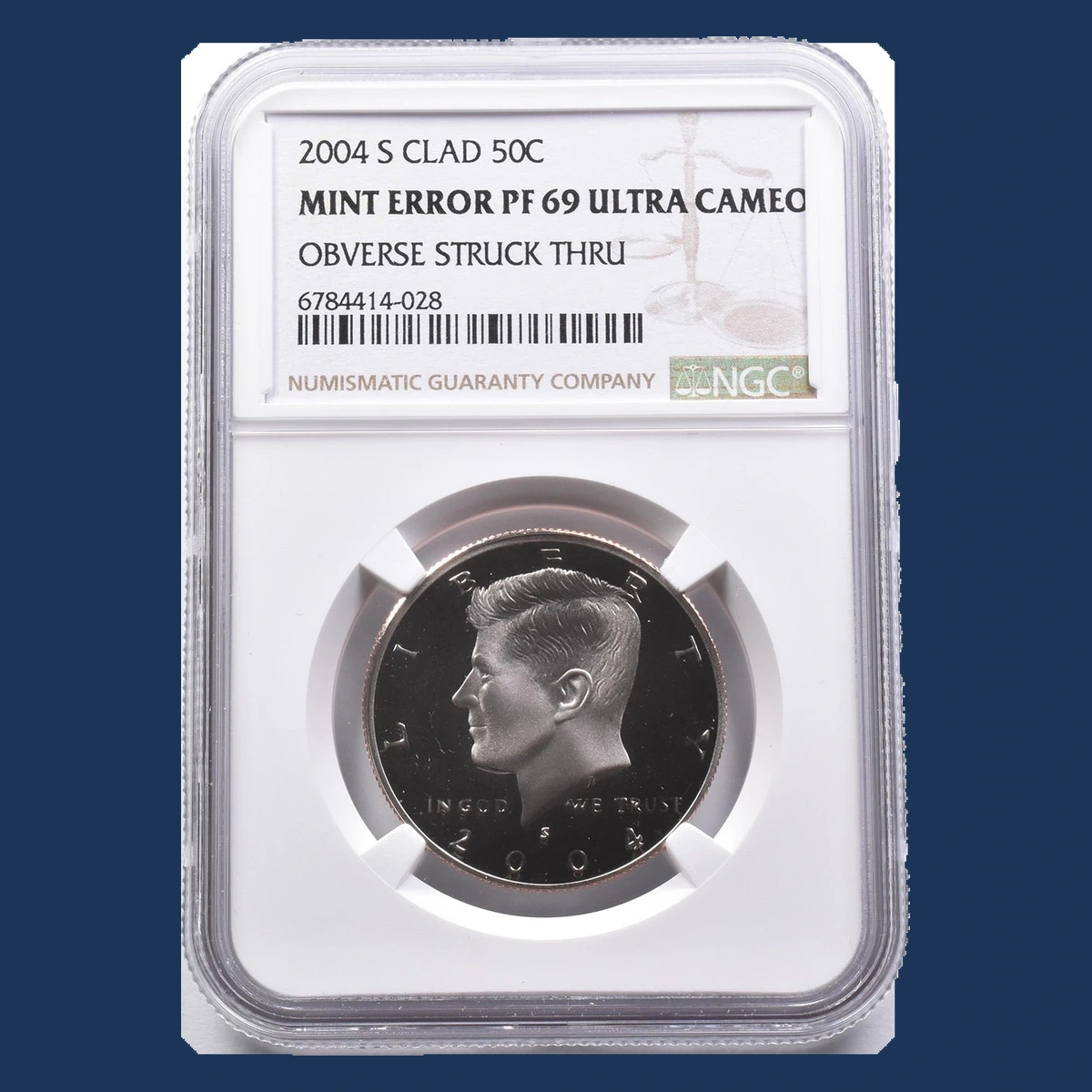
Missing letters or a smooth patch in Kennedy’s hair can show where something blocked the strike. The year guide suggests examining these areas without identifying one certified 2004 example.
A strike-through occurs when material comes between the stamping tool and the metal disc. The material prevents the design from forming normally beneath it.
A later scrape removes detail that had already been stamped. The boundary between normal and affected areas helps separate these causes, but a smooth weak patch alone does not identify grease, and a sharp depression alone does not prove a metal fragment.
Estimated Value
Estimated value is $30–$200 for a genuine localized strike-through in ordinary collector condition. The size, visible effect, and surrounding surface matter more than a count of missing letters.
A regular-metal 1976-D with strike-through effects on both sides sold for $114 in March 2025. That provides a related Kennedy comparison.
It is a different year with two affected sides. The sale does not establish a 2004 price or identify the material responsible for another mark.
How to Identify
Locate the boundary where normal letters or hair meet the affected area. Compare the same place on a normal coin at similar size before guessing what blocked the strike.
Inspect that transition with a magnifier under soft and angled light. Scrape tracks, cuts, and pushed-up metal can point to damage after minting.
Record the mint and finish, then check the edge grooves for alteration. A scale and calipers can compare 11.34 grams for regular metal or 12.50 grams for silver proof, both about 30.61 millimeters across.
An original surface where the design was interrupted as it formed is the essential first distinction from detail removed afterward.
5. 2004 Kennedy Half Dollar Broadstrike (Estimated Up to $300)
An extra-wide half dollar can still have its whole design. This points toward a broadstrike, where the metal spread too far during striking.
A ring normally surrounds the disc, limits its width, and forms the grooves around the edge. Without proper support from that ring, pressure can push metal beyond the normal outline.
The 2004 guide reports this type without naming a mint, finish, or graded example. Missing edge grooves alone do not prove it, since grinding or other damage can smooth the edge without making a genuine broadstrike.
Estimated Value
The year guide gives an estimated $100–$300 range for recognizable broadstrikes. This assumes a complete design and real outward spreading, not just an uneven rim.
A 1990-P graded ANACS MS61 sold for $192 in March 2025. MS61 means no wear but many noticeable marks.
That regular-metal example supports a different-year comparison. A collector proof or a much larger spread needs a comparison suited to its own appearance and condition.
How to Identify
Measure several widths with calipers against the normal 30.61 millimeters. Real expansion is the starting test, rather than how wide one border appears.
Weigh the coin against its proper standard: 11.34 grams for regular layered metal or 12.50 grams for a silver proof. Spreading does not itself remove metal.
Now check that the design remains complete on both sides. Use a magnifier on the edge to distinguish grooves formed abnormally during striking from grooves filed or flattened afterward.
A complete design inside a truly expanded outline, with an edge supporting that same cause, provides the clearest initial evidence of a broadstrike.
6. 2004-P or 2004-D Kennedy Half Dollar Missing Clad Layer (Estimated Up to $400)
One side may look copper-colored when an outer metal layer is missing. Ordinary 2004-P and 2004-D halves have a copper center between two copper-nickel outer layers.
Losing an outer layer exposes the center and reduces weight. It does not necessarily reduce the width, because thickness and diameter are different measurements.
The year’s 90%-silver proof has a different construction and does not fit this error. Color alone is not proof on a regular coin either, since staining, added plating, or chemical treatment can change the appearance of an otherwise complete surface.
Estimated Value
The starting estimate is $100–$200, following the year guide. More complete, clearly identified layer loss in attractive condition has an estimated $200–$400 range.
A 1979 half dollar missing a layer, graded ANACS MS62, sold for $299 in January 2011. It was unworn but had noticeable marks.
That older sale is a comparison rather than a 2004 record. Silver-proof prices do not apply to this mistake in a coin made from layered metals.
How to Identify
Use a scale to test the color clue: substantial layer loss should lower the normal 11.34 grams. Record the actual reading, since partial and whole-layer losses need not weigh the same.
Confirm the P or D, then compare both sides and follow the edge layers with a magnifier. Any remaining outer-layer boundary should agree with the exposed copper area.
Calipers should check the roughly 30.61-millimeter diameter. Inspect the remaining edge grooves for grinding, and consider staining or added color if the normal weight and layers remain intact.
Exposed copper supported by a missing layer and a matching weight deficit is the quickest combined test.
Conclusion
Estimated values span $4–$400, but the right comparison begins with the metal type and visible feature. A raised crack on a silver proof needs a different test from exposed copper on a layered coin.
Use the normal design to examine doubling, clashes, and interrupted details, and measure any apparent widening. The $80.50 proof-crack purchase remains a historical whole-coin result, while the other-year sales provide comparisons rather than invented 2004 transactions.