2014 Half Dollar Error List with Pictures

A Kennedy half struck on a quarter blank brought $5,040 at Heritage in January 2025. That comparison was dated 1964, not 2014.
For this anniversary year, unusual metal needs careful checking because the Mint also made legitimate silver and gold versions. The 2014 half dollar error list below has comparative estimates from $5 to $5,500.
Read on to identify the version first, then examine the missing metal, extra design, or interrupted strike without confusing normal anniversary features with errors.
1. 2014-P Kennedy Half Dollar Struck-Through Error (Estimated Up to $100)
A seller reports a struck-through area on Kennedy’s head on a 2014-P coin. The seller also calls it MS66, but neither the grade nor the error has third-party certification.
A struck-through error can form when something lies between the metal blank and the die, the steel stamping tool. It may leave a sunken shape or block part of the design.
The listing does not identify the object. There is no basis to choose grease, fabric, or wire from the label alone.
Compare the affected head area with the correct normal portrait. The surrounding design helps show what actually changed.
Estimated Value
The seller-described MS66 coin is offered at $5.99 before shipping. That is an asking price, not a completed sale or an authenticated-error auction result.
Use an estimated $5–$100 for minor through stronger head-area strike-throughs on ordinary clad coins. Clad means the coin is made from bonded metal layers.
The actual original feature matters more than the seller’s grade claim. Faint missing detail and a clear object-shaped depression are not equal comparisons.
How to Identify
Choose a normal example of the same 2014 version before comparing Kennedy’s head. Some anniversary portraits were deliberately made higher, so their outlines differ from regular coins.
Use a 10× magnifier to look for blocked design with undamaged surrounding metal. Scraping lines, flattened high points, or pushed-up edges can suggest later damage.
Change the lamp’s direction to distinguish a depression from a dark reflection. A scale and calipers should show about 11.34 grams and 30.61 millimeters for ordinary clad, with a ridged edge.
A local interruption formed with the portrait, surrounded by the correct normal design, is the useful first confirmation to seek.
2. 2014 Kennedy Half Dollar Doubled Die Obverse Error (Comparative Estimate Up to $200)
A taller portrait does not mean there are two portraits. Some anniversary 2014 Kennedy versions deliberately used higher raised detail, which must not be mistaken for doubling.
A doubled die already has a repeated design in the stamping tool before it makes coins. The struck coins copy that same extra shape.
The 2014 guide lists front doubling as something to examine, without providing a specific identified example. Obverse is the term for the front.
The useful clue is an extra contour on the correct version. A generally bolder portrait or a bright rim around it does not establish that feature.
Estimated Value
The comparative estimate is $25–$200 for a modest, independently identified 2014 doubled front. An older clad comparison is a 1974-D FS-101 in ANACS MS64 sold for $49 at Heritage in May 2026.
MS64 describes an unworn coin with some marks. That sale belongs to an established variety from another year.
It does not identify a 2014 tool. Normal higher anniversary detail receives no doubling premium simply because it looks different from a regular portrait.
How to Identify
Identify the version using the mintmark, finish, and reliable packaging or holder information. Compare a normal coin of that exact version, particularly for anniversary portraits.
A 5×–10× magnifier can show rounded extra contours or notches. Flat ledges beside letters suggest movement during striking instead.
The normal diameter is about 30.61 millimeters with a ridged edge. A scale separates 11.34-gram clad from authorized 12.50-gram, 90% silver issues; use calipers for size.
Check the suspected feature under different light and against another coin from the same tool. A repeated extra outline is the meaningful first test, rather than the height of Kennedy’s portrait.
3. 2014 Kennedy Half Dollar Clipped Planchet Error (Estimated Up to $300)
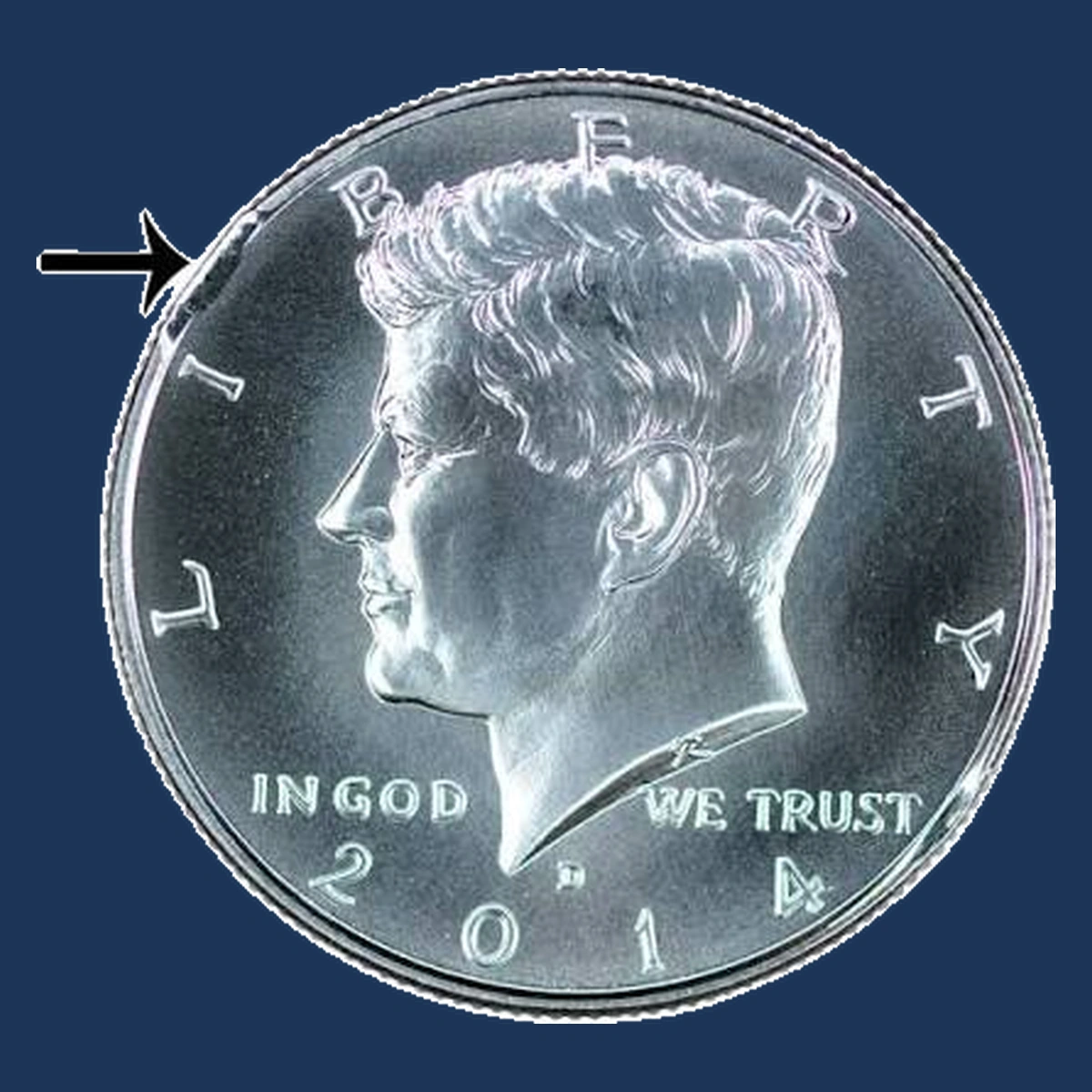
An incomplete blank changes how the rim forms during stamping. A punch overlapping an earlier hole leaves a curved gap, while the strip’s edge can leave another shape.
The key is that metal was missing before the design was added. Cutting a piece out of a finished coin is later damage.
The year list includes clips for 2014-P and 2014-D. It does not identify one certified specimen’s size or direction.
Curved and straight outlines describe possible appearances, not two proven discoveries. Both need evidence from the edge and the struck design to establish how the metal was lost.
Estimated Value
Small genuine clips have an estimated range of $25–$100. More visible examples extend the overall estimate to $25–$300, following the year guide’s discussion of size and appearance.
A 1993-D ANACS MS64 curved clip totaled $34.74 at Pristine in August 2025. That is another year’s clad Kennedy.
It shows that an authentic small clip can remain affordable. It does not establish a sale price for a 2014 example.
How to Identify
Inspect where each face meets the missing section with a 10× magnifier. The outline alone cannot separate a mint clip from a recent cut.
Look for original metal texture and struck detail flowing into the gap. A weak rim opposite it can add support, while filing lines or crushed metal suggest another cause.
A digital scale should show a loss consistent with the missing metal from the usual 11.34 grams. Calipers may still read about 30.61 millimeters across an intact direction.
Keep the remaining edge ridges visible. Natural struck detail meeting the incomplete edge is the direct check that the loss came before striking.
4. 2014 Kennedy Half Dollar Off-Center Strike Error (Estimated Up to $350)
An off-center coin needs enough of its date to identify it as 2014. A blank sitting partly outside the stamping tools can lose date detail along with the rest of the design.
Some metal remains unstamped while design at the opposite side misses the edge. Both faces help explain the shift.
The year list reports this category for ordinary P and D clad coins. Its percentages discuss possible value differences rather than measurements of one named example.
Keep those reports with the ordinary issues. They should not automatically be extended to the authorized anniversary silver or gold products.
Estimated Value
Estimate $50–$350 for identifiable ordinary clad examples. The year guide places typical pieces around $50–$200; the higher allowance covers stronger presentation with a readable date.
A historical comparison is a 1991-D PCGS MS62 struck fifty percent off-center, sold for $546.25 at Heritage in 2009. That dramatic earlier coin sits above the ordinary working range.
It is not a 2014 result. Percentage, surviving detail, and condition must be considered together.
How to Identify
Read the year and mintmark before estimating how far the strike shifted. Then compare the portrait and eagle with the blank area on both faces.
A 10× magnifier should show untouched metal beside missing design, without grinding lines. If only one face shifts, a misaligned tool may explain it; if all design remains, investigate a widened strike.
Use a scale near the intact clad weight of 11.34 grams and calipers against the normal 30.61-millimeter diameter. Some edge ridges may be incomplete where the blank was not held normally.
A readable 2014 date with matching two-sided displacement and original blank surface gives the clearest first confirmation.
5. 2014 Kennedy Half Dollar Doubled Die Reverse Error (Comparative Estimate Up to $750)
Bright edges around the eagle can look doubled under harsh light. A true doubled back needs an extra raised design shape made in the stamping tool, not just stronger contrast.
Reverse means the back of the coin. Other coins from the same affected tool should repeat its extra contour.
The 2014 source presents this as an examination category, without identifying one feather or letter on a documented example. Normal design and the correct finish remain the starting comparison.
Anniversary finishes can make edges stand out deliberately. That appearance does not add a second impression to the coin’s actual design.
Estimated Value
A comparative $25–$750 range covers modest through clearly visible identified back doubling. A 1964 FS-801 PCGS MS66 sold for $720 at Stack’s Bowers in December 2024.
That established variety is an older silver coin, unlike an ordinary 2014 clad candidate. Its high unworn grade also matters.
The result supports an upper comparison after identification. It does not turn normal contrast from an anniversary finish into a recognized 2014 mint error.
How to Identify
Use soft light to reduce glare around the eagle and letters. Follow a suspected extra contour with a 10× magnifier rather than judging one bright edge.
Compare the same finish and design version. Flat ledges, worn letters, and artificially sharpened photographs can all make false extra outlines.
The normal ridged-edge coin measures about 30.61 millimeters with calipers. A scale identifies 11.34-gram clad or 12.50-gram authorized silver, but those figures do not prove doubling.
The extra shape must remain distinct as the light changes. Matching it with another identified coin from the same stamping tool is the most useful direct confirmation.
6. 2014 Kennedy Half Dollar Wrong-Planchet Error (Comparative Estimate Up to $5,500)
A silver or gold 2014 Kennedy is not automatically a wrong-metal error. The Mint deliberately issued both metals for the anniversary.
A wrong planchet means the blank did not belong to the specific version being struck. A smaller blank may lose outer design, while another metal may change weight without making the size different.
Color alone cannot establish that mismatch. Plating and other later changes also need checking.
The source gives this as an identification category. It does not provide a confirmed 2014 wrong-blank specimen or a sale for one, so the candidate’s measurements and design must supply the evidence.
Estimated Value
Estimate $1,000–$5,500 for an authenticated ordinary Kennedy issue struck on an unintended smaller clad blank. Heritage sold a 1964 Kennedy on a clad quarter blank, NGC MS64, for $5,040 in January 2025.
That older example offers broad context, not a prediction for every 2014 candidate. Its date and manufacturing circumstances differ.
Normal anniversary silver and gold coins are excluded. They need values for their authorized versions, not this mint-error range.
How to Identify
Identify the intended version first. The Mint announcement explains the silver set and gold Proof, a specially made collector coin dated 1964–2014.
A scale distinguishes 11.34-gram clad from 12.50-gram, 90% silver; the gold version contains three-quarters of a troy ounce of gold. Calipers check the normal 30.61-millimeter diameter or record a smaller outline.
Inspect the ridged edge with a 10× magnifier for cutting, machining, or plating. A clad quarter blank starts near 5.67 grams, and any missing outer design should fit the proposed smaller blank.
A verified mismatch between the intended issue and the blank’s weight or composition is the decisive check.
Conclusion
The estimated ranges run from $5 to $5,500, from seller-reported minor marks to authenticated major blank errors.
The quoted auctions involve other years. Use them as comparisons after identifying the actual 2014 feature.
This anniversary year needs careful version matching. Identify the normal metal, portrait, and finish first, then look for the specific abnormal feature; an unusual color or higher portrait alone is not enough to establish an error.