2003 Half Dollar Error List with Pictures

A Kennedy half missing its pale outer layer sold for $432 in March 2023. That coin was a 1974-D, but it offers a price comparison for a similar error reported for 2003.
The 2003 Kennedy Half Dollar errors below carry estimated values of $5–$500. A copper-colored face is only one possible clue.
Raised lines, faint letters, and odd edges tell different stories. Read on to learn which details to check before paying extra.
1. 2003 Kennedy Half Dollar Die Crack Error (Estimated Up to $100)
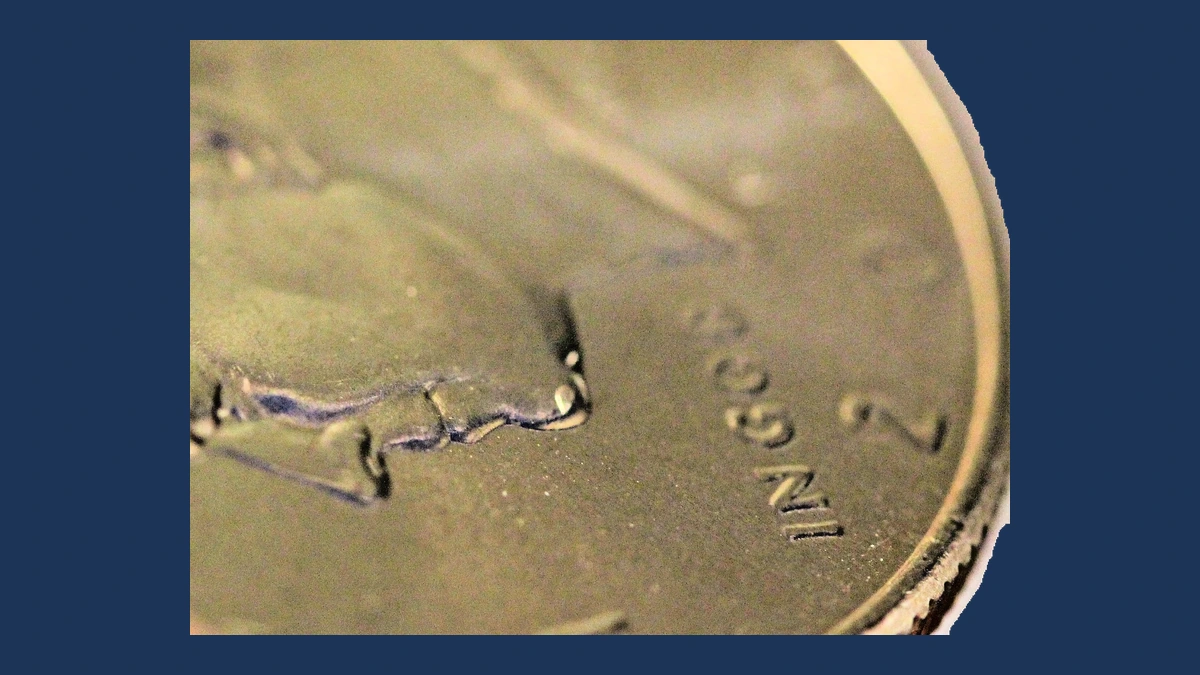
A thin line that stands above a 2003 half’s surface may come from a cracked die. A die is the steel tool that stamps the design onto the coin.
When that tool cracks, metal can enter the narrow opening during striking. The result is a raised line on the coin.
The year guide reports cracks without identifying a particular side, mint, or path. There is no single spot to check on every example.
A scratch usually cuts into the metal instead. A loose strand lying on the surface can also look like a raised crack in a photograph.
Estimated Value
Estimate $5–$100 for modest genuine die cracks on 2003 halves. A tiny line belongs near the low end, while a strong, attractive ridge may attract more interest.
The year guide places typical Kennedy cracks around $20–$100. Those figures are guide estimates, not sales of a particular 2003 example.
Condition can account for much of a coin’s price. A high grading-service number does not automatically make a faint crack a valuable error.
How to Identify
Use a 10× magnifier while tilting the coin under a lamp. Follow the suspected crack and check whether it stands above the surrounding surface.
A scratch may have raised metal along its sides, so look for a groove down the middle. Do not scrape at a possible loose thread; you could damage the coin.
Next identify the kind of half dollar. Normal layered-metal, or clad, coins weigh 11.34 grams, while the S silver Proof weighs 12.50 grams.
Proof means a specially made collector coin. Both types measure about 30.61 millimeters across, which you can check with calipers alongside a scale.
Inspect the edge ridges, then return to the line: an unbroken raised ridge without a cut is the main clue.
2. 2003-D Kennedy Half Dollar Struck-Through Grease Error (Estimated Up to $100)
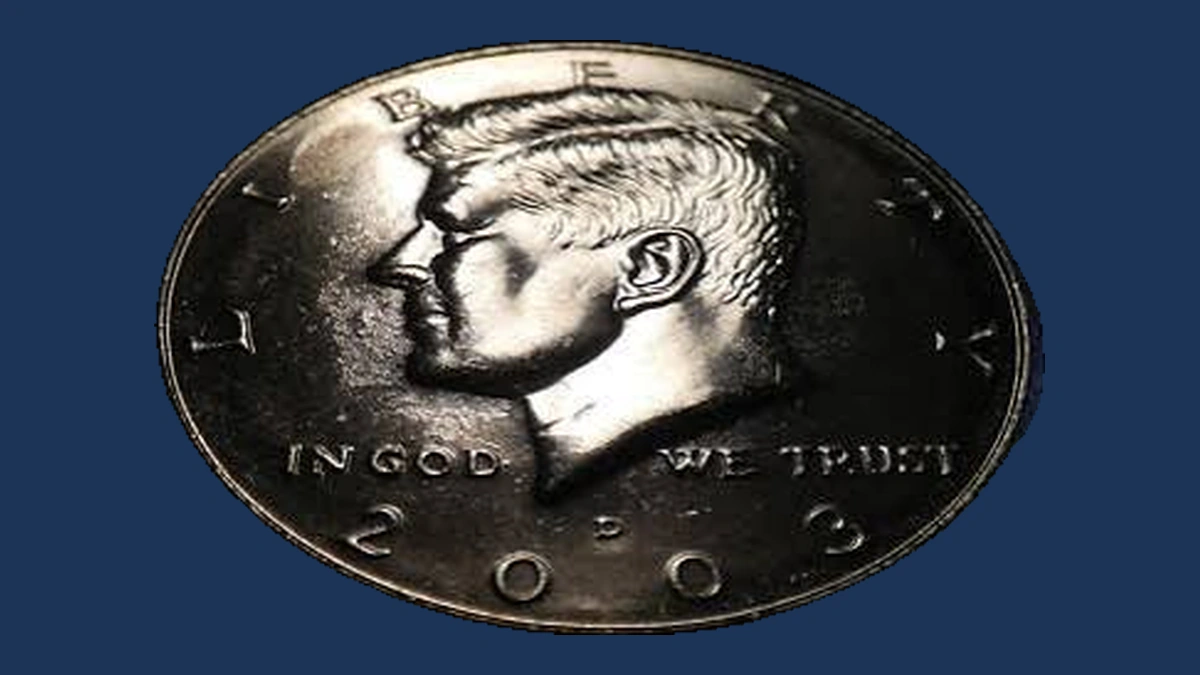
Weak letters or missing details can appear when grease blocks part of the stamping tool. The metal blank receives less of the intended design in that area.
A seller listed a 2003-D half as struck through grease. The coin was ungraded and described as BU, meaning bright and unworn.
The listing does not name a missing letter or a particular part of Kennedy’s face. Examine the coin itself rather than expecting one fixed pattern.
Grease can fill small hollows in the tool. Ordinary wear or later scraping can also weaken a design, but they leave different clues on the surface.
Estimated Value
Select Coins & Collectibles asked $8.95 for its ungraded 2003-D example. This was an offer to sell, not a completed auction.
Use an estimated range of $5–$100 for minor missing details through larger, clear strike-through areas. Good surfaces and a stronger visible effect can support a higher price.
The dealer’s BU description does not assign a numerical grade. Before paying more, make sure the weak area is an error rather than wear or damage.
How to Identify
The D mintmark identifies the reported Denver coin. Its normal clad construction has a copper-colored core between pale outer layers.
Check a loose coin against 11.34 grams on a scale and about 30.61 millimeters with calipers. Inspect the edge ridges for damage as well.
Now compare the weak area with nearby details of similar height through a 10× magnifier. Wear usually affects exposed high points, while scraping may leave fine lines running across the surface.
Do not decide from color alone. A local patch where details never formed, surrounded by sharper original details, is the useful first comparison for a grease strike-through.
3. 2003-P Kennedy Half Dollar Doubled Die Obverse Error (Estimated Up to $200)
Look at LIBERTY and the date for the reported doubling on 2003-P halves. Year guides and a seller’s listing mention this feature, but no verified map of the extra lines is provided.
The seller’s coin was circulated and ungraded. The claim needs a careful comparison.
A true doubled die has an extra outline already built into the stamping tool. Coins made with that tool can repeat the same added shape.
A flat ledge caused during striking is a different effect. Thick lettering or rough edges from a worn tool also do not, by themselves, establish a doubled die.
Estimated Value
An estimated $20–$200 covers convincingly identified examples in a range of conditions. The year guide starts at $20–$100, but no authenticated 2003-P auction result supports a precise price here.
A different-year comparison shows why appearance and identity matter. A 1974-D FS-101 doubled die graded ANACS MS64 sold for $49 at Heritage in May 2026.
That catalog number belongs to the 1974-D variety. It does not identify the seller’s reported 2003-P doubling.
How to Identify
Concentrate on the edges of LIBERTY and the date with a 10× magnifier. Compare them with a normal 2003-P, rather than relying on thick-looking letters.
Rounded extra outlines deserve a closer look. A flat step beside a reduced letter often points to movement during striking instead.
The P mintmark must be visible on the same coin. On a loose example, use a scale and calipers to check about 11.34 grams and 30.61 millimeters.
Inspect the edge ridges and copper-colored center layer. A doubled-looking digit does not mean the date was punched twice by hand on this modern issue.
The strongest match is the same extra outline on another verified coin from the same stamping tool.
4. 2003-P Kennedy Half Dollar Broadstrike Error (Estimated Up to $250)
A wide border around complete designs can be a clue to a broadstrike. The metal has spread farther outward than normal during striking.
A ring called the collar normally holds the blank’s edge in place. If it fails to do that job, the struck coin can expand.
The 2003-P year guide reports this error but gives no measured size for an individual example. A wide-looking photograph alone cannot prove it.
Both designs should remain on the coin. Hammering or squeezing a normal half later can also enlarge it, but usually leaves damaged details and marks from the pressure.
Estimated Value
Estimate $30–$250 for a genuine 2003-P broadstrike, depending on condition and how clearly it has spread. The year guide’s narrower $30–$80 range is also an estimate.
For comparison, a 1990-P broadstrike graded ANACS MS61 sold for $192 at Heritage in March 2025. That was an actual sale of a different-year coin.
It helps explain the wider estimate for a clear example. It does not establish a recorded sale price for a 2003-P.
How to Identify
Read around the whole design before looking at the rim width. Both the portrait and eagle designs should fit on the coin.
Calipers can show whether the metal has spread beyond the normal 30.61 millimeters. A scale should remain near 11.34 grams because spreading does not remove metal.
Through a 10× magnifier, examine the edge for missing or unusual ridges where the collar failed to hold it. Compare the smooth background and raised designs for pressure damage.
A coin hammered later may be wider too, but often has flattened details. Complete designs, genuine outward spread, and matching changes to the edge should support the same explanation.
5. 2003-P Kennedy Half Dollar Off-Center Strike Error (Estimated Up to $300)
A crescent of bare metal beside an incomplete design can signal an off-center strike. The blank sat partly outside the stamping tools when they came together.
Kennedy’s portrait and the eagle are then shifted against the coin’s outline. Parts of both designs may fall beyond the metal.
The year report names Philadelphia for this category. It does not identify a certified 2003-P coin with a known direction or percentage of offset.
Those details must come from the coin being examined. General price examples for small and large offsets do not show how far a particular 2003 half was shifted.
Estimated Value
The estimated range is $50–$300 for a clear off-center coin with enough design to identify it. The Philadelphia year guide suggests $50–$250.
The wider range allows for a more striking appearance, without claiming a known 2003 auction result. A readable date and mintmark usually help collectors identify and compare the coin.
There is no fixed price for each percentage of offset. Two equally shifted coins can differ greatly in condition and appeal.
How to Identify
Bare metal alone is not enough. Turn the coin over and check where the design ends on both sides.
A shifted front paired with a normally centered back can mean one stamping tool was misaligned. An off-center blank should show a matching displacement on both faces.
Use a 10× magnifier to inspect the boundary for grinding, scraping, or polish that could have removed details later. Keep the remaining date and P mintmark in view.
Weigh a loose coin against the normal 11.34 grams, and measure its outline with calipers against 30.61 millimeters. Check the edge ridges where the bare area begins.
Matching incomplete designs beside original bare metal are the deciding clues.
6. 2003 Kennedy Half Dollar Rim Cud Error (Estimated Up to $350)
A smooth lump joined to the rim may be a cud. It replaces detail that should have appeared at the coin’s edge.
This happens when a piece breaks off the edge of the stamping tool. Metal rises into the empty space during the next strikes.
The 2003 guide reports cuds without naming a mint or an exact place around the rim. The shape of the raised area is the important clue.
A small lump away from the rim may be a chip, not the same error. A blow to the edge can push metal up, but that is later damage.
Estimated Value
A genuine rim cud has an estimated value of $50–$350. A larger raised area and clean surfaces can make the error easier to appreciate.
A recent comparison is a 1976-D reverse die break graded NGC MS65. It sold for $256 at Heritage in June 2026.
That coin had a different year and shape. Its price helps frame the estimate, but it is not a 2003 cud sale or a price for every small chip.
How to Identify
The raised area must join the rim. Follow its border with a 10× magnifier and check whether normal design stops at the lump.
Glue, solder, or metal pushed up by a blow can imitate the outline. Look for disturbed surfaces and damage along the edge instead of assuming every lump was struck there.
Clad examples normally weigh 11.34 grams; a normal S silver Proof weighs 12.50 grams. A scale and calipers should also show a diameter near 30.61 millimeters.
Inspect the ridged edge beside the lump and on the opposite side. A thin crack reaching the rim is not enough: the key is a broad raised area replacing detail and joining the border.
7. 2003 Kennedy Half Dollar Missing Clad Layer Error (Estimated Up to $500)
A clad half dollar has pale copper-nickel layers bonded to a copper center. One face can look copper-colored if an outer layer is missing.
When a layer separates before striking, the exposed copper can receive the coin’s design directly. The coin also loses some weight.
Reports for 2003 do not identify a certified example or say which face lost its layer. Color alone cannot prove this error.
Stains, plating, or deliberate stripping can change a coin’s appearance. A normal 2003-S silver Proof, a specially made collector coin, uses a different silver alloy and has no copper-core sandwich to lose.
Estimated Value
Estimate $150–$500 for a genuine missing-layer example. The amount of metal missing, surface condition, and appearance all affect the price.
The year guide gives this range without identifying a 2003 auction result. A 1974-D missing its front clad layer, graded NGC MS64, sold for $432 at Heritage in March 2023.
That different-year sale provides a useful comparison. A copper-colored 2003 coin still needs evidence that its layer was lost at the Mint.
How to Identify
Put color aside at first and weigh the coin. Missing an outer layer should reduce the weight from the normal clad standard of 11.34 grams.
The exact loss depends on how much metal is gone. Calipers may still show the usual 30.61-millimeter diameter because losing a face layer need not shrink the coin’s width.
Examine the layer boundaries and edge ridges through a 10× magnifier. On the copper-colored face, look for a design struck into the exposed metal rather than damaged by later peeling or chemicals.
A 12.50-gram S silver Proof is a normal product. Reduced weight and a naturally struck copper face must agree before color becomes a convincing clue.
Conclusion
The reported 2003 errors have estimated values from $5 to $500. A faint raised crack sits at the low end, while a genuine missing outer layer can bring much more.
Start with what you can see, then check the weight and edge. Preserve the surfaces.
A normal silver Proof is not a missing-layer error, and an unusual color alone cannot tell you what happened at the Mint.