1808 Half Dollar Error List with Pictures

An unworn 1808/7 with a slightly shifted strike and extra marks from die contact sold for $2,300 in June 2002. Estimated whole-coin ranges below run from $150 to $4,000.
A thin second line at Liberty’s neck and a tilted eagle need different checks. Both appear in reports of 1808 half dollar errors, alongside expanded coins and repeated designs.
Read on to compare each visible feature and keep the two reported coins with multiple errors separate.
1. 1808 Capped Bust Half Dollar Reported Double Profile (Estimated Up to $600)
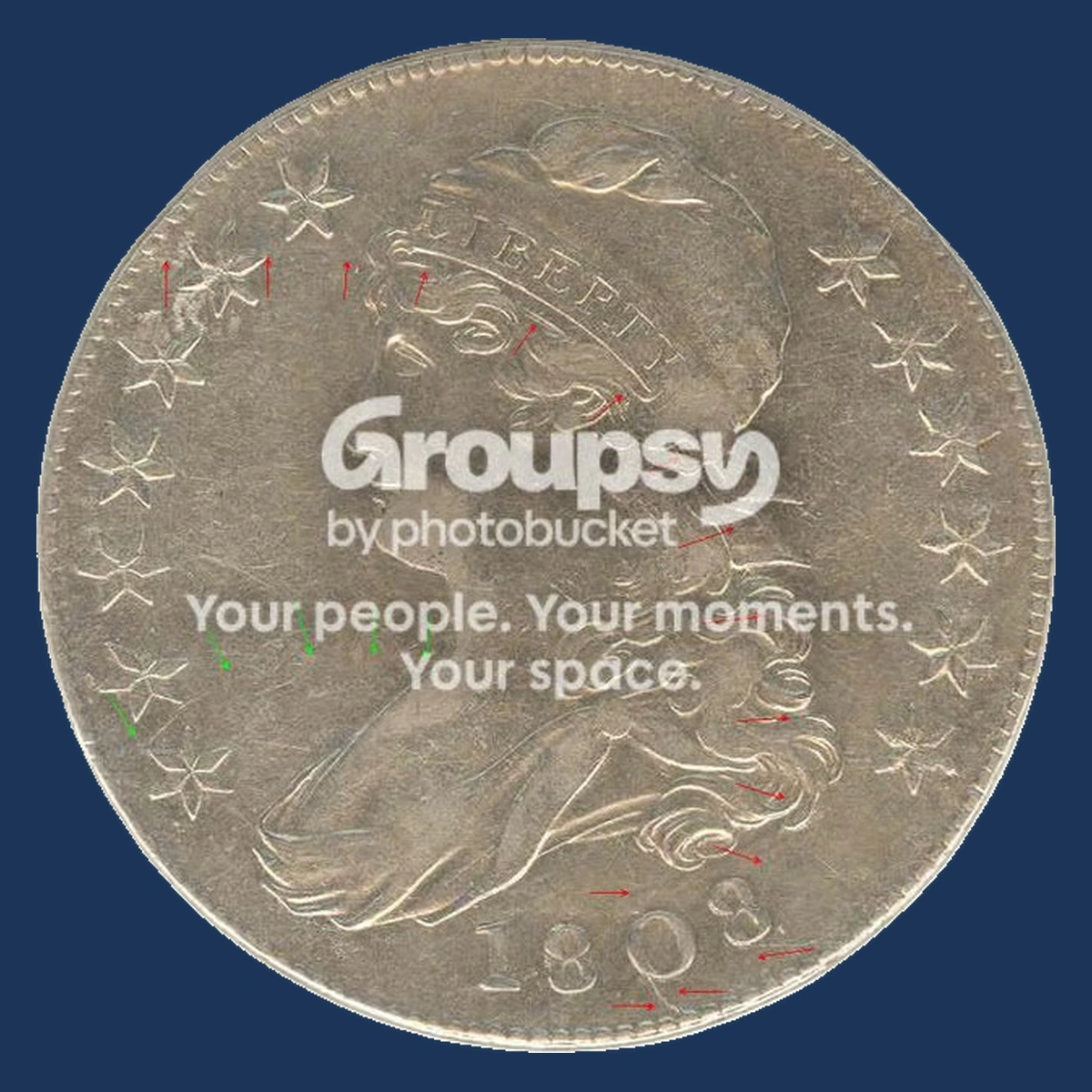
A thin extra outline follows Liberty’s neck on the reported example. Its owner discussed it in a collectors’ thread about 1808 half dollars and identified the variety as O-105.
That number names a particular set of design details. It does not establish why the neck looks doubled.
Movement during stamping can leave an extra edge. Pressure damage, reflections, or a blurred photograph can also produce a similar appearance.
The owner relayed a specialist’s response, but the discussion does not prove a doubled front die. A die is the steel stamping tool, so that claim needs more than a second-looking profile.
Estimated Value
An estimated $200–$600 suits a worn 1808 with a clear but modest second neck outline. Most of the range concerns the whole coin’s condition.
A different VG10 example is offered at $1,900 with two seller-described striking problems. That is an asking price for another coin, not a double-profile sale.
The thin neck feature should not inherit that price. Its small extra outline is a different comparison from a conspicuous combined error.
How to Identify
Use a 10× magnifier where the neck meets the flat surrounding surface. Move the light to see whether the extra contour is raised design, a flat shelf, or a damaged edge.
Check a second sharply focused photograph so camera blur does not become evidence of physical metal. Look at other design parts for related repetition without assuming they must all be doubled.
Inspect the lettered edge and the Philadelphia faces without a mint letter. A digital scale and calipers can compare an accessible coin with 13.48 grams and about 32.5 millimeters.
A second neck outline that stays visible under changing light confirms the reported appearance. Its presence alone still does not prove a doubled die.
2. 1808 Capped Bust Half Dollar Reported Rotated Reverse (Estimated Up to $800)
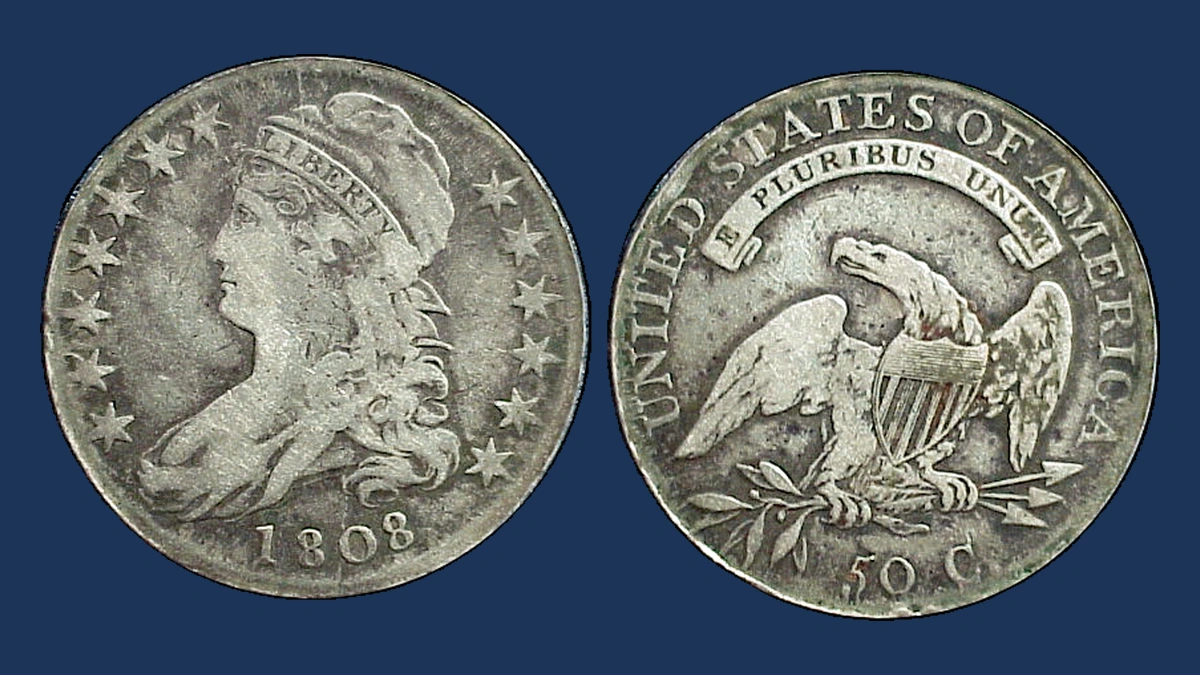
The back can lean even when both designs are centered. A collector measured about 22 degrees of rotation on examples labeled O-109 and O-109a, using an alignment tool called RotaDie.
Those labels name catalog varieties. The account uses conflicting direction words, so the angle is retained without calling it clockwise or counterclockwise.
Rotation concerns the relationship between the two sides. The stamping tools were turned relative to their normal alignment.
A photograph can mislead here. Twisting the coin during a flip, or allowing it to slide inside a case, may create an apparent tilt that the coin does not have.
Estimated Value
An estimated $200–$800 suits a worn 1808 with a confirmed tilt around the reported 22 degrees. This is an estimate, not a traced sale of those examples.
A much later 2000-P Kennedy with 75-degree rotation sold for $79 in March 2025. It was graded PCGS MS61.
That different-date comparison shows why angle alone cannot set the price. The early silver coin’s identity and preservation account for much of its value.
How to Identify
Set the front upright against a fixed vertical reference. Flip top to bottom without twisting sideways, then see whether the back ends upright as expected.
If it leans, repeat the movement and measure the angle with a protractor or alignment guide. Keep the case or coin from slipping.
The collector’s measurement supplies about 22 degrees but no settled direction. Check the lettered edge and accessible coins with a digital scale and calipers against 13.48 grams and roughly 32.5 millimeters.
The same tilt on repeated controlled flips supports a real alignment difference. Two photographs turned upright separately cannot show that relationship reliably.
3. 1808 Capped Bust Half Dollar Die Cracks and Local Die Breaks (Estimated Up to $1,500)
One 1808/7 has raised lines near the date’s bottom and the left-hand stars. Another route follows the tops of ATES on its back.
A normal-date 1808 shows a different feature: a larger raised break from the left wing toward the tail feathers. These descriptions concern separate coins.
Both record damage in the stamping dies. Silver entered a crack or missing part of the tool and left extra raised metal on the coin.
A scratch can cross the same area but has a different structure. Location becomes useful only when the line’s height and connected route match the reference.
Estimated Value
Estimated worn-coin values run from $150–$1,500, from modest cracks to clear local breaks. Remaining detail, cleaning, and surface quality affect the comparison.
An 1826 O-104 with cracks on both sides sold for $1,020 including fees in August 2025. Early Cents sold that PCGS AU58, an almost unworn coin.
It provides a recent same-series reference. The price is not a sale of either 1808 example described here, despite the similar kind of die damage.
How to Identify
On the overdate, follow the raised lines below the date and by the left stars, then check ATES. The collector’s record shows those locations.
Inspect the normal-date coin’s wing-to-tail break separately. A 10× magnifier and low light can show whether metal stands above the surface rather than forming a scratched channel.
Check a larger lump for impact damage or corrosion before assigning it to a broken die. Photograph both sides and the lettered edge.
A digital scale and calipers compare accessible coins with 13.48 grams and about 32.5 millimeters. Connected raised metal along the correct example’s route is the useful match, rather than any mark in the same general area.
4. 1808 Capped Bust Half Dollar Reported Expanded Strike (Estimated Up to $2,500)
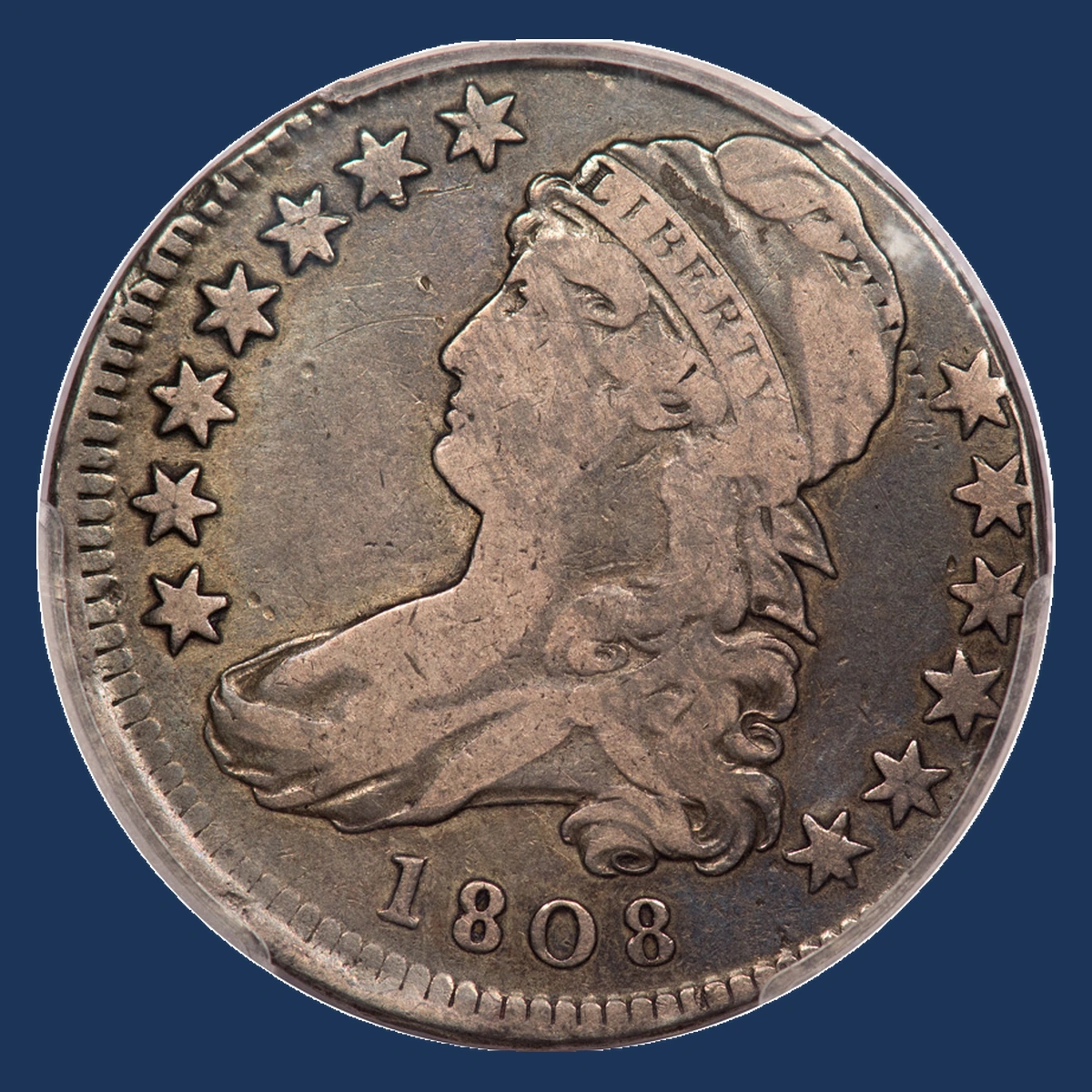
A dealer describes this worn 1808 O-106 as broadstruck, meaning abnormally spread during stamping. The same PCGS VG10 coin is also described as double struck.
Early Capped Bust halves used an open collar, a surrounding guide that did not grip the blank like a modern close-fitting ring. The usual modern explanation therefore needs care here.
Width, thickness, and edge words help test whether the coin spread unusually. Another strike may have contributed to its outline.
The description is the dealer’s claim. The PCGS numerical grade alone does not establish that the company certified either named error.
Estimated Value
The dealer asks $1,900 for the VG10 with both described features. An estimated $900–$2,500 suits a similarly worn example with clear expansion and second-strike evidence.
That is one coin, so its price must not be added to the double-strike range below. The advertised amount is an offer, not a completed sale.
Measurements and original stamped surfaces matter. The word broadstruck by itself cannot establish the stronger end of the estimate.
How to Identify
Measure width in several directions and thickness at several points with calipers. Compare with an ordinary coin of the same early type rather than judging one wide border.
About 32.5 millimeters is the normal width, with some manufacturing variation. A digital scale can compare an accessible example with its original 13.48 grams.
Inspect the lettered edge under a 10× magnifier for spreading, flattening, or later hammering. Keep the 1808 date and complete designs in the photographs.
Connect any wider outline with the way the design formed and any second impression. A wider outline with recognizable stamped detail supports the dealer’s description more strongly than rim width alone.
5. 1808 Capped Bust Half Dollar Dealer-Reported Double Strike (Estimated Up to $3,000)
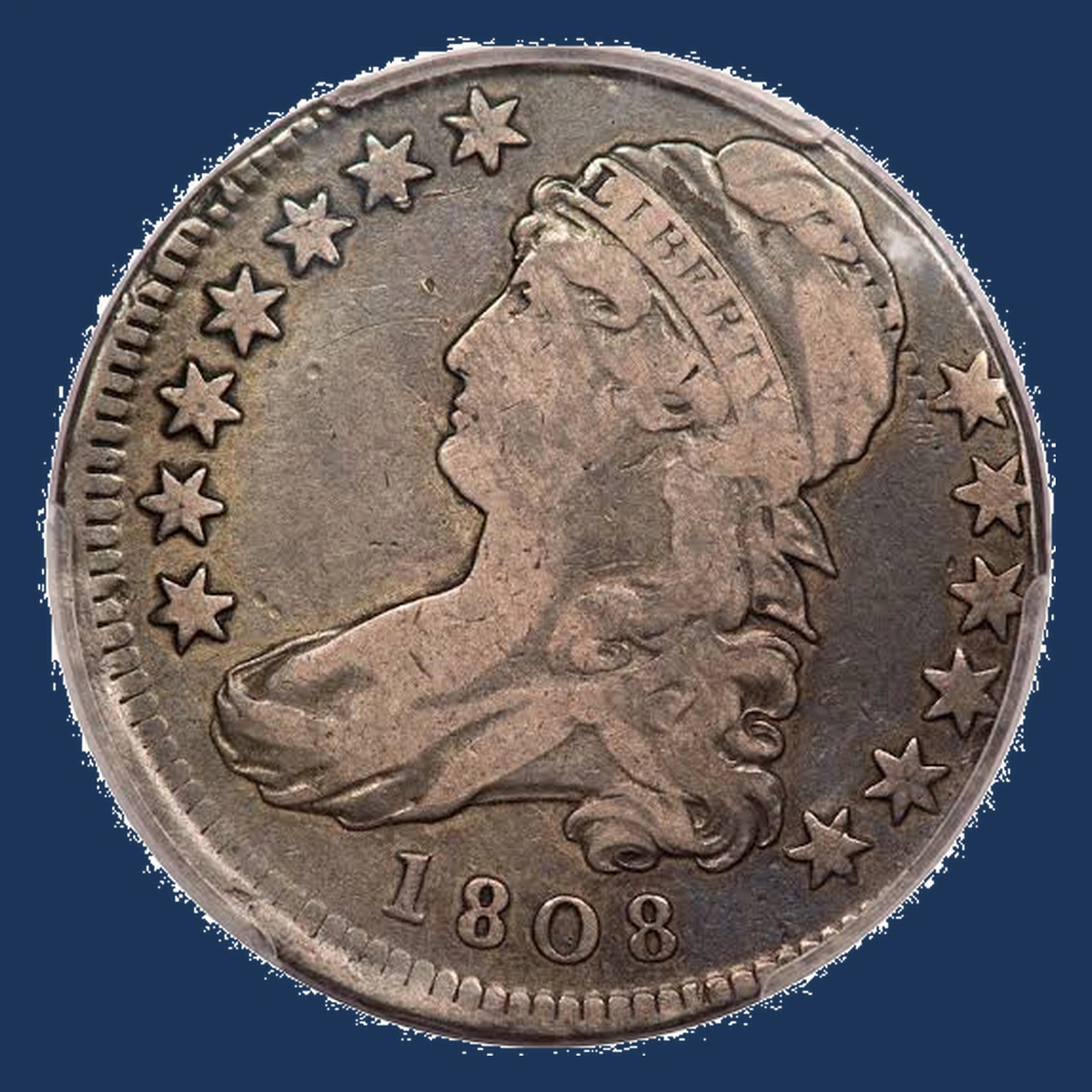
A second blow can put the design in a new position on a coin. Parts of the first impression may survive even after the next blow and years of wear.
The dealer’s listing calls the PCGS VG10 O-106 a double strike as well as an expanded strike. It gives no exact direction or place to check for the repeat.
The claim belongs to that offered coin. It does not supply grounds to invent two complete portraits or dates.
A thin neck outline or a faint transferred mark could have another cause. Several related design remains are more useful evidence.
Estimated Value
The $1,900 offer is a current asking reference for this combined-error coin. An estimated $900–$3,000 covers worn examples with a demonstrable extra impression.
The range overlaps the expansion estimate because both descriptions concern the same specimen. A clearer repeat can support more interest.
Keep the PCGS grade separate from the dealer’s error wording. Photographs showing recognizable details in a second design position matter more to the comparison than an unsupported label alone.
How to Identify
Study the whole front before choosing one doubled-looking mark. Surviving parts of an earlier design should fit a compatible second position.
Compare stars, portrait edges, letters, and border teeth with a 10× magnifier. Any evidence on the back must fit the same coin and movement.
Check for flat shelves and later impact dents that can imitate short repeated marks. A digital scale and calipers document an accessible coin against 13.48 grams and about 32.5 millimeters, including any distortion.
The edge has words rather than grooves. Two or more related design remains sharing one shifted position provide the strongest first check of the dealer’s double-strike claim.
6. 1808 Capped Bust Half Dollar Clashed Dies (Estimated Up to $4,000)
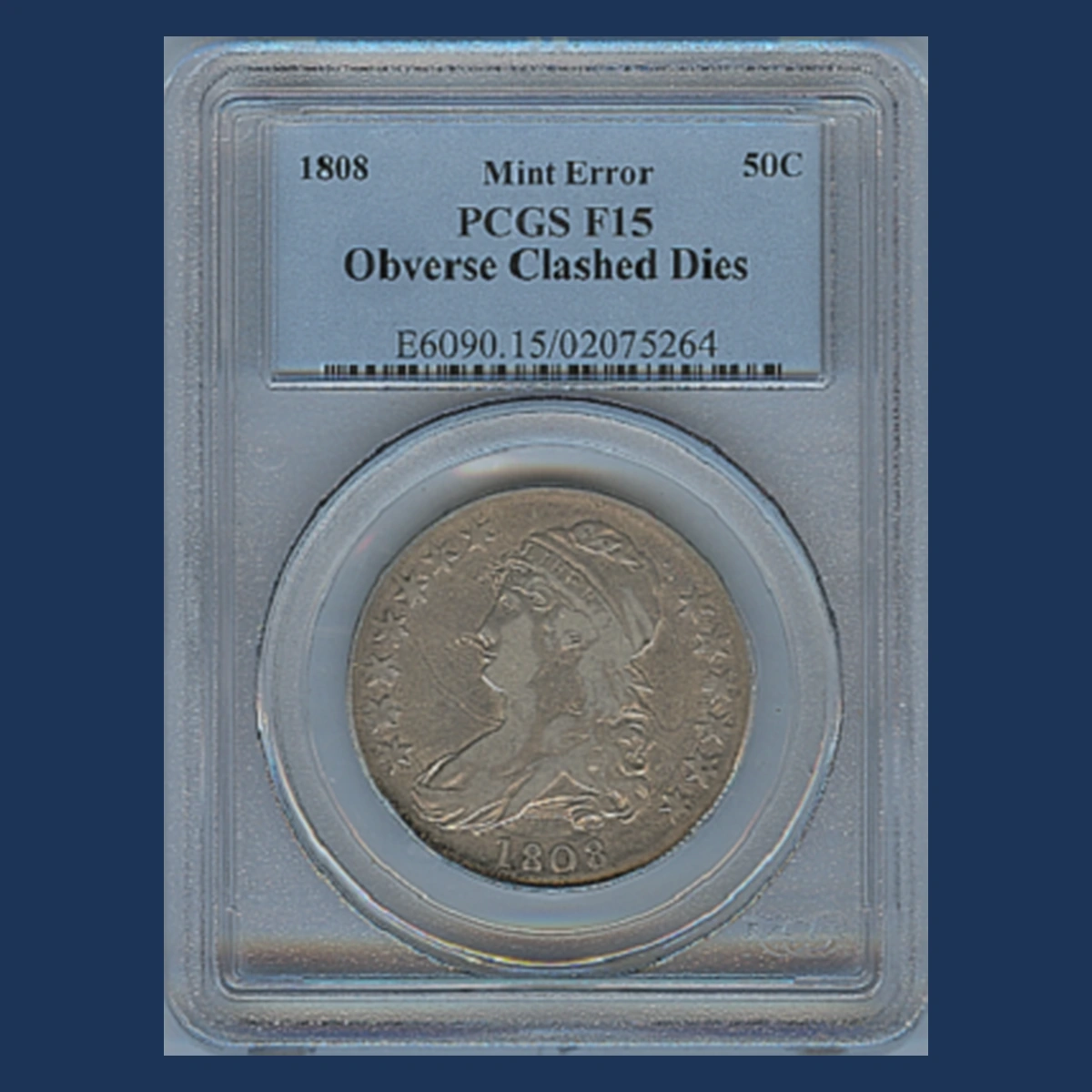
Faint shapes can appear where they do not belong after the two dies strike each other without a blank between them. Later coins then pick up traces from the opposite design.
This is a die clash. A collector reports light clashes on both sides of an 1808/7, and a separate NGC MS62 auction coin also has clash marks.
The descriptions do not map every trace to one specific spot. Each example needs its own comparison.
The known date and ATES crack routes identify fractures, not clashes. Reusing those locations as clash clues would give a different feature the wrong explanation.
Estimated Value
The NGC MS62 1808/7 sold for $2,300 in June 2002. An estimated $2,000–$4,000 suits a comparably preserved unworn overdate with clashing.
For worn coins with light traces, use an estimated $200–$900. The older sale values the whole coin, including several minting features.
The changed date, original shine, and surface condition can matter more than a faint clash. Its price is not a separate amount paid for each extra mark.
How to Identify
Compare both faces to see whether a suspicious shape resembles part of the opposite design. Mirroring one photograph can help show how the tools faced each other.
Use a 10× magnifier and several light angles. A recessed scratch, raised fracture line, or second complete impression may point to another cause.
Record the 1808/7 date, where an older 7 remains beneath the final 8, and photograph the lettered edge. A digital scale and calipers can compare accessible coins with 13.48 grams and approximately 32.5 millimeters.
A recognizable connection to the opposite design supports a clash. An unexplained line, or a location borrowed from a crack description, does not provide the same evidence.
7. 1808 Capped Bust Half Dollar Slight Off-Center Strike (Estimated Up to $4,000)
The auctioneer called the NGC MS62 example slightly off center. No percentage or direction was supplied, so it should not be described as a dramatic missing-design error.
An off-center blank sits away from the intended position between the dies. The design may then approach one edge more closely than the other.
Both sides need comparison. One uneven row of border teeth can also result from a single die being misaligned.
This 1808/7 combines the small shift with clashes and die cracks. The same nearly complete design and unworn condition remain part of its identity when any one feature is discussed.
Estimated Value
Heritage recorded $2,300 for the NGC MS62 on June 8, 2002. A similar unworn overdate has an estimated $2,000–$4,000 range.
Worn examples with a similarly modest shift may fit $250–$1,000. These are whole-coin comparisons, not a separate price for off-centering.
The clash section describes the same auction specimen. Its estimate must not be added again, because the historical buyer purchased all its features in one coin.
How to Identify
Compare border widths in full photographs of both sides. The design centers should support a displaced blank rather than only one misaligned die.
Under a 10× magnifier, separate original incomplete edge detail from border teeth worn or scraped away later. The catalog says only slightly off center, so do not borrow a percentage from another coin.
Confirm the 1808/7 date, Philadelphia origin without a mint letter, and the lettered edge. Calipers and a digital scale can compare accessible coins with the usual 32.5 millimeters and original 13.48 grams.
Consistent displacement on both faces provides the physical support for this modest claim. A single uneven border does not establish the whole striking sequence.
Conclusion
A second neck line is a surface feature; a tilted eagle concerns how the sides line up. Keeping those questions separate makes the other cracks, clashes, and shifted designs easier to compare.
Estimated whole-coin ranges span $150–$4,000. The dealer’s worn VG10 and the auction’s unworn MS62 overdate are different coins, each with several reported features; neither becomes multiple purchases because its descriptions appear in more than one section.