1997 Half Dollar Error List with Pictures

A 1997-D half dollar struck twice brought $840 in April 2018. Its second impression landed seventy percent off center, leaving a dramatic overlap.
This 1997 Kennedy half dollar error list covers estimated values from $5 to $1,500. Other examples show a raised crack line, unusual color, or metal spread around the design.
Read on to compare these features and learn which simple checks help explain what happened.
1. 1997 Kennedy Half Dollar Obverse Die Crack Error (Estimated Up to $100)
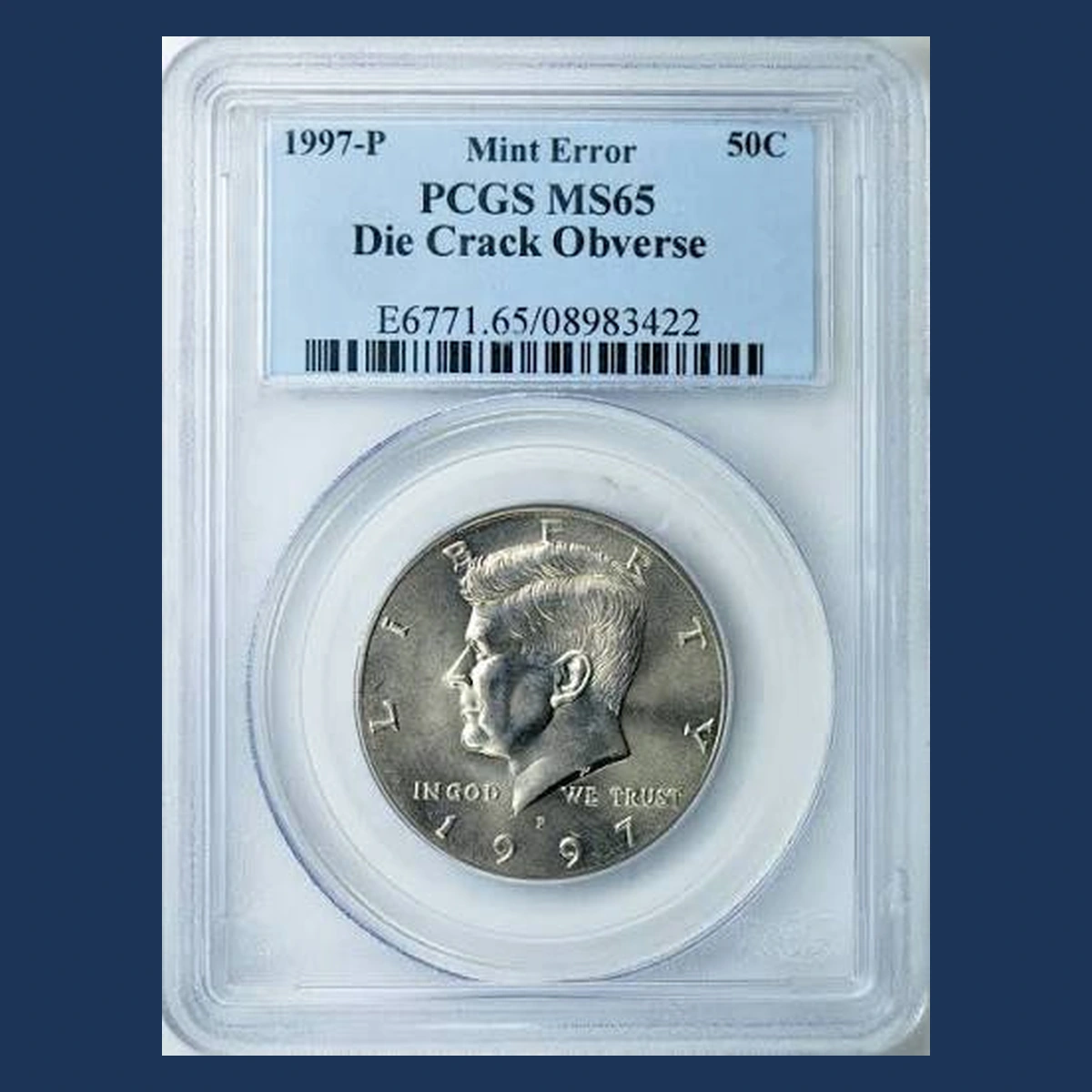
A narrow raised line on the front is the feature to look for on this 1997-P error. GreatCollections lists an example graded PCGS MS65, meaning an attractive unworn coin.
The line comes from a crack in the die, the steel tool that stamps the design. Metal enters that crack during striking and leaves a small ridge on the coin.
This does not mean the coin itself split. It also differs from a scratch cut into its surface.
The listing identifies the front as affected but does not establish an exact route for the line.
Estimated Value
Estimate $5–$100 for minor through clearly visible front crack lines on ordinary 1997-P examples. The coin’s condition and the line’s visibility influence the price.
The GreatCollections MS65 listing shows a graded example, but no public sale amount is available here. It therefore cannot supply a completed-sale figure.
A large raised break connected to the rim is more severe. Its price should not automatically be applied to a thin crack line.
How to Identify
Hold the coin still and move a lamp across the suspected line. Use a magnifier to see whether it rises above the surface or cuts into it.
A scratch can leave a small ridge along one side of a groove. Follow the whole feature rather than judging just that raised lip.
Check any endpoint near the rim against the grooves around the edge. A later impact may crush those grooves and push metal upward.
For a loose coin, use a scale and calipers to check roughly 11.34 g and 30.61 mm. Confirm the P and complete date too.
The immediate distinction is a continuous raised line without the cut groove that accompanies a scratch.
2. 1997 Kennedy Half Dollar Clipped Planchet Error (Estimated Up to $250)
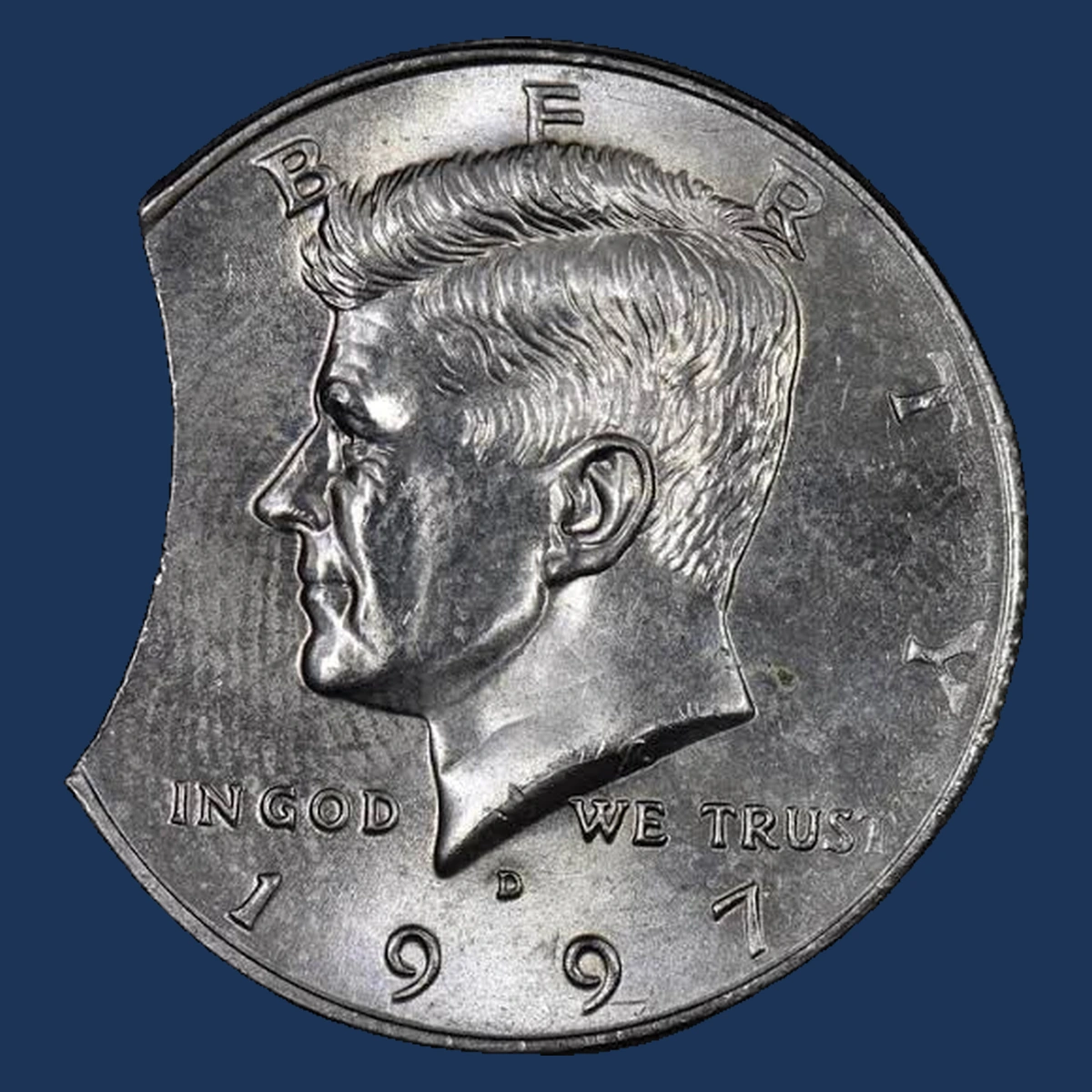
A gap in the edge can be a clip if it existed before the coin was struck. The blank, a round metal disc, was already incomplete when it entered the press.
The 1997 reports mention curved and straight clips without identifying one particular mint or gap location. Either shape needs evidence from the coin itself.
Striking can soften the rim beside a gap and sometimes weaken the opposite rim too. That opposite weakness is helpful, but it is not obvious on every genuine example.
A piece cut away after minting can copy the shape without those original features.
Estimated Value
A genuine clip on an ordinary layered-metal example has an estimated value of $25–$250. A clear small clip can be preferable to a larger gap with heavy damage.
A 1993-D curved clip graded ANACS MS64 sold for $34.74 including the buyer’s fee in August 2025. MS64 describes an unworn coin with some marks.
That nearby-year result supports the modest end of the range. It is not a sale of a 1997 example.
How to Identify
Before weighing an S-mint collector proof, identify its metal. The ordinary layered-metal version weighs 11.34 g, while a ninety-percent-silver proof normally weighs 12.50 g.
Use a scale to check for missing weight and calipers across intact metal for the usual 30.61 mm diameter. Then examine the gap with a magnifier.
Study both ends of the opening and the exposed edge layers. Saw marks or sharp burrs can show that someone removed metal after striking.
Compare the surviving grooves around the edge and look across the coin for a weak rim. Its absence does not rule out a clip.
Check first for original rim detail flowing into the gap, rather than a sharp cut through a finished design.
3. 1997 Kennedy Half Dollar Struck-Through Error (Estimated Up to $300)
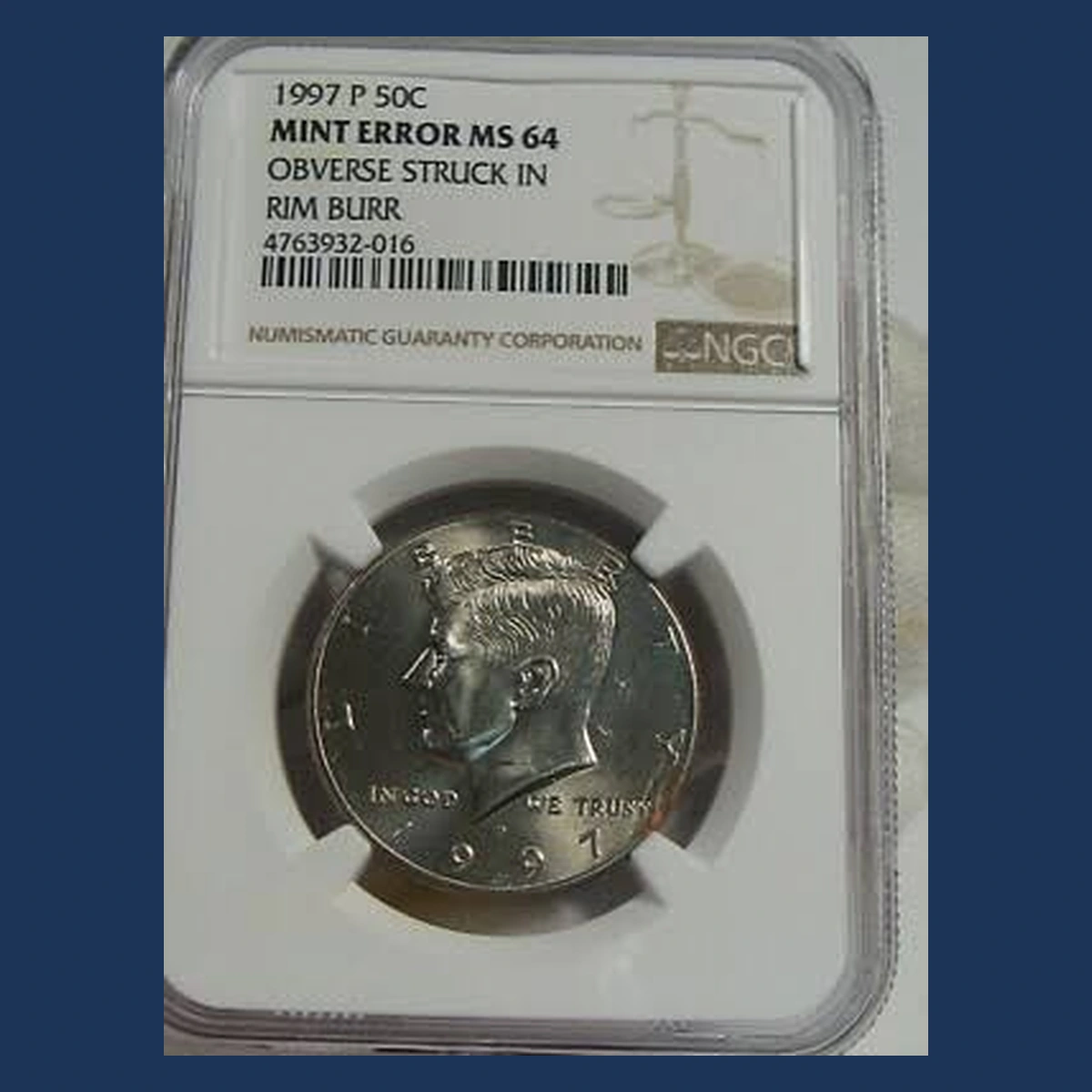
A shallow blank patch or an unusual pressed-in texture can result from a strike-through. Something sat between the stamping tool and the metal, blocking normal contact.
Soft material may only weaken the design. Firmer material can leave an impression of its shape.
Strike-through errors are reported for 1997 without an identified example showing a particular trapped material. A weak patch should therefore not automatically be called a cloth, wire, or grease error.
Check the actual coin’s surface and finish. Special collector proofs and ordinary coins can make the same kind of interruption look different.
Estimated Value
An estimated $10–$300 covers small weak patches through clear obstruction impressions on ordinary layered-metal coins. A recognizable texture or a large central mark can attract more interest.
A 1976-D half struck through material on both sides sold for $114 at Heritage in March 2025. That is a different-year comparison.
No individual 1997 sale price is established here. A proof, which is a specially made collector coin, also needs its normal value considered.
How to Identify
Tilt the coin first to make sure the mark is in the metal, not a scratch on its plastic holder. Then inspect the affected area with a magnifier.
Look for normal detail stopping at the patch and continuing beyond it. A scrape may instead push metal to one side or leave a rough damage ridge.
Check the mint and metal before using a scale. Layered-metal examples normally weigh 11.34 g; silver proofs weigh 12.50 g, with both measuring about 30.61 mm across.
Use calipers on a loose coin and inspect the edge grooves for unrelated damage. An interruption surrounded by original struck detail is the first useful clue to a strike-through.
4. 1997 Kennedy Half Dollar Improperly Annealed Planchet Error (Estimated Up to $350)
Dark color on this 1997-D example began during production rather than ordinary storage. NGC identified the coin as having an improperly annealed blank and graded it MS63.
Annealing means heating the metal before striking so it is easier to shape. A problem during that step can leave an unusual surface that remains after the design is stamped.
CONECA published a photograph of the graded example in 2022. MS63 means unworn with noticeable marks.
This differs from losing an entire outer metal layer. An otherwise intact coin can change color without losing that much weight.
Estimated Value
A 1974-D half with the same heating-related error sold for $139 at Heritage in June 2023. NGC graded it MS66, meaning well preserved and unworn.
Use an estimated $75–$350 for confirmed 1997 examples. The original surface quality and clear signs of the mint-made condition affect the value.
The published 1997-D photograph is not a sale record. Ordinary darkening during storage should not receive the same premium simply because it looks similar.
How to Identify
Compare the surface with the published NGC example, including the texture across the design. Darkness by itself cannot show when or where heating occurred.
Use a magnifier to look for corrosion, coating, or blisters that might suggest a different cause. Inspect the edge grooves and the boundaries between the metal layers.
A scale reading near 11.34 g supports a full-weight ordinary blank rather than a large missing layer. Calipers should show about 30.61 mm.
These measurements do not prove a heating error, so keep them together with the surface evidence. The practical first check is a match to the confirmed coin’s original texture, not just its dark color.
5. 1997 Kennedy Half Dollar Broadstrike Error (Estimated Up to $500)
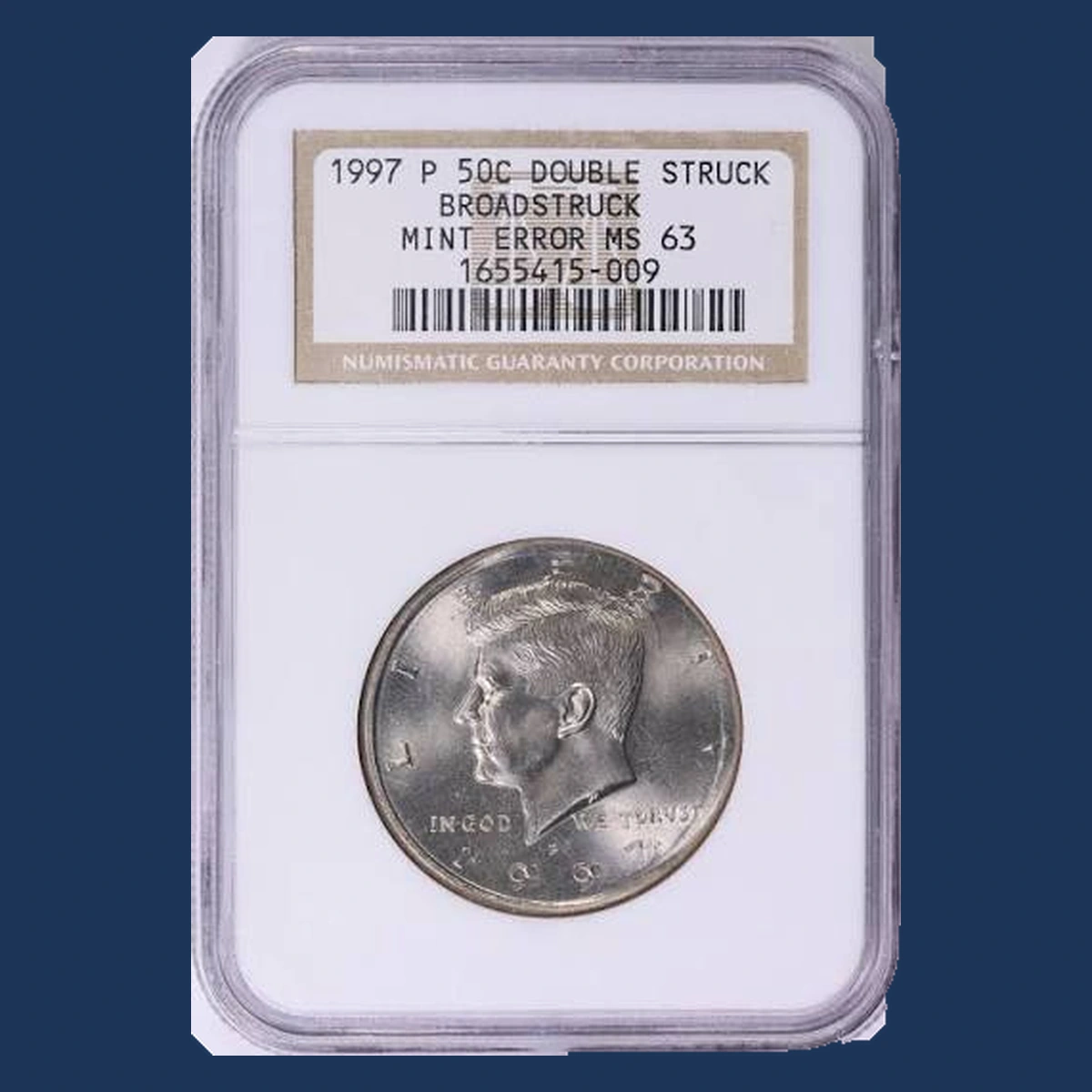
Extra metal surrounds the full design on the known 1997-P broadstrike. The coin spread because the retaining ring did not hold it within its normal diameter.
Heritage also describes this example as struck twice after a slight turn. The widened shape and overlapping designs are two features of the same coin.
A plain broadstrike does not need a second impression. Its main clues are the complete picture and original metal spread around it.
Later flattening can also widen a coin, but crushes existing details. A broad border alone cannot tell you which happened.
Estimated Value
An ordinary broadstrike of similar collector quality has an estimated range of $100–$500. A 1990-P graded ANACS MS61 sold for $192 in March 2025.
The actual 1997-P NGC MS63 brought $460 at Heritage in April 2006. Both grades describe unworn coins, with visible marks.
The $460 sale covers its broadstrike and double strike together. Do not count that price twice when valuing the two features on the same coin.
How to Identify
Check the expanded edge before studying the overlap. Use a magnifier to look for natural outward spreading and changes to the normal edge grooves.
Measure the wider directions with calipers against the ordinary 30.61 mm diameter. A scale should usually stay near 11.34 g because spreading need not remove metal.
Now follow the outer design around both sides. Every intended feature should remain on the coin, even if the border looks uneven.
Flattened details or fresh grinding require another explanation. On the documented Philadelphia coin, the overlapping pictures are an additional feature to examine separately.
A complete design inside a naturally expanded outline is the first check for the broadstrike itself.
6. 1997 Kennedy Half Dollar Missing Clad Layer Error (Estimated Up to $600)
A copper-colored face can result from a missing outer layer, not just a change in color. Ordinary Kennedy halves have copper-nickel coverings over a copper core.
Losing one covering removes metal and exposes that core. A heating-related color change on an intact coin may leave its weight nearly normal.
Missing layers are reported for 1997 without a particular mint or affected face established here. Each coin needs its own weight and edge examined.
This category concerns the layered-metal coins, including those collector proofs made that way. The year’s ninety-percent-silver proofs use a different composition.
Estimated Value
Estimate $150–$600 for a confirmed missing-layer 1997 example in ordinary collectible condition. A clear exposed face and well-preserved struck details can make it more appealing.
A 1974-D missing its front layer sold for $432 in March 2023. NGC graded that unworn coin MS64 and recorded a weight of 9.34 g.
That is a different-year comparison. Its exact weight is not a rule that every genuine 1997 missing-layer coin must meet.
How to Identify
Inspect the edge layers with a magnifier before judging the copper color. Look for a missing covering on one face and its intact counterpart on the other.
The usual layered-metal weight is 11.34 g. Use a scale to check the loss, keeping the normal 12.50 g silver proof separate from this comparison.
Both versions measure about 30.61 mm with calipers, so diameter alone cannot identify the metal. Check the edge grooves and the exposed face for scraping or grinding.
A light coin with an abraded surface may have lost metal after minting. Look first for an actual absent layer together with lower weight and undamaged struck detail.
7. 1997 Kennedy Half Dollar Off-Center Strike Error (Estimated Up to $650)
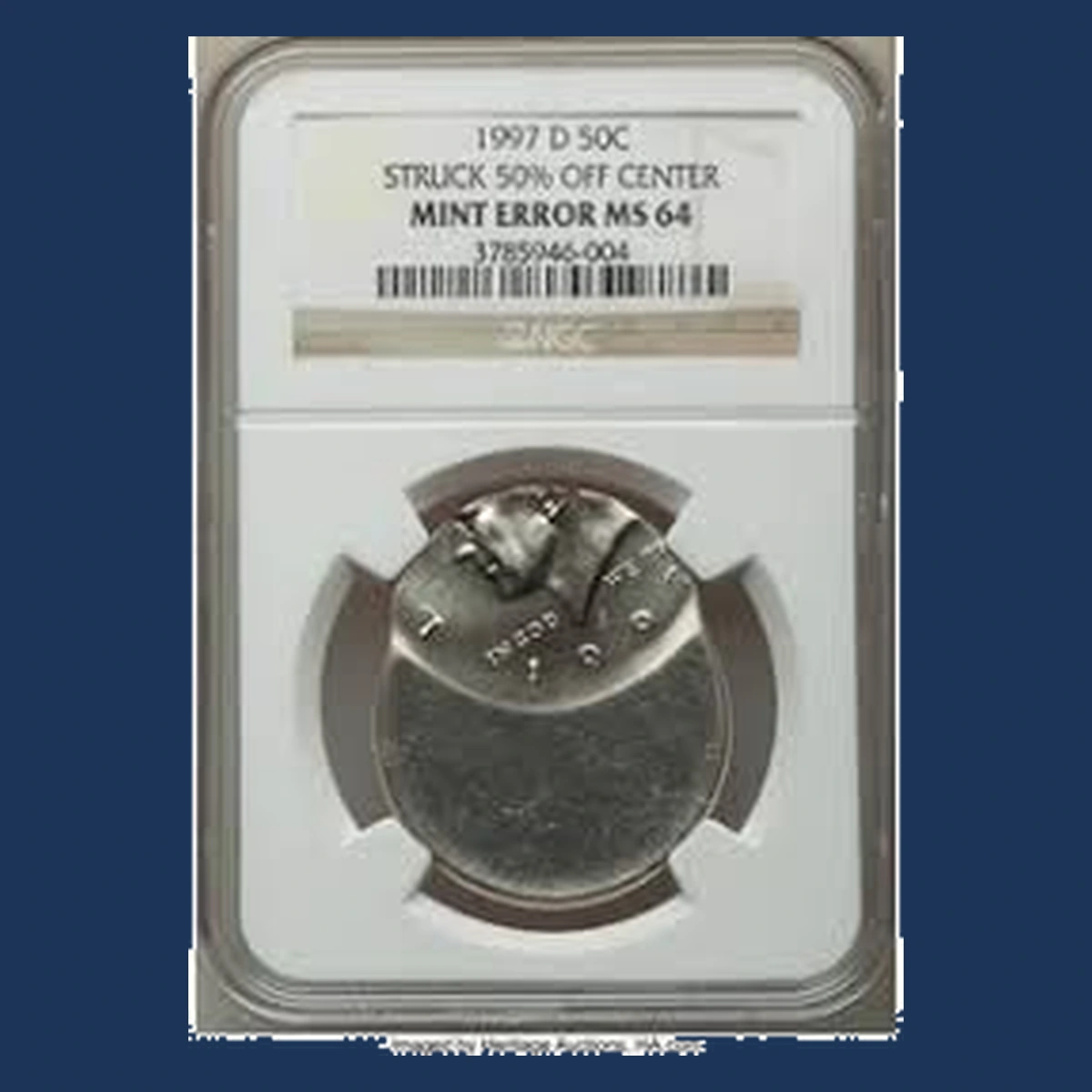
The known 1997-D example is described as off center toward ten o’clock. That tells you a direction, not the percentage of the design affected.
Its metal disc sat partly outside the stamping tools. Only the overlapping area received the picture, leaving unused metal beside missing outer details.
Both faces should show effects of the same shifted position. The coin was graded NGC MS64, meaning unworn with some marks.
This is separate from the Denver coin struck twice with its second impression seventy percent off center. A shifted single strike does not require an overlapping picture.
Estimated Value
Coin World records $408 on April 16, 2021 for the 1997-D NGC MS64 off-center example sold by Heritage. This supports an estimated $75–$650 range for ordinary through especially attractive examples.
A 1990-P struck ten percent off center brought $198 in September 2025. It was graded NGC MS66, a better-preserved unworn grade.
That later sale is a different-year comparison. Its ten-percent measurement must not be applied to the 1997-D coin.
How to Identify
Keep Kennedy upright and compare the coin with the auction photograph. Check the described ten-o’clock direction without assuming it means a ten-percent shift.
Find the D and complete date, then look at the missing outer design on the back. The two faces should agree about the movement.
With a magnifier, examine plain metal beside the stamped picture. It should be an original unstruck surface, not an area smoothed down later.
Inspect remaining edge grooves and use a scale against 11.34 g. Calipers can record the outline against the usual 30.61 mm diameter.
A single displaced picture on each side, with matching untouched metal beside it, gives the quickest first confirmation.
8. 1997 Kennedy Half Dollar Double Strike Error (Estimated Up to $1,500)
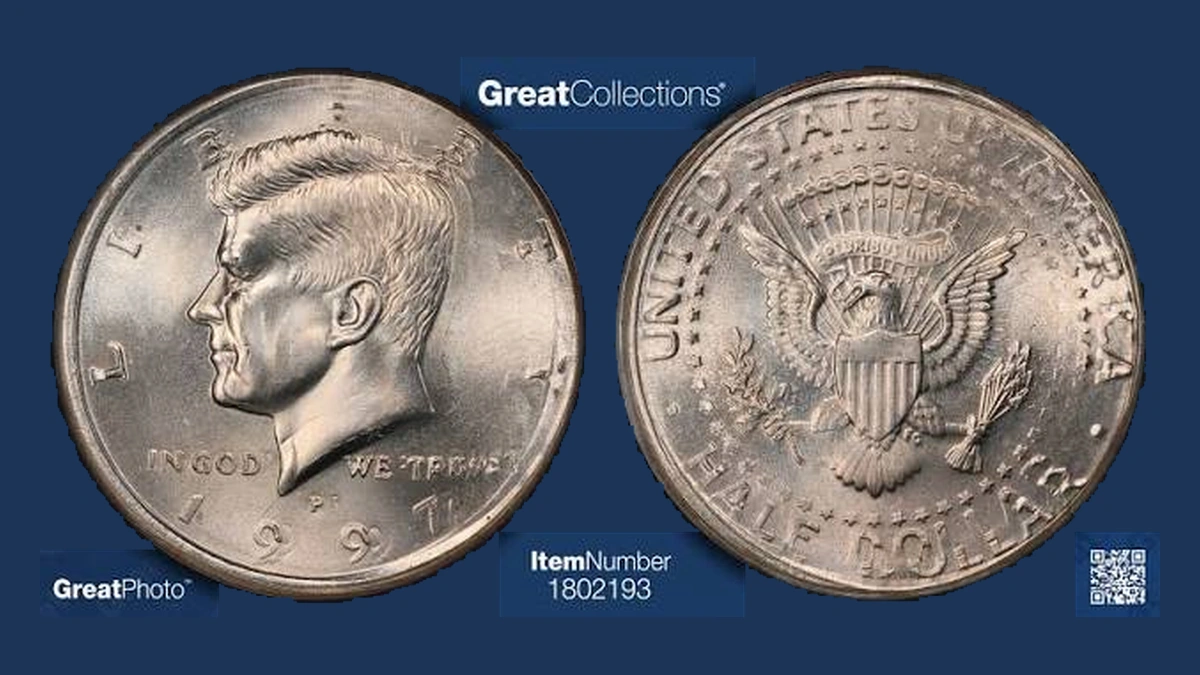
The Philadelphia example has two close impressions after a slight turn. The Denver example has its second impression seventy percent off center, creating a much larger shift.
Both received another strike after their first pictures formed. The amount of movement explains their different appearances.
The Philadelphia coin also spread outside the retaining ring. That extra feature should not be copied onto the Denver coin without evidence.
Neither is the same as a doubled die. In that case, the steel stamping tool already carries doubled details; the coin does not need another strike.
Estimated Value
Recorded sales include $460 for the Philadelphia coin in April 2006 and $840 for the Denver example in April 2018. An estimated $250–$1,500 covers differences in condition and how clearly both impressions show.
A 1998-P double strike with a broadened second impression brought $317.20 in June 2026. CACG graded that different-year coin MS64, meaning unworn with some marks.
Compare the actual overlap and surfaces. Two strikes do not create one fixed premium.
How to Identify
Find parts of both designs with a magnifier and follow them across the coin. The repeated pieces should fit a single explanation for movement between strikes.
The Philadelphia description specifies a slight turn. The Denver coin needs a much larger displaced second picture, rather than the same close overlap.
Inspect the edge grooves and spreading for effects that fit those strikes. Use a scale against 11.34 g and calipers against 30.61 mm, allowing for expansion.
A single flat shelf beside a letter does not prove two blows. Start with several overlapping design features that move together; they reveal another strike more quickly than one doubled-looking letter.
Conclusion
Estimated values of $5–$1,500 cover these 1997 errors, from a narrow raised line to two overlapping strikes. Each needs a different check.
Weigh a coin with suspicious color, study the edge around missing metal, and compare both pictures on a possible double strike. Condition still affects the price.
When one coin has both spreading and repeated strikes, value the whole example rather than adding separate sale prices for its features.