1992 Half Dollar Error List with Pictures

Doubled letters in WE TRUST helped a 1992-S silver proof reach $6,750 at GreatCollections in February 2026. That top-graded collector coin is the recognized variety called FS-101.
The 1992 half dollar errors below have estimated values from $5 to $7,500. Read on to check raised lines, wide outlines, missing metal, and a mark left by a piece of grooved coin edge, while keeping silver and ordinary-metal coins separate.
1. 1992-P Kennedy Half Dollar Reported Die Crack (Estimated Up to $20)
A thin line standing above the surface is the feature to look for in the 1992-P crack report. A crack in the steel stamping tool can fill with metal and leave that raised line on the coin.
The Philadelphia year list names this category without a photographed example or exact path. It does not establish a line through Kennedy’s head or any particular letter.
The difference from a scratch is important. A scratch cuts or pushes metal after the coin is finished, while a tool crack creates a ridge as part of the original strike.
Estimated Value
The 1992-P reference estimates $5–$20 for a minor crack. That suits a small but identifiable raised line on an otherwise ordinary coin, whether worn or unworn.
This is a guide range, not a recorded sale of a specific example. A faint short ridge fits closer to the lower end.
A cleaner coin with an easy-to-follow line can fit higher. The range does not cover a large lump joined to the rim after a major tool break.
How to Identify
Confirm the P below Kennedy’s neck and inspect the edge grooves. A scale and calipers should show roughly 11.34 grams and 30.61 millimeters for this regular-metal coin.
Next, find both ends of the line under a magnifier. Follow its whole route, especially where it meets a letter or part of the portrait.
Move the light from side to side and look for a raised ridge rather than a groove with displaced metal beside it. Do not scrape at the mark.
A continuous ridge formed with the surrounding design gives the clearest initial evidence of a crack in the stamping tool.
2. 1992-P Kennedy Half Dollar Reported Broadstrike (Estimated Up to $40)
A coin wider than usual can still show all of its design. This combination points toward a broadstrike.
A metal ring normally limits how far the round disc spreads during striking. Without that support, pressure can push metal beyond the normal outline.
The 1992-P reference reports broadstrikes without a measured example. Someone can also widen a finished coin by flattening it.
Check the design as well as the width. An off-center strike instead loses design beyond one edge and leaves blank metal elsewhere.
Estimated Value
The published guide estimates $15–$40 for a modest genuine 1992-P broadstrike in ordinary worn to unworn condition. It assumes a clearly widened outline with the full design present.
This is not a recorded price for a photographed 1992-P example. The basic range covers a fairly small visual change.
Dramatic spreading, unusually high condition, or another error on the same coin would need a closer comparison. Those features should not be priced from this simple category alone.
How to Identify
Place a normal half dollar beside the candidate and use calipers across several different widths of it. Compare the readings with 30.61 millimeters rather than judging only one broad-looking rim.
The design must remain complete, including the outer lettering. A missing part of the picture beside untouched metal suggests an off-center strike instead.
Use a scale to compare 11.34 grams, then inspect the edge with a magnifier for unusual grooves, hammer marks, or flattening. Verify the 1992 date and P mintmark.
A complete design inside naturally spread metal is the essential first distinction from a coin enlarged by damage after minting.
3. 1992 Kennedy Half Dollar Reported Die Clash (Estimated Up to $75)
A small shape from the eagle can appear where only the front design should be, or the reverse can happen. Collectors call such transferred details clash marks.
They start when the steel stamping tools meet with no blank between them. The blank is the round metal disc used to make the coin.
The 1992 reports do not name a mint, finish, or exact transferred shape. Smooth spaces near the portrait and eagle are places to inspect, but an unusual line still needs a recognizable match to the opposite design before it supports a clash explanation.
Estimated Value
Estimated value is $15–$75 for a subtle, identifiable clash on an ordinary layered-metal coin. This follows the year guide’s modest-feature range.
A clear transferred shape is easier to compare and can support more interest than a barely visible mark. The source gives no sale price for a named specimen.
Keep this estimate within its stated scope. A silver proof or a dramatic coin with several errors requires a comparison suited to that different coin.
How to Identify
Compare a normal coin of the same finish first, so ordinary lines and changes in color are not mistaken for extra design. Use a magnifier to follow the suspected shape.
Then compare it with the opposite side in the position the stamping tools would have faced. Several connected outlines are better evidence than one suggestive line.
Record the mint and metal type, and inspect the edge grooves. A scale and calipers can compare 11.34 grams for regular metal or 12.50 grams for silver proof, both about 30.61 millimeters across.
A specific opposite-design match explaining the mark’s shape and position provides the useful first conclusion.
4. 1992 Kennedy Half Dollar Reported Clipped Planchet (Estimated Up to $100)
A curved gap in the edge can form before the coin receives its design. The metal disc was incomplete when it entered the press.
On some genuine clips, the rim opposite the gap is also weak. This supports the explanation but cannot prove it by itself.
The 1992 references report clipped planchets, meaning incomplete coin blanks. They name no particular mint, finish, or clip size.
The gap must show that metal was missing before stamping, rather than cut away afterward. The report also does not establish a silver-proof example.
Estimated Value
The guide estimate is $25–$100 for modest genuine clips on ordinary 1992 coins, from worn through typical unworn condition. Size and clear signs of manufacture affect value.
The amount applies to the whole coin. It is not a fixed price for each percentage of missing metal.
No specific mint or sale is implied. A silver-proof example would need a separate comparison after its metal, finish, and original missing segment had been established.
How to Identify
Start at the two ends of the gap, where the normal edge meets the missing section. Examine how the nearby rim and design formed around that boundary.
A magnifier helps reveal sawing, filing, or a fresh cut. Then look at the opposite rim for supporting weakness without using that clue alone.
Use a scale against 11.34 grams for regular metal or 12.50 grams for silver proof. Calipers can compare an intact width with 30.61 millimeters, while the remaining edge grooves, date, and mintmark identify the coin.
Compatible original striking at both ends of the gap gives the quickest checkpoint before considering opposite-rim weakness.
5. 1992-D Kennedy Half Dollar Struck Through Reeding (Estimated Up to $450)
A row of marks can form when a small piece of grooved coin edge gets caught during striking. Heritage identified that cause on the front of a 1992-D graded NGC MS64.
MS64 means no wear but some marks. The listing does not say that the fragment remains attached.
The trapped piece pressed its edge-groove pattern into the surface as the coin was struck. Another coin hitting it after minting can also leave a row of dents.
Examine where the marks meet the original design. Their tooth-like appearance alone cannot show which event caused them.
Estimated Value
The NGC MS64 sold for $336 at Heritage on July 15, 2021. Estimated value is $200–$450 for a similarly preserved example with a clear impression.
That result concerns this specific obstruction. It does not price every row of dents from another coin’s edge.
Clear pattern detail and good surfaces matter. A different object, an attached fragment, or a much larger affected area would need its own comparison.
How to Identify
Confirm the D below the neck and compare the front with the cataloged example. Its photographs supply the precise location, which the title alone does not describe.
Inspect both sides and the edge for later damage. A scale and calipers should show about 11.34 grams and 30.61 millimeters, with normal grooves around the remaining edge.
Study the patterned depression with a magnifier under changing light. Compare the spacing and depth of the marks and look for lips pushed up by separate later impacts.
A patterned impression formed with the original surface, rather than several independent dents, is the key first distinction.
6. 1992 Kennedy Half Dollar Reported Off-Center Strike (Estimated Up to $600)
A blank area remains where the stamping tools did not reach, while some of the design runs beyond the opposite edge. A readable date may survive even when other outer details are missing.
The 1992 guide includes off-center strikes, but its percentages are general examples rather than measurements of one identified coin. The actual mint and finish must come from the coin itself.
An uneven rim on only one side may instead mean that one stamping tool shifted. A rotated back is different again, changing the design’s direction rather than its position on the metal.
Estimated Value
A slight shift on a regular-metal coin has an estimated $25–$100 range. Stronger, clearly dated unworn examples have an estimated $100–$600 range.
A 1976 Kennedy struck fifteen percent off center sold for $480 at Heritage in December 2025. NGC graded it MS64, meaning no wear but some marks.
That later sale supports the more obvious-error range. Neither its percentage nor its condition establishes what a particular 1992 coin looks like.
How to Identify
Match the design missing at one edge with the untouched metal elsewhere. Both should result from one shift of the round disc, rather than from metal cut away later.
Use a magnifier at the boundary and around any surviving edge grooves. Compare both faces, since a misleading photograph or one uneven border can suggest an error that is not present.
Record the date, mint, and finish before weighing and measuring. A scale and calipers can compare 11.34 grams for regular metal or 12.50 grams for silver proof, and the normal 30.61-millimeter diameter.
Corresponding missing design and original blank metal on both sides supply the immediate positioning test.
7. 1992-S Silver Kennedy Half Dollar Doubled Die Obverse FS-101 (Estimated Up to $7,500)
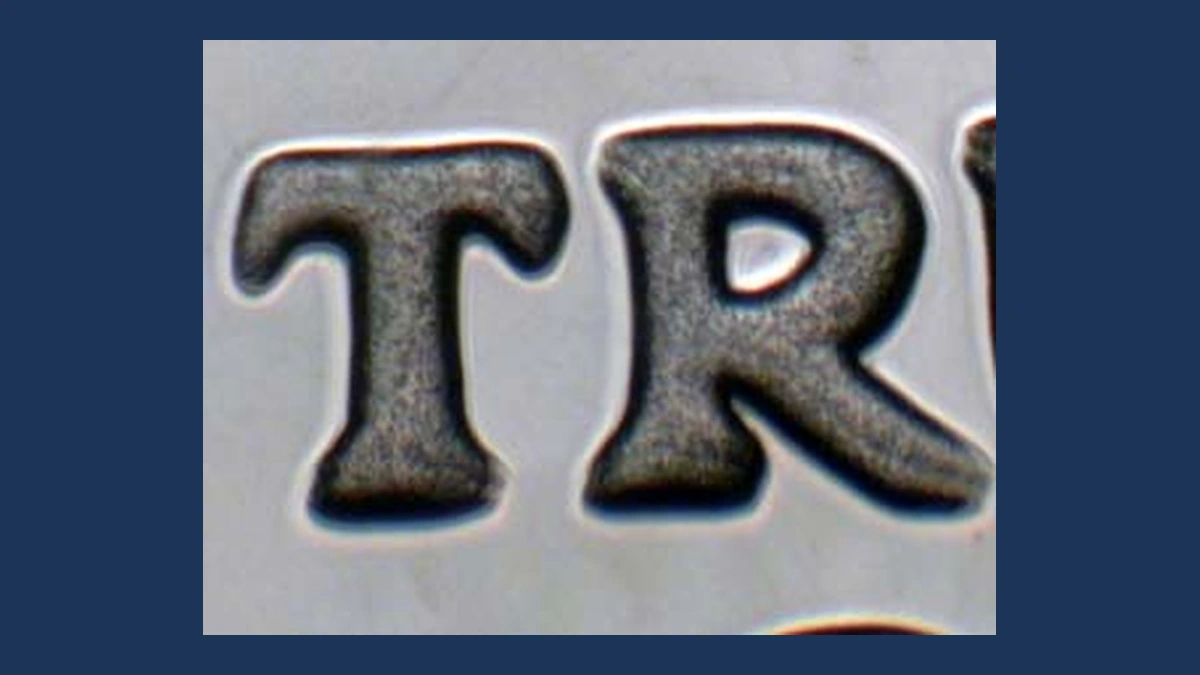
WE TRUST is the clearest place to start on the 1992-S silver doubled die called FS-101. Extra shapes also appear in the final date digits, parts of LIBERTY, and the reported S mintmark pattern.
The doubling was already present in the steel stamping tool. The repeated blows used to make a proof, a specially produced collector coin, do not automatically create this variety.
Silver is part of the identification. San Francisco also made ordinary-metal proofs in 1992, so an S mintmark and reflective surfaces alone do not establish that a coin is the silver FS-101.
Estimated Value
GreatCollections records $6,750 for an NGC Proof70 Ultra Cameo in February 2026. A PCGS Proof69 Deep Cameo sold for $2,585 in September 2016.
Grades 68–69 with strong frosted-to-mirrored contrast have an estimated $2,000–$3,500 range. A Proof70, with no visible imperfections at standard grading magnification, has an estimated $5,000–$7,500 range.
These prices require the identified silver variety. They do not apply to ordinary proofs or merely doubled-looking letters.
How to Identify
Check the metal before the letters. A scale should agree with the silver proof’s 12.50 grams rather than the regular-metal proof’s 11.34 grams.
Calipers can confirm the shared 30.61-millimeter diameter, and the edge should have grooves. Avoid touching the reflective surfaces.
Under a magnifier, compare WE TRUST with the identified silver FS-101 example, then examine the same extra shapes at 92, RTY, and the mintmark. Move the light to separate raised duplicated shapes from reflections or flat shelves.
A confirmed silver-proof identity followed by the distinctive WE TRUST doubling is the most efficient opening check for this particular valuable variety.
Conclusion
Estimated values span $5–$7,500, with the top end reserved for exceptional silver FS-101 proofs. The $336 grooved-edge strike-through belongs to a different error and condition level.
For the broader reports, check the actual coin rather than assuming a mint or mark location. Weight and finish separate silver proofs from regular-metal issues, while the shape and position of each feature help distinguish a minting mistake from later damage.