1981 Half Dollar Error List with Pictures

A Lincoln cent picture sits over an earlier Kennedy design on one remarkable 1981-P half dollar. The bowl-shaped coin sold for $13,200 in July 2021.
This 1981 Kennedy half dollar error list starts with much smaller features, including a bump near Kennedy’s ear. Estimated ranges span $1–$20,000.
Follow the fourteen types below to see how the weight, edge, and surviving pictures help explain each coin, from a minor raised mark to overlapping designs from different denominations.
1. 1981 Kennedy Half Dollar Raised Ear Bump (Estimated Up to $50)
A small bump beside Kennedy’s ear has more than one proposed explanation. The original discussion considers either a minor chip or flat doubling caused during striking.
A chip begins when a fragment breaks from the die, the steel tool that stamps coins. Metal fills the hole and leaves a raised lump on later coins.
Movement during striking can instead leave a flattened step along the existing ear outline. A hit after minting may also push metal upward.
The visible bump is the starting point. The report does not establish a crack across the portrait or settle which explanation applies.
Estimated Value
Allow an estimated $1–$50 for this reported feature. The upper end requires a clearly identifiable mint-made chip on an attractive coin; flat strike doubling usually adds little.
A different 1981-P with a major die break sold for $23 in August 2021. Its AU55 grade means slight wear.
That larger break shows why the estimate remains modest. Its sale does not establish the cause or price of the separate Denver ear bump.
How to Identify
Turn the coin under low light while looking through a 10× magnifier. Does the bump stay rounded, or does it become a flat step beside the normal ear?
An irregular raised mound fits a chip better than a shelf that follows an existing edge. Inspect nearby hair and cheek for a hit that pushed metal upward.
Keep enough portrait in the photograph to show those relationships. A tight crop can make a small bright spot look more convincing than it is.
Check the edge grooves, then use a scale and calipers when safely accessible against 11.34 grams and 30.61 mm.
Return to the ear’s shape: rounded added relief, a flat displaced edge, and an impact lip require different explanations.
2. 1981 Kennedy Half Dollar Misaligned Obverse Die (Estimated Up to $250)
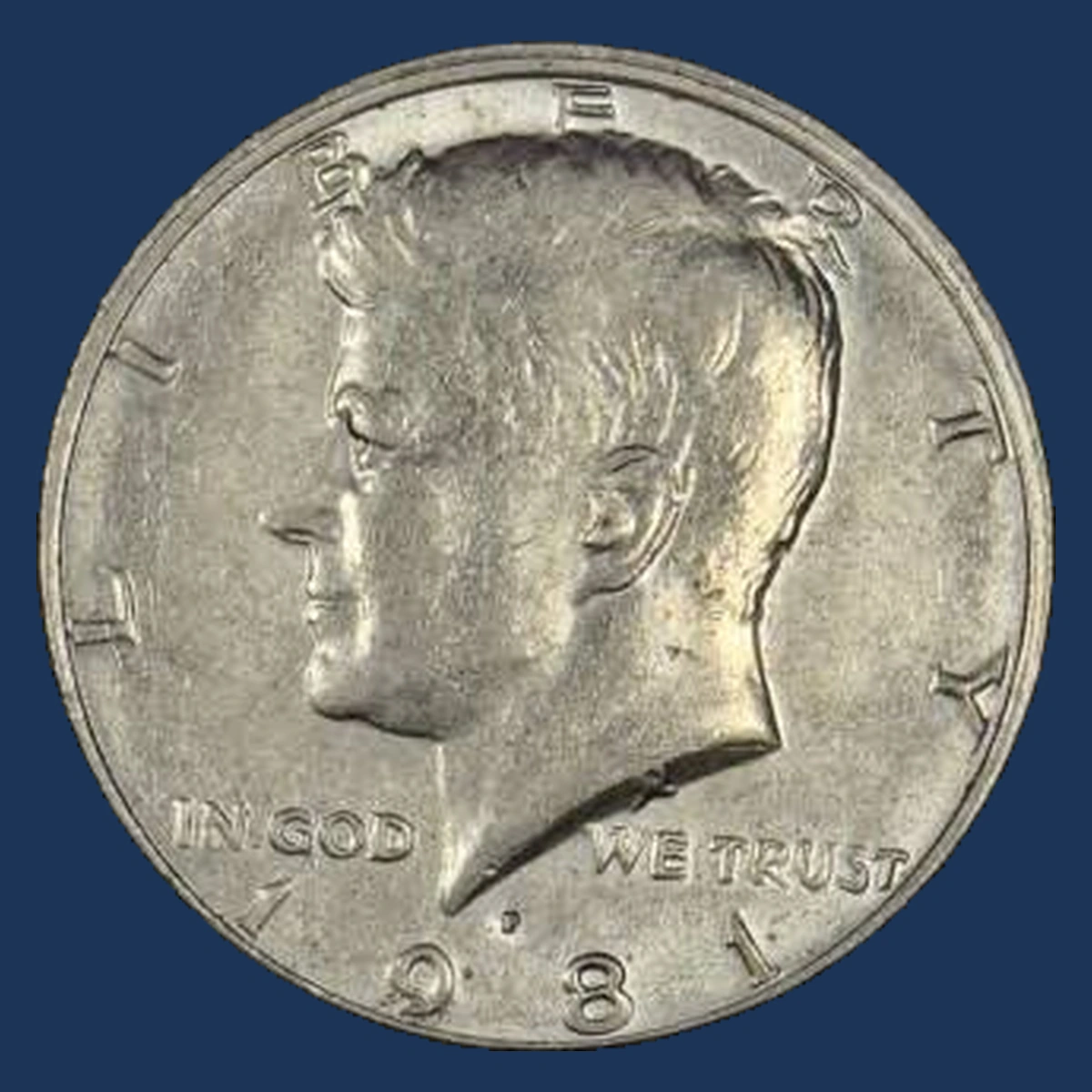
The cataloged 1981-P has its front picture displaced by about ten percent. The listing specifically says it does not have a partial-collar strike.
One stamping tool sat to the side of its normal position. That can shift its picture while the opposite tool remains centered over the blank.
This differs from an off-center strike, where the blank sits wrongly beneath both tools. A wide border on one face does not establish the same mistake.
The front and back need to be compared. The edge should also be checked separately rather than assuming every shifted picture comes with another edge error.
Estimated Value
The estimated range is $25–$250. Clear one-face displacement and a readable date support the stronger values.
The historical ten-percent listing has no sale result assigned here. A separate 1983-P was offered uncertified at $9.50 with minor misalignment and a mark from retaining-ring contact.
That is a different-year asking price for a different combination. It offers only a low-end comparison, while the more obvious reported 1981 shift allows a wider range.
How to Identify
Compare equal-sized photographs of both faces with the entire rims visible. A shifted front beside a substantially centered back points to one displaced tool.
A bare crescent affecting both pictures suggests an off-center blank instead. Do not let a cropped narrow border hide that difference.
The source excludes a partial collar, but inspect the circumference under a 10× magnifier for any separate step. Such a feature would need its own evidence.
Use calipers and a scale when safely accessible against 30.61 mm and 11.34 grams. Check the edge grooves and layered-metal construction.
The defining comparison is the front-to-back difference in centering, with one picture displaced more than the other on the same blank.
3. 1981 Kennedy Half Dollar Curved Clipped Planchet (Estimated Up to $350)
A curved clip leaves part of the blank missing before the coin receives its pictures. Reports include both Philadelphia and Denver halves from 1981.
The guide does not identify one certified example, gap position, or percentage. Each coin must provide those details itself.
The curved boundary can begin when a punch overlaps a hole already cut from the metal strip. The later strike shapes the remaining metal around that gap.
Someone can also cut or grind a finished coin into a similar outline. Its surface history will differ, so the silhouette alone is not enough to identify an original clip.
Estimated Value
Estimate $25–$350 for clearly recognizable curved clips. Greater visible size, preservation, and a readable date and mint letter can support more interest.
A 1993-D curved clip sold for $34.74 including fees in August 2025. Its MS64 grade describes unworn condition with some marks.
That different-year result anchors the modest end of the market. A larger, attractive 1981 clip may bring more, but an incomplete shape alone does not justify the same premium.
How to Identify
Inspect the missing curve under a 10× magnifier, especially where it joins the intact rim. Look for natural strike flow rather than parallel tool marks or a newly exposed cut.
Compare both faces at the gap. The opposite rim may be weak, though that effect need not be obvious on every genuine clip.
Follow the remaining edge grooves toward the exposed metal layers. Photograph the boundary before handling changes its surface.
Use a scale and calipers when safely accessible. Missing metal should affect the ordinary 11.34-gram weight, while intact spans can be compared with 30.61 mm.
An original boundary shaped by the later strike is the key evidence, rather than a smooth crescent that could have been cut afterward.
4. 1981 Kennedy Half Dollar Rim Cuds (Estimated Up to $450)
Two cataloged 1981-P rim breaks sit near two o’clock. CUD-001 reaches above T in LIBERTY, while CUD-002 has a different boundary in roughly the same area.
A third entry, CUD-003, describes a larger break near ten o’clock and still awaits verification. Its status should stay separate from the other records.
A cud forms when a piece breaks from the tool’s edge. Coin metal fills the missing space and leaves a raised mass joined to the rim.
A thin crack or isolated inner bump is different. The exact outline matters more than the approximate clock position.
Estimated Value
Estimated values of $20–$450 cover small worn cuds through stronger attractive examples with clear matches. A separate 1981-P major break graded AU55 sold for $23 in August 2021.
That sale shows why a dramatic category name does not guarantee a high price. A 1976-D back break graded MS65 brought $256 in June 2026.
The latter is an unworn different-year comparison. It does not establish a price for any particular 1981 front cud.
How to Identify
Compare the whole raised boundary with the cud catalog, not just its clock position. The two near-two-o’clock records differ, and CUD-001 reaches above T.
Under a 10× magnifier, check that the mass joins the rim and remains part of the struck surface. Solder or squeezed metal can imitate a lump.
Weakness on the opposite face may support a large break, but it is not mandatory in every image. Keep nearby letters in the photograph.
Use a scale and calipers when safely accessible against 11.34 grams and 30.61 mm. Inspect the surviving edge grooves.
The outline above the letters must match its own catalog record; sharing an approximate position does not make two cuds identical.
5. 1981 Kennedy Half Dollar String-Like Struck-Through (Estimated Up to $500)
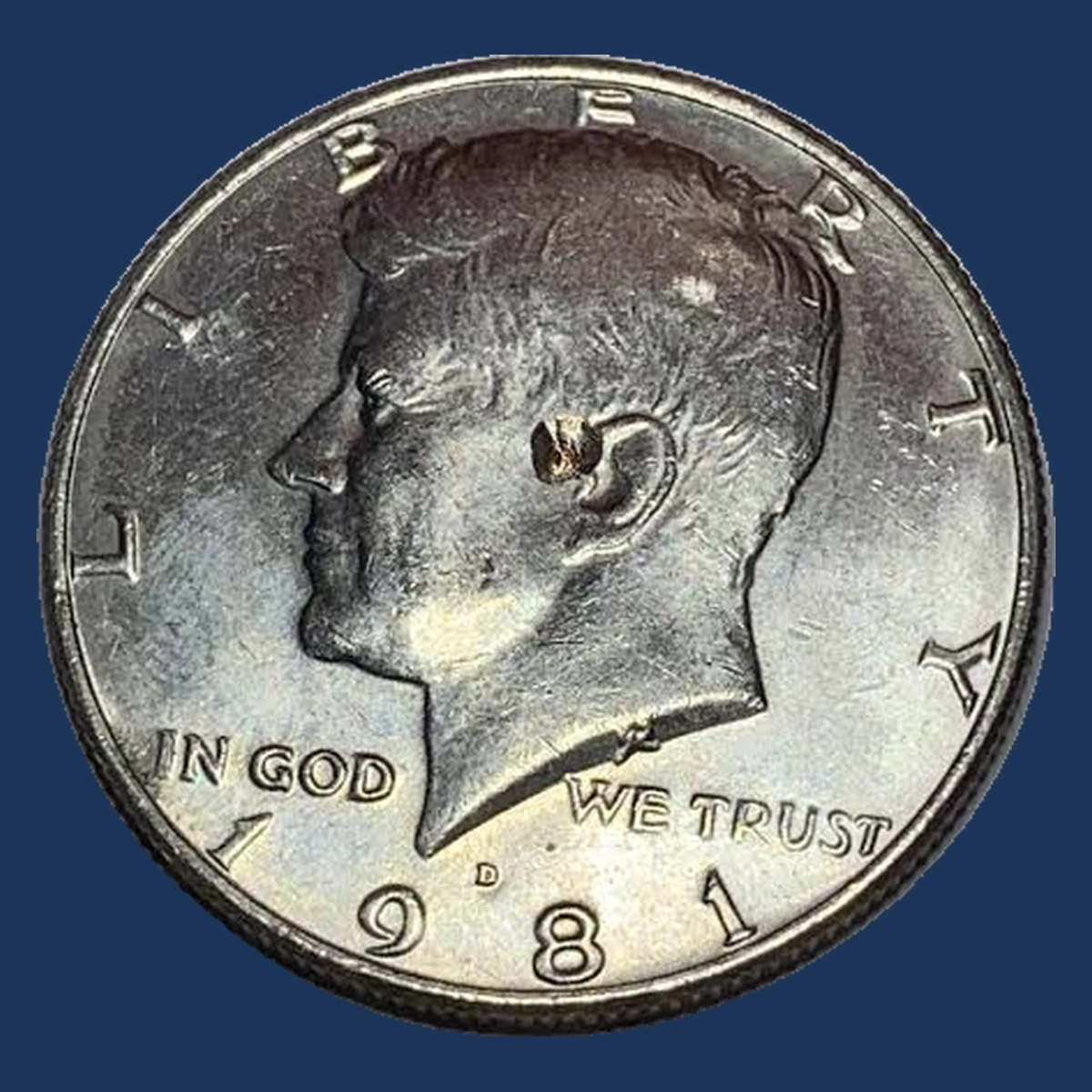
A line across the face and continuing above the head led collectors to suggest a string-like strike-through. The discussion dates to 2011 and includes this 1981 half.
A different 1976 coin in the same discussion had damage attributed to solder. That explanation should not be copied onto the 1981 piece.
A flexible object trapped during striking can leave a sunken path where the picture failed to form normally. The shape explains the string comparison.
It does not identify a surviving fiber or its material. Nor does the discussion establish a grading-service error identification for this coin.
Estimated Value
Estimate $25–$500 for a genuine line-shaped strike-through. A strong clear impression on preserved surfaces supports the upper end; an ordinary scratch belongs outside the range.
Different-year comparisons include a 1976-D struck through on both faces at $114 in March 2025. An MS67 1988-D front strike-through brought $59 in July 2021.
Neither sale identifies the material in the 1981 line. They provide market scale rather than a transaction price for that collector-reported example.
How to Identify
Trace the depression across the face with a 10× magnifier. Watch what happens where the line meets raised hair and facial features.
A struck-through path interrupts the picture as it forms. A later scratch cuts across already finished detail and may push metal up along its edges.
Use low light from several directions and keep the full route in a photograph. Do not probe the hollow or pull anything that looks like a fiber.
Check the edge grooves and measure safely accessible examples against 11.34 grams and 30.61 mm with a scale and calipers. Those checks cannot identify a trapped object.
The useful distinction is interrupted original design along a natural impression, rather than a cut through completed surfaces.
6. 1981 Kennedy Half Dollar Doubled Dies (Estimated Up to $600)
On the cataloged 1981-S Type 2 Proof, extra outlines appear across STATES OF AMERICA and the stars below. The doubling becomes stronger from left to right.
A Proof is a specially made collector coin. This back variety is called DDR-001; Type 2 identifies the form of its S mint letter.
Front doubling reports and a Philadelphia back report are less specific. They do not establish the same cataloged stamping tool.
Each needs its own matching details. A normal Type 2 S or the Denver ear bump does not substitute for the San Francisco Proof’s repeated letters and stars.
Estimated Value
Estimate $25–$600, separating small identifiable doubling on everyday coins from an attractive Proof matching DDR-001. Flat doubling caused during striking does not receive the same value.
A 1974-D doubled front graded MS64 sold for $49 in May 2026. A 1965 Special Mint Set doubled back graded MS66 brought $408 in March 2024.
The latter has a different collector finish and silver alloy. Both are different-year comparisons, not direct sale prices for the 1981 Proof.
How to Identify
For the S Proof, compare letters and stars with DDR-001 photographs. Check that the extra outlines strengthen toward the right, then confirm the Type 2 S separately.
Use a 10× magnifier and move the light without touching the shiny surfaces. Flat reflective shelves should not replace a match to raised repeated detail.
Front candidates need their own evidence around letters and date. Keep P, D, and S photographs labeled so they cannot borrow one another’s patterns.
Normal 1981 Proofs and everyday halves use layered metal: 11.34 grams, 30.61 mm, and edge grooves. Check safely accessible examples with a scale and calipers.
The specific Proof match is the left-to-right increase in doubled back lettering and stars.
7. 1981 Kennedy Half Dollar Proof Die Clash (Estimated Up to $800)
Faint extra shapes can stand out against a Proof’s mirror-like areas. Year references describe a clash on 1981-S Proofs without mapping an exact location or naming a particular example.
The two stamping tools hit each other without a blank between them. Later coins can receive pieces of the opposing design as unwanted traces.
Those fragments should have a sensible relationship to the other face. Random scratches, polishing lines, and reflections do not prove the same event.
The appearance depends on the tool contact and later polishing. There is no fixed outline that should be borrowed from every other Kennedy clash.
Estimated Value
A recognizable Proof clash has an estimated $75–$800 range. Clear transferred shapes and undamaged mirror-like areas support stronger interest than a faint isolated line.
A 1973-S with strong clashes sold for $720 in October 2022. Its PR68 Deep Cameo label describes excellent Proof condition with frosted design against mirrored flat areas.
That is a different-year comparison. Weaker traces, less contrast, or damaged surfaces would place a 1981 example lower, and ordinary handling marks do not earn this error value.
How to Identify
Prepare complete photographs of both faces in matching orientation. Compare a suspected line with the mirrored outline of the opposite picture.
A recognizable transferred shape must fit where the tools could touch. An odd line with no matching design is not enough.
A 10× magnifier helps distinguish it from fine scratches across the finished Proof surface. Move the light to test glare without rubbing the mirror-like areas.
The standard 1981-S Proof uses copper-nickel layers around copper, weighs 11.34 grams, and measures 30.61 mm. Inspect the edge grooves and use a scale and calipers only when safely accessible.
Keep the complete alignment beside the close-up; a matching opposite-design fragment in the right location provides the useful evidence.
8. 1981 Kennedy Half Dollar Off-Center Strike (Estimated Up to $1,200)
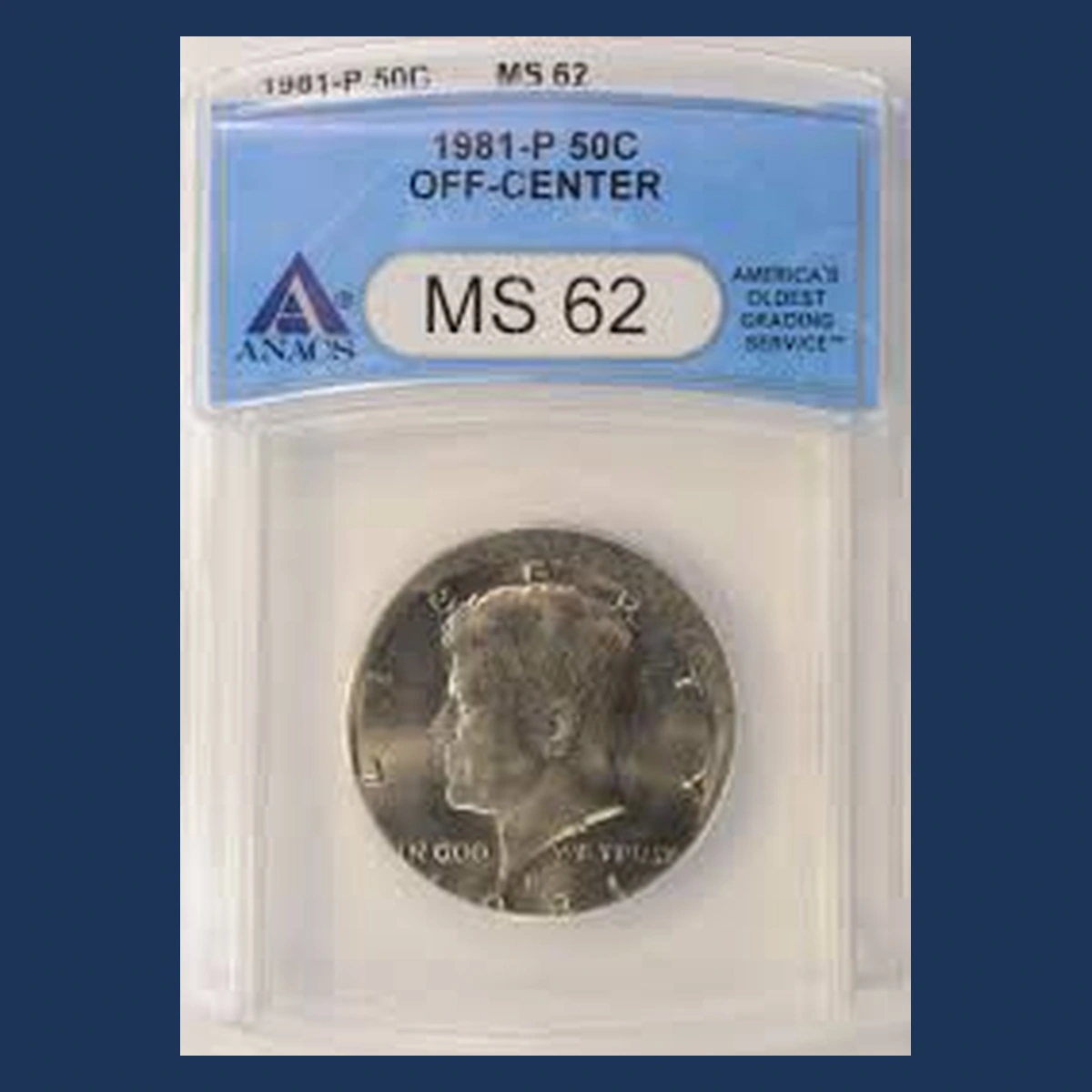
The reported 1981-P examples include a seven-percent off-center coin graded MS62 and a separate fifteen-percent shift toward eleven o’clock. Both retain readable dates.
A larger example is cataloged as 198?-P, sixty percent off center toward 1:30. It was graded MS63 and also has clash marks.
The remaining final digit was interpreted as possibly 1. That makes it an associated candidate, not a firmly dated 1981 example.
All show misplaced pictures beside bare metal. The amount and direction of each shift belong to that particular coin and should not be transferred between the examples.
Estimated Value
Estimated values span $75–$1,200. A clearly dated 1981-P off-center example graded MS62 sold for $199.75 in August 2016.
The separate 198?-P sixty-percent coin brought $460 in May 2005. Its incomplete date remains part of that comparison.
For a more recent different-year result, a 1990-P ten-percent shift graded MS66 sold for $198 in September 2025. These grades describe unworn condition of differing quality; none of the prices restores the candidate’s missing final date detail.
How to Identify
Compare the bare area and incomplete pictures on both faces before focusing on the percentage. Matching displacement distinguishes an off-center blank from a single shifted tool.
For the sixty-percent candidate, enlarge the final date fragment with a 10× magnifier. Preserve the 198? reading rather than completing the digit from expectation.
Its clash traces near the nose and beneath the chin identify other features, but cannot restore missing date metal. Keep those observations separate.
Use a scale and calipers when safely accessible against 11.34 grams and 30.61 mm. Inspect the remaining edge grooves and the boundary between struck and bare surfaces.
The essential match is the same displaced blank affecting both pictures, with every surviving date stroke still visible.
9. 1981 Kennedy Half Dollar Double Strike with a 90% Off-Center Second Impression (Estimated Up to $2,000)
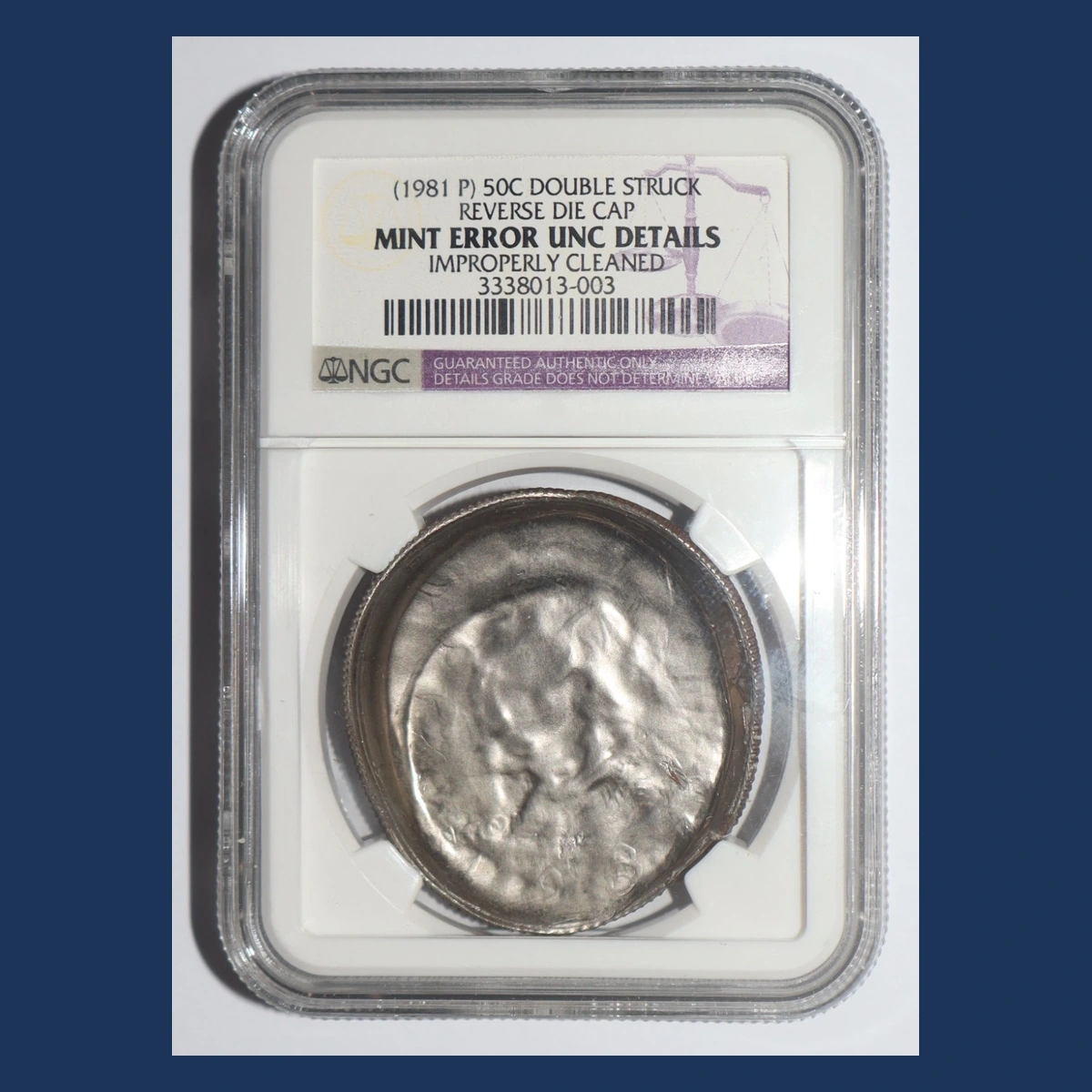
Only a small part of this coin remained under the tools for its second blow. Sullivan catalogs the 1981-P as double struck, with the second strike ninety percent off center.
Its MS63 grade describes unworn condition with visible marks. The first picture and surviving piece of the second must be read together.
This is not a coin struck only once with most of its blank outside the press. The overlap should show another genuine impression over earlier design.
The source does not describe a flipover or a one-face second strike. Those extra events should not be added to the explanation.
Estimated Value
Estimate $300–$2,000, depending on how clearly the small second picture can be read. The listed MS63 identifies the strike relationship, but no sale amount is assigned to it here.
A different-year 1989-P double strike brought $2,400 in July 2022. Its second blow was sixty-five percent off center, leaving more of the second design visible.
That difference can make the later coin easier to read. A larger off-center percentage does not automatically mean a higher price.
How to Identify
Find recognizable letters or design pieces in the small second-strike area. Under a 10× magnifier, follow where they interrupt the earlier picture.
A bent or stretched outline alone does not prove another blow. The extra detail should be formed by the stamping tools, rather than sunken marks from squeezing finished coins together.
Check both faces without changing their relative orientation. The retained edge grooves and extension’s surface should fit the same sequence.
Use a scale and calipers when safely accessible against the normal 11.34 grams and 30.61 mm. Avoid a tight holder that could bend the small extension.
The useful evidence is a readable piece of a later picture crossing the first, even though most of that second strike missed the coin.
10. 1981 Kennedy Half Dollar Huge Broadstrike with a 90% Indent (Estimated Up to $2,500)
Most of the front is a depression on this PCGS MS60 example. The date remains among the recognizable details beside it.
The catalog combines two descriptions: a huge broadstrike and a ninety-percent indent. The first describes outward spreading without normal retaining-ring control; the second describes an object blocking most of the picture.
The label does not identify the object. Its broad impression and the coin’s expansion need to be read together.
An odd gap along the outline is not automatically a clip. That separate claim would need evidence beyond the distorted shape already produced by this complex strike.
Estimated Value
The MS60 example sold for $1,410 in April 2013. MS60 means unworn but with many marks.
An estimated $800–$2,500 allows for a nearly complete indent combined with strong spreading. A later comparison is a 1989-P with a small four-percent transferred impression and partial-collar strike, sold for $119 in March 2025.
That much smaller error is not a direct price match. It does not set the ceiling for the large 1981 depression and expanded shape.
How to Identify
Study the depression and surviving date together with a 10× magnifier. The boundary should explain why part of the picture formed and most did not.
A hollow dug into a finished coin leaves a different surface. Compare the transition with original struck metal beside it.
Calipers can record spreading beyond 30.61 mm, while a scale checks against a complete 11.34-gram blank. Measure only when safely accessible; a wide body does not automatically mean a larger blank was used.
Inspect the edge for incomplete grooves and loss of retaining-ring control. Photograph any gap separately rather than calling it a clip immediately.
The depression, remaining picture, and expanded metal should fit one original striking event, without signs of later excavation.
11. 1981 Kennedy Half Dollar Wrong Planchet (Estimated Up to $3,500)
Two recorded examples differ in opposite ways from a normal half dollar. The Dominican Republic blank weighs 12.4 grams, while the quarter blank is much smaller.
The foreign-blank coin was graded MS61 and has a uniform copper-nickel edge with weak upper back lettering. The record does not identify its exact Dominican denomination.
The quarter-blank coin has a cleaning notation and a net AU50 assessment. That means the condition was judged lower because of the cleaning.
Cleaning affects its value, but it does not change the basic error. Half-dollar tools struck a blank intended for another coin.
Estimated Value
Estimate $350–$3,500 across the two blank types: roughly $350–$1,500 for quarter blanks and $1,200–$3,500 for the Dominican attribution. The cleaned quarter-blank example sold for $384 in December 2024.
The 12.4-gram Dominican example brought $1,860 in January 2022. These are separate coins on different blanks.
The foreign-blank price depends on its metal and identification. It should not be applied automatically to every small or oddly colored half dollar with the same date.
How to Identify
Start with weight and edge construction. The Dominican coin’s recorded 12.4 grams exceeds a normal half’s 11.34 grams; a layered-metal quarter blank normally starts at 5.67 grams.
That quarter figure is a standard, not a measured weight for the cleaned example. Use a scale and calipers when safely accessible.
Compare 30.61 mm for the half with a quarter blank’s starting 24.26 mm, allowing for spreading. Under a 10× magnifier, inspect any grooves and the entire edge.
Uniform copper-nickel differs from the normal half’s visible copper center. The smaller blank should cut off part of the half-dollar picture.
Actual Washington details would suggest a previously struck quarter instead, so distinguish naturally missing half-dollar design from surviving design of another coin.
12. 1981 Kennedy Half Dollar Obverse Die Cap (Estimated Up to $6,000)
A die cap begins when a struck coin stays attached to a stamping tool. More blows push its metal outward and upward until it wraps around the tool.
One 1981-P cap is certified NGC MS61. A separate published example has a more complicated history.
Mike Byers describes that coin as double struck before it stuck to the front tool. Further blows produced expanding reversed impressions and overlapping depressions on its back.
His MS63 assessment is an author’s grade, not a stated service certification. Those additional contacts belong to that published coin, rather than automatically describing the simpler NGC cap.
Estimated Value
The NGC MS61 cap sold for $2,040 in June 2024. An estimated $1,500–$6,000 covers straightforward caps through highly developed examples with clear additional strike evidence.
Tall original walls, readable identity, and understandable back impressions can support higher values. Condition matters alongside the unusual shape.
The complex published example has no sale price assigned here. Its author’s MS63 description should not be priced as though it were a matching modern grading-service label or a recent transaction.
How to Identify
View the cap from an angle to see how its walls rise from the base. Use a 10× magnifier to follow stretched design and metal flow through that transition.
A half bent into a bowl afterward may have a similar silhouette without the same strike evidence. Compare the surface, not just its height.
On the complex published coin, examine the reversed impressions and overlapping depressions separately. They do not automatically belong to the NGC MS61 example.
Use a scale against 11.34 grams and calipers to record width and wall height when safely accessible. The original flat coin measured 30.61 mm; note any surviving edge grooves.
Naturally stretched design continuing into rising walls supports a cap, so preserve those walls without pressing them flat.
13. 1981 Kennedy Half Dollar Quarter Reverse Brockage (Estimated Up to $7,000)
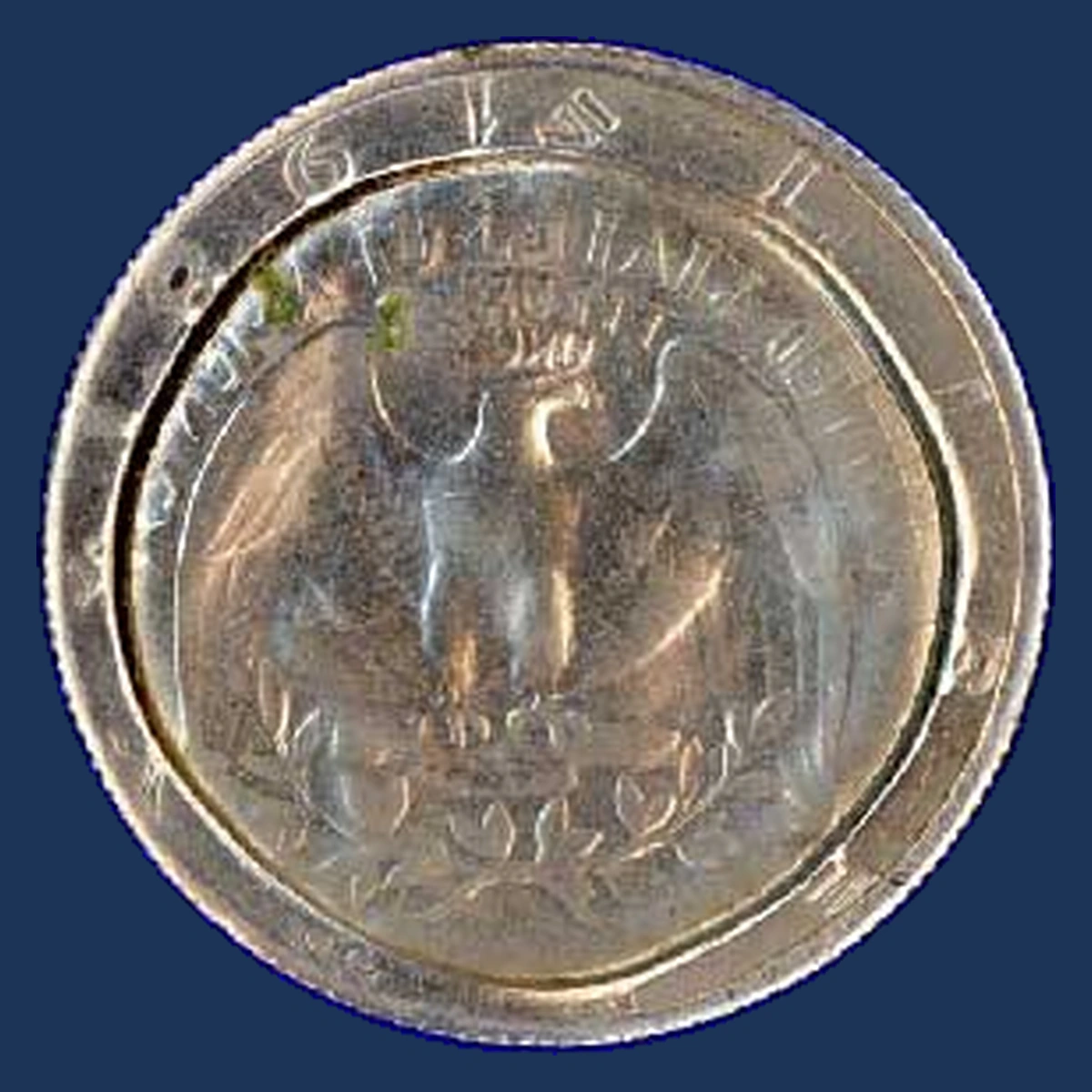
A smaller quarter eagle appears inside the front of this half dollar. It faces right because another struck coin transferred a sunken mirror image.
This is called a brockage. The published 1981-P example was graded NGC MS64 and retains its half-dollar date and lower front lettering around the intrusion.
Its back, diameter, and edge are described as normal. Those details identify a full half-dollar coin, rather than a half design on a quarter blank.
A specialist suggested the contacting quarter may itself have been off center. Its date is unknown; 1981 identifies the half, not necessarily both coins involved.
Estimated Value
Estimate $1,500–$7,000 for a clear example with strong identification and attractive preservation. The recognizable quarter picture on a larger half gives it unusual appeal.
A different-year 1989-P with a small four-percent brockage and partial-collar strike sold for $119 in March 2025. That is a much smaller transferred impression.
The comparison offers a modest baseline rather than a direct match. It is not a sale of the published 1981 example or a ceiling for its extensive quarter design.
How to Identify
Inspect the right-facing sunken eagle with a 10× magnifier. Compare it with a mirrored photograph of a normal quarter back, including any reversed lettering.
Kennedy half-dollar details should remain identifiable around the smaller image. Then check the normal back and complete circumference described for this example.
Use a scale and calipers when safely accessible against 11.34 grams and 30.61 mm. Inspect the edge grooves; these support a full half-dollar coin rather than a lighter quarter blank.
Later squeezing can also make sunken impressions, so a specialist should examine how the transferred design meets the original strike. Preserve the complete faces and grading information.
The central clue is a recognizable mirrored quarter back impressed into, rather than struck as raised design on, the half dollar.
14. 1981 Kennedy Half Dollar Cent Strike over a Half Dollar (Estimated Up to $20,000)
The smaller design came second on this unusual piece. A cent front tool struck a half dollar that already carried its Kennedy picture.
The 1981-P body curled into a pronounced bowl, and its back became distorted. No Lincoln back design appears on that side.
The auction catalog suggests cloth or another material blocked the opposite strike. That remains an explanation offered by the cataloger, not an identified trapped substance.
The lasting evidence is the centered Lincoln front over the earlier half-dollar design. This sequence is the reverse of a half-dollar picture struck on a small cent blank.
Estimated Value
The PCGS MS64 example sold for $13,200 in July 2021. Estimate $9,000–$20,000 for this exceptional configuration with readable designs and comparable preservation.
A different 1980-P half struck on a cent blank sold for $3,840 in August 2024. That is a smaller blank receiving the larger half-dollar picture.
Here, a finished half received a later cent picture. The striking order and original coin differ, so the two prices do not describe interchangeable errors.
How to Identify
Follow the design sequence under a 10× magnifier. Lincoln’s smaller front should lie over earlier Kennedy details on the larger body.
Photograph the bowl profile and both faces. Check the cataloged absence of a Lincoln back without treating the suggested blocking material as proven.
The starting coin was an 11.34-gram, 30.61 mm layered-metal half, not a 3.11-gram bronze cent. Use a scale and calipers only when safely accessible to record retained metal and deformation.
Inspect remaining edge grooves and support the curved coin without flattening it. Pressing it flat would erase evidence.
The decisive relationship is a later centered cent picture over a previously struck half dollar, with the larger coin’s original design still identifiable around it.
Conclusion
The estimated $1–$20,000 span reflects very different 1981 mistakes. A tiny ear bump needs a close surface check, while the most unusual coins preserve parts of more than one picture or denomination.
Read those relationships in order. A quarter image impressed into a full half, a half struck on a smaller blank, and a cent picture added later are three different events, even when all produce striking-looking coins.