1969 Half Dollar Error List with Pictures

A 1969-S proof half dollar struck on cent metal sold for $4,680 in August 2022. Its tiny copper-alloy disc carries only part of the much larger design.
This 1969 Kennedy half dollar error list spans estimated values from $10 to $7,000. Some slight doubled details are common, while other coins show major striking or metal problems.
Read on to compare Denver’s ordinary coins with San Francisco’s specially made proofs and identify the actual feature before pricing it.
1. 1969 Kennedy Half Dollar Master-Die Doubling (Estimated Up to $40)
Slightly doubled letters appear on many 1969 halves because the same feature passed through the tool-making process. A master die, an earlier design tool, supplied multiple tools that actually stamped coins.
Those later tools could all inherit the small extra detail. It therefore need not be a rare feature of one individual tool.
Denver and San Francisco references describe inward spread in the motto, date, and LIBERTY. Proof references also mention slight tripling and hair below R.
These shared details provide a starting comparison. Stronger individual varieties need extra features beyond this common pattern.
Estimated Value
Estimate $10–$40 for ordinary collectible examples showing only the inherited feature. Most of that value comes from preservation and silver content, not a separate doubling premium.
A modest 1969-D individual doubled-die example sold for about $31 in 2024. That provides context for avoiding inflated rarity claims.
Exceptional grades need separate comparisons. Shared slight doubling does not make every affected coin equally scarce, nor should this whole-coin range be added to its ordinary value.
How to Identify
Choose a normal example of the same D or S issue and place it beside your coin. Use a magnifier on the motto, date, and LIBERTY.
Compare the small outlines before searching for anything unusual. A common repeated feature on both coins may come from their shared earlier tool.
Inspect the edge grooves and use a scale against 11.50 g and calipers against 30.61 mm. Those are the normal forty-percent-silver half-dollar measurements.
They do not tell you whether doubling is common or rare. First find what both ordinary coins share; only extra separation beyond that pattern needs comparison with a scarcer individual variety.
2. 1969-D Kennedy Half Dollar Repunched Mintmark (Estimated Up to $125)
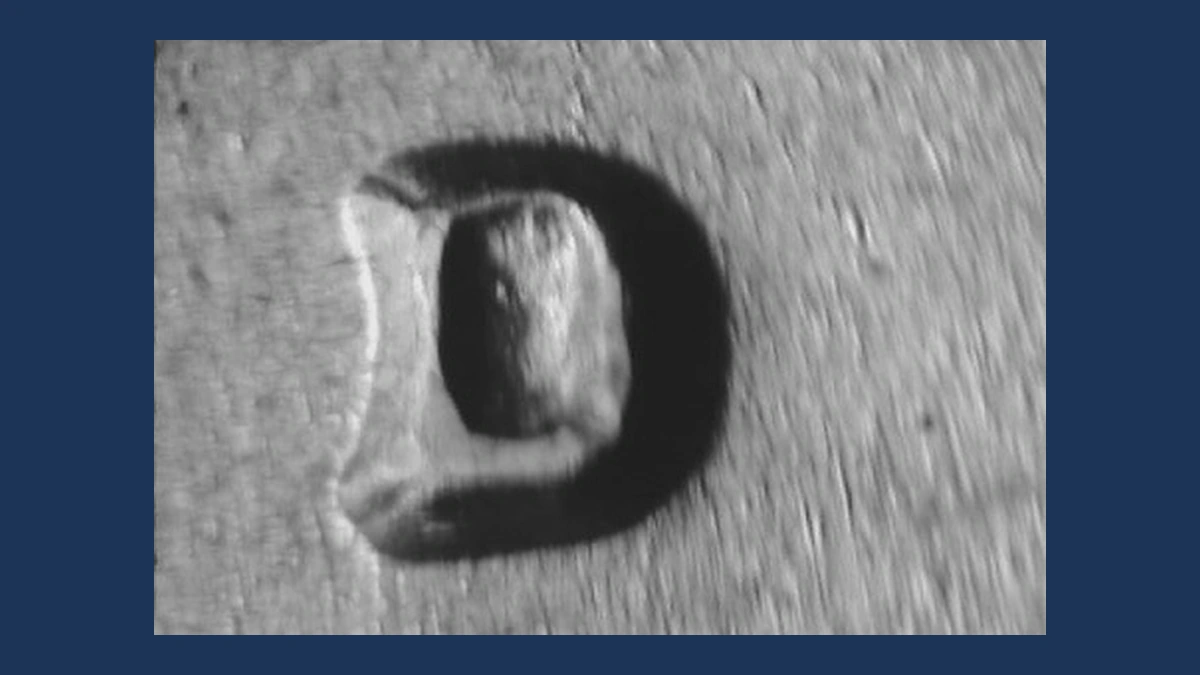
An extra tilted curve beside D can be a trace of an earlier mintmark punch. Workers applied the letter by hand to the steel tool that stamped coins.
A repeated punch did not always cover the first impression. The leftover shape then appeared on coins made with that tool.
One catalog pairing is CONECA RPM-001 with Wexler WRPM-002. Another tilted version has its own reference and should be matched separately.
The D sits between Kennedy’s neck and the date. A damaged letter can look distorted too, so look for a recognizable earlier D rather than a random bump.
Estimated Value
An identifiable repunched D has an estimated value of $20–$125. The year guide gives about $40 for a representative MS65 example, meaning an attractive unworn coin.
That guide figure is not an auction record for either catalog number. A clear extra impression and original surfaces support greater interest.
A flattened or unreadable mintmark is a weaker comparison. Exceptionally high grades need their own condition comparisons instead of assigning all their value to the repeated punch.
How to Identify
Follow the D’s curves with a magnifier and look for part of an earlier tilted letter. Compare the whole shape with the correct catalog picture.
Then check any small surrounding marks used to support that variety. Different tool stages may not show exactly the same secondary marks.
Inspect the letter and edge grooves for cutting or displaced metal. Use a scale against 11.50 g and calipers against 30.61 mm on a loose silver-clad coin.
A flat shelf from movement during striking can distort D without preserving an earlier punch. Match a recognizable extra D contour first, rather than treating any ridge beside the mintmark as repunching.
3. 1969-D Kennedy Half Dollar Small Rim Cuds (Estimated Up to $175)
A small raised patch above LIBERTY’s I appears on one late-stage Denver variety. Another shows a patch immediately to the right of that letter.
These are separate examples, each tied to a particular pair of stamping tools. The front tool developed a small break at its edge.
Coin metal filled the missing tool area and created the raised patch, called a cud. Its connection to the rim separates it from an interior bump.
Earlier coins from the same tool pair can lack the break. A later cud should not be expected on every example of the underlying variety.
Estimated Value
The small recorded rim breaks have an estimated range of $25–$175. This follows modest Kennedy tool-break comparisons rather than prices for huge raised patches.
Clear shape and good condition improve appeal. An associated back variety can also interest collectors, but the whole coin is being priced.
Do not add a full variety price to a full cud price as though two separate coins were offered. The small recorded breaks need comparisons that match their actual size.
How to Identify
Inspect the rim above and beside I with a magnifier, comparing the two positions separately. Look for a raised patch that joins the edge.
A rim hit can fold existing metal inward. Check whether the edge grooves are crushed or pushed across previously finished lettering.
Use a scale against 11.50 g and calipers against 30.61 mm, then compare the associated back variety. Earlier stages can lack the cud without losing that variety’s identity.
Keep the full date and mintmark in the photograph. Start by matching the raised edge connection either above I or to its right, rather than combining both positions into one example.
4. 1969-D Kennedy Half Dollar Die Clash (Estimated Up to $200)
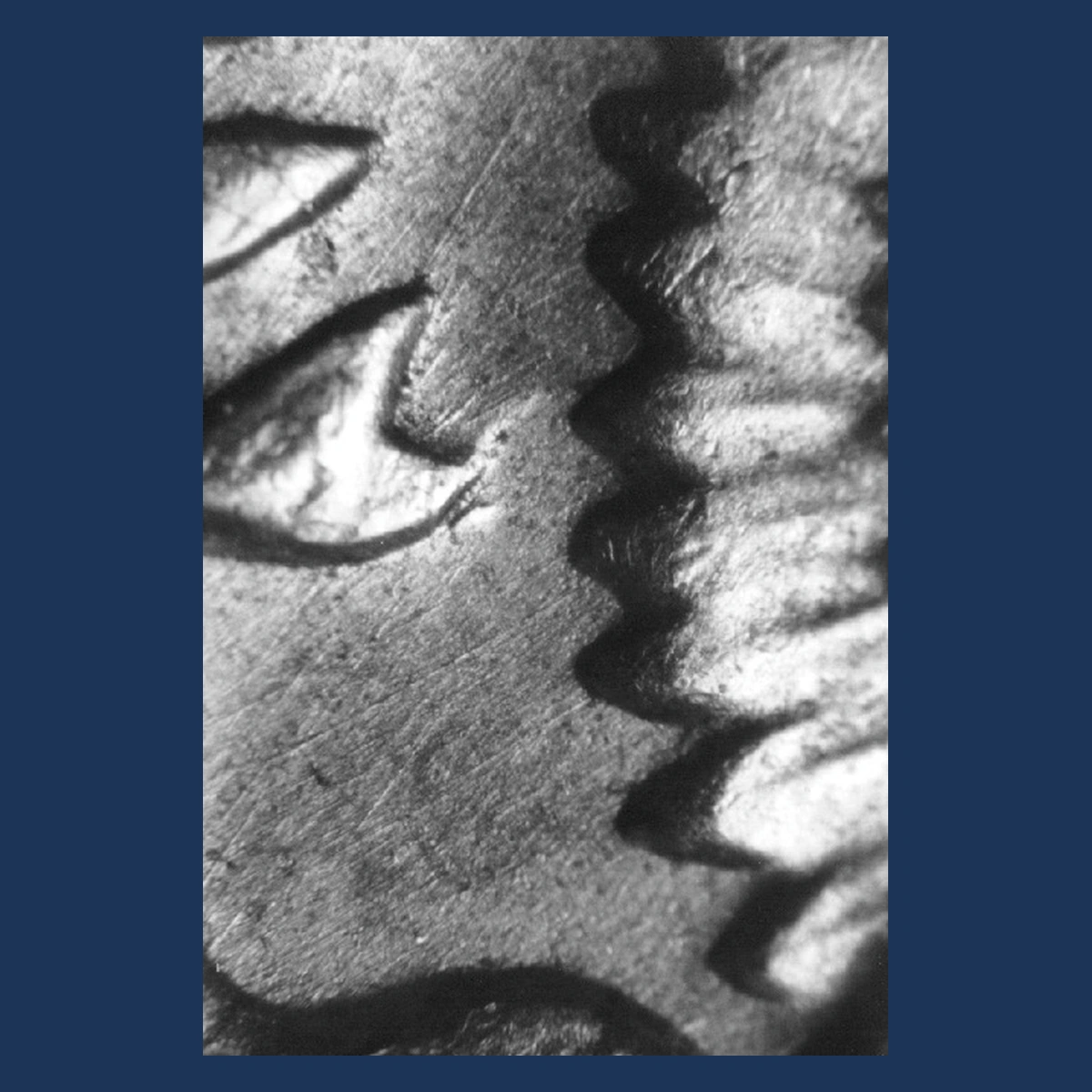
Extra lines near upper DOLLAR and between the right wing and lower-right leaves are recorded on this Denver variety. They are clash traces from contact between the two stamping tools.
The tools met without a coin disc between them. Parts of one picture marked the other tool and later appeared on coins.
The relevant variety is known through WDDR-001 and CONECA DDR-010. The clash belongs to a particular stage of its tools’ use.
Not every coin with similar back lettering must show it. Scratches in the same area also need to be separated from transferred pieces of the opposite design.
Estimated Value
A modest clash on this silver-clad issue has an estimated value of $25–$200. Clear transferred detail and preserved surfaces can support more interest.
A 1970-S proof clash sold for $159 in April 2022. Its PR65 Cameo grade describes an unworn collector proof with contrast between frosted detail and reflective surfaces.
That is a different-year, different-finish comparison. Any clash and accompanying variety on the same 1969 coin should be valued together, not as two separate objects.
How to Identify
Compare upper DOLLAR and the wing-to-leaf area with correctly aligned pictures of the opposite design. Use a magnifier to follow the suspected transferred shape.
Its position must fit actual contact between the tools. A line that merely resembles a feather from one angle is not enough.
Inspect nearby scratches and polishing lines separately, then check the edge grooves for alteration. A scale should be compared with 11.50 g and calipers with 30.61 mm.
Keep those normal measurements alongside photographs of the extra lines. For a quick first test, match one clear trace to the opposite picture in the correct place, rather than counting every line as a clash.
5. 1969-D Kennedy Half Dollar Doubled and Tripled Die Obverses (Estimated Up to $200)
Some Denver coins have extra doubling beyond the small inherited details common to the year. References describe additional inward separation in the motto, date, and LIBERTY.
One variety shows closely spaced tripling. Another pattern turns clockwise and is especially useful around T and Y.
These shapes need separate comparisons. Thick letters alone do not tell you which tool made the coin.
WDDO-001 is paired with a recognized doubled-back variety. That pairing can help identify an example, but the front must still show its own extra relief beyond the ordinary shared pattern.
Estimated Value
The auction index records about $31 in March 2024 for an ANACS AU58 DDO-001 example pictured in Flynn’s reference. AU58 means only slight wear.
An estimated $20–$200 covers modest worn through attractive clear examples. A named variety can remain affordable.
That sale belongs to a particular coin and grade. It is neither a ceiling for all varieties nor a reason to give a large premium to ordinary inherited thickening.
How to Identify
Compare an ordinary 1969-D first to learn the shared small outlines. Then use a magnifier to see whether your coin has additional separated detail in the motto and date.
For the clockwise pattern, inspect T and Y against the correct photograph. Do not substitute a picture of an inward-spreading variety.
Check the letter edges for flat shelves or later tool marks. A scale and calipers should be compared with 11.50 g and 30.61 mm, and the grooved edge should be intact.
Keep both faces visible for any matching back variety. Start with extra front relief matching one named tool beyond the pattern already visible on an ordinary comparison coin.
6. 1969 Kennedy Half Dollar Doubled and Tripled Die Reverses (Estimated Up to $300)
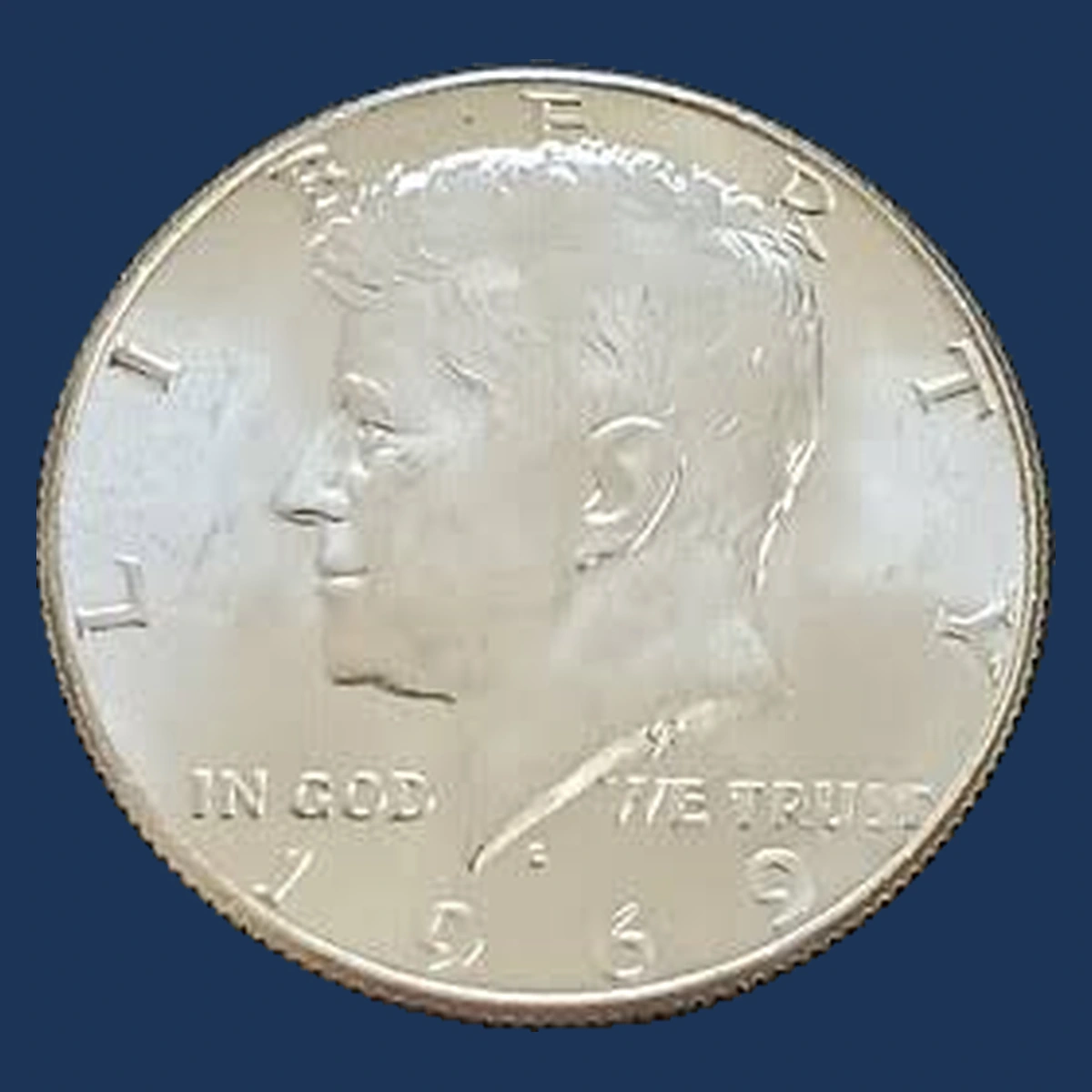
Repeated star points and letter edges vary among the known back varieties. Some Denver patterns spread counterclockwise, while others move inward or show three closely spaced outlines.
San Francisco proofs have their own patterns. A proof is a specially made collector coin, and its reflective surface can make false extra edges appear.
One Denver variety shows tripling in stars below STATES. Several proof varieties also affect nearby stars, but they are not automatically the same tool.
Normal versions differ in the G of FG too. That ordinary design difference is useful background, not an error by itself.
Estimated Value
Estimate $25–$300 for correctly identified back varieties in ordinary collectible grades. The year discussion gives about $75 for one MS65 comparison, an attractive unworn example.
That guide figure is not a sale record for every catalog entry. Strength of doubling, finish, and condition can change the price.
Many catalog names do not by themselves prove rarity. Clear repeated outlines offer a better upper-range comparison than a vague resemblance or a normal difference in the G.
How to Identify
Select a photograph for the correct D ordinary coin or S proof before inspecting the stars. Use a magnifier to match two separated star points or letter corners.
Their direction and spacing should agree across both places. On a proof, move the light to make sure a reflection is not masquerading as a third outline.
Keep the normal G shape separate from the doubling comparison. Check the grooved edge and use a scale against 11.50 g and calipers against 30.61 mm.
Look for alteration around the suspect detail too. The quickest useful test is two matching repeated points on the same mint and finish, rather than one thick-looking star.
7. 1969-D Kennedy Half Dollar Underweight Thin Planchet (Estimated Up to $400)
One 1969-D weighs 9.3 grams and has weak tail feathers and a weak front border from three to six o’clock. NGC graded it MS62, meaning unworn with noticeable marks.
Heritage suggested that the metal strip had been rolled too thin before the blank was cut. The low weight and shallow detail support examining that possibility.
A separate PCGS AU58 listing describes another thin-blank coin, but no usable weight is established here. AU58 means only slight wear.
The two records should remain separate. Missing surface metal can also lower weight without the disc having started uniformly thin.
Estimated Value
A genuine thin-blank example has an estimated value of $100–$400. Original surfaces and clear signs of the production mistake affect its appeal.
The 9.3 g coin did not sell in its July 2010 Heritage offering. No realized price belongs to that appearance.
A 1970-S underweight proof weighing 10.8 g brought $156 in 2020. That different-year collector proof offers a related comparison, not the same weight, finish, or cause as the Denver coin.
How to Identify
Use a scale against 11.50 g, then measure thickness at several places with calipers. Compare the diameter with 30.61 mm to see whether the lower weight fits thinner original metal.
Study the tail feathers and lower-right front border with a magnifier. Check the layered edge and its grooves for grinding, chemical attack, or a separated covering.
A small weight alone cannot prove that a strip was rolled too thin. Keep the measured 9.3 g coin separate from the other listing.
Start with reduced thickness across undamaged original surfaces, supported by shallow strike detail, rather than accepting any underweight coin as this error.
8. 1969 Kennedy Half Dollar Layer Separation and Missing Cladding (Estimated Up to $600)
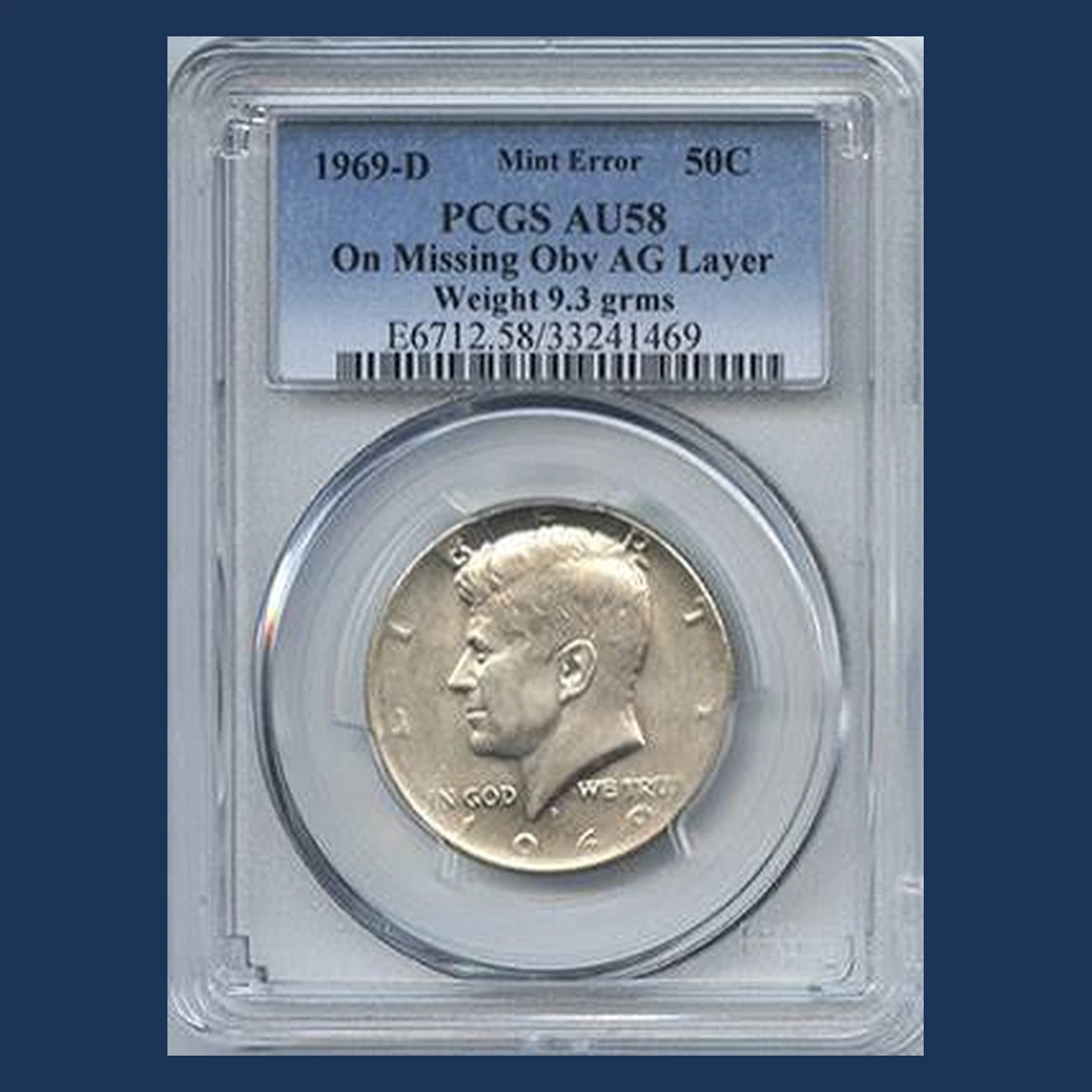
An outer metal layer can separate completely or remain attached like an open shell. These failures differ from a disc rolled uniformly too thin.
One Denver split-before-strike example weighs 9.3 grams, the same as the separate thin-blank coin. Another missing-layer example weighs 9.5 grams, with its affected side unspecified.
A San Francisco proof has a small peeling area above G in GOD. That is separate from another mark on its face.
The outer layers contain about eighty percent silver and the core about 20.9 percent. Exposed inner metal is therefore not pure copper like the core of later halves.
Estimated Value
Estimate $75–$600 across small peels, missing layers, and larger attached separations. A 9.5 g MS63 missing-layer coin sold for $154 in March 2023.
A dealer asks $99 for an ANACS AU55 attached-shell example. MS63 is unworn with marks, while AU55 has light wear.
The $99 is an offer, not a sale. The proof peel needs a comparison suited to its collector finish, and separate coins’ best features should not be combined when pricing one.
How to Identify
Inspect the exposed boundary with a magnifier before drawing conclusions from weight. Look for a natural layered edge, attached flap, or a separated surface that received the design afterward.
Leave any flap untouched. Use a scale against 11.50 g and calipers against 30.61 mm, while checking the surviving edge grooves.
Equal 9.3 g readings do not give the thin-blank and split-blank coins the same cause. Color alone is also unreliable because the inner metal contains silver.
For the proof, compare the peel above G directly with its photograph. Start with a visible separating layer that fits the original strike, rather than weight loss by itself.
9. 1969 Kennedy Half Dollar Struck Through Debris, Thread, or Clad Metal (Estimated Up to $700)
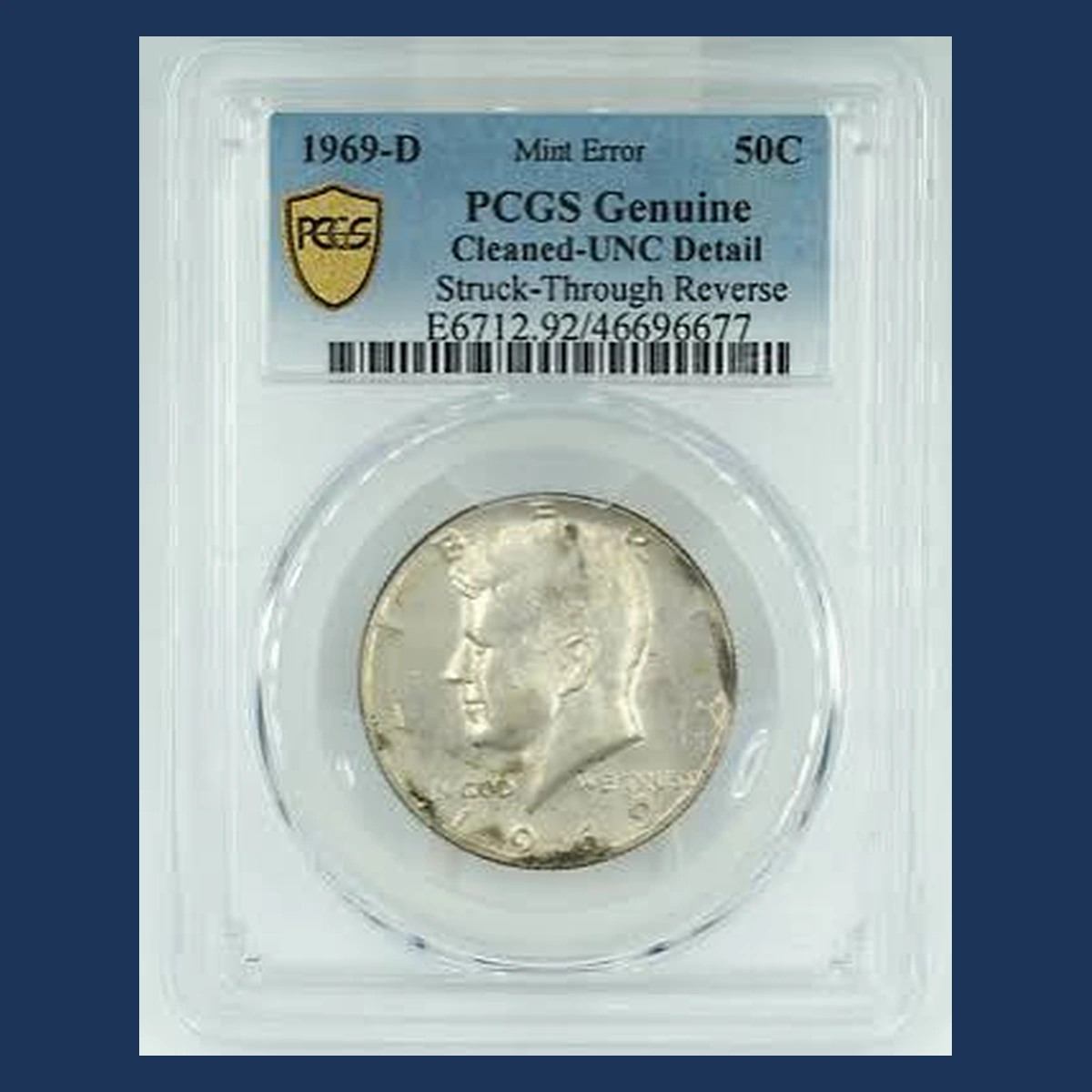
A fine thread mark on a San Francisco proof is one of several recorded obstructions. ANACS graded that coin PR67 Cameo, indicating high preservation and contrast between frosted design and reflective surfaces.
Separate Denver records describe a back-only MS64 example and an MS65 with both faces affected. Those are unworn coins with different amounts of surface marking.
Another coin was struck through loose outer-layer metal. The fragment could leave an impression and fall away afterward.
That does not mean the receiving coin lost its own layer. The separate material blocked normal contact with the stamping tool.
Estimated Value
The two-face MS65 example brought $144 in January 2023. An estimated $50–$700 covers modest through conspicuous impressions, with proof preservation and recognizable texture supporting stronger interest.
The older back-only Denver example appeared in a mixed lot with another coin. Its total cannot be used as an individual 1969 price.
A thread mark also does not make every smooth hollow a fabric error. The visible shape and the whole coin’s condition must fit the comparison.
How to Identify
Use a magnifier along the impressed line or hollow to check whether it formed during striking. Nearby detail should meet the interruption without scraped edges or metal pushed aside by a later cut.
Compare both faces if the claim involves both sides. An original back mark alone does not prove a matching front error.
Check the edge grooves and layer boundaries, then use a scale against 11.50 g and calipers against 30.61 mm. A coin can retain its own layers while being struck through a separate fragment.
The object need not remain. Inspect the original impression’s boundary first, and name thread or another material only when its actual texture supports that identification.
10. 1969-D Kennedy Half Dollar Off-Center Strike (Estimated Up to $2,000)
A large plain crescent surrounds the displaced picture on the fifty-five-percent off-center example. NGC graded it MS64, meaning unworn with some marks.
A separate PCGS MS62 is recorded at seventy-five percent off center. It keeps a smaller part of the intended picture and has more noticeable marks.
The metal discs sat partly outside the stamping tools. Each strike left its own boundary between stamped design and untouched metal.
These are individual accidents, not identical pictures copied by one unusual tool. The amount of surviving date and design must be checked separately on each coin.
Estimated Value
The fifty-five-percent MS64 sold for $552 in July 2021. The seventy-five-percent MS62 brought $1,200 in December 2024.
An estimated $300–$2,000 covers comparable dramatic Denver examples. Condition and the amount of readable identity affect where a coin fits.
A percentage describes the appearance, not a fixed price per unit of movement. An undated silver-clad half cannot borrow a confirmed 1969 price simply because it has a similar empty crescent.
How to Identify
Locate the remaining date and D before estimating the size of the plain area. Use a magnifier to check that its texture is original rather than ground smooth.
Compare the back for a matching shift. One tool sitting off center can leave a different result from a disc displaced between both tools.
A scale may stay near the original 11.50 g because the shift does not remove metal. Calipers should record the outline against 30.61 mm, including any spreading.
Inspect partial edge grooves for trimming. The quickest first check is untouched metal beside corresponding incomplete pictures on both faces, with the surviving date belonging to that same coin.
11. 1969-D Kennedy Half Dollar Double Strikes and Flipover Strikes (Estimated Up to $3,500)
A second strike can land far from the first, leaving overlapping pictures across an unusual outline. Denver examples include second impressions ninety or ninety-five percent off center.
Other coins have smaller shifts of sixty, sixty-five, or seventy percent. Those measurements belong to separate specimens.
One lightly worn AU58 coin turned over before a second strike about eighty-five percent off center. Another disc blocked part of that strike, leaving an area without a normal opposing picture.
The surviving designs help show the sequence. A later blow can add detail, flatten an earlier image, or place opposite-side pictures together.
Estimated Value
The ninety-percent MS63 example sold for $722.40 in April 2021. A seventy-percent MS63 brought $1,920 in December 2024; MS63 means unworn with noticeable marks.
An estimated $600–$3,500 also allows for stronger examples represented by a historical $3,220 result. Visibility and the surviving sequence help determine the price.
Value the complete coin. Do not add full separate prices for movement, turning over, and a blocked area that all belong to the same accident.
How to Identify
Place photographs of both faces together and use a magnifier to trace the older and later pictures. Several repeated features should fit one movement between strikes.
For a coin that turned over, look for opposite-side designs on the same face. A simple second off-center blow does not reverse which side faced each tool.
Check where later detail flattened earlier lines and where another disc blocked contact. Inspect edge grooves and any seams to rule out joined pieces.
Use a scale against 11.50 g and calipers against 30.61 mm, recording expansion. Begin by matching overlapping designs across both sides, rather than deciding from a distorted rim alone.
12. 1969-D Kennedy Half Dollar Indented by a Dime Planchet (Estimated Up to $5,000)
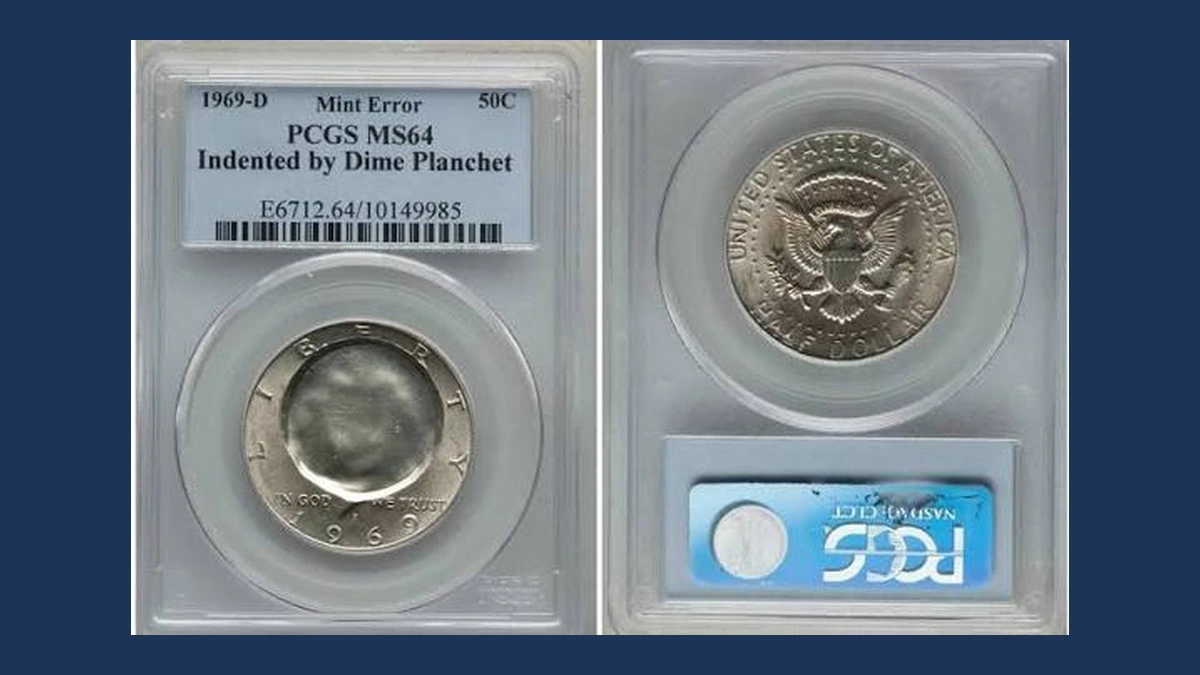
A broad hollow covers almost all of Kennedy’s portrait on this 1969-D example. The lower tip of his neck remains visible below it.
A dime blank, the disc meant to become a dime, overlapped the half-dollar disc during striking. It blocked normal contact with the front stamping tool.
The dime disc is no longer attached. Its indentation remains in the larger half dollar, graded PCGS MS64, an unworn coin with some marks.
This is not a half-dollar picture on dime-size metal. The large body remains the half-dollar blank, with a smaller disc’s obstruction pressed into its front.
Estimated Value
The auction report gives $3,840 in 2020 for the PCGS MS64 indentation. An estimated $2,500–$5,000 covers comparable clear examples with attractive remaining surfaces.
The value belongs to the half dollar carrying the impression. No embedded dime is included with it.
A circular mark punched into a finished coin is a different object. A half-dollar design struck on a dime blank also belongs to another error category and should not be priced from this sale.
How to Identify
Compare the visible lower neck tip and the hollow’s boundary with the catalog photograph. Use a magnifier to check how the original portrait was blocked, rather than crushed after it formed.
Do not include a dime in the weight calculation; none remains attached. The scale reading belongs to a half-dollar disc that normally started at 11.50 g.
Use calipers against the full half’s 30.61 mm outline, not the dime’s much smaller size. Inspect the back and edge grooves for later pressing or damage.
Start with the disc-shaped hollow over the portrait inside a full-size half-dollar body. That immediately separates an indent from a design struck on dime-size metal.
13. 1969 Kennedy Half Dollar Curved, Straight, and Double Clips (Estimated Up to $6,000)
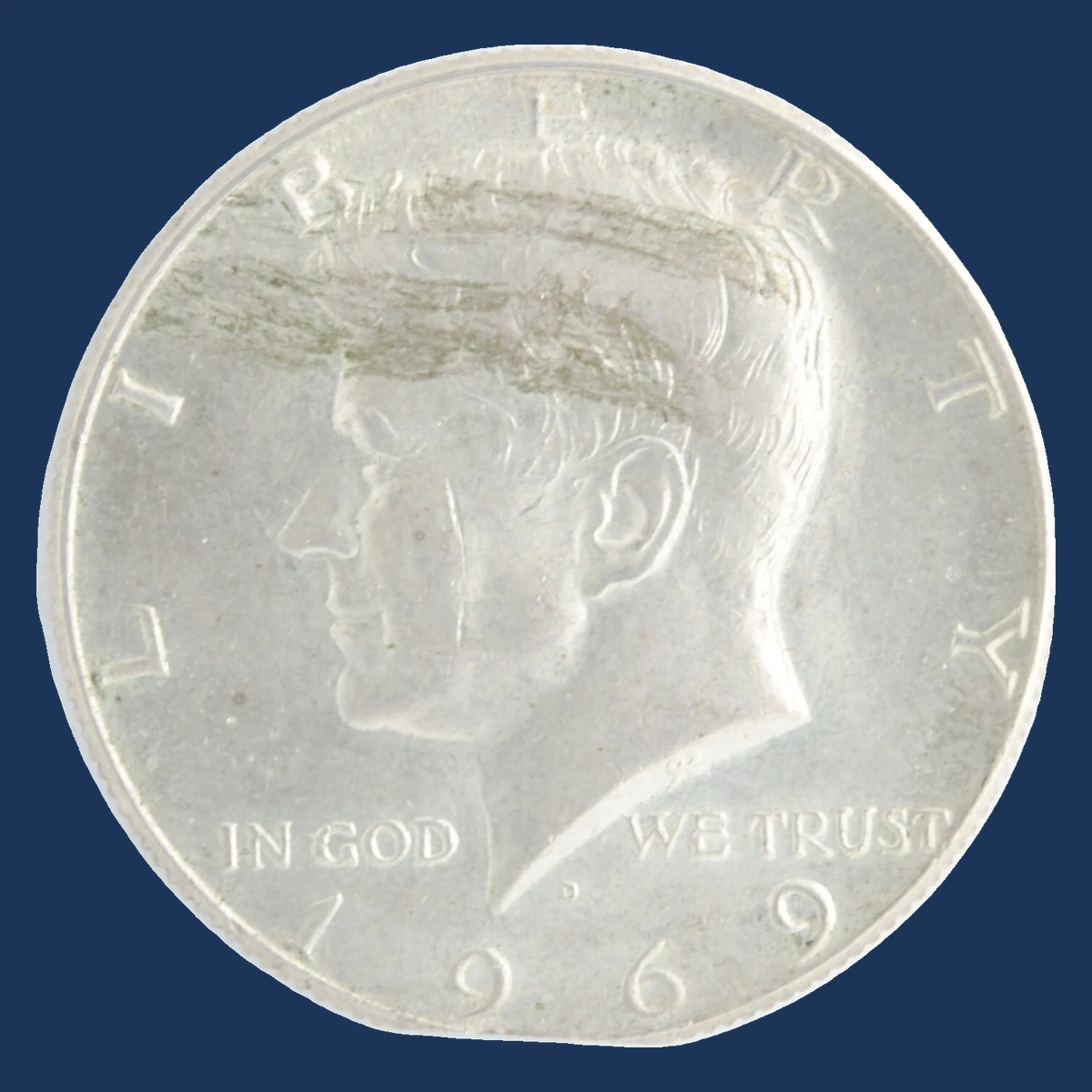
Different missing-edge shapes appear on both Denver ordinary coins and San Francisco proofs. One Denver curved clip weighs 11.2 grams, while other reports describe a ragged gap or a straight one near six o’clock.
The proof records include a PCGS PR63 with a twenty-two-percent double clip and a separate NGC PR63 double-curved-clip example. Their percentages must not be mixed.
Both grades describe proofs with noticeable surface marks. A proof is a specially made collector coin.
Each clip began with an incomplete disc before striking. A genuine boundary need not always look like a smooth curved bite.
Estimated Value
Estimate $30–$300 for Denver clips and $250–$6,000 for proofs, depending on size and preservation. The NGC PR63 double clip sold for $276 in January 2022.
A historical advertisement asked $5,500 for the separate twenty-two-percent PCGS PR63. That was an offer, not a sale.
The broad proof range covers different examples and evidence. A small double clip should not automatically inherit the ambitious asking price of the larger advertised coin.
How to Identify
Inspect both openings of a double clip with a magnifier. At each boundary, look for rim and lettering shaped around metal that was already absent during striking.
Straight and ragged gaps need the same test as curved ones. Saw marks or a sharp cut through finished detail suggest later removal.
Use a scale against the normal 11.50 g and calipers across intact areas against 30.61 mm. The 11.2 g reading belongs only to its recorded Denver example.
Check remaining edge grooves and any weak opposite rim. First follow original struck detail into every gap, rather than accepting all missing pieces because one boundary looks genuine.
14. 1969-S Kennedy Half Dollar Proof Struck on a Cent Planchet (Estimated Up to $7,000)
Only 3.1 grams of cent metal carries the half-dollar design on this San Francisco proof. The smaller disc leaves outer lettering cut off where no metal was available.
NGC graded it PR66 Red and Brown. That describes a well-preserved proof with some original copper color and some brown toning.
The whole disc was meant for a cent. It is not a silver half whose outer covering peeled away.
The example appeared in the 2022 ANA auction. Its small size and copper-alloy body also separate it from a full-size half with an indentation made by another disc.
Estimated Value
The NGC PR66 Red and Brown example sold for $4,680 in August 2022. An estimated $3,500–$7,000 covers comparable confirmed proof wrong-blank coins.
Condition, color, strike clarity, and surviving date detail all affect the value. The price belongs to a whole half-dollar strike on cent metal.
A brown-toned silver half or a missing-layer coin is different. Red and Brown describes this copper-alloy coin’s color; it is not another error with a separate price.
How to Identify
Use a scale first: the recorded 3.1 g is far below the normal half-dollar weight of 11.50 g. Calipers should document the smaller outline against 30.61 mm, allowing for spreading during striking.
With a magnifier, compare the missing outer details and surviving date and S with the confirmed photographs. Look along the edge for one copper-alloy body rather than normal silver-clad layers.
The small blank may not reach the ring that makes the half’s edge grooves. Fresh trimming, seams, or plating suggest alteration instead.
Start with near-cent weight and original proof half-dollar detail ending naturally at the small copper-alloy edge, rather than copper color alone.
Conclusion
These 1969 errors have estimated values from $10 to $7,000. Common slight doubling, extra individual-tool doubling, and a dramatic strike on cent metal belong to very different markets.
Keep each coin’s mint, finish, and measured weight with its photographs. Equal weights can still have different causes, as the thin and split 9.3 g examples show.
Compare original surfaces and the edge before choosing a price, and keep asking prices separate from completed sales.