1977 Half Dollar Error List with Pictures

A 1977 half dollar stamped over a finished 1976 nickel sold for $6,168.75 in January 2016. Parts of Jefferson and Monticello remained underneath Kennedy and the eagle.
The 1977 half dollar errors below range from small mintmark changes to coins made on the wrong metal. Estimated values stretch from $10 to $9,000.
Read on to identify the visible feature, compare the right specimen, and see why color or a strange outline alone proves little.
1. 1977-D Kennedy Half Dollar Filled or Weakened Mintmark (Estimated Up to $75)
A filled center and a weak outer stroke are different changes to the D. The first adds visible metal; the second leaves part of the letter poorly formed.
A small break in the die, the steel stamping tool, can fill the letter’s opening on the coin. Material blocking a recessed stroke in that tool can prevent the stroke from forming.
The year list combines these appearances without identifying which one its specimen shows. Check the actual relief before choosing the cause.
A normal Philadelphia half has no mintmark. An empty mintmark position on that coin is not a Denver error.
Estimated Value
Estimate $10–$75 for a genuine small tool break or blocked mintmark on a collectible example. A tiny filled center usually attracts less attention than a clearer change.
This is an estimate, not a recorded same-year sale. The extra metal or missing stroke must come from minting.
Dirt inside the D, later damage, and Philadelphia’s normal lack of a mintmark do not qualify. Confirm the feature before assigning an error premium.
How to Identify
Under a 10× magnifier, decide whether the D has a raised center, a missing stroke, or both. Move the lamp so the letter’s height becomes clear.
Do not dig inside it or clean it. Dirt can fill a letter without changing the original metal.
Normal 1977-D coins use layered copper-nickel metal, weigh 11.34 grams, and measure about 30.6 millimeters. Use a scale and calipers when safely accessible, and inspect the edge grooves.
Compare nearby details for rubbing or smoothing. Look for original raised metal within the D or a genuinely unformed stroke; a coin with no D needs separate evidence of Denver origin.
2. 1977 Kennedy Half Dollar Struck Through Die-Filling Material (Estimated Up to $150)
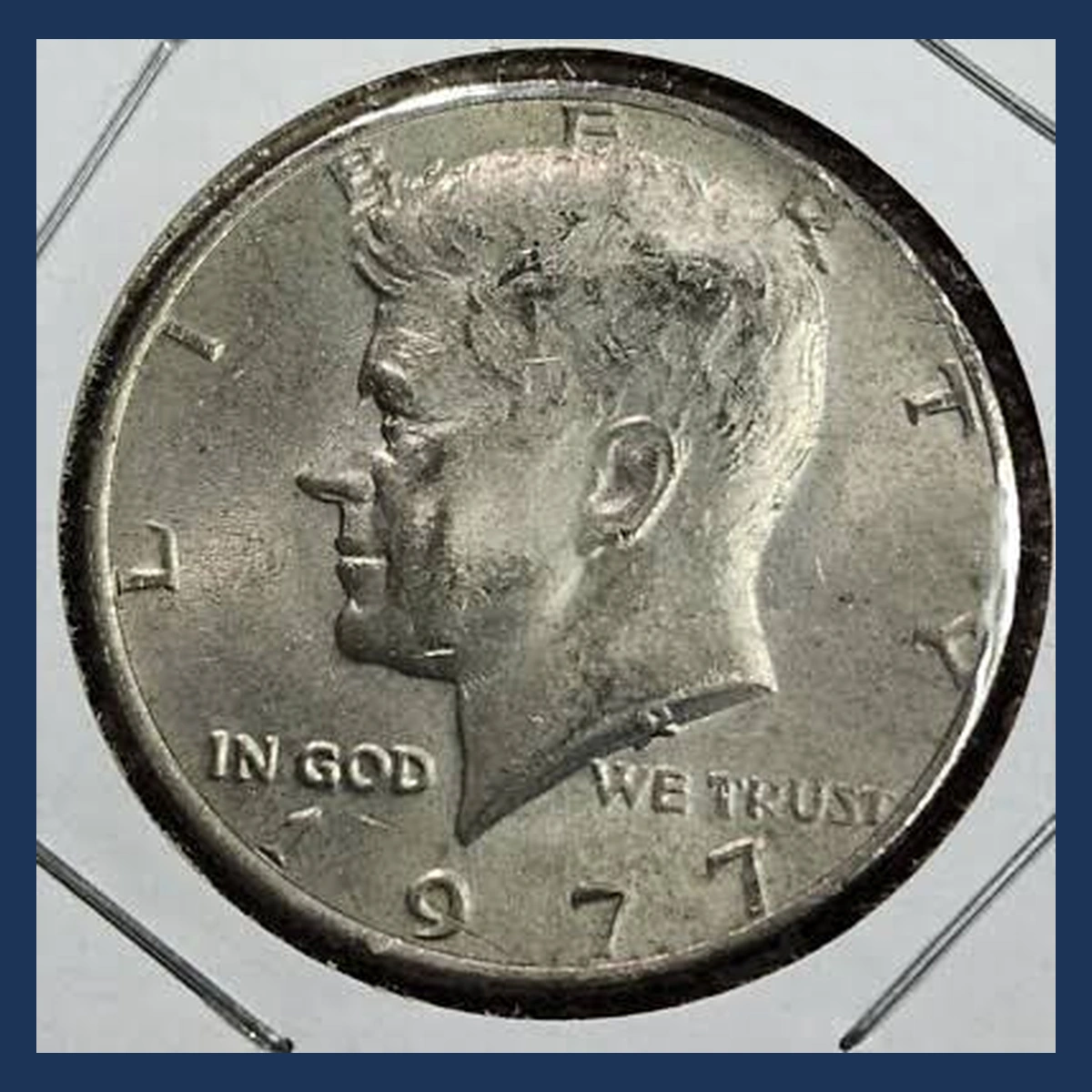
A small part of Kennedy or the eagle can look soft while nearby detail stays sharp. Material may have blocked a recess in the stamping tool.
The 1977 report associates weak portrait and eagle features with this process. It does not identify the blocking substance on a specific coin.
Grease is one possibility, but a soft cheek or eagle breast cannot prove grease by itself. Wear and an overall weak strike can look similar.
Compare how the picture changes around the affected patch. A local failure to form detail is different from a finished coin rubbed smooth during circulation.
Estimated Value
Estimate $15–$150 for a confirmed local obstruction. A clear interruption beside original sharp surfaces can appeal more than faint unexplained softness.
A 1992-D NGC MS64 struck through an edge-groove fragment sold for $336 in July 2021. MS64 describes an unworn coin with some marks.
That object left a more recognizable impression. Its price gives broader context, rather than valuing every weak cheek on a 1977 half as an equally obvious error.
How to Identify
Compare the weak patch with nearby high points under a 10× magnifier. Wear generally smooths exposed parts, while a blockage can leave one weak area within a sharper picture.
Look for polishing, scratches, or chemical roughness that might explain detail lost later. Preserve the surface instead of rubbing it.
When safely accessible, compare scale weight with 11.34 grams and caliper width with about 30.6 millimeters. Inspect the edge grooves for damage.
There was no ordinary silver half-dollar issue in 1977. For this error, look for original texture surrounding a local failure to form detail; a soft cheek alone cannot identify the blocking material.
3. 1977 Kennedy Half Dollar Die Clash (Estimated Up to $200)
An extra shape near Kennedy may come from part of the eagle’s picture. The two stamping tools can hit each other when no blank sits between them.
One tool picks up a trace of the opposite design and stamps it onto later coins. This is called a die clash.
The 1977 year list reports the type without establishing one authenticated pattern. A claimed wing or portrait outline needs comparison in the right place and direction.
A whole second picture is not required. However, a random line proves little unless its shape fits the design on the other side.
Estimated Value
Estimate $20–$200 for a clearly matched clash on an ordinary issue. More obvious transferred shapes and attractive original surfaces can support the upper end.
A 1973-S PCGS PR68 Deep Cameo sold for $720 in October 2022 with strong clashes. It was a Proof, specially made for collectors, with strong frosted-to-shiny contrast.
That older coin’s finish and clearer marks explain a different price level. Its sale does not authenticate the reported 1977 pattern.
How to Identify
Compare a photograph of the extra shape with a mirrored view of the opposite face. Keep the coin’s real top and bottom positions fixed.
The match should explain more than one vague corner. Use a 10× magnifier and moving light to separate a narrow trace from a scratch.
An accessible ordinary coin should be compared with 11.34 grams on a scale and about 30.6 millimeters with calipers. Check its layered edge and grooves.
A sunken picture pressed in by another finished coin has a different cause. Look for a recognizable fragment of the opposite design in the correct position, rather than a random line or a complete second strike.
4. 1977-D Kennedy Half Dollar Repunched Mintmark (Estimated Up to $250)
The year list describes an extra D outline above the main mintmark. Workers still added mintmarks to individual stamping tools by hand at this time.
A repeated punch could land slightly away from the first position. Part of that earlier D would then appear as raised detail on coins.
The report calls the shift northward, meaning above the letter. It does not provide a confirmed catalog number for a pictured example.
Several varieties are mentioned, but each needs its own matching photograph. A lump inside the D or a flat shelf beside it does not prove another punch impression.
Estimated Value
Estimate $25–$250 for a properly identified repunched mintmark with visible extra strokes. Clear letter shape and good preservation help its appeal.
This is an estimate, not a sale record for a numbered 1977-D variety. A list of possible varieties cannot set the price by itself.
The separate FS-101 doubled-front variety has an $800 record. That broader repeated design is a different feature, so its price should not be borrowed for a small extra D.
How to Identify
Find the D below Kennedy’s neck and above the date. Magnify its top and outside curve with a 10× lens or close photograph.
Compare the opening and the small end strokes too. A bump from a tool break or a flat striking shelf can imitate part of another letter.
Use a scale and calipers when safely accessible against 11.34 grams and about 30.6 millimeters. The ordinary Denver half has copper-nickel outer layers and edge grooves.
Those measurements cannot assign a variety number. Look for a separate rounded contour above the D that follows the letter’s actual shape, rather than simple thickness or an isolated lump.
5. 1977 Kennedy Half Dollar Clipped Planchet (Estimated Up to $350)
The known 20% curved clip weighs 9.4 grams and is graded NGC MS64. A separate NGC MS66 has three curved gaps.
A year list also reports a straight clip without fixing the specimen’s mint. These descriptions belong to different coins.
Each error begins with an incomplete metal disc before stamping. A punch overlapping older holes can make curved gaps, while the strip’s edge can leave a straight shortage.
Gap count alone is not enough. Every missing section needs an original boundary, with nearby details that formed beside it rather than being cut away after the coin was complete.
Estimated Value
The 20% curved clip NGC MS64 sold for $104 in June 2023. Estimate $40–$350 for collectible clips with different sizes, gap counts, and conditions.
That sale and the 9.4-gram measurement belong to one specimen. They should not be assigned to the separate triple clip.
The straight-clip report needs its own examination as well. A straight-looking cut earns no mint-error price until its original boundary and surrounding design support the claim.
How to Identify
The 20% clip’s 9.4 grams is an actual measurement. A generic catalog weight of 11.34 grams does not show that another clipped coin kept its full weight.
Use a scale when safely accessible and record each gap with a close photograph. Calipers across intact spans can compare the outline with about 30.6 millimeters.
Follow the surviving edge grooves into each boundary through a 10× magnifier. Watch for saw marks or sharp cut lips.
Weakness on the opposite rim may help, but the gap itself needs original stamped surfaces. Look for silver-colored metal formed naturally beside each shortage, with weight loss that fits the missing area.
6. 1977 Kennedy Half Dollar Lamination and Clamshell Separation (Estimated Up to $400)
Layers open while remaining attached on the Philadelphia PCGS AU58 cataloged by Stack’s Bowers. AU58 means nearly unworn.
Collectors call this a clamshell separation because the coin opens along an internal split. It is a physical gap, not just a differently colored patch.
A general 1977 report also describes peeling without locating the affected face or establishing when it appeared. That report should not inherit the cataloged coin’s details.
The attachment can show how the blank failed. Cutting, heating, or prying a finished coin can imitate an opening, so its surfaces matter more than how far apart the layers sit.
Estimated Value
Estimate $40–$400 for a genuine separation on a collectible half. A clear clamshell with its attachment intact differs from a tiny flake.
A 1965 NGC MS64 front-side clamshell sold for $144 in July 2021. That earlier half has a different layered construction containing 40% silver.
The sale offers a comparison for the opening’s form. It is not the result for the ordinary-metal 1977 PCGS AU58 described in the 2014 catalog.
How to Identify
Keep the clamshell in its present position. View the opening from the edge through a 10× magnifier without pulling the layers farther apart.
Look for saw cuts, fresh tool-entry marks, or heat damage that might explain later alteration. Compare the picture on the outside with the split beneath it.
The ordinary blank starts at 11.34 grams and about 30.6 millimeters, with edge grooves. A scale can still read near full weight if both pieces remain attached.
Use calipers gently or a scaled photograph for dimensions. Look for an original internal split with its surviving connection undisturbed, rather than a layer forced open by a recent cut.
7. 1977-D Kennedy Half Dollar Partial Collar (Estimated Up to $500)
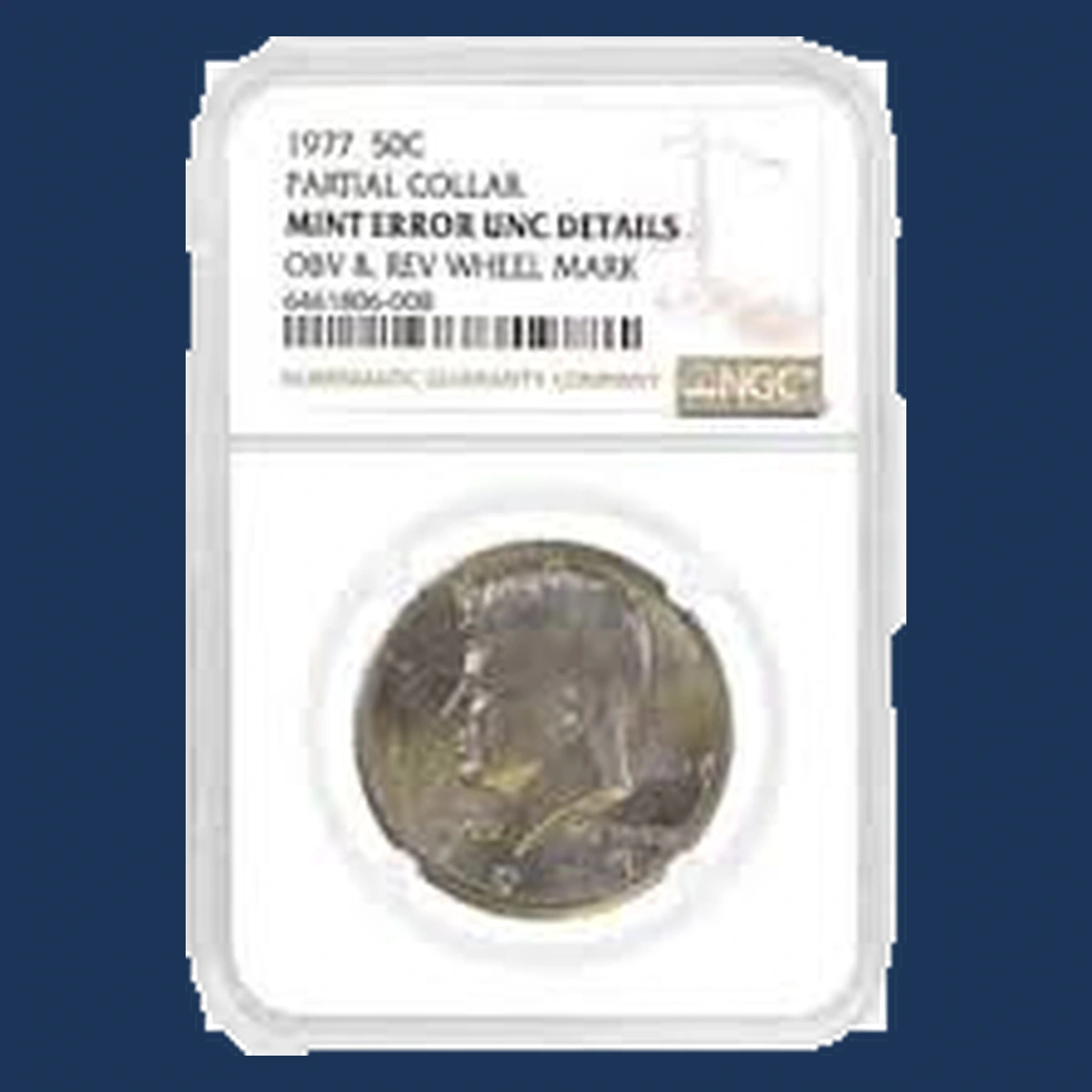
Part of the edge can stay narrow while another part spreads outward. The collar, a ring controlling width during stamping, held only part of the blank.
That partial contact can leave a step or uneven edge. The held area receives the ring’s grooves, while the exposed metal behaves differently.
Heritage catalogs a 1977-D NGC MS66 with this error. Its identity concerns the edge, not just a wide-looking rim in a front photograph.
A broadstrike escapes the ring more completely. Rolling or squeezing a finished edge can also make a ledge, so inspect how the step meets the original surfaces.
Estimated Value
Estimate $75–$500 for a genuine partial collar with a clear edge transition. The NGC MS66 identifies a specific 1977-D, but no sale is used from its October 2026 listing.
A separate 1977-D PCGS MS65 large uncentered broadstrike brought $456 in December 2025. It shows broader spreading from a related ring failure.
That different error helps compare scale. Its price is not a direct result for the partial-collar coin.
How to Identify
Look at the edge at eye level and rotate the coin slowly. A 10× magnifier should reveal where the narrower grooved area meets the expanded portion.
Check for a seam or tool marks from later rolling and squeezing. Examine both face rims for damage from the same possible blow.
An ordinary Denver half starts at 11.34 grams and about 30.6 millimeters. Use a scale and calipers when safely accessible without pressing on the unusual edge.
The coin’s front view alone cannot explain the step. Look for original stamping and grooves continuing naturally into the transition, rather than a bent or compressed ledge on a finished coin.
8. 1977 Kennedy Half Dollar No FG and Weak FG (Estimated Up to $600)
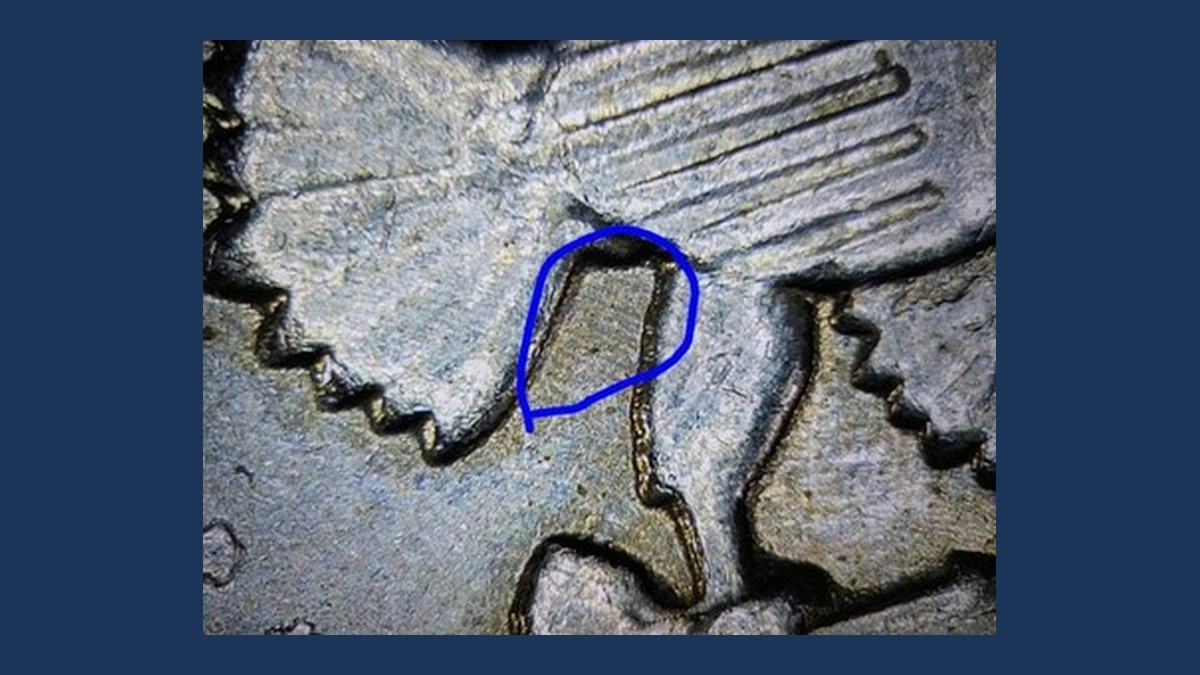
FG stands for designer Frank Gasparro. On the recognized Philadelphia No FG variety, excessive polishing removed these small initials from the stamping tool.
NGC’s record identifies the normally unmarked Philadelphia coin. It does not identify a Denver No FG variety.
A separate report calls the initials missing on 1977-D. Discussion of a Denver example instead suggests faint remaining strokes or material blocking the tool.
Those possibilities must stay separate from confirmed complete absence. Even a small surviving piece of a letter changes the description to weak detail, while the nearby surfaces help explain why it is hard to see.
Estimated Value
Estimate $75–$600 for a recognized Philadelphia No FG with original surfaces. A minor Denver weak-FG feature is estimated at $10–$40.
The Denver range does not price it as the same confirmed variety. A different 1972-D FS-901 graded NGC MS64 sold for $900 in December 2022.
That older recognized variety shows demand for complete absence. Its date and identity prevent the result from becoming a direct quote for either 1977 report.
How to Identify
Look above and to the right of the tail feathers, beneath the leg on your right. Move the light while viewing through a 10× magnifier to find any faint stroke.
If part of F or G remains, the initials are weak rather than completely absent. Check nearby feathers and flat surfaces for wear, rubbing, or blocking material.
Keep the front mintmark in the same set of photographs. The Philadelphia identification must not move onto a Denver coin.
An accessible normal half should be checked with a scale and calipers against 11.34 grams and about 30.6 millimeters, including edge grooves. Look for true complete absence on the correct Philadelphia issue, with undisturbed surrounding detail.
9. 1977 Kennedy Half Dollar Broadstrike, Including a Clipped Example (Estimated Up to $700)
A full picture can sit unevenly inside a coin that spread too wide. This is an uncentered broadstrike, where the restraining ring failed to hold the blank normally.
One 1977-D PCGS MS66+ also has an 18% clip. The missing piece and the extra spreading leave different evidence on the same coin.
A clip does not automatically turn that broadstrike into an off-center strike. The issue is whether the stamping itself lost part of the picture beyond the available blank.
The list reports broadstrikes without clips. A separate Denver PCGS MS65 appeared in a 2025 auction with a large expanded outline.
Estimated Value
The PCGS MS66+ with an 18% clip sold for $168 in July 2021. A separate large uncentered broadstrike graded MS65 brought $456 in December 2025.
Estimate $100–$700 for collectible recognized examples. Spreading, surfaces, and the visible combination affect value.
The higher grade and added clip did not guarantee the higher sale. A more dramatic single error can attract more interest than a smaller combined one.
How to Identify
Follow the main picture around both faces before measuring the extra width. Separate an actual missing piece from blank-looking metal left by uneven spreading.
On the clipped MS66+, those are two different observations. The expanded picture and clipped edge need their own explanations.
Use calipers against about 30.6 millimeters and a scale against 11.34 grams for an intact ordinary blank. A genuine clip should lower the weight.
Inspect remaining edge grooves and surface flow through a 10× magnifier. Look for a complete strike inside metal that spread naturally, then check the clip’s boundary for original stamped details rather than later cutting or flattening.
10. 1977 Kennedy Half Dollar Reported Elliptical Planchet (Estimated Up to $750)
The year guide shows an oval 1977 half under an elliptical-planchet heading. Elliptical means oval, while planchet means the blank before stamping.
The description names the shape without proving how it formed. Incomplete cutting can leave an unusual blank, but other striking events can also stretch metal.
Later pressure or trimming can change a finished coin too. Merely feeding a round blank off-center does not explain every oval outline.
The useful question is whether the shape existed before the picture was stamped. Original edge surfaces and the way letters end at that edge help test the proposed explanation.
Estimated Value
The guide assigns a $500 estimate to its oval-blank report. An estimated $150–$750 range allows for different original shapes and preservation.
The $500 is a guide figure, not an auction result. A coin pressed or cut into an oval after stamping does not qualify.
Confirm whether the blank was originally irregular before using this range. Expansion during a different striking event also needs its own explanation and comparison.
How to Identify
Inspect both ends of the oval through a 10× magnifier. Check whether the picture ends naturally at an original edge or was cut through afterward.
Use calipers along both the long and short directions instead of forcing one diameter measurement. A scale should be compared with the normal starting weight of 11.34 grams.
A normal half spans about 30.6 millimeters and has edge grooves. Check for stretching, pressing, and grinding that may have changed those features.
The date must support 1977, and the mint should follow any surviving mark. Look for original stamped lettering ending at an already oval boundary, without signs of later reshaping.
11. 1977 Kennedy Half Dollar Doubled Dies, Obverse and Reverse (Estimated Up to $1,000)
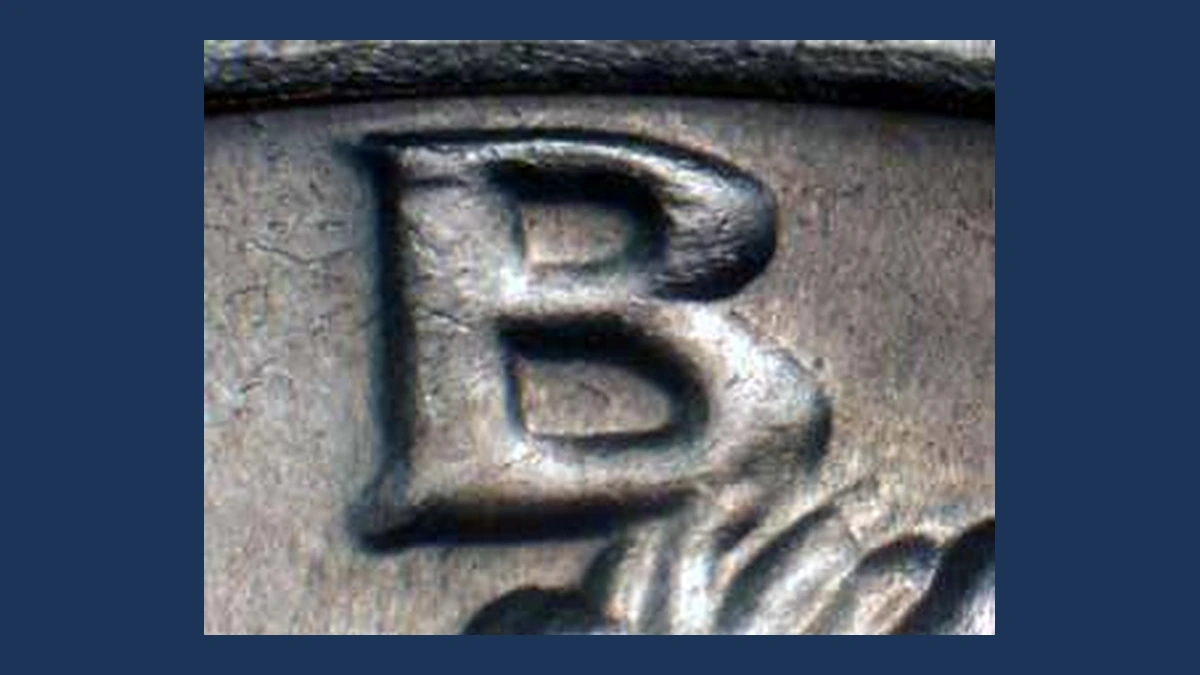
TRUST is a useful place to start on the recognized Denver FS-101. CONECA describes counterclockwise extra outlines across the date, motto, and LIBERTY.
A second Denver tool made smaller repeated edges in WE TRUST and the TY of LIBERTY. It needs its own matching pattern.
The general report also mentions HALF DOLLAR, E PLURIBUS UNUM, and feathers on the back, without an established catalog identity. That claim is separate.
The repeated design began in a stamping tool. It is not evidence of two blows on one coin, and simple letter thickness does not prove it.
Estimated Value
Estimate $100–$1,000 for recognized FS-101 examples. PCGS lists an $800 MS65 record from December 2018.
More modest front doubling, or a professionally identified example of the reported back type, is estimated at $25–$200. The FS-101 price does not confirm that back-side claim.
Compare the actual spread of extra detail and overall condition. The strongest variety’s price should not be applied to every thick-looking inscription or every separately listed stamping tool.
How to Identify
Compare TRUST with the correct CONECA photographs under a 10× magnifier. The second Denver variety needs a pattern match, not merely a judgment that it looks weaker.
For a back-side candidate, photograph the named letters and feathers separately. Flat shelves from movement and changing reflections need to be ruled out.
An accessible ordinary half can be checked with a scale and calipers against 11.34 grams and about 30.6 millimeters. Inspect its edge grooves and mintmark.
Those normal measurements do not assign a variety number. Look for matching rounded extra edges and notched letter corners across several features on the same face, in the same direction as the reference.
12. 1977 Kennedy Half Dollar Off-Center Strike, Including a Reported Clip Combination (Estimated Up to $1,200)
A Philadelphia PCGS MS65 is described as 5% off-center, while a Denver PCGS MS65 is recorded at 10%. Both involve a blank displaced during stamping.
A separate year report combines an off-center strike with a large clip. It supplies no certification linking that coin to either MS65.
It is also different from the documented Denver 18% clip with an uncentered broadstrike. Similar outlines do not make those the same coin.
An off-center strike leaves some picture outside the blank. A clip adds actual missing metal, so each claimed feature needs its own visible evidence.
Estimated Value
Estimate $75–$500 for modest off-center strikes and $150–$1,200 for a clear combination with a substantial clip. The guide’s $1,000 figure for the combined report is an estimate.
A 1999-D NGC MS66 struck 65% off-center sold for $552 in March 2023. That different-year example has much greater displacement.
It helps compare severity without supplying a sale for either 1977 MS65. The reported combination should not inherit another coin’s percentage or condition.
How to Identify
Find untouched blank metal beside incomplete pictures on both faces. A wide uneven rim with a complete picture may instead be a broadstrike.
For the reported combination, examine the clip separately through a 10× magnifier. A later cut into an off-center coin is not a second mint error.
Use a scale and calipers when safely accessible against 11.34 grams and about 30.6 millimeters, and inspect the remaining edge grooves. A genuine missing piece can reduce the weight.
Keep each coin’s mintmark and percentage with its own photographs. Look for matching shifted pictures beside original blank metal, plus an independently original clip boundary when both features are claimed.
13. 1977-D Kennedy Half Dollar Missing Obverse Clad Layer (Estimated Up to $1,500)
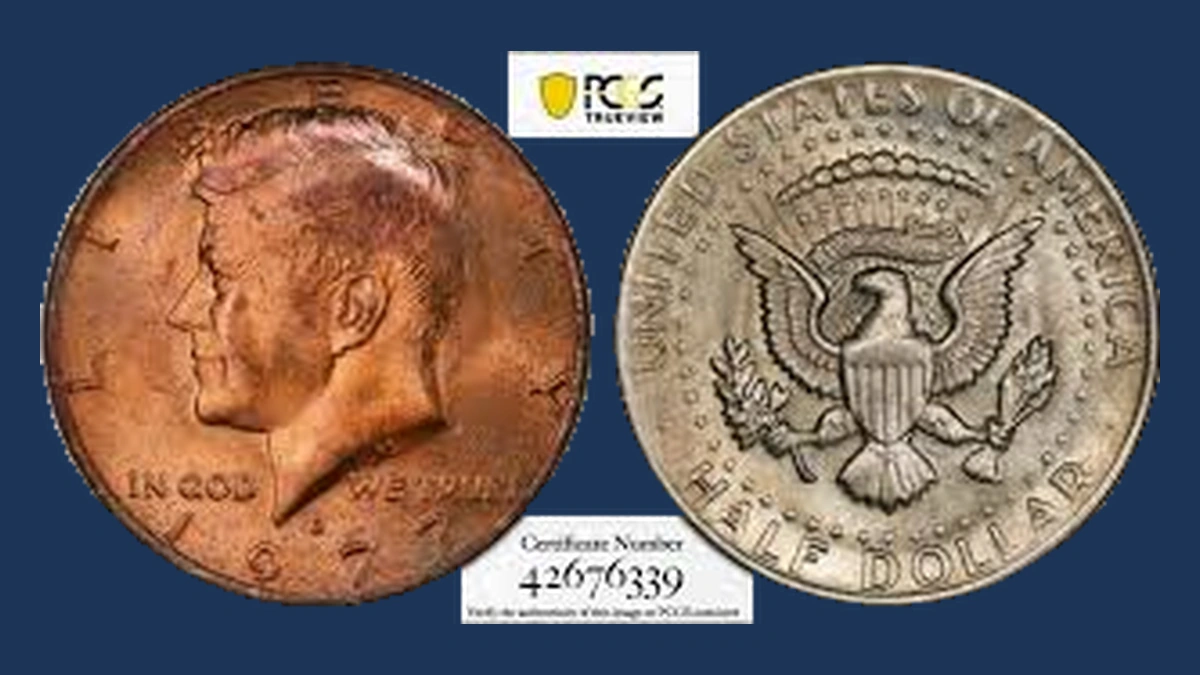
The usual silver-colored front layer is absent on a 1977-D cataloged by Stack’s Bowers. PCGS graded it MS66.
The copper middle now forms the front surface. Older holder information says the layer separated before stamping, allowing Kennedy’s picture to form directly in the exposed copper.
That differs from removing a layer after the design was complete. The timing should fit the surviving relief and edge.
The older holder’s grade and weight are part of this coin’s history. They do not describe another specimen or provide a fresh measurement, and brown color alone could also come from toning or plating.
Estimated Value
Estimate $300–$1,500 for a genuine missing-front-layer Kennedy with clear original striking. The PCGS MS66 provides a specific 1977-D example without a verified sale amount here.
A less extensive 1998-P defective-cladding NGC MS63 brought $149 in March 2023. That is a related but smaller material flaw.
Complete loss of a face’s outer layer makes a more obvious error. Its original picture and remaining surface quality still need to support the higher comparison.
How to Identify
Look through a 10× magnifier at Kennedy’s relief on the copper surface. For this recorded sequence, the design should have formed directly in the exposed middle metal.
Compare the front-to-edge transition with the remaining back layer. Chemical stripping, staining, or added plating cannot replace that physical relationship.
Weigh an accessible coin against the normal 11.34 grams and use calipers against about 30.6 millimeters. Inspect the edge grooves and record where the layer is missing.
The old holder’s weight is historical, not a new reading. Look for original copper-side relief and consistent layer loss at the edge, rather than relying on brown color or a rough stripped surface.
14. 1977 Kennedy Half Dollar Double Strike (Estimated Up to $2,000)
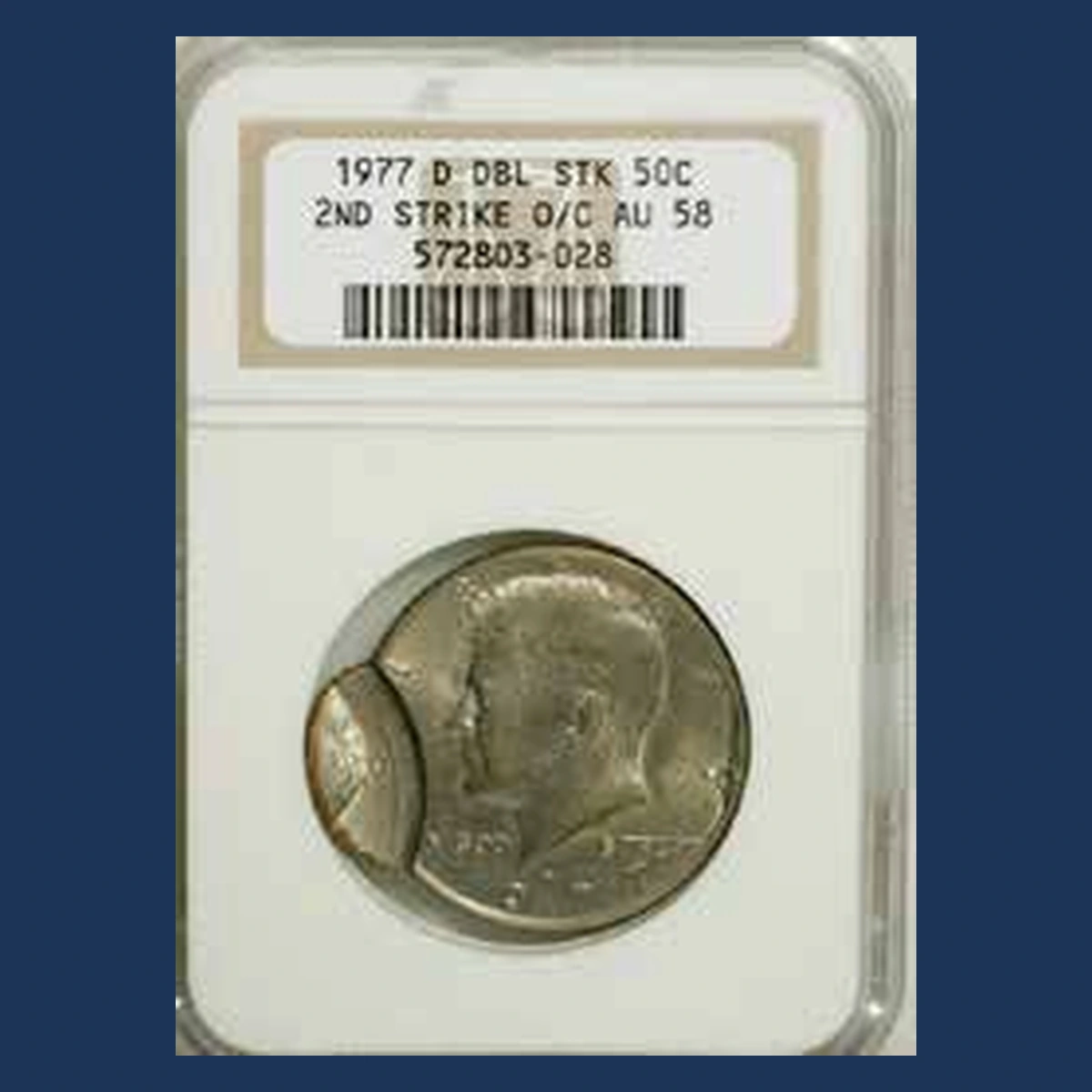
The Denver NGC AU58 keeps a second off-center picture over its first strike. AU58 means nearly unworn, and the overlap records movement between blows.
A separate Philadelphia coin appeared in a 1978 dealer catalog. Its second strike was described as 90% off-center toward 7 o’clock.
The dealer used BU, an older term for an unworn coin, rather than a modern numbered grade. That description belongs to the Philadelphia example.
A small distant second impression and a broad overlap can share the same cause. They need not share direction, percentage, condition, or the amount of the first picture that survives.
Estimated Value
The Denver AU58 sold for $488.75 in January 2009. Estimate $500–$2,000 for collectible recognized examples with differing displacement and condition.
No modern auction sale is used here for the historical Philadelphia listing. Its very large second-strike percentage does not set the price by itself.
Collectors also need to see both impressions clearly. Original surfaces and the amount of readable earlier picture can matter as much as the position of the second blow.
How to Identify
Choose a surviving part of the first portrait or inscription and follow it through the later picture. A 10× magnifier should show earlier relief flattened by the next blow.
Photograph both faces with their edge positions kept fixed. The 7 o’clock location belongs only to the historical Philadelphia description.
When safely accessible, compare scale weight with 11.34 grams and use calipers against the normal 30.6-millimeter width. Inspect remaining edge grooves for matching strike distortion.
A shelf beside one letter is not a second whole picture. Look for distinct overlapping raised designs that fit movement between blows, rather than sunken details transferred by later squeezing.
15. 1977-D Kennedy Half Dollar Struck on a 40%-Silver Planchet (Estimated Up to $8,000)
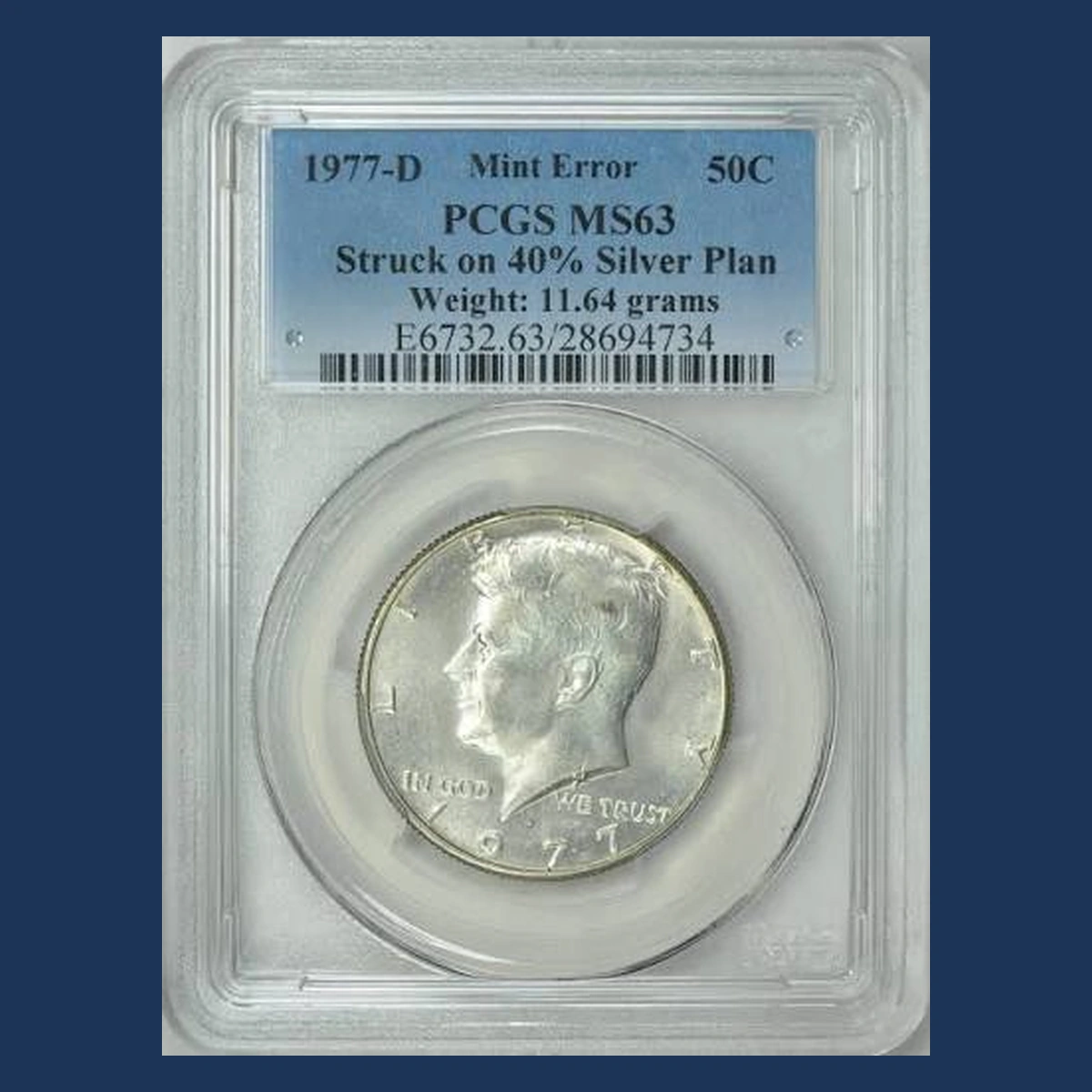
This Denver half uses a layered blank containing 40% silver overall. That was not the intended metal for the regular 1977 half dollar.
Its date and restored eagle back distinguish it from earlier intended silver issues. The blank is not pure silver.
Heritage recorded a cleaned NGC Uncirculated Details example at 11.5 grams and a separate AU55 at 11.2 grams. Another AU55 cataloged in 2016 weighed 11.4 grams.
Those readings show why a rigid weight cutoff is unreliable. The original surfaces and actual layered composition must support the error, rather than a bright edge or an unusually pale color alone.
Estimated Value
The cleaned Uncirculated Details coin brought $3,480 in December 2022. An NGC AU55 sold for $4,230 in June 2016.
Estimate $3,000–$8,000 across genuine worn and unworn examples. Uncirculated Details means unworn but with a problem, here cleaning; AU55 describes light wear.
Original surfaces and confirmed silver construction affect placement. Prices for normal 1977 halves or silver-blank Eisenhower dollars are not direct quotes for this half-dollar error, despite a similar description.
How to Identify
Confirm 1977, the Denver D, and the eagle back through a 10× magnifier. The ordinary layered-metal half weighs 11.34 grams; a 40% silver half blank normally starts near 11.50 grams.
Those weights are too close to settle the cause. Have a specialist interpret testing that does not damage the coin, checking the layered edge as well as the surfaces.
Silver plating can mislead a surface reading. Both blank types are about 30.6 millimeters across with edge grooves, so calipers mainly confirm the denomination.
A calibrated scale adds evidence when safely accessible. Look for the correct date and original strike on genuine silver-containing layers, rather than weight or white color alone.
16. 1977 Kennedy Half Dollar Struck Over a 1976 Nickel (Estimated Up to $9,000)
Jefferson’s portrait points toward the top of Kennedy’s head on this coin. Part of Monticello, the building on a nickel’s back, survives across the eagle’s breast.
A finished 1976 nickel received a later 1977 half-dollar strike. NGC graded the resulting coin MS66.
The faint nickel date remains near Kennedy’s bust tip, along with upper portions of the final 77 from the half. Much of the larger picture missed the small metal disc.
This is different from using an unused nickel blank. The older portrait, building, and date prove that the smaller coin already carried pictures before the later strike.
Estimated Value
The NGC MS66 sold for $6,168.75 in January 2016. Estimate $4,000–$9,000 for a clearly identified, well-preserved coin showing both designs and years.
The range values the combined half-dollar and finished-nickel strikes. It is not a quote for a half dollar on an unused nickel blank.
Recognizable parts of the older picture are central to that distinction. Their survival matters especially where the later blow flattened or displaced much of Jefferson and Monticello.
How to Identify
Find the remaining part of Monticello on the eagle’s breast and the 1976 date near the bust tip. Use a 10× magnifier to compare both independent clues.
The nickel began near 5.00 grams and 21.2 millimeters, with a plain edge. A normal half instead uses 11.34 grams, about 30.6 millimeters, and edge grooves.
Weigh and measure only when safely accessible, allowing for spreading during the later strike. Compare the surviving raised pictures with the cataloged MS66.
Later squeezing leaves a different transferred impression. Look for genuine raised nickel landmarks surviving beneath the half-dollar picture, rather than just a sunken copy of another coin.
Conclusion
A 1977 half dollar can show missing metal, an extra letter outline, or even an older coin’s picture. Find the actual feature before choosing the error name.
Estimated values run from $10 to $9,000. Philadelphia normally has no mintmark, and a silver claim needs testing rather than color alone.
For complicated pieces, preserve photographs of both faces and the edge so every surviving layer or earlier impression stays connected with the right coin.