1943 Half Dollar Error List with Pictures

Yellow metal makes one of the best-known 1943 Walking Liberty half dollar errors stand out. Struck on a Peruvian brass blank, it sold for $21,150 in November 2013.
Other clues include missing initials, peeling silver, and overlapping designs. Estimates run from $50–$60,000, with the highest figure reserved for a separately discussed steel-blank coin whose date is missing.
Read on to compare the visible features and keep the dated 1943 examples separate from undated or disputed-year coins.
1. 1943 Walking Liberty Half Dollar Clipped Planchets (Estimated Up to $400)
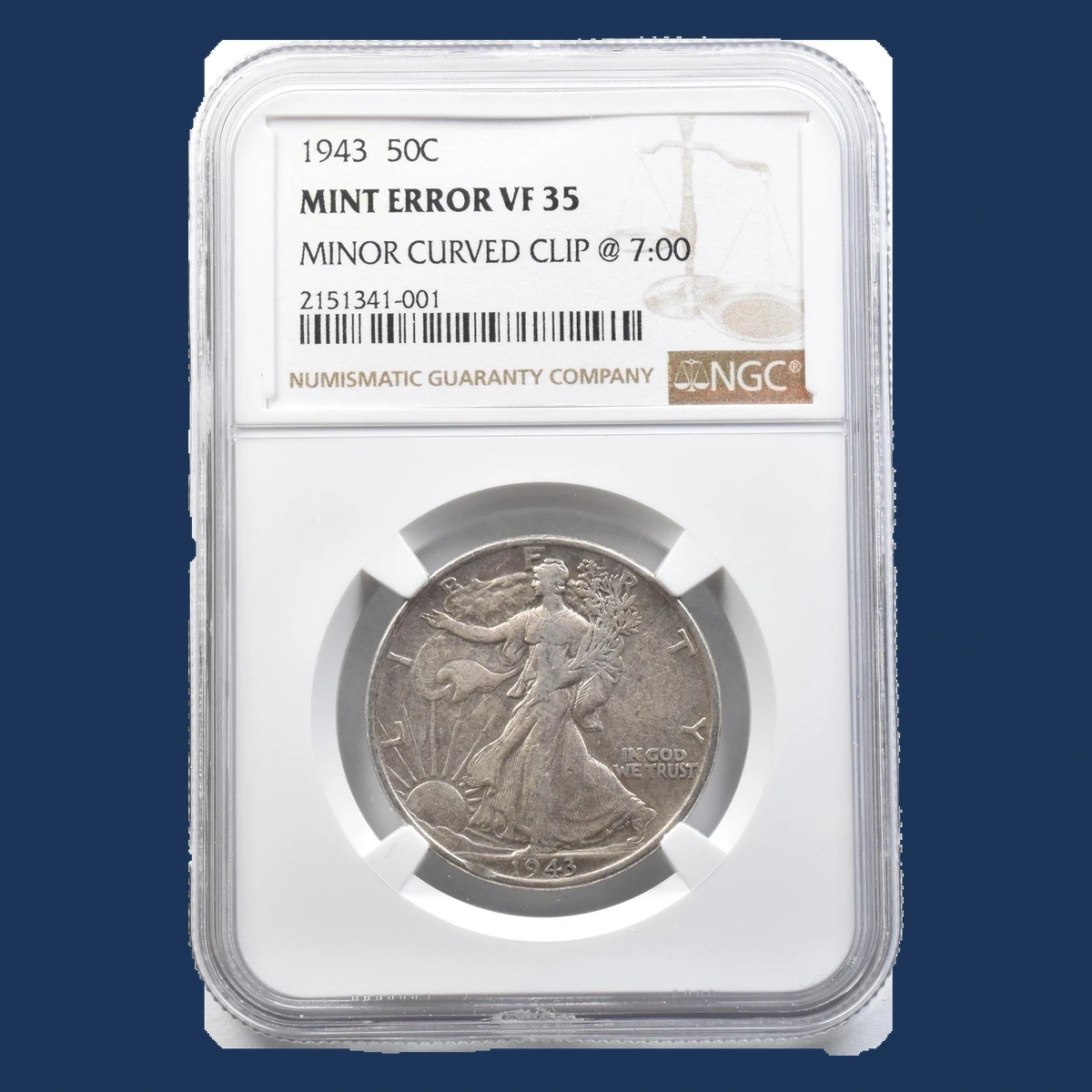
A curved bite or a straight missing section can begin before the coin receives its design. The blank-cutting machine may overlap an earlier hole or the edge of the metal strip.
Both shapes are reported for 1943 halves. The incomplete blank then enters the press, where nearby letters and the rim may form weakly beside the gap.
The reports do not identify exact sizes or positions on certified examples. Check the actual coin rather than borrowing a percentage from another photograph.
A later cut can also leave a convincing-looking missing section.
Estimated Value
The estimated range for genuine clips is $50–$400. The size of the missing section, original surfaces, and remaining condition all influence the price.
A 1942-S rim clip graded ANACS MS62 sold for $81.90, including the buyer’s fee, in May 2025. MS62 means no circulation wear but noticeable marks.
This nearby-year sale helps compare small clips without establishing the grade, mint, or missing-metal percentage of the reported 1943 examples.
How to Identify
Examine both ends of the opening with a 10× magnifier. See whether the rim and letters formed beside a gap or were cut through after they had already formed.
A scale can compare the remaining weight with the normal 12.50 g. Use calipers across intact parts of the coin against about 30.6 mm, and inspect the surviving edge ridges.
Missing metal should explain a large weight loss, but sawing or filing also reduces weight. Weakness in the opposite rim can help support a clip, although it does not appear on every example.
Keep the date visible when photographing each coin. Begin at the gap’s two ends, where original struck edges should differ from fresh cuts through the finished design.
2. 1943 Walking Liberty Half Dollar Lamination (Estimated Up to $600)
A patch of metal has separated from the center of the back on a listed 1943-S. The 2009 Coin Galleries catalog describes it as a lamination and says the detached piece was not retained.
NGC graded the coin MS65, meaning no circulation wear and relatively few marks. A separate collector discussion shows another suspected separation, but does not establish the same mint or grade.
These coins contain silver mixed with copper throughout. They do not have modern bonded outer layers, so a missing patch should not be described as missing copper-nickel cladding.
Estimated Value
Use an estimated $60–$600 range for genuine laminations, from modest worn examples to clear defects on attractive unworn coins. No sale price is assigned here to the cataloged 1943-S MS65.
A 1947 NGC MS65 with a front lamination is offered for $275. That is a dealer’s asking price for another year and another face, not a completed sale of the 1943-S or the separate collector-discussed coin.
How to Identify
On the listed 1943-S, examine the central patch on the back with a 10× magnifier. Move the light to see the boundary between missing metal and the undisturbed design.
Look for a split within the metal, rather than a scraped trench or widespread corrosion. If a different coin still has an attached flap, leave it in place and photograph the joint from the side.
A normal coin contains 90% silver, weighs 12.50 g, and measures about 30.6 mm. Use a scale and calipers, or recorded measurements for a sealed example, and inspect the ridged edge.
Do not transfer the listed coin’s grade to another example. The useful starting clue is a clear separation boundary with original design continuing up to the missing patch.
3. 1943 S Walking Liberty Half Dollar Clashed Dies (Estimated Up to $700)
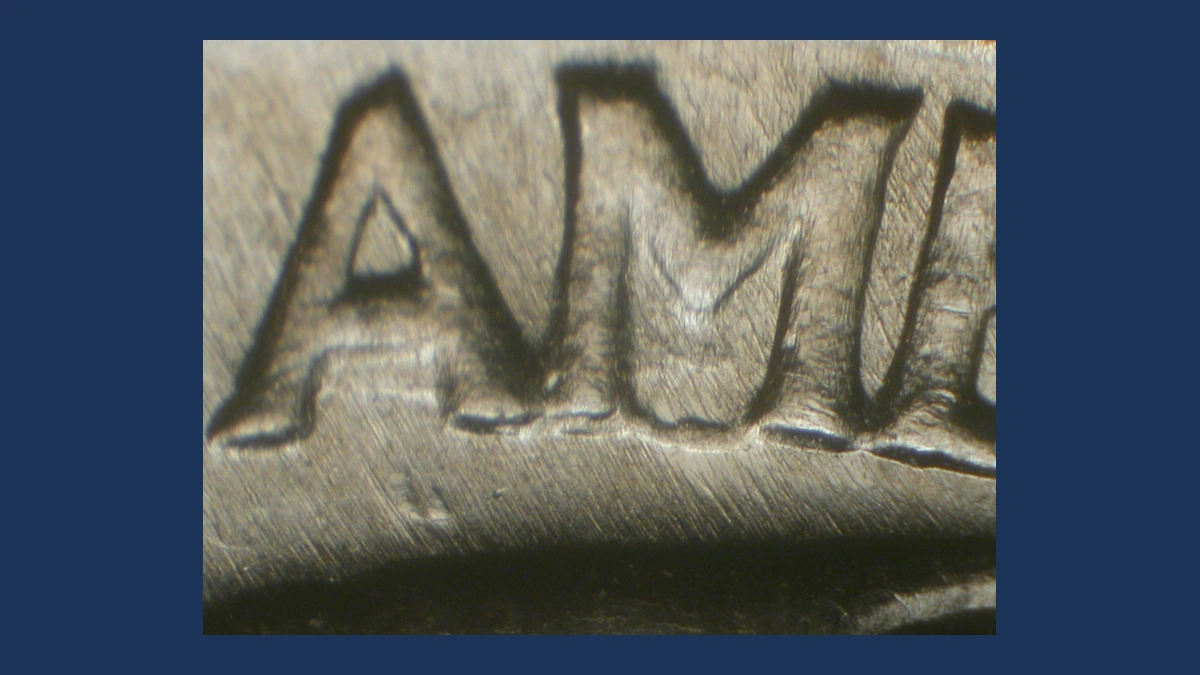
A faint extra mark below AM on the back can help identify this 1943-S variety. CONECA lists the mark as a clash on a particular stage of the RPM-001 stamping tool.
A clash happens when the two steel stamping tools, called dies, hit without a blank between them. Marks from one design can then appear on coins struck by the other tool.
This example also has a repunched S, but that letter came from a different step in making the tool. A random scratch below AM does not establish a clash.
Estimated Value
An estimated $75–$700 applies to a genuine, collectible clash on the complete coin. The repunched mintmark and clash may appear together, so their full coin prices should not be added.
A strong 1973-S Kennedy clash sold for $720 in October 2022. It was a proof, a specially made collector coin, graded PCGS PR68 Deep Cameo.
Its excellent surfaces and frosted designs against mirrorlike backgrounds make it a different comparison.
How to Identify
Find AM on the back, then inspect the area below it with a 10× magnifier. Compare the extra shape with the front design in the position where the stamping tools would meet.
Photograph the S separately. Its extra outline can help identify the variety, but does not turn every nearby line into clash evidence.
Check a loose coin on a scale against 12.50 g and with calipers against about 30.6 mm. Include both faces and the ridged edge in photographs.
Normal measurements alone cannot prove a clash.
Look closely for scratches or metal pressed into the surface later. Start with the mark below AM: its shape and position should match part of the design from the opposite face.
4. 1943 Walking Liberty Half Dollar Strikethrough and Filled Die Errors (Estimated Up to $800)
The reported Philadelphia coin is missing OLLAR from the word DOLLAR. Material filling the stamping tool is the suggested cause, because it can stop small details from forming.
A separate 1943-S has a minor struck-through mark on the back. PCGS graded it MS65, meaning no circulation wear and relatively few marks, without identifying the material that caused the interruption.
These are different coins. Weak lettering and a small impressed patch can both arise during striking, but neither description turns every worn or weakly struck area into an obstruction error.
Estimated Value
The 1943-S PCGS MS65 sold for $253 in March 2010. An estimated $60–$800 covers genuine minor omissions through clearer, more attractive impressions.
That historical sale belongs to the San Francisco coin, not the Philadelphia missing-letter report. A different 1951-S Franklin half with a strike-through was listed as sold for $134 in April 2026.
Its NGC MS64 grade means no circulation wear and relatively few marks, and its design also differs.
How to Identify
Use a 10× magnifier on the missing OLLAR area and compare it with the surviving D. Check the neighboring lettering for broad wear or scratches that could explain the missing details.
The San Francisco coin needs a separate examination of its own back. Its reported mark is not established at the Philadelphia coin’s missing-letter position.
Look at each interruption’s boundary before guessing what material caused it. A distinct texture may help, but a smooth weak patch does not name the obstruction.
Normal coins weigh 12.50 g on a scale and measure about 30.6 mm with calipers. Inspect the ridged edge and opposite face for impacts.
Begin with the contrast between the interrupted area and the undisturbed design immediately beside it.
5. 1943 Walking Liberty Half Dollar Obverse Doubling and 1943/2-Type Features (Estimated Up to $1,200)
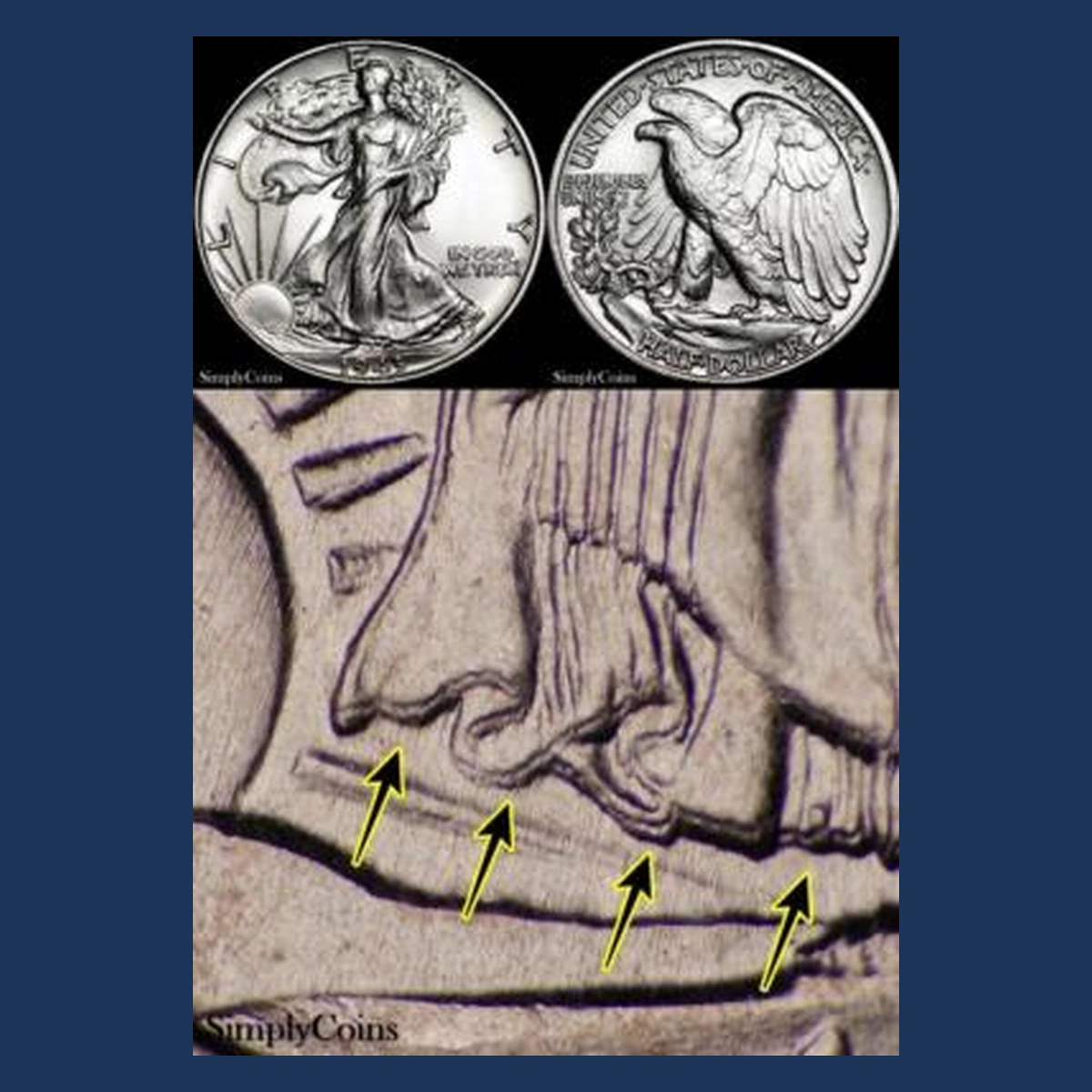
Extra outlines may appear in the motto, lower skirt, or central sun rays on coins from all three mints. Some examples also show a faint earlier-date shape behind the 3.
Collectors often describe these as 1943/2 features. Specialists have changed how they explain the tools that produced them, and the exact stage of toolmaking remains under review.
The visible marks still provide useful comparisons. Different tools can leave different supporting lines and amounts of doubling, so one familiar date label does not identify every doubled-looking 1943 half dollar.
Estimated Value
The estimated range is $50–$1,200 for clearly identified examples. Stronger extra outlines and better preservation can increase appeal without settling the debate over the exact manufacturing step.
A different 1939-D doubled die sold for $2,160 in April 2025, graded NGC MS67+. That grade describes an unworn coin with very few marks.
Its exceptional condition and recognized variety should not set the price of a modest or weakly doubled 1943 coin.
How to Identify
Use a 10× magnifier on the motto, lower skirt, and central rays shown in the specialist photographs. Look for extra raised outlines that remain visible when the light changes.
Compare several features on a coin from the same mint. A faint shape behind the 3 can help only when it is actually visible.
Flat shelves beside letters can come from movement during striking, while altered digits may show tool marks. Neither should be accepted just because the coin is labeled 1943/2.
Check 12.50 g with a scale and about 30.6 mm with calipers, including a photograph of the ridged edge. Begin with matching extra outlines in the motto and rays, then check the date detail.
6. 1943 Walking Liberty Half Dollar Reported Doubled Die Reverses (Estimated Up to $1,200)
Some reports describe extra feather and letter outlines on the back of a Philadelphia coin. They do not establish a matching specialist variety number.
A separate 1943-S graded MS63 appeared in a 2022 Centennial catalog as a doubled die reverse, labeled BR-5199. MS63 means no circulation wear but noticeable marks.
The catalog code is not automatically a number used by another specialist.
A true doubled die carries the extra design on the stamping tool itself. Normal feather edges, wear, or flat steps left during striking can create a different doubled-looking appearance.
Estimated Value
Use an estimated $50–$1,200 range for a clearly identified 1943 doubled reverse. This is a comparison-based estimate, not a known sale price for the cataloged MS63.
A recognized 1946 reverse variety graded NGC MS65 sold for $2,040 in November 2024. That unworn, relatively clean coin has a different date and a stronger established identity.
The same price should not be assumed for a subtle or unnumbered 1943 report.
How to Identify
Enlarge the suspected letters or feathers with a 10× magnifier. Look for an extra contour that keeps its shape under different lighting, rather than a shadow beside a normal feather.
Check nearby details for the same pattern. A flat shelf cutting into the usual letter shape can come from movement during striking instead of a doubled tool.
Keep Philadelphia and San Francisco examples separate when comparing photographs. The catalog’s BR-5199 label belongs to its listed MS63 and does not locate a feature on another coin.
Use a scale and calipers for the normal 12.50 g and about 30.6 mm, and inspect the ridged edge. Start with repeated extra outlines in several nearby details, rather than one bright line.
7. 1943 Walking Liberty Half Dollar Repunched Mintmarks (Estimated Up to $1,500)
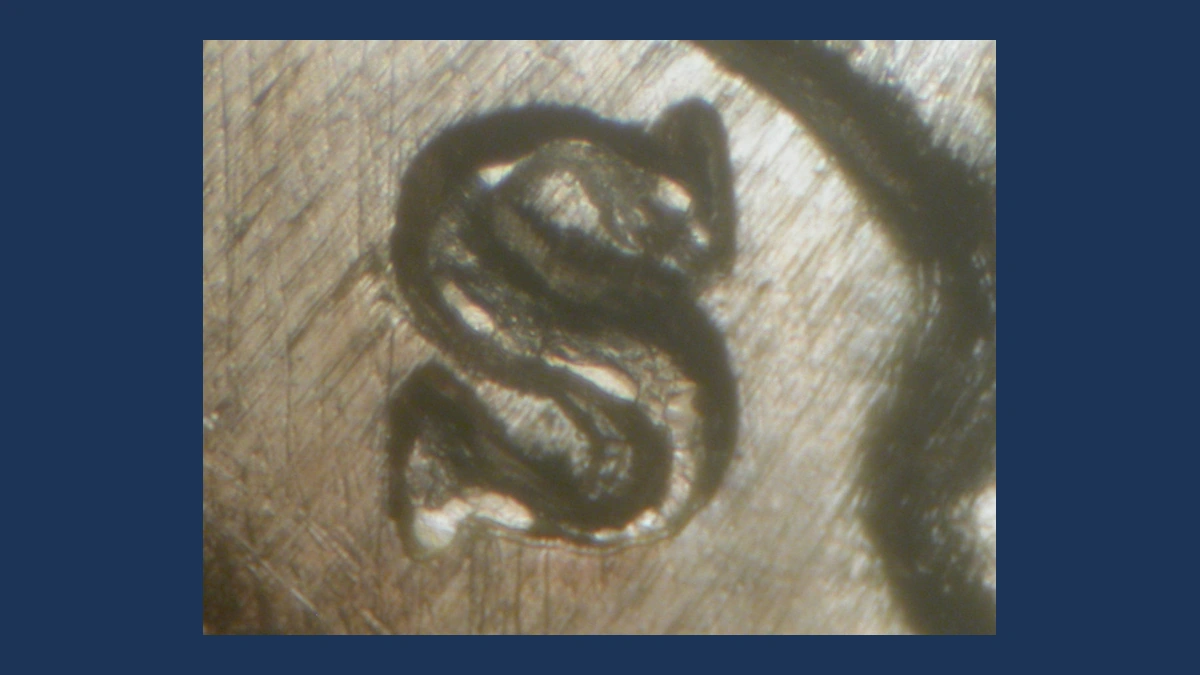
An extra D or S outline can come from punching the mintmark into a stamping tool more than once. Part of an earlier punch remains beside the final letter and transfers onto later coins.
Denver examples show extra D shapes to the southwest or west. San Francisco references describe two westward S/S examples, separated by other small marks on their tools.
Any claimed front doubling needs its own examination, even when the S matches a known repunched variety. The earlier S proves a separate letter impression, not that the whole front design was doubled.
Estimated Value
The estimated range is $60–$1,500, covering identifiable repunched mintmarks on worn through attractive unworn coins. The visible extra letter and overall condition matter more than a catalog number alone.
For comparison, a 1944-S FS-501 in MS62 sold for $588 in September 2017, while an FS-502 in MS66 brought $893 in November 2013. Both were unworn, with the MS66 better preserved.
Neither sale identifies a 1943 variety.
How to Identify
Find the D or S at the lower left of the back. With a 10× magnifier, follow the extra outline to the west or southwest and see whether it forms part of another letter.
A random ridge beside the mintmark is not enough. Compare any supporting cracks or lines with the correct variety, especially when separating the two San Francisco examples.
If front doubling is claimed, inspect the front separately rather than assuming it from the S. Photograph the mintmark without cleaning the surrounding metal.
Check about 12.50 g on a scale and 30.6 mm with calipers, including the ridged edge. The first useful clue is a recognizable second D or S contour in the reported direction.
8. 1943 Walking Liberty Half Dollar Reported Rim Cuds (Estimated Up to $2,000)
A raised lump joined to the rim may come from a broken stamping tool. When a piece of steel breaks away at the tool’s edge, coin metal fills the empty space.
Collectors call the resulting rim-connected lump a cud. It replaces part of the intended design rather than removing a bite from the coin.
General 1943 reports mention cuds, and one author describes a feature above the eagle’s head on a 1943-S. The report does not establish its rim connection in a certified photograph, so the actual raised area still needs examination.
Estimated Value
A genuine rim cud has an estimated $150–$2,000 range, depending on size, lost design, and condition. Neither 1943 report supplies an recorded sale price.
A large 1973-S Kennedy proof cud sold for $2,040 in March 2022. It was a specially made collector coin graded NGC PR67 Cameo, with well-preserved surfaces and contrasting designs.
That different format illustrates a dramatic example, not the expected price of a small break on a regular Walker.
How to Identify
Follow the raised area to the rim under low light. A true cud should connect with the edge and replace design that would normally appear there.
Use a 10× magnifier to inspect the boundary. Added solder, corrosion, or a rim folded inward by an impact can make a lump without a broken stamping tool.
An isolated raised spot above the eagle’s head may be a smaller tool chip instead. Check the opposite face for related weakness, but do not assume it must appear at a particular location.
A scale and calipers can compare with the normal 12.50 g and about 30.6 mm.
Include edge photographs. The quickest visible distinction is whether original raised coin metal replaces the design all the way to the rim.
9. 1943 Walking Liberty Half Dollar Reported Folded Planchet (Estimated Up to $5,000)
An oddly folded coin may have bent before striking or long after it left the Mint. The order matters more than the dramatic shape.
A year list mentions folded 1943 coins, but does not establish a particular certified example. Its explanation also mixes cutting the blank with folding it.
For a genuine folded-blank error, the design should show that the tools struck metal already overlapping or folding during the strike. A normal finished coin bent in a vise is damage, even if it has doubled thickness and a similar outline.
Estimated Value
A professionally identified folded-blank Walker has an estimated $1,000–$5,000 range. This does not assign a value to the poorly described candidate in the year list.
A different 1944 double strike graded NGC MS62 sold for $4,320 in December 2022. It was unworn with noticeable marks and shows demand for dramatic striking errors.
However, a double strike is not a folded-blank sale and cannot establish that the reported 1943 bend happened at the Mint.
How to Identify
Leave the coin folded. Opening it can break the metal and destroy the surfaces needed to understand what happened.
Use a 10× magnifier to inspect the design at the fold. Look for details stamped into overlapping metal, rather than completed letters or figures merely bent out of shape later.
A scale should relate to the normal 12.50 g unless metal is missing. Photograph the altered thickness and outline, and use calipers only where they will not squeeze the fold.
Compare with the normal 30.6 mm width and inspect any surviving edge ridges. A specialist should check tool marks and fresh breaks.
The central question is whether struck design crosses already folded metal or simply bends with a finished coin.
10. 1943 Walking Liberty Half Dollar Reported Double Strike (Estimated Up to $6,500)
A second strike can leave an earlier portrait or lettering visible beneath another impression. The overlapping designs show how the coin moved between blows.
Year reports mention 1943 double strikes without establishing a particular mint or amount of movement. Nearby illustrations also include 1942-S and 1945-S coins, whose details must stay with their own dates.
A genuine 1943 example needs its own readable year and evidence of two strikes. A tiny flat ledge beside one letter is not enough, because movement during a single strike can produce that much smaller effect.
Estimated Value
The estimated range is $1,500–$6,500 for a genuine 1943 double strike with a readable sequence and secure date. It uses same-series comparisons rather than a known sale of the general report.
A dated 1944 double strike sold for $4,320 in December 2022, with its second impression off-center. NGC graded it MS62, meaning no circulation wear but noticeable marks.
Its year, condition, and particular overlapping designs remain part of that comparison.
How to Identify
Choose an earlier letter or portrait detail and follow it with a 10× magnifier. See whether it belongs to a separate arrangement of design beneath the later impression.
Photograph both sides before deciding how far the coin moved. A proposed turn or off-center second strike should explain the visible overlap, not just one confusing mark.
The intended blank weighed 12.50 g and measured about 30.6 mm. Check retained weight with a scale and use calipers to record any expansion.
Inspect the edge ridges, seams, and crushed metal for evidence of squeezing or assembly after striking. Start with two distinct sets of raised design that each fit a possible striking position on the same dated coin.
11. 1943 Walking Liberty Half Dollar Reported Broadstrike (Estimated Up to $7,000)
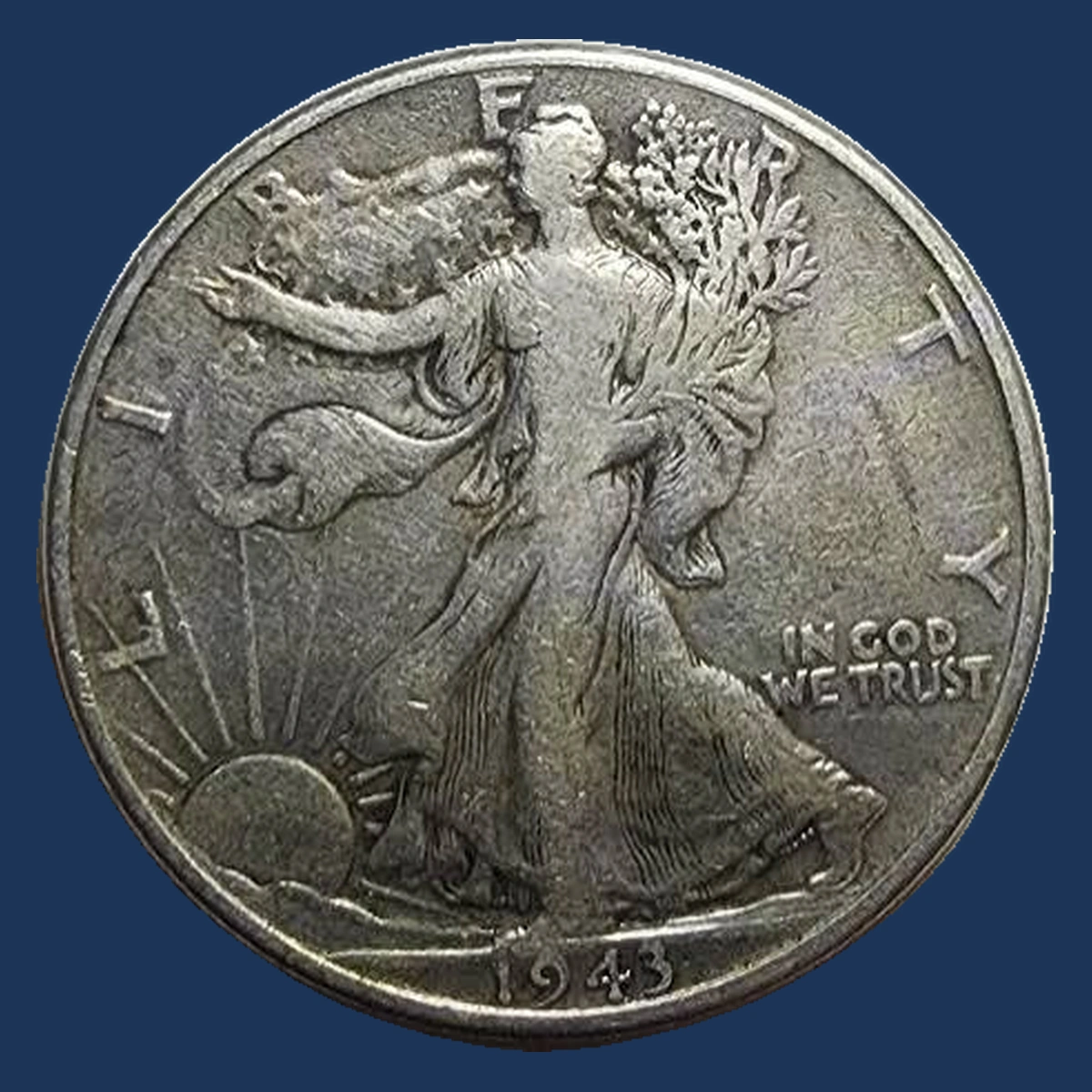
An unusually wide coin can still carry the complete design. A broadstrike happens when the collar, the ring that limits the coin’s width, fails to restrain the metal during striking.
The blank spreads outward and may develop an uneven border. A reported 1943 broadstrike is listed without a particular diameter, mint, or certified example.
That makes the physical coin especially important. Hammering or squeezing a finished half dollar can also widen it, but the edge and design should show a different result from metal spreading naturally under the stamping tools.
Estimated Value
Estimate $1,000–$7,000 for a genuine Walker broadstrike, with expansion, surfaces, and preservation affecting value. A documented 1944 PCGS MS62 provides a nearby example of the shape, without an recorded sale price here.
A separate 1944 half struck 30% off-center sold for $5,760 in November 2022, graded PCGS XF40, meaning clear circulation wear. That different error offers broad context for dramatic silver-half mistakes, rather than a direct broadstrike price.
How to Identify
Compare the whole outline with a normal coin. Use calipers in several directions against about 30.6 mm and a scale against 12.50 g for an intact blank.
With a 10× magnifier, follow the outer letters and date on both faces. A broadstrike should retain the complete intended design inside the expanded metal.
Design running off the coin beside an empty crescent instead suggests an off-center strike. Examine the edge ridges and wider areas for filing, hammering, or flattened details.
Keep the full date visible when taking photographs, since another year’s broadstrike cannot identify this reported 1943 example. Begin with a complete design inside a naturally expanded outline, rather than judging the width of only one border.
12. 1943 S Walking Liberty Half Dollar Missing AW Initials (Estimated Up to $7,500)
A tiny empty spot on the back can identify the 1943-S Missing Initials variety. Designer Adolph Weinman’s AW letters normally sit beneath the wingtip on the viewer’s right.
Heavy polishing of a stamping tool can remove these shallow details. Later coins then lack the initials even though nearby parts of the design still form.
The recognized 1943-S variety is called FS-901. Wear or deliberate smoothing can also hide the letters, and a blurry photograph may miss faint surviving strokes.
Complete absence needs a closer look at the actual metal.
Estimated Value
The estimated range is $75–$7,500, from worn examples to exceptionally preserved coins. Greysheet’s retail guide lists MS67 at $5,250 and CAC-approved MS67 at $7,500.
MS67 describes an unworn coin with very few marks, and CAC approval is an additional quality review. These are guide figures rather than auction sales.
The extraordinary condition contributes heavily to the upper prices, which should not be applied to an ordinary worn example.
How to Identify
Find AW on a normal reverse first. Then examine the same spot below the wingtip on your coin with a 10× magnifier while moving the light.
Check for any surviving part of A or W. Faint strokes should not be ignored to create a missing-initials identification.
Compare the nearby feathers and smooth background for wear, rubbing, or fine scratches. Deliberate smoothing may remove the initials while damaging the surrounding surface.
Confirm the S at the lower left of the back. Use a scale and calipers for about 12.50 g and 30.6 mm, and photograph the ridged edge.
Leave the surface untouched.
The first visible test is whether AW is truly absent while the adjacent design and metal remain original.
13. 1943 Walking Liberty Half Dollar 60% Off-Center Strike (Estimated Up to $15,000)
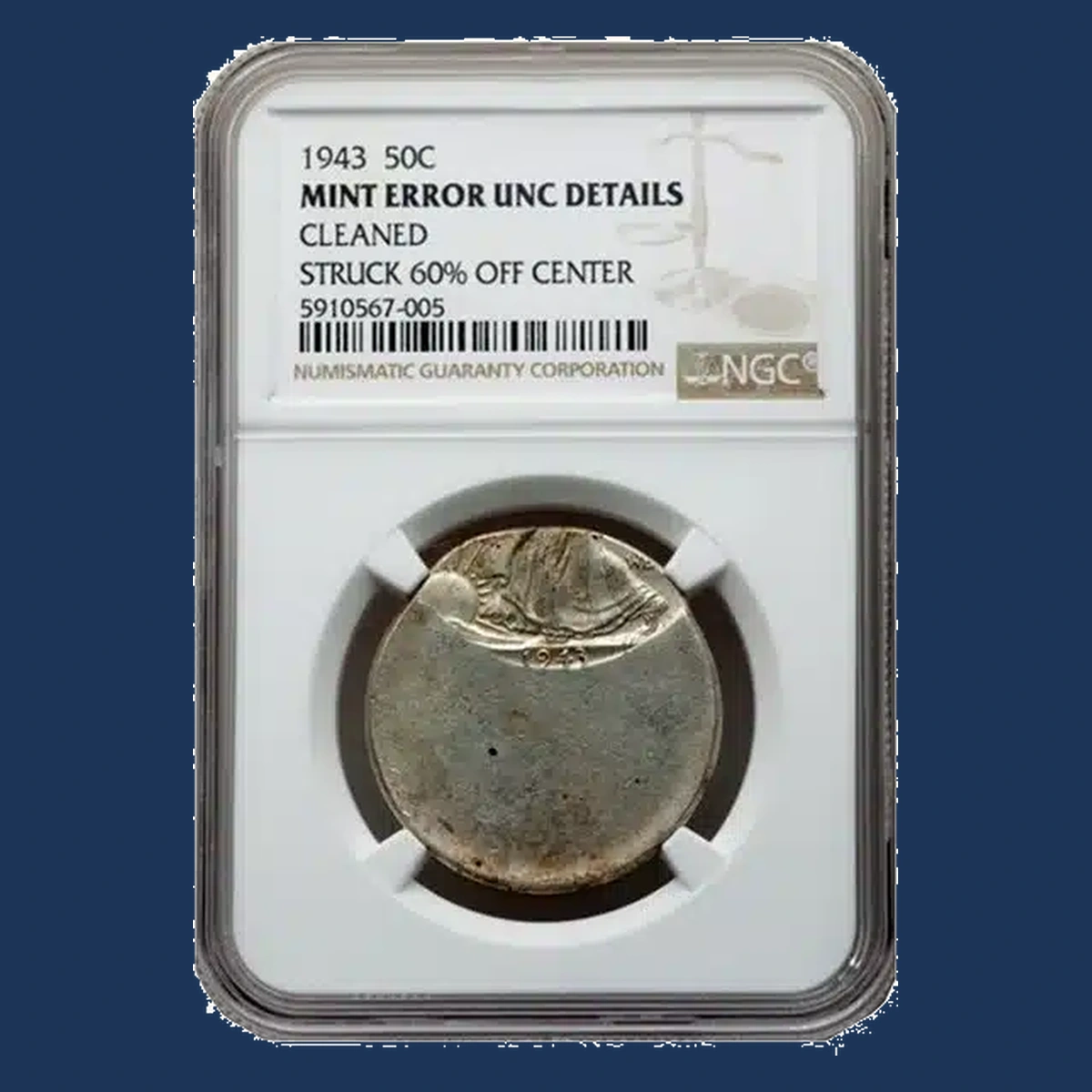
Most of the design missed the coin on the auctioned example struck 60% off-center toward one o’clock. The remaining struck area preserves the year but leaves the normal mintmark position beyond the available design.
That missing location does not prove Philadelphia origin. It also does not establish an overdate.
NGC labeled the coin Uncirculated Details, Cleaned. This means it has no circulation wear but its surfaces were cleaned.
The cleaning happened after manufacture, while the off-center shape records the blank’s position during striking, so both facts belong in its description.
Estimated Value
The estimated range is $4,000–$15,000 for a dramatic genuine Walker off-center strike. Cleaning affects where the reported 1943 piece fits within that comparison.
A 1944 example struck 30% off-center, graded PCGS XF40 with clear wear, sold for $5,760 in November 2022. A 1918 example only 10% off-center but graded MS65, unworn with relatively few marks, brought $10,575 in April 2013.
Condition can matter as much as the amount of movement.
How to Identify
Look at the date and empty crescent together. Hold the coin consistently so you can compare the reported shift toward one o’clock on both faces.
Use a 10× magnifier where the normal blank surface meets the incomplete design. Grinding away a crescent or shifting only one stamping tool will leave a different relationship.
Do not assume there was no mintmark simply because its usual position is missing. The remaining design cannot answer a question about metal that never received that detail.
Check weight against 12.50 g on a scale and record the changed outline with calipers against a normal 30.6 mm coin. Examine cleaning separately.
The first check is the readable 1943 date beside matching unstruck areas on both faces.
14. 1943 Walking Liberty Half Dollar Wrong Planchets and Undated Comparisons (Estimated Up to $60,000)
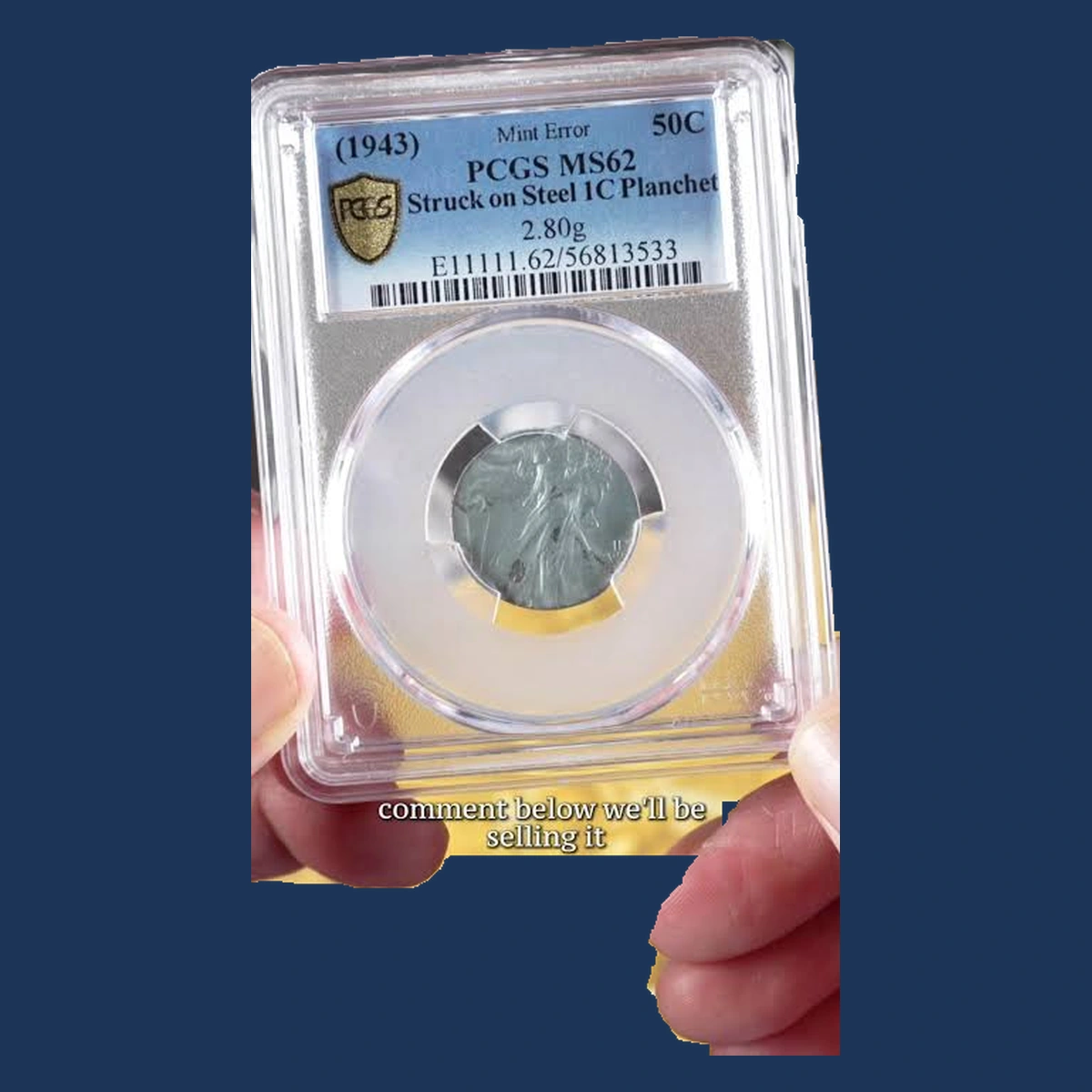
The brass example weighs 7.47 g and carries doubled motto and sun-ray details called FS-101. NGC graded it MS63, meaning no circulation wear but noticeable marks.
Its proposed San Francisco origin comes from production history, not a visible S.
A separate steel-cent-blank coin has no date. Reports place it possibly in 1943 or 1944, with MS64 and MS62 examples requiring separate identities.
Another dealer called an El Salvador-blank coin 1943-S, while a related documented coin is 1945-S. These comparisons do not establish additional dated 1943 discoveries.
Estimated Value
The Peru-blank MS63 sold for $21,150 in November 2013, supporting a $15,000–$30,000 estimate. Separate estimates are $30,000–$60,000 for the undated steel candidate and $12,000–$25,000 for an identified El Salvador example.
The Peru auction record identifies its own coin. The related 1945-S El Salvador piece brought $15,275 that month, while the steel MS64’s $44,062.50 record notes that its owner repurchased it.
Neither result supplies a missing year.
How to Identify
Weigh each coin separately on a scale. The Peru example’s 7.47 g differs sharply from the normal 12.50 g.
Use calipers to record its outline against about 30.6 mm.
With a 10× magnifier, inspect the cut-off design and original edge for trimming or plating. Its doubled motto and rays do not supply an S where no mintmark survives.
The undated steel coin needs its own measurements and photographs, while the El Salvador claim needs a readable date. Never combine details from different grading holders.
A specialist should compare the metal tests with the original strike. Start with the actual date, edge, and weight of each coin, keeping undated pieces separate from the dated brass example.
Conclusion
Check the date and mint before comparing the error itself. A missing initial, an extra letter outline, and a coin struck on foreign metal each need a different close look.
Estimates span $50–$60,000, but the highest range concerns an undated steel example, not a confirmed dated 1943 coin. Preserve original surfaces and keep cleaning, missing dates, and disputed years attached to every price comparison.