1933 Half Dollar Error List with Pictures

Three fine lines appear on the back of a 1933-S half dollar that sold for $9,775. Its exceptional condition explains the January 2011 Heritage price; the lines alone were not worth that amount.
The 1933 half dollar errors here span approximately $50–$9,775, from worn coins with small die cracks to that high-grade example. A doubled skirt hem and reported off-center strikes offer other features to explore.
Start with the close-up checks below.
1. 1933-S Walking Liberty Half Dollar Doubled Die Obverse Error (Estimated Up to $2,500)
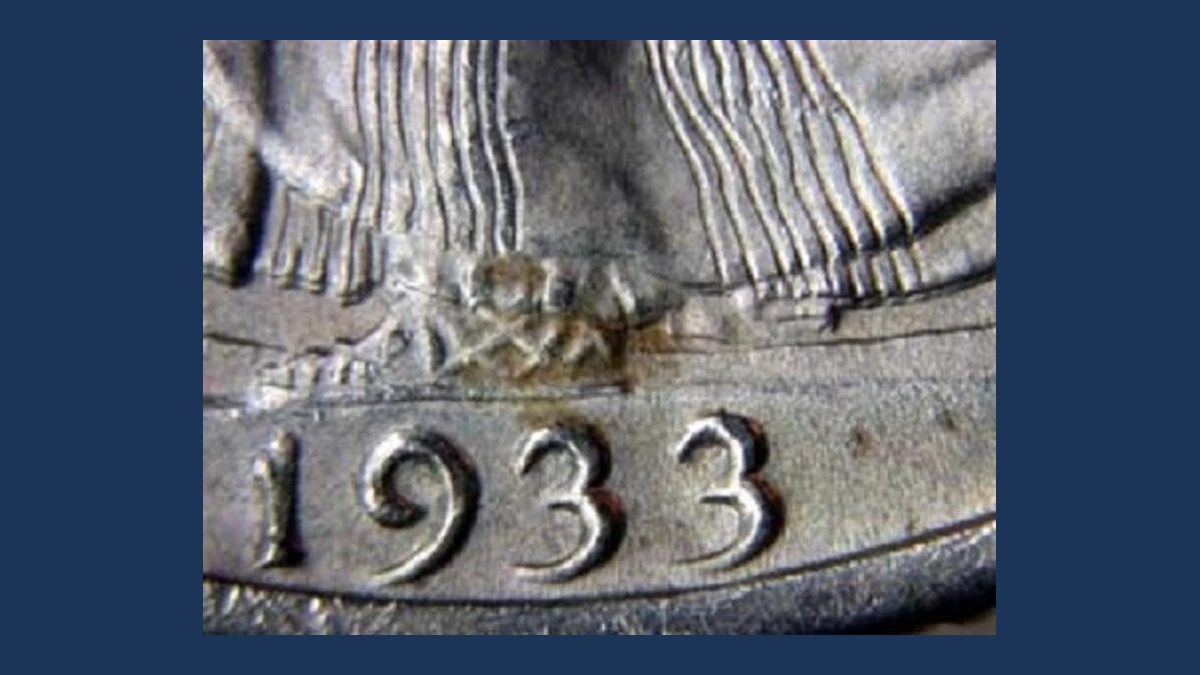
Look at the bottom of Liberty’s skirt. A faint extra outline along the hem is the main clue to this 1933-S doubled die.
DDO-001 and VP-001 are two catalog names for the same variety. The doubling is on the front, also called the obverse.
The die is the steel tool that stamps the design onto each blank. A small shift while that tool received its design left the extra hem outline.
The feature is subtle. Wear can make it harder to see, so a clear reference photo is more useful than a general claim of doubled letters.
Estimated Value
The estimated range is $100–$2,500, from worn examples to unworn coins around grade MS64. At the upper end, buyers are also paying for a scarce date in good condition.
The Coins Value guide reports a $1,560 sale in June 2021 for an NGC MS64 CAC VP-001 at Stack’s Bowers. That is a reported historical sale of one coin.
It does not establish a fixed extra fee for every doubled hem.
How to Identify
Use a reference photo that keeps Liberty’s feet and lower skirt visible. With a 10× magnifier, follow the extra hem outline and compare its shape, rather than checking the date for unrelated marks.
The extra detail should rise from the surface. A scratch cuts into the metal, while a flat shelf can result from movement during striking.
Check the S at the lower left of the reverse. The coin should also have grooves around its edge and measure about 30.6 millimeters.
When safely accessible, use calipers and a scale to compare it with the 12.50-gram unworn standard. The small, matching spread along the hem is what connects your coin to DDO-001 or VP-001.
2. 1933-S Walking Liberty Half Dollar Off-Center Strike Error (Estimated Up to $3,500)
A blank crescent beside missing design can point to an off-center strike. The metal disc sat in the wrong position when the dies came together.
This error is reported for the 1933-S. It should affect both faces, because part of the disc missed the intended strike area.
One uneven border is not enough. A single misplaced die can shift the design on one face while the other remains centered.
Keep the date and S mintmark visible when comparing examples. The direction and size of the shift belong to the individual coin, not every off-center half from this year.
Estimated Value
The year guide proposes an estimated $300–$3,500 for genuine, clearly identifiable off-center examples. It is not a recorded sale of one certified 1933-S.
For comparison, an 1827 Capped Bust half struck ten percent off center sold for $2,640 in September 2025. NGC graded that worn coin VG8.
The comparison involves another design, date, and collector market. It shows what an older silver-half error can bring, not what every 1933-S should cost.
How to Identify
The date comes first. Read 1933 and find the S on the back before using a price for this issue.
Then check both faces with a magnifier. Missing design should go with untouched blank metal, while a shift on only one side suggests a die-alignment problem.
Examine the blank margin for grinding marks. Removing part of a finished coin does not produce the same surface as a missed strike.
A normal half weighs 12.50 grams and measures about 30.6 millimeters, with grooves around its edge. Scale and caliper checks are useful when safely accessible, though the strike can distort the outline and leave incomplete edge grooves.
A specialist can confirm whether the visible date, mintmark, and displaced designs belong to one genuine error coin.
3. 1933-S Walking Liberty Half Dollar Reverse Die Crack Error (Up to $9,775)
The back of one 1933-S half shows three raised crack lines. One runs from the second S in STATES toward the eagle’s upper wing.
Another runs from the O in DOLLAR through the rear leg and tail. The third lies near eight o’clock.
The coin did not crack apart. Instead, fractures opened in the die, and silver entered those narrow spaces during striking.
The result is raised lines on the finished coin. All three appear on the same NGC MS67 example described by CoinWeek, whose high grade means unusually fine uncirculated condition.
Estimated Value
The documented MS67 coin sold for $9,775 at Heritage in January 2011. That was the price of the exceptionally preserved coin, not a $9,775 premium for its cracks.
Worn examples with minor visible cracks have an estimated $50–$300 range. Including the documented high-grade coin gives a broader comparison span of $50–$9,775.
The large difference comes mainly from condition. Three raised lines do not turn an ordinary worn half into the same valuable specimen.
How to Identify
A raised line catches light differently from a scratch. Tilt the reverse under a lamp and use a magnifier to inspect the three described paths.
Follow each line from its beginning to its end. A genuine die crack can cross both open areas and raised design, while a scratch usually cuts a groove.
Keep the entire eagle in a reference photograph. This prevents separate scratches from looking like the three crack paths on the documented coin.
Calipers should show about 30.6 millimeters, and a safely accessible scale reading can be compared with 12.50 grams when unworn. Include the grooved edge, date, and S in your checks; all three matching raised paths identify this particular cracked die.
Conclusion
Small details can have different causes: the doubled skirt began while a die was made, while the reverse cracks formed as a die wore out. An off-center coin instead records a misplaced blank.
The overall estimated span is $50–$9,775. Most worn cracked-die coins fall far below the top figure, which belongs to one exceptional MS67 half; match the feature and condition before using a sale price.