1801 Half Dollar Error List with Pictures

One scratched 1801 half dollar sold for $8,050 at Heritage in July 2008. Faint marks around its central design came from a minting accident, while its obvious scratches came later.
When checking 1801 half dollar errors, telling those marks apart is the first step. A similarly sharp but scratched example has an estimated range of $6,000–$8,050.
Read on to see how a die clash leaves a trace of the opposite design.
1801 Draped Bust Half Dollar Clashed Dies Error (Up to $8,050)
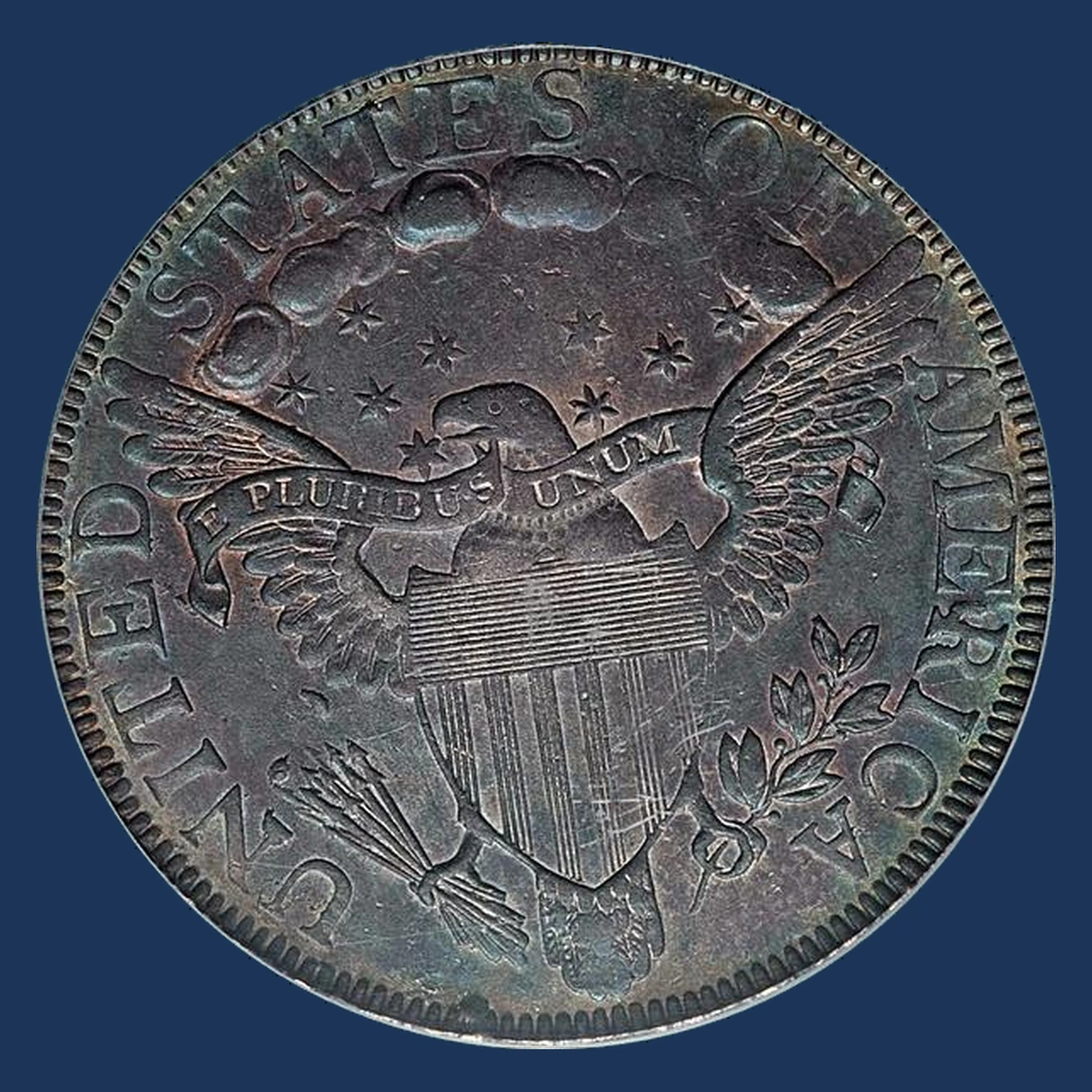
Faint pieces of the opposite design can appear around the center of a coin. These marks form when the two dies, the steel tools that stamp the design, hit each other without a blank between them.
Their damaged surfaces can then leave extra traces on later coins. Collectors call this a die clash.
Heritage described small clash marks on both faces of an 1801 example known as O-102. The same coin also had many scratches, mainly on the front.
They came from different events. A genuine mint-made clash does not turn nearby scratches into valuable errors.
Estimated Value
The scratched O-102 sold for $8,050 on July 30, 2008. Its NCS AU Details grade means it retained much of its design but had a condition problem.
An estimated $6,000–$8,050 suits a similarly sharp, scratched example. This historical sale values the entire scarce early half dollar, not just the clash marks.
The auction did not assign a separate clash premium. Adding another large amount for the faint extra design would overstate what the sale proves.
How to Identify
Examine the central design with a 10× magnifier. Look for a faint shape that fits part of the other face, rather than a random line.
Then inspect the scratches separately. Cuts into the metal with irregular edges point toward damage after the coin was made.
Compare both faces with photographs of the auctioned O-102. That number identifies a particular pair of dies, so the full design details also need to match.
This early half dollar has different specifications from later silver halves. Use a scale and calipers against 13.48 g and about 32.5 mm, allowing for wear.
Inspect the lettered edge, which should not have the grooves found on later halves. A matching central trace from the opposite design is the quickest useful clash check.
Conclusion
An 1801 half dollar can have a real mint error and later damage at the same time. The auctioned O-102 shows both faint clash marks and obvious scratches.
Its $8,050 historical sale supports an estimated $6,000–$8,050 for similarly sharp, scratched examples. Judge the complete coin within that range, and use the opposite design to identify a clash instead of treating every unusual line as an error.