1839 Capped Bust Half Dollar Error List with Pictures

An 1839-O Capped Bust half dollar with an extra mintmark outline brought $11,400 at Stack’s Bowers in 2025. Graded PCGS MS61, it was unworn but showed surface marks.
These 1839 Capped Bust half dollar errors have estimated values of $800–$12,000 across the grades discussed. Read on to check raised cracks, a reported lint impression, an upside-down back, and extra curves beside the O above the date.
1. 1839-O Capped Bust Half Dollar Die Cracks (Estimated Up to $3,000)
Raised lines can almost circle the design on an 1839-O half dollar. They show where the dies, the steel stamping tools, began to crack.
Silver entered those narrow gaps during striking and left ridges on the coin. A 2007 auction described an example graded ANACS VF35, meaning it had moderate wear.
Its cracks followed the date and front-side stars. On the back, a large branch ran from the AT area of STATES toward the eagle’s beak.
Connected raised lines point to a damaged stamping tool. They differ from scratches cut into the silver later.
Estimated Value
Circulated examples with clear cracks have an estimated value of $800–$3,000. A Gerry Fortin Rare Coins listing asks $2,195 for a PCGS VF30 example with extensive cracking.
That is an asking price, not an auction result. The scarce New Orleans coin and its condition account for much of the value.
An obvious network may attract collectors, but its separate branches do not each add another error premium.
How to Identify
Use a 10× magnifier to inspect the stars and date before turning to STATES on the back. Follow the branch from near AT toward the eagle’s beak.
Under low light, a crack should look raised rather than cut into the silver. Different coins may show different stages of the same growing crack.
This design has an O above the date, HALF DOL. on the back, and grooves around the edge. A scale and calipers provide checks against roughly 13.36 grams and 30 millimeters.
Inspect the edge for later damage. To check the crack pattern quickly, trace the connected raised lines around the design and compare the branch beside STATES.
2. 1839-O Capped Bust Half Dollar Reported Lint Strike-Through (Estimated Up to $3,500)
A mark runs from the M in AMERICA into the eagle’s wing on a coin described in a 1992 auction. The catalog called it a lint impression.
Lint trapped between the steel stamping tool and the metal disc could leave a shallow mark as the design was struck. That mark could cross both lettering and feathers.
The same description also called the area a metal flaw. Its cause is therefore reported, not established.
A recessed impression and a peeling layer are different features. The surface at the mark’s edge helps tell them apart.
Estimated Value
A circulated 1839-O with this reported feature has an estimated value of $1,500–$3,500. For comparison, a different 1839-O with a repunched mintmark sold for $3,120 at Stack’s Bowers in June 2025.
That NGC AU53 coin had slight wear. Its sale helps compare the date and condition, not the value of the 1992 lint example.
No separate premium is assigned to the reported lint. Damage or peeling metal would affect the price.
How to Identify
Find the M in AMERICA, then follow the mark into the wing with a 10× magnifier. Look at how it crosses the letter and feathers.
A shallow impression may interrupt the design smoothly. A lifted flake or a gap between silver layers instead points toward peeling metal, often called lamination.
Check the O above the date and the grooves around the edge. Use a scale to compare with the original 13.36 grams and calipers to measure about 30 millimeters across.
Do not lift any loose metal. The quickest useful check is the boundary between the M and wing: look for a pressed-in shape rather than a cut or peeling layer.
3. 1839-O Capped Bust Half Dollar 180-Degree Rotated Reverse (Estimated Up to $6,000)
Flip this coin from top to bottom and the eagle stays upside down. The back was struck 180 degrees away from the usual United States coin alignment.
This is also called medal alignment. A sideways flip instead leaves the eagle upright, which can hide the difference.
Two separate photographs with both designs turned upright cannot show this error. The way the coin is flipped matters.
Stack’s Bowers described this alignment on a lightly worn NGC AU58+ example in 2012. That coin also had an extra O outline, a separate feature on the same coin.
Estimated Value
The 2012 auction record lists $3,525 for the AU58+ example with this alignment. Estimated values run from $800–$6,000 across worn coins and attractive, lightly worn examples.
The sale price covered the entire coin, including its condition and extra mintmark outline. It cannot show exactly how much the rotation added.
Cleaning or other damage can lower a coin’s value. Compare such pieces with similarly damaged examples.
How to Identify
Keep Liberty upright in a secure transparent holder. Flip it straight from top to bottom without allowing the coin to twist sideways.
The eagle should finish upside down on the reported error. Repeat the same motion to make sure a twist did not change the result.
Use a magnifier to confirm the O above the date and the grooved edge of this Capped Bust design. A scale and calipers should give roughly 13.36 grams and 30 millimeters, allowing for wear.
Separate photos adjusted to look upright are not enough. To confirm the rotation quickly, repeat the top-to-bottom flip and watch whether the eagle consistently ends upside down.
4. 1839-O Capped Bust Half Dollar Repunched Mintmark (Estimated Up to $12,000)
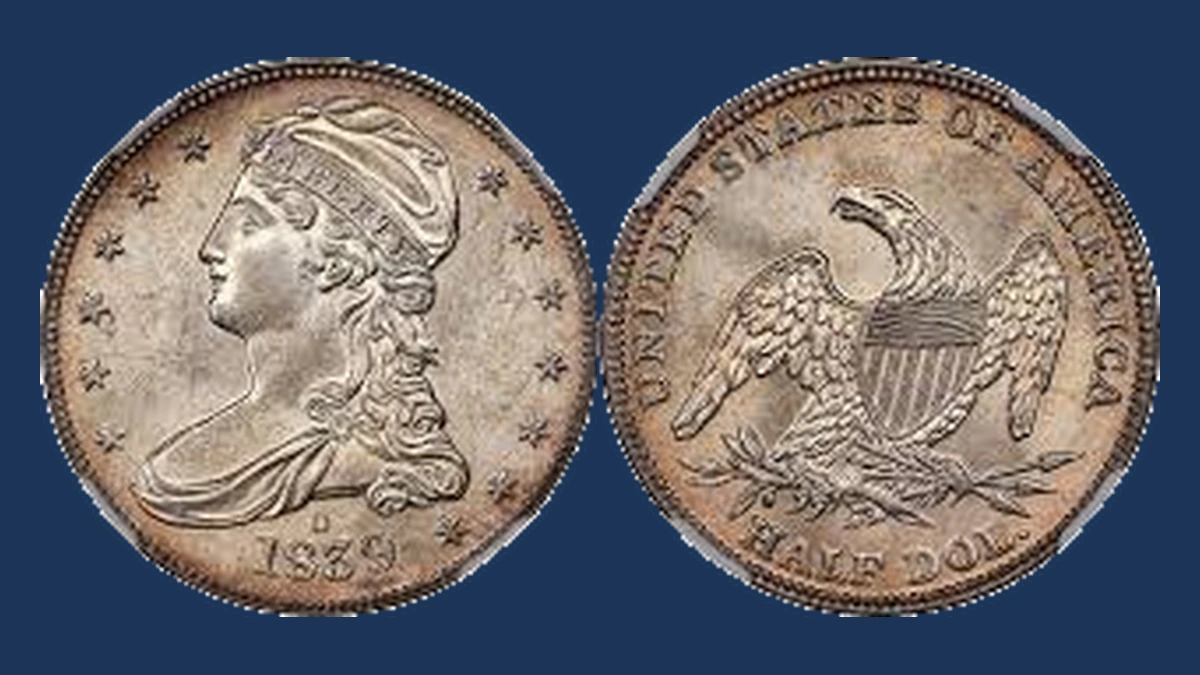
An extra arc beside the O can show where the mintmark punch first landed. On this design, the New Orleans letter sits above the date on the front.
Workers punched the O into the steel stamping tool by hand. If the punch shifted, the final impression might not cover all of the earlier one.
Recorded examples show different arrangements, including traces below or to the right and a tilted impression toward the upper left. Compare each coin separately.
A thick O is not enough. Look for part of a second recognizable outline.
Estimated Value
A PCGS MS61 example brought $11,400 at Stack’s Bowers’ 2025 Summer Showcase sale. An NGC AU53 example sold for $3,120 at the firm’s June 2025 auction.
These results support an estimated $1,000–$12,000 range from circulated coins through lower unworn grades. Condition and original surfaces explain much of that spread.
The extra O belongs to an already scarce coin. It should not be given a separate price without considering the whole piece.
How to Identify
Study both the inside and outside of the O with a 10× magnifier. An earlier punch may leave a small arc rather than a complete second letter.
Compare its position with a confirmed example showing the same arrangement. Do not combine traces described on different coins into one expected pattern.
Check HALF DOL. on the back and the grooves around the edge for damage. Use calipers for about 30 millimeters across and a scale to compare with the original 13.36 grams.
A recessed nick or flat shelf can imitate doubling. For the fastest check, match the extra raised O arc and its position to the confirmed comparison coin.
Conclusion
Estimated values of $800–$12,000 cover different grades and features on the 1839-O Capped Bust half dollar. More than one feature can appear on the same coin, so do not add the separate ranges together.
Use a controlled flip for rotation, magnification for raised cracks and extra O curves, and a close look at the surface for the reported lint mark. Match condition as carefully as the error.