1830 Half Dollar Error List with Pictures

A raised crack curves from the stars toward LIBERTY on the Dale Friend 1830 half dollar. That PCGS MS65 example sold for $4,700 in May 2022, with its excellent unworn condition contributing to the price.
The 1830 half dollar errors below have estimated values from $100 to $8,000 across different conditions. Read on to check the edge words, turned designs, overlapping impressions, and a back whose surface shape changed during production.
1. 1830 Capped Bust Half Dollar Reported Rotated Dies (Estimated Up to $400 for Modest Circulated Examples)
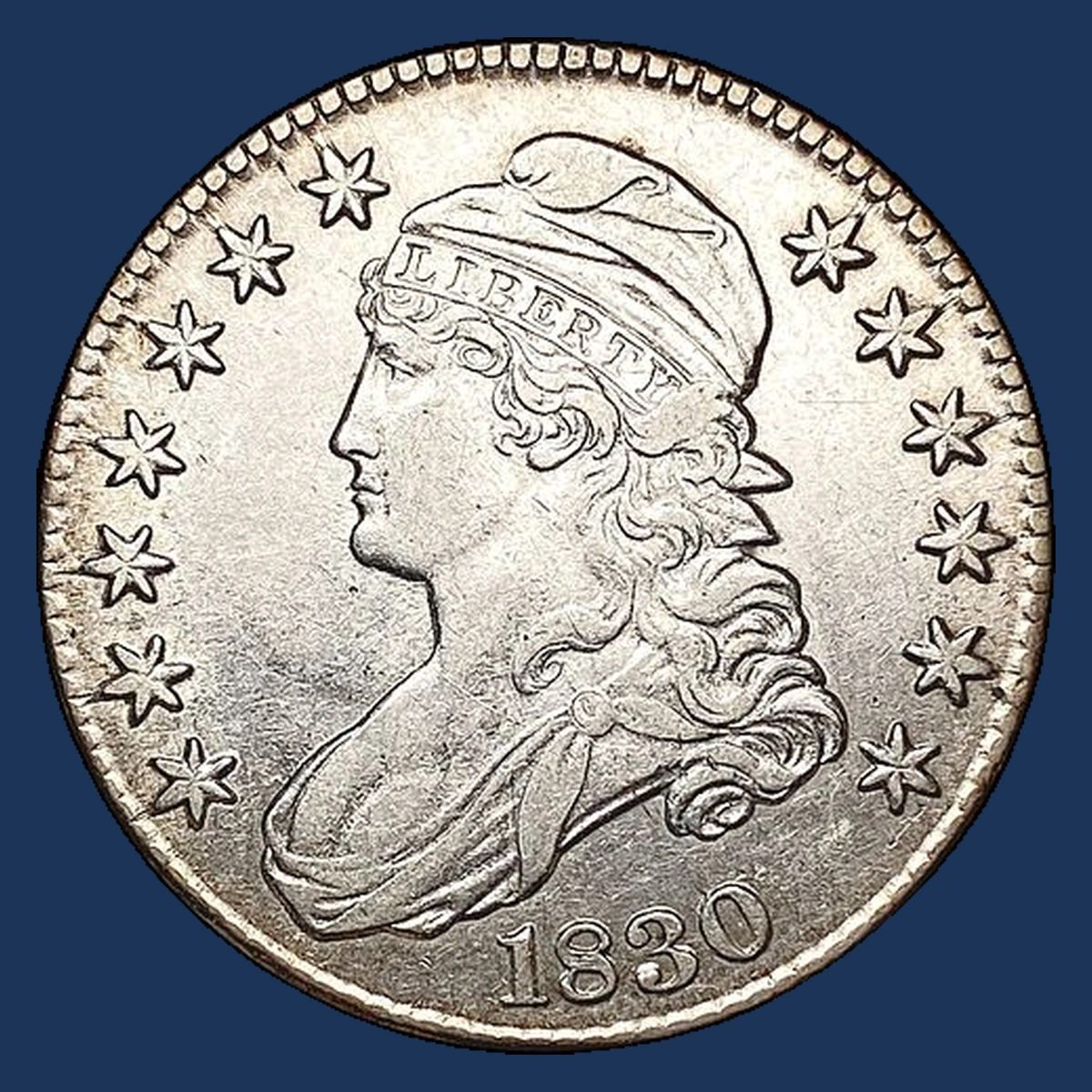
The eagle may lean when you turn an apparently normal 1830 half dollar over. Gold Standard Auctions described one coin as having rotated dies, meaning the two stamping tools faced the wrong relative directions.
The available title gives no angle or direction. Those details must come from the actual coin.
A photograph can hide the tilt if each side is turned upright separately. Rotation concerns how the front and back line up when you flip the actual coin.
The designs can still be centered on the metal. An uneven border alone is not enough to identify rotation.
Estimated Value
Estimated value is $100–$400 for a worn 1830 with a modest, repeatable rotation. The auction title does not establish a large angle or a final price.
A dealer offers a different 1825 graded NGC VF20 with a rotated back at $228.99 or best offer. VF20 means moderate wear.
That is an asking comparison, not a completed 1830 sale. A much larger turn needs its own comparison after the amount of rotation is measured.
How to Identify
Confirm both faces belong to the same 1830 half dollar and inspect the lettered edge. A scale and calipers can compare 13.48 grams and roughly 32.5 millimeters.
Keep both sides visible in the photographs.
Hold Liberty upright beside a vertical line, then flip the coin from top to bottom without twisting it sideways. Measure the eagle’s lean with a protractor.
Repeat the movement to check for slipping in the holder. The auction report does not justify borrowing an angle from a neighboring listing.
The same lean appearing after repeated controlled flips is the first physical evidence of rotation on this coin.
2. 1830 Capped Bust Half Dollar Collector-Reported Reverse Die Clash (Estimated Up to $650 for VF Examples)
Fine extra shapes appear on the back of the collector’s reported coin. The owner also describes a much broader change in the back’s shape, which is a separate feature.
The extra shapes are called clash marks. They can form after the steel stamping tools meet without a blank, the round metal disc used to make a coin.
The collector identifies an O-119 in VF30 condition, meaning moderate wear. The description does not locate every transferred shape, so the actual coin must show which parts of the opposite design explain the marks on its back.
Estimated Value
Estimated value is $150–$650 for a moderately worn 1830 with recognizable clash marks. The collector’s O-119 is a report, not a traced sale.
An off-center 1830 with heavier wear and a condition problem is currently offered at $1,300. That is a more obvious but different error.
Its asking price does not value these faint traces. Nor should separate prices be added for every unusual feature on the same back.
How to Identify
Separate the fine lines from the broad rise or distortion across the back. A magnifier and changing light help keep those two observations distinct.
Compare the small shapes with the front design, using a reversed photograph if needed to understand how the tools met. Keep full views beside the close pictures.
A scale and calipers can compare 13.48 grams and about 32.5 millimeters. Inspect the lettered edge for impact damage and check whether the whole coin is bent.
A recognizable piece of the opposite design on the back is the first clash evidence to seek, independent of its wider surface shape.
3. 1830 Capped Bust Half Dollar Collector-Reported Reverse Die Sinking (Estimated Up to $900 for VF Examples)
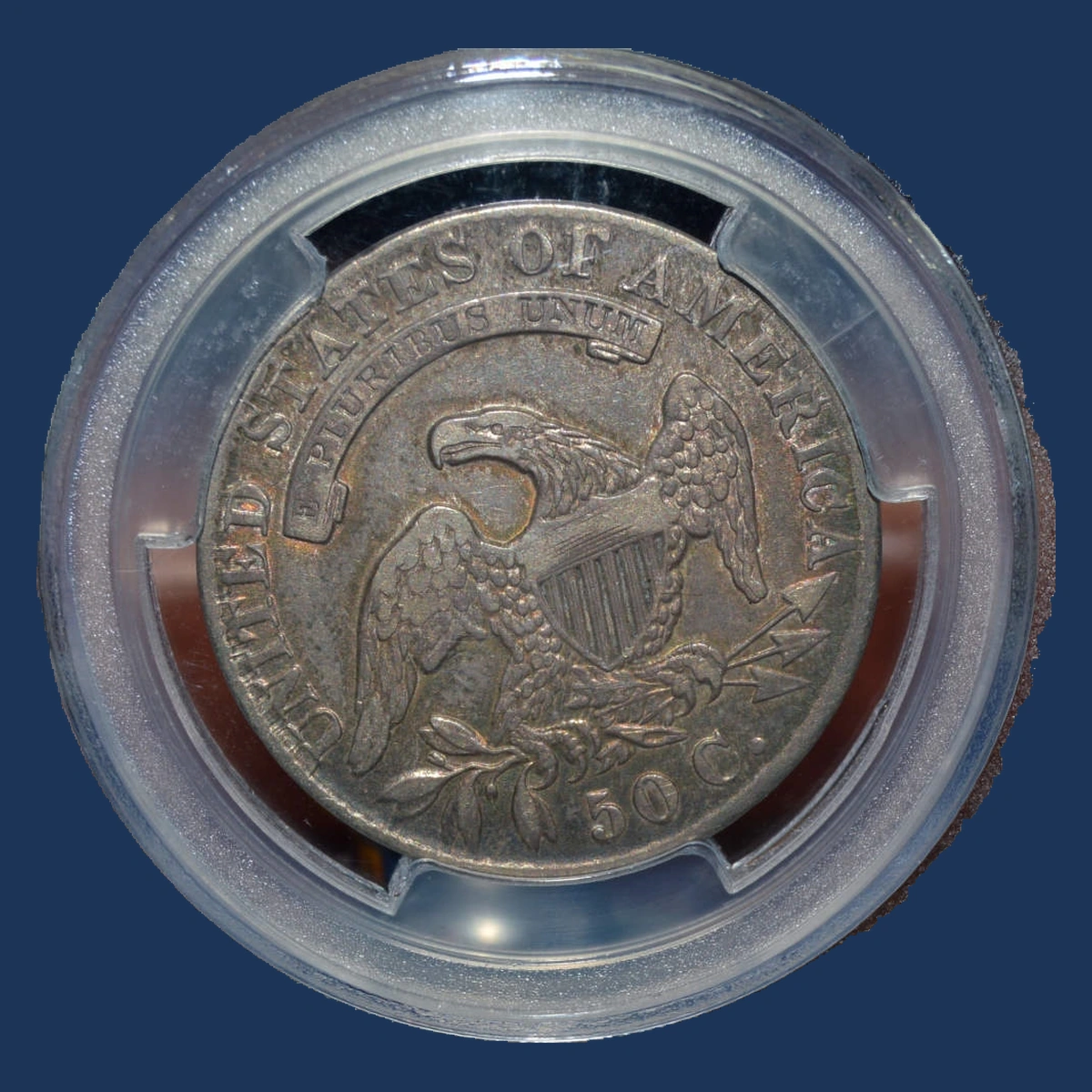
The back can have a broad raised area rather than just an extra line. The owner of an 1830 O-119 describes severe die sinking as well as clash marks.
Here sinking refers to the steel stamping tool, not to a hollow pressed into the coin afterward. An inward change in that tool can leave extra space for coin metal and create a raised or distorted surface.
The text gives no exact boundary for the area. Its shape needs to be examined on the actual example, separately from the small clash traces and from ordinary bending after minting.
Estimated Value
Estimated value is $200–$900 for a moderately worn example with convincing original back distortion. This is an estimate, not a sale assigned to the collector’s VF30.
A mildly off-center 1825 graded PCGS AU53 sold for $600 in June 2024. That lightly worn coin has a different production mistake.
It provides only broad series context. The sinking and clash reports concern one coin, so their estimates should not be added as independent premiums.
How to Identify
View the whole coin from several low angles. Decide whether one area of the back rises or whether the entire piece has been bent.
Use calipers at comparable points to record width and thickness, with about 32.5 millimeters as the normal diameter. A scale compares the original 13.48 grams.
Inspect the lettered edge for impact or compression, then use a magnifier on the design within the changed area. Compare that shape with the reported example rather than just its small clash lines.
A local shape change formed with the stamped design, without signs that the whole coin was bent later, is the first useful test.
4. 1830 Capped Bust Half Dollar Overlapping OALF Edge Inscription (Estimated Up to $1,000 for XF Examples)
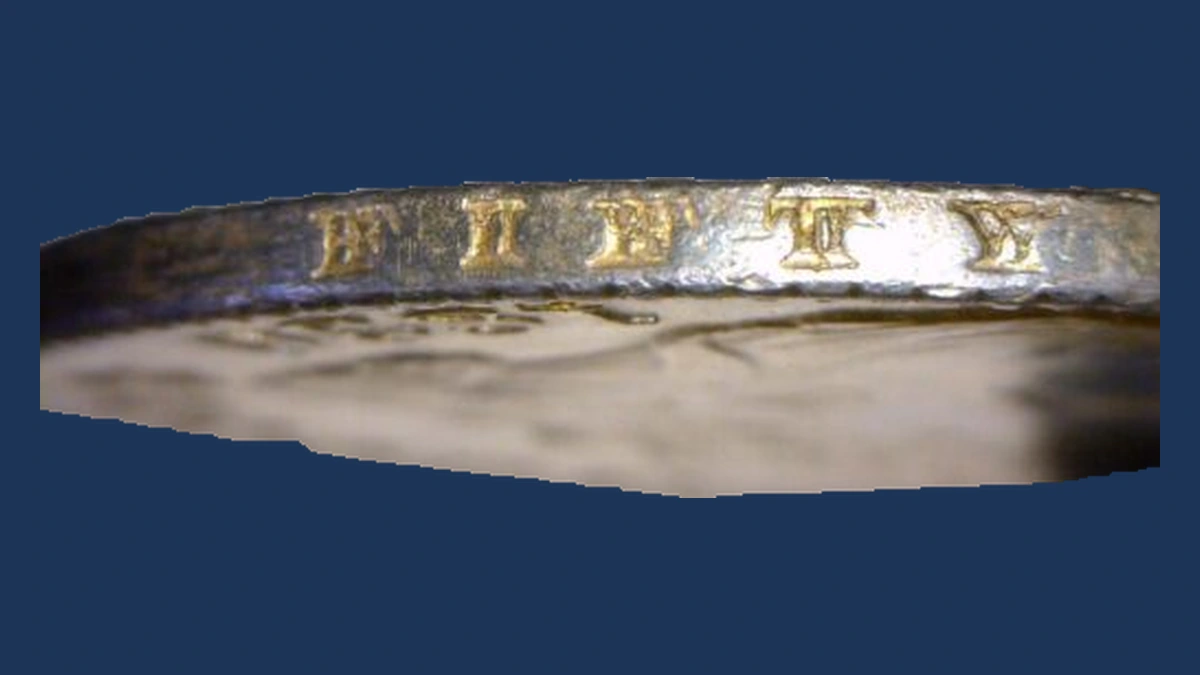
The unusual edge word OALF is made by overlapping letters, not by replacing the normal wording. On the reported 1830, OR crosses the first part of HALF.
The owner described the 1830 as XF, meaning moderate wear with clear remaining detail. The overlap should still be visible as intersecting parts of actual letters.
Edge words were applied before the front and back designs were struck. This error therefore does not require two portraits or an off-center picture, and the letters must be read in sequence rather than accepting an odd-looking word from a small photograph.
Estimated Value
Estimated value is $250–$1,000 for an XF-level 1830 with a clear matching overlap. XF means moderate wear with substantial detail remaining.
An 1834 doubled-edge coin with cleaning and heavier wear sold for $220 in July 2026. That gives a recent lower-condition comparison.
The better-preserved 1830 may bring more, but the estimate is for the complete coin. An odd-looking edge word does not automatically carry the price of a dramatic multiple strike.
How to Identify
Write the full edge inscription in order while turning the coin under a magnifier. At OR and HALF, trace how the stamped letters cross one another.
The owner’s account describes this particular overlap. Photograph the dated faces and use clear views of the actual edge, rather than relying on a written OALF label.
Inspect letter depth for recutting or damage and record the whole edge in overlapping photographs. A scale and calipers can compare the Philadelphia half’s original 13.48 grams and about 32.5 millimeters.
Physical overlap between OR and the beginning of HALF is the immediate observation that explains the reported OALF wording.
5. 1830 Capped Bust Half Dollar Five-Percent Off-Center Strike (Estimated Up to $1,800 for Fine Details Examples)
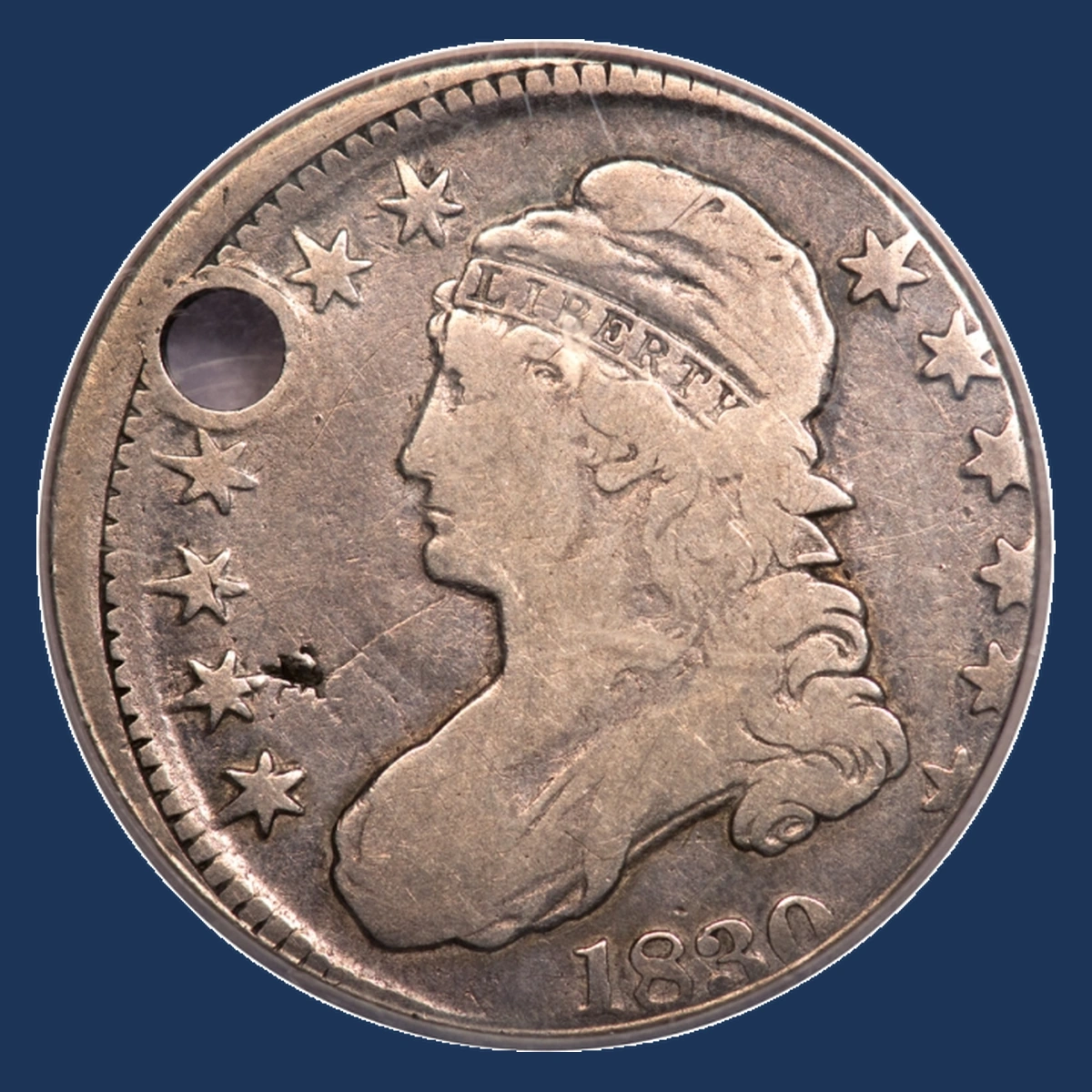
The dealer describes a Small 0 coin struck five percent off center. Its NGC Fine Details label indicates heavy wear with a condition problem, not an ordinary problem-free grade.
The shift is modest rather than a loss of most of the design. The description gives no direction.
Check the actual holder for the grade and condition problem before comparing prices. The title describes an NGC Fine Details coin.
Both sides should show a related shift within the outline. A single uneven border or a damaged rim needs a different explanation.
Estimated Value
The dealer asks $1,300. Estimated value is $700–$1,800 for a similarly worn five-percent example, depending on the condition problem.
The displayed price is an offer, not a completed sale. A less-shifted 1825 graded PCGS AU53 sold for $600 in June 2024.
That lightly worn coin has a different appearance. A higher grade alone does not determine which of two errors will bring more.
How to Identify
Keep the whole outline visible when comparing both sides. Look at the border and untouched metal without assuming a direction that the listing does not give.
Use a magnifier to separate original blank texture from filing, dents, or later smoothing. Read the holder’s condition qualification as well as its error description.
Check the Small 0 in the date, photograph the lettered edge, and confirm the Philadelphia issue without a mintmark. A scale and calipers can compare 13.48 grams and about 32.5 millimeters.
The same positional shift on both stamped faces is the quick physical comparison supporting the dealer’s five-percent description.
6. 1830 Capped Bust Half Dollar Seller-Reported Double Strike (Estimated Up to $3,500 for Circulated Examples)
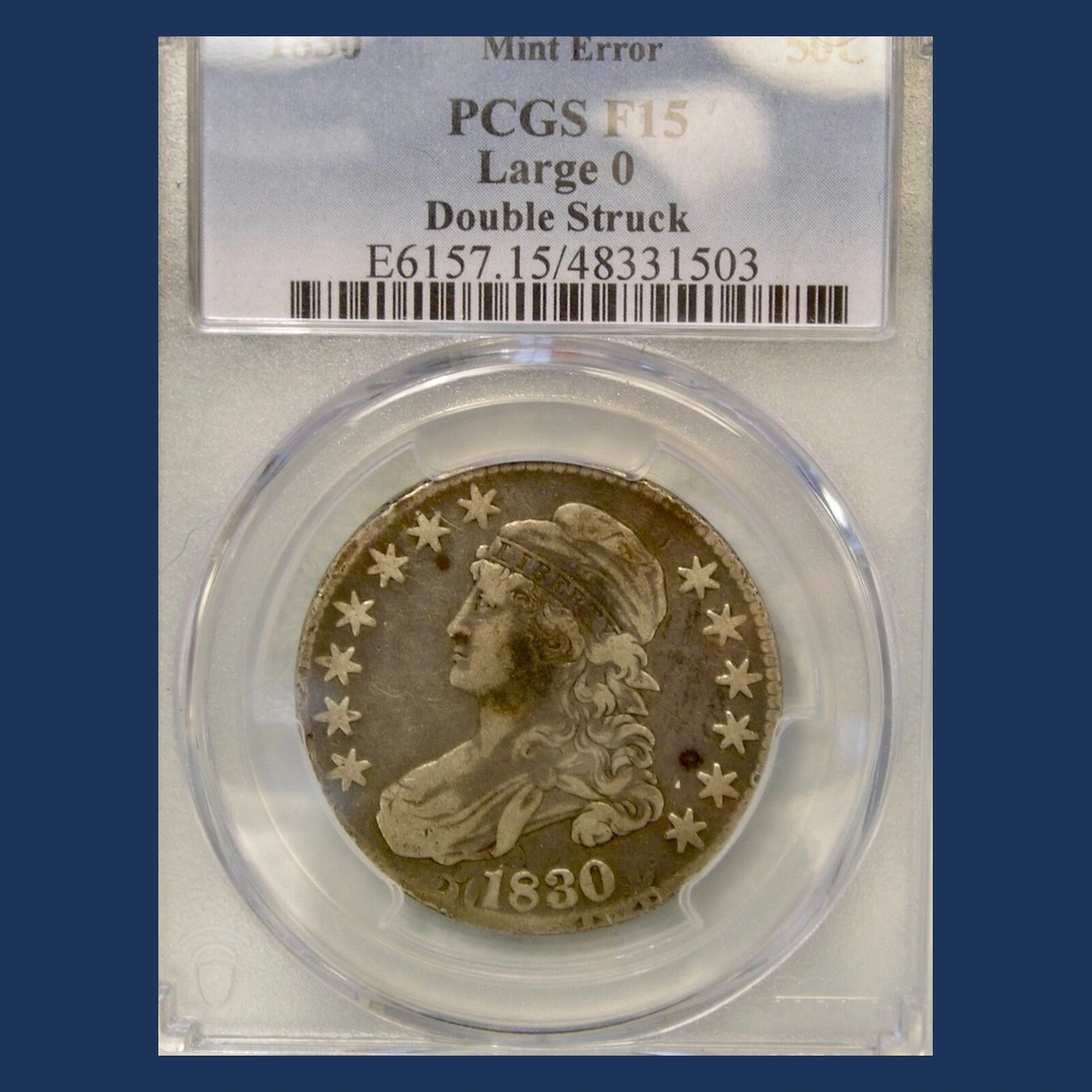
A seller calls an 1830 half dollar double struck, but the wording does not locate the extra impression or say how far it moved. The coin needs to supply that evidence.
Listings referring to the same grading record give conflicting conditions. The advertised Fine15 therefore should not be treated as a reliable problem-free grade.
Several design marks fitting a second position would support another blow. A small extra line at Liberty’s nose is a narrower feature, discussed separately below, and does not by itself establish two strikes across the coin’s larger design.
Estimated Value
Estimated value is $700–$3,500 for a worn 1830 with clear evidence of a genuine extra strike. Heavy wear or other problems fit lower than strong remaining impressions.
An 1824 double-struck on the front sold for $2,880 in January 2022. PCGS graded it VF20, indicating moderate wear.
That is a related example from another year. No price is taken from the conflicting 1830 listings, and their disputed grade should not justify a higher estimate.
How to Identify
Compare the stars, portrait, letters, and border to see whether several surviving marks fit another position of the design. The word double in a listing title is not enough.
Read the actual holder and preserve photographs of it because the seller descriptions conflict. Then check the dated front, half-dollar back, and lettered edge.
A scale and calipers can compare 13.48 grams and roughly 32.5 millimeters. Use a magnifier under changing light to separate raised impressions from flat shelves or later dents.
Several extra design remnants agreeing on one second position provide the most useful first test of the seller’s double-strike claim.
7. 1830 Capped Bust Half Dollar Strike-Doubled Nose or Portrait Profile (Estimated Up to $6,000 for Comparable MS64 Coins)
A second-looking line follows Liberty’s nose on the Newman collection’s 1830 Large 0. The catalog calls it strike-doubled, a narrower description than two complete impressions of the coin.
The NGC MS64 CAC example has no wear but some marks. It also carries a crack toward LIBERTY, which is a separate tool defect.
Movement during striking can produce an extra-looking portrait edge. Its shape needs close examination before assigning a more specific cause, and similar descriptions on other 1830 coins do not prove that they show this same nose contour.
Estimated Value
Estimated value is $2,500–$6,000 for an attractive MS64 with a modest doubled profile. Worn examples may fall around $100–$600.
The same catalog variety from the Dale Friend collection sold for $4,700 in May 2022, graded PCGS MS65. It is a different coin.
That sale compares high-grade condition, not the Newman coin’s final price or a separate payment for nose doubling. The extra contour does not guarantee a multiple-strike premium.
How to Identify
Keep the full portrait and Large 0 date in view when comparing the preserved Newman description. Do not substitute a different coin merely labeled double profile.
Inspect the nose through a magnifier as light moves across it. A flat shelf, a rounded extra shape, and metal pushed up by damage can look similar from one angle.
Check the rest of the design for related movement, then inspect the lettered edge. A scale and calipers can compare 13.48 grams and roughly 32.5 millimeters.
The actual height and shape of the extra nose line are the first evidence to examine, without assuming another complete strike.
8. 1830 Capped Bust Half Dollar Die Cracks Through Stars and Lettering (Estimated Up to $8,000 for Comparable Gem Coins)
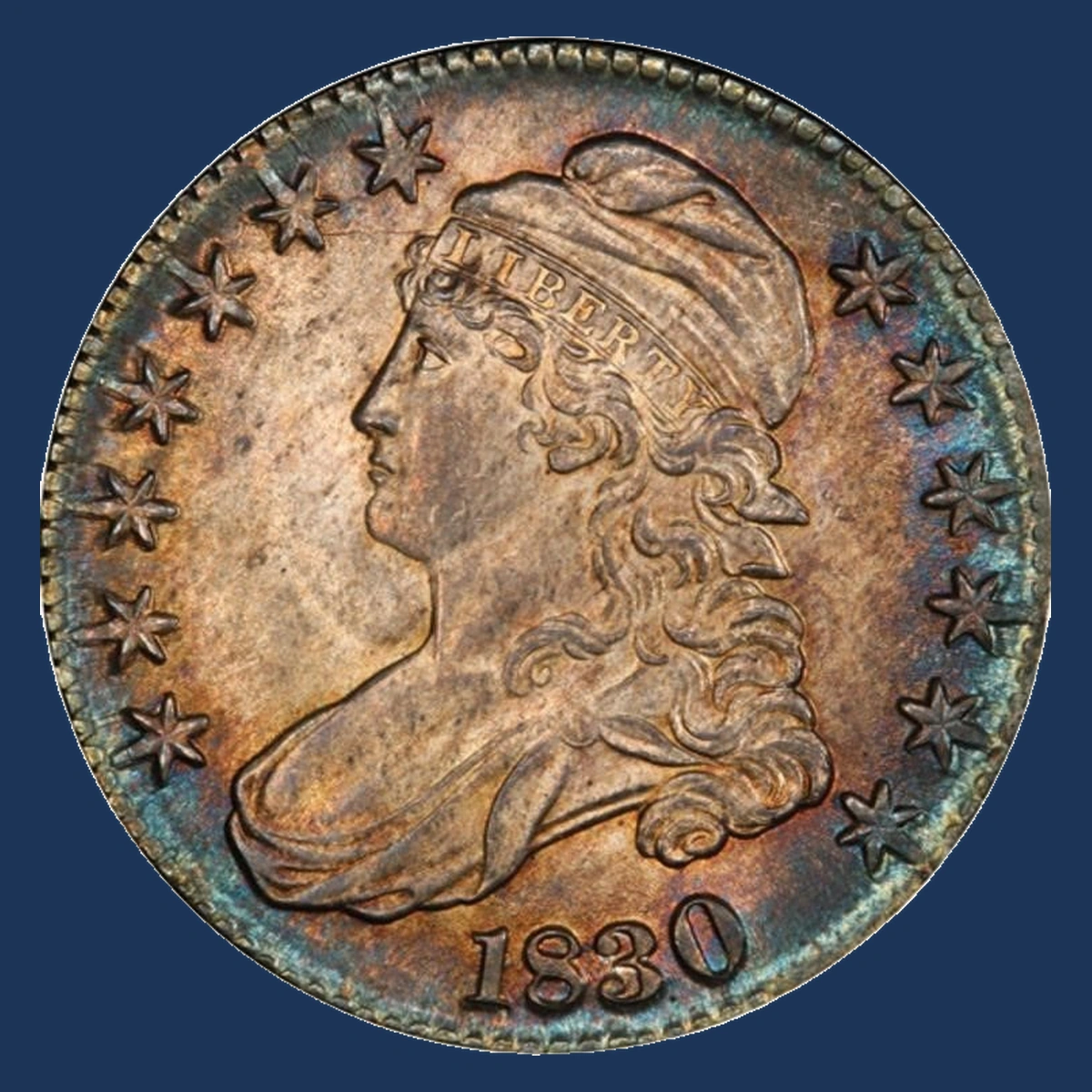
A curved raised line runs from star three through star six toward the L in LIBERTY. Legend described it on the Dale Friend coin, cataloged as 1830 O-123.
This example graded PCGS MS65, meaning a well-preserved unworn coin. The line records a crack in the steel stamping tool, where silver filled the opening during striking.
Stars and letters help follow the route when part of it is faint. A separate auction coin has a finer crack between the left wing and scroll on the back, which should not be assumed to accompany every front example.
Estimated Value
The MS65 O-123 sold for $4,700 in May 2022. Estimated value is $4,000–$8,000 for a similarly attractive unworn coin.
Worn examples with recognizable cracks have an estimated $100–$900 range. The high-grade sale reflects the whole coin’s preservation and color.
A clear raised line helps identify the example, but it does not give a worn coin the same value. Match condition as well as the path.
How to Identify
Count the stars and follow the line from the third through the sixth toward LIBERTY. Keep the whole front visible so the intersections can be compared.
Side light and a magnifier show whether the line rises above the metal or cuts into it. Check any back crack against its own wing-to-scroll description instead of combining different coins.
Confirm the Large 0 for this example and photograph the lettered edge. A scale and calipers can compare 13.48 grams and roughly 32.5 millimeters.
A connected raised route through the named stars toward L gives the direct first match for the documented front crack.
Conclusion
Estimated values span $100–$8,000, with condition explaining much of that spread. One coin can have several features, such as small clash traces beside a broader change in the back’s shape.
Check each visible feature separately while valuing the complete coin. Read overlapping edge words, measure a turned back, and trace any claimed second impression, rather than accepting a seller’s title or applying an unworn coin’s price to a heavily worn example.