1940 Half Dollar Error List with Pictures

A certified 1940-S curved clip weighs 12.20 grams, below the normal 12.50 grams. At the other end of the series, an undated double-struck half sold for $11,400 in August 2025.
This 1940 Walking Liberty half dollar error list spans estimates of $40–$15,000. The larger prices use clearly identified comparisons, not invented 1940 sales.
Read on to distinguish raised lines, separating layers, missing metal, and two visible strikes.
1. 1940 Walking Liberty Half Dollar Die Crack Error (Estimated Up to $250)
A thin line raised above the silver may come from a cracked die. The die is the steel tool that stamps the coin.
When the steel splits, silver can enter the opening during the next strike. It leaves a ridge rather than a cut in the finished coin.
The 1940 report does not name a mint or one repeatable route across the design. The actual line must supply that information.
Clothing folds, scratches, and metal pushed beside a gouge can look like lines. None should be called a crack without checking how the feature sits above or below the surface.
Estimated Value
Estimate $40–$250 for a genuine small crack on a circulated or ordinary unworn half. Much of the lower value can come from the silver coin itself.
A larger back die break on a 1976-D Kennedy half sold for $256 in June 2026. Its NGC MS65 grade describes no circulation wear and few marks.
That is another design and a larger feature, not a sale of a 1940 crack. A clear raised route may add interest, but condition still matters.
How to Identify
Use a 10× magnifier with light from the side to establish height. A ridge above the silver differs from a scratch cut below it.
Trace the line to both ends, including any place where it crosses a letter or design detail. A gouge may have a sunken center with raised metal beside it.
Inspect the grooved edge for impacts. A scale and calipers can compare a loose coin with the original 12.50 g weight and roughly 30.6 mm diameter.
A sealed example can use recorded measurements. The quickest useful check is a continuous raised line that remains part of the original struck surface, rather than the rough edge of a cut.
2. 1940 Walking Liberty Half Dollar Lamination Error (Estimated Up to $500)
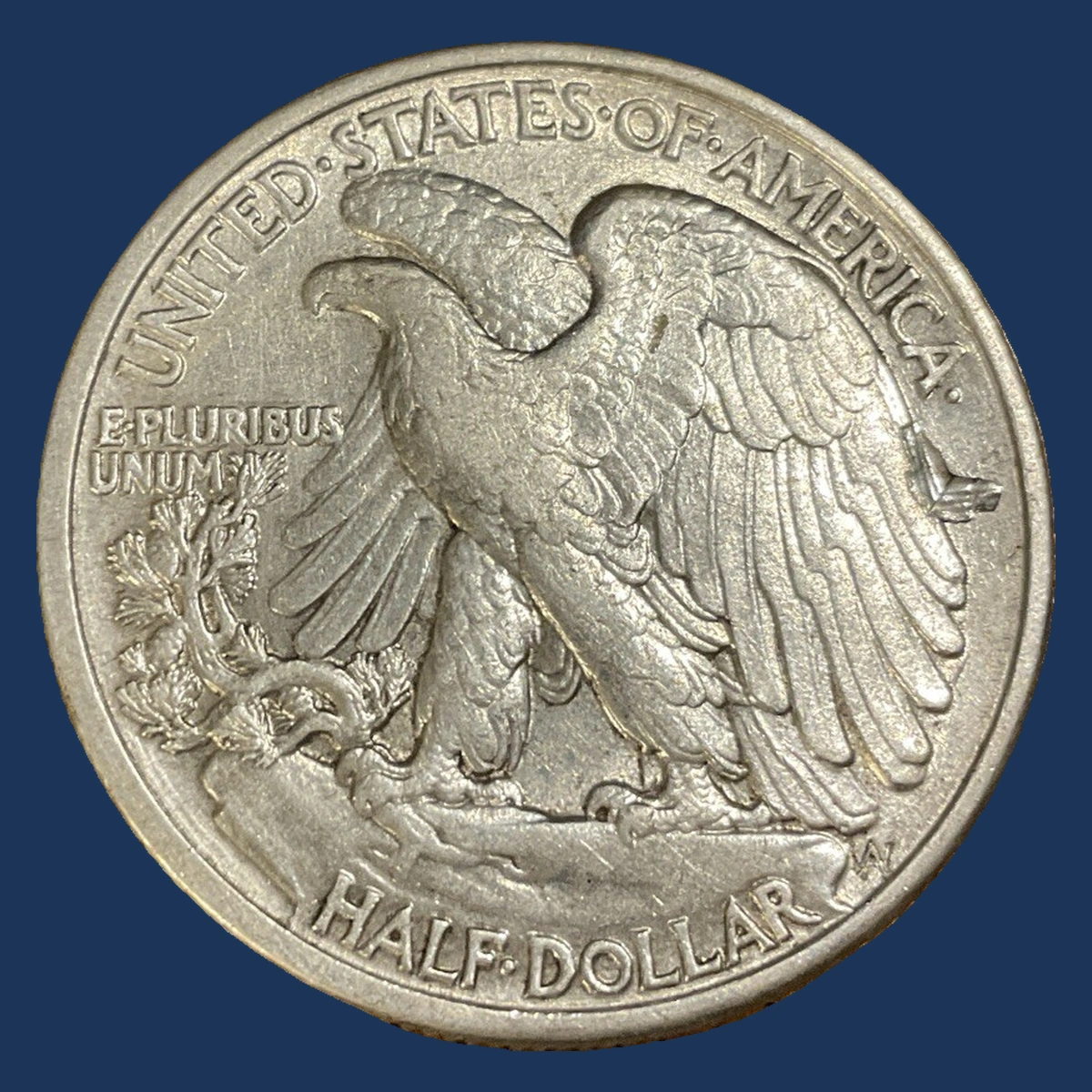
The seller’s Philadelphia example has a reported lamination on the back. It is a circulated coin offered without a numerical grading-service grade.
A lamination is metal separating in layers within the coin. A layer may lift, open, or leave a missing flake.
This half is made from a 90% silver alloy. It does not have an outer silver sheet that can peel from a modern bonded-layer core.
San Francisco laminations are also reported, but their positions need their own photographs. A back-side flaw on one Philadelphia example does not establish where a San Francisco coin’s metal separated.
Estimated Value
The 1940 Philadelphia back-lamination listing asks $45. It is an ungraded seller offering, not a completed sale or independent confirmation of the error.
Estimate $45–$500 from modest worn separations through clearer, more attractive examples. This includes the guide’s broader $50–$500 discussion.
A surviving layer and the size of the opening can affect collector interest. The rest of the coin’s condition also matters, so a rough patch alone does not justify the upper price.
How to Identify
For the Philadelphia report, begin on the eagle side and follow the disturbed area into intact silver. A 10× magnifier may reveal the edge of a thin layer or the opening left when it detached.
A gouge can show a tool path and pushed metal instead. Do not lift an attached flake to investigate it.
Use a scale against 12.50 g and calipers across undamaged spans against 30.6 mm. Inspect the grooved edge for cutting or a split that continues into the coin.
A low weight alone cannot decide the cause. The strongest first clue is a layer separating beneath original design, rather than metal scraped out of a solid surface.
3. 1940 Walking Liberty Half Dollar Struck-Through Error (Estimated Up to $500)
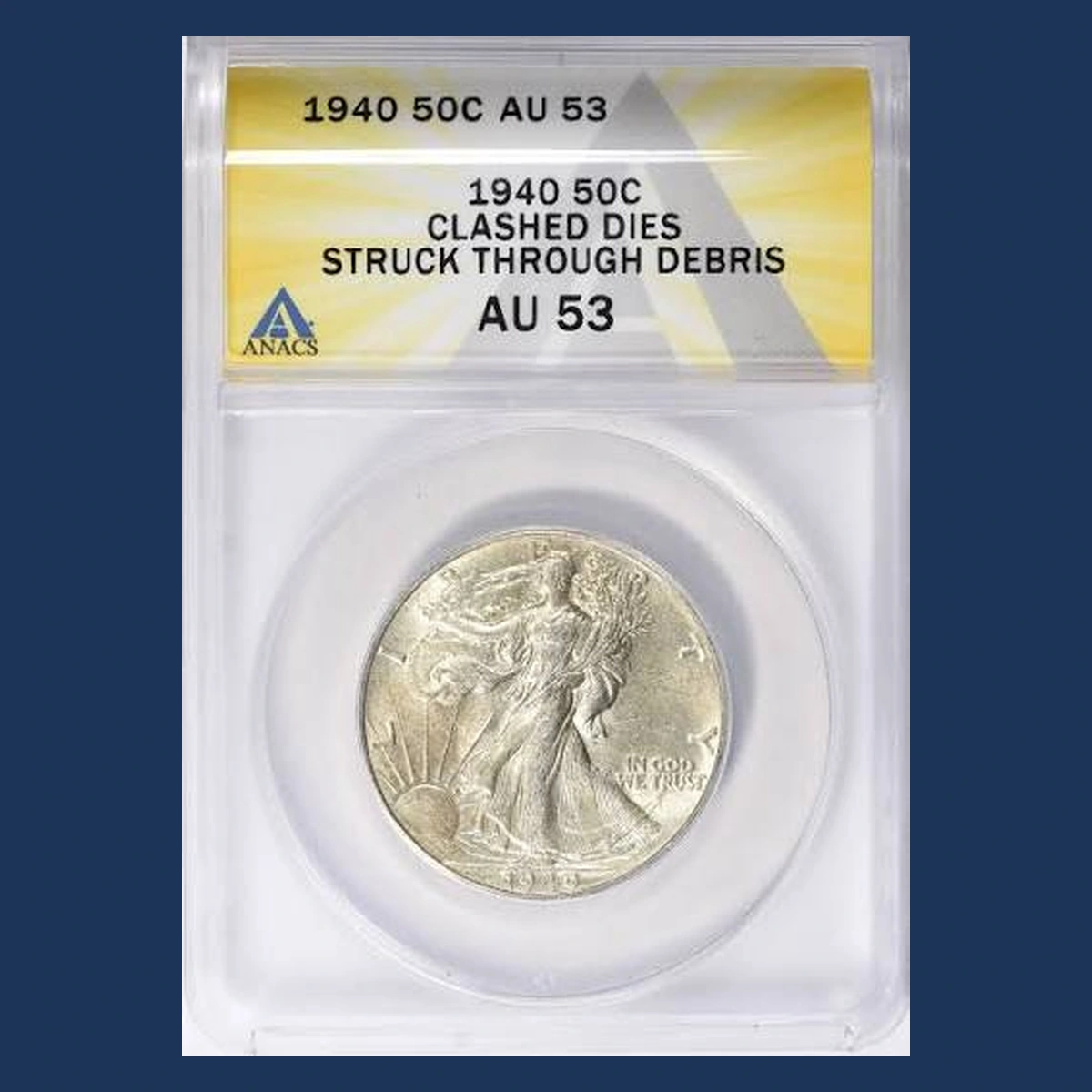
Detail can fail to form even when the coin’s metal remains present. Something between the blank and the stamping tool may have blocked the design.
Soft material filling a tool can leave a weak patch. A harder object can leave its own recessed shape when pressed into the silver.
The 1940 reports concern Philadelphia and San Francisco circulation coins without naming one object or fixed position. Those limits matter when describing a find.
Wire, cloth, and grease would leave different evidence. Listing possible materials does not establish three 1940 examples, and a worn area may not involve an obstruction.
Estimated Value
The guide’s $50–$500 estimate covers genuine ordinary-strike examples, from a small missing detail to a visible depression. It is not a sale price for a named 1940 coin.
A 1976-D Kennedy struck through material on both sides sold for $114 in March 2025. That newer coin uses bonded metal layers rather than the Walking Liberty half’s silver alloy.
It provides context for a modest striking error. Its exact marks and condition should not be assigned to a 1940 example.
How to Identify
Compare the patch with nearby design through a 10× magnifier. Ask whether detail failed to form there or was cut away afterward.
Sharp scrape walls and piled-up burrs suggest later damage. Original metal meeting a recessed impression can tell a different story.
General softness near the center is not enough, especially on a weakly struck San Francisco coin. Look for a clear boundary or impressed texture.
A scale and calipers can check 12.50 g and about 30.6 mm; inspect the grooved edge too. Small strike-throughs may leave all these measurements normal.
Start where normal struck texture meets the weak patch, looking for a local interruption without scraping or pushed-up metal.
4. 1940-S Walking Liberty Half Dollar Repunched Mintmark Error (Estimated Up to $600)
An extra curve or small finishing stroke beside S may come from an earlier mintmark punch. The worker added the letter more than once while preparing the stamping tool.
Only S is relevant as a branch-mint letter for 1940 halves. Denver did not make half dollars that year.
The report does not give one universal direction for the extra stroke. Its shape must fit part of another S on the matching variety.
A thick border or shadow does not establish an earlier letter. Damage or an altered mintmark can also distort the normal outline, so examine the shape and surroundings.
Estimated Value
The 1940-S guide estimates $75–$200 for circulated examples and $500–$600 for sharper unworn coins. Together these form a working $75–$600 range for clearly matched repunching.
They are guide figures, not a completed auction record for a specific tool. The earlier S needs to be visible enough to compare.
A strong grade can increase the ordinary coin’s value independently. Normal mintmark thickness does not earn a variety premium just because the letter looks bold.
How to Identify
Find S below the branch at the lower left of the back. Compare it with a normal 1940-S using a 10× magnifier.
Follow the extra curve or small end stroke to see whether it fits an earlier S. Do not borrow an upward or sideways direction from another year.
Flat shelves and a damaged letter edge can imitate a fragment. Inspect nearby silver for added metal or tooling.
Calipers and a scale can check the usual 30.6 mm and 12.50 g on a loose coin; photograph the grooved edge too. The direct visual match is a recognizable earlier S piece in the same position as the corresponding variety photograph.
5. 1940-S Walking Liberty Half Dollar Curved Clip Error (Estimated Up to $700)
The Rippere Collection coin has a curved missing edge and a recorded weight of 12.20 g. It is a 1940-S graded ANACS VF25, meaning noticeable circulation wear.
The gap was present in the blank before striking. Overlapping punches in the metal strip could leave that incomplete arc.
The coin weighs 0.30 g less than the standard half dollar, but that difference is not an exact measurement of the clip. Circulation also removes metal.
The catalog does not give the gap’s clock position or percentage. Those details must be read from its photographs rather than calculated from weight alone.
Estimated Value
Estimate $75–$700 for genuine curved clips from circulated through modest unworn 1940-S examples. The Rippere record identifies the VF25 coin and weight but provides no sale amount used here.
A 1942-S ANACS MS62 rim clip sold for $81.90 including premium in May 2025. MS62 means no circulation wear but noticeable marks.
That different-year small clip offers a modest comparison. Greater visual impact and better condition may support more, but every clipped half does not resemble the same example.
How to Identify
Compare the full outline with the ANACS VF25 example, keeping S visible in the back view. Use a 10× magnifier where the normal edge grooves meet the missing arc.
A scale can compare with the listed 12.20 g and the normal 12.50 g standard. Another genuine clip need not weigh exactly the same, because its gap and wear may differ.
Use calipers across intact spans against 30.6 mm, and look opposite the clip for possible rim weakness. The useful clue is a natural, undisturbed curved boundary with struck metal flowing into it, without file lines cutting through the finished rim.
6. 1940 Walking Liberty Half Dollar Doubled Die Obverse Error (Estimated Up to $2,500)
A doubled front design begins in the stamping tool, before a coin receives its image. Coins made with that tool can repeat the same extra raised shapes.
The 1940 reports mention Philadelphia and San Francisco circulation coins. They suggest checking LIBERTY, the date, and Liberty’s figure.
These broad areas do not identify one exact direction or a named tool. Nor do the reports confirm the same variety on proofs, which are specially made collector coins.
A promising outline needs a matching example. The existence of doubling on one issue does not mean every mint or collector version shares that feature.
Estimated Value
Estimate $75–$2,500 for clearly identified examples, from minor circulated doubling through strong detail on well-preserved coins. The upper comparison uses a known 1939-D FS-101.
That NGC MS67+ coin sold for $2,160 in April 2025. Its grade reflects exceptional preservation without circulation wear.
It is another date and a specific variety, not identification of a 1940 tool or a price for a proof. A tiny feature belongs nearer the modest end, with mint and condition considered separately.
How to Identify
Compare the front with an ordinary coin from the same mint using a 10× magnifier. Examine the named areas for rounded extra shapes rather than one thick letter or a changing reflection.
The report gives no specific direction, so a matching known example is needed before naming a variety. Keep any proof candidate separate from this ordinary-strike account.
Check the grooved edge and measure a loose coin with calipers against 30.6 mm. A scale should be compared with the original 12.50 g, allowing for wear.
The immediate visible test is a stable repeated front-design shape matching the known tool, rather than rough widening along an ordinary edge.
7. 1940 Walking Liberty Half Dollar Doubled Die Reverse Error (Estimated Up to $2,500)
The eagle and back lettering are the inspection areas for a doubled reverse. This differs from an extra punch used only for the S mintmark.
The year discussion points to UNITED STATES and HALF DOLLAR without identifying particular letters or feathers on a confirmed tool. Normal overlaps in the artwork can also create paired lines.
The mint and collector finish remain unresolved for the reported category. A photograph alone cannot show that Philadelphia, San Francisco, and proofs all share one variety.
The extra shape must belong to a doubled tool’s design. A shelf caused during striking is a different effect.
Estimated Value
A 1946 FS-801 doubled reverse graded NGC MS65 sold for $2,040 in November 2024. That unworn coin with few marks provides context for a recognized, strong Walking Liberty variety.
Use an estimated $75–$2,500 for properly identified 1940 candidates from circulated through better-preserved examples. It is a comparison range, not a documented 1940 sale.
The 1946 pattern cannot be transferred to another date. A minor extra contour also does not automatically deserve the prominent variety’s price.
How to Identify
Begin with the back words, then move into the eagle’s feathers under a 10× magnifier. Photograph each suspected extra contour together with the surrounding design so its position remains clear.
A low flat step beside the main shape suggests movement during striking rather than another rounded design outline. Once the mint and coin type are known, compare with a normal example of the same issue.
Use a scale against 12.50 g and calipers against 30.6 mm for a loose coin, and inspect the grooved edge. The strongest first clue is separated, rounded extra detail that matches a documented tool pattern instead of normal overlapping artwork.
8. 1940 Walking Liberty Half Dollar Off-Center Strike Error (Estimated Up to $12,000)
The boundary between design and blank silver becomes uneven when a blank enters the press off center. Part of the intended image misses the metal while some metal receives no image.
Both faces should show that misplaced position. A wide rim on only one face may have a different cause.
The year report includes off-center strikes without establishing a certified example’s mint, direction, or percentage. Those details need to be read from the actual coin.
Another Walking Liberty date can illustrate the process but cannot supply this coin’s identity. A clear 1940 date remains important when identifying its year.
Estimated Value
Estimate $100–$12,000 for genuine ordinary-strike candidates, from modest worn shifts through exceptional certified examples. The upper comparison is a 1918 PCGS MS65 half struck 10% off center.
It sold for $10,575 in April 2013 and had no circulation wear with few marks. That is not a 1940 transaction.
The estimated range is comparative at both ends. Readable date, original blank surface, condition, and missing design matter together; the same percentage does not make two coins equivalent.
How to Identify
Keep the full outline visible on both faces and find the corresponding missing design. A shift confined to one face may come from a moved stamping tool.
With a 10× magnifier, examine where raised detail meets untouched silver. Look for original surface and metal flow rather than cuts or later compression.
A scale and calipers can compare the coin with the standard 12.50 g and 30.6 mm, recording any changed shape. Inspect remaining edge grooves and include every surviving date digit and mintmark area in photographs.
The quickest convincing combination is design lost from both faces beside original unstruck metal, with the readable year kept on that same coin.
9. 1940 Walking Liberty Half Dollar Double Strike Error (Estimated Up to $15,000)
Two visible impressions can show that a coin moved before receiving another blow. The later image may flatten part of the first while leaving other details beside it.
This matters because Philadelphia also made 1940 proofs. Their normal repeated pressing is not automatically an accidental double strike.
The year discussion does not identify an authenticated dated 1940 example. A candidate needs its own readable evidence of separate striking events.
A doubled die can leave close repeated lines in one ordinary strike. Those small contours do not substitute for a second image showing that this coin moved or was struck abnormally.
Estimated Value
An undated San Francisco half with a second strike 90% off center sold for $11,400 in August 2025, as reported from Heritage. Its PCGS AU53 grade means light wear.
Estimate $5,000–$15,000 for substantial authenticated ordinary-strike candidates. The comparison coin’s unknown date must not become 1940.
More modest or more dramatic forms need closer comparisons. Proofs need separate treatment, and their normal multiple pressing does not earn the premium of an accidental displaced second strike.
How to Identify
Use a 10× magnifier to follow earlier design into the later impression. The overlap should explain more than one doubled letter, including where the first image was flattened.
Keep both complete faces in photographs. Identify whether the coin is an ordinary strike or a proof before interpreting repeated detail.
The grooved edge may change where the surrounding ring contacted the coin differently during successive blows. A scale and calipers can compare with 12.50 g and 30.6 mm while recording any expansion.
The direct test is two recognizable displaced images with overlap and metal flow that agree with successive strikes, rather than normal proof manufacture or one doubled tool pattern.
Conclusion
Estimated prices for these 1940 halves range from $40 to $15,000. The measured 12.20 g clip and $45 seller-listed lamination provide specific examples, while the largest figures use other-year or undated comparisons.
Keep Philadelphia and San Francisco identities clear, inspect the entire edge, and preserve both faces in photographs. For a suspected second strike, first distinguish an ordinary circulation coin from a specially made proof.