1924 Dollar Coin Error List with Pictures

PCGS lists a 1924 Broken Wing dollar auction result of about $2,233 in January 2015. Its MS67 grade describes an exceptionally well-preserved, unworn coin, so that price includes much more than a raised mark.
This 1924 Peace dollar error list covers eight main types, with estimated whole-coin values of $75–$6,000. Some involve extra metal, while others leave missing detail or a gap.
Start with the shape of the unusual area. The sections below explain the difference and where to inspect it.
1. 1924 Peace Dollar Surface Flaking from a Weak Blank
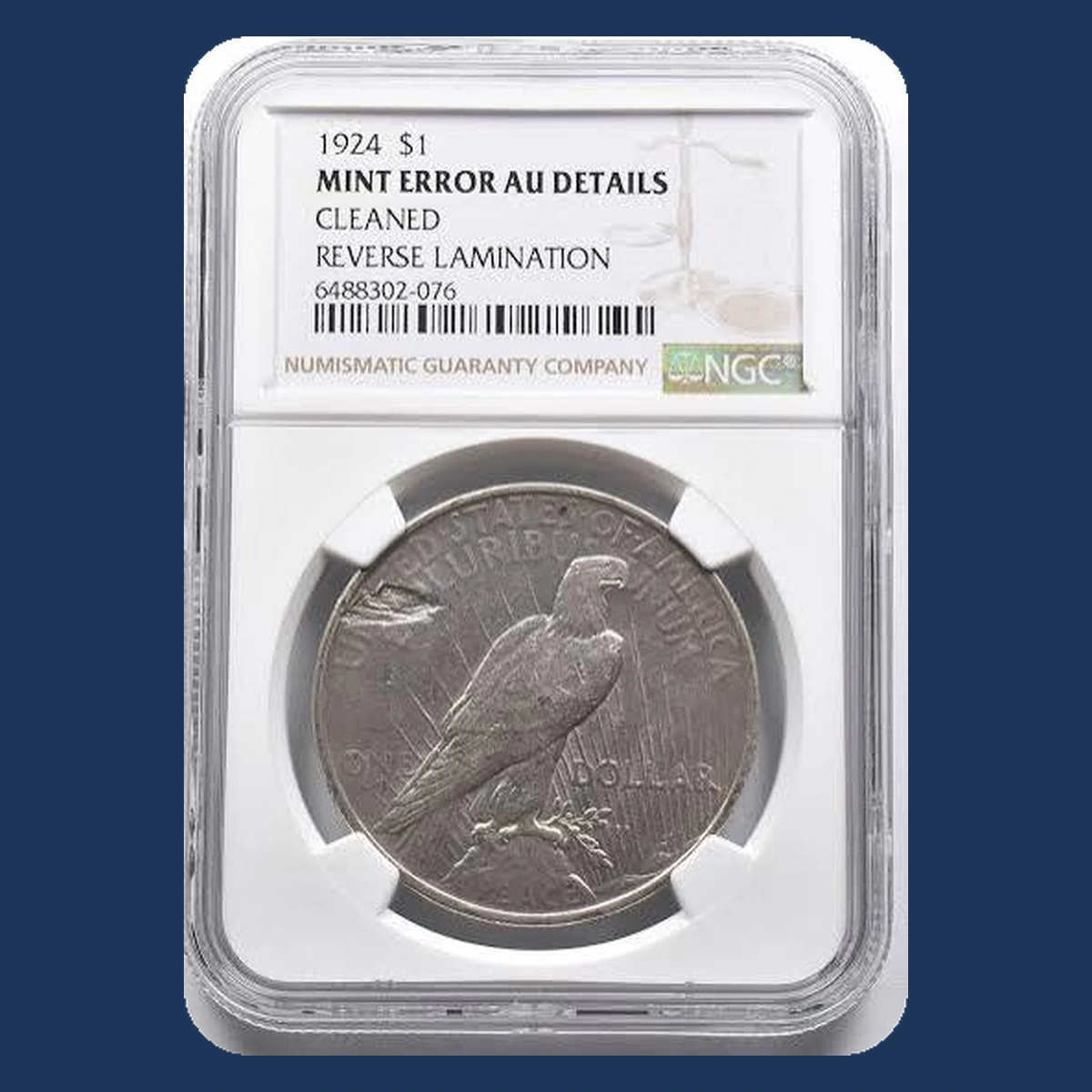
A peeling strip on a Peace dollar can start with a weakness inside the silver-copper alloy. As the thin surface separates, it may lift or leave a shallow rough patch.
A Philadelphia back-side lamination was certified NGC AU58, a grade indicating slight circulation wear. Another auction listed a front lamination on an NGC MS61 coin.
The year guide also reports this error for San Francisco, without identifying a particular example. The S report should not inherit the Philadelphia coins’ grades or locations.
These dollars are solid alloy coins. Their flaking is not the loss of a modern clad outer layer.
Estimated Value
The Philadelphia back-lamination coin brought $36 in August 2013, according to the PCGS auction record. That older price belongs to an AU58 example.
For a newer comparison, a 1922 Peace dollar with a back lamination graded NGC AU58 sold for $134 in December 2025. Estimate $75–$500 for comparable 1924 pieces.
The surviving surface and the size of the split influence appeal. A small flake may add little, while an obvious intact strip can make the error easier to display.
How to Identify
A flap can be fragile even when it looks firmly attached. Hold the coin by its edge and examine the split without sliding a fingernail or tool underneath it.
Light from the side helps reveal the flap’s thickness and the shallow area beneath it. Under a magnifier, follow any struck detail that runs toward or across the seam.
Later scraping often leaves parallel scratches or metal pushed outward. A natural separation instead follows a weakness within the alloy, sometimes leaving a thin piece still attached.
A normal loose Peace dollar weighs about 26.73 grams and measures 38.1 mm, but a tiny flake may hardly change its weight. Preserve the seam for examination rather than trying to expose more of it.
2. 1924 Peace Dollar Curved or Double Clip
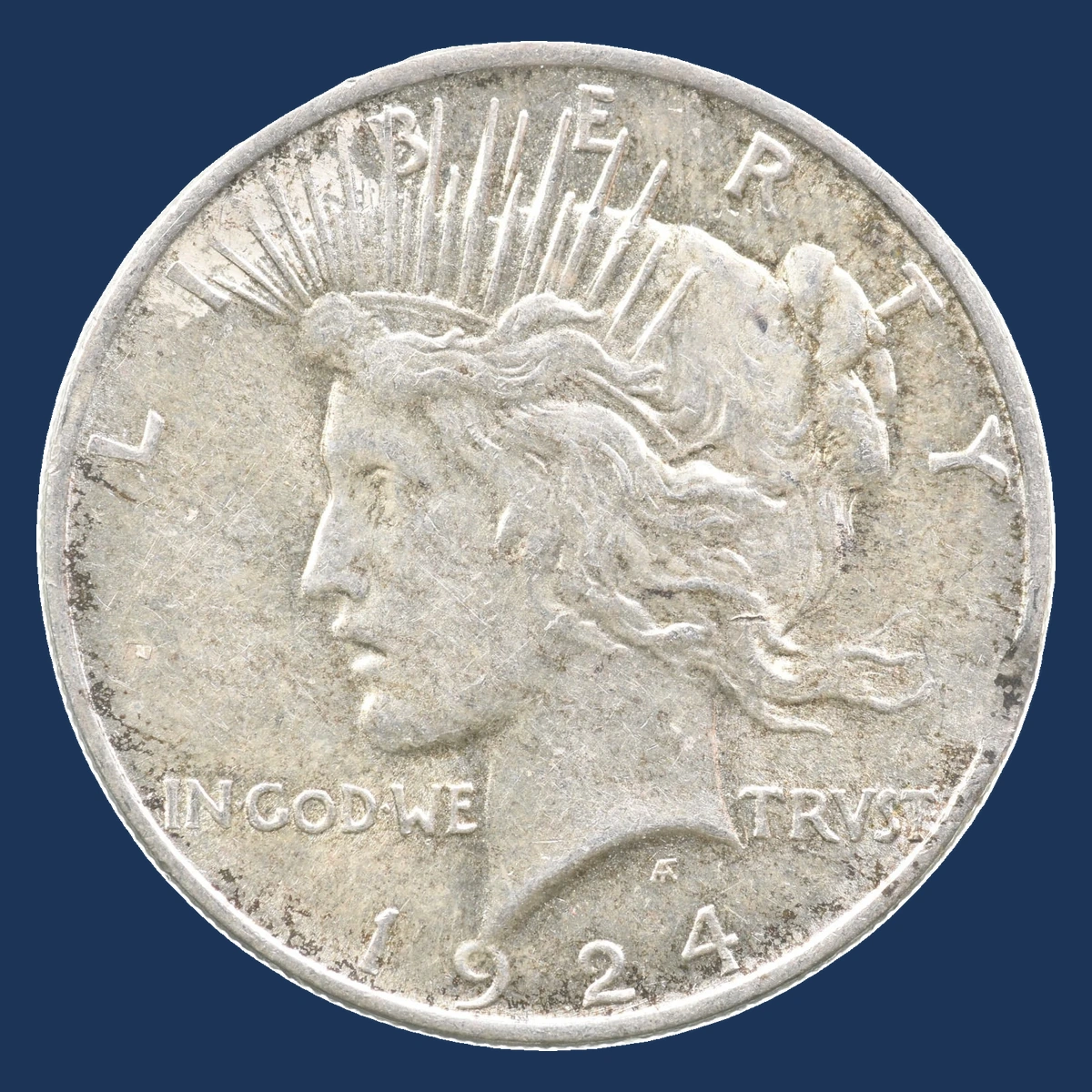
One or two gaps are reported in the year guide for 1924 Peace dollars. These belong to the blank-cutting stage, before the dollar receives its design.
A circular cutter can overlap an earlier hole in the metal strip. The next blank then lacks a curved section instead of forming a complete disc.
If this happens in two places, the coin can have a double clip. Two gaps do not require two separate strikes.
The report does not identify a mint or fixed gap size. The surviving rim and nearby design must show whether a candidate was incomplete when struck.
Estimated Value
An estimated $75–$600 suits authenticated 1924 clips, with size, condition, and clear original edges guiding the price. Double clips should be assessed as one complete coin.
For a large-dollar comparison, a 1972 Philadelphia Eisenhower dollar with a curved clip graded ANACS MS64 sold for $180 in March 2022. Its different metal and date make it a broad mechanism comparison only.
A larger gap can be attractive, but later cutting adds no mint-error value. Keep the original edge surface intact.
How to Identify
Use a 10× magnifier at both ends of each gap, where the normal rim meets the missing section. Look for metal flow and softened nearby detail rather than a cut straight through finished letters.
The opposite rim may also be weak because the incomplete blank behaved differently during preparation. Treat that weakness as supporting evidence, since it may be subtle or absent on a small clip.
A scale can reveal missing mass against the normal 26.73 grams, but a saw-cut dollar can also be light. Check the entire gap for tool marks and judge the measurements together with the untouched rim, not as a stand-alone test.
3. 1924 Peace Dollar Foreign Material Rolled into the Metal
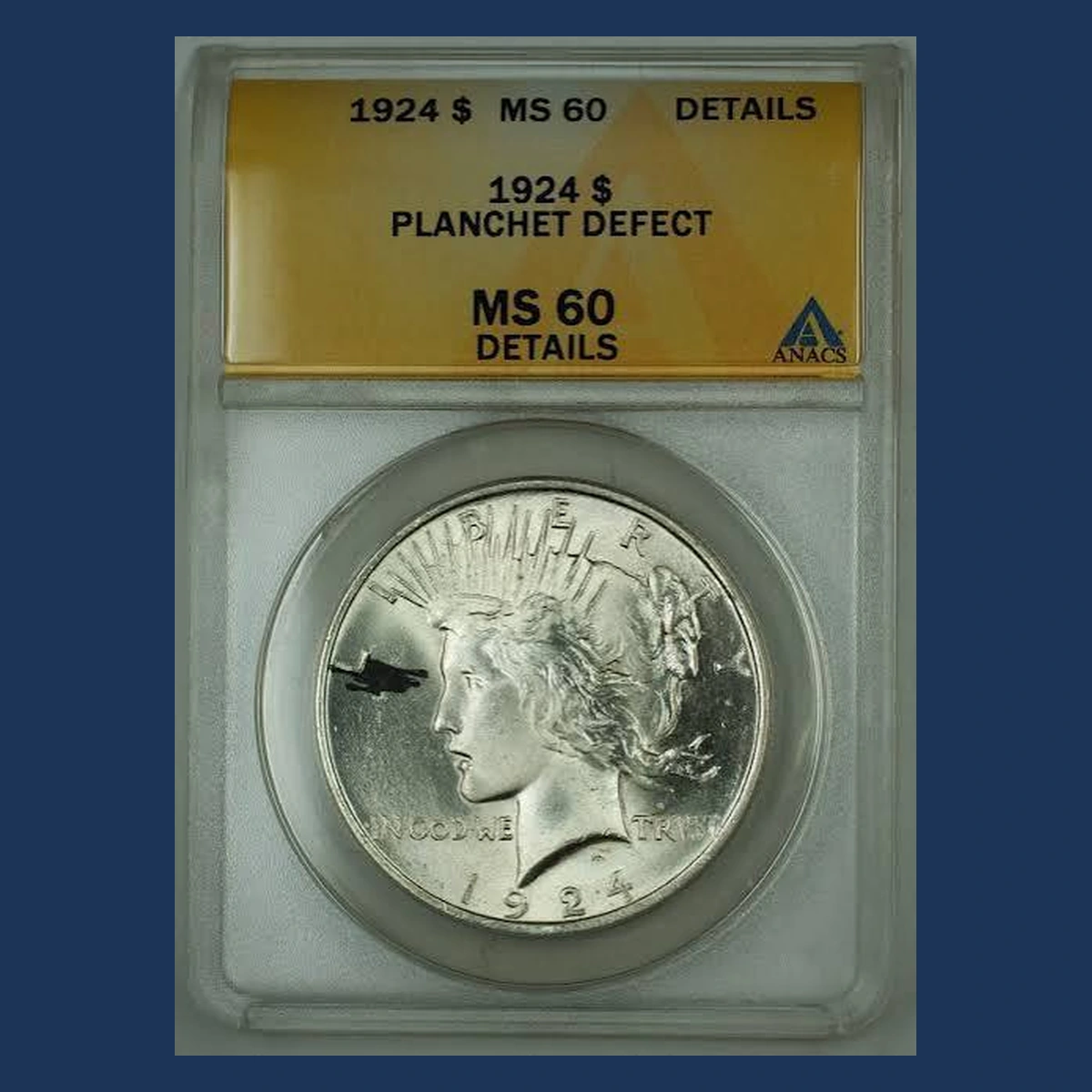
A patch beneath LLAR in DOLLAR appears in a dealer’s auction description of a 1924 Peace dollar. It was described as a large area of rolled-in slag.
That term means unwanted material became embedded while the metal strip was rolled before blanks were cut. It is a different stage from an object landing between a blank and the stamping tools.
The listed coin was described as About Uncirculated, meaning it showed only limited wear. The foreign material’s exact composition was not stated.
Color alone is not enough to identify this error. Its physical connection with the struck metal matters.
Estimated Value
Allow an estimated $100–$750 for a genuine 1924 example with an embedded patch. Preservation and a clear connection between the foreign material and the original strike support the higher end.
Jim’s Coins listed a $16 minimum bid, not a realized sale price. It should not be presented as the amount this dollar actually sold for.
Ordinary dirt, tarnish, or later corrosion can look unusual too. Those appearances do not carry the same collecting interest as material rolled into the blank.
How to Identify
Locate DOLLAR on the eagle side, then examine the metal below LLAR. This placement identifies the reported 1924 feature without confusing it with another coin’s front-side patch.
A magnifier and low light can show whether the patch is embedded or merely resting on top. Look at its boundary and any design that formed across or around it.
Do not scrape it to test whether it will come off. Removing the material can destroy evidence of when it entered the metal.
Photograph the whole back before taking closer views. A specialist can compare the surrounding original surface with the patch and assess whether it formed during rolling.
Color is the least reliable clue here. The undisturbed boundary between the patch and struck silver is more useful.
4. 1924 Peace Dollar Raised Bar below the D in GOD
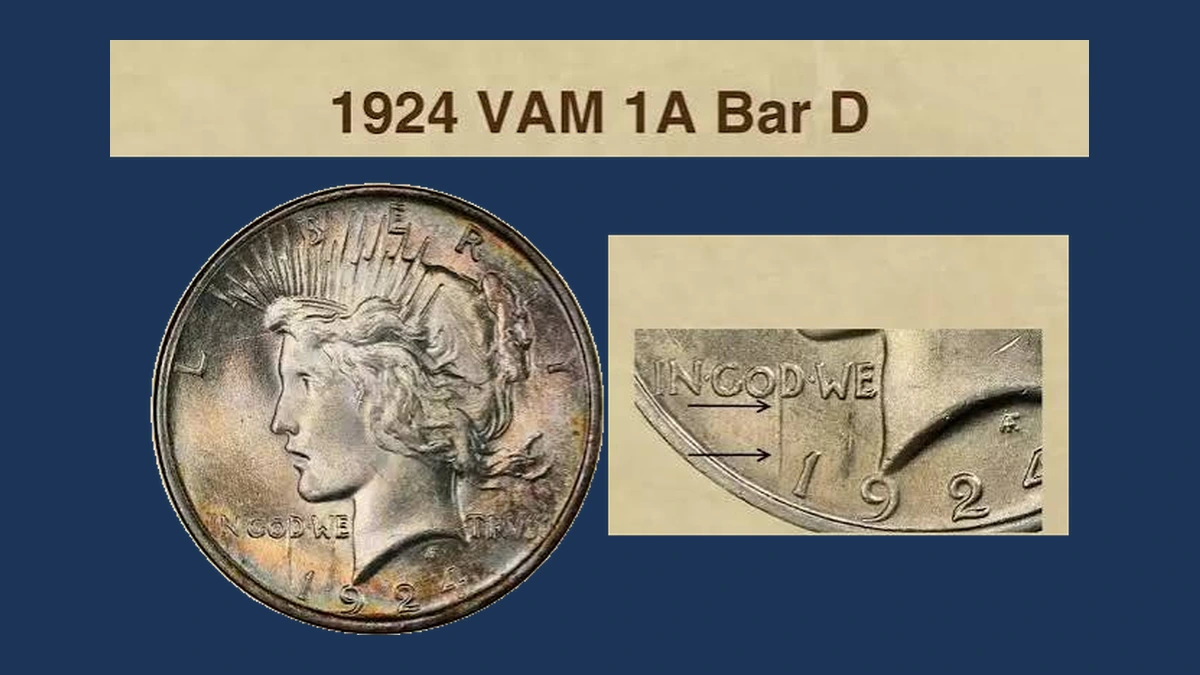
A vertical bar extends below the D in GOD on the 1924 Bar D variety. It appears on Liberty’s side of the dollar, not beneath DOLLAR on the back.
The bar is raised because a groove damaged the stamping tool. During striking, coin metal entered that groove and formed an extra ridge.
Researchers have suggested damage from a feeding part as a possible cause. The exact source of the tool damage is not established.
The visible bar remains the useful feature regardless of that explanation. A scratch cut into an individual finished coin would be a different kind of mark.
Estimated Value
PCGS records a Bar D coin graded MS64 at $600 in January 2023. The listing was an eBay result, not a dealer’s asking price.
Estimate $75–$1,000 for circulated through attractive unworn examples. A clear bar and pleasing surfaces make the variety easier to appreciate.
The ridge can remain visible on a worn coin, but heavy scratches may distract from it. Judge the complete dollar’s condition alongside the strength of the raised bar rather than pricing the nickname alone.
How to Identify
Find GOD in the front motto and focus just beneath its D. John Roberts’s discussion in Coin World places the Bar D feature there.
Turn the light across the line while viewing it with a magnifier. A raised ridge casts a different shadow from a groove cut down into the coin.
Compare its shape and attachment below the letter with a recognized Bar D photograph. A random scratch somewhere else in the motto does not reproduce that relationship.
Fine lines from polishing the stamping tool may occur nearby, but they are not a reason to count extra errors. The vertical raised bar directly below GOD’s D is the feature to match.
5. 1924 Peace Dollar Doubled Back Design
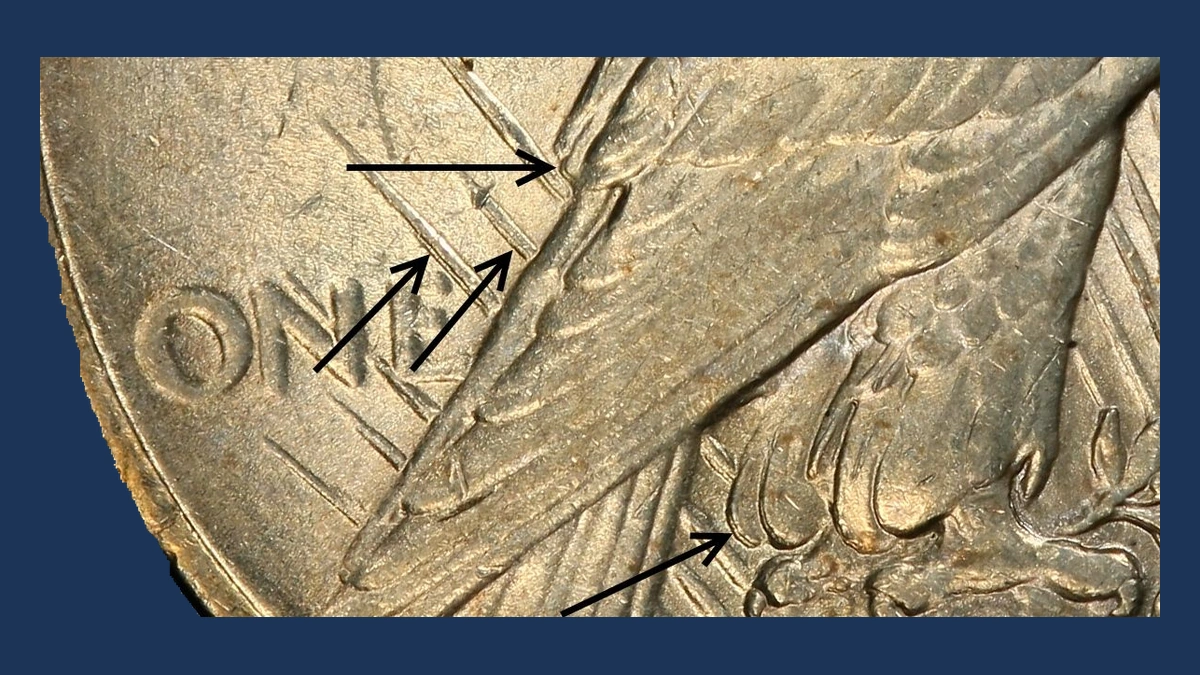
Repeated outlines in the back design can come from a stamping tool that already carried a doubled picture. Collectors call that a doubled die.
PCGS recognizes a Philadelphia doubled-back variety for 1924. A year guide also reports a San Francisco example, which needs its own matching photographs.
Doubling should be checked in the back lettering and eagle design. A thick-looking letter alone does not establish the variety.
Unlike a double strike, this error does not require the coin to move and receive a second impression. The tool can reproduce the same extra outlines on several coins from its working life.
Estimated Value
PCGS lists an MS64 Philadelphia doubled-back example at about $852 in February 2014. That record concerns the recognized Philadelphia variety, not the separate San Francisco report.
For matched examples in ordinary circulated through unworn condition, estimate $100–$1,500. The range prices the whole coin and its visible doubled pattern.
The mint and grade can change the total substantially. A strong, clearly photographed match is preferable to an expensive claim supported only by glare or one unusually thick letter.
How to Identify
Separate the mint first by checking for an S near the eagle’s tail. A San Francisco coin should not be matched to Philadelphia solely because both have thick back lettering.
Place a photograph of the correctly identified variety beside your coin and inspect one area at a time under a magnifier. Follow repeated edges in the lettering and picture, using their relative positions rather than brightness to judge the match.
If an apparent extra edge moves when the lamp moves, it may be reflection. A flat, shelf-like smear can also result from movement during striking, so seek the same fixed pattern in several details before accepting a doubled-back identification.
6. 1924 Peace Dollar Object Blocking the Front Design
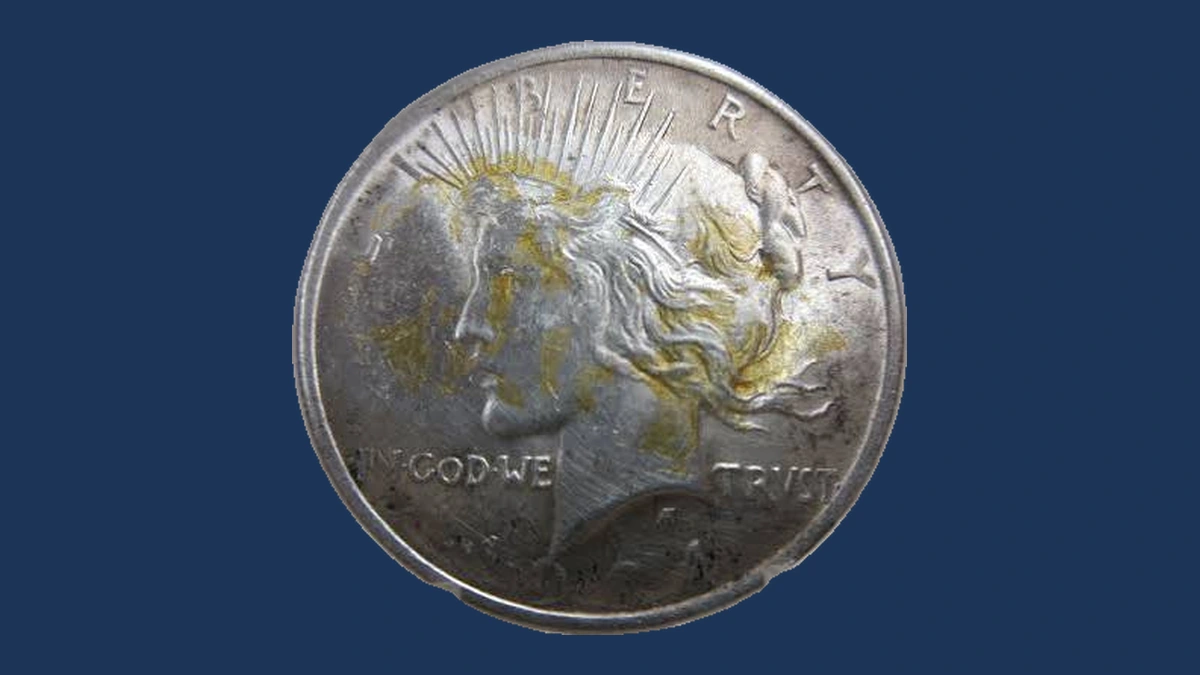
A foreign object between a blank and a stamping tool can interrupt the dollar’s front design. The affected area may remain weak or carry the shape of the obstruction.
A Philadelphia example appears in a Stack’s Bowers catalog, while another lists a front struck-through coin graded NGC MS63. Its grade describes an unworn coin with marks.
The reported material is not identified. A mark should not be called cloth or wire simply because those objects sometimes cause this error.
There is no need for the coin to shed metal. The missing detail can result from blocked contact during the strike.
Estimated Value
Comparable authenticated 1924 struck-through dollars have an estimated whole-coin value of $100–$2,000. A large, clear interruption can draw more attention than a tiny shallow patch.
A different-year front struck-through Peace dollar, a 1923 graded NGC MS64, sold for $192 in December 2025. It offers a recent comparison for the mechanism, not a sale price for either reported 1924 coin.
Surface quality still counts. Damage after minting can mimic an obstruction and may reduce, rather than increase, the dollar’s appeal.
How to Identify
Look for the boundary between normally formed design and the interrupted area. An object can block local contact while leaving neighboring letters or portrait details sharply struck.
A magnifier may reveal a pattern inside the impression, but do not assign a material from a vague shape. Photograph that texture under light from more than one direction.
Compare the affected area with a later dent, which may have a sharp impact edge or metal pushed into the surrounding design. Also check for a peeling lip that would instead suggest a lamination.
The entire front should explain where the design failed to form. Concentrate on that relationship before deciding whether a hollow-looking patch is a minting error.
7. 1924 Peace Dollar Raised Wing Break or Rim Cud
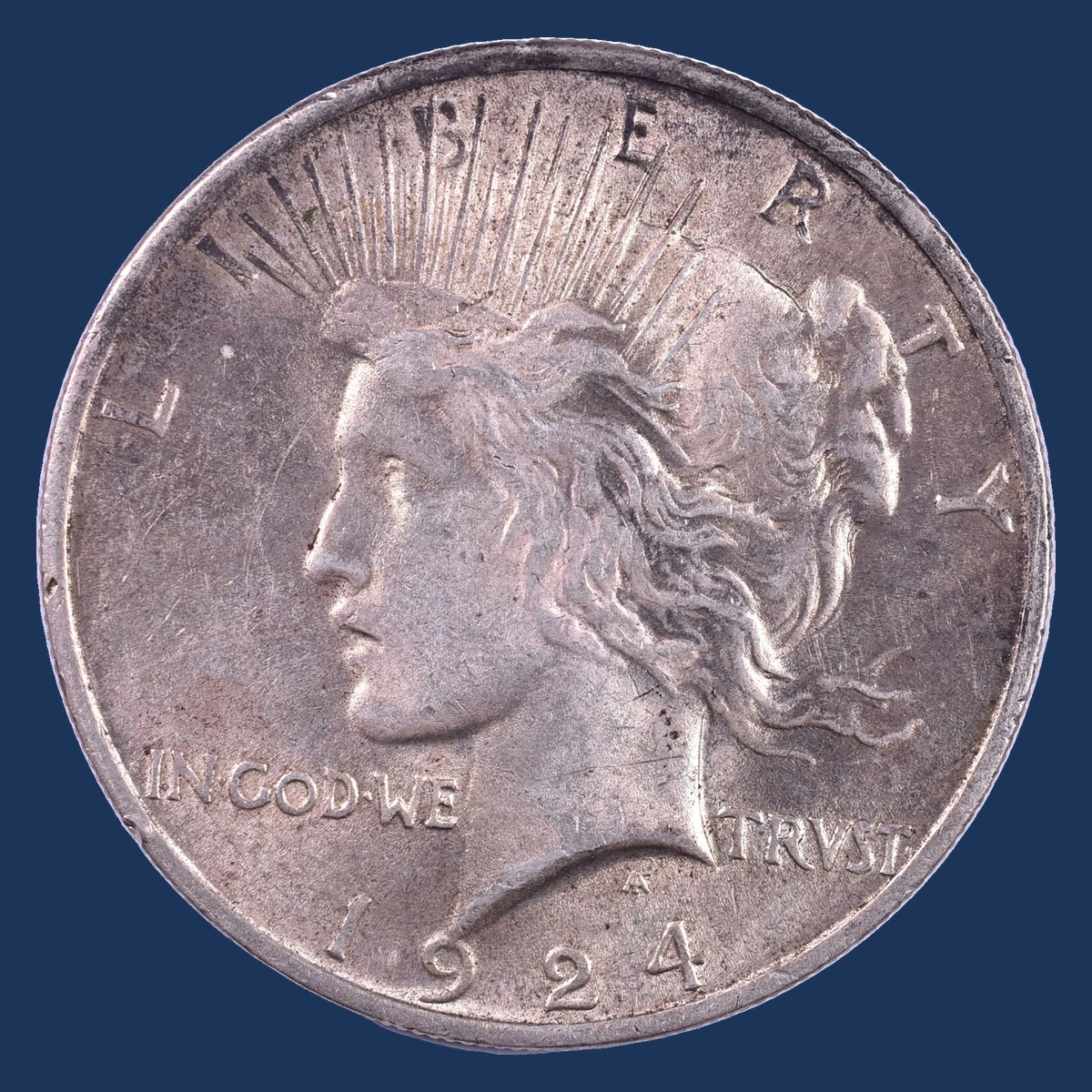
Raised metal can appear where a piece of a stamping tool breaks away. Coin metal fills the new opening during the next strike.
The Philadelphia Broken Wing variety shows raised damage-related detail in the eagle’s wing area. The coin itself did not lose a piece of its wing.
A separate Philadelphia dollar graded ANACS MS64 was advertised with a rim cud extending from 7 to 8 o’clock. A cud is a raised lump caused by a break at the tool’s edge.
These are different shapes of tool break. The rim example should not be mistaken for the internal wing feature.
Estimated Value
PCGS lists an MS67 Broken Wing auction result of about $2,233 in January 2015. That high grade contributes heavily to the whole-coin price.
A separate ANACS MS64 rim-cud dollar appeared in a 2007 dealer list at $149.95 asking. It is neither the same coin nor a confirmed sale.
Estimate $100–$3,000 across comparable authenticated wing and rim breaks. Clearly raised features, undamaged surroundings, and the preservation of the complete coin help explain the wide range.
How to Identify
For Broken Wing, inspect the eagle with a magnifier and compare the raised feature with an identified variety photograph. Ordinary feather lines belong to the design and should not be mistaken for damage to the tool.
A scratch normally cuts into the surface. The tool-break feature adds raised metal and may replace or obscure part of the intended picture.
For a rim candidate, inspect both faces before assigning its location. The old listing gives 7 to 8 o’clock but does not identify which face.
Check the lump’s connection with the rim under side lighting. A later edge hit can fold or push metal inward, often leaving a dent beside it.
Match the actual raised shape and surrounding design, keeping the wing and rim examples separate.
8. 1924 Peace Dollar Very Weak Strike and Weak Edge Ridges
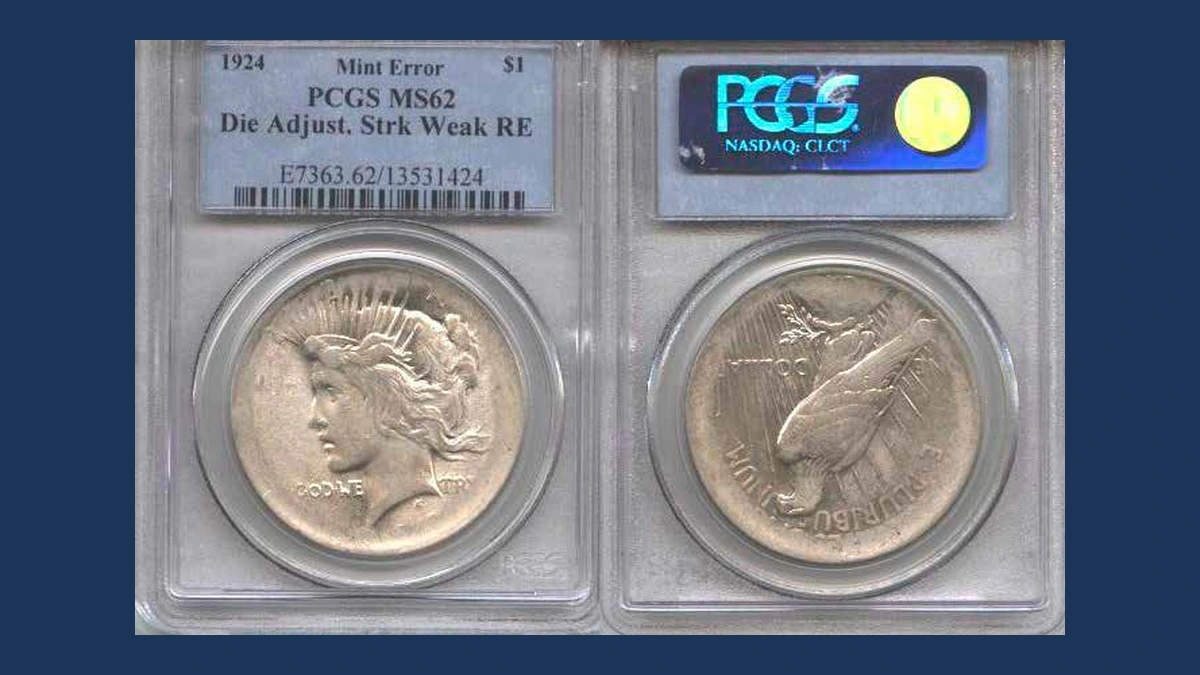
The portrait, eagle, and edge ridges can all fail to form fully when striking pressure is too low. A documented 1924 Philadelphia dollar shows this combination.
Its PCGS holder calls it a Die Adjustment Strike, and the dealer description specifically notes weak edge ridges. The coin was graded MS62.
The traditional name suggests a press-setting problem. Weakness alone, however, does not prove that workers deliberately made a test piece.
This coin needs to be judged as a whole. A worn portrait, a partly blocked letter, or one soft feather does not reproduce broad weakness together with a poorly formed edge.
Estimated Value
The PCGS MS62 example was advertised by Al’s Coins for $4,995. That figure is an asking price, not a reported completed transaction.
An estimated $1,500–$6,000 covers a comparable authenticated broad weak-strike example with its unusually weak edge. The connection between the face weakness and the edge matters more than the old label by itself.
A normal dollar with worn high points is a different comparison. Original surfaces and photographs of both faces and the edge help support the error’s value.
How to Identify
Inspect the edge before focusing on Liberty’s face. The listed coin’s lightly formed ridges are an important part of the weak-strike description.
Compare both faces for broad shallow detail while checking whether the original surface remains intact. Wear tends to flatten exposed high points after striking and can leave smoother patches there.
A magnifier helps distinguish untouched weak detail from rubbing, while a scale and calipers can screen for a thinned or altered coin. Normal specifications are 26.73 grams and 38.1 mm.
For a certified coin, use its edge photographs rather than opening the holder. The strongest visible combination is broad weak detail on both faces together with lightly formed edge ridges.
Conclusion
A raised bar, a peeling patch, and a blocked design tell different stories even when they appear on the same date. The eight groups here span estimated whole-coin values of $75–$6,000.
Study the feature’s height, boundary, and position before using a price comparison. For the unusually weak strike, include the edge in that inspection.
Keep flakes and embedded material untouched. Clear photographs make those original details easier to compare.