1940 Quarter Error List with Pictures

The words IN GOD WE TRUST offer a good starting point on a 1940-D quarter. A doubled version of that motto helped an attractive unworn example bring $2,880 in February 2018.
There are other places to look: the small mint letter, a peeling surface, or a blank crescent beside the picture. This 1940 quarter error list groups those features by cause, with estimated values of $25–$5,000.
Read the matching section below before deciding whether an unusual mark came from the Mint.
1. 1940 Washington Quarter Peeling Silver from a Lamination
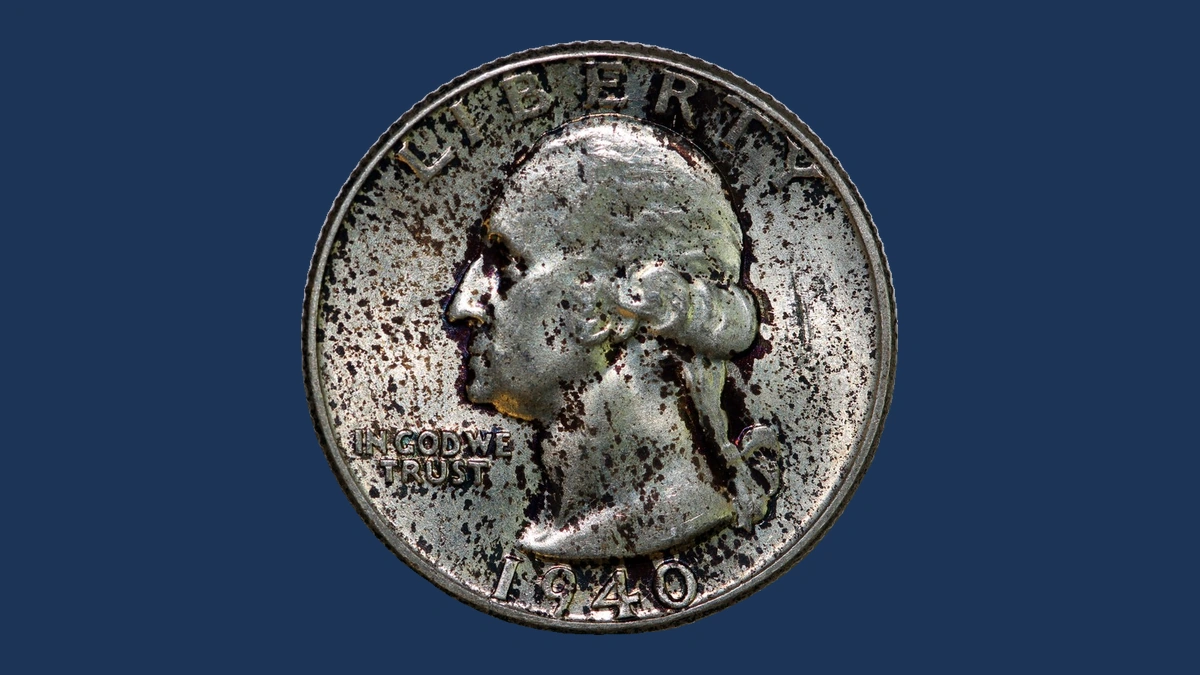
A thin metal layer may lift from the coin, leaving a rough patch or a loose flap. Collectors call this peeling fault a lamination.
The fault starts inside the blank, the metal disc used to make the coin. A normal 1940 quarter contains silver and copper mixed throughout its metal, rather than a silver coating.
Reported examples have local peeling, rather than an entire disc splitting in two. There is no single spot to check on every coin.
The boundary of the affected layer helps distinguish this fault from a later scrape or corrosion.
Estimated Value
An authenticated 1940 lamination has an estimated value of $25–$500. Small local peels generally attract less than a clearly visible separation on an otherwise appealing quarter.
The range reflects how clearly the peel shows and how well the coin survives. A rough patch usually attracts less attention than an intact flap.
Cleaning or scraping can lower value and obscure the original boundary. A damaged surface does not receive an error premium merely because some silver is missing.
How to Identify
Leave any attached flap alone. Trying to lift it can destroy the thin connection that helps explain how the metal separated.
Shine a low light across the patch and watch its edge. A thin sheet lifting from the surface is different from a deep pit or a groove cut through the design.
With a magnifier, follow the lettering or portrait detail up to that boundary. Parallel scrape lines and metal pushed aside can suggest later damage, while scattered rough pits may suggest corrosion.
Take a full-coin photograph and two close-ups with the light coming from different directions. Look for a natural layered boundary, rather than relying on the missing metal alone.
2. 1940 Washington Quarter Raised Tool Cracks and Possible Rim Breaks
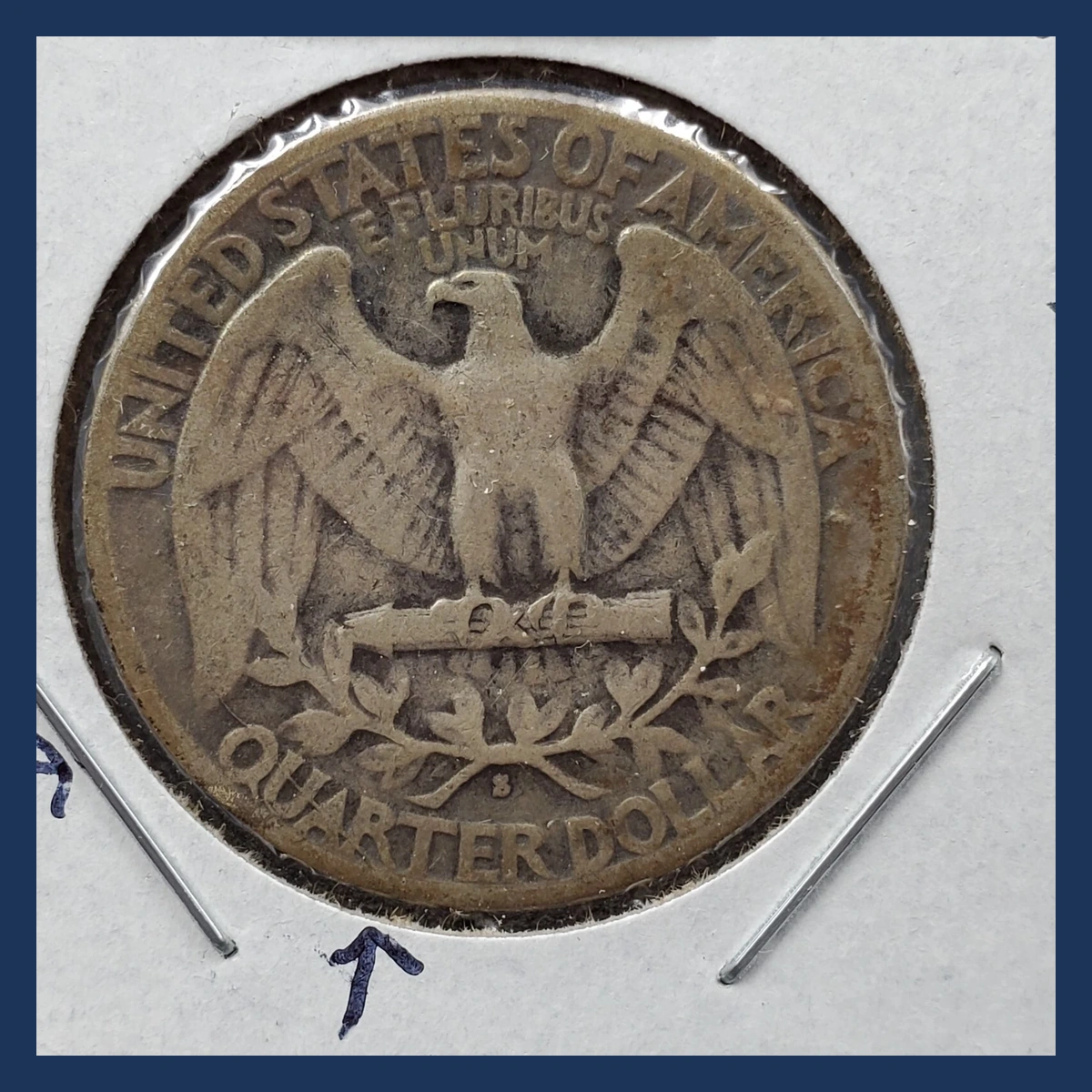
A narrow raised line can form when silver enters a crack in the tool stamping the coin. The tool is called a die, so collectors describe the copied line as a die crack.
Year guides mention cracks on Philadelphia quarters. Their general descriptions do not establish one route across the portrait or lettering.
A larger missing piece of the tool at its edge can leave a raised blob connected to the coin’s rim. That form is often called a cud.
A line alone does not demonstrate a large rim break. The connection and shape need their own examination.
Estimated Value
Estimate $25–$250 for matching minor tool cracks and $100–$1,500 for a confirmed substantial rim-connected break. The larger estimate requires more than a thick-looking line.
A larger break with surviving date detail can make a stronger display. The upper range suits a clear rim-connected mass, while a faint threadlike line belongs near the lower end.
Preservation still affects interest. A dent that pushed silver against the rim is later damage and should not be priced as a cud.
How to Identify
Tilt the coin slightly and watch the suspected line’s shadow. A raised thread copied from a cracked tool should stand above the surrounding surface, rather than cut into it.
Trace its full route before judging a dark patch at one end. Toning can make a fine line look much wider in a photograph.
For a suspected cud, examine where the raised mass joins the outer rim. The affected area should replace normal struck detail, not simply sit against a crushed edge.
Check the other face for weakness opposite a substantial break, but do not make that single clue decisive.
Compare the rim connection and the replaced design with a confirmed example. An unexplained bump alone does not identify a cud.
3. 1940 Washington Quarter Repeated Denver and San Francisco Mint Letters
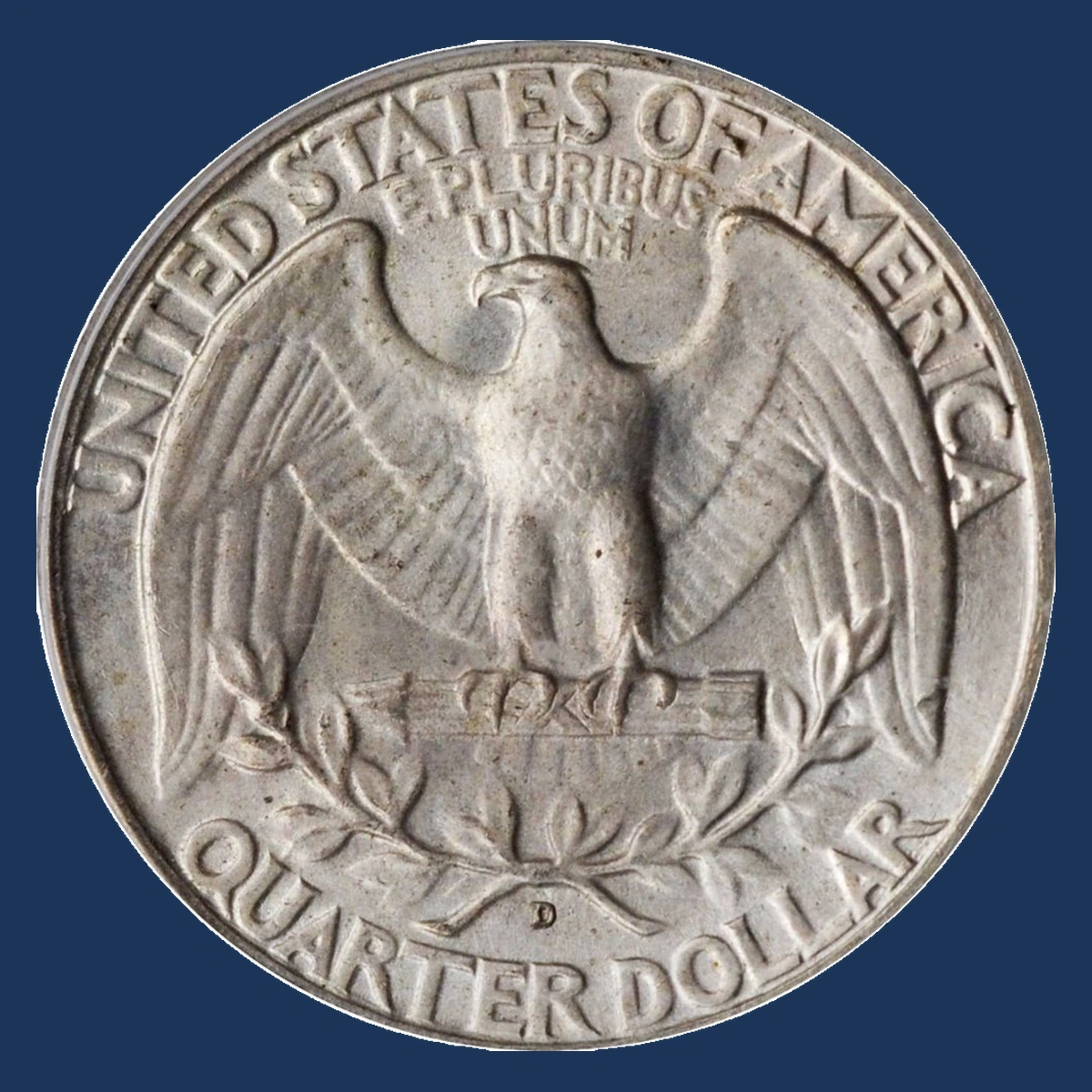
Two or three overlapping letter shapes can remain where a worker punched the mintmark into the stamping tool. These small repeats are separate from doubling in the main picture.
The Denver FS-501 is also cataloged as CONECA RPM-002 and shows three punch impressions. FS-502 is another named Denver comparison.
San Francisco has a listed triple-S pattern as well as a different repeated S paired with front doubling. Some Denver coins likewise combine a repeated D with a doubled front.
The two features can share one coin. Their names do not turn it into two separately priced quarters.
Estimated Value
The Denver FS-501 graded MS66 brought $2,585 in August 2015. An FS-502 graded MS65 appears in an auction index at $297 in December 2024.
Estimate $25–$3,500 for identified mintmark varieties across worn and attractive unworn grades. MS65 and MS66 describe well-preserved coins without circulation wear.
The patterns differ in collector demand. Three surviving punch outlines do not automatically make an example more valuable than a different, clearly identified two-outline variety.
How to Identify
The small D or S sits below the wreath on the back. That letter selects the photographs you need; a Denver pattern cannot identify a San Francisco coin.
Under magnification, follow the extra outline around the letter instead of stopping at one thick spot. A small lump or a flat shelf left by tool movement can look like part of another letter.
Denver FS-501 should match the same three overlapping D shapes in a confirmed photograph. The same variety is called CONECA RPM-002, so those two labels identify one pattern.
San Francisco needs its own S comparison.
Once the letter matches, check the front for any linked design doubling. Record both features together when they occur on the same quarter, rather than adding two separate coin values.
4. 1940 Washington Quarter Doubled Motto and Other Front or Back Designs
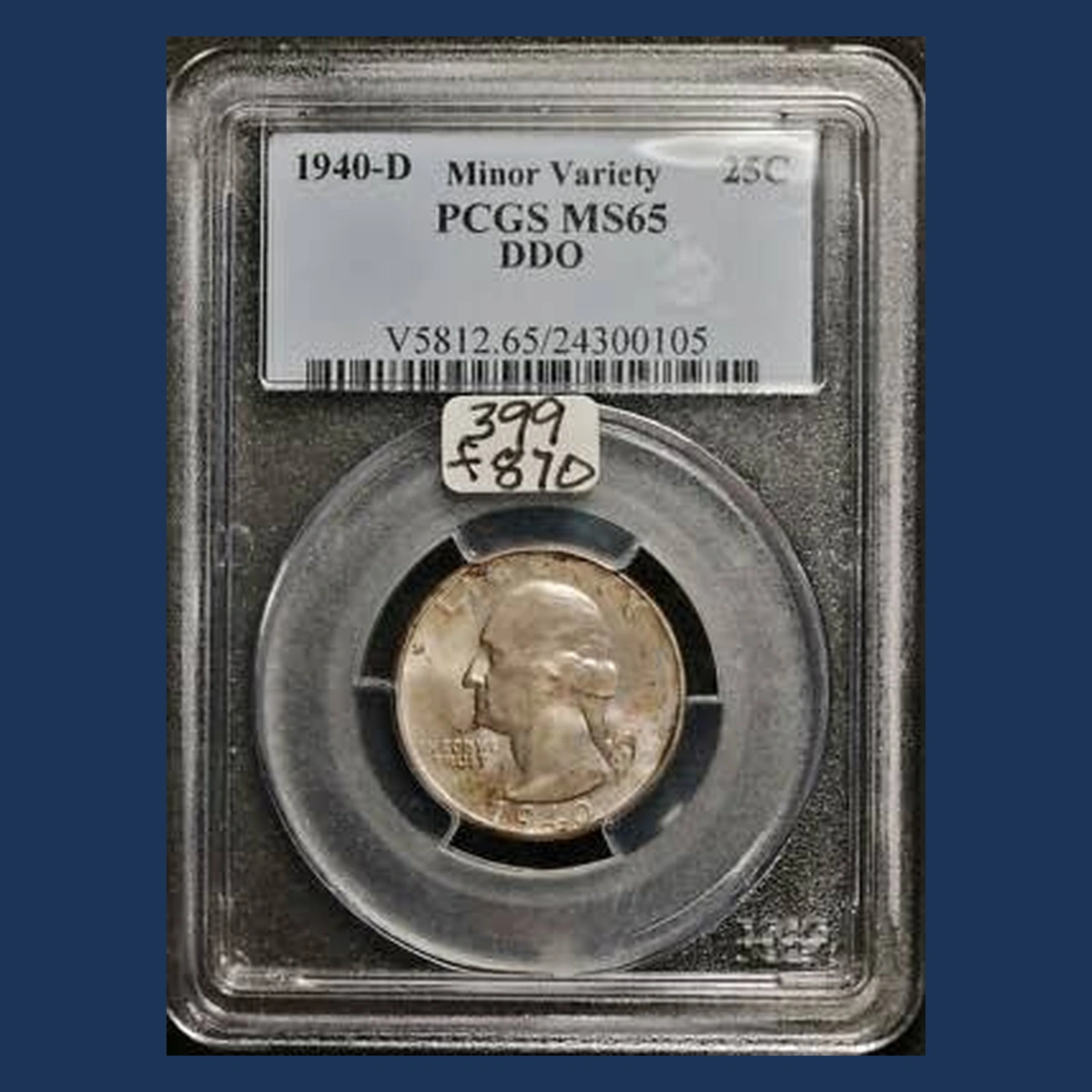
IN GOD WE TRUST shows the clearest repeated outlines on the Denver FS-101 quarter. The date also has doubling, though it is less obvious.
This pattern was already present in the stamping tool before the quarter was made. A normal single strike could copy both outlines onto the silver.
Other front patterns exist for Denver, Philadelphia, and San Francisco, along with back varieties for Philadelphia and San Francisco. They need their own reference photographs.
The same general doubled-tool mechanism can therefore look different from one variety to another. A thick motto does not automatically identify FS-101.
Estimated Value
The Denver FS-101 graded MS66 sold for $2,880 in February 2018, according to PCGS CoinFacts. Its unworn surfaces contributed to that whole-coin price.
Estimated values are $25–$3,500 across confirmed patterns and conditions. The best comparison uses the same mint, specific variety, and similar preservation.
A different doubled front may not command the FS-101 premium. Flat striking-related shelves and reflections should not be assigned its price merely because they resemble a second outline.
How to Identify
IN GOD WE TRUST provides the clearest test for Denver FS-101. With a 10× magnifier, compare several letters against a confirmed example, then check the lighter repeated edges of the date.
Next, look below the wreath on the back for the D. Philadelphia coins have no mint letter, while an S points to San Francisco and a different group of patterns.
If the motto fails to match, compare other varieties from that same mint before assigning a name. For back doubling, use photographs of the correct Philadelphia or San Francisco pattern.
A bright reflection changes when you move the lamp. Repeated rounded letter shapes and matching splits in several details are more useful than one bright edge or flat ledge.
5. 1940 Washington Quarter Off-Center Design with an Unstruck Crescent
Part of the design can miss the metal when a quarter blank enters the press off center. A crescent stays blank while lettering or artwork disappears beyond the opposite edge.
The shift should fit both faces because the whole disc was misplaced. A stamping tool moving on one side can instead leave the other face centered.
Reported 1940 examples do not all share one known mint or direction. Even a small shift can be genuine if part of the intended design missed the disc.
The surviving design and untouched metal show the actual displacement. An uneven rim alone does not.
Estimated Value
For authenticated 1940 off-center quarters, estimate $100–$5,000. A clear blank crescent, readable year, and pleasing original surfaces generally make a stronger display than a tiny shift.
Larger shifts can attract more interest when enough of the design survives to identify the coin. Wear, scratches, or an unreadable date can limit the price despite a dramatic blank area.
Do not assign a mint merely because its letter is missing from the displaced design. A secure identity supports a more useful valuation.
How to Identify
Compare both faces before estimating a percentage. Two incomplete designs that fit the same misplaced disc support an off-center strike; one shifted face may instead reflect a misaligned stamping tool.
Find the blank crescent and the missing artwork on the opposite edge. A complete design surrounded by extra metal suggests a broadstrike, made without normal sideways support, rather than an off-center strike.
Keep the date visible in photographs. Record a mint letter only if it remains readable below the wreath; do not guess one from a missing area.
Finally, inspect the boundary of the untouched crescent with a magnifier. Grinding marks or scraped-down details point to later alteration, while the original struck-to-blank boundary helps show the actual displacement.
Conclusion
Begin with the doubled motto or repeated mint letter if your 1940 quarter looks normal at first glance. Peeling metal and missing parts of the design call for different checks.
Estimated prices across these types run from $25–$5,000. The documented Denver sales show the value of identified varieties in attractive condition, rather than a guaranteed price for any extra line.
Leave the surfaces untouched and compare both faces with the correct mint’s examples.