1879 Morgan Dollar Error List with Pictures

The nickname “Capped CC” can be misleading: this 1879 variety concerns overlapping mintmarks, not a coin stuck over a stamping tool. An MS64 example, an unworn coin with relatively few marks, sold for $14,640 in March 2026.
This 1879 Morgan Dollar error list separates that variety from expanded blanks, peeling silver, and a dollar returned to rim-forming machinery. Estimated whole-coin values range from $75–$25,000.
Read the visible clues before relying on an error’s name.
1. 1879 Morgan Dollar Silver Peeling above STATES (1879-O)
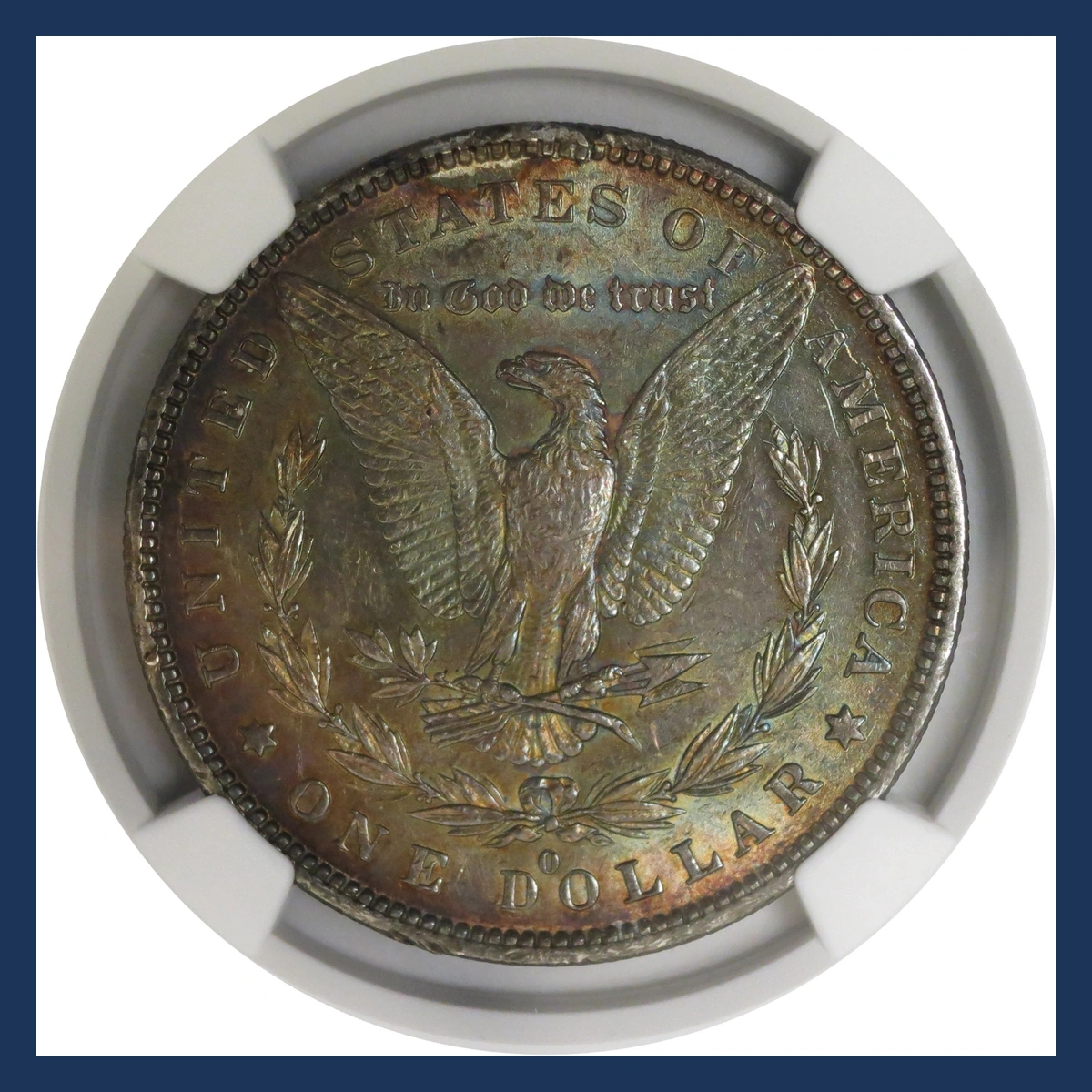
A thin peel appears above STATES on the back of a documented New Orleans dollar. The separation began within the silver alloy rather than in the lettering of the stamping tool.
This kind of surface separation is called lamination. A weak layer can lift or break away after the coin receives its design.
Coin Exchange describes this example as NGC AU55, meaning light circulation wear. Its colored surface is separate from the peeling feature.
The raised edge of the layer matters more than its color. A stain or a scratch alone is not lamination.
Estimated Value
Coin Exchange listed the NGC AU55 example at $166.66 for check or wire payment. That is an asking price, even though the item is now marked out of stock.
Use an estimated $75–$600 for comparable 1879-O laminations. The amount of separated silver, survival of the flap, and original surrounding surface influence appeal; colorful toning does not establish the cause of the peel.
How to Identify
Turn the eagle upright and look above STATES before enlarging the suspected peel. Include the letters in the photograph so the feature’s location remains easy to compare.
Use a magnifier and side light to see the layer’s thickness and attached edge. A true peel should have a physical boundary that remains visible as the light moves, unlike a simple color change.
Check around that boundary for scraping, fresh cuts, or an impact that pushed metal upward. Do not lift the flap to inspect underneath it, since that can destroy the original connection and remove part of the design.
The thin layer separating from otherwise intact silver is the feature to preserve.
2. 1879 Morgan Dollar Grooves beside an Unrestrained Edge
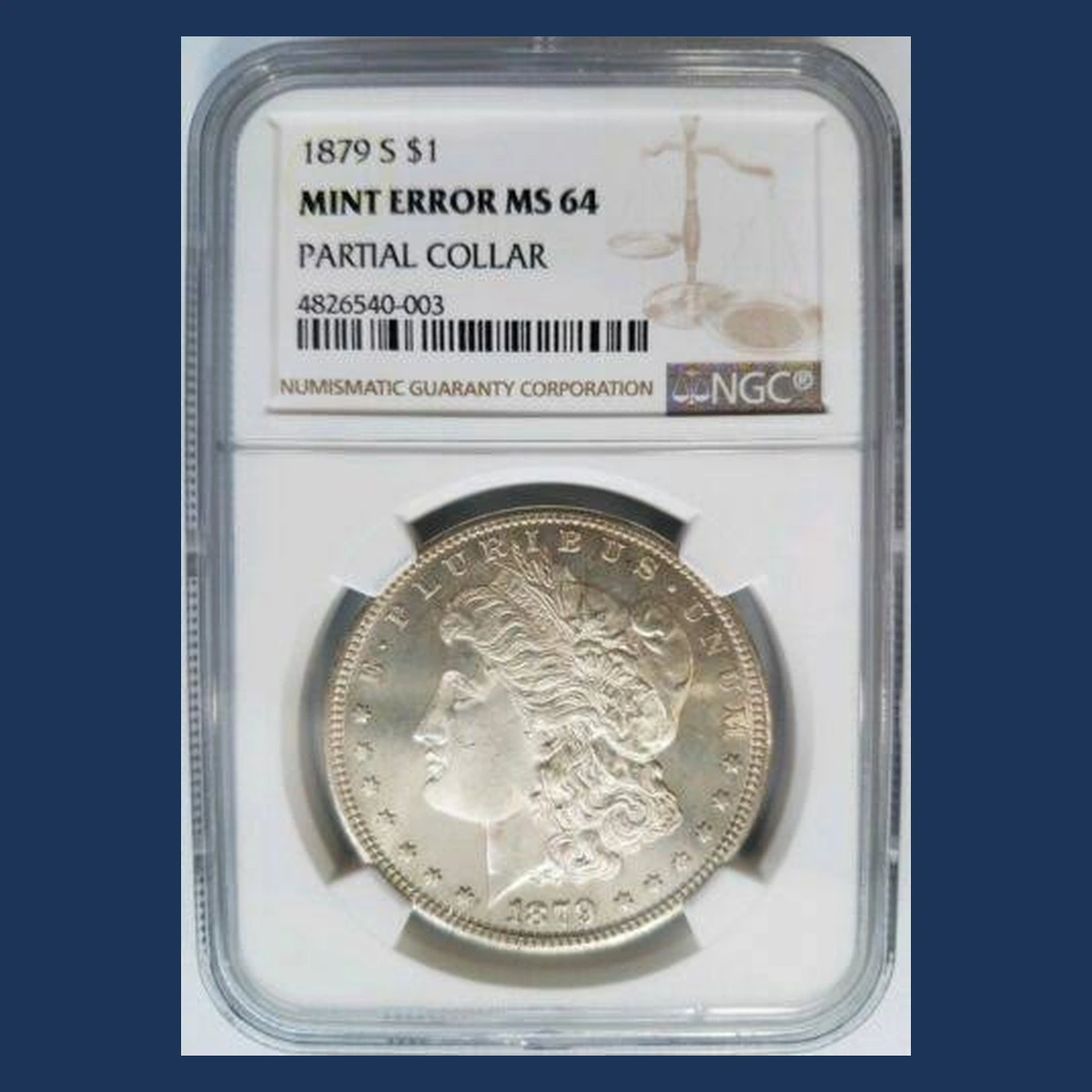
Traces of edge grooves can survive beside a mostly smooth, expanded edge. The collar ring caught only part of the blank when the design was struck.
One Philadelphia dollar graded NGC MS62 also missed the earlier step that raises a small rim on the blank. Its grooves remain near the back rim.
The holder called it a broadstrike, but Heritage explained why the surviving grooves support a partial collar. MS62 means an unworn coin with noticeable marks.
Another Philadelphia example is graded NGC AU Details, indicating light wear plus a condition problem. A separate 1879-S shows tilted collar restraint.
Estimated Value
The Philadelphia MS62 combination sold for $2,820 in August 2013 at Heritage. That price covers one coin with both the missing prepared rim and partial-collar strike.
Estimate $150–$3,500 across 1879 partial-collar examples, including the more unusual blank-preparation combination. A modest step on a circulated dollar belongs to a different comparison than the MS62 piece.
Edge clarity, preservation, and any cleaning or later rim damage influence the whole-coin value.
How to Identify
Compare the grooved and smooth portions around the edge before focusing on the portrait. On the Philadelphia blank-preparation combination, use a magnifier to find the remaining grooves near the back rim.
The catalog’s broadstrike wording can be tested against that physical evidence: intact struck grooves show that some collar contact occurred. Inspect the transition for filing that could have removed grooves after the coin was made.
A tilted 1879-S needs its own edge photographs showing how the step changes height around the coin. Calipers can compare several widths of a loose specimen with the normal 38.1-millimeter standard, but the surviving edge pattern is the more useful clue.
3. 1879 Morgan Dollar Impressions Left by Foreign Material
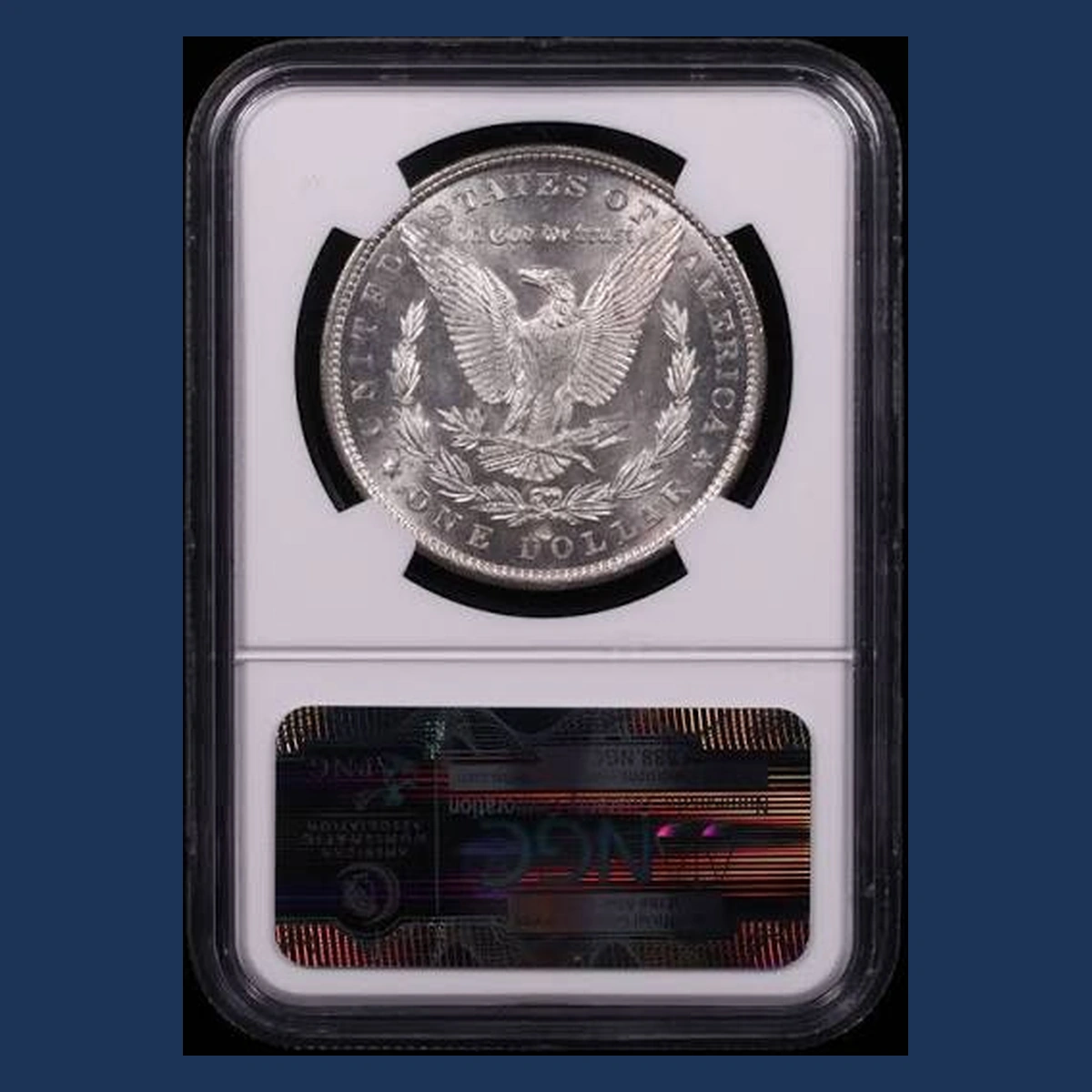
Material caught during striking can leave a groove or hollow where the normal picture should appear. The blank was pressed against that material instead of receiving the complete design.
Reported 1879 examples include a Philadelphia back line and an 1879-S NGC MS64+ impression around the eagle. That grade describes an unworn coin near the upper end of MS64.
Carson City examples include a back impression graded NGC XF45 and a separate front impression graded PCGS AU55. Both have circulation wear.
The material and shape must be judged separately on each coin.
Estimated Value
Estimate $100–$1,500 for recognizable Philadelphia or San Francisco impressions, and $400–$4,000 for comparable Carson City dollars. These are whole-coin estimates across varying condition and visibility.
The higher Carson City range includes the underlying date-and-mint value. It does not mean an equally sized depression automatically earns a larger error premium.
A narrow faint line, broad obstruction, and severe later damage offer different displays, so compare the entire surface as well as the impression.
How to Identify
Choose the correct face and mint before looking for a matching impression. The Philadelphia line belongs on the back, while the two Carson City examples involve different faces.
Follow the depression through any nearby lettering or picture under a magnifier. Material present during striking can interrupt the design where it lay, instead of cutting a continuous path across finished detail afterward.
On the San Francisco comparison, include the eagle and adjacent area in the close-up.
Try light from opposite directions to reveal any sharp trench, pushed-up ridge, or scraping that suggests later damage.
The shape of the interrupted design is more useful than naming the trapped material from a small dark mark.
4. 1879 Morgan Dollar Uneven Expansion around a Complete Design (1879-S)
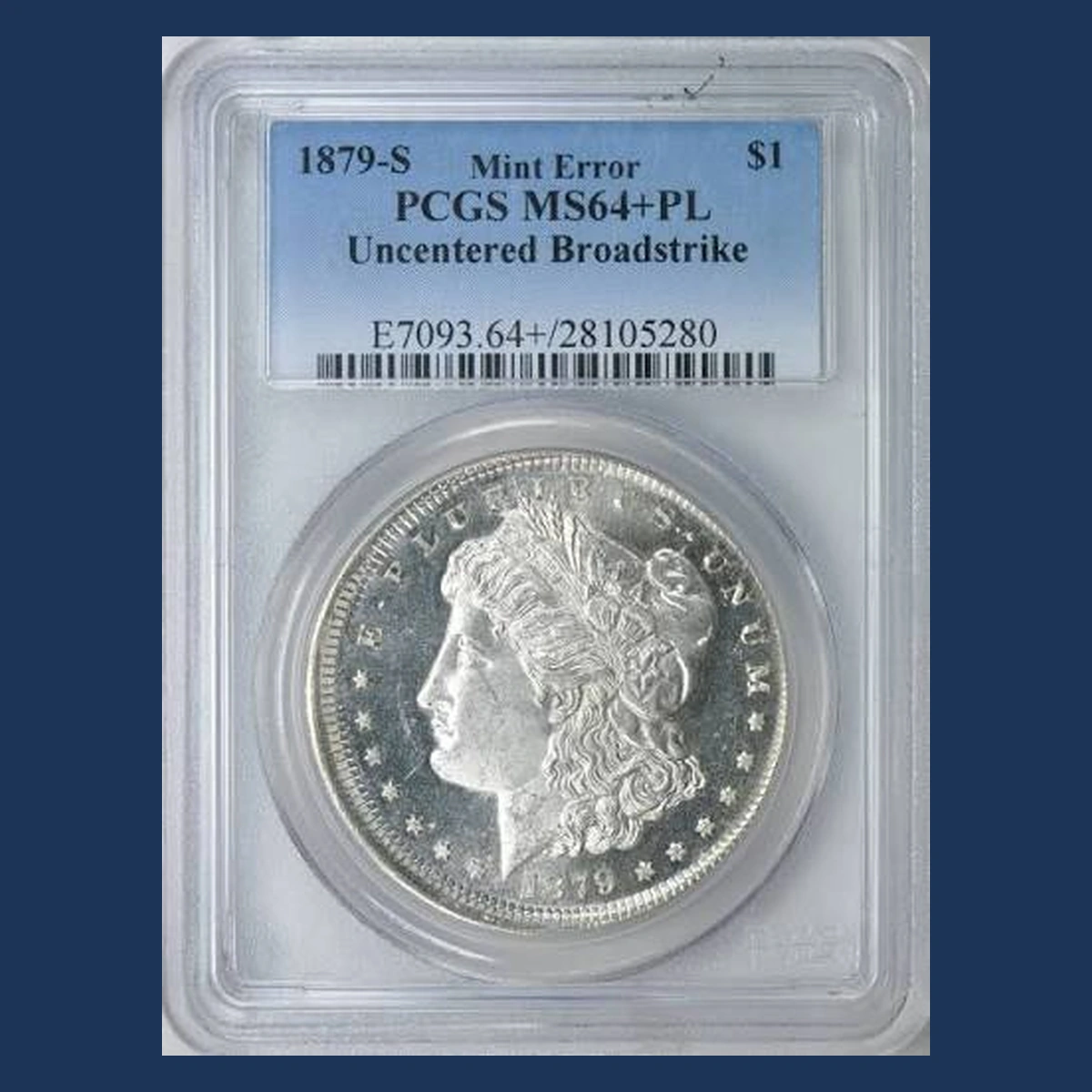
Extra silver can spread beyond the picture when the collar ring fails to hold the blank. If the complete design remains, the result is a broadstrike.
The documented 1879-S is an uncentered broadstrike, with more expansion on one side than the other. GreatCollections offered it as PCGS MS64+ PL.
MS64+ describes an unworn coin of strong quality within its grade. PL means reflective, prooflike surfaces; it does not turn this ordinary strike into a specially made Proof.
The complete outer design is the important distinction from an off-center coin that loses part of the picture.
Estimated Value
For 1879-S broadstrikes, estimate $1,000–$6,000 across recognizable circulated through attractive unworn examples. Strong expansion combined with a complete date and appealing surface can improve the display.
The PCGS MS64+ PL coin appears in GreatCollections’ March 2014 archive. A useful same-mechanism comparison is the 1883-O PCGS MS64 broadstrike reported at $2,300 in October 2008.
That different-date result should be adjusted for the actual expansion, grade, and surface quality being compared.
How to Identify
Examine the edge and the expanded border together under angled light. A dollar widened by later hammering may have a crushed picture or repeated dents instead of original outward-flowing silver.
With calipers, record the widest and narrowest points of a loose coin against the normal 38.1-millimeter diameter.
Now trace every star and outer letter on both faces. The intended design must remain complete despite its uneven position.
Compare the unequal margins with the certified 1879-S broadstrike, leaving a sealed coin in its holder.
Check for surviving collar-made grooves when reviewing the edge photographs. Complete design surrounded by original expansion, without full collar restraint, is the combination to look for.
5. 1879 Morgan Dollar Twenty Percent off Center (1879-O)
A documented New Orleans dollar has its design shifted far enough that part misses the blank. Mint Error News describes the 1879-O as 20% off center and graded PCGS VF30.
VF30 means a circulated coin with clear major features. The unstruck area and opposite missing design make the striking error visible despite the wear.
The date and mint remain important for identifying the coin. An undated Morgan assigned only to a range of years cannot automatically serve as an 1879 example.
The reported percentage does not establish which clock direction the design moved.
Estimated Value
Allow an estimated $2,000–$10,000 for genuine 1879-O off-center dollars comparable to the documented 20% example. Displacement, readable date, and remaining surface quality drive much of the interest.
For a related comparison, an 1883-O graded XF40 brought $2,520 in May 2024, as reported by Coin World. That was a different date and a smaller shift, so its price should not be transferred directly to the 1879-O VF30.
How to Identify
Confirm the 1879 date and O mintmark first, using full-face photographs rather than only the dramatic blank area. This keeps an undated coin from being assigned a precise year without support.
Locate the missing outer design on each face, then compare the unstruck portion opposite it. Both sides should fit the same physical displacement.
Use a magnifier to inspect the boundary for grinding or cuts made after striking. A scale may also help detect missing metal on a loose coin, compared with the normal 26.73-gram standard and expected wear.
Record the direction from the actual coin. The paired missing-design and untouched-blank areas provide the practical confirmation.
6. 1879 Morgan Dollar Finished Coin Returned to the Rim-Forming Mill (1879-S)
The dollar looks thick and slightly dished, with an unusually raised outer rim. Its appearance led an early owner to describe a thick, concave blank.
NGC identified a different sequence: the already struck coin passed through the upsetting mill. This machine normally squeezes a blank’s edge to create a small rim before the design is struck.
Heritage described the 1879-S example as NGC MS61, an unworn coin with noticeable surface marks. It came from the Newman collection.
This later rim-forming step does not mean the portrait received two strikes.
Estimated Value
The Newman collection example sold for $8,225 on April 25, 2013 at Heritage. Its recognized manufacturing sequence and unusual rim separate it from an ordinary dollar with a thick-looking edge.
Use an estimated $4,000–$15,000 for a securely authenticated comparable 1879-S error. Condition and the clarity of the reshaped rim remain important.
Artificially rolled or hammered edges can look similar but do not deserve this estimate merely because the coin appears concave.
How to Identify
View the dollar from the side as well as straight on. The dished appearance and elevated rim should be considered together, rather than treating extra thickness alone as proof of a special blank.
Under a magnifier, follow the entire rim for repeated dents, cuts, or irregular hammering. Those can suggest that a finished dollar was altered by hand.
Compare the edge profile with the certified MS61 example.
For a loose coin, record its diameter with calipers and its mass with a scale against normal Morgan standards of 38.1 millimeters and 26.73 grams.
The rim’s continuous reshaping after the design was struck needs specialist confirmation; a simply bent or thick coin does not establish that sequence.
7. 1879 Morgan Dollar Mintmark Punched over an Earlier Position
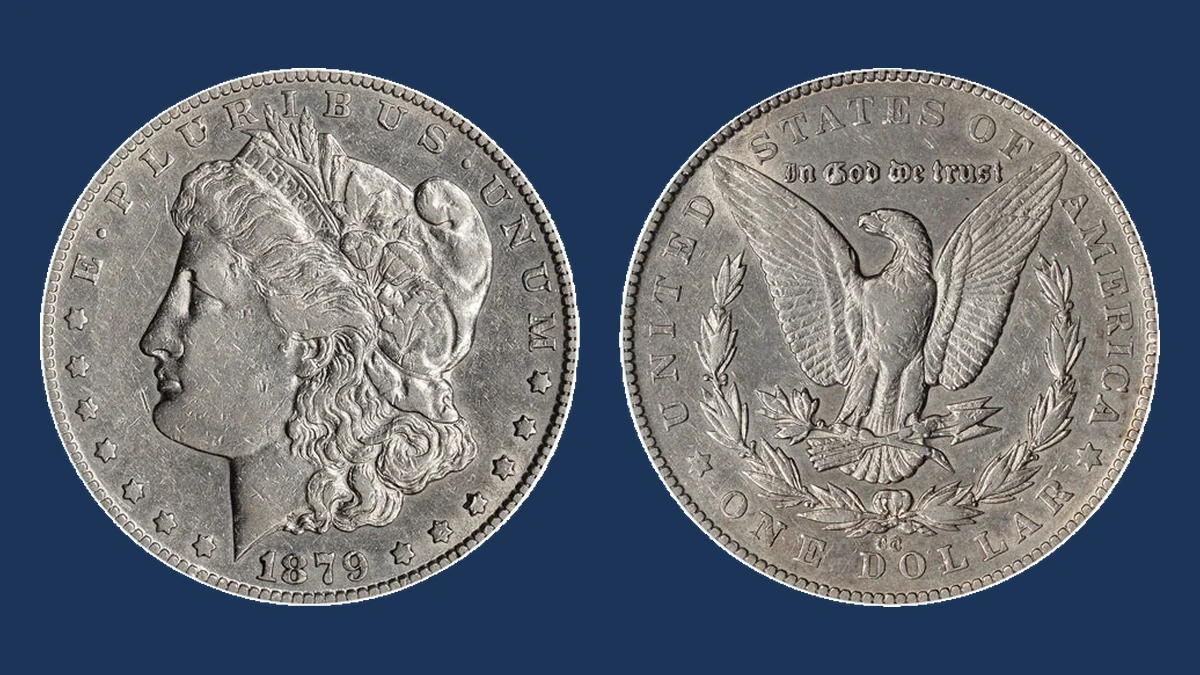
Extra shapes around the Carson City letters can hide an earlier, smaller CC. Larger letters were punched over the smaller ones on the die, the steel stamping tool.
Tool work around the mintmark helped obscure those lower letters. The resulting rough-looking pattern became known as Capped CC, though no coin cap caused it.
New Orleans has a different repunched mintmark: an upright O over a sideways O. Parts of the older horizontal outline remain visible around the final letter.
Both features began when the mintmark was added to the tool, not when a second dollar struck the coin.
Estimated Value
A PCGS MS64 Capped CC with CAC approval sold for $14,640 in March 2026 at Heritage. The approval recognizes quality within the grade.
Estimate $300–$25,000 for worn through attractive unworn Capped CC dollars, and $75–$1,500 for O-over-horizontal-O examples. The scarce Carson City issue accounts for much of its higher price.
The two mintmarks require their own comparisons; overlapping letters alone do not make their values equal.
How to Identify
For Capped CC, examine both letters and the uneven raised marks around them with a magnifier. Compare the complete pattern with an identified example instead of interpreting every rough patch as rust or corrosion.
Look for remnants that fit the smaller underlying CC. Check nearby silver for a seam, engraving, or disturbance that could suggest an added mintmark.
For the New Orleans variety, trace the upright O and then the surviving sideways curves. The older outline should fit an O turned horizontally, not merely a thick normal letter.
Keep each comparison centered below the wreath bow. The earlier letter shapes beneath the final mintmark distinguish these varieties from random bumps.
Conclusion
These 1879 Morgan dollar errors and varieties have estimated whole-coin values of $75–$25,000. The mint, condition, and nature of the feature all affect the comparison.
A Capped CC is a mintmark variety, while the returned-to-mill dollar has an altered rim after striking. Broadstrikes, partial collars, and off-center strikes also need different edge and design checks.
Keep photographs of the complete coin beside each close-up, and leave loose metal untouched.