2006 Dime Error List with Pictures

A little raised “cap” behind Roosevelt’s head and copper showing through the back call for different explanations. Both appear among the reports in this 2006 dime error list.
The cap-shaped chip shares a seller-listed coin priced at $2.25. For a stronger error comparison, a 2018-P missing-layer dime sold for $384 in July 2021.
Estimated values across the seven groups run from $2–$600. Follow the close-up checks below, and learn when to use the different weight standard for a silver collector Proof.
1. 2006 Roosevelt Dime Die Chips and Cracks (Estimated Up to $50)
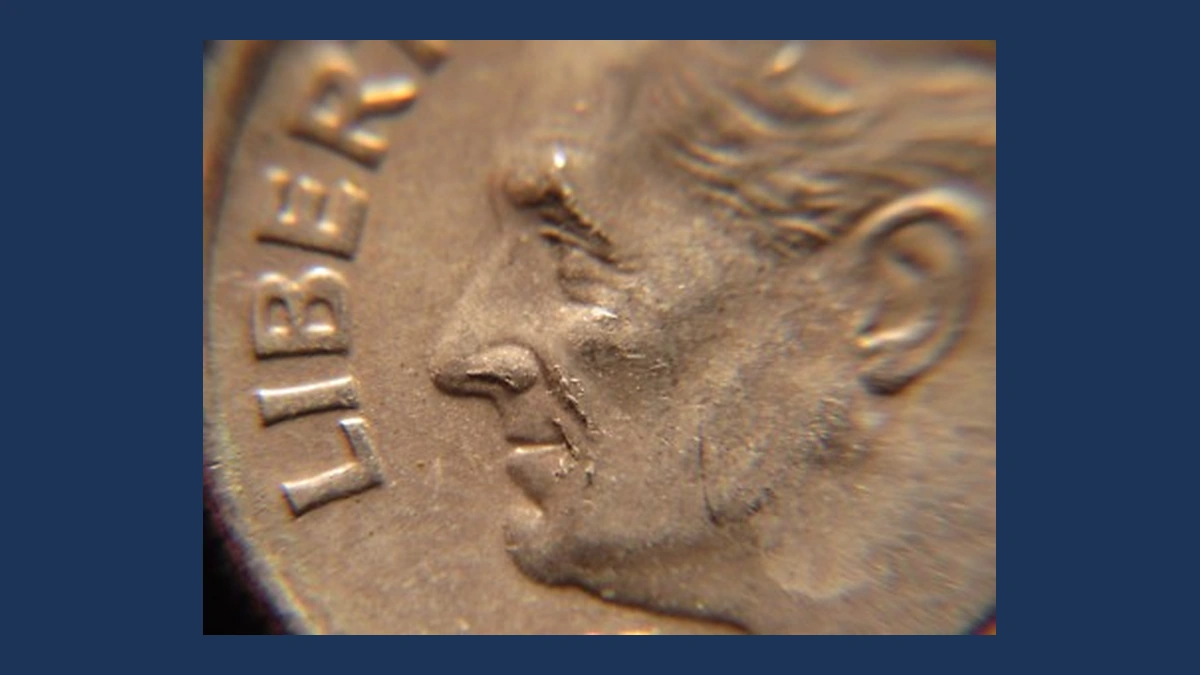
The back of Roosevelt’s head can appear to carry a tiny cap. A seller described this raised patch on a 2006-P dime as a die chip.
A die is the steel tool that stamps the coin. When a small piece of that tool breaks out, coin metal can fill the space and form a bump.
A narrow crack in the tool produces a raised line instead. Other 2006 reports include cracks, without one fixed route for every example.
Neither feature is a crack through the coin itself. Look for extra raised metal, rather than a scratch dug into the surface.
Estimated Value
The cap-shaped chip appears on a seller’s $2.25 listing that also describes a struck-through error. That is an asking price for the whole coin.
An estimated $2–$50 covers minor chips and short cracks through clearer, more appealing examples. Similar small tool flaws on modern Roosevelt dimes provide the comparison.
A tiny bump can add very little. The two descriptions on the offered dime do not mean adding two prices together.
How to Identify
View the area behind the head with a 10× magnifier and a low lamp. Rotate the light to see whether the feature stands above the surface.
A scratch normally cuts inward. A chip or crack in the tool leaves metal raised on the finished coin.
For a regular 2006-P, compare safely accessible examples with 2.268 g and 17.9 mm using a scale and calipers. Inspect the edge grooves for unrelated damage.
A matte-looking surface can belong to a satin collector-set coin; it is not itself a tool flaw. Keep the finish in mind when choosing comparison pictures.
The cap-shaped example should show a small original raised patch attached to the back of the portrait.
2. 2006-P Roosevelt Dime Struck-Through Error (Estimated Up to $150)
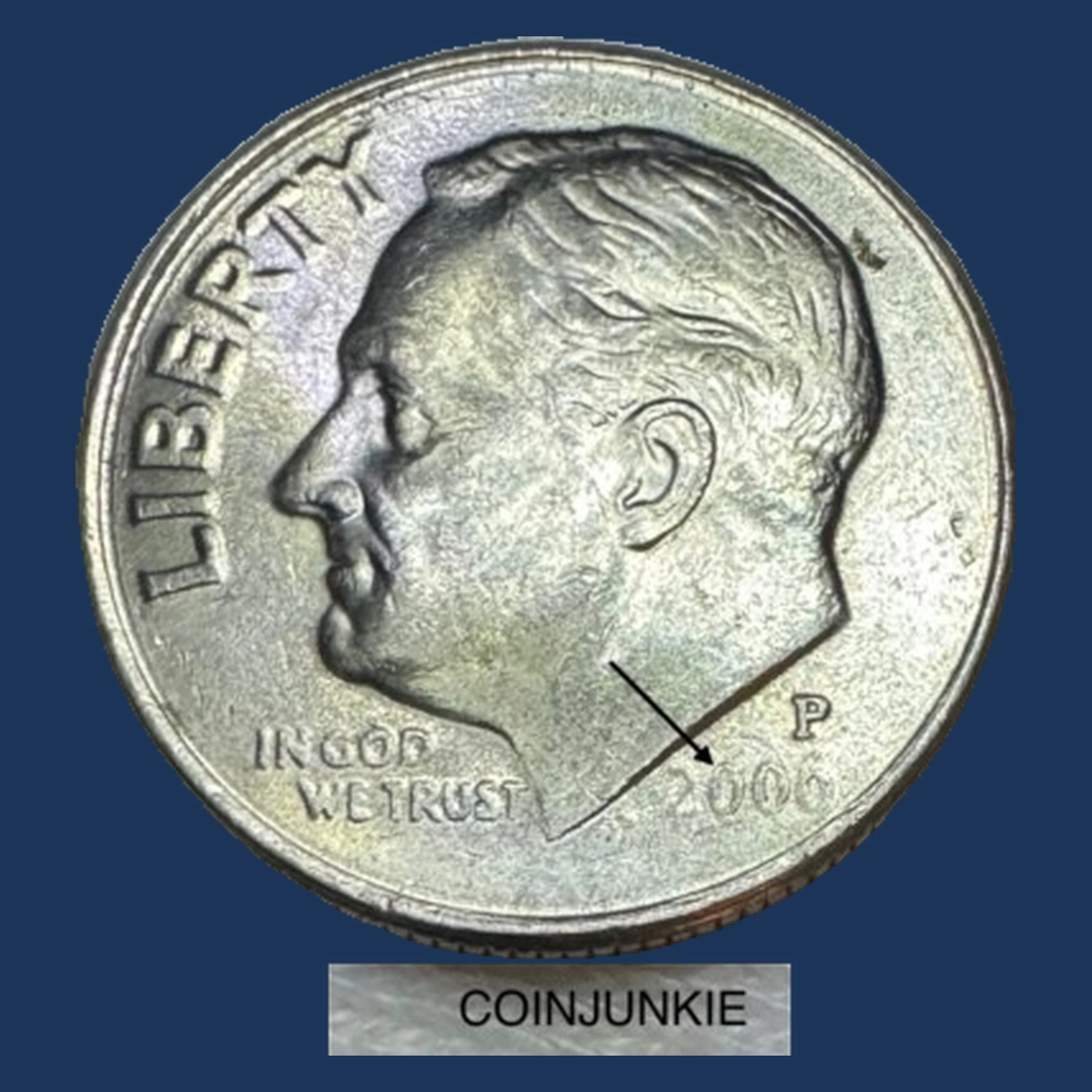
Something caught between the blank and a stamping tool can interrupt the portrait. Collectors call the result a struck-through error.
The object takes part of the pressure, leaving an impression or preventing normal detail from forming. Grease can cause soft-looking missing detail rather than a sharply outlined hollow.
A 2006-P seller listing describes this error together with the small chip behind Roosevelt’s head. Those features have different causes on the same coin.
The description does not identify the trapped material or its exact position. A mark elsewhere must be assessed from its own shape and surrounding design.
Estimated Value
For small, clear struck-through areas, estimate $5–$40. A larger recognizable impression can fit approximately $40–$150.
These are comparison estimates for modern Roosevelt dimes. The 2006-P offered with both this error and a die chip was priced at $2.25 by its seller.
That listing is not a completed sale or a price for the struck-through mark alone. The estimated upper range concerns stronger features than a tiny patch of missing detail.
How to Identify
First decide whether detail is missing, sunken, or merely scratched. Follow the portrait across the mark with a 10× magnifier.
A later scrape may cut through finished features and push metal into a lip. Material caught during striking can interrupt detail without that same pattern of displaced metal.
Compare a normal regular coin’s 2.268 g weight and 17.9 mm diameter using a scale and calipers when safely accessible. Check the edge grooves too.
A normal weight is possible because an obstruction need not remove any of the blank. Do not assign a material such as wire or cloth from a vague hollow.
Look for an interrupted struck design whose shape fits an obstruction, rather than a cut across completed detail.
3. 2006 Roosevelt Dime Clipped Planchet (Estimated Up to $300)
Two missing sections make the Philadelphia example easy to distinguish from a normal round dime. It weighs 2.13 grams and received an ANACS AU58 grade, meaning only slight wear.
The missing portions were absent from the blank before striking. A blank is also called a planchet once prepared for the press.
A separate specialist catalog shows a 2006 dime with a large straight clip, graded ANACS MS63. That describes an unworn coin with noticeable marks.
These are different coins. The two gaps on the Philadelphia piece do not represent two separate errors with two separate prices.
Estimated Value
Estimate $25–$100 for modest genuine clips and approximately $100–$300 for larger, attractive examples. Shape, wear, and the amount of missing metal affect the price.
The 2.13 g double clip sold at GreatCollections in January 2026, but its final amount is not public here. A sale date is not a price.
These ranges therefore use comparable modern clipped dimes. Two small gaps can be less dramatic than one large gap on another coin.
How to Identify
The Philadelphia dime’s recorded 2.13 g is below the regular 2.268 g weight. Check a loose coin with a scale, or use the recorded weight for a sealed example.
Compare intact spans with 17.9 mm using calipers when safely accessible. Then inspect each gap separately through a 10× magnifier.
Look where the normal rim fades or rounds into the opening. Fresh saw marks or a sharp cut across finished letters suggest later damage.
The large straight-clip example needs its own comparison; its mintmark is not assigned here. Inspect the remaining edge grooves on both types.
A genuine clip should show how original metal flowed beside a gap that already existed before the design was struck.
4. 2006 Roosevelt Dime Broadstrike (Estimated Up to $350)
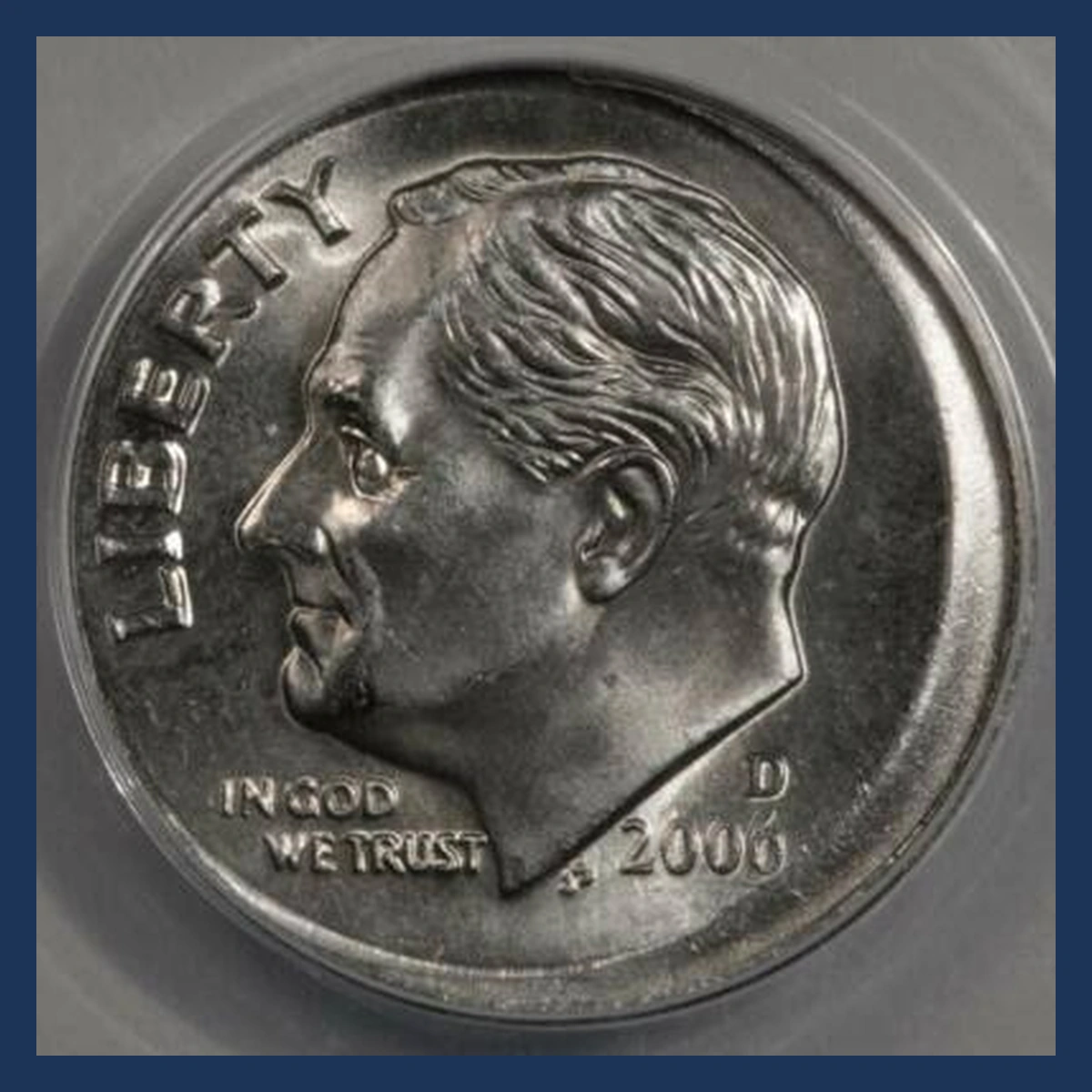
An oversized border can surround a complete Roosevelt portrait and full back lettering. This is the appearance to examine for a broadstrike.
The collar, a ring around the blank, normally limits the coin’s width. It also helps form the edge grooves.
Without proper containment, metal spreads outward during striking. A coin can become wider without losing any part of the intended design.
Year-specific reports include 2006 regular dimes, with Philadelphia examples mentioned. Their outlines need individual comparison rather than an assumed direction of spreading.
A coin flattened after leaving the Mint may be wide too, but often has crushed detail.
Estimated Value
Genuine broadstrikes have an estimated $50–$350 range, from modest widening to obvious expansion on attractive unworn coins. These are whole-coin estimates.
A 2000-P dime graded NGC MS65 sold for $159 in September 2025. That grade describes good preservation without wear.
The comparison coin was both broadstruck and struck more than once. Its price includes that added error, so it is not a direct sale record for a 2006 broadstrike.
How to Identify
Check all the outer letters before reaching for calipers. A broadstrike keeps the design complete, even when the border is uneven.
Measure across several directions and compare with a normal 17.9 mm dime. Record the widest and narrowest spans rather than only one number.
A safely accessible coin can be weighed against the regular 2.268 g standard. Spreading changes shape without necessarily changing weight.
Inspect the edge through a 10× magnifier for missing or incomplete grooves. Later flattening can alter those grooves too, so examine the portrait for crushed high points.
Complete, undamaged-looking designs within a naturally expanded border support a broadstrike more strongly than width or a smooth edge alone.
5. Reported 2006-S Silver Roosevelt Dime Doubled Die (Estimated Up to $400)
The silver collector version needs a different comparison from a pocket-change dime. A 2006 year guide reports a doubled die on the San Francisco silver Proof.
A Proof is specially made for collectors, usually with reflective backgrounds. This silver version contains 90% silver rather than a copper center with outer layers.
A doubled die carries repeated design shapes on the steel tool before striking. Coins made from it can share those shapes.
The report does not name a front-only or back-only pattern. Examine both faces, and do not treat every reflective line as an extra outline in the metal.
Estimated Value
Use an estimated $50–$400 for a genuine minor-to-clear doubled design on the silver Proof. The range compares silver Roosevelt Proof varieties from other dates.
It is not a reported auction result for a specific 2006-S example. Stronger raised separation and clean mirrorlike surfaces support higher prices.
An ordinary silver Proof has value without doubling, so the estimate concerns the entire coin. A bright reflection or flat ledge beside a letter does not justify the variety premium.
How to Identify
Check the finish and metal before looking for doubling. A 2006-S silver Proof normally weighs 2.50 g, compared with 2.268 g for the layered-metal Proof.
Both measure 17.9 mm across and have grooved edges. Use a scale and calipers only when safely accessible; otherwise consult the recorded coin description.
Now examine both faces through a 10× magnifier. Compare any extra outlines with a matching 2006 silver Proof variety photo, not a circulation coin.
Rotate the light to separate reflections from raised metal. Normal repeated blows used to make Proofs should still leave a single clean design.
Fixed, rounded separation at matching design details is the feature to establish before paying for a doubled die.
6. 2006 Roosevelt Dime Off-Center Strike (Estimated Up to $500)
Part of the portrait can disappear beyond the edge while a crescent stays blank. The blank was not centered between the tools when the coin was struck.
This differs from simply having a wider border on one side. An off-center blank affects the designs on both faces.
Reports for 2006 regular dimes include Philadelphia examples. They do not establish one percentage or direction for all coins.
The surviving date helps identify the year when much of the design is missing. A missing mintmark needs care too, because the strike may have missed its position rather than the tool lacking it.
Estimated Value
Estimate $30–$150 for smaller genuine offsets with readable dates. More dramatic, attractive examples can fit approximately $150–$500.
A 1977 dime struck ten percent off center sold for $109 in June 2026. Its NGC MS64 Full Bands grade means unworn with some marks and clearly separated torch bands.
That is a different-year comparison for the same broad error type. Date visibility, remaining design, and surfaces can matter as much as the amount of displacement.
How to Identify
Place front and back photographs side by side, including the full outline. Find the readable 2006 date before judging the size of the shift.
If only one face moves, the problem may be one misplaced tool. A true off-center blank should leave incomplete designs on both sides.
Use a 10× magnifier along the border between the design and untouched metal. Abrasion can erase detail, but it leaves a worked surface rather than an original blank area.
The regular coin starts at 2.268 g and 17.9 mm. A scale and calipers can check accessible examples, allowing for spreading during striking.
Inspect the remaining edge grooves, then confirm that both incomplete designs meet original plain metal.
7. 2006 Roosevelt Dime Missing or Defective Clad Layer (Estimated Up to $600)
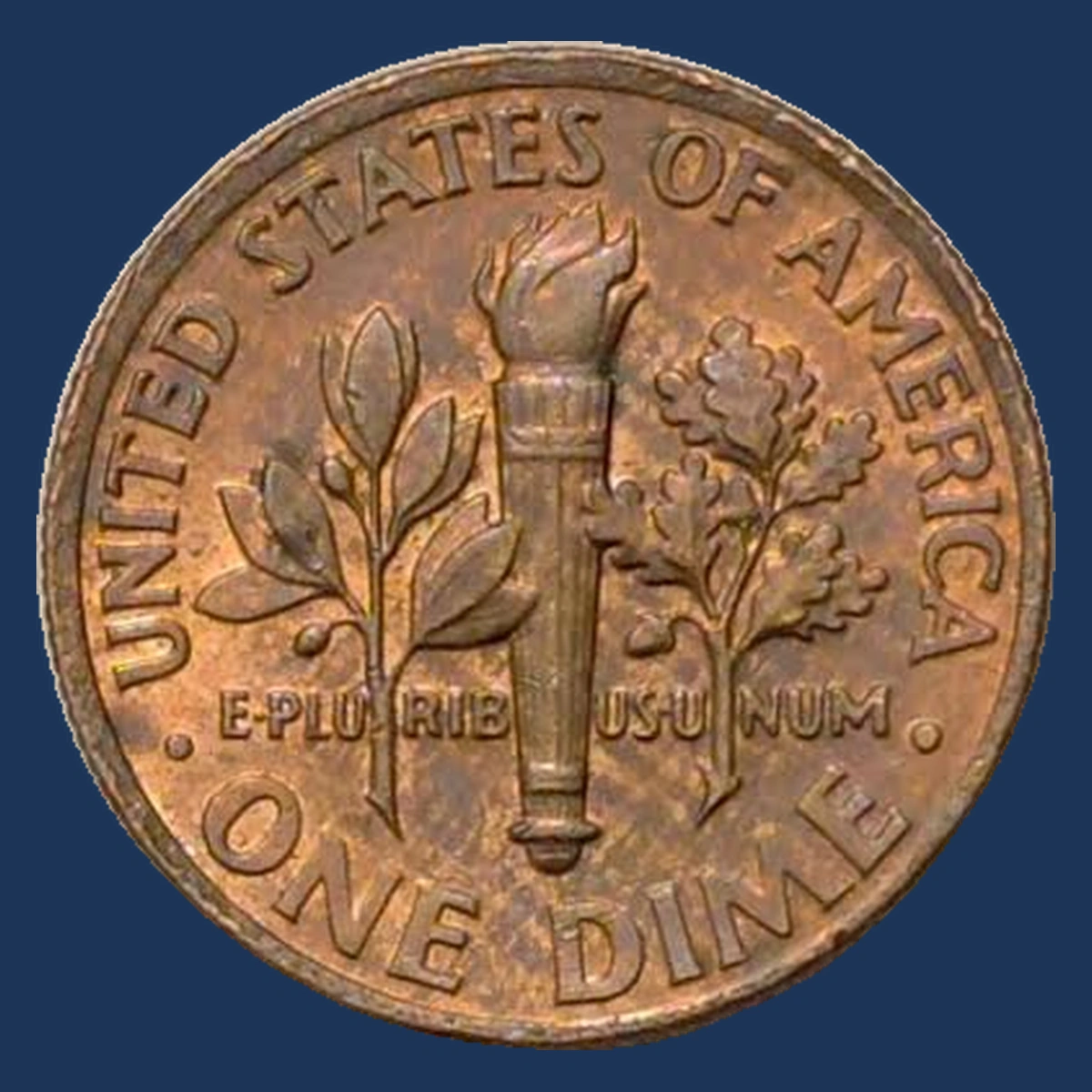
The torch side of one 2006-P dime exposes its copper center. The pale outer metal layer is missing from that face.
GreatCollections listed this coin as PCGS MS64, an unworn grade with visible marks. Denver missing-layer reports do not specify the same face.
A separate specialist catalog example is labeled defective cladding and graded NGC MS66. That higher grade describes very good preservation without wear.
Defective cladding can involve a local flaw rather than an entire absent layer. Keep the two examples separate when comparing their surfaces; a small lifting patch is not automatically a missing whole face.
Estimated Value
Allow an estimated $30–$150 for clear local layer defects and $150–$600 for larger missing-layer examples. Each range concerns the complete coin.
A 2018-P dime missing its front layer sold for $384 in July 2021. It was PCGS MS64, but its date and affected face differ.
The 2006-P auction page gives a July 2015 sale without a public final price here. Its $40 opening bid was not the amount realized.
How to Identify
Compare the back of the Philadelphia example with its front and edge. The missing pale layer should expose copper in the coin itself, not just brown staining.
A scale can reveal weight below the normal 2.268 g when safely accessible. Compare the diameter with 17.9 mm using calipers, and inspect the remaining edge grooves.
For local defective cladding, look for a boundary, separation, or lifting layer through a 10× magnifier. An attached flap need not cause a measurable weight loss.
Leave any loose metal untouched. The 2.50 g silver Proof is a different construction and should not be used as the normal weight comparison.
Actual layer separation at the edge or surface is stronger evidence than color alone.
Conclusion
Use the shape of the mark to choose your next step. A raised patch calls for angled light, a clipped edge needs close inspection, and exposed copper needs a weight check.
These estimated ranges run from $2 for a minor tool flaw to $600 for a stronger missing-layer error. Keep ordinary, satin-finish, and silver Proof examples separate when comparing coins.
Two features on one dime still belong to one coin and one overall price.