1838 Dime Error List with Pictures

Stars provide the first clue when sorting 1838 dime errors. Philadelphia coins have them around Liberty, while New Orleans coins have a plain front and an O on the back.
An exceptional 1838-O F-101 sold for $37,600 in April 2023. That price reflects its outstanding condition as well as its variety.
Estimated ranges below span $50–$40,000, from worn coins with small tool flaws to rare unworn examples. Read on to check extra star points, doubled letters, and the marks sometimes called partial drapery.
1. 1838 Liberty Seated Dime Reverse Die Flaw (Estimated Up to $650)
A raised patch between the central letters can come from a flaw in the stamping tool. A die is the steel tool that presses the design into the blank.
The recorded example has a noticeable flaw between the N of ONE and the M of DIME. A smaller patch appears between the N and E of ONE.
The specialist description does not establish exactly how the tool developed these spots. They sit inside the design, so they are different from a break attached to the rim or a loose layer peeling from the coin.
Estimated Value
For a worn to lightly worn coin with these clearly matched patches, estimate $75–$650. The price includes the dime itself and depends on its condition.
This is an estimate, not a recorded sale of the illustrated tool flaw. Clear raised shapes on undisturbed metal help collectors recognize it.
Corrosion or attached debris should not receive the same treatment. Their position between the correct letters does not make them an original tool flaw.
How to Identify
Look between ONE and DIME with a 10× magnifier. Locate the larger raised patch between N and M, then check for the smaller spot between N and E.
Change the light angle to see whether the shapes rise from the coin’s surface. Dirt can sit in the same space, so do not scrape or poke the metal to test it.
Compare the exact outlines with the recorded variety, including nearby cracks when present. A different small lump is not automatically the same flaw.
The 90%-silver dime normally weighs 2.67 g and measures 17.9 mm; check with a scale and calipers and inspect the grooved edge. Begin with the two correctly placed raised patches inside the lettering.
2. 1838 Liberty Seated Dime Rotated Reverse (Estimated Up to $750)
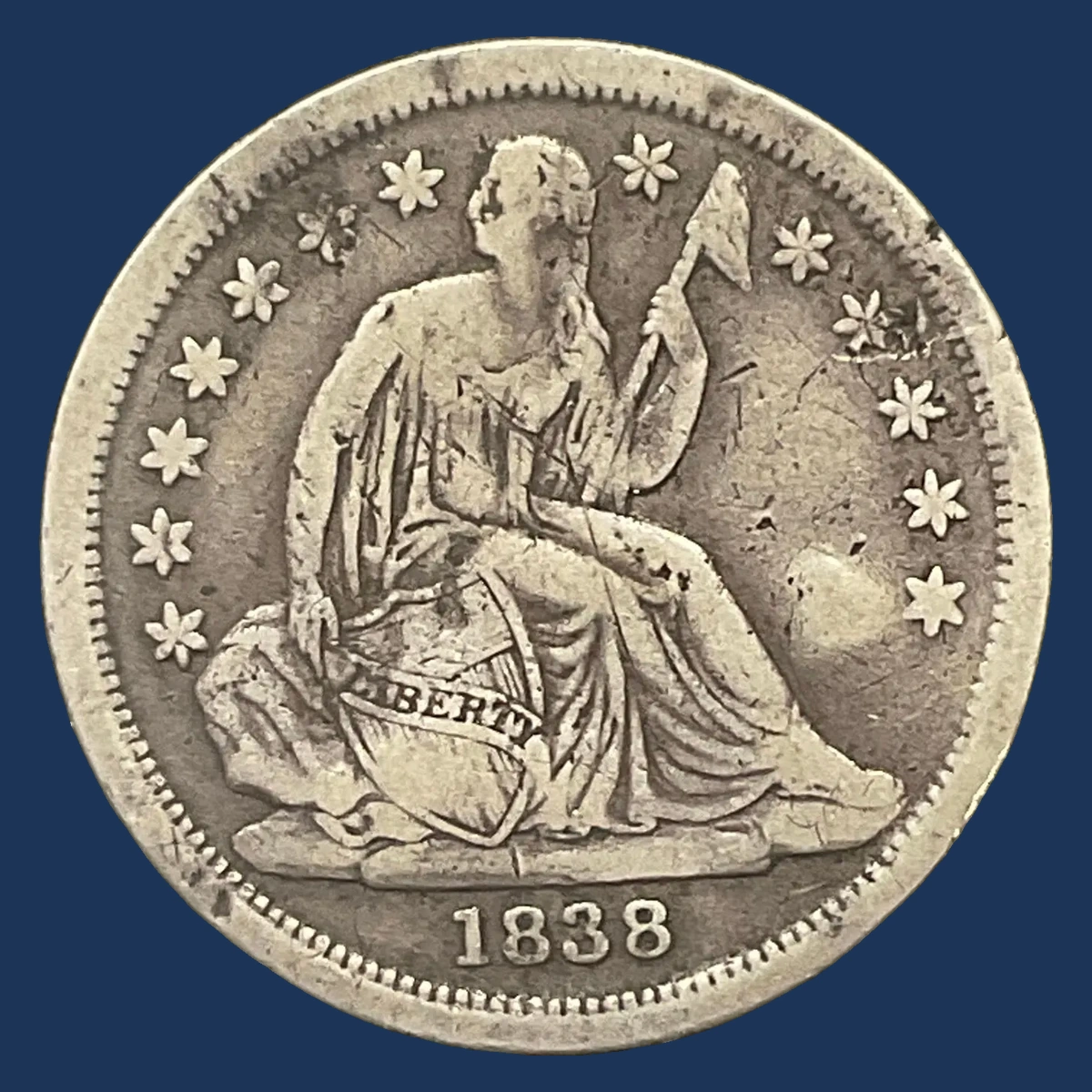
The back may sit at an angle when the front is held upright and flipped over correctly. A stamping tool that turns from its intended position can produce this rotated design.
A seller reports the feature on an 1838 Large Stars dime. The listing does not give a measured angle, so no particular number should be assumed.
Photographs can be rotated independently and make a normal coin appear unusual. The actual coin needs a controlled flip; reports about the smaller 1838 half dime do not establish the alignment of this ten-cent piece.
Estimated Value
A clearly demonstrated rotation on a collectible worn 1838 dime has an estimated range of $100–$750. A larger, easily repeated tilt can attract more interest than a slight difference.
This is an estimate for a genuine rotated strike, not a sale result for the seller’s report. Wear, damage, and overall appearance also affect its price.
An angled photograph alone proves little. A repeatable tilt after a controlled flip is needed before assigning an error premium.
How to Identify
Place Liberty upright and hold the coin at its left and right edges. Turn it over from top to bottom without twisting it sideways; ONE DIME should then appear upright.
Repeat the same movement several times. If the angle changes between attempts, the handling may be causing the apparent rotation.
Use a 10× magnifier to confirm the date and Large Stars design. A scale and calipers should relate to the normal 2.67 g and 17.9 mm, with 90% silver and a grooved edge.
For a sealed coin, keep the holder fixed and use recorded measurements. The direct test is the same reverse tilt appearing after each careful top-to-bottom flip.
3. 1838 Liberty Seated Dime Repunched Date (Estimated Up to $900)
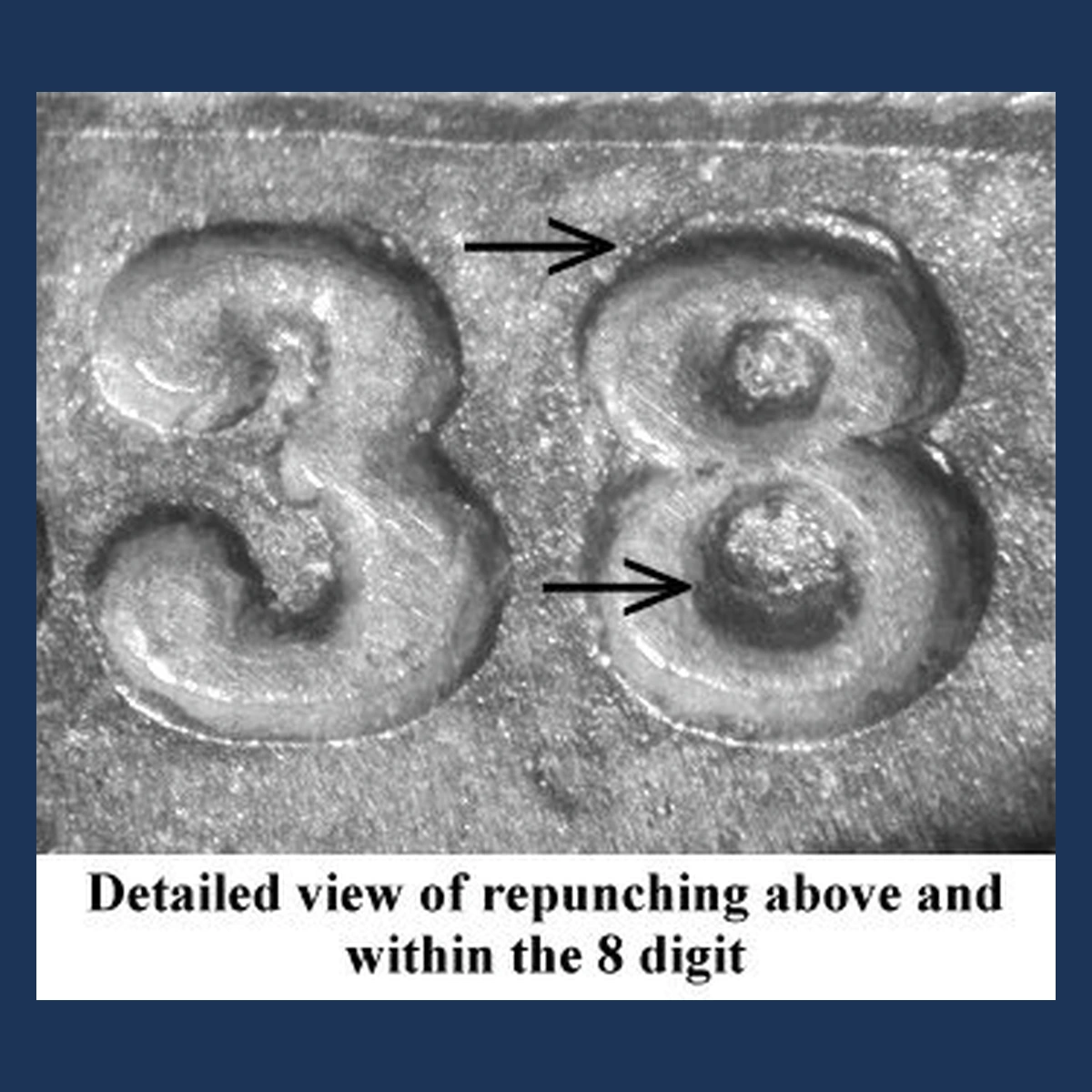
Extra strokes beside 1 and 8 can show where the date punch entered the tool twice. The earlier position can remain visible after the final date is added.
Specialist records list this feature on a Philadelphia pairing also associated with clash marks. The repeated date and the clash arise at different stages, even when they occur on the same coin.
The 8 already has two normal loops. Look for a separate earlier outline rather than counting those loops as doubling.
Compare the extra strokes with the correct example. Do not assume their direction.
Estimated Value
Estimate $100–$900 for clearly identified repunched dates on worn through lightly worn 1838 Philadelphia dimes. Strong visible remnants and better surfaces support the higher portion.
This range is an appraisal, not a specific auction result for the 18 repunching. Some examples also have partial-drapery clash marks.
Price that combination as one coin. Adding a full clash price to a full repunched-date price would count much of the dime’s value twice.
How to Identify
Put the first two date digits under a 10× magnifier. Follow the stem of 1 and both normal loops of 8 before deciding which lines are additional.
Compare the full 18 with a known example, keeping the neighboring digits in view. Flat shelves, scratches, or light reflections can produce different doubled-looking edges.
The Philadelphia coin has stars around Liberty and no O below the back’s wreath. Check that identity before comparing it with a New Orleans dime.
Use a scale against 2.67 g and calipers against 17.9 mm; the normal metal is 90% silver with a grooved edge. Begin with matching extra punch strokes on both 1 and 8, rather than a single unusual loop.
4. 1838 Liberty Seated Dime Die Cracks (Estimated Up to $1,000)
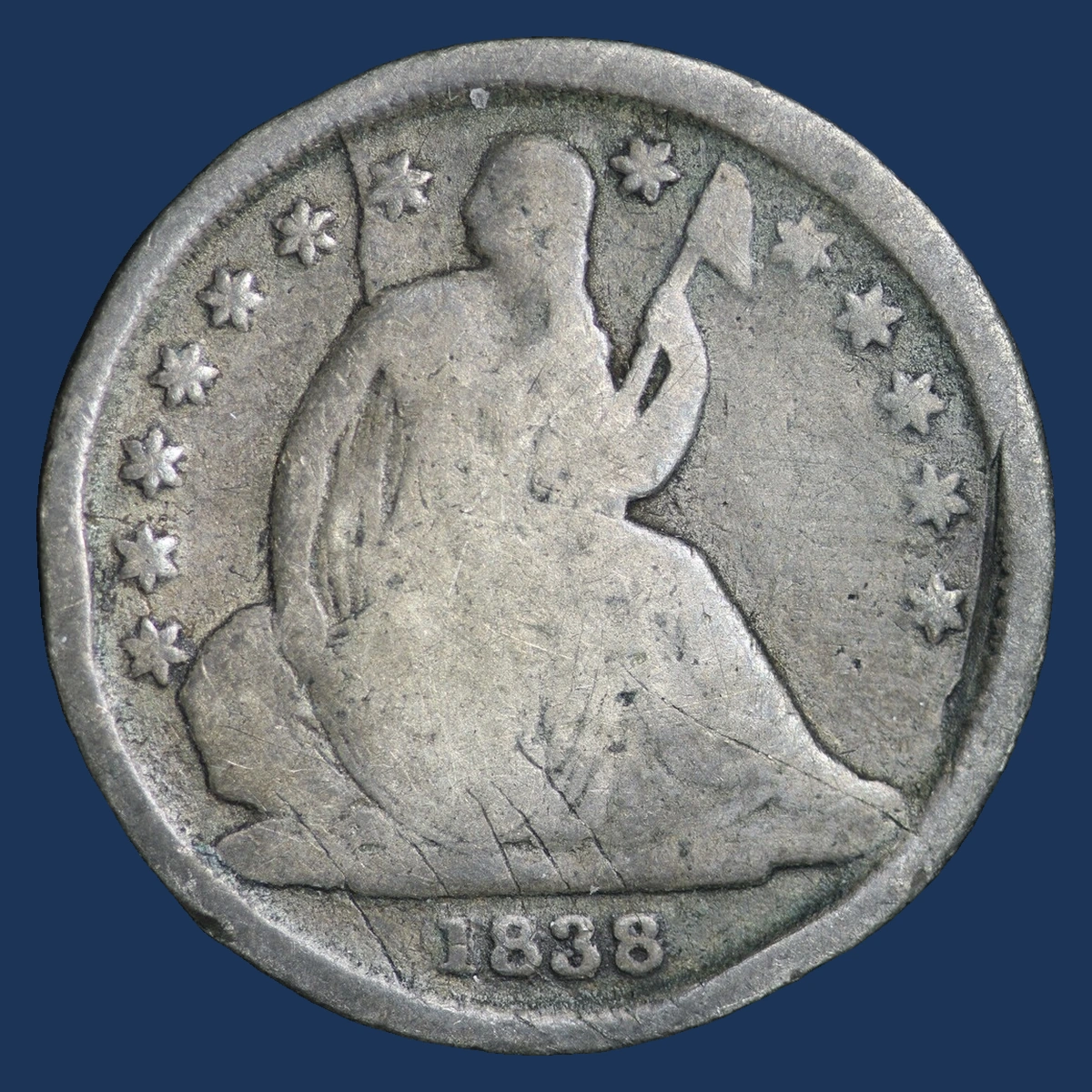
A line crossing letters and continuing through the design may record a cracked tool. Silver pushed into the opening creates a raised line on the finished coin.
One recorded back has a crack running from the E of STATES through the N of ONE and I of DIME toward the left bow. Other examples show cracks crossing Liberty’s body.
The auctioned F-104 has a strong line through the B in LIBERTY. These are different crack patterns, not one continuous route that should appear on every 1838 dime or a split through the coin itself.
Estimated Value
For worn through lightly worn 1838 dimes with identifiable cracks, estimate $50–$1,000. Size and visibility can add interest, but the coin’s overall preservation remains important.
An exceptional F-104 graded PCGS MS66 sold for $4,560 in January 2025. That unworn coin had very few marks, a repunched star, and a narrow lamination.
Those features and its preservation contribute to the full price. The crack alone should not receive the same value.
How to Identify
Follow the raised line across several design elements with a 10× magnifier. For the long reverse example, check the route through STATES, ONE, DIME, and the left bow.
The F-104 front instead needs its own comparison through the B in LIBERTY. Do not combine the two patterns into a single expected feature.
A later scratch usually cuts downward and can leave pushed-up metal beside it. Side lighting makes the difference easier to see.
A scale and calipers can check the usual 2.67 g and 17.9 mm, with a grooved edge and 90% silver expected. Start with one continuous raised line matching a documented route, rather than an actual opening through the coin.
5. 1838 Liberty Seated Dime Reverse Lamination (Estimated Up to $1,200)
A narrow split interrupts the metal between A and M in AMERICA on a recorded Philadelphia dime. Heritage describes it as a lamination on the Large Stars F-104 example.
Lamination means part of the coin’s metal separates along an internal weakness. It differs from a crack in the tool, which leaves a raised line on the coin.
This particular dime also has a front tool crack and a repunched first star. Those features share one physical coin, but the split between AM comes from its metal rather than from the shapes cut into the tool.
Estimated Value
A genuine lamination on a worn through lightly worn example has an estimated value of $100–$1,200. A small clear split can be easier to assess than extensive peeling that damages important design.
The F-104 PCGS MS66 sold for $4,560 in January 2025. Its exceptional unworn condition and other features contribute to that amount.
That is the complete coin’s price. The narrow lamination by itself did not sell separately for $4,560.
How to Identify
Read AMERICA on the back and inspect the space between A and M with a 10× magnifier. Low light should show the split’s edge and the surrounding original metal.
A scratch may cut a trench with sharp ridges beside it. A color boundary alone changes appearance without showing an actual separation.
Leave any attached metal in place. This silver-copper coin does not have modern bonded copper-nickel layers, so a split should not be called a missing clad layer.
Use a scale and calipers against the normal 2.67 g and 17.9 mm, or recorded measurements for a sealed example. Begin with a physical separation between AM while the nearby lettering remains intact.
6. 1838 Liberty Seated Dime Clashed Dies, Called Partial Drapery (Estimated Up to $1,800)
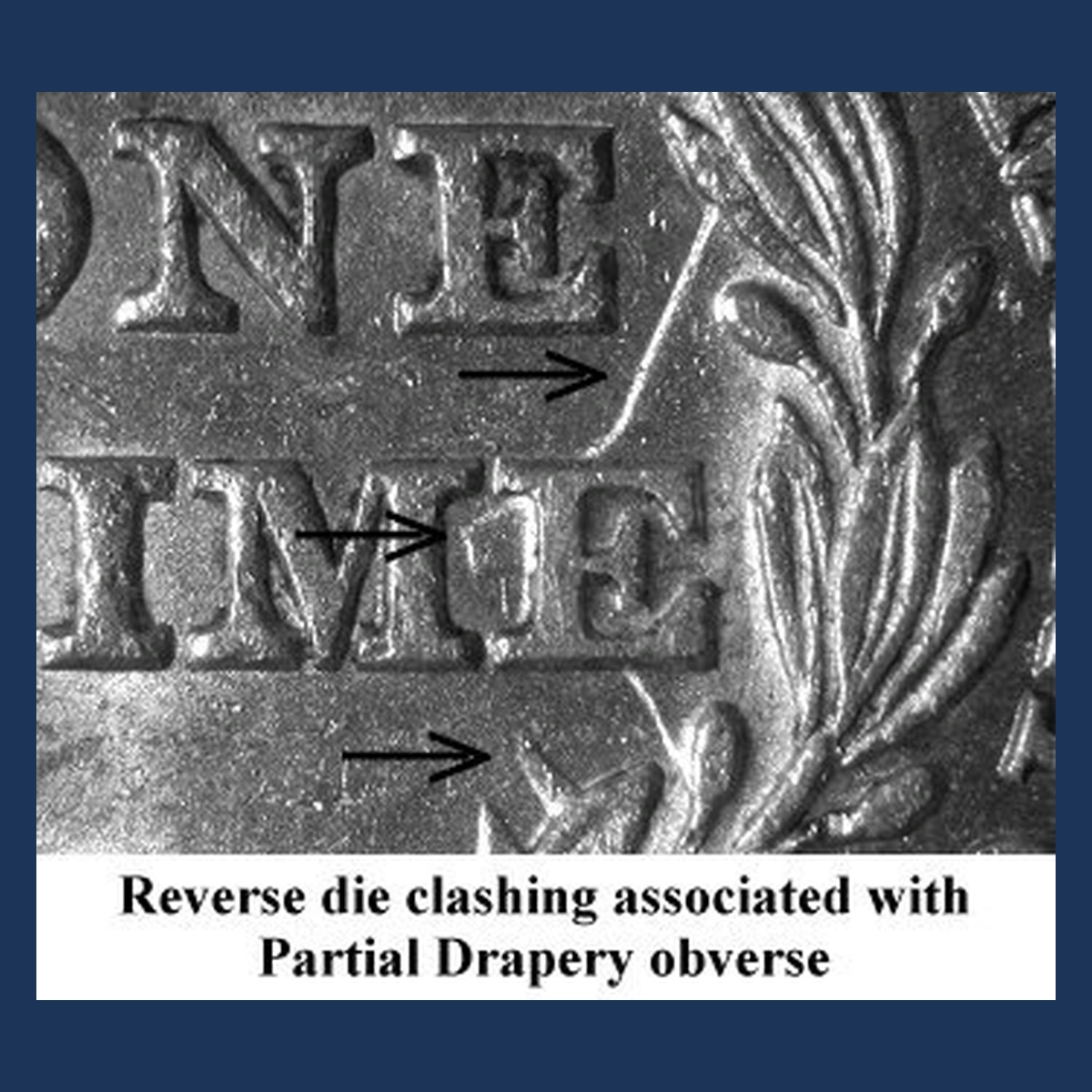
What looks like a small fold below Liberty’s right elbow can be part of the wreath design. It transferred after the two stamping tools struck each other without a blank between them.
The feature became known as partial drapery, but the specialist explanation identifies a clash mark. It is not the extra drapery added to later normal coin designs.
The back also shows strong traces beside the inner edge of the right wreath and through the E of DIME. Those marks offer a useful second place to check before accepting a faint elbow line.
Estimated Value
An estimated $100–$1,800 covers identifiable partial-drapery clashes on worn through lightly worn 1838 dimes. Clear traces on both faces make a stronger comparison than a vague line under the elbow.
This is a whole-coin estimate, not a recorded sale of the illustrated specialist example. Surface quality and remaining detail still matter.
A repunched date may appear on the same piece. Compare that combination as one coin, without adding another complete price for the extra date strokes.
How to Identify
Check the back first, especially the inner side of the right wreath and the E of DIME. A 10× magnifier can reveal the strong transferred outlines described in the specialist comparison.
Then look below Liberty’s own right elbow on the front. Match that small extra shape with the opposite wreath, rather than treating every curved line as clothing.
The usual 90%-silver coin weighs 2.67 g and measures 17.9 mm; use a scale and calipers where accessible. Inspect the grooved edge and surrounding surfaces for later pressure or scratches.
The most useful first clue is the strong reverse clash beside the right wreath, followed by its matching elbow trace.
7. 1838 Liberty Seated Dime Repunched Stars (Estimated Up to $2,000)
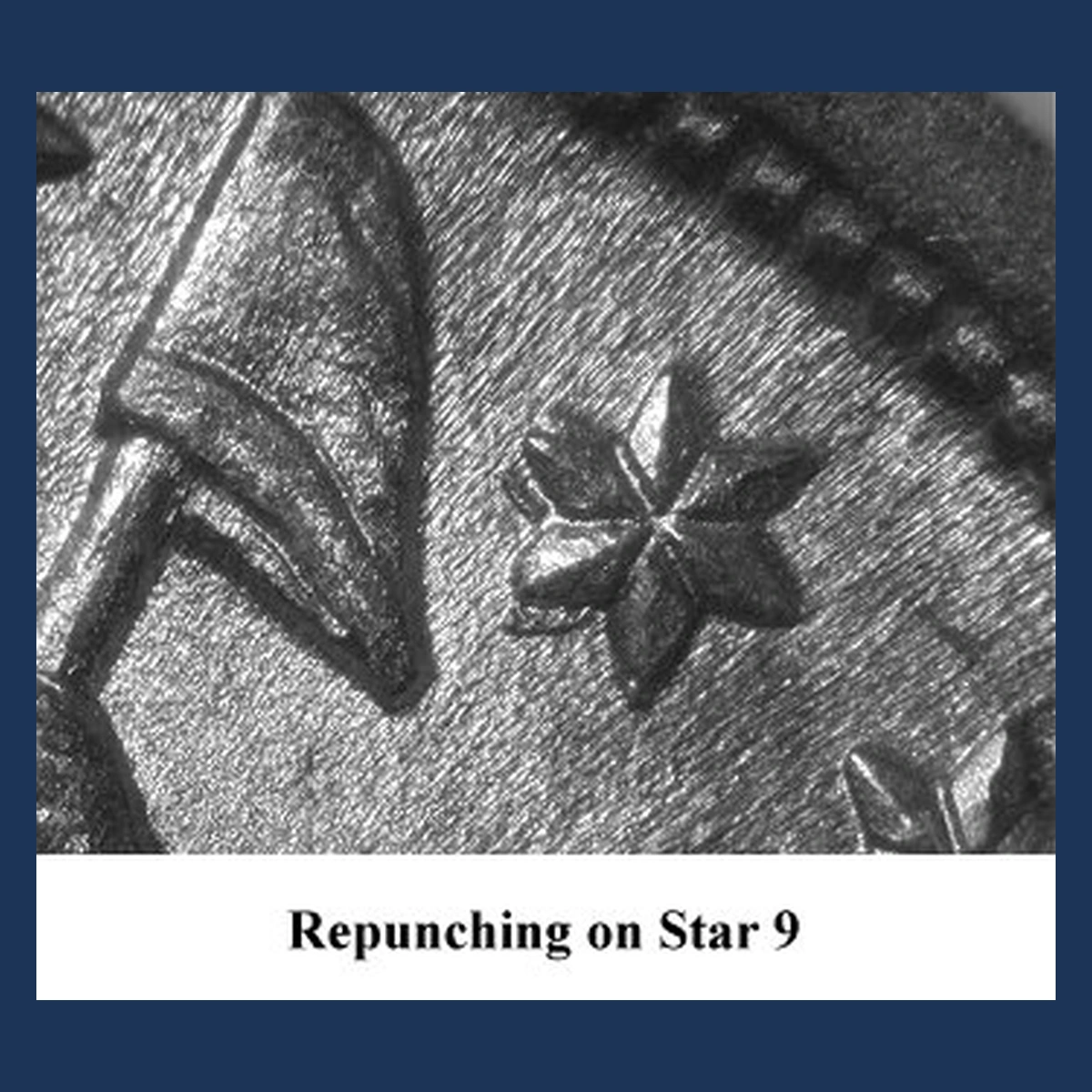
Extra points can make a star look slightly doubled or unusually thick. Repeating a star punch in a different position while making the tool can leave those extra outlines.
One documented Philadelphia tool has repunching on stars nine and thirteen. A separate F-104 auction example has a repunched first star.
These descriptions belong to different coins, so all three affected stars need not occur together. Normal points, wear, and glare can also confuse the view.
Look for another punch outline. It should repeat part of the star’s shape, rather than simply make one point look thicker.
Estimated Value
For identifiable repunched stars on worn through lightly worn coins, estimate $100–$2,000. A strong extra point on a well-preserved star is more appealing than a blurred outline.
The F-104 MS66 sold for $4,560 in 2025. That exceptional coin had several features, including its repunched first star.
It gives a high-grade comparison, not a separate price for stars nine and thirteen. One extra star point should not automatically receive the same value.
How to Identify
Count the stars around the front using a clear comparison photograph so you do not inspect the wrong positions. Under a 10× magnifier, examine stars nine and thirteen on the documented pairing.
For the F-104 example, look at the first star separately. Check for extra points or overlapping edges that follow another placement of the same star shape.
Changing the light can remove glare, while a real raised outline remains. Scratches crossing a point should not be mistaken for another punch.
Use a scale and calipers for the normal 2.67 g and 17.9 mm, and inspect the grooved edge. Begin with the matching doubled points on the specified stars, keeping the two examples separate.
8. 1838 Liberty Seated Dime New Orleans Rim Cuds (Estimated Up to $3,000)
Raised patches along the front rim appear on the New Orleans F-101 variety. A piece broke from the stamping tool’s edge, leaving space that coin metal filled during striking.
This rim-connected lump is called a cud. It replaces normal design instead of cutting a notch out of the coin.
PCGS describes early breaks around two and four o’clock, with further development on later examples. The normal F-102 pairing lacks these cuds, so the plain starless front alone does not identify them; the actual raised rim patches need to be present.
Estimated Value
Estimate $300–$3,000 for worn through lightly worn New Orleans examples with clear rim cuds. This includes the substantial value that an early 1838-O dime can have before the break is considered.
The F-101 recorded at $37,600 in 2023 was exceptionally well preserved. Its price covered the complete coin, including the repunched O.
That amount is not a separate cud bonus. Adding it to another full variety price would count the same coin twice.
How to Identify
Confirm the starless front and O below the back’s wreath. Then inspect the front rim near two and four o’clock with a 10× magnifier, comparing the actual stage of the break.
Follow each raised patch into the rim. A crushed border, solder, or corrosion can make a lump after minting, while an enclosed tool chip does not form the same edge connection.
Photograph both faces and the edge together. Normal 1838-O dimes contain 90% silver, weigh 2.67 g, and measure 17.9 mm.
Check those figures with a scale and calipers when the coin is loose. The direct visual test is raised original metal replacing design at the rim, rather than a notch or folded edge.
9. 1838 Liberty Seated Dime Doubled Die Reverse (Estimated Up to $6,500)
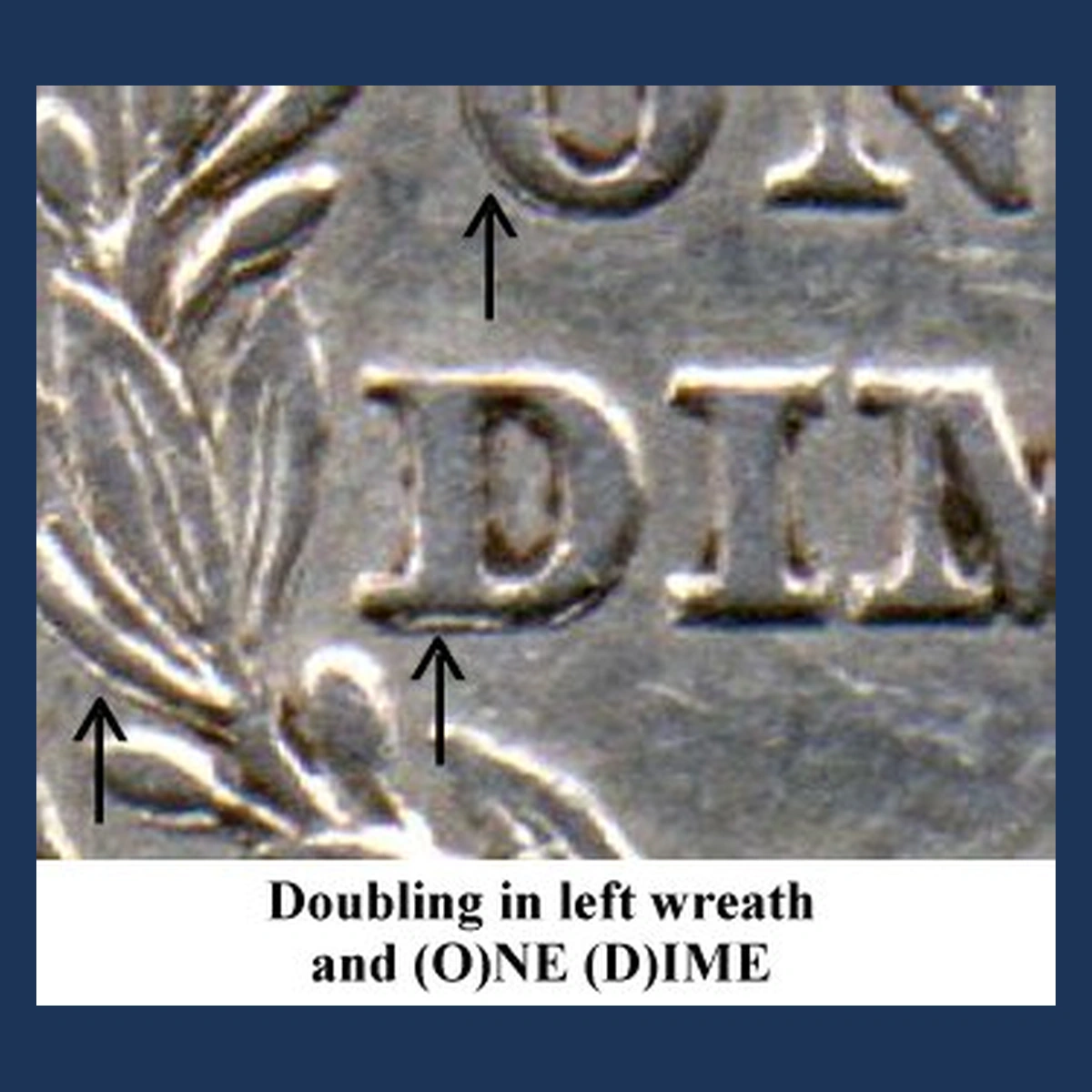
Extra outlines around the D of DIME, the bow, and the lower wreath mark the doubled back. The tool carried that doubled design before it struck any coins.
The same back tool was paired with both Small Stars and Large Stars fronts. Different catalog labels reflect those pairings, rather than proving two unrelated causes of the doubling.
Inspect the design itself instead of relying only on the label. A flat ledge caused by movement during striking can look doubled too, but it does not repeat the same rounded outlines across the letters and wreath.
Estimated Value
A Small Stars doubled reverse graded PCGS MS65 with CAC approval sold for $5,490 in May 2026. MS65 means no circulation wear and relatively few marks.
CAC adds a separate quality review. Estimate $150–$900 for worn through lightly worn examples and $1,000–$6,500 for comparable unworn coins.
The auction price covers both the Small Stars front and doubled back. Those features should not receive separate added prices.
How to Identify
Examine the D of DIME and the lower wreath with a 10× magnifier. Compare the bow too, looking for repeated extra outlines rather than an isolated bright edge.
A normal letter beside a flat shelf can result from movement during striking. Genuine tool doubling should match the known pattern across several details.
Photograph the stars on the front so the correct pairing stays attached to your comparison. Philadelphia has no O below the wreath.
The normal coin is 90% silver, 2.67 g, and 17.9 mm; a scale and calipers check the coin, not the doubling itself. Begin with the extra D outline and matching bow or wreath details, then confirm the front pairing.
10. 1838 Liberty Seated Dime Small Stars from a Half-Dime Punch (Estimated Up to $6,500)
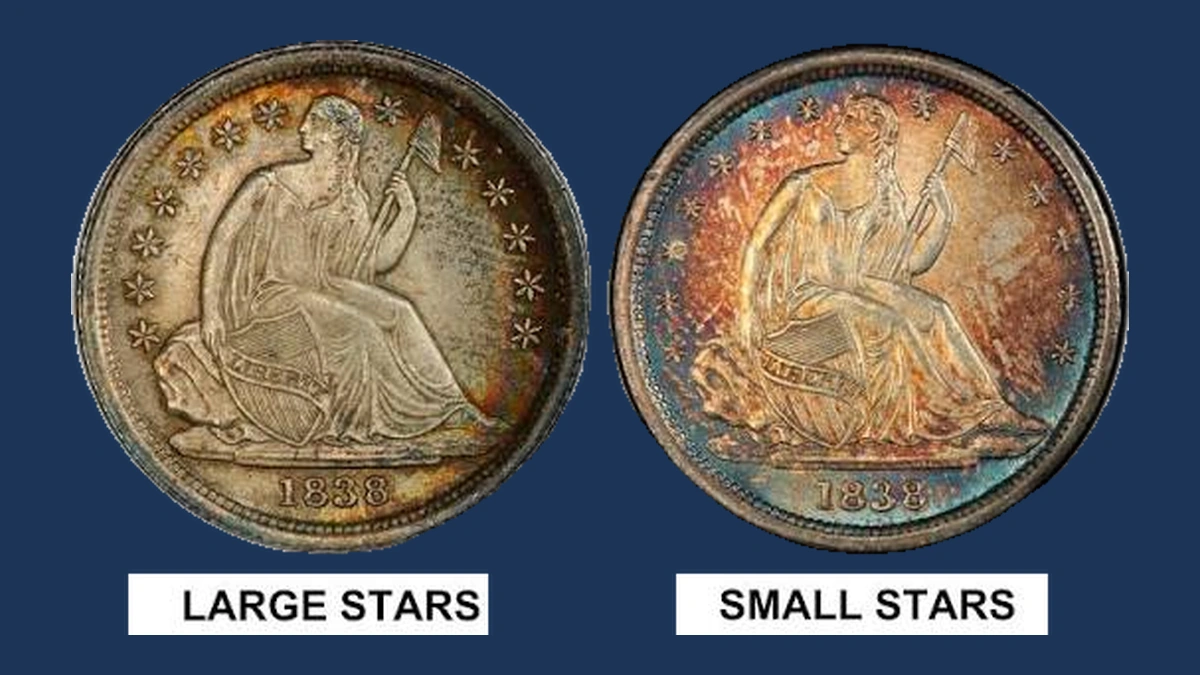
All thirteen stars look smaller than on the familiar Large Stars front. Specialists explain that this tool was made with a star punch intended for the smaller five-cent half dime.
The result is the recognized Small Stars dime variety. The coin is still a ten-cent piece of normal dime size, not a half dime struck with the wrong denomination.
Wear can shorten star points, but it does not turn one front into the other. Compare the entire arrangement of stars and the paired back, which also carries the doubled details discussed above.
Estimated Value
For Small Stars dimes, estimate $75–$900 in worn through lightly worn condition and $1,000–$6,500 for comparable unworn examples. Preservation of the little star points matters alongside the coin’s overall surfaces.
The May 2026 $5,490 MS65 sale is the same Small Stars and doubled-reverse coin discussed above. It provides one combined price.
The unusual star punch and doubled back belong to that single coin. Counting each description separately should not double what the buyer paid.
How to Identify
Compare all thirteen stars with clear photographs of Small Stars and Large Stars dimes. A 10× magnifier helps distinguish their original shapes from points flattened by wear.
Read ONE DIME on the back and check the whole coin’s size. The similar-looking half dime is a smaller five-cent coin and should not supply the measurements or price comparison.
A normal 1838 dime contains 90% silver and weighs 2.67 g. Use a scale and calipers against 17.9 mm, with the grooved edge also visible.
The Philadelphia issue has no O mintmark, while the New Orleans front has no stars. Start with uniformly small, correctly shaped stars around Liberty, then match the complete dime design.
11. 1838 Liberty Seated Dime Repunched O Mintmark (Estimated Up to $40,000)
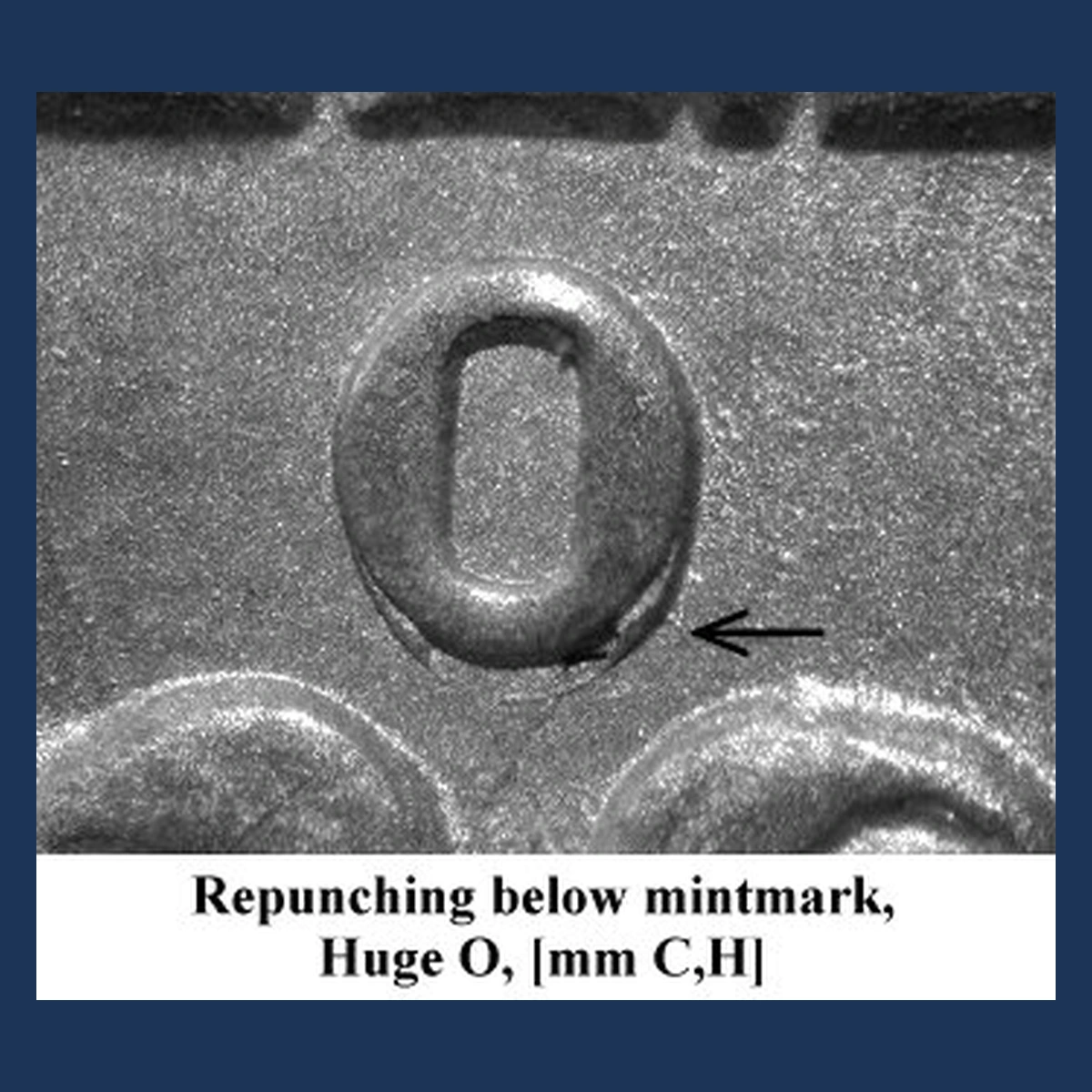
An extra outline below the large O identifies repunching on the New Orleans F-101. The mintmark punch entered the stamping tool more than once, leaving part of an earlier letter.
This variety has a starless front, unlike the Philadelphia dime. The O sits below the wreath on the back and appears upright on the documented repunched tool.
A different normal O may lean slightly without being repunched. Tilt alone is not the error; the additional lower outline is what matters, and the same coin can also show the rim breaks discussed earlier.
Estimated Value
PCGS records $37,600 for an F-101 in April 2023, graded MS65+, an unworn coin with exceptionally few marks. That is a complete high-grade variety price.
Estimate $300–$3,000 for worn through lightly worn repunched-O examples. Comparable exceptional unworn coins fit $15,000–$40,000.
Much of the upper value comes from the scarce coin’s preservation. A faint extra O on a worn piece does not inherit that auction record.
How to Identify
Locate the large O below the wreath and inspect its lower edge with a 10× magnifier. Look for part of a second O outline, keeping the full letter in view.
Compare its upright shape with the documented F-101. The normal tilted O of another pairing does not prove repunching, and added metal or scratches can confuse the lower edge.
Check the starless front and complete 1838 date before using the comparison. Normal dimes weigh 2.67 g, measure 17.9 mm, and contain 90% silver.
Use a scale and calipers for a loose coin and examine its grooved edge. Begin with the extra curved outline beneath the upright O, rather than the letter’s angle alone.
Conclusion
The stars and mintmark narrow the search before you inspect smaller details. Philadelphia’s Small Stars, doubled back, and partial-drapery clash differ from the starless New Orleans coin’s repunched O and rim breaks.
Estimated values run from $50–$40,000, with exceptional unworn New Orleans coins at the upper end. Compare the complete coin, and count one auction price once even when its star, crack, and metal flaw all appear here.