1906 Dime Error List with Pictures

A backward design can turn a small silver dime into a major error. An undated Barber dime with a full backward impression sold for $11,500 in January 2012.
That is a comparison for the brockage among these 1906 dime errors, not a sale of the 1906 coin. Smaller date marks, clips, and peeling metal create more affordable choices.
The nine groups below span estimated values of $20–$15,000. Read on to learn where each feature appears and how to check it.
1. 1906 Barber Dime Lamination (Estimated Up to $300)
A loose metal flake can lift from the surface of a silver dime. The separation is called a lamination.
A 1906 Barber dime is made from silver mixed with copper, rather than the layered metal of a modern dime. Weakness or impurities within that mixture can let a thin section separate.
Some flakes remain attached. Others fall away and leave an irregular opening.
The 1906 report concerns this surface separation. It does not establish that an entire disc split into two complete halves, or that every rough patch has the same cause.
Estimated Value
Estimate $20–$300 for genuine surface laminations on circulated through lightly worn 1906 dimes. Small flakes generally attract less attention than a clear, larger opening.
This range includes the whole coin’s value. Its mint and remaining detail still matter, so a worn Philadelphia coin needs a different comparison from a better San Francisco example.
The range is an estimate, not a recorded 1906 sale. Corrosion or a scrape does not qualify simply because metal is missing.
How to Identify
Examine the border of the opening before judging its size. A 10× magnifier can show whether a thin layer lifts from within the coin or was scraped away.
Leave an attached flake untouched. Even gentle pressure can break its last connection.
For a loose coin, use a scale against the normal 2.50 g and calipers against 17.9 mm. Missing metal can lower the weight, while circulation wear can also reduce it.
Inspect both faces and the grooves around the edge for corrosion, tool cuts, or related splitting. Color alone does not identify the cause.
Find a natural peeling boundary within the metal, without scraping or corrosion explaining the opening.
2. 1906 Barber Dime Clipped Planchet (Estimated Up to $600)
A piece of the outline is absent before the design is stamped. This is a clipped planchet, meaning an incomplete metal disc used to make the coin.
A Philadelphia example appeared in the Rippere collection offered by GreatCollections in December 2024. ANACS graded it XF45, a worn coin that still retains much of its detail.
The gap is only one part of the identification. Nearby letters and rim metal can show how the incomplete disc responded to stamping.
A dime cut or filed afterward also loses metal. Its freshly damaged boundary has a different origin.
Estimated Value
An estimated $50–$600 covers genuine clips on circulated to lightly worn examples. Size, appearance, and the surviving date all influence the price.
The 1906 XF45 offering is used as an identified example, without assigning it an unavailable sale amount. A different 1912-S double-clip dime brought $198 in October 2022.
That comparison had environmental damage and two curved gaps. It helps compare the market, but its mint, damage, and clip pattern differ from the Philadelphia coin.
How to Identify
Weigh a loose candidate and compare it with a normal 2.50 g dime. A real missing segment should account for some weight loss, but cutting after minting does the same.
Inspect the gap with a 10× magnifier. Check for saw marks or filing, then look at letters and rim sections near each end.
A genuine clip may show stretched detail near the gap and weakness in the opposite rim. Neither sign should be assumed without examining the coin.
Use calipers across intact portions against 17.9 mm. Check the remaining edge grooves for alteration.
Compare the gap and adjacent stamped design together; the letters should fit an incomplete disc rather than a later cut.
3. 1906 Barber Dime Rim Cud (Estimated Up to $750)
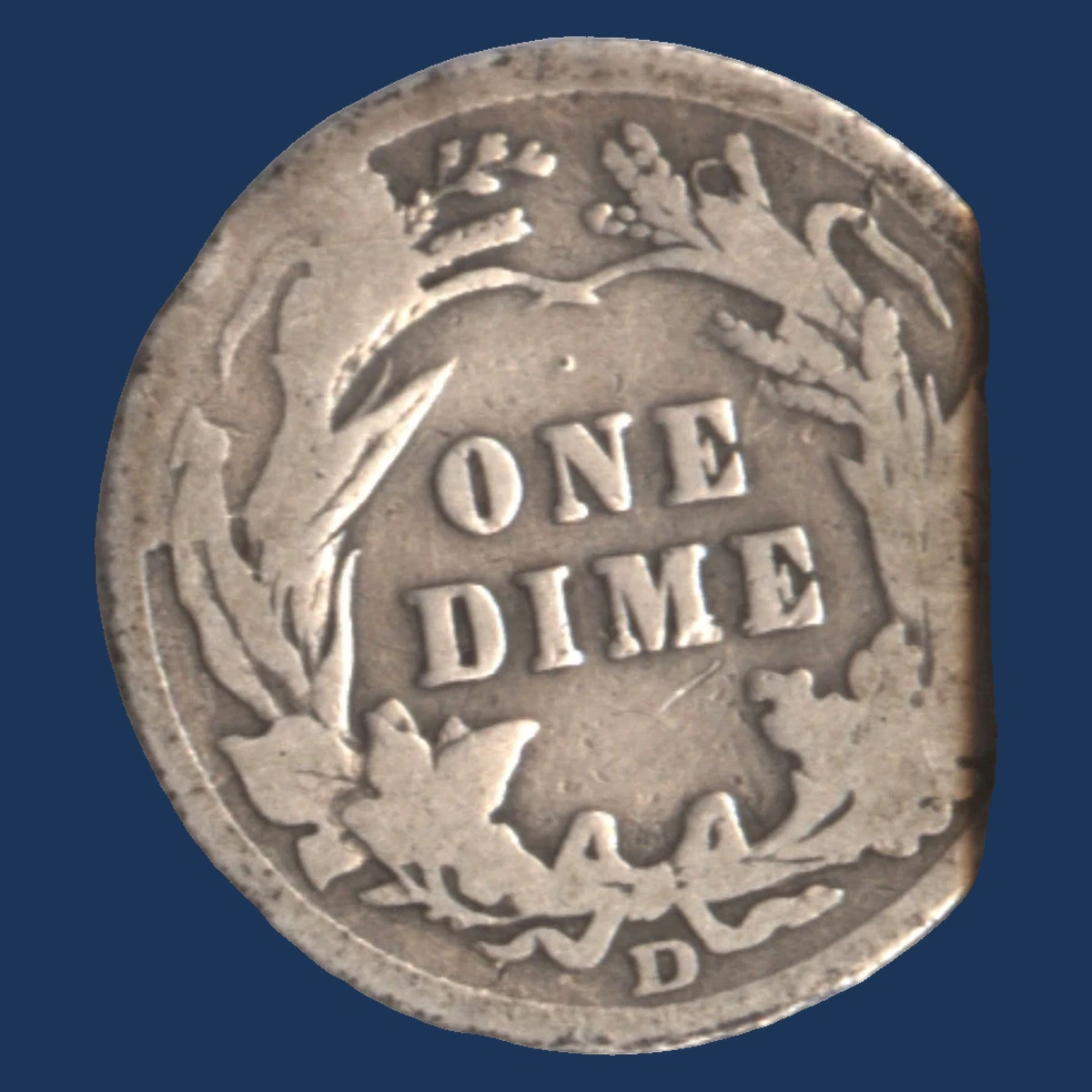
A broad raised patch can replace part of the design at the edge. Collectors call this a cud when the patch connects to the rim.
It begins with a break in the die, the steel tool that stamps coins. Metal enters the broken area instead of receiving the normal design.
The 1906 category does not establish one exact position around the coin. The rim connection is the important feature to find.
A small bump inside a letter or branch is a different form of tool damage. A dent or added solder can also make raised metal near the edge.
Estimated Value
Genuine rim cuds have an estimated whole-coin range of $75–$750 in circulated through lightly worn condition. A clear large break usually draws more interest than a subtle edge bump.
This estimate compares similar Barber rim breaks rather than a recorded sale of one 1906 specimen. The mint and coin’s condition remain part of the price.
An impressive shape does not establish value by itself. Added metal, a bent rim, or impact damage needs a different explanation.
How to Identify
Turn the coin until the raised patch meets the light from the side. With a 10× magnifier, trace its connection to the rim and the design it replaces.
A blob sitting on top of intact letters may be material added later. Look for a separate border around solder or dirt.
Inspect the opposite face and the grooves at the same part of the edge. A hard rim hit can push metal upward and leave other impact marks.
Check a loose coin with a scale and calipers against 2.50 g and 17.9 mm. Do not scrape the patch to test it.
Confirm that original coin metal replaces design and joins the rim naturally, rather than merely sitting over finished details.
4. 1906 Barber Dime Misplaced Date (Estimated Up to $800)
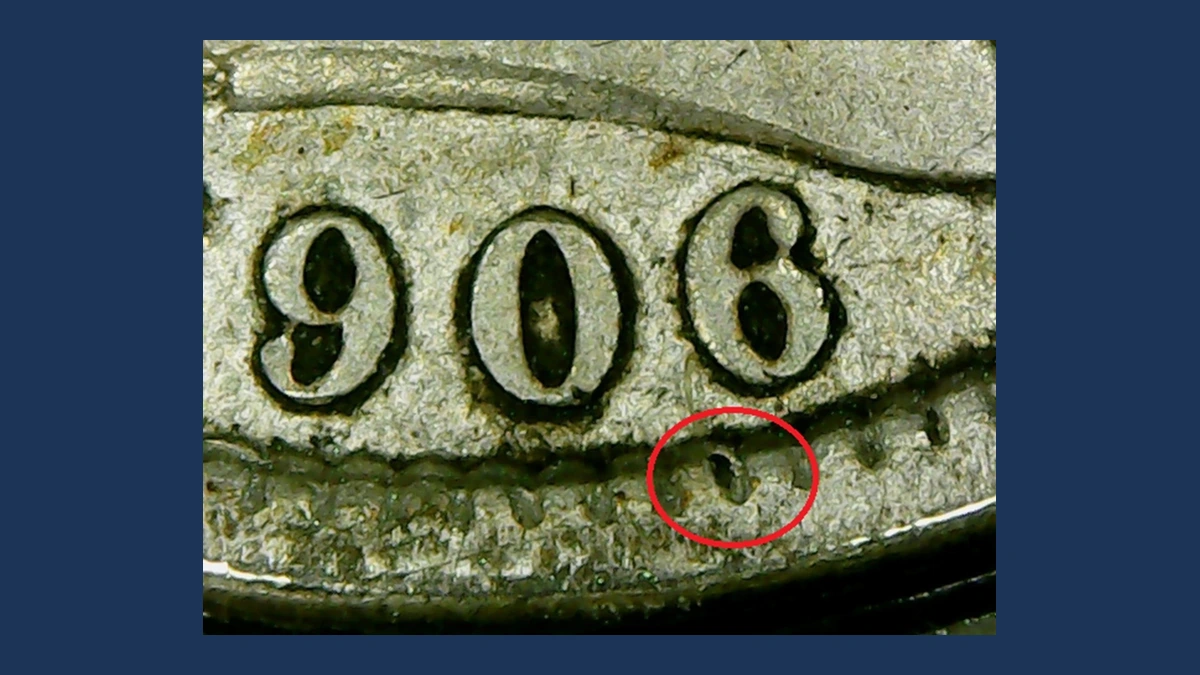
Tiny pieces of numerals can hide among the toothlike shapes inside the rim below 1906. They can be remnants of a date punch placed too low on the stamping tool.
This is a misplaced date. The extra pieces lie outside the intended date rather than simply beside its normal digits.
On the New Orleans report, the top of an extra 0 appears below the space between the 9 and 0. A Denver report describes numeral traces near the tops of the border teeth.
Those two patterns need separate comparisons. Damage to the border can imitate a small digit fragment.
Estimated Value
Use an estimated $40–$800 for clearly identified circulated through lightly worn examples. Readable numeral remnants and attractive surfaces support stronger prices.
A different 1907-S misplaced-date dime graded ANACS VF20 sold for $54 in March 2024. That coin had more noticeable wear than an almost-uncirculated example.
The sale shows an affordable comparison, not the price of either 1906 pattern. The New Orleans and Denver coins have different underlying values as well as different date marks.
How to Identify
Locate the mintmark below the wreath bow on the back before choosing a date photograph. O identifies New Orleans and D identifies Denver.
Use a 10× magnifier to inspect the toothlike border below 1906. For the O example, compare the extra curved top below the space between 9 and 0.
Check Denver traces against a Denver example, not that New Orleans location. Ordinary border teeth, scratches, and dents must not be mistaken for digits.
A scale and calipers should be compared with 2.50 g and 17.9 mm. Inspect the outer edge grooves for damage near the suspect area.
Match a recognizable numeral fragment outside the normal date to the correct mint’s misplaced-date pattern.
5. 1906 Barber Dime Repunched Date (Estimated Up to $900)
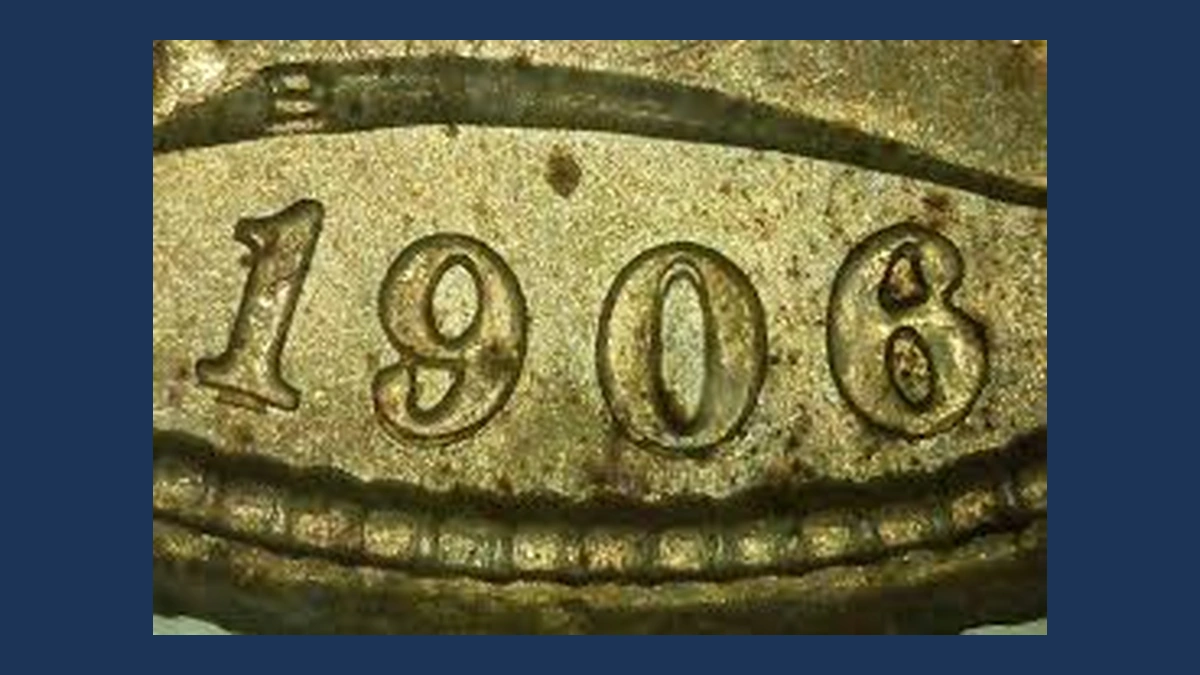
A curve or upright beside a date digit may be part of an earlier impression. Workers punched dates into the stamping tool, and a shifted repeat blow could leave both outlines.
The result is a repunched date. Reports cover Philadelphia, Denver, New Orleans, and San Francisco coins for 1906.
Each mint’s pattern needs its own match. A date mark seen on Denver’s 9 or 6 does not describe every other variety.
Some coins also have a repeated mintmark or a misplaced date fragment. Those added features belong to the same coin, rather than changing what date repunching means.
Estimated Value
The estimated whole-coin range is $35–$900 for worn through attractive lower unworn examples with clear date remnants. Mint, condition, and the exact pattern affect the comparison.
A Philadelphia 1907 repunched-date dime graded ANACS AU50 sold for $79 in March 2024. That different-year example shows light wear.
It helps compare ordinary repunching without pricing every 1906 mint alike. Stronger preservation can raise the coin’s basic value even when the extra numeral stroke is small.
How to Identify
Choose one date digit and compare its main outline with the smaller extra stroke. Under a 10× magnifier, see whether that stroke fits another impression of the same numeral.
A low, flat shelf can come from movement during stamping. Random scratches do not usually follow a complete digit’s shape.
Check the mintmark on the back and use photographs from that mint. Keep any separate fragment in the lower border distinct from doubling beside the intended date.
The ordinary silver coin measures 17.9 mm and weighs 2.50 g. Use calipers and a scale, then inspect the edge grooves.
Follow the extra stroke into a recognizable earlier numeral and match it to the correct mint’s date pattern.
6. 1906 Barber Dime Broadstrike (Estimated Up to $1,200)
The coin spreads wider when its edge is not properly held during stamping. A broadstrike can keep the full design inside that enlarged outline.
The collar normally surrounds the disc and forms its edge grooves. Without its restraint, metal moves outward instead of stopping at the usual diameter.
A Philadelphia 1906 broadstrike appears in an auction record with an ANACS cleaning description. Cleaning concerns its surfaces, not the cause of its wider shape.
A coin hammered flat afterward can also become wider. Its crushed design should not be confused with natural spreading during the original strike.
Estimated Value
An estimated $100–$1,200 covers circulated through attractive unworn 1906 broadstrikes. A clear spread and original surfaces usually increase interest.
A 1907 broadstrike graded NGC MS62 sold for $384 in October 2022. A 1900-S example graded VF30 is indexed at $341.60 in March 2026.
Those different-year coins also differ in wear and mint. They help estimate the type without assigning a sale amount to the cleaned 1906 example or treating cleaning as an error premium.
How to Identify
Read the outer lettering on both faces before measuring the coin. The design should remain within the metal even if the border is uneven.
Calipers can then compare several diameters with the usual 17.9 mm. A scale reading near 2.50 g supports a complete disc, allowing for wear.
Use a 10× magnifier to inspect the edge grooves and the expanded border. Look for natural spreading rather than filing, hammer marks, or flattened letters.
Fine cleaning scratches affect condition but do not explain the broader outline. Keep those two observations separate.
Check that complete designs sit inside an originally expanded edge, without later pressure crushing the coin to make it wider.
7. 1906 Barber Dime Repunched and Overpunched Mintmarks (Estimated Up to $1,500)
A second curve beside a mintmark may reveal an earlier punch impression. Repeating the same letter creates a repunched mintmark, such as the reported D/D and S/S patterns.
The 1906-D/O is different: a D was punched over an O. This is called an overmintmark because the two letters identify different mints.
The recognized D/O FS-501 shows part of the earlier O to the left of the D. Find the letter below the wreath bow on the back.
A stray bump does not establish either error. The earlier outline must form part of the correct letter.
Estimated Value
Estimate $40–$800 for clear D/D or S/S examples in circulated through lightly worn condition. A recognizable D/O has a separate estimated range of $100–$1,500.
These are estimates for the whole coin, not recorded 1906 transactions. A different 1907-O repunched mintmark brought $125 in December 2012 in a heavily worn grade.
That older same-letter comparison does not directly price D over O. Condition and the readability of the earlier letter remain important.
How to Identify
Turn the wreath upright and find the letter below its bow. Inspect it with a 10× magnifier before checking the date on the other side.
For D/O, compare the curved remnant left of D with an identified FS-501. For D/D or S/S, follow the shape of the same repeated letter.
A crack or chip near the mintmark can make a bump without creating another letter. Change the lighting to separate raised outlines from shadows.
Use a scale and calipers to compare with 2.50 g and 17.9 mm. Inspect the edge grooves and mintmark area for alteration.
Trace the earlier curve into the expected O, D, or S shape beneath the visible mintmark.
8. 1906 Barber Dime Off-Center Strike (Estimated Up to $1,500)
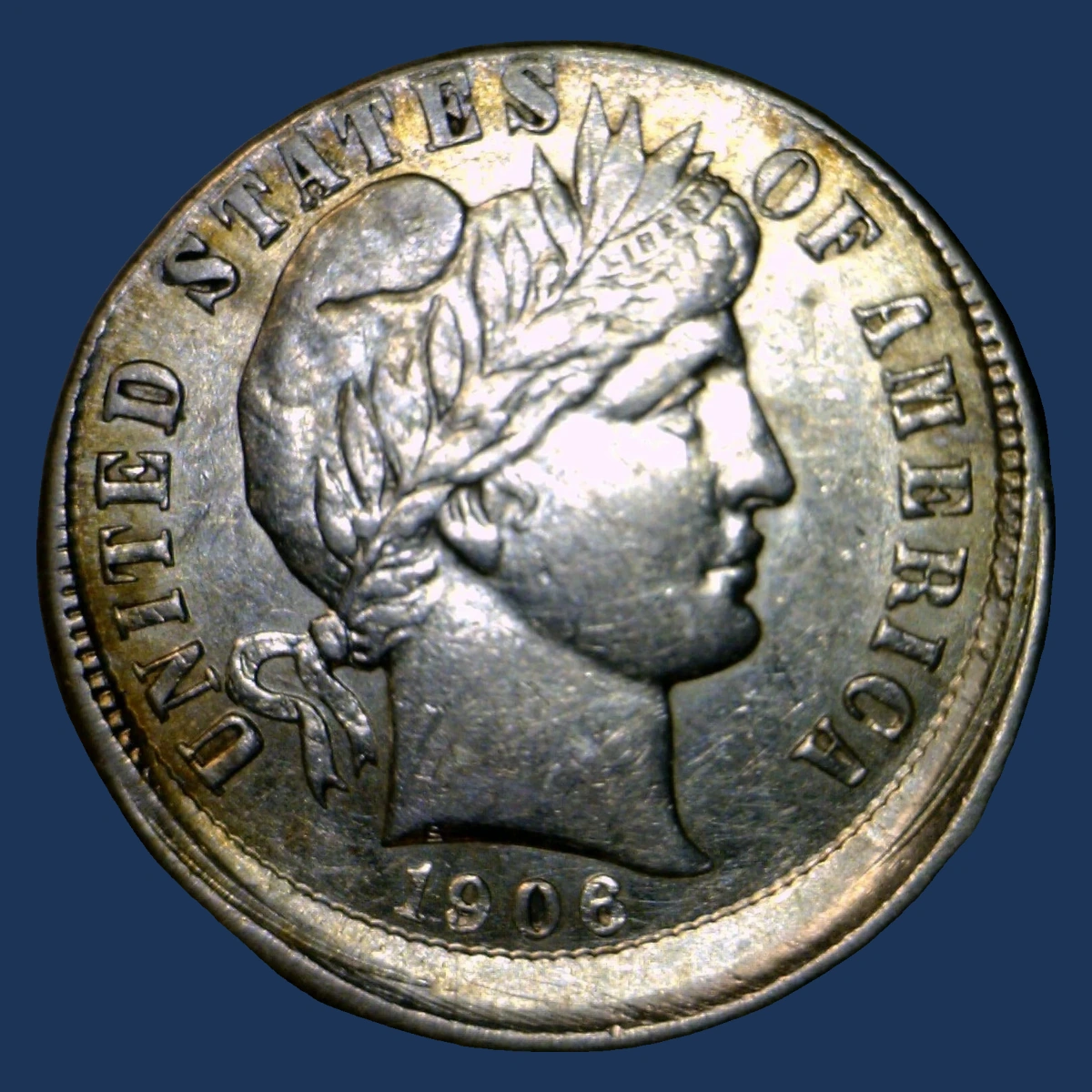
A thin plain crescent can sit beside a design that runs beyond the metal. The disc entered the press slightly away from its intended position.
A Philadelphia 1906 dime described as five percent off center was graded PCGS AU50. That grade indicates light circulation wear.
Both faces should show the result of the same misplaced disc. A single shifted stamping tool can instead move only one face’s design.
The reported percentage belongs to that example. Other coins need their own measurement and a surviving date, rather than borrowing the description from a similar-looking piece.
Estimated Value
Genuine readable-date examples have an estimated range of $150–$1,500 in circulated through lightly worn condition. Small shifts usually belong toward the lower end.
A 1902 Barber dime struck off center sold for $561.20 in June 2026, graded ANACS AU50. That is a recent different-year comparison.
The recorded 1906 five-percent example is not assigned that sale price. Greater displacement can increase appeal, but lost date detail or poor surfaces may reduce what buyers pay.
How to Identify
Keep the whole coin in view and locate the date before studying the plain crescent. A tight photograph can hide missing parts of the design.
Use a 10× magnifier to trace the boundary on the front, then compare the back. The two faces should fit the same misplaced disc.
A plain area made by scraping can show parallel cuts. Inspect the surviving edge grooves for filing or other changes too.
Compare weight and dimensions with 2.50 g and 17.9 mm using a scale and calipers. An off-center strike need not remove metal.
Find an intact plain crescent beside incomplete designs on both faces, with 1906 still readable on the coin.
9. 1906 Barber Dime Reverse Brockage (Estimated Up to $15,000)
Liberty can appear twice, but one image faces backward and sinks into the metal. On the recorded 1906 dime, that unusual image replaces the normal back design.
This is a brockage. Another already-struck coin remained in the press and pressed its raised design into the next disc.
Stack’s Bowers described the example as a first-strike reverse brockage, graded PCGS AU55. The grade means light wear with much original detail remaining.
The normal back mintmark area is covered by the error. It therefore cannot identify this coin as a Denver issue simply because Denver began making dimes in 1906.
Estimated Value
An estimated $4,000–$15,000 covers a clear, dated Barber brockage in comparable lightly worn condition. A complete backward impression can make the error especially appealing.
An undated Barber dime with a full front-side brockage of the back design sold for $11,500 in January 2012, graded PCGS AU58.
That historical comparison reverses a different face and has no readable date. It informs the estimate rather than supplying a sale price for the 1906 coin.
How to Identify
Look first at the direction of the letters and portrait on the unusual side. They should be backward and sunken, rather than another normal raised design.
Compare the two faces with a 10× magnifier. The impression must form a recognizable copy, not scattered contact marks from two coins pressed together later.
For a loose piece, record its weight with a scale and its diameter with calipers against the usual 2.50 g and 17.9 mm. Use recorded measurements for a sealed coin.
Inspect the edge grooves and rim for later pressure damage. Do not assign a mint from the covered back.
Match a complete backward, sunken front design on the back with the original raised design on the other face.
Conclusion
The date and mintmark hold several of the smaller clues on 1906 Barber dimes. Larger mistakes change the outline, remove metal, or put a backward portrait on the back.
Estimated values run from $20 for small laminations to $15,000 for a strong brockage. Match the mint and exact feature before comparing prices, and include wear and surface damage when judging the whole coin.