2005 Dime Error List with Pictures

A copper-colored dime can have two very different stories. One 2005-D coin missing its back outer layer sold for $75, while a discolored 2005-P annealing error brought $74.
The distinction matters when checking 2005 Roosevelt Dime errors. Color, weight, and the edge help tell these coins apart.
Other examples include a straight clip on a satin-finish collector coin and material trapped during striking. Estimated values below span $5–$1,000; keep reading for the features that support each identification.
1. 2005 Roosevelt Dime Parallel Feeder Marks
Parallel horizontal lines are reported on a 2005-D dime as feeder-finger marks. A feeder is the part of the press that moves blank metal disks into position.
The name alone does not explain how these particular lines formed. A feeder can affect a steel stamping tool, or an object can interfere directly with the coin.
Those events leave different evidence. Lines copied from a marked tool are not the same as scratches cut into a finished dime.
The report does not specify a face or exact position. The actual lines must supply those details.
Estimated Value
Use a conditional $5–$50 estimate for modest, genuine Mint-made feeder marks. The comparison is with minor press-related marks on modern dimes, not major missing-metal errors.
The reported Denver coin is described as MS66, meaning unworn with few marks. That grade does not by itself show how the lines formed.
The estimate applies only after their Mint origin is established. Ordinary handling scratches do not gain a feeder-error premium merely because several run parallel.
How to Identify
First decide whether the lines rise above the surface or cut into it. Move a lamp across the coin while examining the lines with a 10× magnifier.
Raised lines may have been copied from marks on the stamping tool. Deep cuts through completed letters need a different explanation, especially if displaced metal sits alongside them.
Keep photographs wide enough to include the 2005 date and D. Compare the lines with another matching example before choosing the feeder explanation.
For a loose coin, a scale and calipers should show about 2.268 grams and 17.91 millimeters. Check the grooved edge for pressure damage.
A repeatable pattern copied into the coin is stronger evidence than a few unrelated surface scratches.
2. 2005 Roosevelt Dime Stepped Edge from a Partial Collar
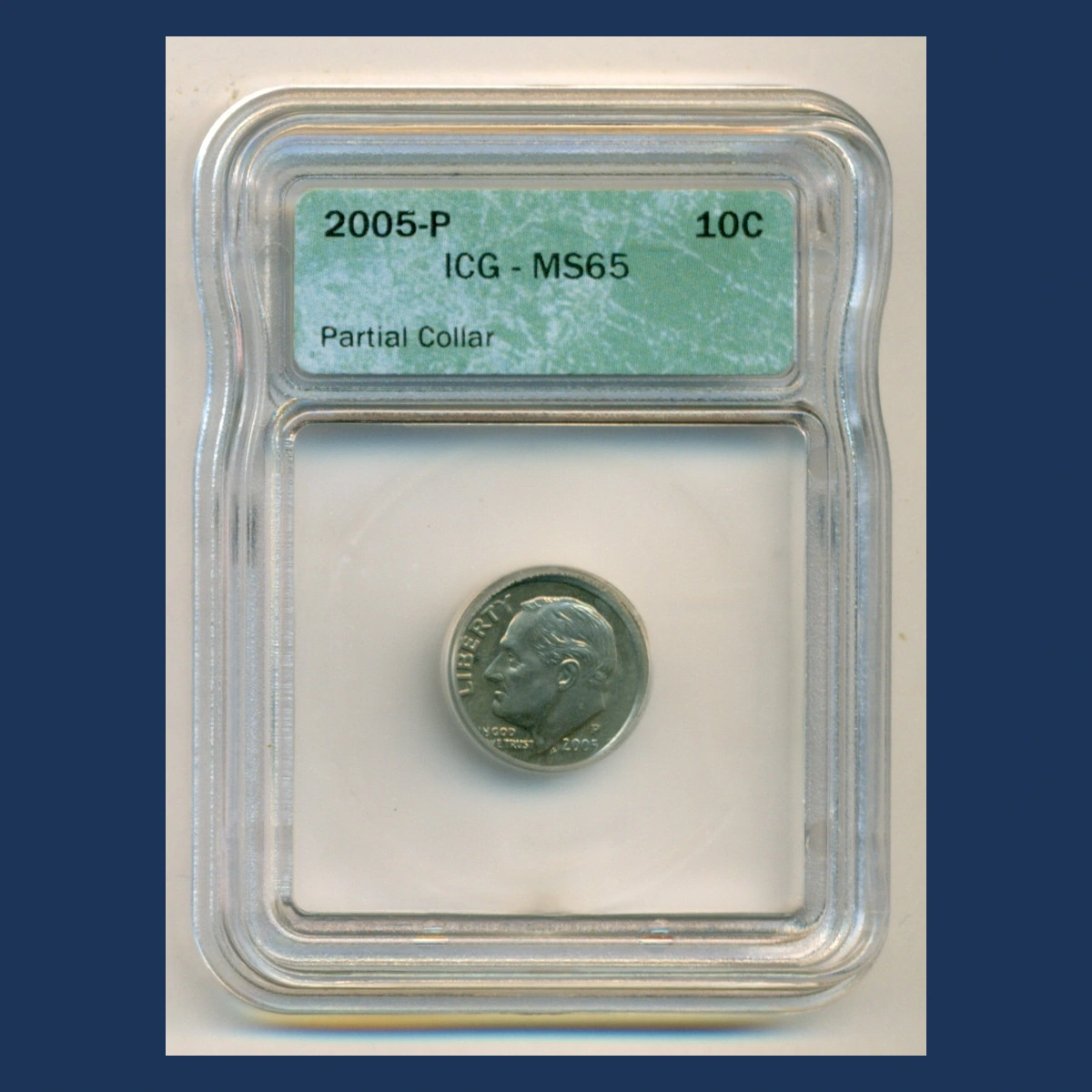
The edge can develop a step when only part of the coin sits inside the restraining ring during striking. That ring is called the collar.
One portion receives the normal edge grooves while another can expand beyond the ring. Viewed from the side, the two levels can resemble a small railway track.
A dealer’s inventory lists a 2005 dime with this partial-collar error. It does not name the mint.
The same list includes a separate uneven broadstrike. The two listings should not be treated as photographs or descriptions of one combined-error coin.
Estimated Value
Fred Weinberg’s historical dealer list offered a 2005 partial-collar dime at $5. That was an asking price, not a recorded auction result.
Estimate $5–$150 for a comparable genuine example, allowing for the edge step’s clarity and the coin’s condition. A small shift can remain an affordable error.
The mint is not specified in that listing. Do not assign a Denver identity or a premium for a particular mint without reading the actual coin.
How to Identify
View the edge from the side rather than judging the width of the face alone. Turn it slowly under a 10× magnifier to find two levels and the boundary between grooves and expanded metal.
An ordinary loose dime is 17.91 millimeters across and weighs 2.268 grams. Use calipers and a scale to record the candidate without squeezing its edge.
Examine the step’s ends for the original striking surface. A rolled rim or an edge pressed against another object can produce a misleading ridge.
Check the full date and mint letter independently of the dealer’s general listing. A natural transition from the grooved section to a wider smooth section is the feature to match.
3. 2005 Roosevelt Dime Discoloration from Improper Annealing
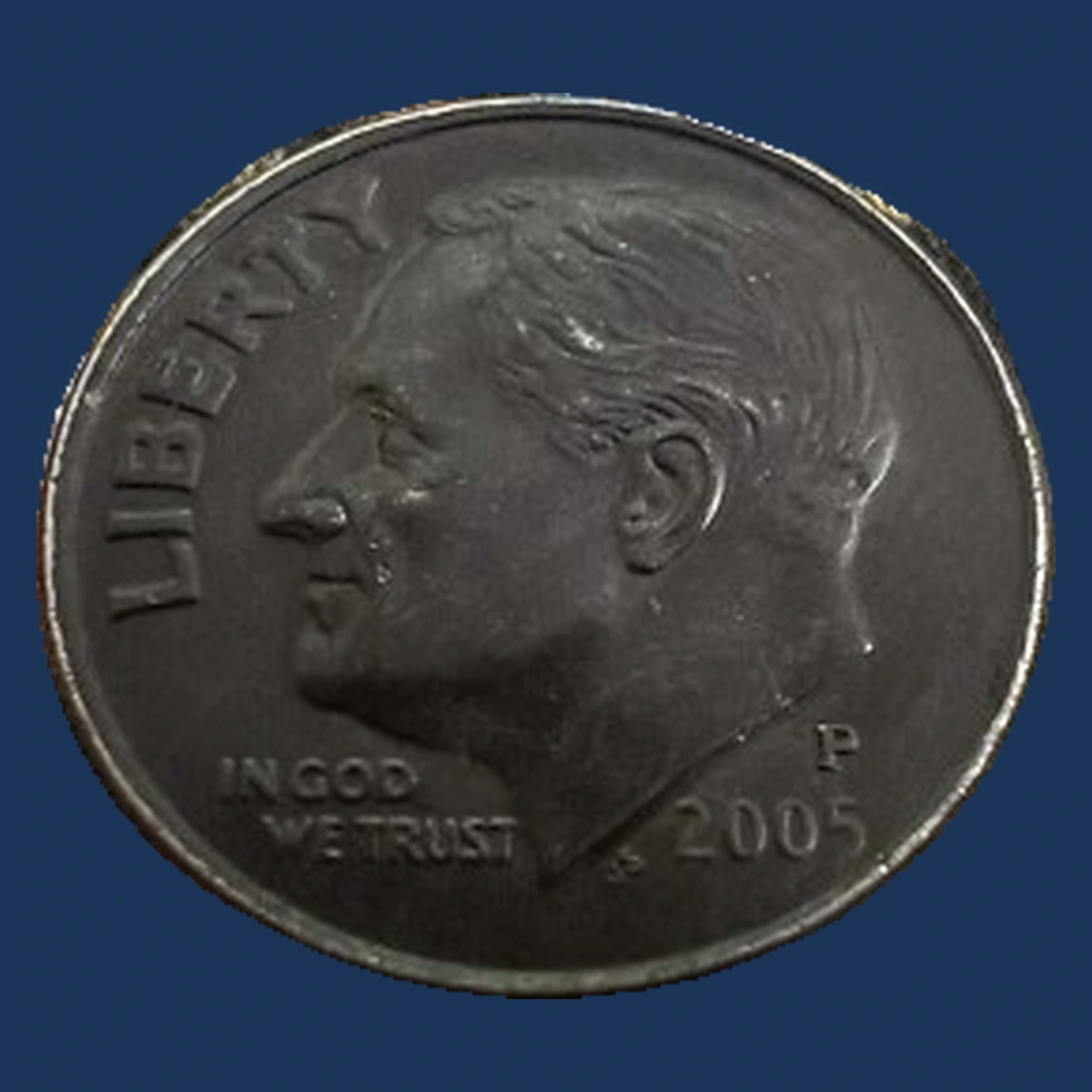
An unusually dark or coppery surface can develop while a blank is heated before striking. This heating softens the metal and is called annealing.
Problems during that treatment can change the surface appearance without removing an outer layer. A 2005-P example was graded NGC MS66, an unworn grade with few marks.
Its unusual color belongs to the heated blank, rather than proving that copper is exposed through missing metal. The layered structure can remain intact.
Ordinary tarnish, chemicals, or later heat can also alter color. A brown dime therefore needs more evidence than its shade.
Estimated Value
The 2005-P MS66 coin sold for $74 in April 2015. For comparable genuine annealing errors, estimate $30–$200, depending on condition and the strength of the surface change.
That amount belongs to a Philadelphia coin, not the separate Denver dime missing its back layer. The two errors should not share a price simply because both can look coppery.
Preserved surface texture matters. Cleaning away the color can remove the feature collectors want to examine.
How to Identify
Compare the coin’s surface and edge together before calling a dark face missing metal. On an annealing error, the normal layers may remain in place beneath the changed color.
For a loose ordinary dime, start with a scale reading near 2.268 grams and a caliper measurement near 17.91 millimeters. A major weight shortage suggests a different question, such as loss of an outer layer.
Use a 10× magnifier to inspect the texture and the grooves around the edge. Look for pits, chemical residue, or scratches from attempts to alter the color.
The documented example has a P mint letter. Matching the graded coin’s original surface appearance is more useful than matching brown color alone.
4. 2005 Roosevelt Dime Doubled Front Lettering
Extra outlines near the date or IN GOD WE TRUST are reported on 2005-P dimes. These are the starting areas for examining the listed doubled front design.
A doubled die is a steel stamping tool that already carries repeated details. Every coin struck from that tool can receive the same pattern.
This is different from a coin moving during striking and leaving flat ledges beside its letters. A thick letter alone does not establish a doubled tool.
The reported features are slight. Their direction and exact shape should be matched to a photographed example rather than guessed.
Estimated Value
A working estimate of $15–$250 covers clearly identified minor doubled front designs. It uses modern Roosevelt varieties as the comparison, rather than a documented sale of this particular 2005-P pattern.
Sharp extra outlines are easier to collect than vague thick letters. Wear, scratches, and glare can make a close pattern harder to recognize.
The whole coin’s condition still matters. The top estimate is not a price for every dime with a blurry date or motto.
How to Identify
Place an ordinary 2005-P dime beside the candidate under similar lighting, so enlargement alone does not make normal letters look unusual. Use a 10× magnifier to compare the date and IN GOD WE TRUST for repeated outlines or split ends.
A flat ledge that thins the original letter can come from movement during striking, rather than a doubled tool. Photograph several affected letters together and compare their added details with the same positions on an identified example.
Check a loose coin with a scale and calipers against 2.268 grams and 17.91 millimeters, and inspect the grooved edge. A matching pattern across several letters is stronger evidence than one thick or brightly lit edge.
5. 2005 Roosevelt Dime Straight Clip on a Satin-Finish Coin
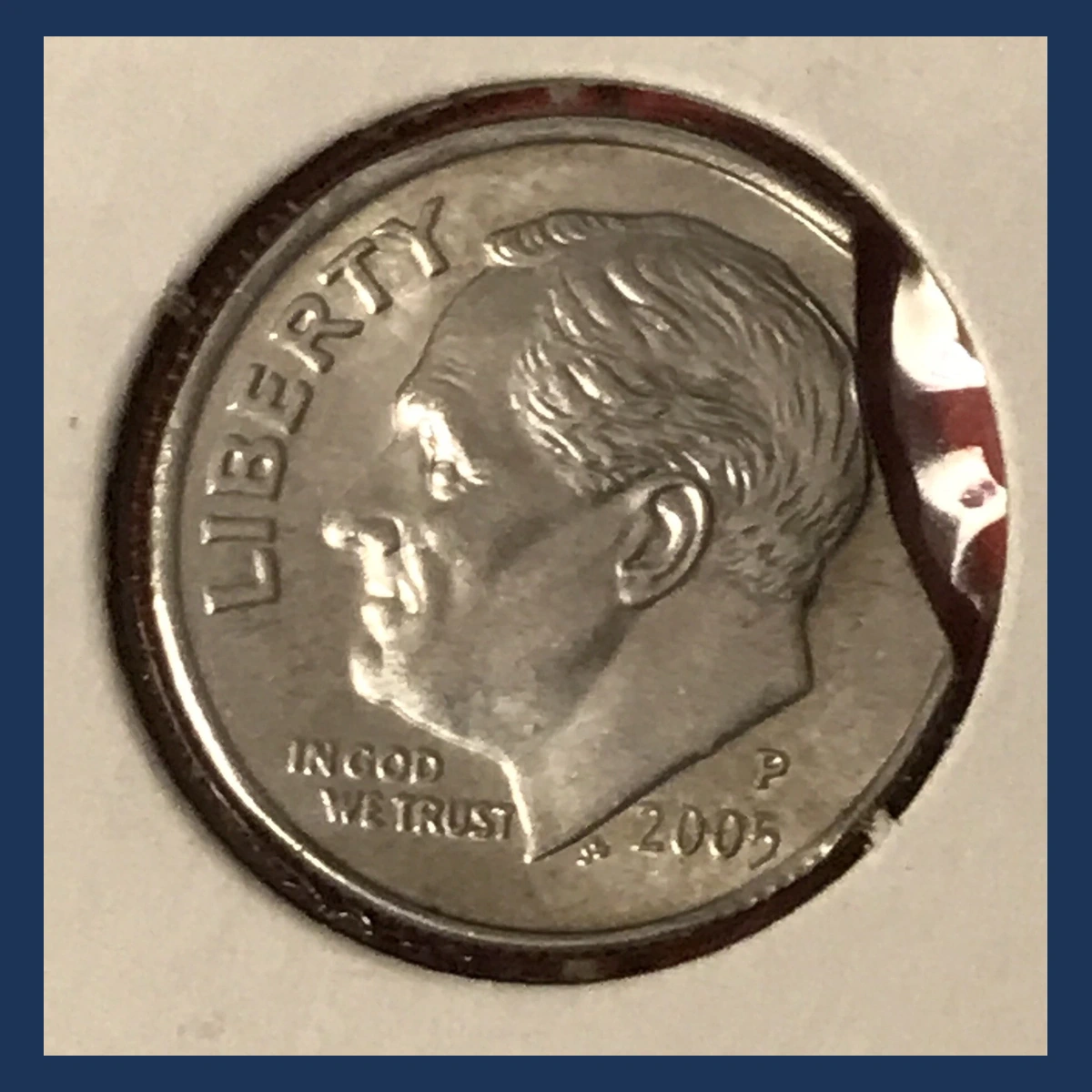
A straight section missing from this dime shows that its blank was incomplete before striking. The design formed on the remaining metal rather than being cut away afterward.
The Calkins collection lists a 2005-P example with a ten-percent straight clip. PCGS graded it SP62.
It has a satin finish, the soft, even appearance used for that year’s special collector-set coins. That surface is different from the normal circulating finish.
The missing section is the error. Satin finish itself is an intentional feature, and the clip should not be described as curved.
Estimated Value
For an original straight clip on a 2005-P satin-finish dime, estimate $50–$300. This is a comparison-based range, not a sale price supplied by the collection listing.
A 1997-P nickel with a twenty-percent clip sold for $124 in March 2025. That other denomination and larger shortage offer context, not a direct satin-dime price.
The collector finish and surviving design belong in the comparison. A later straight cut through a finished coin is damage, even if equally large.
How to Identify
Confirm the satin finish before comparing the coin with an ordinary circulation dime. The collector example is identified as 2005-P, SP62, with a straight shortage rather than a curved bite.
Look closely at the two ends of the missing section with a 10× magnifier. The rim and design should have formed around the absent metal.
Weigh a loose example against the normal 2.268 grams, allowing for the lost material. Use calipers across intact parts to compare with the usual 17.91 millimeters.
Inspect the remaining edge grooves for filing, then look opposite the clip for possible rim weakness. A straight original blank edge with naturally formed neighboring details is the key comparison.
6. 2005 Roosevelt Dime Cracked and Broken Stamping Tools
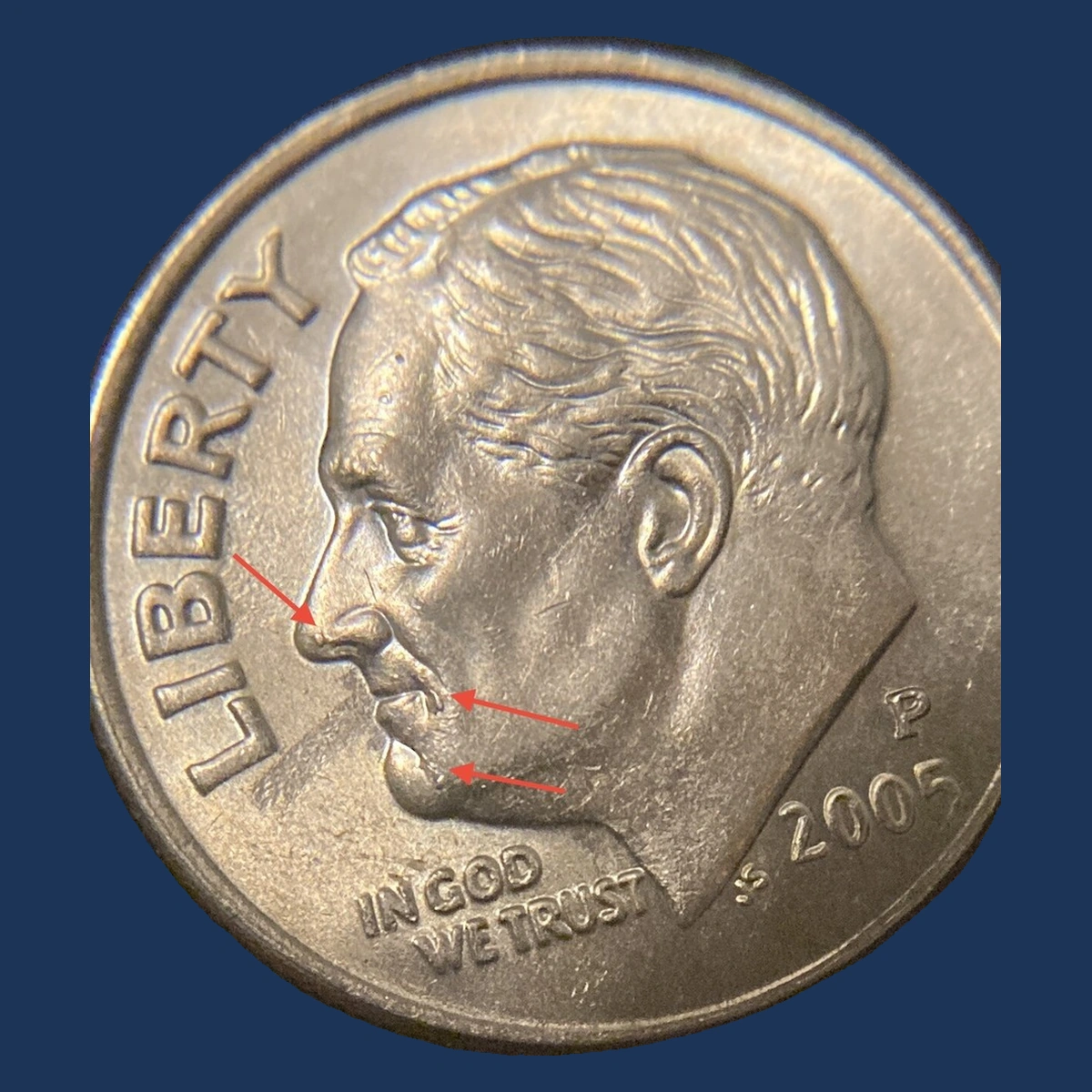
A narrow raised line can form when coin metal enters a crack in the stamping tool. A small piece breaking away from that tool instead leaves a raised blob.
The Philadelphia reports include front chips and cracks on both faces. They do not specify a single path that every coin should follow.
A separate Denver report concerns a raised patch joined to the rim. Collectors call this larger rim break a cud.
These shapes come from missing space in the tool, not added metal on the coin. Later impacts and attached debris can imitate them.
Estimated Value
Estimate $5–$350 across small raised chips, clear cracks, and stronger rim breaks. Minor lines usually sit toward the lower end, while a large recognizable patch can attract more interest.
The range is based on comparable modern tool-damage errors. It is not a sale assigned to either the reported Philadelphia or Denver coin.
Value the complete coin once if several features occur together. Separate maximum prices for each line or blob would overstate the comparison.
How to Identify
Begin by deciding whether the feature is raised or recessed. Under a 10× magnifier, a raised line can fit a tool crack, while a groove is more likely to be a scratch.
For the Denver cud report, trace the raised patch into the rim. Small internal chips on the Philadelphia examples need not reach that border.
Compare the area with a normal dime and inspect the grooved edge for impacts or attached material. Do not press or scrape a suspected blob to test it.
A loose coin can remain near 2.268 grams and 17.91 millimeters because the tool lost metal, not the dime. Check with a scale and calipers, then photograph the raised feature under low-angle light.
7. 2005 Roosevelt Dime Uneven Expanded Strike
Extra metal beyond the design can give a dime a wide, uneven border. The coin spreads when the collar, the ring controlling its edge, does not restrain it normally.
Fred Weinberg listed a 2005 uneven broadstrike among ordinary dimes. A separate year guide reports a Denver example, but that does not identify the dealer’s coin as Denver.
The full intended design should remain on a broadstrike. An off-center strike instead leaves some of that design missing beyond the metal.
An uneven border alone is not enough. Later pressure can flatten and widen a finished coin.
Estimated Value
The historical dealer list asked $15 for a 2005 uneven broadstrike. This was an offer price rather than an auction result.
Use an estimated $15–$400 for genuine examples, with greater expansion and stronger preservation affecting the comparison. A 2000-P dime combining broadstriking with repeated strikes sold for $159 in September 2025.
That later sale concerns a different year and a compound error. It does not establish a sale price for the dealer’s 2005 coin.
How to Identify
Read around the outside lettering on both faces before measuring the coin. The full design needs to remain on the metal for the broadstrike description to fit.
With calipers, compare the expanded outline in several directions with a normal 17.91-millimeter dime. A scale can check near 2.268 grams, since spreading need not remove metal.
Inspect the outer border through a 10× magnifier for original struck texture rather than smooth flattening from later pressure. Note how the edge grooves change around the coin.
An uneven expansion does not supply the mint identity. Read the actual P or D separately, then match a complete design within an expanded original outline.
8. 2005 Roosevelt Dime Off-Center Strike
When a blank sits away from the center of the press, part of the design misses the metal. The opposite side of the disk can remain bare.
The Denver report describes a 2005 dime struck fifteen percent off center and graded MS62. That is an unworn grade that allows noticeable marks.
The direction of the shift is not specified. It should not be copied from a photograph of another year or mint.
Both faces record the same misplaced disk. A coin with only one shifted face may instead have a problem with the position of one stamping tool.
Estimated Value
Estimate $40–$500 for a genuine dated 2005 off-center dime, depending on the shift and condition. The reported fifteen-percent example is a moderate displacement.
A different-year 1977 dime struck ten percent off center sold for $109 in June 2026. That result provides a nearby type of error for comparison, not a 2005 auction record.
Readable date and mint details help distinguish the coin. A much larger shift can lose those details and need a lower comparison despite its appearance.
How to Identify
Locate the bare area on each face and compare their boundaries with the struck design. Both faces should fit one blank that sat off center.
Use a 10× magnifier to examine the untouched metal for scratches or flattened remains of letters. Removing an existing design afterward is different from never receiving it.
Read the 2005 date and D wherever they survive. The reported percentage does not tell you which direction the coin shifted.
Weigh a loose candidate against 2.268 grams and record its outline with calipers against the usual 17.91 millimeters. Check the edge grooves for later squeezing.
Part of the intended design must actually run off the metal; a wide border around complete lettering is not the same error.
9. 2005 Roosevelt Dime Missing Outer Layer
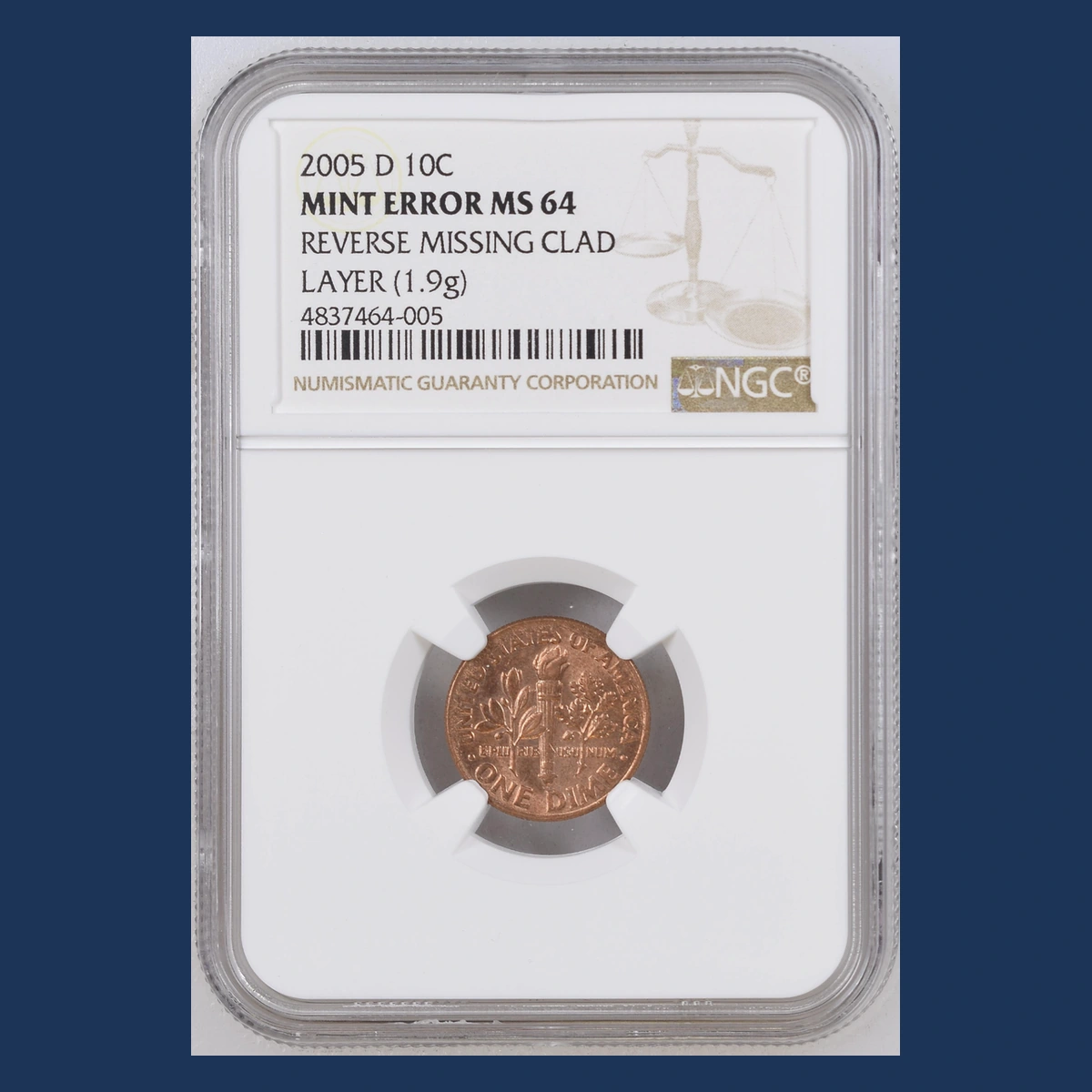
A copper-colored back can result when a dime loses an outer metal layer. Regular dimes use copper-nickel outer layers bonded to a copper center, a structure called clad.
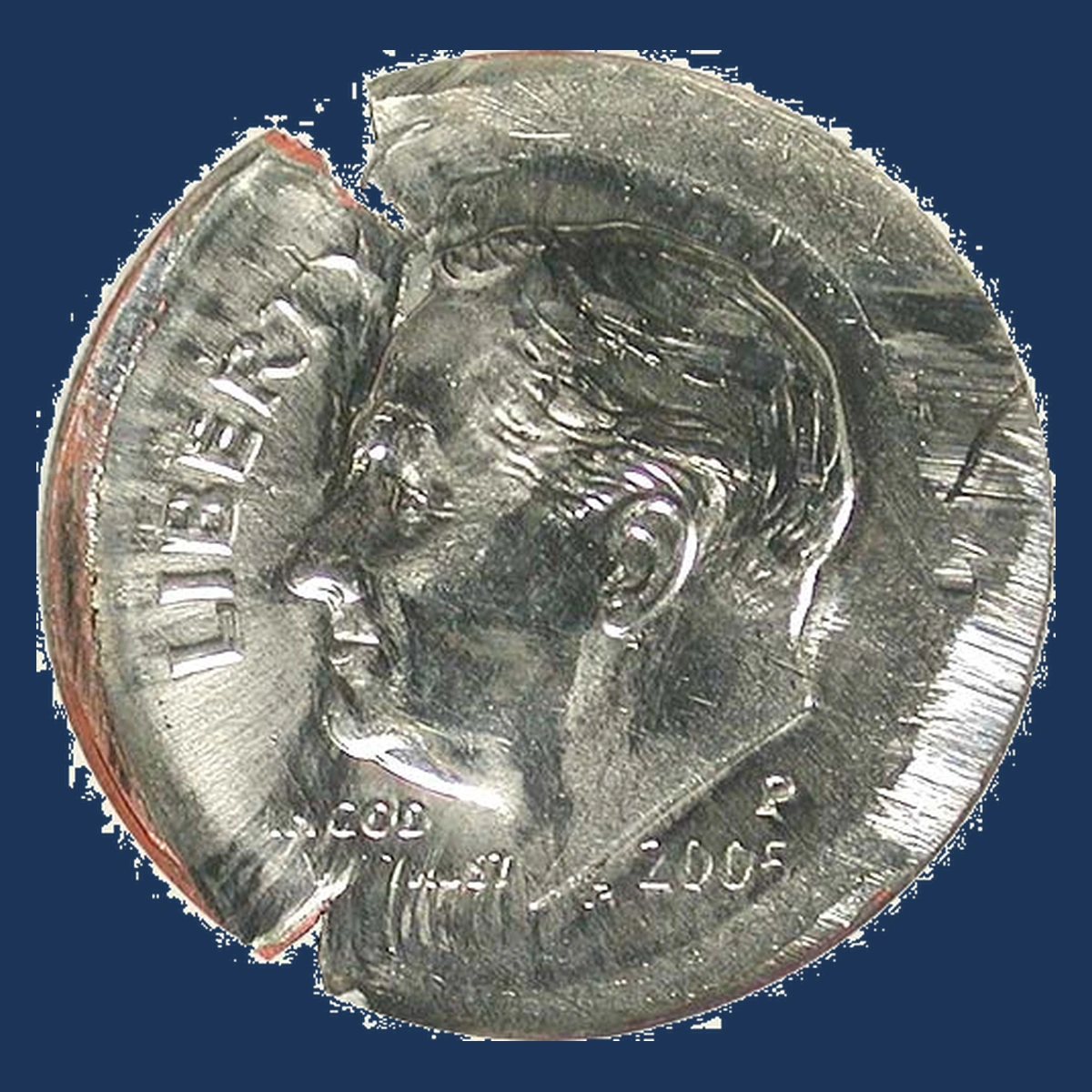
One 2005-D example missing its back layer weighed 1.9 grams and was graded NGC MS64. It is separate from the partial-loss coin illustrated by specialist Jon Sullivan.
That second Denver dime has approximately seventy percent of an outer layer missing. Some silver-colored metal remains beside the exposed copper.
Sullivan’s example shows why every genuine missing-layer coin need not have a completely copper-colored face.
Estimated Value
The 1.9-gram Denver coin missing its back layer sold for $75 in December 2020. Estimate $50–$600 for comparable genuine partial or full-layer loss, depending on condition and extent.
The seventy-percent example has no sale amount attached here. Its percentage and appearance should not be treated as measurements of the auctioned coin.
A clean boundary and original surfaces support the comparison. Color from chemicals or an added copper coating does not establish a missing layer.
How to Identify
A scale offers a useful first comparison with the auctioned coin: that specimen weighed 1.9 grams instead of the normal 2.268 grams. Do not require the same weight from the separate partial-loss example.
Use calipers against the normal 17.91-millimeter diameter, then inspect the exposed copper and remaining layer with a 10× magnifier. Look for a natural boundary rather than scraping or acid damage.
Check the grooved edge for the bonded metal structure and compare both faces. The documented full-loss example is missing the back layer.
For a partial example, follow the boundary between copper and the remaining outer metal. That original transition, supported by the weight and surface, is more useful than copper color alone.
10. 2005 Roosevelt Dime Struck-Through Material Still Attached
Material can remain pressed into a coin after blocking the stamping tool. The surrounding design forms around the obstruction, leaving both the object and its interrupted area visible.
This is called a retained struck-through error. The 2005-P report describes an MS60 example, an unworn coin that can have many marks.
The object’s material and position are not specified. It should not be identified as cloth, wire, or grease without seeing the actual evidence.
Glue or dirt added later can also stick to a dime. Retained material must belong to the original striking event.
Estimated Value
For genuine retained struck-through material, estimate $75–$1,000, depending on its size, visibility, and condition. The upper end suits a clear original object with a convincing interrupted design.
This estimate follows modern retained-object errors rather than a recorded sale of the reported 2005-P coin. A small loose speck is not the same comparison.
The attached object and the dime have one combined value. Removing it can destroy the relationship that makes the error understandable to a buyer.
How to Identify
Do not pull at the attached material. Begin with photographs from several angles so its boundary can be studied without disturbing it.
Under a 10× magnifier, follow where the design stops or becomes weak beside the object. Look for metal formed around it rather than glue spread over already complete letters.
A loose ordinary dime is normally 2.268 grams and 17.91 millimeters. A scale and calipers can record this candidate, but retained material may affect its weight.
Inspect the grooved edge and both faces for unrelated damage. Keep the P and 2005 date visible in the photographs.
The key is an object locked into a naturally interrupted struck design, not simply something stuck on the surface.
Conclusion
A 2005 dime’s finish and metal structure can change the comparison. Keep the satin-finish straight clip separate from ordinary coins, and distinguish discoloration from an actual missing layer.
The estimated range runs from $5 for modest press or edge errors to $1,000 for clear retained struck-through material. Document both faces, the edge, and any useful measurements before choosing a similar example.
Leave attached material and original surfaces undisturbed.