1891 Nickel Error List with Pictures

At 2.9 grams, one unusual 1891 nickel weighs far less than the normal 5 grams. It was struck on a smaller blank with a different metal mixture and brought $2,300 in January 2007.
Other 1891 nickel errors involve extra strikes, shifted designs, or flaws already present in the metal. Their estimated values span $25–$6,000.
Use the examples below to connect what you see with the way the mistake happened.
1. 1891 Liberty Nickel Defective Planchet
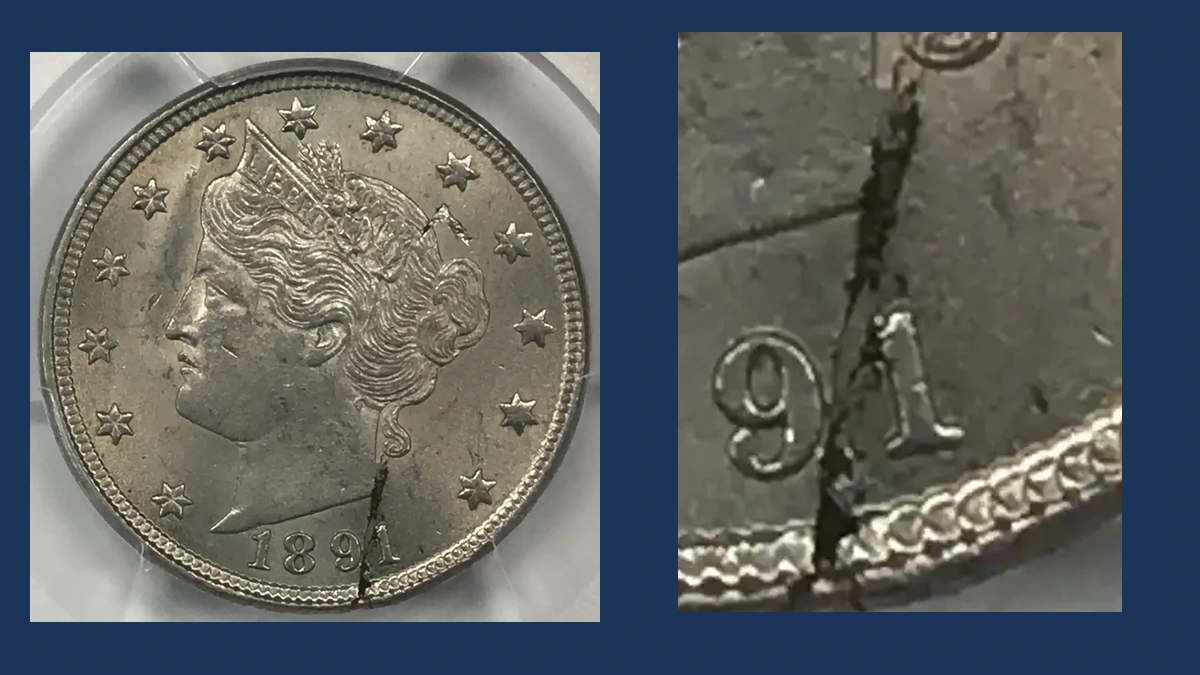
A flaw in the metal can remain visible after the nickel’s design has been stamped. Collectors use planchet flaw for a defect in the prepared metal blank.
Old Pueblo Coin listed an 1891 nickel with that description in a PCGS holder. Its Uncirculated Details label indicates no circulation wear, with the flaw noted instead of a normal numerical grade.
That broad name does not tell you whether metal peeled, cracked, or was missing. The shape on the actual coin determines the more specific explanation, rather than the label alone.
Estimated Value
The dealer listed the PCGS piece at $145, an asking price rather than an auction result. It fits within an estimated $25–$350 range for genuine blank flaws of modest through more obvious size.
A readable date and an attractive remaining surface help the value. A small flaw on a heavily worn coin sits lower.
Large missing areas may look dramatic, but corrosion or later scraping can reduce a coin’s appeal instead of adding an error premium.
How to Identify
Read the holder description, then examine the metal itself. A planchet-flaw label should lead you to a particular irregular area, not to every weak letter on the coin.
For a loose piece, record its weight and diameter with a scale and calipers. Normal references are 5 grams and 21.2 mm, but missing original metal can lower the weight.
Use a 10× magnifier and side lighting to inspect the flaw’s border. A thin layer lifting from a rough surface suggests peeling, while scattered deep pits can instead indicate corrosion.
Check the plain edge for cuts or grinding near the same area. Do not lift a flap or clean a cavity; the untouched boundary helps distinguish the original defect from later damage.
2. 1891 Liberty Nickel Off-Center Strike
Part of Liberty’s design can miss the metal when the blank enters the press out of position. The result combines cut-off design details with an area that never received an impression.
A Heritage catalog described an 1891 example struck 10% off center toward eleven o’clock. It was graded PCGS MS63, meaning unworn with noticeable marks.
The catalog noted a sharp design and silver-gray surfaces with light color. Other examples show smaller shifts or later damage, so their appearance and value can differ substantially even within this one error type.
Estimated Value
An estimated $75–$1,800 covers smaller worn off-center examples through attractive unworn coins. The degree of shift and remaining date matter alongside condition.
An 1891 ANACS coin with damage sold for $97.75 in September 2002. It was described as 5–10% off center, so its price is a lower-grade comparison rather than a value for the MS63 example.
A clean coin with a larger visible displacement should be considered separately from a heavily marked small shift.
How to Identify
Check the back before judging the front’s uneven border. Both faces should fit a blank displaced between the stamping tools; only one shifted face suggests a different alignment problem.
Use a 10× magnifier to follow where the design leaves the metal. The empty portion should be original blank surface, not an area where letters were polished away.
A complete loose blank should remain close to 5 grams on a scale, although striking can change its outline from the normal 21.2-mm diameter. Measure it with calipers and inspect the normally plain edge for cut marks.
Compare the date with a normal 1891 example. The blank crescent proves little if the remaining numbers cannot establish the year being sold.
3. 1891 Liberty Nickel Double Strike
Two sets of design details can survive when a nickel receives another blow after moving in the press. The later strike may cover part of the first while adding a displaced portrait or lettering.
An 1891 example is listed as double struck, with the second strike off center. NGC graded it Fine 12, meaning considerable wear but a recognizable design.
This is more than a slightly doubled edge on one number. The second impression belongs to another striking event, and it must be read in relation to the surviving first design.
Estimated Value
Greysheet records a $690 Heritage result in December 2022 for the NGC Fine 12 double strike. Its wear did not prevent collectors from valuing the extra impression.
Estimate $250–$2,500 for comparable worn through better-preserved double strikes. A large, easily understood second image can draw stronger interest than a crowded, difficult-to-read overlap.
The two impressions are features of one coin, so there is one purchase price rather than an amount for each strike.
How to Identify
Choose one recognizable feature, such as Liberty’s nose or a letter, and locate it in each of the overlapping designs. A second isolated bump proves little, but several displaced details can establish another impression.
Photograph both faces under the same lighting, then inspect the overlaps with a 10× magnifier to see which design flattened the other. Sunken mirror lettering suggests a coin-to-coin impression and needs a different explanation from two normal stamping blows.
For a loose piece, check the 5-gram normal weight with a scale and compare the outline with 21.2 mm using calipers. Inspect the plain edge for stretching caused by repeated strikes, rather than cuts that explain the shape through later damage.
4. 1891 Liberty Nickel Partial Counterbrockage
A transferred image may look stretched or unusually rounded while still standing above the surface. This can occur when one error coin passes its design to another blank.
First, a coin receives a sunken mirror image from another struck coin. If that sunken image presses into a fresh blank, the new impression becomes raised and reads normally again.
Collectors call this a counterbrockage. An 1891 example has been reported with a partial affected area of about 35%, but the image’s height and direction are essential to applying that name correctly.
Estimated Value
For a verified partial counterbrockage, estimate $500–$3,500 according to the size and clarity of the transferred image. The reported 1891 piece was described at AU58, or only slightly worn.
Its published value around $2,400 is a guide estimate, not an identified auction result. A strong raised image would support more interest than a weak, difficult-to-read transfer.
Damage or a different kind of impressed image calls for a fresh valuation rather than automatically using that figure.
How to Identify
First establish which way the unusual letters read. Compare them with the normal opposite face, then tilt the coin under a lamp to judge whether they rise or sink.
Use a 10× magnifier for shallow details. Raised, normally reading transferred features fit counterbrockage; sunken mirror lettering describes brockage instead.
A loose coin normally weighs 5 grams and measures 21.2 mm. Record both with a scale and calipers, then inspect the plain edge for signs of squeezing or crushing.
Return to the transferred image and trace several connected details. Stretching may distort them, but their reading direction should still make sense together.
A percentage describes the affected area; it does not establish how that image formed.
5. 1891 Liberty Nickel Struck on a Smaller Wrong Blank
This nickel’s smaller blank could not receive the design in the usual way. The documented 1891 example weighs 2.9 grams and sits off center toward eight o’clock.
The stars on the right, AMERICA, and the left corn ear are weak. Heritage described the coin as NGC MS63, an unworn grade with some marks.
Mint Error News reported a metal mixture of 86.9% copper and 13.1% nickel, different from the normal nickel mixture. The exact intended use of that blank has been debated, so a specific foreign denomination should not be assigned from appearance.
Estimated Value
The coin brought $2,300 including fees in January 2007, as reported by Mint Error News. The original auction platform separately shows a $2,000 winning bid before fees.
An estimated $1,500–$6,000 range allows for condition and the appeal of a correctly identified unusual blank. Clear date details and undamaged surfaces support stronger prices.
This range concerns a genuine wrong blank; simply grinding a normal nickel to a lower weight does not create the error.
How to Identify
Measure a loose candidate before deciding that weak outer lettering is just wear. The known coin is 2.9 grams, far below the normal 5 grams; a scale can reveal that difference immediately.
Calipers should document the diameter rather than force it to the normal 21.2 mm. The known example is undersized, but its exact diameter should come from measurement.
Under a 10× magnifier, inspect the plain edge for grinding and the surface for corrosion that could have removed metal. Then compare the right-hand stars, AMERICA, and left corn ear with the documented weak areas.
A grading service can test the metal without scratching it. Correctly struck details on an undersized blank are more persuasive than low weight or unusual color alone.
Conclusion
Estimated values of $25–$6,000 cover the blank flaws, striking mistakes, and unusual metal blank discussed here. The 2.9-gram coin shows why weighing a loose nickel can reveal something the date alone cannot.
For transferred images, check whether the design is raised and reads normally, or is sunken and reversed. Those differences change the error name.
Keep measurements and clear photographs together when comparing your coin with a documented example or its auction price.