1895 Nickel Error List with Pictures

Repeated impressions can turn an ordinary nickel design into something far more unusual. NGC reported that a multiply struck 1895 Liberty nickel realized $78,000 in December 2022.
Smaller features require a different eye, from an extra date outline to a raised crack line. The 1895 nickel errors below span an estimated $10–$80,000, with the upper end reserved for exceptional multiple strikes.
Start with the visible feature, then use the checks below to work out how it formed.
1. 1895 Liberty Nickel Die Crack
A thin raised line can appear when a steel stamping tool develops a crack. That tool, called a die, leaves its design on every blank it strikes.
Metal pressed into the crack makes a narrow ridge on the coin. The ridge may cross an open area or pass through letters without looking like part of the intended design.
This is a useful feature to check on an 1895 nickel. A scratch is different: it cuts into the finished surface and may push a small lip of metal beside the cut.
Estimated Value
Estimate $10–$100 for an ordinary collectible 1895 nickel with a genuine die crack. A short, faint line generally adds little to the value of the coin itself.
A longer, clearer raised line can attract more interest, especially on a coin with readable lettering and little wear. These are whole-coin estimates for a verified feature.
A heavily scratched or corroded piece should be priced for its damaged condition, even when a real crack line remains visible.
How to Identify
Move a lamp to one side and watch the line’s shadow. A raised ridge behaves differently from a groove, though a scratch’s pushed-up edge can briefly imitate it.
Use a 10× magnifier to inspect both sides of the line. A deep cut beside the ridge favors damage; a continuous raised line without that cut better fits a cracked die.
Look where the line crosses a letter or the rim. Photograph that junction because it often shows the relationship more clearly than an empty stretch of the field.
On a loose example, a scale and calipers should show roughly 5 grams and 21.2 mm. Examine the plain edge for the crushed metal of a later impact before treating a rim mark as a die crack.
2. 1895 Liberty Nickel Repunched Date
An extra curve beside a date numeral can come from placing the date punch more than once. The punch was used on the steel die before the coin was made.
Coins struck from that tool could then repeat the same extra outline. The finished nickel itself did not need a second strike.
For an 1895 candidate, the question is whether the added shape truly belongs to an earlier numeral. Ordinary wear, a hit, or flat doubling can make the date look untidy without leaving a genuine second date-punch impression.
Estimated Value
A verified minor repunched date has an estimated $20–$250 range for worn to moderately marked unworn examples. This uses similar Liberty nickel date varieties as comparisons, rather than claiming an 1895 auction result.
Clear extra curves should command more attention than a faint trace visible only under harsh lighting. At the lower end, ordinary coin condition accounts for much of the price.
Do not pay the upper estimate merely for a seller’s description of a doubled number.
How to Identify
Before magnifying the date, confirm the coin has Liberty on the front and a V above CENTS on the back. All 1895 Liberty nickels came from Philadelphia without a mint letter.
For a loose coin, use a scale and calipers to compare 5 grams and 21.2 mm. Its plain edge and full design should fit a normal nickel, because repunching changes a number rather than the blank.
Now examine each numeral with a 10× magnifier. Trace any extra curved section until you can explain which part of a number it might represent.
A photograph under several lighting angles can reveal whether it is raised or cut into the surface. An isolated bump with no recognizable numeral shape is not enough to identify repunching.
3. 1895 Liberty Nickel Off-Center Strike
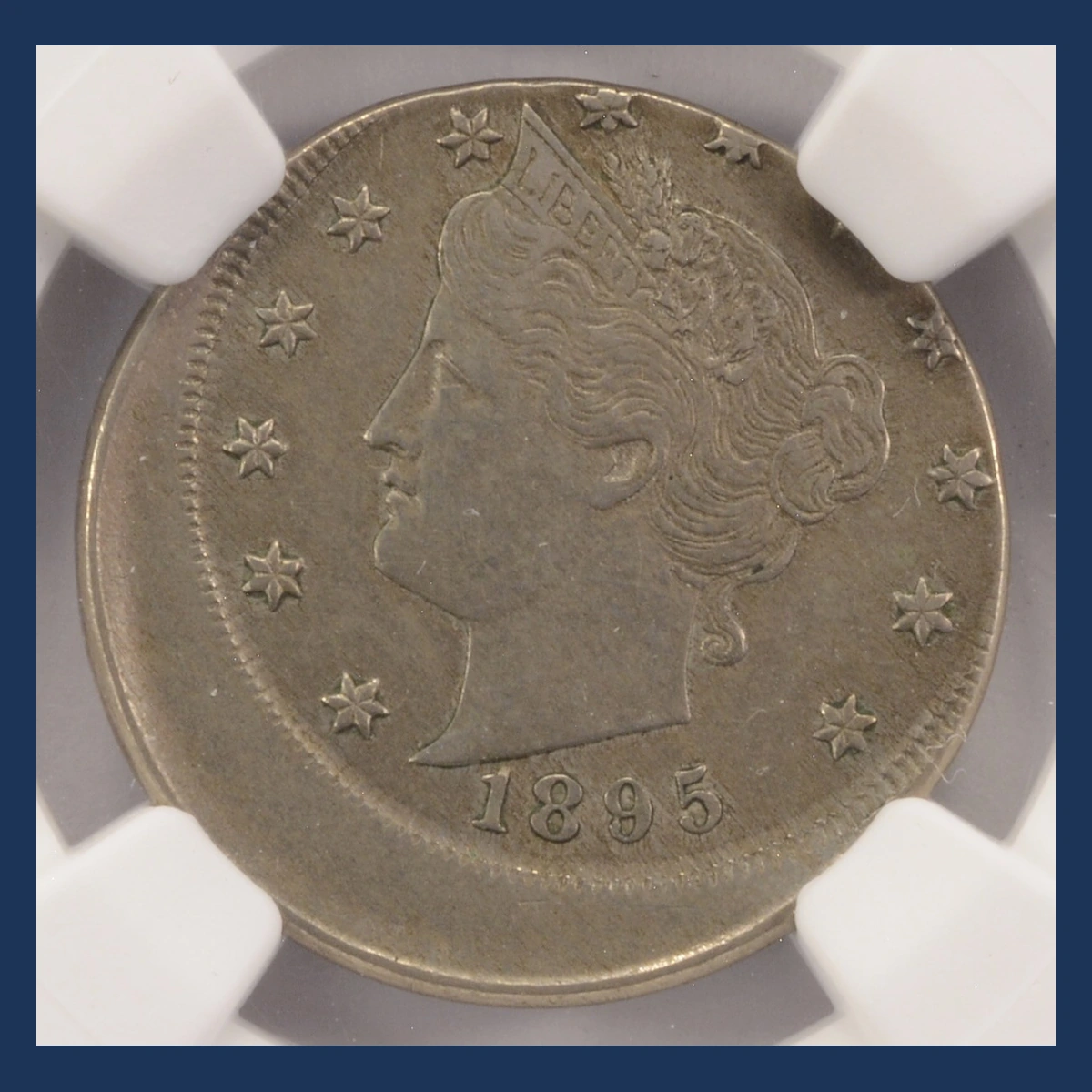
On an off-center nickel, the design no longer occupies the middle of the metal blank. Some details run off the edge while an unstruck area remains beside them.
A specialist dealer listed an 1895 example struck 15% off center toward the one-o’clock position. NGC graded it AU55, meaning light wear with much detail remaining.
A separate 5% off-center example appeared in a 2015 Stack’s Bowers catalog. The smaller shift should not be given the larger coin’s description, even though both mistakes arose from a blank sitting out of position.
Estimated Value
The 15% off-center NGC AU55 coin carried an $800 dealer asking price. That offer helps place a readable, lightly worn example within an estimated $150–$1,500 range.
Smaller shifts and heavier wear usually bring lower prices. More displacement can help, but losing the date reduces appeal to collectors seeking this particular year.
The estimate covers comparable ordinary strikes; a dealer’s posted amount shows an offer to sell, not a completed auction payment.
How to Identify
Find the boundary where the design stops and the smooth blank area begins. Follow it across both faces, checking which letters or portrait details have fallen beyond the metal.
Use a 10× magnifier at that boundary. Later grinding may remove a design, but it leaves a worked surface rather than an area never touched by the stamping tools.
The coin should still be substantially complete metal. For a loose specimen, weigh it against the normal 5 grams and use calipers to record departures from the normal 21.2-mm outline.
Inspect the plain edge for cutting, then compare the two sides’ positions. If only the front is displaced and the back remains centered, investigate a misaligned tool instead of assuming an off-center blank.
4. 1895 Liberty Nickel Multiple Strikes
Repeated portraits or letters can show that a nickel returned beneath the stamping tools several times. A later blow may partly flatten an earlier design while leaving other portions visible.
NGC includes an 1895 Liberty nickel in its discussion of coins struck multiple times. Its description establishes repeated strikes without specifying an exact count for this example.
That distinction matters when reading the overlapping shapes. Several visible fragments might belong to one earlier impression, so counting every stray letter as another blow would exaggerate what happened to the coin.
Estimated Value
NGC reports a $78,000 Heritage sale in December 2022 for the multiply struck 1895 nickel. That result includes the auction buyer’s premium.
Use a broad estimated $1,000–$80,000 range, with the upper end reserved for exceptional examples comparable to that major sale. A worn coin with modest extra impressions belongs far below that level.
Visible separation between strikes, overall condition, and the strength of the remaining date all affect collector interest.
How to Identify
A distorted outline can help show where repeated blows spread the metal, but it does not reveal the strike count. For a loose coin, record its weight with a scale and its widest dimensions with calipers.
The normal references are 5 grams, 21.2 mm, and a plain edge. Then make enlarged photographs of both faces and connect recognizable fragments into earlier portraits or lettering.
Follow the overlaps with a 10× magnifier. A later impression may flatten part of an earlier one, giving you a clue to their order.
Tiny extra date strokes alone could be a date-punch variety. Look instead for related design pieces in different positions, and count an earlier strike only when the surviving shapes support it.
Conclusion
The $10–$80,000 estimated range puts a modest crack line and an exceptional multiply struck nickel at very different ends. The reported $78,000 sale belongs to a particular major error, not every coin with doubled-looking details.
For an 1895 nickel, separate an extra date curve from a second set of design features. Then check whether a shifted design leaves untouched metal beside it.
Clear photographs and gentle handling preserve the clues that make those differences visible.