1945 Quarter Error List with Pictures

A thick-looking letter is only a starting clue on a 1945 quarter. On the San Francisco FS-102 variety, the lettering, date, and hair ribbon share a specific thickened shape.
An MS66 example sold for $840 at Heritage in March 2018. Estimated whole-coin values for the 1945 quarter errors below span $20–$1,500.
Keep reading to separate those small tool-made features from missing edges and designs that spread or missed the blank.
1. 1945 Washington Quarter Straight Clipped Blank
A straight section can be absent from the metal disk before the quarter receives its design. The blank cutter may reach the edge of the strip instead of cutting a complete circle.
The result differs from the familiar curved clip. A 1945-S straight-clip example is reported, but no particular missing percentage or clock position should be assumed for another coin.
The surrounding rim and letters formed beside that incomplete edge. A later cut through a finished quarter can imitate the outline while leaving a different relationship between the design and missing metal.
Estimated Value
Estimate $25–$300 for a genuine 1945-S straight clip, depending on its size, condition, and readable identity. A small loss on a worn coin generally attracts less attention than an obvious original gap.
For a different-year comparison, a 1953 curved-clip quarter graded ANACS MS64 sold for $79 in June 2026. That sale illustrates the scale of a modest silver-quarter clip without assigning its curved shape or grade to the reported 1945-S coin.
How to Identify
A flat missing edge deserves a close look for cutting marks before it receives an error label. Examine the entire boundary under a magnifier, including both places where the straight section meets the round rim.
Look for lettering that formed beside the gap, rather than finished letters abruptly sliced away. A weak area on the opposite rim can support a clip, although it is not required on every genuine example.
Weigh the loose coin against the normal 6.25-gram silver-quarter standard. Less metal means less weight, but a saw cut does too.
Keep the surviving date and S visible in your photographs. A natural struck boundary is more useful evidence than the straight shape alone.
2. 1945 Washington Quarter Repunched Mint Marks
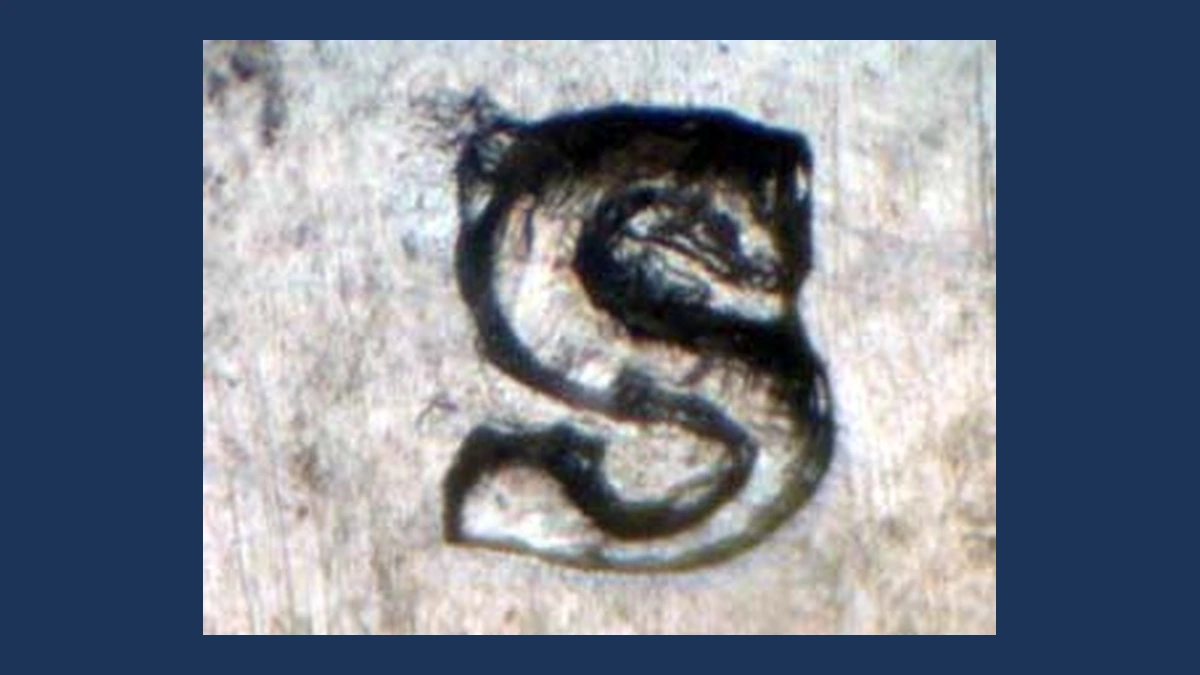
The mint letter can retain an extra curve where a worker punched it into the stamping tool more than once. Coins struck with that tool repeat the same small shape.
For 1945-S FS-501, the extra S lies above the main letter. Other S varieties show different directions, while the Denver RPM-001 has an extra D below.
An odd S center is not always a second letter. Damage to the letter punch can produce a similar-looking center without a repeated punch impression, so that lookalike needs to be separated from genuine S/S examples.
Estimated Value
Confirmed repunched mint marks have an estimated whole-coin range of $20–$600. Worn minor examples tend toward the lower end; clear, well-preserved cataloged shapes can support stronger prices.
A 1949-D D/D FS-501 graded MS65 sold for $384 in March 2018. That is a different-year variety comparison, not a sale of the 1945-S FS-501, and an oddly shaped S caused only by punch damage does not automatically deserve the same premium.
How to Identify
Find the letter below the branches on the back. Philadelphia quarters have no mint letter, so a repunched D or S identification must begin with the appropriate marked coin.
For S/S FS-501, compare the upper extra curve with a confirmed photograph. Do not use a westward S/S outline as a substitute merely because it also looks doubled.
The Wexler mint-mark photographs separate these patterns from the damaged S-punch lookalike.
Inspect the letter’s outside contour as well as its center with a 10× magnifier. A genuine second outline must fit the proposed variety.
On the Denver RPM-001, look below the main D instead of borrowing an S-coin feature.
3. 1945 Washington Quarter Broadstrike
Metal can spread outward when the surrounding steel collar fails to contain a quarter during striking. Collectors call the resulting widened coin a broadstrike.
A Philadelphia example graded NGC Uncirculated Details has this expanded shape along with scratches on the front. The scratches are later damage, not the cause of its broadstrike.
A separate San Francisco broadstrike is reported with a weak date. Its identity and condition should stay separate from the Philadelphia coin, even though both belong to the same kind of striking error and show an unusually wide outline.
Estimated Value
An estimated $75–$700 covers genuine 1945 broadstrikes across a range of condition and visible spreading. Attractive original surfaces can matter as much as the enlarged border.
The scratched Philadelphia example sold for $134 on June 29, 2026. Its Details label records the damage despite little circulation wear, so that result should not be used as the price of an undamaged coin or the separate weak-date San Francisco example.
How to Identify
Keep the design and the surface condition separate as you examine the coin. A scratch can lower the value of a real broadstrike without explaining why its metal originally spread.
Check whether all major design elements remain on the expanded blank, then compare its outline with the normal 24.3-millimeter diameter. The edge can show weak or missing grooves where the collar did not hold the metal.
For the reported San Francisco coin, study the weak date and surviving S instead of assuming identity from the widened rim. Original letters should follow the spread metal; a flattened finished coin may be wider too, but its crushed details tell a different story.
4. 1945 Washington Quarter Doubled Front and Back Details
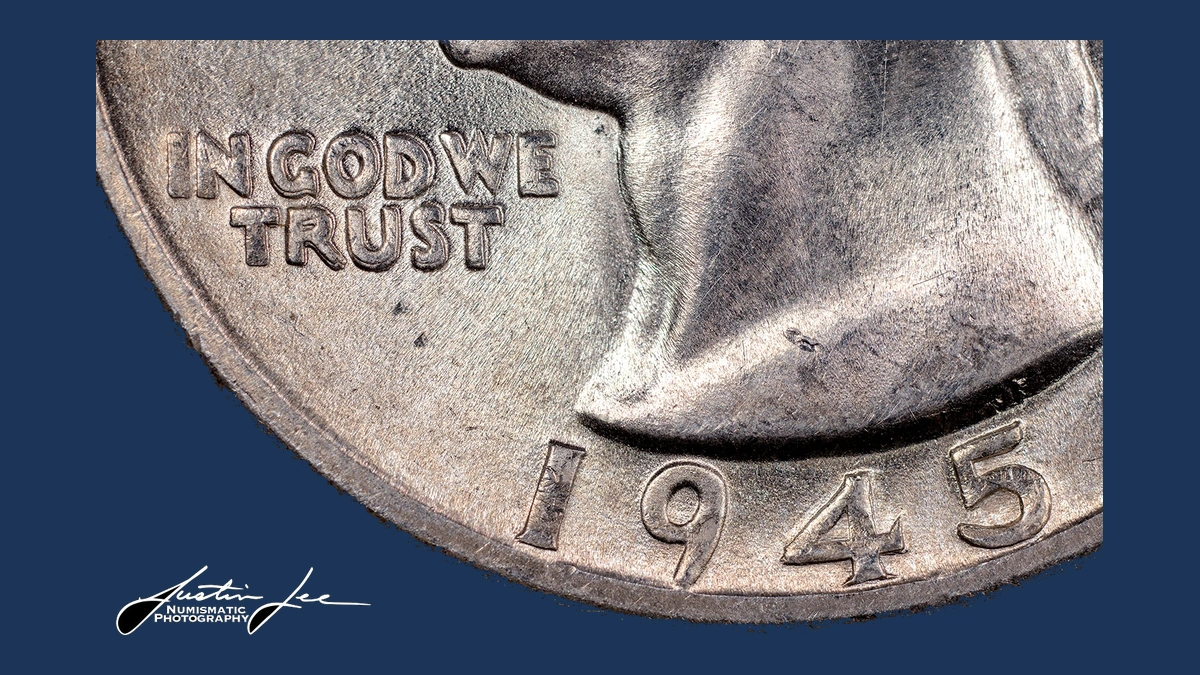
An extra outline or unusual thickening can already be present in a steel stamping tool, called a die. Every coin it strikes can then repeat that doubled design.
Philadelphia FS-101 shows counterclockwise separation across front lettering, date, and other details. San Francisco FS-102 instead has strong thickening in the lettering, date, and hair ribbon.
Denver and San Francisco also have other front patterns, and all three mints have reported doubled backs. These are different tool patterns, so one coin should not be expected to carry every feature found across the year.
Estimated Value
Estimate $25–$1,000 for identified doubled-tool varieties, with minor worn examples below clear, well-preserved major varieties. The exact catalog match matters more than the general claim that a coin looks doubled.
A Philadelphia FS-101 graded MS65 sold for $552 in March 2018. The distinct San Francisco FS-102 reached $840 in MS66 on March 29, 2018; those are separate whole-coin auction results, not prices to add together.
How to Identify
Select a reference for the correct mint before deciding which details should be repeated. A Philadelphia FS-101 and a San Francisco FS-101 are not the same pattern despite sharing a number.
With a magnifier, compare the affected letters one at a time. On Philadelphia FS-101, check the motto, LIBERTY, date, and hair-ribbon ends for the documented counterclockwise separation.
For San Francisco FS-102, compare thickened lettering and date rather than searching only for a doubled portrait outline. A back variety needs its own match in the lettering, leaves, or other listed details.
Raised, rounded repeated edges differ from a flat ledge left by movement during striking. Match the coin’s actual pattern before attaching a catalog name.
5. 1945 Washington Quarter Off-Center Strike
Part of the quarter’s intended design can miss the blank while the opposite side remains empty. This happens when the metal sits away from its proper position between the stamping tools.
The shift changes how both designs fit on the same disk. A wide rim on only one face may have a different cause, such as one tool sitting off to the side.
Off-center quarters are reported for 1945 without a single established mint or displacement for every example. The remaining date, mint-letter area, and blank crescent need to be checked on each coin.
Estimated Value
For genuine dated 1945 off-center quarters, use an estimated $100–$1,500 whole-coin range. A readable year and a clear displacement help the error display well.
A 1965 quarter struck 25% off center sold for $180 in December 2025. That later copper-nickel coin offers a comparison for the striking mistake, while the 1945 silver coin’s wear, missing design, and surface quality still control its own price within the wider estimate.
How to Identify
Begin at the empty crescent and follow its boundary toward the struck design. Part of the intended outer lettering should be missing beyond the opposite edge, not simply pushed inward by a wide border.
Turn the quarter over. Its second design should fit the same misplaced blank.
Check whether the complete year survives before judging the amount of shift. If the back mint-letter area missed the metal, the absence of D or S cannot prove Philadelphia.
Look across the unstruck portion with low lighting for grinding or hammer marks. A later alteration can imitate a blank-looking area.
A genuine misplaced blank shows a natural transition between struck and untouched metal on the same original disk.
Conclusion
Estimated values for these 1945 quarter errors range from $20–$1,500, with the strongest prices tied to clear features and suitable condition. A tiny mint-letter difference needs a more exact comparison than a plainly missing edge.
Start with the correct mint, preserve the coin’s surface, and keep both faces in your photographs. The scratched broadstrike shows why a genuine Mint error can still lose appeal through later damage.