1996 Dime Error List with Pictures

Roosevelt’s ear rests over Lincoln’s cheek on one unusual 1996 coin. It began as a Philadelphia dime before another strike added a penny design.
That example brought $747.50 in April 2011. This 1996 dime error list covers estimated values of $5–$3,500, including less expensive edge steps, clipped blanks, and blocked designs.
The W mint letter on a normal collector-set dime is not itself an error. Look for a physical change in the metal or design instead.
1. 1996 Roosevelt Dime Broadstrike with a Wide Border
A dime can spread wider than normal when the ring around its edge fails to contain the metal. The portrait and torch may still fit inside the expanded outline.
The ring is called a collar, and this result is a broadstrike. A simple example has no required second image, backward portrait, or missing section of metal.
Broadstrikes are reported for 1996 without a fixed mint for the general category. A wide-looking border needs to be examined with the rest of the design, because later flattening can also enlarge a finished coin.
Estimated Value
For genuine simple broadstrikes, estimate $20–$200. Clear outward spread around a complete design makes the error easier to see than a slightly uneven border.
A clean surface can improve its appeal. Scratches or crushed lettering may reduce the value or suggest that later damage caused the shape.
Greater spreading can make a clear example more attractive to collectors. An intact date and readable outer lettering help display the change without losing the coin’s identity.
How to Identify
Photograph the candidate beside an ordinary dime at the same scale. Calipers can compare a loose example with the normal 17.91-millimeter diameter.
Check whether the outside letters remain on the metal. A broadstrike keeps the complete main design within the expanded outline, even if that design is not perfectly centered.
If letters run off the blank, examine the coin for an off-center strike instead. That error leaves part of the intended design beyond the available metal.
Look along the widened edge for changes to the normal grooves, then inspect Roosevelt and the torch for crushing. Hammering a finished dime can enlarge it, but it also damages detail that was already there.
2. 1996 Roosevelt Dime Stepped Edge with a Wider Back
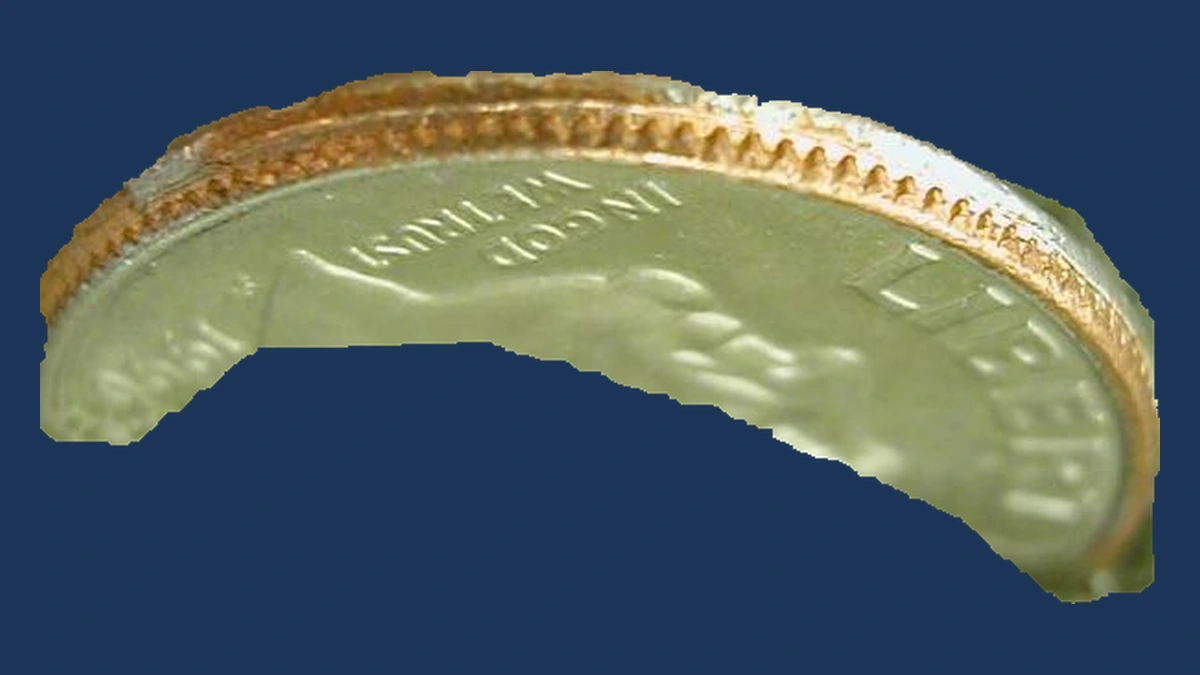
The two faces of this Denver dime do not have the same width. The front stays near normal size while metal beside the back spreads farther outward.
Only part of the edge was held by the collar ring during striking. A narrow band of grooves remains beside the front, next to a wider smooth step.
This is a reversed partial collar error. The reversed arrangement of the stamping tools was an intentional press setup; the error was the collar failing to surround enough of the blank when the design was struck.
Estimated Value
Estimate $25–$300 for a genuine 1996-D example with a clear original edge step. An obvious transition between the narrow grooved band and wider smooth metal helps show the error.
For a different-denomination comparison, a 1990-P nickel with a partial collar error sold for $99 in June 2025. Its price does not establish a sale for this dime.
Compare the dime’s edge, wear, and any later damage before choosing a value within the range.
How to Identify
Look from the side so both edge levels appear together. The illustrated Denver example keeps its narrow grooved band next to Roosevelt’s face.
Follow that band around the edge, then compare it with the smooth metal projecting beside the torch side. A face-only photograph can hide the relationship.
Check for filing or a folded rim produced by a later impact. Damage may change one short section without creating the same original stepped boundary.
Use full photographs to keep the front and back correctly identified. The useful clue is which face adjoins each edge level, rather than simply finding a dime with worn grooves or calling the normal tool arrangement an error.
3. 1996 Roosevelt Dime Raised Break from a Split Front Tool
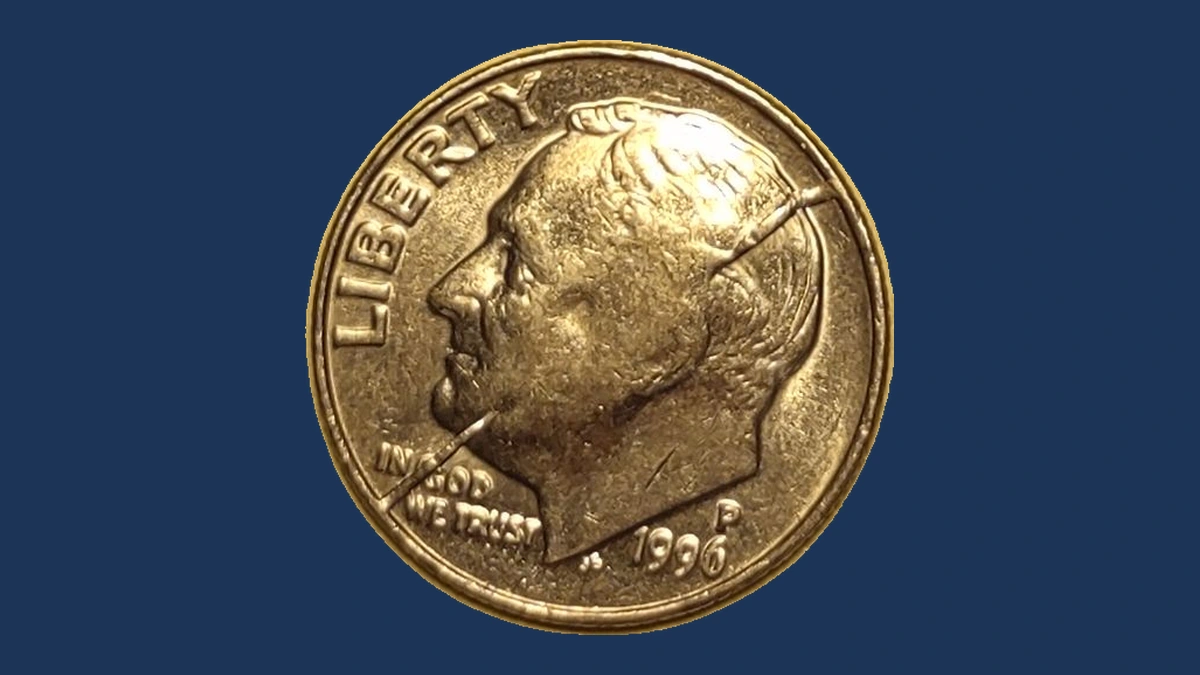
A deep break in the stamping tool can produce a raised ridge or a change in surface level across a coin. Metal enters the opening in the tool during the strike.
A 1996-P dime graded PCGS MS63 was cataloged as struck with a split front die. Die is the name for the steel tool carrying the coin design.
A raised break can be followed across the surrounding portrait and letters under light from the side. Unlike a scratch, it rises from the coin’s surface instead of cutting into metal that was already stamped.
Estimated Value
The PCGS MS63 example sold for $192 in April 2020. Comparable confirmed split-tool dimes have an estimated range of $75–$500.
The coin’s MS63 grade means it has no circulation wear but shows noticeable surface marks. A clear break on an attractive surface can draw more interest than a faint feature hidden by scratches.
This estimate applies to a tool-related raised feature, not a dime that somebody split, bent, or cut after it left the Mint.
How to Identify
Inspect the back and edge before concentrating on the raised front line. A bent coin or a physical split through its metal can create a misleading change in surface level.
Now shine light across the front break. Watch the shadow move as you change the angle, checking that the feature rises above the surface rather than cutting down like a scratch.
Follow its path through nearby letters and portrait detail. Raised metal and any difference in level should connect into one break in the stamping surface.
Compare that complete pattern with the cataloged PCGS example. A single raised line without matching surrounding features is not enough to identify the same split tool.
4. 1996 Roosevelt Dime Missing Outer Layer
An ordinary dime has pale outer metal bonded to a copper center. Loss of an outer layer can expose that copper while leaving much of the coin intact.
A 1996-P example was cataloged in an older ANACS holder with an MS62 grade. That grade describes an unworn coin with noticeable marks.
A copper-colored face needs more than a color check. Stains, added copper, and chemical treatment can also change a dime’s appearance, so inspect the edge layers and the original design before deciding that metal is missing.
Estimated Value
For a genuine comparable missing-layer dime, estimate $50–$500. A clear copper face with original struck detail usually makes a stronger display than a small unclear patch.
As different-year comparisons, a 2000-D back-layer example sold for $132 in November 2020 and a separate front-layer coin brought $104 in December 2022.
Wear, scratches, and the amount of exposed copper affect the comparison. The recorded 1996-P listing does not identify which face lost its covering.
How to Identify
Follow the metal layers along the edge beside the unusual face. Look for a structural change rather than assuming every brown surface is exposed copper.
A loose ordinary clad dime normally weighs 2.268 grams. Missing metal can lower that weight, although grinding or acid can reduce it too.
Inspect the affected face for original lettering, scrape lines, and pitting. Its texture should support the same explanation as the edge.
Check the issue before applying this test. Normal 1996-W collector-set dimes are clad, while San Francisco also made ninety-percent-silver Proofs weighing 2.50 grams.
Those silver collector coins have no copper core to expose. Their normal construction should not be confused with a missing-layer error.
5. 1996 Roosevelt Dime Double Clips and Clips with an Off-Center Strike
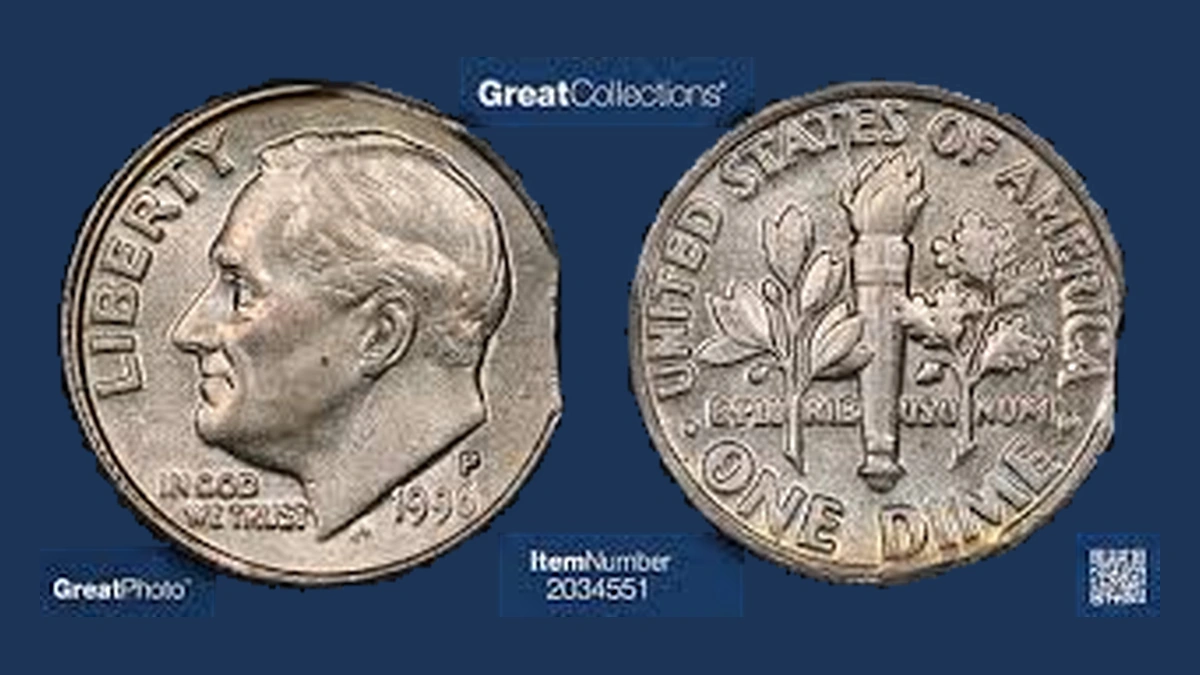
Missing metal and unused metal can occur on the same dime. A clip removes part of the blank before striking, while an off-center strike leaves some remaining metal without a design.
One 1996-P double-clip dime was graded PCGS AU58, meaning it has slight wear. Its two missing sections need their own edge examination.
A different PCGS MS64 coin combines a twelve-percent clip with a fifteen-percent off-center strike. Another NGC MS64 Full Torch example is ten percent off center toward two o’clock and has a substantial curved clip.
Estimated Value
Estimated values are $25–$250 for genuine double clips and $75–$600 for comparable clip-and-off-center combinations. Visibility and condition matter alongside the amount of missing metal.
A clear date helps identify the piece, while a well-formed gap makes the blank-making error easier to understand. Scratches can reduce appeal even on a dramatic outline.
The Full Torch label describes sharp torch detail. It does not add another error or turn one combined coin into two separately priced pieces.
How to Identify
Point out the actual gap before examining the plain crescent. Missing metal and metal that never received a design should be easy to distinguish in a full photograph.
Inspect each gap through the coin’s thickness for later cuts or filing. Letters near an original clip may stretch toward its boundary.
On the double-clip coin, examine both missing sections separately. Weakness at the opposite rim can help, but is not required on every genuine clip.
Keep the percentages with the correct example. The twelve-percent clip belongs to the PCGS coin with a fifteen-percent shift; the separate NGC coin has a ten-percent shift toward two o’clock, not a documented ten-percent metal loss.
6. 1996 Roosevelt Dime Single Off-Center Strike
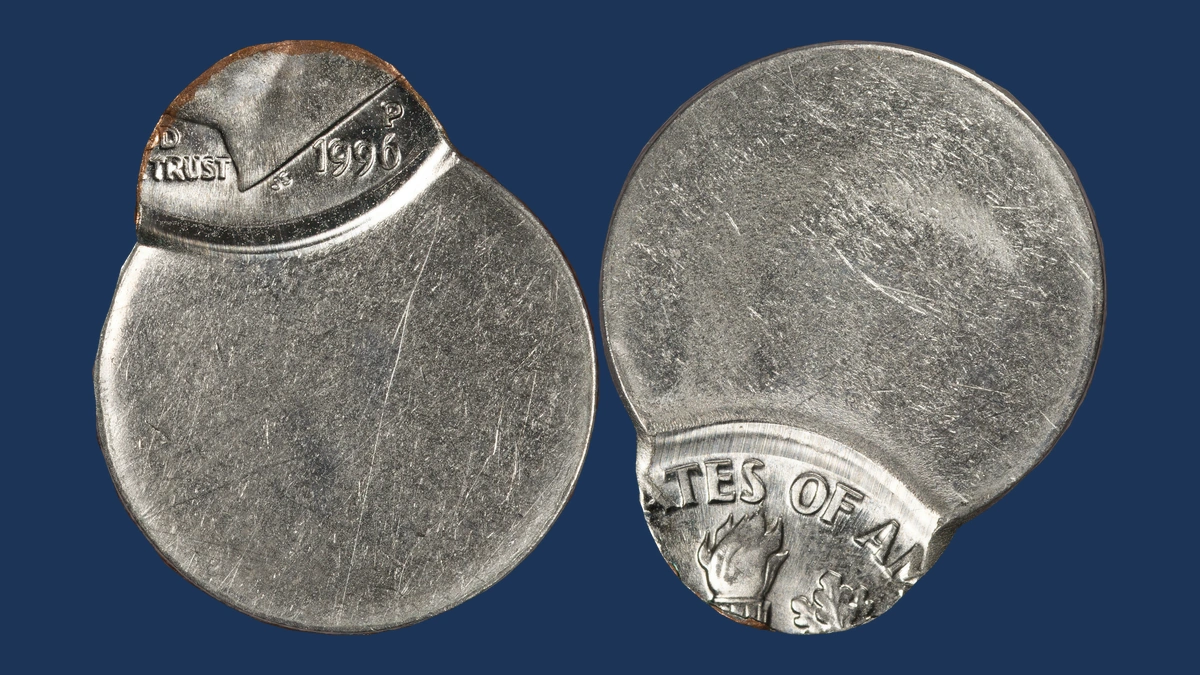
More than half of the intended design missed the blank on one 1996-P dime. The catalog describes a fifty-five-percent off-center strike toward twelve o’clock.
ANACS graded it MS64, meaning an unworn coin with visible marks. It appeared in a two-coin lot with a different 1994-P dime.
The plain area is still part of the original metal disk. It did not receive the design because the blank was misplaced between the tools, so this area should not be called a clip or treated as a second strike.
Estimated Value
The two-coin lot sold for $74 in July 2021. That total included both the 1996-P example and a 1994-P dime with a different off-center position.
For individual genuine 1996 examples, estimate $40–$750 across different shifts and conditions. A clearly readable year and a clean original blank area improve the comparison.
Each coin in that lot had its own condition and degree of displacement. Use the combined result cautiously when comparing a single dime for purchase.
How to Identify
Find the date and P first, keeping the complete outline in view. The known 1996 example is fifty-five percent off center toward the top when Roosevelt is upright.
Trace the boundary between struck design and plain metal on both faces. They should fit one blank sitting partly outside the area reached by the tools.
If only the front is displaced and the back remains centered, investigate a shifted stamping tool instead. An off-center blank moves the available metal away from both tools.
Examine the untouched crescent closely for grinding marks or flattened remains of a finished design. Such damage would suggest that somebody removed detail after minting, rather than the blank missing the tools originally.
7. 1996 Roosevelt Dime Design Blocked by Cloth-Like Material or Grease
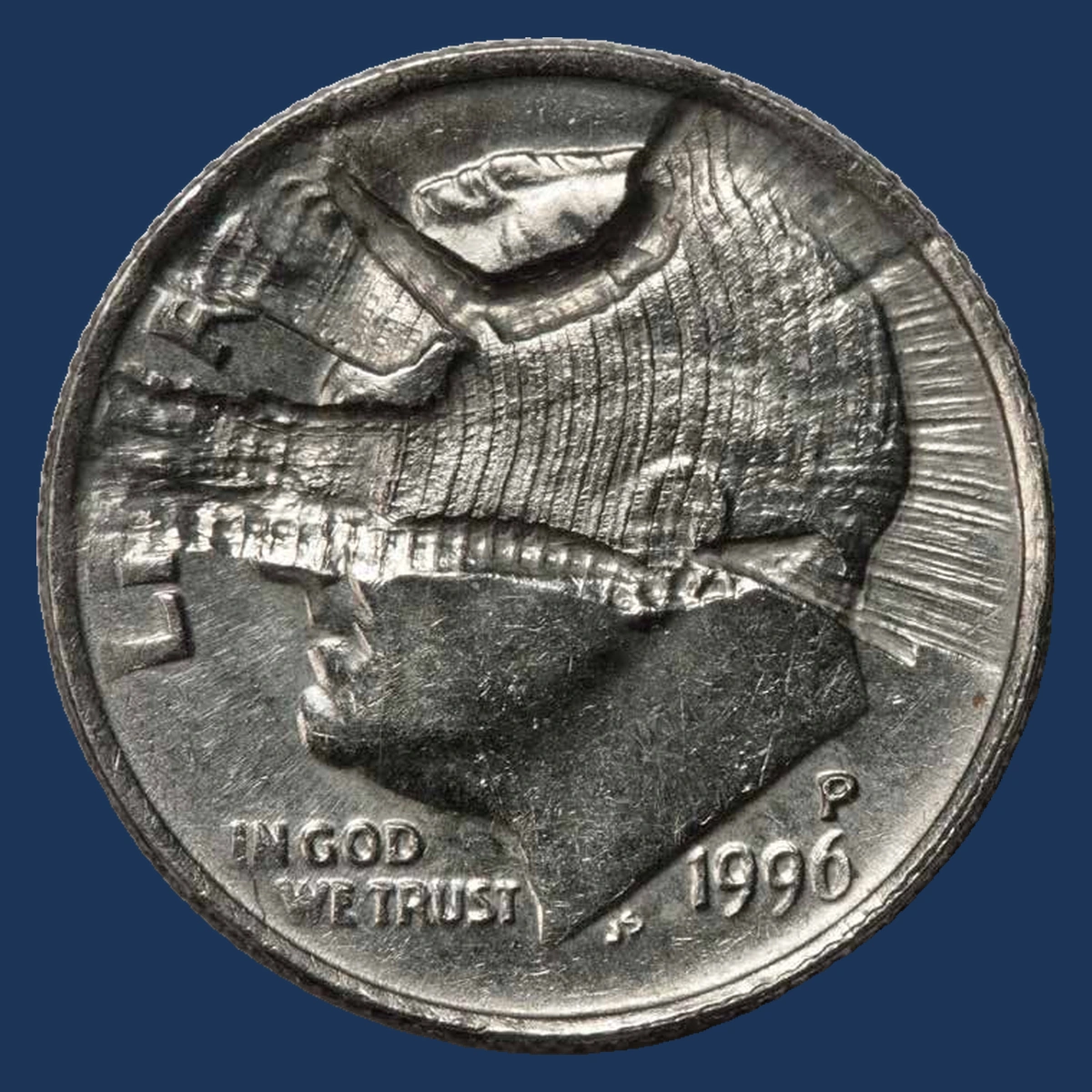
A patch across Roosevelt’s portrait can show a texture resembling woven material. It forms when an object between the tool and blank prevents the normal design from reaching that area.
A Philadelphia dime is reported with this cloth-like effect on its front. The texture is a clue, but it does not identify the precise fiber or prove that a piece remains attached.
Grease-filled detail is also reported for 1996 without a specific mint or missing letter established. Grease can block the small recesses that would normally form raised lettering on the coin.
Estimated Value
Genuine minor grease-filled features have an estimated range of $5–$75. A clear original cloth-like impression can support an estimated $100–$1,000, depending on its extent and preservation.
For comparison, a 1986-P nickel struck through material sold for $204 in June 2023. That different coin does not establish the identity or value of the dime’s reported fibers.
A large woven-looking patch across the portrait is easier to display than one vague weak letter. Original texture matters more than a colorful seller description.
How to Identify
For the portrait example, follow the texture across the affected area. Several connected threads or repeated crossing lines provide better evidence than a single rough spot.
Check where the pattern meets ordinary portrait detail. Later scraping can cut through a finished surface without producing an original blocked design.
For a grease-filled candidate, compare the weak letters with their sharp neighbors. General wear often affects nearby high points as well.
Look for pits, residue, or groups of cleaning scratches before deciding that the Mint caused the interruption.
Photograph the full affected face and a close view of its boundary. Describe only the texture that survives; the appearance alone cannot establish an exact fiber material or an attached object.
8. 1996 Roosevelt Dime Smooth Indent with a Broadstrike
An overlapping blank can cover part of a dime when the tools strike. Instead of receiving its normal design, the covered area becomes a smooth depression called an indent.
A 1996-P example combines a twenty-percent indent with outward spreading beyond the usual border. PCGS graded the coin MS66, an unworn grade with few marks.
The hollow and expanded outline tell two parts of the same striking accident. One area was covered by another blank, while the exposed metal spread outward without the usual restraint around the edge.
Estimated Value
For a comparable genuine indent-and-broadstrike dime, estimate $150–$1,250. A clearly formed depression beside a readable date helps explain the accident.
The twenty-percent figure describes the hollow on the cataloged coin, not its value or the amount of metal missing. The blank remains present beneath that depressed area.
A clean hollow and smooth spreading usually display better than a damaged surface. Strong remaining letters and a readable year help collectors recognize the whole accident.
How to Identify
Locate the depression and trace its complete boundary. Note which face actually carries it rather than assigning a face from the general error name.
Examine the surface inside the hollow. A plain indent differs from a recessed backward portrait transferred by a previously struck coin.
Turn to the expanded border and check how the remaining design flows into it. The outline should support missing collar restraint during the same event.
Look for sharp impact damage or later crushing around the hollow. Those can depress a finished coin without reproducing an original overlapping-blank strike.
Use side lighting and a full-coin photograph together. The close view shows depth, while the complete outline keeps the twenty-percent description in perspective.
9. 1996 Roosevelt Dime Brockage with an Expanded Outline
A struck coin trapped against the next blank can press its design into that blank. The copied image comes out sunken and backward, an effect called a brockage.
Philadelphia examples from 1996 combine this transfer with a wider, broadstruck outline. Cataloged front-image examples include separate NGC MS66 and MS67 coins.
A PCGS MS65 example has twenty-five-percent front brockage, while another PCGS MS66 piece has forty-five-percent back brockage. The face and percentage belong to each individual specimen, so those descriptions should not be combined into one double-sided error.
Estimated Value
Comparable genuine brockage-and-broadstrike dimes have an estimated range of $100–$1,500. The visibility of the backward image and condition of the surrounding surface strongly affect appeal.
Published auction records list $144 and $192 for the separate NGC MS66 and MS67 front-brockage coins in July 2021. Those modest results concern their particular images and preservation.
A larger percentage may be easier to display, but it does not guarantee a higher price than a clearer smaller transfer.
How to Identify
Read any letters within the unusual impression backward. Then use side lighting to confirm that the transferred design sinks into the surface rather than standing above it.
Identify the affected face before comparing percentages. The cataloged twenty-five-percent example concerns the front, while the forty-five-percent example concerns the back.
Follow the copied details toward their boundary and check the expanded outer outline. Both features should fit an original strike against another coin.
Later squeezing between finished coins can also transfer impressions, so inspect for flattening and damage across the normal design. Match several connected features with a documented example instead of relying on one reversed letter or the total width alone.
10. 1996 Roosevelt Dime Repeated Strikes with a Shift or Large Spread
A dime can receive another blow if it does not leave the press normally. Moving between blows creates another position of the design, sometimes very close to the edge.
One 1996-P example has a second strike ninety-five percent off center and a PCGS MS61 grade. Only a small area could meet the tools during that later strike.
A different dealer-described Philadelphia coin was struck repeatedly without rotation and spread to roughly nickel size. That size comparison describes its expansion, not a dime design struck on a nickel blank or a measured final diameter.
Estimated Value
Estimate $100–$2,000 for confirmed repeated-strike examples across different arrangements and conditions. A recognizable second image is more useful than a dramatic percentage without visible supporting detail.
The dealer’s older listing for the broadly spread piece showed a $32 minimum bid. That figure is neither a completed sale nor a price for the separate PCGS coin.
Distinct surviving portraits or letters are easier to follow than nearly overlapping traces. Scratches or crushed detail can reduce even a dramatic repeated strike’s appeal.
How to Identify
On the ninety-five-percent example, begin at the edge where the later blow left its small impression. Trace a recognizable design fragment into that separate position, then compare it with the earlier image.
The widely spread example needs a different check. Look across the enlarged surface for repeated details that stay in the same direction, since this coin was described as struck without rotation.
A nickel-sized outline alone does not prove another strike. Check the edge and surface for flattening caused by later pressure, and look for original design continuing into the expanded metal.
Keep photographs of both faces together while mapping the impressions. A distinct second portrait or group of letters is stronger evidence than one wide or flattened letter.
11. 1996 Roosevelt Dime Overstruck with a Penny Design
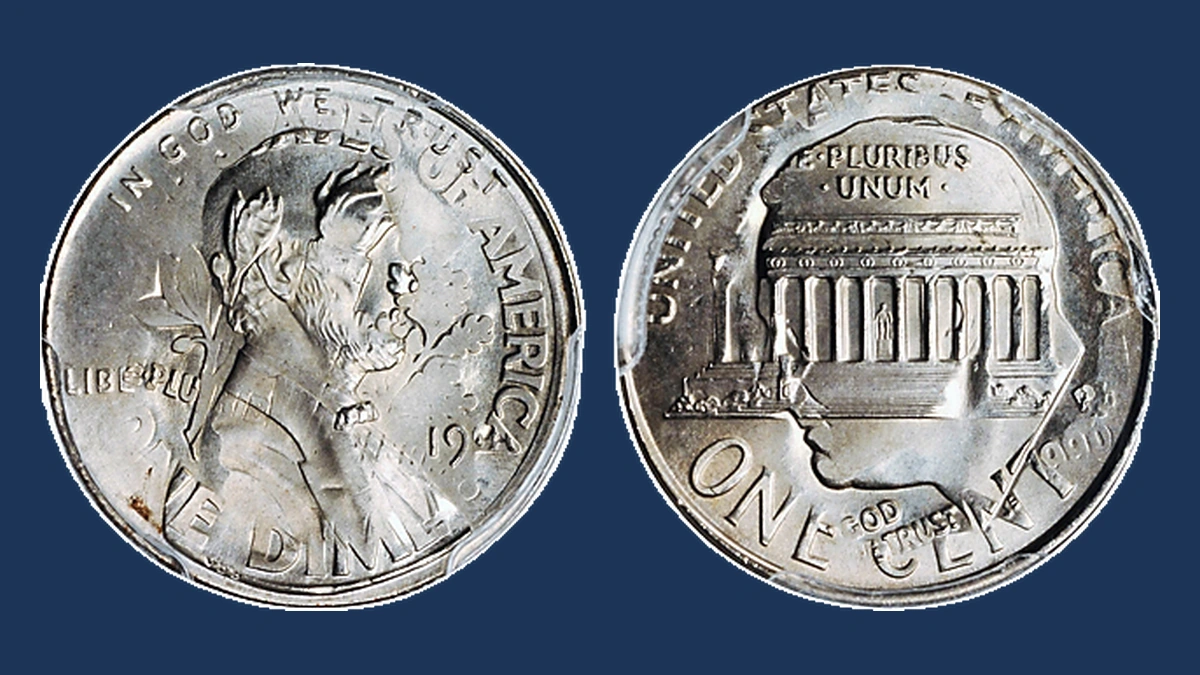
Roosevelt and Lincoln share the front because this dime passed through a cent press after its original strike. The newer cent design overlaps the earlier dime design.
The two denominations on one coin make this a double-denomination error. The documented piece began as a 1996-P dime and later received a 1996 cent design.
NGC graded it MS66, an unworn grade with few marks. Roosevelt’s ear lies over Lincoln’s cheek, and the surviving designs reveal the sequence more clearly than the coin’s color or its resemblance to a silver-colored penny.
Estimated Value
The same-year double-denomination example sold for $747.50 in April 2011. Estimate $750–$3,500 for comparable authenticated combinations with readable identities and attractive surfaces.
A 2001 cent over a 2001-P dime brought $1,320 in September 2025, offering a more recent different-year comparison. It is not a resale of the 1996 coin.
Both denominations describe one physical piece. Their face values and separate designs are not independently priced items.
How to Identify
Trace a dime feature beneath the cent impression before looking at the color. Roosevelt or the torch must survive to show that a finished dime received the later design.
Inspect the overlapping lines with a magnifier and follow which details cross others. An unused dime blank would not supply an older Roosevelt portrait.
Read both surviving years and keep the mint identities separate. The documented example uses a 1996-P host, rather than a dime from an earlier year.
Check the edge for seams, added metal, or later novelty stamping. The original overlapping designs need to explain one continuous piece of metal; a specialist should confirm that sequence before the comparison price is applied.
Conclusion
A stepped edge, missing metal, and an extra portrait each tell a different story about a 1996 dime. The estimated $5–$3,500 range reflects those differences as well as condition.
Keep the original date and mint tied to the particular coin. On a repeated strike, follow each image separately; on a clip, distinguish missing metal from an area that simply never received the design.
Clear photographs of both faces make those comparisons much easier.