1979 Quarter Error List with Pictures

A split D and a second portrait tell very different stories. Among 1979 quarter errors, a coin struck three times brought $747.50 in June 2006.
Estimated values here span $1 to $3,000, from a damaged mintmark punch to a thin metal layer struck separately. The familiar Filled S and Clear S on collector coins are normal mintmark styles.
Follow the pictures and checks below to separate extra metal, missing metal, and repeated designs.
1. 1979 Washington Quarter Split D from a Damaged Mintmark Punch
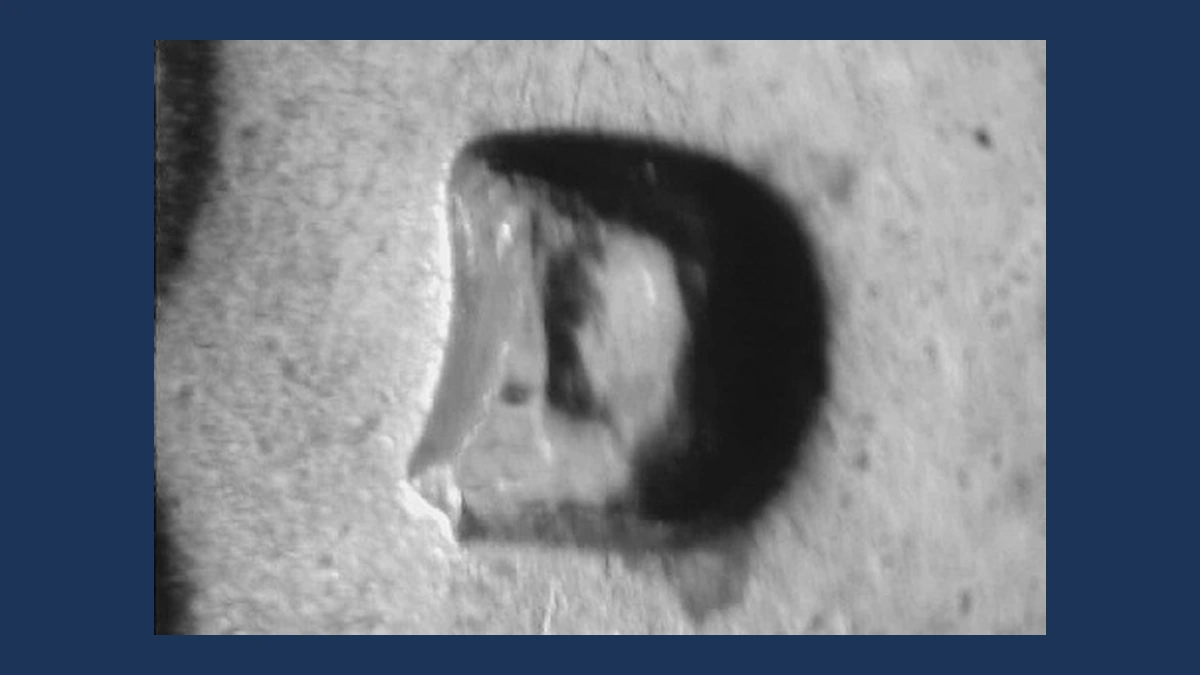
The tiny foot at the bottom of this D splits into two parts. That shape can look like a second mintmark, especially in a heavily enlarged photograph.
It began on the punch used to place the D into a die, the steel tool that stamps coins. Damage to that punch left the split shape behind.
Wexler identifies this 1979-D feature as a damaged punch, not a repunched mintmark. The difference matters because two visible points do not necessarily mean the mintmark was entered twice.
Estimated Value
Allow roughly $1 to $20 for an identifiable example, depending on condition and the clarity of the split. The estimate describes a small collectible feature rather than a major striking accident.
A sharp D on an unworn coin is easier to show than the same shape flattened by circulation. Heavy scratches or staining reduce its appeal.
The split alone does not justify the much larger prices sometimes attached to supposed double or triple mintmarks.
How to Identify
Find the D beside the lower part of Washington’s hair, then enlarge its bottom edge. A 10× magnifier or a sharp close-up is more useful here than weighing the coin.
Look for a split in the little foot at the base of the letter. Compare that exact feature with the Wexler picture, keeping both images upright.
Now trace the rest of the D. This punch defect does not require a second complete curve or another upright beside the main letter.
Glare can make one bright edge look doubled, so change the light and check again. If the extra line exists only as a moving reflection, it is not the fixed split shown in the catalog.
2. 1979 Washington Quarter Die Breaks, Rim Cuds, and Small Chips
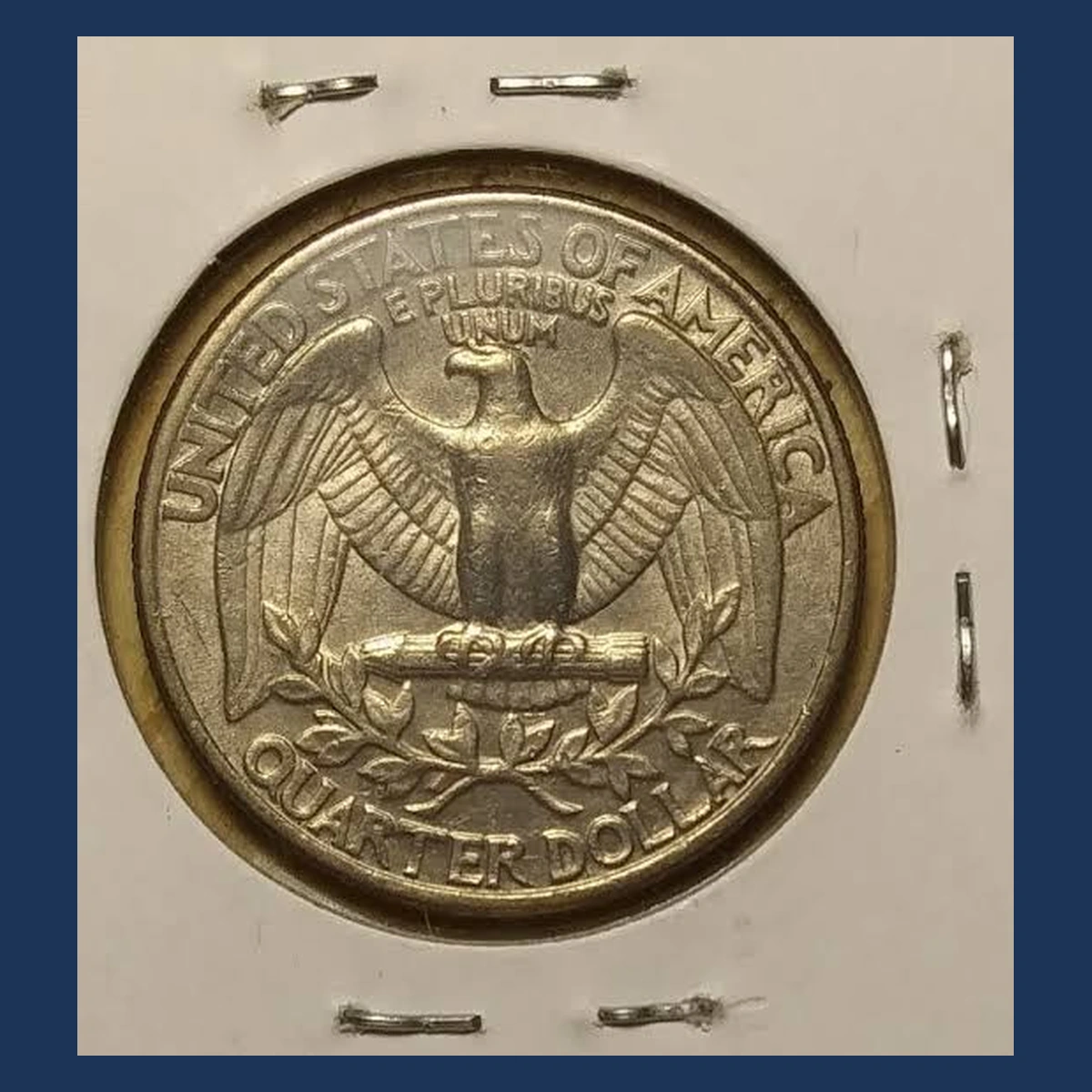
Two documented 1979-D rim breaks occupy different places. One forms a thin raised area outside UNITED on the back; another makes two stepped bumps on the front’s right edge.
A rim cud forms when part of a stamping tool breaks away at its edge. Coin metal fills the opening, leaving a raised patch.
Smaller reports include a D with its center filled and a raised “tear” beneath Washington’s eye. The tear is a seller-described feature, while a filled D needs inspection before its cause can be assigned.
Estimated Value
Small confirmed chips and rim breaks have an estimated range of $2 to $100. Larger, cleaner raised areas usually have more visual appeal than a nearly closed mintmark.
The eye-tear and filled-D reports belong toward the modest end unless examination establishes a clear mint-made defect. A nickname does not add value by itself.
For the rim examples, preserve enough surrounding design in photographs to show the exact location and the size of the extra metal.
How to Identify
Use the letters as landmarks. On the back-rim example, inspect the edge outside UNITED around nine to nine-thirty on a clock face.
The other documented coin has two raised steps near three to four o’clock on the front. These are separate examples; do not expect both patterns on one coin.
View each raised area under light from the side. A break in the stamping tool creates extra coin metal, while a later blow often pushes up a lip beside a dent.
For a filled D, check whether its center rises above the surrounding surface or merely contains dirt. Leave any deposit in place for examination.
The reported eye tear needs the same raised-metal check, including a clear view of the untouched surface around it.
3. 1979 Washington Quarter Reported Double or Triple D
Some 1979-D reports describe smaller D-like outlines above and to the right of the main mintmark. Sellers may call the appearance a double or triple D.
A true repunched mintmark begins when a letter punch enters the stamping tool more than once in different positions. Several other effects can leave extra edges around a letter, however.
This reported appearance has no established catalog match in the available examples. It should therefore be examined as a possible mintmark error, without treating the seller’s name as proof of repeated punching.
Estimated Value
A confirmed minor repunched D would have an estimated value of $5 to $150. The upper end assumes clear extra letter detail and an attractive, unworn surface.
An unexplained shadow around the D does not support that premium. Large online asking prices also do not establish what collectors have paid.
Before paying more, ask for sharp pictures of the entire mintmark and an expert identification that explains the shape of the secondary letter.
How to Identify
Photograph the D straight on, with the camera focused on the metal rather than the reflection. Include the nearby hair so the letter’s position remains clear.
Trace the alleged extra D from its upright into its curve. A short shelf or isolated bright line is not enough to draw another complete letter.
Try lighting from the opposite side and check whether the same raised letter parts remain visible. Reflections shift, but a genuine extra outline stays in the metal.
Compare the bottom of the D with the known damaged-punch example, which has only a split foot. If separate letter parts remain above and to the right, seek an expert match before accepting a double-D or triple-D label.
4. 1979 Washington Quarter Reported Doubled Dies
Extra edges in the lettering may come from a doubled die: a stamping tool carrying a repeated part of the design. Every coin made with that tool can repeat the same feature.
For 1979, reports place front-side doubling in LIBERTY and the date. Other reports mention eagle feathers, UNITED STATES OF AMERICA, and E PLURIBUS UNUM on the back.
These descriptions do not establish one coin with all those features. Each side and mint needs its own comparison, and simple flat shelves beside letters should not be mistaken for a doubled design.
Estimated Value
The estimated range for a confirmed minor doubled die is $5 to $150. Bold separation that remains easy to see usually attracts more interest than a faint extra line.
Wear can erase the tiny details needed to identify the variety. Clear, unworn examples therefore have an advantage over badly marked or worn coins.
These reported 1979 features should be priced by their actual appearance and identification, not by the records for major doubled dies from other years.
How to Identify
Pick one area to inspect closely, starting with LIBERTY or the date on a front-side candidate. Work letter by letter rather than judging a blurred full-coin picture.
Look at corners and ends. Two rounded outlines or small separated tips can be more useful than a long, flat ledge alongside a letter.
On a back-side candidate, compare the lettering with the eagle’s feathers. Photograph any repeated detail at the same magnification so its direction is easy to follow.
Check that wear or a hit has not flattened the original edge and produced a false second outline. Normal lighting from several directions helps separate relief from glare.
A good expert comparison must match the actual side and mint of your coin, not merely the year.
5. 1979 Washington Quarter Reported Improper Annealing
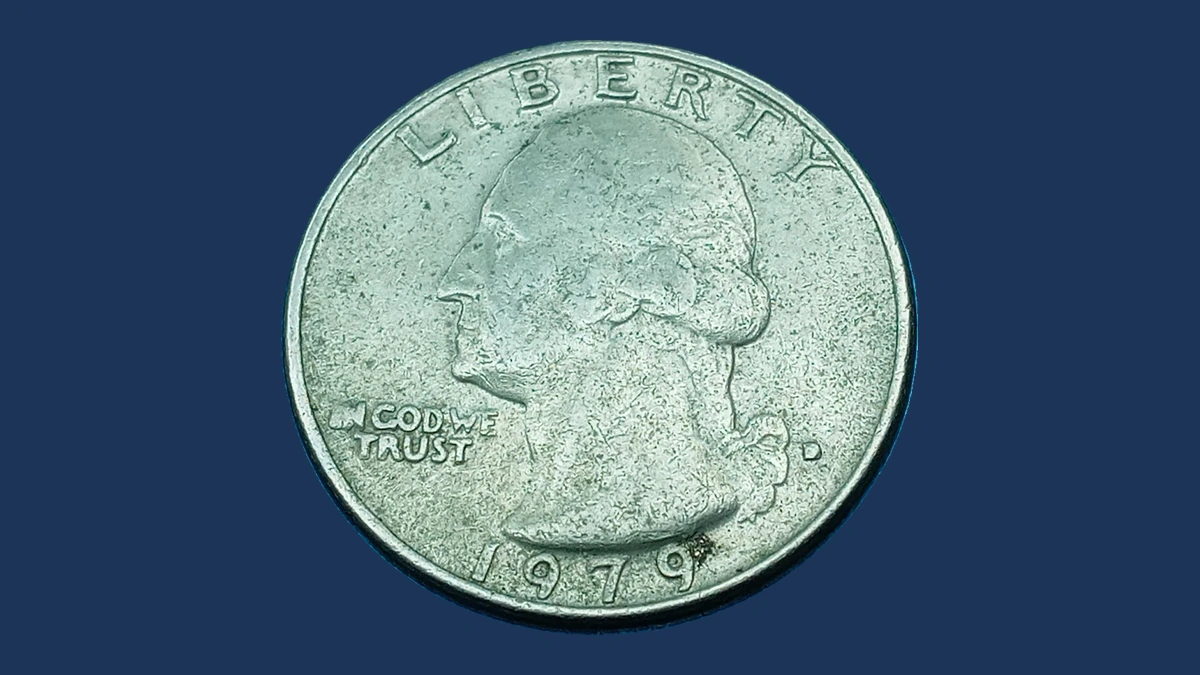
A quarter blank is heated before striking to soften the metal. That treatment is called annealing, and problems during heating can change the appearance of its surface.
Reports for 1979 mention uneven copper-brown, blue, or orange areas. Such color can make an otherwise normal-looking quarter stand out immediately.
Color is only the starting point. Later heating, chemicals, and ordinary surface changes can produce similar shades.
A brown or blue quarter therefore needs examination before its color can be linked to a mint heating error. Inspect the underlying metal as well as the shade.
Estimated Value
An authenticated heating error has an estimated range of $20 to $200. Strong, attractive color on a well-preserved coin can place it above a weak or patchy example.
A damaged surface changes that comparison. Rough corrosion, cleaning, or later heating can leave a colorful coin with little added collector value.
The range assumes the unusual surface formed during mint production. A seller’s color description alone does not establish that condition or an auction result.
How to Identify
Begin with broad, neutral light rather than a colored lamp. Photograph both faces together so differences in lighting do not create an apparent color change.
Inspect the surface between letters. Original detail should remain visible, while rough pits, bubbles, or peeling deposits may point to later damage.
Check the edge next. A normal clad quarter has pale outer layers around a copper-colored center; a brown face does not automatically mean an outer layer is missing.
For a loose coin, a scale can help distinguish a normal-weight colored piece from one that has lost substantial metal. The usual weight is 5.67 grams.
Leave the surface untouched and obtain an expert opinion on the cause of the color before treating it as a heating error.
6. 1979 Washington Quarter Struck on a Type One Quarter Blank
Before striking, an ordinary coin blank passes through a step that raises its outer edge. A Type One blank has not received that preparation.
A 1979-D quarter is recorded as having been struck on such a blank. Its main interest lies in how the rim formed when the design was stamped into the flat-edged piece.
This is a quarter blank, not the smaller nickel blank discussed later. The recorded coin also has surface residue, which describes its condition and does not represent another minting error or a missing outer metal layer.
Estimated Value
Type One quarter-blank strikes have an estimated value of $25 to $200. The recorded 1979-D sold for $38 in January 2023 with an AU50 Details assessment and surface residue.
AU50 indicates light circulation wear; “Details” flags a condition problem that prevents a normal numerical grade. That problem helps explain the modest result.
A cleaner example with a well-supported identification could bring more, especially if its unusual rim formation remains easy to see.
How to Identify
Start by reading the full description on any grading holder. “Type One Blank” identifies the missing rim-preparation step; it does not by itself name a different denomination.
Compare the edge and rim with a normal 1979-D quarter of similar wear. Follow the rim around both faces, noting how the raised border developed during striking.
A weak rim alone is not enough. Wear, an uneven strike, or damage can also leave part of that border low.
For a loose candidate, record its weight and diameter: a normal quarter is 5.67 grams and about 24.3 millimeters. A much smaller piece calls for a different explanation.
Keep photographs of any residue, but do not remove it to improve the rim’s appearance. This subtle blank error benefits from professional examination.
7. 1979 Washington Quarter Broadstrike
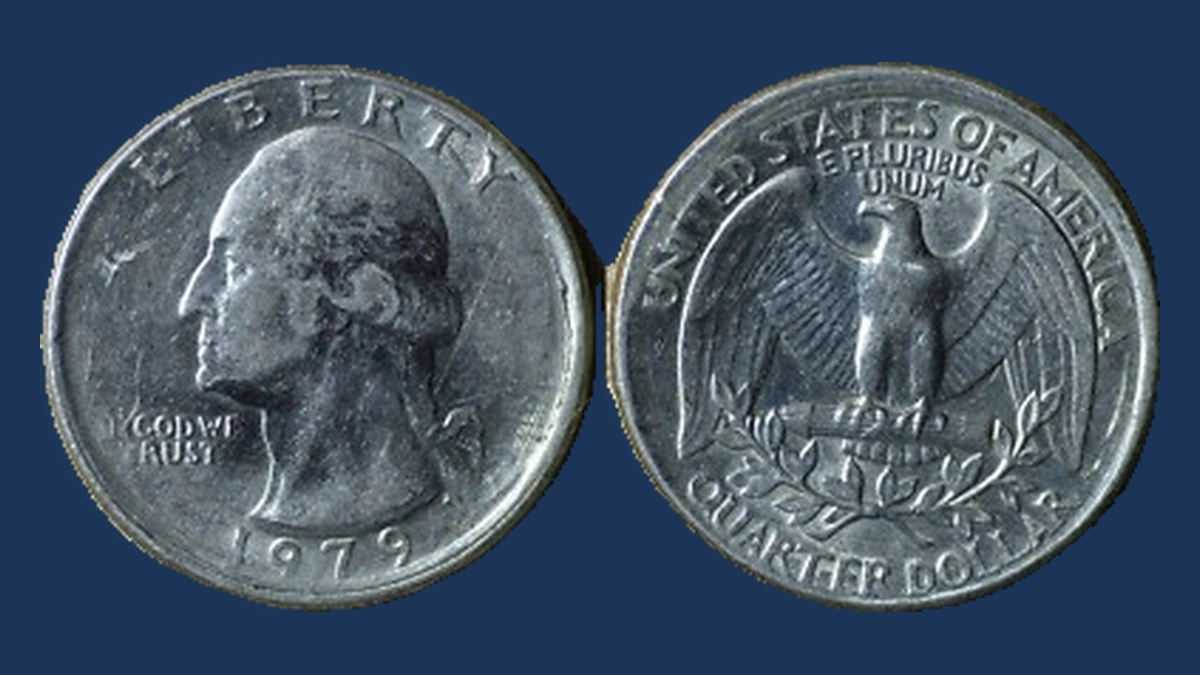
A broadstrike can leave a quarter wider than usual while keeping the whole design on the coin. The metal spread beyond its normal boundary during the strike.
The missing restraint is the collar, a ring that controls the edge and gives a normal quarter its grooves. Without that restraint, the blank can expand outward.
An unworn 1979 example graded MS63 illustrates this error. A different MS66 example appeared in a two-coin auction lot, so the condition and price of those pieces should not be treated as interchangeable records.
Estimated Value
For a typical broadstrike, estimate $20 to $200. The MS63 example sold for $49 in July 2022, showing that a clear mint error can remain affordable.
An expanded edge with an intact date and balanced design usually displays better than a heavily damaged piece. More dramatic spreading can increase interest, provided the coin remains genuine and attractive.
A two-coin lot containing another year cannot supply a separate price for its 1979 quarter without an individual valuation.
How to Identify
Place a loose candidate beside a normal quarter without stacking or rubbing their surfaces. Use calipers gently if an accurate diameter is needed; the normal diameter is about 24.3 millimeters.
Next, trace the outermost lettering around both faces. A broadstrike keeps the full design, even when it sits unevenly within the widened metal.
If part of the design runs off the blank, investigate an off-center strike instead. Expansion and displacement are different observations.
Look along the side for the loss of normal edge grooves, and inspect any squeezed or hammered areas for later damage. Compare the recorded MS63 coin’s freely expanded border with the intact design it surrounds.
8. 1979 Washington Quarter Reported Rotated Die
An eagle that looks upside down may be perfectly normal. United States coins use an arrangement in which the back appears upright after a top-to-bottom flip.
A rotated die occurs when one stamping tool turns away from its intended position. The two sides then have an unusual angle relative to each other.
A 1979 report describes an upside-down eagle without recording how the coin was turned. It is a candidate for this check, not a measured rotation, and the reported appearance alone does not establish an error.
Estimated Value
A genuine, clearly measured rotation has an estimated range of $20 to $250. Large angles generally attract more attention than a slight tilt that is hard to show.
The condition of the coin and the quality of the photographs still affect a sale. Buyers need a reliable view of the relationship between its two faces.
A normal coin turned from left to right can show an upside-down back and receives no rotation premium for that appearance.
How to Identify
Hold Washington upright and note a fixed point at the top of the coin. Turn it over from top to bottom, as though flipping a calendar page.
Do not spin it between your fingers or turn it from left to right. Either movement changes the result of the test.
The eagle should now appear upright. If it leans, repeat the flip while keeping the same top and bottom positions fixed.
Photograph both sides using that controlled movement, then measure the angle from the expected upright position. A holder can help preserve the relationship without handling a loose coin repeatedly.
The original upside-down-eagle report gives no measured angle, so compare your own result with normal alignment before deciding that the stamping tools were rotated.
9. 1979 Washington Quarter Reported Tilted Partial Collar
A step along the edge can show that only part of a blank sat inside the collar during striking. The collar is the ring that controls the coin’s width.
The trapped metal stays narrow, while the part above the ring spreads farther outward. If the blank was tilted, that change can rise and fall around its edge.
A seller described a no-mintmark 1979 quarter as a tilted partial-collar strike. The important feature is the three-dimensional edge, rather than an uneven-looking front rim or a tilt inferred from one photograph.
Estimated Value
The estimated range is $15 to $250 for a genuine partial-collar strike. A clear step with preserved edge grooves is usually more appealing than a faint, difficult-to-photograph change.
A strong tilt can make the error more dramatic, but it needs supporting side views. The reported 1979 seller description does not provide a measured angle or a confirmed auction price.
Ordinary rim damage should not be valued within this range simply because it makes the coin appear uneven.
How to Identify
Ask for side photographs covering the full edge, because a front-only picture hides the feature that matters. Look for a narrow band beside a wider band that spread beyond the collar.
Edge grooves may remain on the restrained portion. Follow the boundary between the bands around the coin and note whether its height changes gradually.
On a tilted strike, that changing height belongs to the coin’s original shape. Abrupt flattened patches, sharp dents, or repeated knocks can instead point to later edge damage.
Compare those side views with photographs of both faces before accepting the seller’s description. An off-center-looking portrait alone does not prove that the blank sat partly above the collar during striking.
10. 1979 Washington Quarter Clipped Blanks
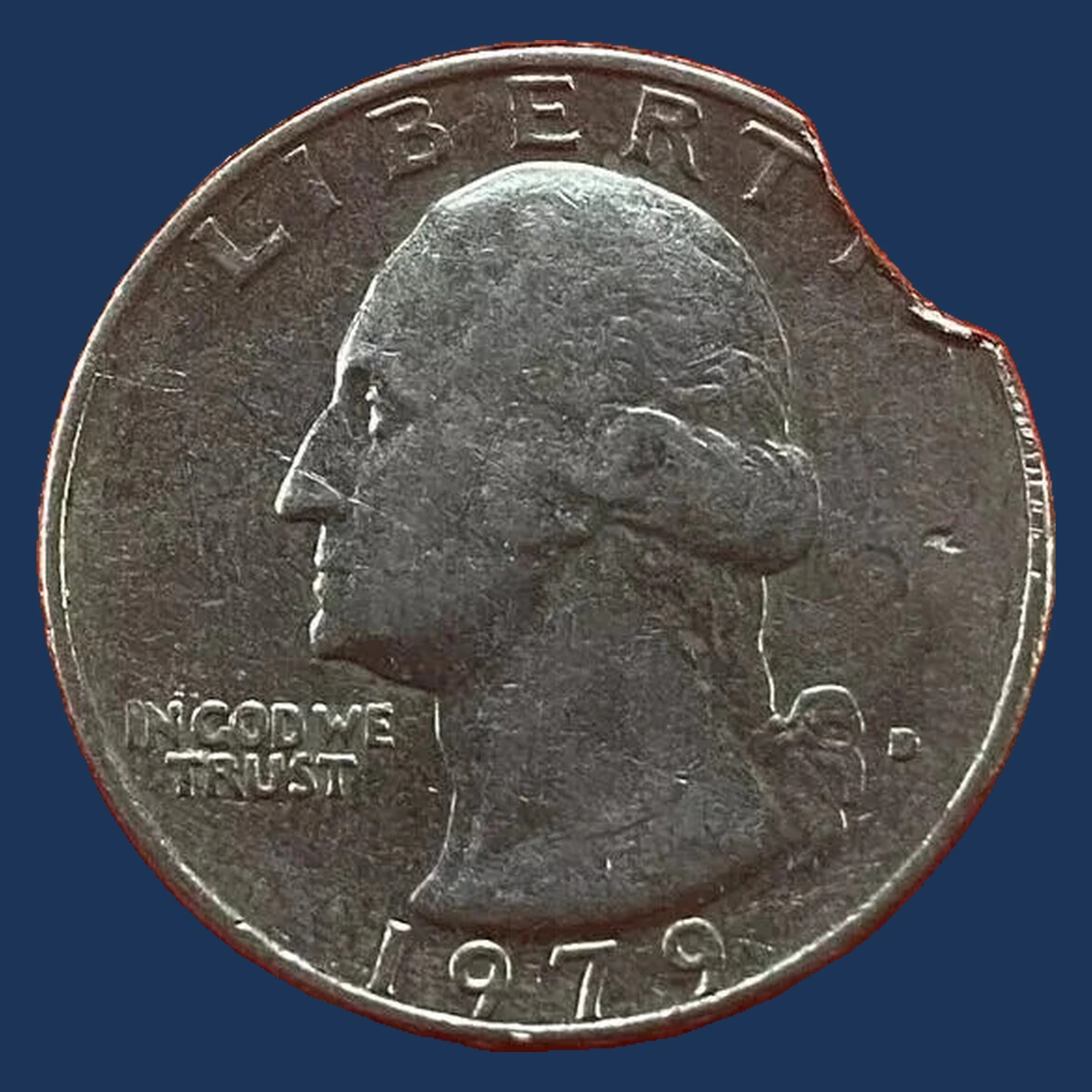
A clipped blank starts with metal missing before the design is struck. Curved gaps can form when a cutting punch overlaps an earlier hole in the metal strip.
The 1979 examples include a single curved gap, two curved gaps, and a Denver coin with a straight missing edge. These are different shapes of the same blank-making problem.
One especially dramatic coin combines a 37% clip with a strike 20% off center. Its open gap is missing metal, while its untouched crescent is metal that never received the design.
Estimated Value
Clipped examples have an estimated range of $10 to $500. A double-curved-clip coin graded MS65 sold for $21 in December 2008; a Denver straight clip brought $15 in September 2006.
The combined 37% clip and 20% off-center coin sold for $288 in July 2021. That amount covers the whole coin, including both features.
Gap size, remaining date, surface condition, and the ease of recognizing the mint-made shape all influence the price.
How to Identify
First decide which part is actually absent. On the combined error, draw a mental line around the metal that remains: the blank crescent still belongs to the coin.
Examine the exposed edge of each missing section under magnification. Smooth-looking boundaries alone are not proof, so check nearby lettering and the way metal flowed during striking.
A weakened opposite rim can support a clip, although it is not present on every example. Later saw cuts or filing marks point toward damage instead.
For two curved gaps, inspect each opening separately rather than assuming both have the same origin. On the straight clip, pay attention to the two ends where the cut meets the round edge.
A loose clipped coin should generally weigh less than a full 5.67-gram quarter.
11. 1979 Washington Quarter Off-Center Strike
The blank was not centered beneath the stamping tools, leaving part of the design off the metal. An untouched crescent remains on the opposite side.
A recorded 1979 example is 30% off center toward two o’clock. Another is described as 40% off center, with a different condition history.
These percentages describe how much of the design missed the blank, not how much metal disappeared. A no-mintmark quarter also should not automatically be assigned to Philadelphia, because West Point produced quarters without a mintmark during this period as well.
Estimated Value
An estimated $50 to $500 covers many collectible off-center 1979 quarters. A readable date, a dramatic blank crescent, and undamaged surfaces tend to move an example upward.
The 30% off-center MS63 coin appeared in a $408 two-coin lot in January 2022. The other quarter was a different year, so $408 is not a single-coin result for 1979.
Missing dates and heavy marks can reduce appeal even when the displacement is visually strong.
How to Identify
Find the date before estimating the size of the error. A partial date should not be completed by guesswork just because a similar auction coin exists.
Check both faces for a design that runs off the metal in the same general area. The untouched part of the blank should remain visible opposite that displacement.
A shifted front with a normally centered back calls for a different explanation, such as a misaligned stamping tool. A broadstrike, meanwhile, retains the full design.
The recorded 30% example points toward two o’clock when the front is upright. Do not borrow the different direction of another coin photographed beside it.
Finish with the blank crescent itself: it is solid metal, not a clipped-out gap or an added piece.
12. 1979 Washington Quarter Missing Front Clad Layer
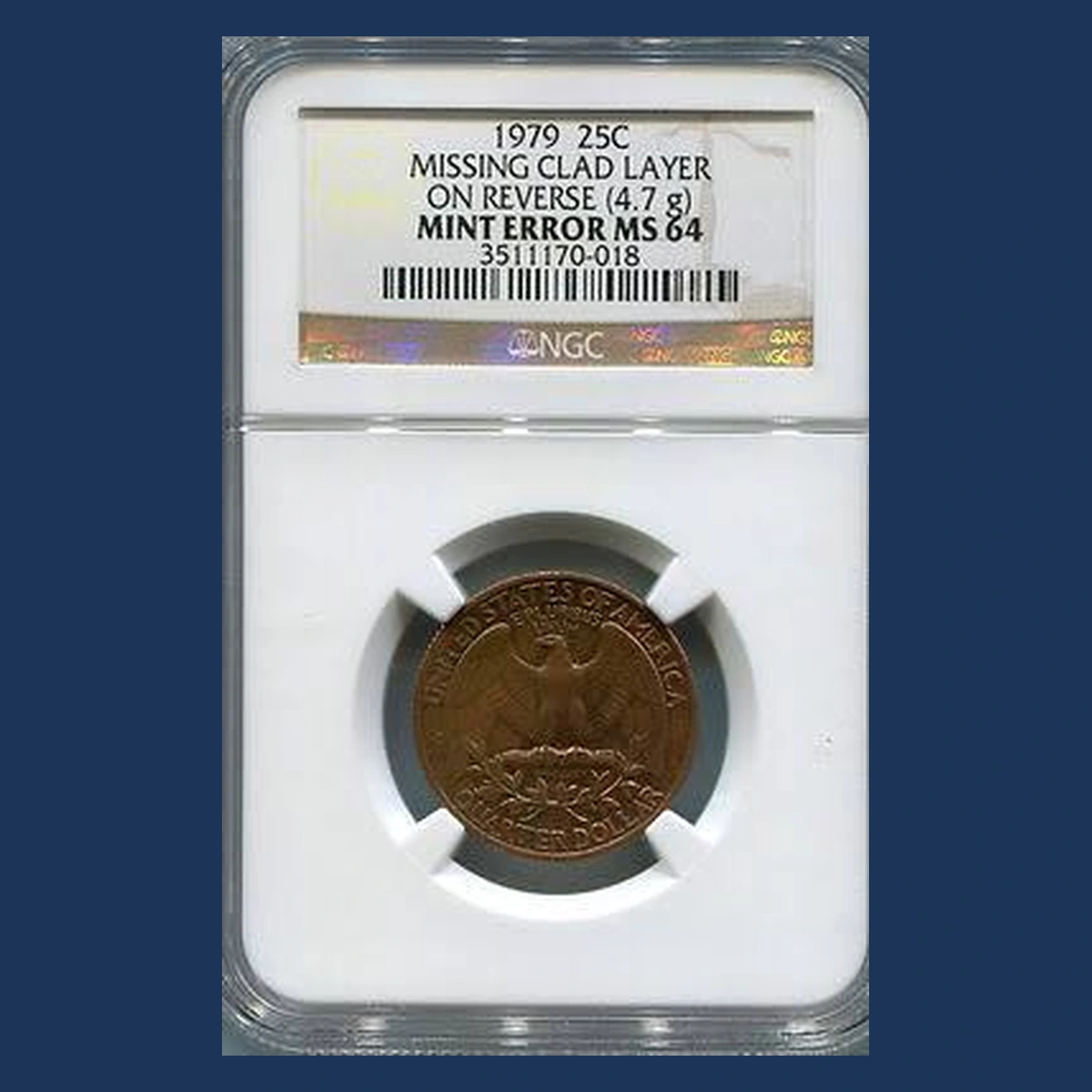
A normal quarter has pale outer metal layers over a copper center. When one outer layer is absent, the exposed face can show the copper core instead.
Several 1979 examples lack the front layer. Recorded no-mintmark coins weigh 4.7 grams, while separate Denver examples weigh 4.6 grams.
The front design remains visible on the exposed metal, and the back retains its pale covering. These coins are different from a quarter that merely turned brown, and from a detached outer sheet struck on its own as a separate piece.
Estimated Value
Estimate $50 to $500 for a confirmed missing-front-layer quarter. No-mintmark examples weighing 4.7 grams sold for $66 in March 2014 and $84 in December 2015.
A Denver MS64 coin weighing 4.6 grams brought $69 in July 2011. A different Denver MS63 example, also 4.6 grams, sold for $264 in November 2020.
The spread shows why grade alone cannot determine the price; surface appearance and collector interest also matter.
How to Identify
For a loose coin, start with a scale accurate to at least one hundredth of a gram. Compare the result with a normal quarter’s 5.67 grams.
The recorded 4.6- and 4.7-gram examples are useful comparisons, not universal target weights for every candidate. Keep each weight attached to the actual coin measured.
Now compare the faces under the same light. A copper-colored front beside a pale back supports the proposed missing-front-layer pattern.
Use an edge view to check the remaining layers. Grinding away a face after minting can also reduce weight, but it leaves damage rather than an undisturbed struck design.
Look closely at Washington and the letters for original detail continuing across the exposed surface. Do not scrape the color to test it.
13. 1979 Washington Quarter Struck on a Nickel Blank
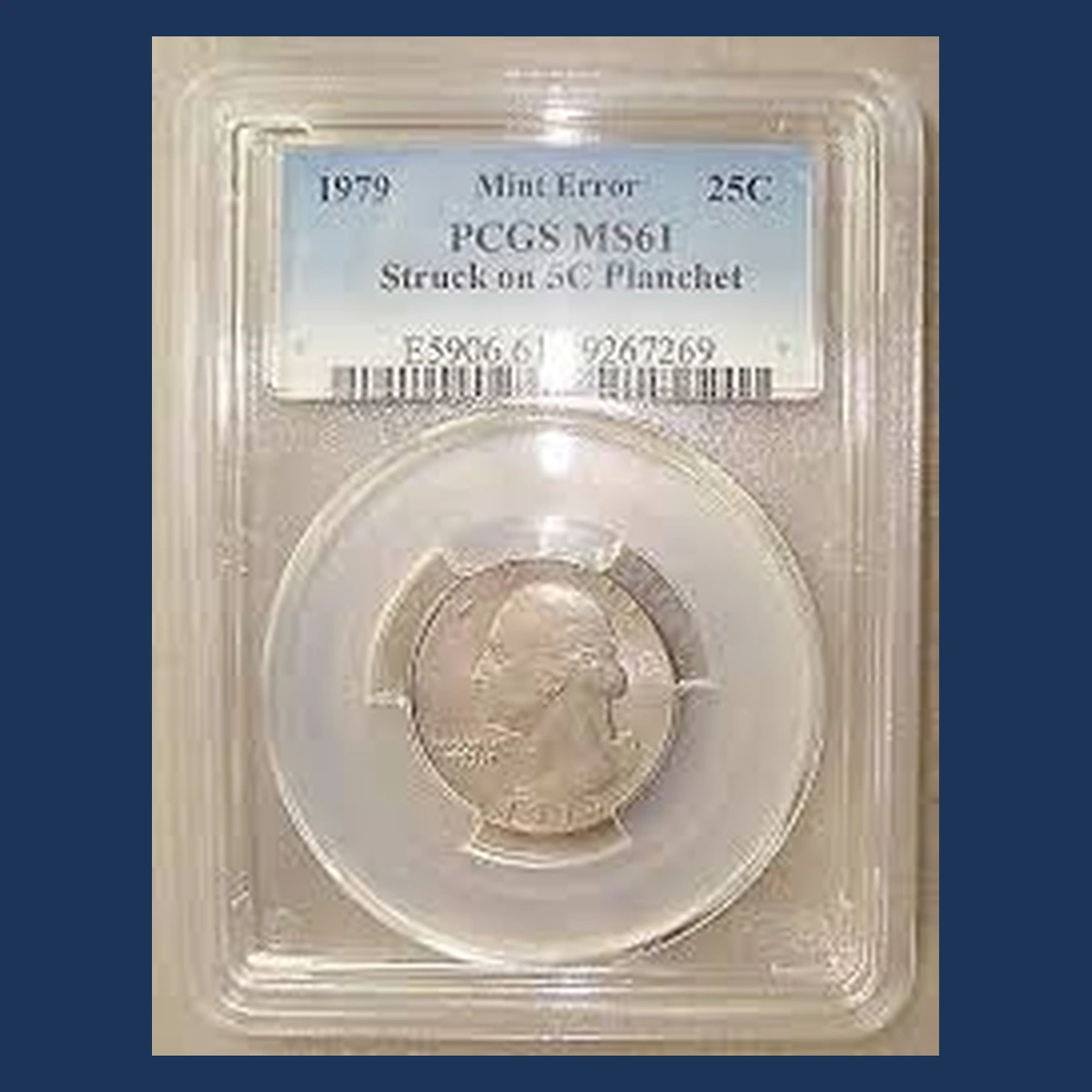
Washington’s design can run out of room when it lands on a blank intended for a five-cent coin. That blank is smaller than a quarter blank and has a different metal structure.
Ordinary nickel blanks are solid copper-nickel alloy, rather than a copper center between pale outer layers. Several 1979 quarter errors of this kind have recorded weights around five grams.
One example specifically used a Type One nickel blank, meaning its edge had not yet been raised before striking. It combines the wrong denomination’s blank with that missing preparation step.
Estimated Value
These wrong-blank quarters have an estimated range of $175 to $1,200. An MS64 example weighing 5.0 grams brought $199.75 in June 2013; an MS66 example brought $600 in January 2022.
The Type One nickel-blank coin, graded MS65 and weighing 5.0 grams, sold for $186 in March 2021. A separate 5.04-gram AU58 coin brought $192 in March 2025.
Clarity of the date and the remaining design can matter as much as the condition number.
How to Identify
Check the metal before comparing tiny details of the portrait. A nickel blank lacks the copper-colored center stripe normally visible along a quarter’s edge.
For a loose candidate, measure its weight and diameter without squeezing the rim. A standard nickel blank starts at 5.0 grams and about 21.2 millimeters, although striking can spread it.
Look around the outer lettering for details lost because the smaller blank could not hold the quarter design. Make sure the date really identifies the piece as 1979.
The Type One example also lacks the normal preformed raised edge, but a weak rim alone cannot establish that identity.
Finally, search for an older nickel design beneath Washington. Its presence would suggest a finished nickel was struck again, rather than an unused blank.
14. 1979 Washington Quarter Struck Through Foreign Material
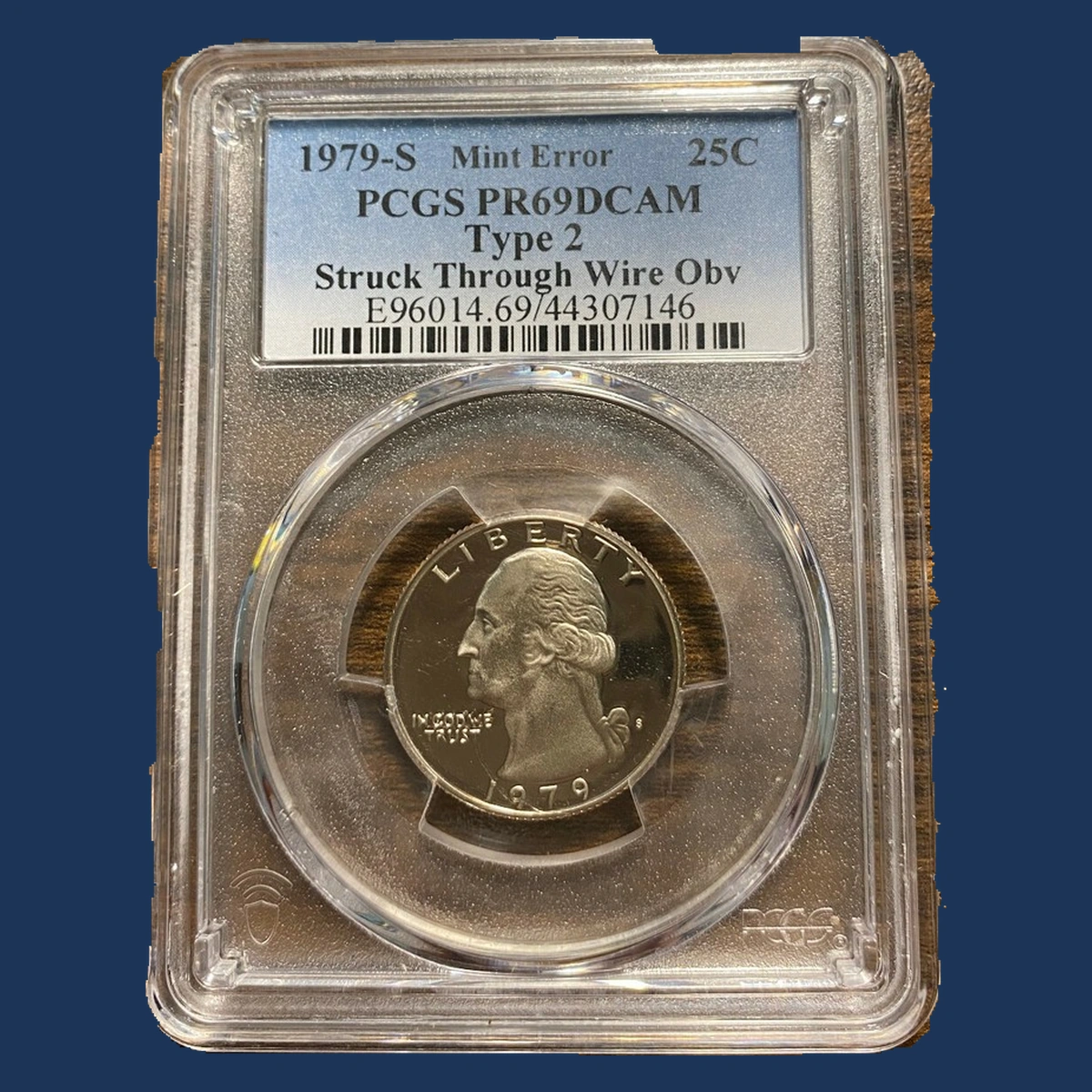
Something between the stamping tool and the blank can interrupt the design. A retained staple is especially striking because the object remains pressed into the finished coin.
A 1979-D example has such a staple on the front. Separate no-mintmark pieces include a metal-impression error and a coin affected on both faces.
Other Denver reports describe weak portrait or lettering details caused by grease blocking the tool. Those shallow areas differ from a filled D that rises above the surface; grease does not explain raised metal inside the letter by itself.
Estimated Value
This broad category runs from an estimated $5 to $1,500. Mild grease-filled details occupy the lower end, while an identifiable retained object can command much more.
The Denver retained-staple coin brought $660 in October 2021. A separate metal-impression example sold for $39 in December 2024, and a both-faces example brought $59 in September 2025.
An object’s survival, the size of its impression, and the surrounding condition explain why these errors do not share one typical price.
How to Identify
Leave a retained object exactly where it is. Trying to lift the staple can destroy both the error and the evidence that it was trapped during striking.
Inspect how the design meets the object or its impression. Original details may stop at the obstruction, rather than being scraped away across an already finished surface.
For the separate metal-impression coin, do not assume any object still remains. A named material and a retained object are different descriptions.
Examine both faces on a coin described as struck through on both sides. The impressions need not identify what the obstructing material was.
On a grease candidate, compare the weak area with sharp nearby details. General wear affects exposed high points, whereas a blocked part of the tool can leave a local gap in otherwise stronger lettering.
15. 1979 Washington Quarter Double and Triple Strikes
A second or third strike can leave several portraits, dates, or bands of lettering on the same piece. The coin failed to leave the striking area before the tools came down again.
On a recorded triple-struck 1979 quarter, the first two impressions nearly overlap. The third sits 40% off center toward the upper right, with a slight counterclockwise turn.
Double-struck examples show different movements: one has a second strike 65% off center, while another reaches 80%. The 65% example also has later damage, which is separate from its repeated mint strike.
Estimated Value
Allow an estimated $100 to $2,000 for collectible repeated strikes. The triple-struck MS66 coin sold for $747.50 in June 2006; a matching-grade, matching-description record brought $411.25 in June 2014.
Those records may concern the same coin and should not be counted as two distinct specimens. The 80% second-strike MS63 example sold for $252 in July 2022.
Clear overlapping designs, a readable date, and freedom from later damage strengthen a coin’s appeal.
How to Identify
Choose one clear section of the design and follow each impression outward from it. A second strike should create a connected pattern, not just an isolated extra line.
On the triple-struck example, inspect LIBERTY and the date for the closely overlapping first two impressions. Small fins at the edge accompany that early overlap.
Then locate the much more displaced third design toward the upper right, which turns slightly from the earlier impressions. On a double-struck candidate, instead map the second portrait and the boundary where it flattened earlier detail.
Check the back for a compatible striking pattern before deciding how many strikes occurred. Keep scratches separate from that map: later damage can lower the grade without explaining away a genuine repeated design.
16. 1979 Washington Quarter Design Over a Struck Jefferson Nickel
An old design can survive beneath a new one when a finished coin enters another denomination’s press. A recorded 1979 quarter was struck over an already made Jefferson nickel.
This is more than a quarter design on the wrong blank. Remains of the nickel’s portrait, building, or lettering can reveal the earlier coin under Washington’s design.
The recorded piece has an XF Details assessment for scratches. Its host nickel’s year has not been established, so the visible 1979 quarter date should not be used to assign a year to the underlying nickel.
Estimated Value
The estimated range is $300 to $2,500, with strong surviving nickel details offering the greatest visual appeal. The scratched example sold for $408 in March 2023.
XF means the coin shows circulation wear, while the Details description flags its scratches. Those condition problems affect the comparison with a cleaner example.
A buyer should be able to recognize traces of both denominations. A smaller blank without any earlier design belongs to a different wrong-blank category and price comparison.
How to Identify
Search between Washington’s main features for lettering or shapes that do not belong on a quarter. Turn the photograph as needed to follow the older nickel design.
Try matching several surviving parts to a normal Jefferson nickel, including its portrait or the Monticello building on the back. One vague line is not enough.
Inspect places where the later quarter design crosses the earlier image. Genuine overstriking can flatten some old details while leaving others between the new features.
The metal should also suit a nickel rather than a normal layered quarter. For a loose coin, weighing can support that check, but surviving design is the key evidence of a finished host coin.
Record any visible host date separately. Never fill in missing digits from the quarter’s 1979 date.
17. 1979 Washington Quarter Struck on a Separate Clad Shell
This striking surface is only a separated outer layer of quarter metal. It is not a complete quarter with one pale covering missing.
A Mint Error News example carries a 1979 design struck 70% off center on the front clad shell alone. Much of the thin piece therefore remains outside the stamped design.
The result combines an unusual piece of metal with a strongly displaced strike. It also differs from a peeling layer still attached to a full coin: here, the outer sheet was separate when it received the design.
Estimated Value
For an authenticated separate-shell strike of this kind, the estimated range is $300 to $3,000. A readable year and a clear division between the struck and untouched areas make the piece easier to understand.
The thin metal is vulnerable to bending, so intact shape and careful storage matter. Strong evidence that the design was struck after separation is also essential.
This is an estimate for the unusual shell strike, not a reported sale price for the illustrated 1979 example.
How to Identify
Avoid pressing or flexing the thin piece. Start with side photographs that show it is a separate sheet, without the full copper-centered body of a normal quarter.
Compare the struck area with the untouched portion. The design should fit a strike on that thin sheet, rather than an outer skin peeled from an already completed coin.
Check the surviving date directly. The published description calls the strike 70% off center, but neither an exact weight nor thickness should be assumed from that percentage.
An expert examination can assess the metal and the order in which separation and striking occurred. Keep any grading holder closed during inspection.
Do not compare its weight with the 4.6- or 4.7-gram missing-layer quarters: those retain a full copper center, while this piece does not.
Conclusion
Estimated prices stretch from $1 to $3,000, but the shape of the error matters more than a dramatic nickname. A split foot on the D is quite different from another complete D.
Keep combined errors together when comparing prices, and check whether an auction amount covered several coins. A loose outer layer also needs different checks from a full quarter with one layer missing.