1983 Dime Error List with Pictures

One missing letter helped a top-grade 1983 proof dime reach $10,560 at auction in November 2014. More typical examples of that No S variety have sold for far less.
The 1983 dime error list extends from tiny mintmark details to coins struck on irregular scraps. Estimated values run from $5–$11,000, depending on the error and condition.
Follow the comparisons below to separate an absent mintmark, a displaced design, and a genuinely unusual blank.
1. 1983 Roosevelt Dime Misaligned Front Die (Estimated Up to $75)
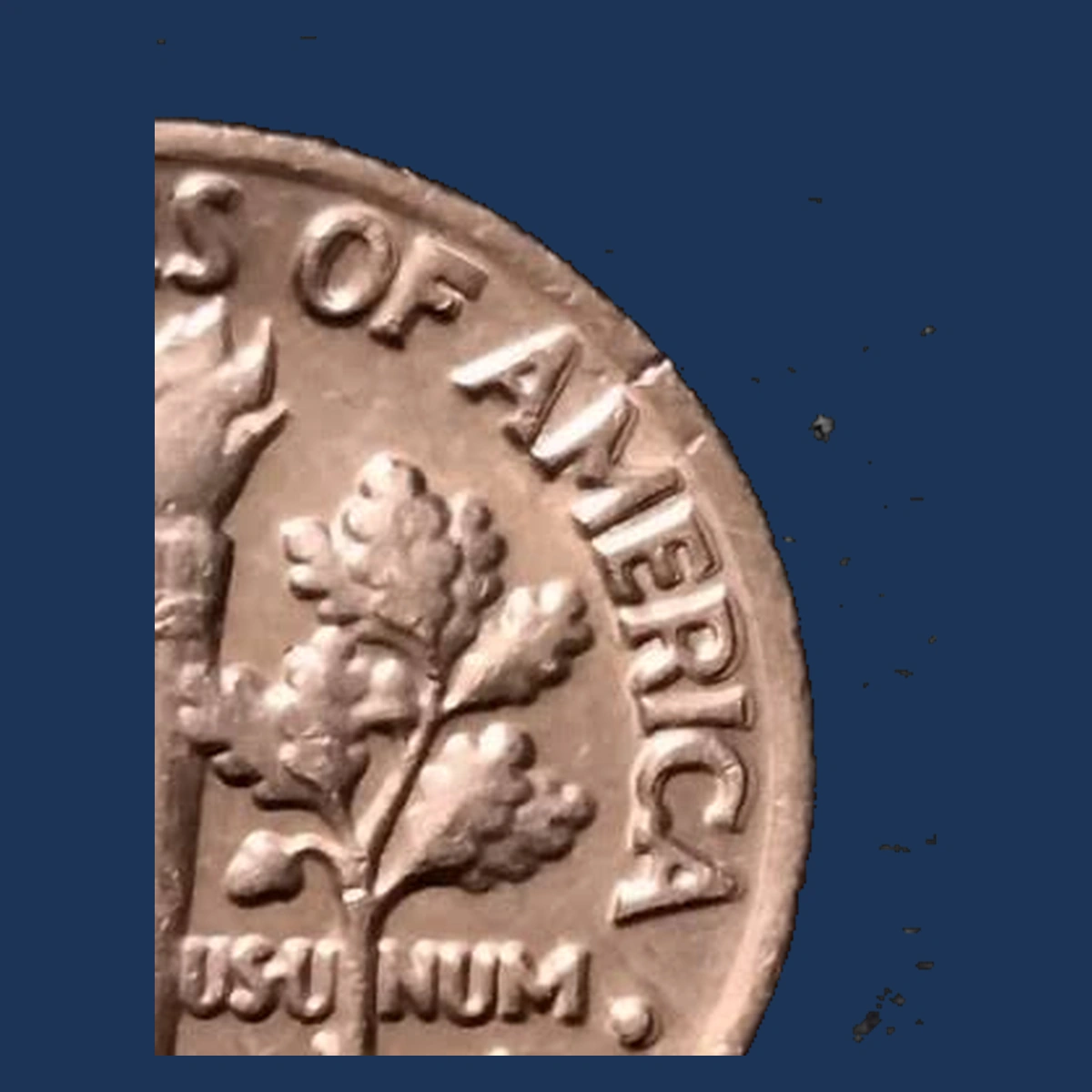
The front border can be wide on one side and narrow on the other while the back remains more evenly placed. That difference may show a shifted front die, the steel stamping tool.
The two tools did not line up normally over the coin. This is different from moving the entire blank away from both designs.
A Mint Error News listing reports the effect on a 1983-P dime. It does not give a direction or percentage for that example.
Small border differences occur frequently. A noticeable imbalance needs both faces checked before it is described as a minting error.
Estimated Value
For a noticeable front misalignment, estimate $5–$75 across worn through unworn examples. A tiny difference between the two borders usually attracts little interest.
The historical 1983-P listing establishes a reported example but supplies no sale result used here. This range is a practical estimate for visible displacement, not a quoted auction price.
The back matters as much as the front. Paying an off-center premium for a coin with only slight one-sided border imbalance can overstate its appeal.
How to Identify
Photograph both faces straight on, with the same enlargement. Compare the gap between the outer lettering and rim at several points.
Use a 10× magnifier to check whether the narrow border cuts into the design. Damage to the rim can imitate a small shift.
Normal 1983 clad dimes weigh 2.268 g and measure about 17.9 mm. Check those figures with a scale and calipers, and look for the usual edge grooves.
The reported example has P above the date. Do not assign it an angle or percentage without measuring that actual coin.
A shifted front paired with a much more evenly placed back is the quickest distinction from an ordinary off-center strike.
2. 1983 Roosevelt Dime Clipped Blank (Estimated Up to $100)
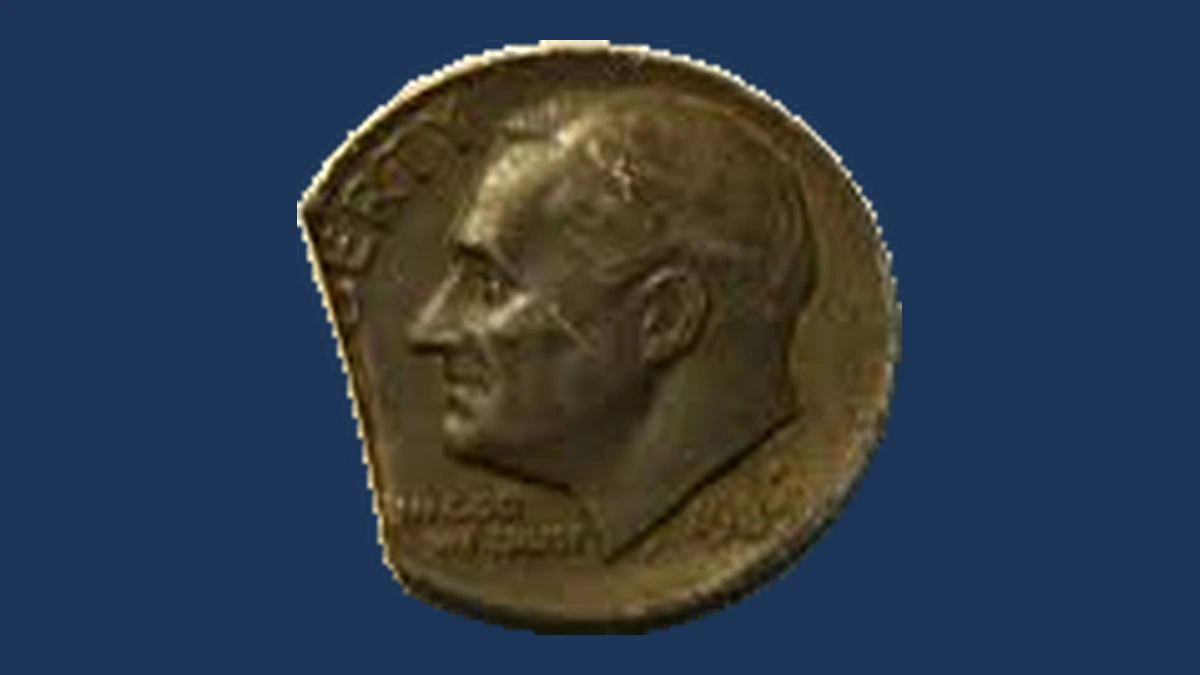
Part of the metal can be missing before a dime receives its design. Collectors call the incomplete disc a clipped blank or clipped planchet.
A curved gap can form when the blanking punch overlaps a hole already cut in the strip. An irregular strip edge can produce a different outline.
The year guide includes clips among 1983 errors but does not establish a particular mint or gap size. Those details belong to the actual coin being examined.
A later cut removes metal too. The surface inside the gap and the way the design approaches it help tell the two apart.
Estimated Value
A modest original clip can be estimated around $10–$100 in collectible worn through unworn condition. Clear shape, a readable date, and undamaged surfaces help explain differences within that range.
This is an estimate for the year-guide category, not an auction result for one specified clip. A larger gap may interest a collector, but losing the date can make the coin harder to identify.
Fresh cutting or filing does not qualify. Check the edge before paying an error premium.
How to Identify
Inspect the two ends of the gap under a 10× magnifier. Original blanking surfaces should differ from fresh saw cuts or metal pushed up by pliers.
The rim opposite a curved clip may be weak because the incomplete blank passed unevenly through the rim-forming process. That clue helps, but it is not required on every coin.
Record the weight with a scale against the normal 2.268 g. Use calipers to compare the surviving outline with the usual 17.9-mm dime.
Keep the full date and any mintmark in the photograph. Check both faces for altered metal.
Begin at the gap’s ends, looking for original struck design meeting a pre-existing omission rather than fresh cutting marks.
3. 1983 Roosevelt Dime Repunched D Mintmark FS-501 (Estimated Up to $150)
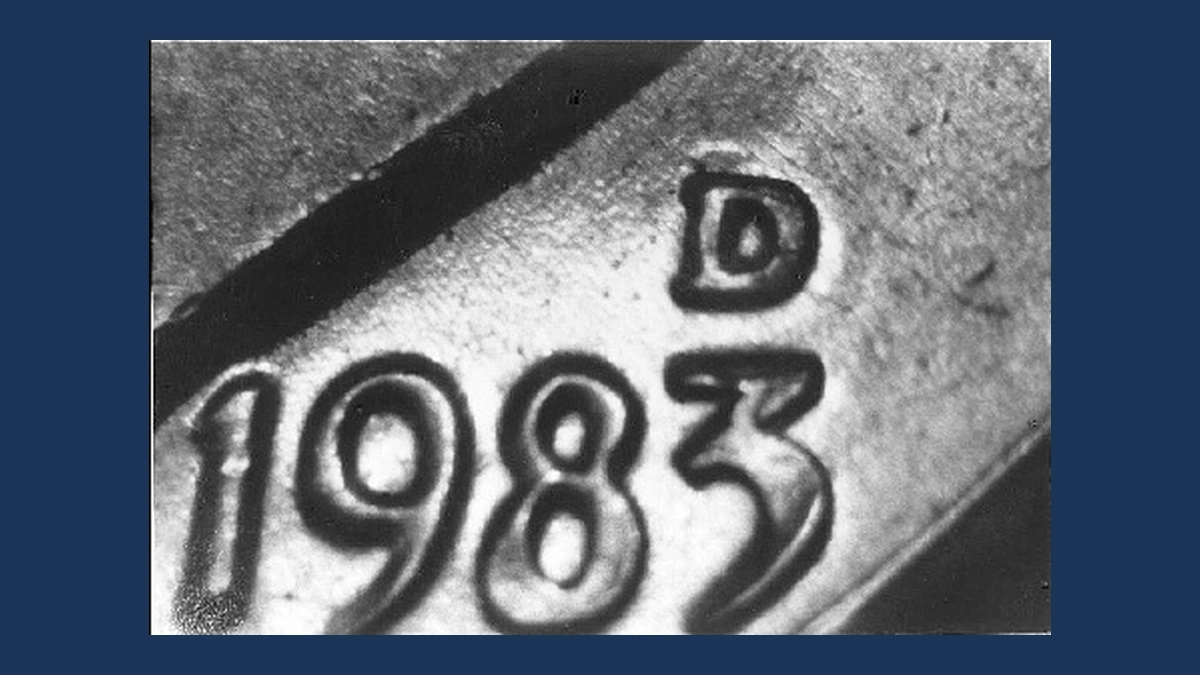
The top of the Denver mintmark can carry a faint extra D outline. A serif is the small finishing stroke at the end of a letter.
For the FS-501 variety, the earlier D sits north, or upward, from the stronger impression. Its traces appear around the upper curve and upper serif.
The mintmark punch entered the stamping tool more than once in slightly different positions. Coins made by that tool then repeated the overlapping shape.
A bright edge around D is not enough. A flat ledge from strike movement or a scratch beside the letter can look similar.
Estimated Value
An estimated $20–$150 covers recognizable examples from worn to ordinary unworn condition. A distinct upper D trace is more useful than a vague thickening of the letter.
PCGS lists FS-501 as a separate variety, but its page supplies no auction record. The price range is an appraisal, not a claimed sale.
Exceptional preservation may bring a separate premium. Do not use the price of a top-grade ordinary 1983-D dime as proof of this mintmark’s value.
How to Identify
Find D above the date, then enlarge only that letter with a 10× magnifier. Look along its upper curve and small top finishing stroke.
Compare the extra line with a complete D shape. It should fit an earlier placement of the same punch, shifted upward.
A loose example can be checked on a scale against 2.268 g and with calipers against 17.9 mm. Normal copper-nickel clad metal and a grooved edge are expected.
Move the light before deciding that a bright line is raised metal. A scratch may cut across the mintmark instead of following its shape.
The upward extra D contour is the useful first check, especially where it survives at the upper curve and serif.
4. 1983 Roosevelt Dime Broadstrike (Estimated Up to $150)
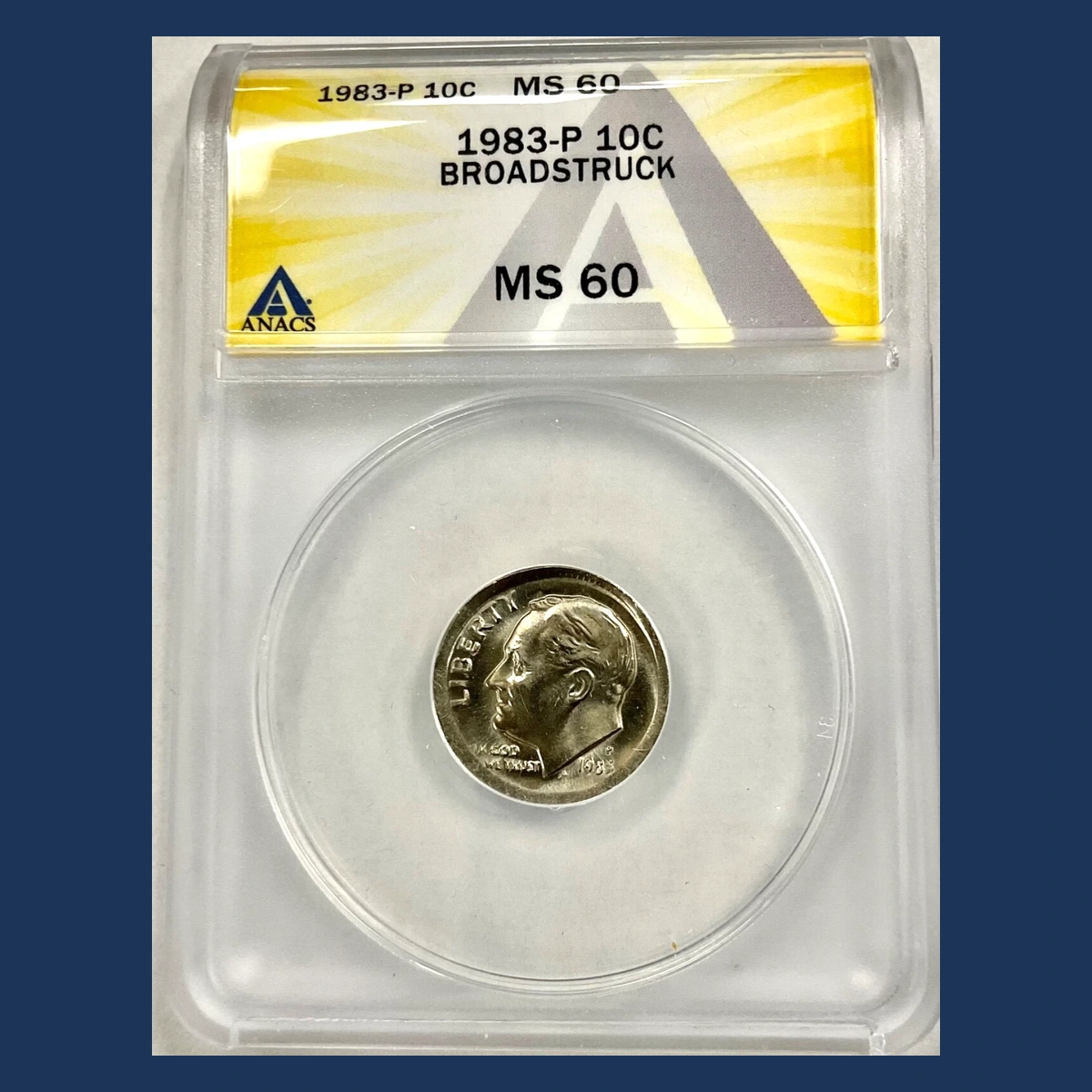
A wide outer margin can surround a complete dime design when the blank spreads beyond its usual boundary. This happens when the retaining ring fails to confine the metal normally.
That ring, called the collar, also forms the edge grooves. A full broadstrike can therefore combine excess width with a changed edge.
Year sources report the category for Philadelphia and Denver. They do not establish identical shapes or measurements for both mints.
The important feature is expansion around the design, not simply an off-center border. A coin flattened afterward can also grow wider, but its design and surfaces suffer.
Estimated Value
Use an estimated $25–$150 range for clear broadstrikes in worn through unworn condition. This is a comparison-based appraisal, with modest expansion near the lower end.
The related 1978 year guide values obvious dime broadstrikes up to about $100. That different year offers context rather than a specific 1983 sale.
A stronger, cleaner spread can justify more. A coin with crushed letters or damaged edges should not be priced as though its shape came directly from the press.
How to Identify
Check the edge before measuring the extra width. A 10× magnifier can reveal whether ordinary grooves were formed or whether the metal escaped the collar.
Calipers should record the widest and narrowest parts of the outline. Compare both with the normal diameter of about 17.9 mm.
The usual weight is 2.268 g, measured on a scale. Broadstriking spreads the existing metal instead of adding more.
Examine both faces for complete major design details. Hammering or pressing after minting can flatten raised letters and leave shiny damaged patches.
Keep P and D examples separate when comparing photographs. Look first for an expanded edge surrounding an otherwise complete struck design.
5. 1983 Roosevelt Dime Off-Center Strike (Estimated Up to $250)
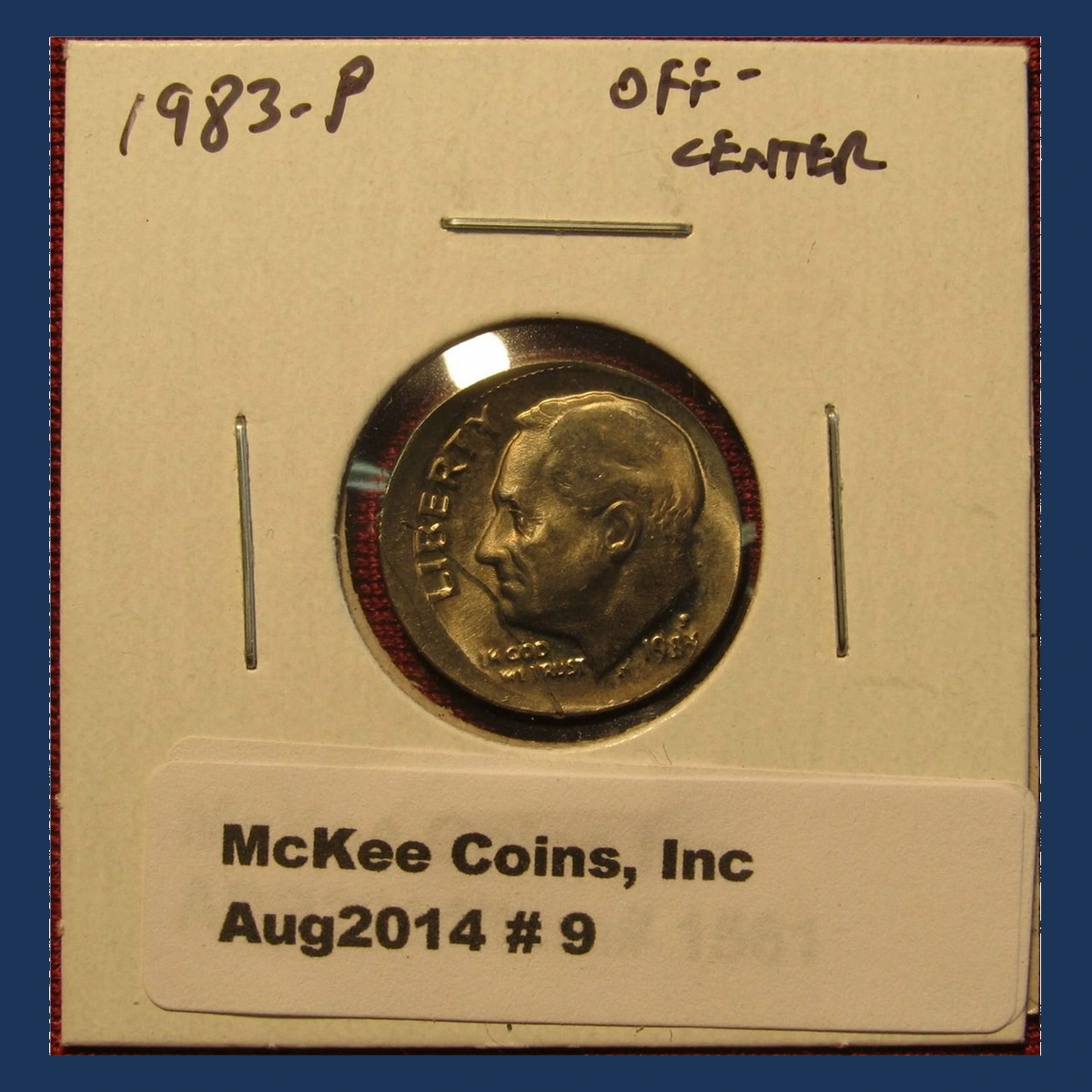
An off-center strike leaves an untouched area beside a design that no longer fits entirely on the blank. Both faces share the effect because the blank was misplaced between the tools.
Heritage recorded a 1983-P example struck 15% off-center toward eleven o’clock. ANACS graded it MS63, meaning no circulation wear but noticeable marks.
A Denver example is also mentioned by the year guide. Its direction and percentage are not established by that general report.
The Philadelphia coin gives a specific comparison. Its measurements should not be copied onto every 1983 dime with an uneven border.
Estimated Value
Estimate $25–$250 for readable-date 1983 off-center dimes, ranging from modest worn examples to clearer unworn pieces. The recorded 15% Philadelphia coin helps define the appearance covered by this estimate.
No recovered sale amount is assigned to that ANACS MS63 example here. Larger shifts can be more dramatic, but keeping the date visible also matters.
Inspect the empty surface for later alteration. Grinding away a portion of the design does not create the same collector appeal.
How to Identify
Hold the front upright and compare the Philadelphia example’s shift toward eleven o’clock. Photograph the entire coin before enlarging its blank area.
Under a 10× magnifier, examine where the design stops. An original unstruck surface should not show grinding that has erased letters or portrait details.
Check the back too. A one-sided border difference may be a shifted tool rather than a misplaced blank.
Use a scale to compare the normal 2.268-g weight, then calipers against a 17.9-mm ordinary dime. Record altered dimensions without assuming that metal is missing.
The immediate clue is interrupted design on both faces next to the same unstruck portion, with the date still identifying the coin.
6. 1983 Roosevelt Dime Strike Through a Late Die Cap (Estimated Up to $350)
A ghostlike design can form when a thin layer of trapped coin metal covers a stamping tool. That covering softens the impression reaching the next blank.
A die cap begins when one struck coin sticks to the tool. Repeated blows can spread and thin it until later coins receive only a blurred version of the design.
Heritage lists a 1983-P struck through a late cap, graded ANACS MS60. This describes an unworn coin with substantial marks.
The dime being discussed is the coin struck through the covering. It need not itself have a cup-shaped outline.
Estimated Value
An estimated $75–$350 suits recognizable late-cap strikes with a readable date, from worn pieces to ordinary unworn examples. The ANACS MS60 coin establishes the reported 1983-P type.
No sale amount is assigned here to its catalog listing. The price depends on how clearly the softened face shows the obstruction’s effect.
An evenly worn or polished dime is a poor comparison. Collectors need visible evidence of the covered-tool strike, rather than a generally faint design.
How to Identify
Compare the soft face with the clearer design elsewhere on the coin. A 10× magnifier should help show blurred raised detail rather than metal scraped away afterward.
Look across a broad area, not just at one missing letter. A late cap can affect much of a face, while a small obstruction may affect only one spot.
The catalog does not specify which face carries the covering’s effect. Match the actual example before naming the front or back.
Normal measurements are 2.268 g and about 17.9 mm, checked with a scale and calipers on a loose coin. Preserve edge photographs too.
Look first for a ghostlike struck design over original surface, alongside clearer detail that does not show similar circulation wear.
7. 1983 Roosevelt Dime Double Strike with a Displaced Second Impression (Estimated Up to $500)
Two sets of design details occupy different positions on this Philadelphia dime. The second strike occurred after the first coin failed to leave the striking area normally.
Heritage describes the later blow as 75% off-center. The first and second designs together explain the unusual outline and overlapping details.
NGC called the piece unworn but assigned a Details label because of a wheel mark on the back. That mark came after striking and reduces its quality.
A repeated full impression differs from slight doubled lettering. The wheel mark also remains separate from the two genuine striking events.
Estimated Value
NGC’s auction index records this damaged example at $34 in January 2016. That low result shows why a dramatic strike does not erase the effect of later damage.
Estimate $35–$500 for comparable 1983 double strikes, with cleaner unworn examples toward the upper end. A different 1978-D double strike graded MS63 brought $264 in 2022.
The coins have different second-strike positions and condition. Compare their visible impressions and surfaces rather than treating either sale as a fixed price.
How to Identify
Pick one recognizable part of the first design, then locate its counterpart in the second impression. A 10× magnifier helps separate overlapping letters from scratches.
The 75% figure refers to the displaced second strike. It does not state how much metal has disappeared.
Use calipers to record the stretched outline against a normal 17.9-mm dime. A scale can check whether the mass remains close to the original 2.268 g.
Examine the back’s wheel mark separately. It should not be counted as a third minting event or mistaken for part of the second design.
Confirm the complete date and P when possible. Two coherent impressions in different positions provide the most direct evidence of a genuine double strike.
8. 1983 Roosevelt Dime Strike on a Scrap Blank (Estimated Up to $1,500)
A scrap strike can look more like an irregular metal fragment than a round coin. Part of the dime design nevertheless appears on its surface.
A leftover piece of metal reached the press instead of a normal prepared blank. Its outline and limited area controlled which design details could appear.
Stack’s Bowers listed a 1983-P example graded PCGS MS64 in 2014. The catalog records 12.5 grains, or about 0.81 g, for that specific piece.
The grade describes an unworn coin with relatively few marks. A fragment cut from a completed dime needs a different explanation.
Estimated Value
For an identified scrap strike of this kind, estimate $200–$1,500, depending on surviving design and condition. The 2014 PCGS MS64 catalog entry supplies a specific example, but no sale result is used here.
A readable date and mintmark make an irregular fragment easier to place within the series. A cleanly preserved struck surface helps too.
This estimate concerns a fragment that entered the press. Cutting an ordinary dime into an unusual shape does not produce an equivalent collectible.
How to Identify
Weigh the fragment on a precise scale before comparing its shape. The cataloged 1983-P piece weighs about 0.81 g, far below a normal 2.268-g dime.
Use calipers to document its maximum dimensions against the ordinary 17.9-mm diameter. The catalog does not establish a particular alloy test for this scrap.
Examine the irregular edge with a 10× magnifier. Fresh cutting marks or abruptly severed raised design may suggest that a finished dime was trimmed.
Photograph every surviving letter, date digit, and mintmark. Their relationship to the edge helps show when the fragment took shape.
The key first check is original struck design flowing toward an existing irregular edge, rather than design sliced away afterward.
9. 1983 Roosevelt Dime Strike on a Wrong-Denomination Blank (Estimated Up to $2,500)
A dime design can land on a disc intended for another denomination. Its weight, metal, or dimensions may then differ from those of an ordinary dime.
The 1983 year guide includes wrong-blank errors without establishing a particular donor coin. Its cent-blank example should not be read as a confirmed 1983 specimen.
A wrong blank need not be smaller. Some are wider or thicker than the disc normally used for a dime.
Design completeness depends on the actual metal and size. A coating, corrosion, or later flattening can also change appearance, so measurements need to support the claimed cause.
Estimated Value
For a professionally identified wrong-denomination blank, use an estimated range of $250–$2,500 for collectible worn through unworn examples. The donor metal and rarity can move the price substantially.
This is not a recorded 1983 transaction. A different 1957 dime on an El Salvador centavo blank sold for $4,080 in 2022, illustrating the higher prices possible for special foreign blanks.
That foreign rarity does not set a standard price for every domestic wrong-blank dime.
How to Identify
Write down weight, diameter, and thickness before proposing a donor denomination. Use a scale accurate to 0.01 g and calipers, comparing with the normal 2.268-g, 17.9-mm dime.
Inspect the edge layers with a 10× magnifier. A plated dime may retain its normal copper center beneath an added surface coating.
If the metal appears different throughout, a professional alloy test can help identify it without filing the edge. Check whether the surviving design fits the proposed blank’s dimensions.
Keep the date and mintmark visible in the same photograph set. The quickest useful test is a consistent combination of weight, size, and metal matching another blank, not color alone.
10. 1983 Roosevelt Dime No S Proof (Estimated Up to $11,000)
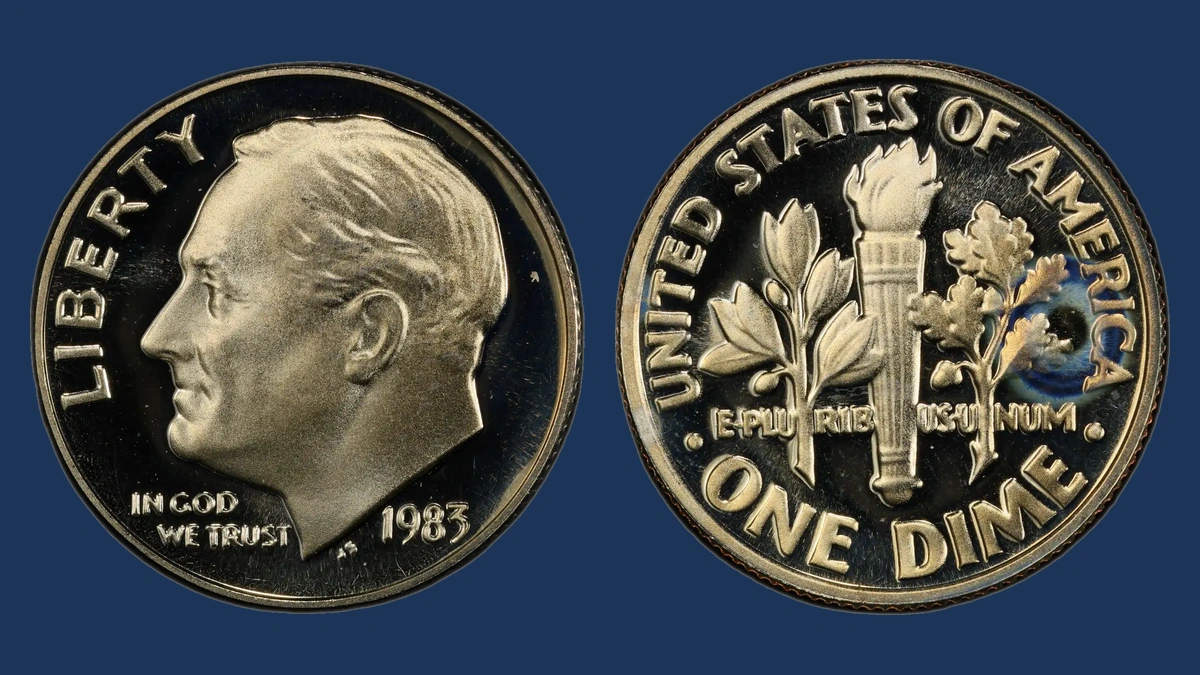
The space above the date should contain S on a normal 1983 proof dime. A proof is a specially made collector coin with carefully prepared surfaces.
The No S variety lacks that letter because its stamping tool did not receive the mintmark. It was still made at San Francisco.
Both Philadelphia and Denver ordinary dimes carried their own mintmarks in 1983. An absent letter alone therefore does not identify the rare proof variety.
The coin needs genuine proof features and an untouched mintmark area. Polishing a coin or removing a letter afterward does not create a No S proof.
Estimated Value
Recent sales give a realistic starting point: a PR68 Deep Cameo brought $585.60 in May 2026, and a PR69 brought $780 that March. These are highly preserved proofs with strong frosted-design contrast.
An estimated $500–$11,000 includes such collectible examples through exceptional PR70 quality. PCGS records a $10,560 sale in November 2014 at that top grade.
The historical high is not the usual price. Tiny surface differences and the final grade make a large difference.
How to Identify
Inspect the area above the date and right of Roosevelt’s neck under a 10× magnifier. It should have an original, uninterrupted surface where S would normally appear.
Compare the entire coin with an ordinary 1983-S proof. Mirror-like backgrounds, sharp detail, and frosted raised designs support the finish, but shine alone proves little.
Look for fine grinding lines, a shallow hollow, or polishing around the missing letter. Keep a certified example in its holder.
Normal clad specifications are 2.268 g and about 17.9 mm, with a grooved edge. Use records for sealed coins, or a scale and calipers for a loose piece.
Check genuine proof surfaces and an untouched empty S position together before treating the coin as the scarce No S variety.
Conclusion
The empty S position belongs to a proof diagnosis, while a wide border or irregular edge calls for a different examination. Keep the coin’s finish, mint, and physical shape together when making a comparison.
Estimated values span $5–$11,000. Recent No S sales show that even a famous variety has a wide price range, so match preservation as carefully as the error itself.