1958 Dime Error List with Pictures

A missing crescent and a faint portrait can tell different stories on a silver dime. One 1958 coin struck through a trapped coin sold for $204 in March 2023.
The 1958 dime errors below include incomplete blanks, repeated letters, and designs blocked during striking. Their estimated values span $20–$1,000.
Some clues sit at the edge; others need a close look at the date or mintmark. Read on to see which checks fit each type.
1. 1958-D Roosevelt Dime Repunched Mintmark (Estimated Up to $250)
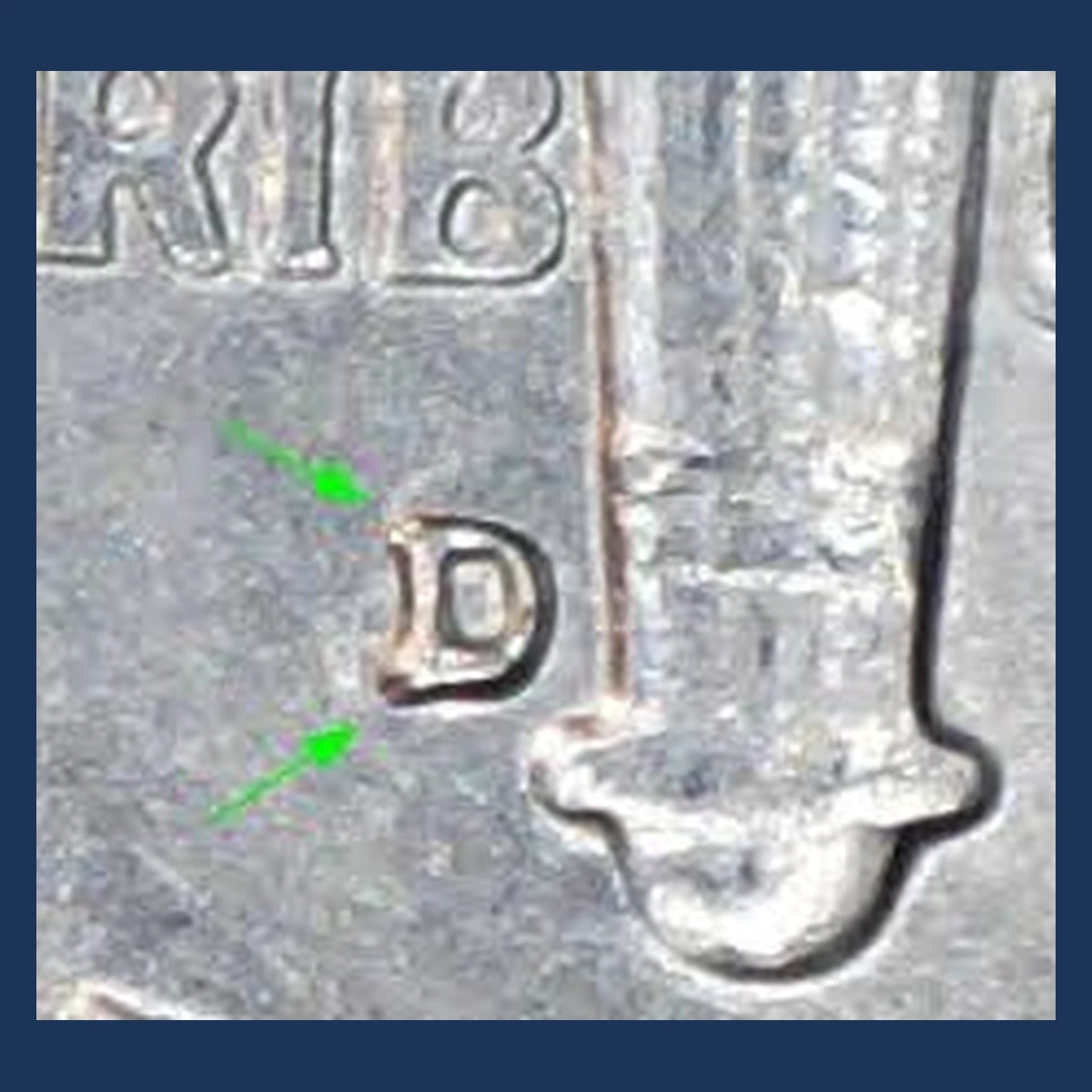
The small D on the back was added to the stamping tool with a separate punch. An extra blow in a slightly different position could leave two overlapping impressions.
Coins made with that tool would repeat the same extra stroke. This is called a repunched mintmark, or RPM.
Wexler’s catalog lists several 1958-D examples. Their extra outlines need not point in the same direction, so the correct photograph matters.
A rough or swollen D is not enough. The second impression should follow the recognizable shape of another D rather than a random bump.
Estimated Value
For clearly identified D/D examples, estimate $20–$250 from worn coins through attractive unworn pieces. This comparison-based range reflects minor repunched mintmarks on nearby silver Roosevelt dates.
A clear curved remnant can be easier to collect than a faint edge hidden by wear. The overall coin still accounts for part of its value.
No single sale is assigned to every 1958-D pattern. Match the actual extra letter and condition before choosing a point within the estimate.
How to Identify
Find the D to the left of the torch on the back. Under a 10× magnifier, follow its main curve before tracing the extra metal.
Compare the position with the corresponding example in Wexler’s catalog. Do not combine strokes from different varieties to make a match.
A low, flat shelf can come from movement during striking. A rounded extra stroke should fit an earlier placement of the punch.
For a loose coin, check 2.50 grams with a scale and 17.9 mm with calipers. Inspect the normal grooved edge for alteration.
A recognizable second D in the documented position is the most useful first mintmark clue.
2. 1958 Roosevelt Dime Die Clash (Estimated Up to $300)
A line beside the portrait may resemble part of the torch or a branch on the back. Such a misplaced outline can come from a die clash.
A die is the steel tool that stamps the design. When the two tools meet without a blank between them, each can mark the other.
Later coins can show faint traces of those contact marks. The 1958 year report lists clashes without assigning one exact location to all examples.
The shape must fit the opposite design in a sensible position. Random scratches or polishing lines do not establish a clash.
Estimated Value
Identifiable minor clashes have an estimated whole-coin range of $20–$100. Stronger, recognizable outlines on attractive examples can fit approximately $100–$300.
These are comparisons with similar silver Roosevelt clashes, rather than a sale record for one named 1958 coin. A trace that clearly resembles the opposite design is more useful than scattered lines.
Wear can make a genuine clash harder to see. Scratches that happen to cross the same area do not earn the same premium.
How to Identify
Place equally sized photographs of the two faces beside each other. Identify which part of the opposite design could explain the unusual line.
A 10× magnifier helps follow faint curves across the smooth background. Move the light gradually, since one bright reflection can hide the real shape.
Check whether the proposed alignment would let those parts of the stamping tools meet. Do not accept a familiar shape in an impossible position.
Use a scale and calipers against 2.50 grams and 17.9 mm for an accessible coin. Its normal edge has grooves.
The quickest useful check is a recognizable opposite-side design fragment whose shape and position both fit the contact.
3. 1958 Roosevelt Dime Struck on a Defective Blank (Estimated Up to $350)
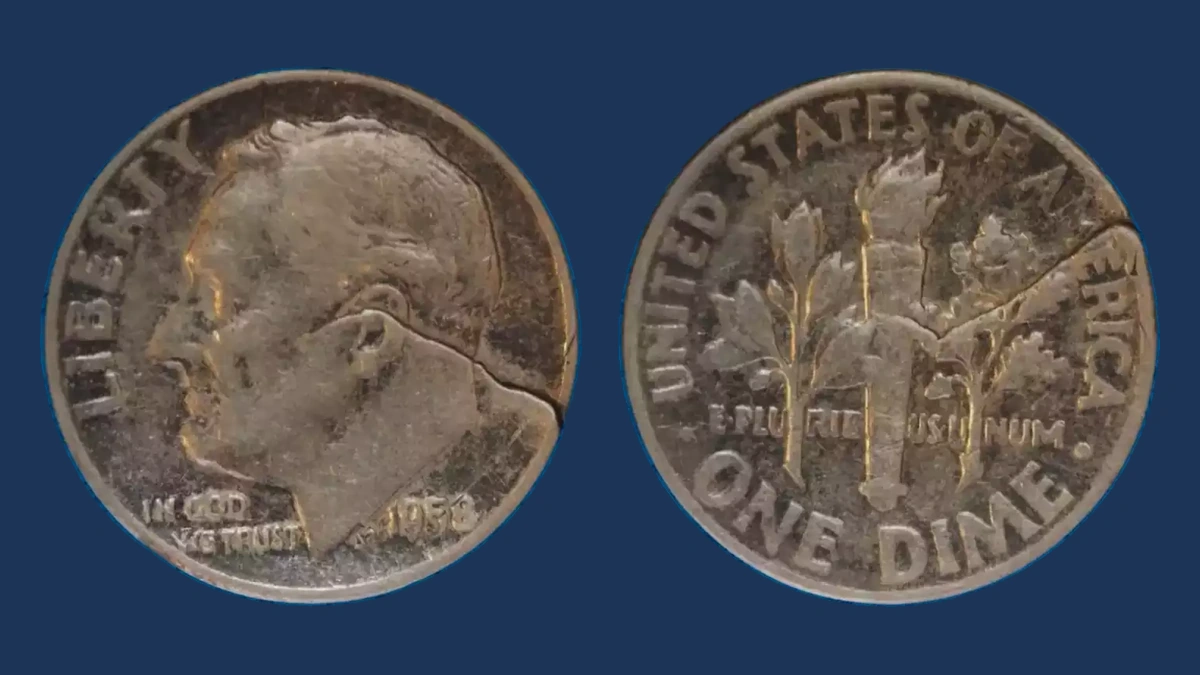
An imperfect metal disc can produce an unusual surface even when the stamping tools work normally. Heritage cataloged one such dime as struck on a defective planchet, meaning a faulty prepared blank.
The listing records a weight of 2.3 grams and an NGC MS65 grade. MS65 describes an unworn coin with relatively few marks.
Its date appears in parentheses as (1958), indicating an assigned year rather than a claim that every digit is clear.
The description does not establish a peeling layer. Keep the recorded blank defect separate from a more specific diagnosis that the description does not supply.
Estimated Value
For genuine defective silver blanks, estimate $30–$350 across modest flaws and more obvious, attractive examples. The extent of the visible defect and the remaining design affect collector interest.
This is a comparison-based estimate, not a claimed sale price for the cataloged 2.3-gram dime. A low weight alone does not justify the range.
Later filing or chemical attack can also reduce weight. The original struck surface must support a production defect before its appearance is priced as one.
How to Identify
Begin with the coin’s record and its assigned date. Do not describe four clear digits if the catalog identifies the piece only as (1958).
Use a 10× magnifier to examine the transition between the unusual area and normally struck design. Look for later scratches, rough chemical pitting, or ground surfaces.
A scale can compare the recorded 2.3 grams with the usual 2.50 grams. Calipers provide a size reference against the normal 17.9 mm.
Inspect the edge grooves for filing, and leave sealed examples in their holders. Photographs of both faces help preserve the evidence.
The useful combination is a documented blank defect and original struck texture, rather than low weight by itself.
4. 1958 Roosevelt Dime Curved Clip (Estimated Up to $400)
A curved gap can begin before the dime receives its design. The punch cutting a fresh blank may overlap a hole left by an earlier cut.
The incomplete disc then goes through the press. Its missing section changes how nearby metal flows and how the rim forms.
Heritage recorded a 1958-D with a twenty-percent curved clip, graded NGC MS61. That means unworn but with many visible marks.
A separate Philadelphia example has a gap at three o’clock and an NGC MS65 grade. Its location should not be assigned to the Denver coin simply because both are curved clips.
Estimated Value
Use an estimated $40–$400 range for genuine curved clips from worn coins through attractive unworn examples. A larger clear gap can improve the display, while damaged surfaces can reduce appeal.
A different 1942 Mercury dime with a curved clip sold for $73 in March 2023, graded ANACS MS63. That unworn silver coin provides a same-mechanism comparison.
Its design and date differ. Neither its price nor the amount of missing metal sets a fixed value for every 1958 clip.
How to Identify
Follow the curve to the two places where it meets the normal rim. A 10× magnifier can show how the surrounding metal formed beside the original opening.
Later cutting can leave sharp tool marks across completed design. Check the opposite rim for natural weakness, while allowing for clips where that clue is faint.
A scale should show less than the normal 2.50 grams if part of the blank is missing. Use calipers across intact spans against the usual 17.9 mm.
Inspect the surviving edge grooves and identify the mint separately. The strongest starting clue is a natural meeting between struck metal and both ends of the curved gap.
5. 1958 Roosevelt Dime Cracked Planchet (Estimated Up to $500)
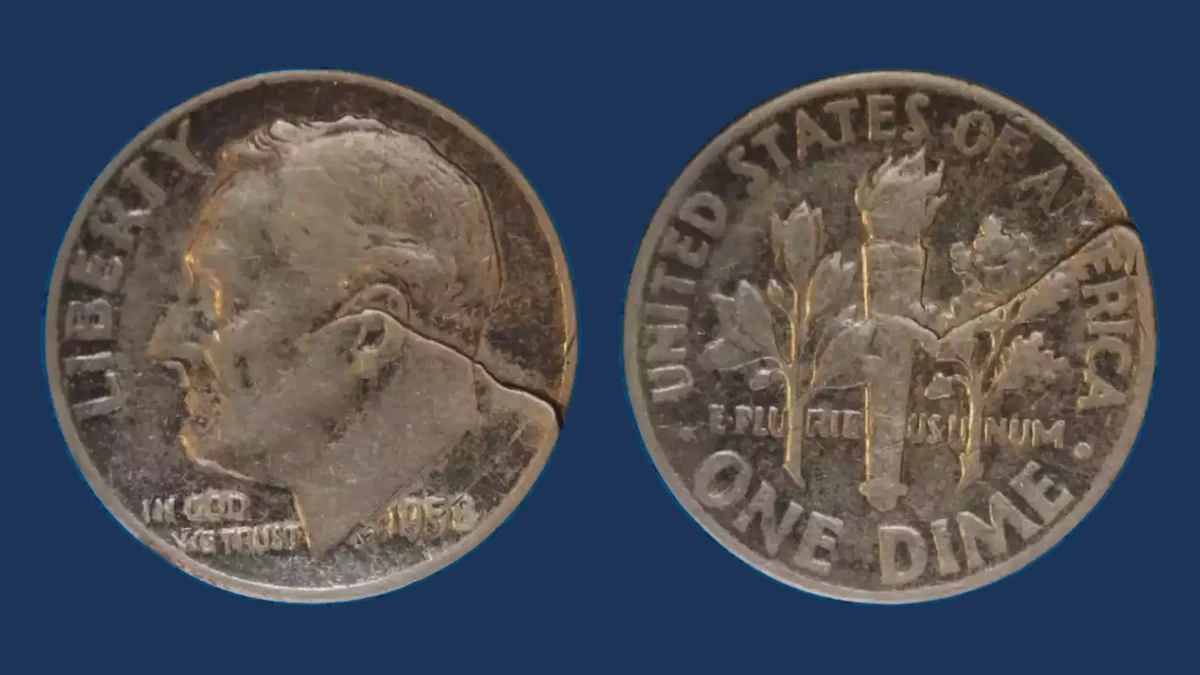
A crack running through Roosevelt’s portrait can represent a break in the metal disc itself. Collectors call that disc the planchet.
The year-specific report describes a cracked example graded AU58, meaning only slight circulation wear. It does not provide one complete route through both faces and the edge.
This differs from a die crack, which leaves a raised ridge copied from the steel stamping tool. A planchet crack is an actual opening.
Do not bend the coin to test it. The opening and surrounding surface need examination without widening or breaking the fragile metal.
Estimated Value
Genuine cracked silver blanks have an estimated range of $40–$500, depending on the opening, condition, and surviving design. A clear original crack is more informative than an unexplained thin line.
For comparison, a 1945-D Mercury dime with a cracked planchet sold for $77 in September 2024. PCGS graded that different-year piece AU50, indicating light wear.
The reported 1958 AU58 coin has no separate sale amount used here. The comparison guides the estimate without treating the two coins as identical.
How to Identify
View the suspected opening with a 10× magnifier under light from the side. Establish that it is a gap in the disc, rather than a ridge standing above it.
Turn the coin over gently and examine the corresponding area. Look at the edge for crushed grooves, bending, or an impact that could explain a later break.
A scale and calipers can record measurements against 2.50 grams and 17.9 mm. A crack may leave those figures close to normal when no metal has fallen away.
Photograph the entire portrait and keep the coin flat. The first useful distinction is an actual opening with original surrounding metal, rather than a raised line or later bend.
6. 1958 Roosevelt Dime Struck Through a Late Die Cap (Estimated Up to $600)
A coin can stick to a stamping tool instead of leaving the press. Further blows flatten the trapped coin and stretch it over the tool like a cap.
New blanks then meet that trapped layer rather than the tool’s bare surface. The design reaching them can become weak or distorted.
Heritage listed a 1958 dime struck through a very late-stage capped die, graded ANACS MS63. That grade means unworn with noticeable marks.
The error coin is the piece struck through the cap. It is not necessarily the trapped coin that formed the cap itself.
Estimated Value
The ANACS MS63 example sold for $204 in March 2023. It provides a direct 1958 reference for this unusual obstruction.
For comparable genuine examples, estimate $100–$600. Clear evidence of the cap’s effect and attractive original surfaces can make a coin easier to collect.
This range is an estimate around related silver-dime errors. Ordinary wear or a generally weak strike does not establish the same mechanism or the same price.
How to Identify
Compare the affected design with the clearer parts of the coin. Through a 10× magnifier, look for original struck texture despite the weakened or distorted image.
Photograph both faces before deciding which tool carried the cap. Compare them with the graded example to find which design was blocked.
A worn portrait can look soft too, but circulation also affects exposed high points elsewhere. Scraping may leave directional marks across finished detail.
For a loose coin, check weight with a scale against 2.50 grams and width with calipers against 17.9 mm. Inspect the edge grooves.
Match the distorted design and original surface to the graded cap-strike example, rather than using missing detail alone as proof.
7. 1958 Roosevelt Dime Proof Doubled Dies (Estimated Up to $800)
Collector Proofs have sharp designs and reflective backgrounds. Small extra outlines on these coins can come from a doubled design in the stamping tool.
The CONECA catalog lists both a front-side and a back-side doubled die for 1958 Proofs. These are separate varieties, not a promise that both faces of one coin are doubled.
The tool acquired the extra image before striking the coin. Normal repeated blows used to make a Proof do not alone establish this error.
Compare the exact catalog photographs for the affected lettering and design. Bright reflections or flat shelves can otherwise imitate doubled edges.
Estimated Value
For identified minor Proof doubled dies, estimate $50–$800 across marked examples and attractive, well-preserved coins. The clarity of the extra outlines and condition of the reflective surfaces affect the price.
A different 1960 doubled-back Proof sold for $533.50 with a Proof-68 Cameo grade. Cameo means frosted designs against a mirrorlike background.
That nearby silver-dime result provides context, not a 1958 auction record. A coin with marks or weak separation should be compared with similarly preserved examples.
How to Identify
First confirm the coin is a collector Proof. Philadelphia made these without a mintmark, while a Denver circulation dime belongs to a different comparison.
Use a 10× magnifier and photographs from the CONECA catalog. Keep front-side and back-side matches separate instead of combining their features.
Change the lighting to see whether an extra outline remains fixed in the metal. A moving reflection can make a normal letter seem doubled.
The standard silver weight and size are 2.50 grams and 17.9 mm, checked with a scale and calipers only where accessible. Inspect the grooved edge without opening a holder.
Look for the specific repeated contours in the correct Proof variety, not a generally shiny or thick-looking design.
8. 1958 Roosevelt Dime Off-Center Strike (Estimated Up to $1,000)
A blank can miss the stamping tools when it enters the press out of place. The part caught between them receives only a portion of the designs.
A 1958 year guide describes an example struck about seventy percent off center and graded MS63. That grade indicates no circulation wear but noticeable marks.
The report does not establish a mint here. A missing mintmark area should not be read as proof of Philadelphia or Denver.
Unlike a clip, this error leaves plain metal beside the incomplete design. The missing feature is stamped detail, not necessarily part of the disc.
Estimated Value
For readable-date examples, estimate $100–$1,000 from smaller shifts through strong, attractive offsets. The visible date, surviving design, and original surfaces all affect appeal.
A different 1964 silver dime struck sixty percent off center sold for $134 in December 2025. Its ANACS MS65 grade describes a well-preserved unworn coin.
That recent comparison shows why a dramatic percentage need not bring a huge price. The reported 1958 example has no specific auction result assigned here.
How to Identify
Locate the surviving date before estimating how much of the design missed the blank. Both faces should show the same misplaced disc beside their incomplete images.
Use a 10× magnifier where the struck area meets plain metal. Grinding can remove design later, but usually changes the surface and leaves signs of working.
Weigh an accessible coin against 2.50 grams and measure its outline with calipers against an ordinary 17.9-mm dime. The strike can change the shape without removing metal.
Inspect the remaining edge grooves for cutting and photograph both faces together. An intact plain crescent adjoining incomplete designs on both sides is the direct off-center clue.
Conclusion
Start by deciding whether the unusual feature changes the metal itself or just the design stamped into it. A curved gap, an actual crack, and a faint transferred outline need different explanations.
Estimated values range from $20–$1,000. Match the coin’s mint, finish, and condition before comparing prices, and keep an assigned year separate from a fully visible date.