2020 Penny Error List with Pictures

Flip a normal penny from top to bottom and the shield should stand upright. A tilted shield, peeling copper, or an oversized outline sends you toward a different error check.
These 2020 penny errors have estimated values of $2–$2,000. One useful wrong-blank comparison is an older 1981-D cent on a dime blank that brought $372 in September 2025.
That sale is not a 2020 result. Use the following sections to connect each visible feature with its cause and a suitable price range.
1. 2020 Lincoln Penny Doubled Designs (Estimated Up to $100)
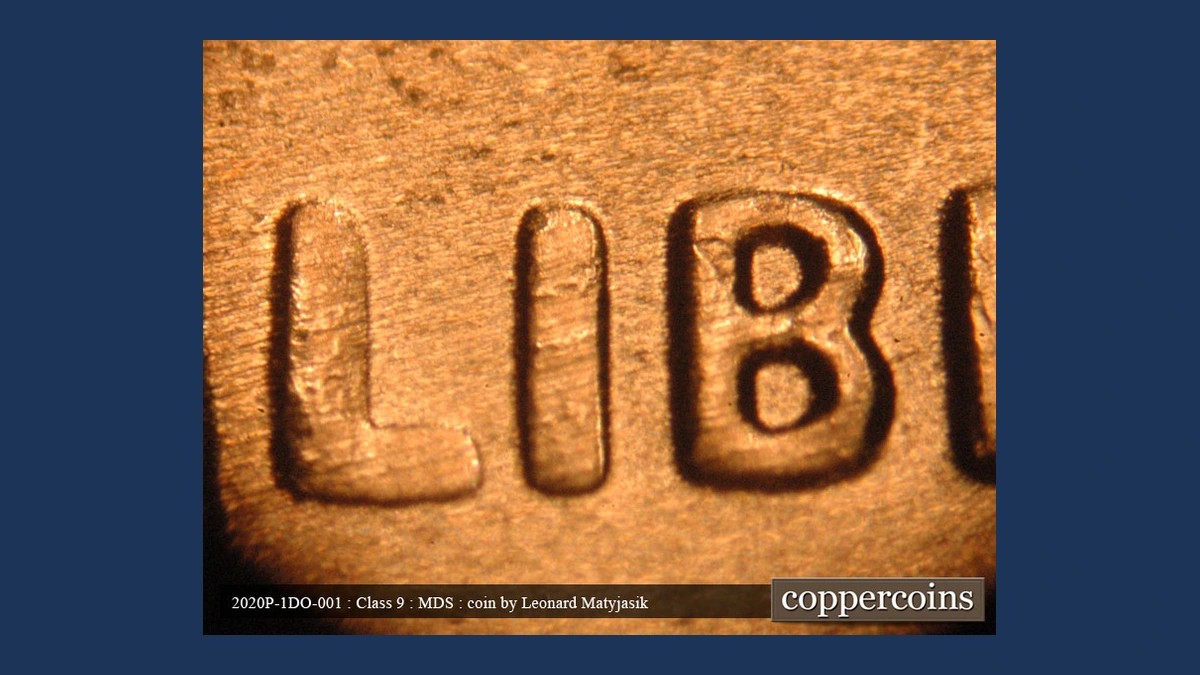
The corners of LIBERTY can reveal more than a generally thick letter. Cataloged Philadelphia examples show extra thickness and split corners in parts of the front design.
Separate back-side examples involve the small LB designer initials. These are different patterns, rather than a requirement for every letter on both faces to double.
The cause is a doubled design on a die, the steel tool that stamps coins. Each coin made with that tool can repeat its pattern.
Denver examples are also reported in year guides. Their exact features need separate comparison instead of borrowing the Philadelphia photographs.
Estimated Value
Estimate $5–$30 for minor, clearly identified doubling. Stronger examples with clean surfaces can fit approximately $30–$100.
These are comparison estimates for modest modern Lincoln varieties. They are not sale records for a particular 2020 stamping tool or catalog number.
The small LB feature may be less obvious than a clearly split letter corner. Wear and weak separation reduce its appeal.
If a coin has doubled detail on both sides, compare its overall condition and appearance rather than adding two prices.
How to Identify
Find the mintmark before choosing photographs. Philadelphia made ordinary 2020 pennies without a mint letter, while Denver used D.
With a 10× magnifier, compare LIBERTY’s vertical strokes and letter corners against Wexler’s 2020 examples. On the back, locate the small LB initials and compare their exact shape.
A flat ledge can arise during striking without a doubled tool. General swelling from tool wear is also different from a matching variety pattern.
Use a scale and calipers where safely accessible to check 2.50 g and 19.05 mm. The normal edge is smooth.
The useful match is the same split corner or extra raised outline in the same location, not thickness everywhere.
2. 2020 Lincoln Penny Die Clash (Estimated Up to $150)
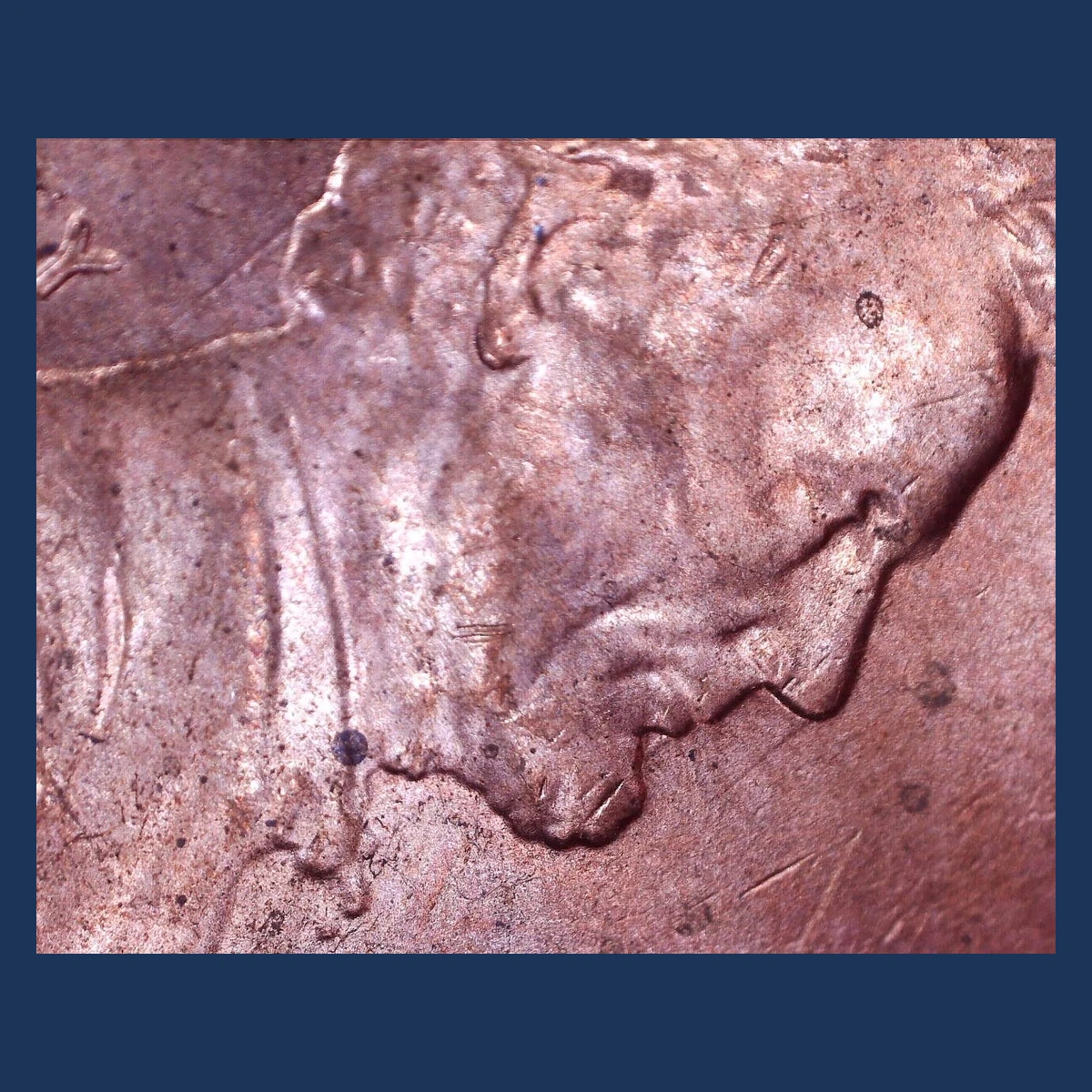
A piece of the shield design can seem misplaced beside Lincoln. This kind of faint transferred outline can result from a die clash.
The two stamping tools hit each other when no blank is between them. Their contact marks can then appear on later coins.
Reports for 2020 include Denver examples, but not one fixed arrangement for every coin. Front and back marks should each be compared with the opposite design.
Parallel lines alone do not prove shield stripes were transferred. The shape, position, and orientation need to fit a real contact between the two tools.
Estimated Value
Faint identifiable clashes have an estimated $10–$50 range. More visible outlines on attractive coins can fit approximately $50–$150.
The comparison comes from modern Lincoln cents with similarly recognizable transferred design fragments. No specific 2020 auction price is used here.
A clear fragment lets a collector understand the error without guessing. Scratches that merely resemble parallel shield lines do not earn the same premium.
Condition still matters because heavy surface damage can obscure an otherwise genuine clash.
How to Identify
Use photographs of both normal designs while studying the extra outline. Ask which part of the opposite face could have made that shape.
Hold the light low and examine the suspected mark with a 10× magnifier. Follow its route without joining separate scratches into an imagined design.
Polishing marks may run across the background without matching a shield or portrait feature. Pressure from another finished coin can also leave a misleading impression.
Check the normal 2.50 g weight and 19.05 mm diameter with a scale and calipers when safely accessible. Inspect the smooth edge for related damage.
A transferred fragment that fits the opposite design’s position is the useful result of this comparison, rather than a cluster of unexplained lines.
3. 2020 Lincoln Penny Copper Plating Separation (Estimated Up to $150)
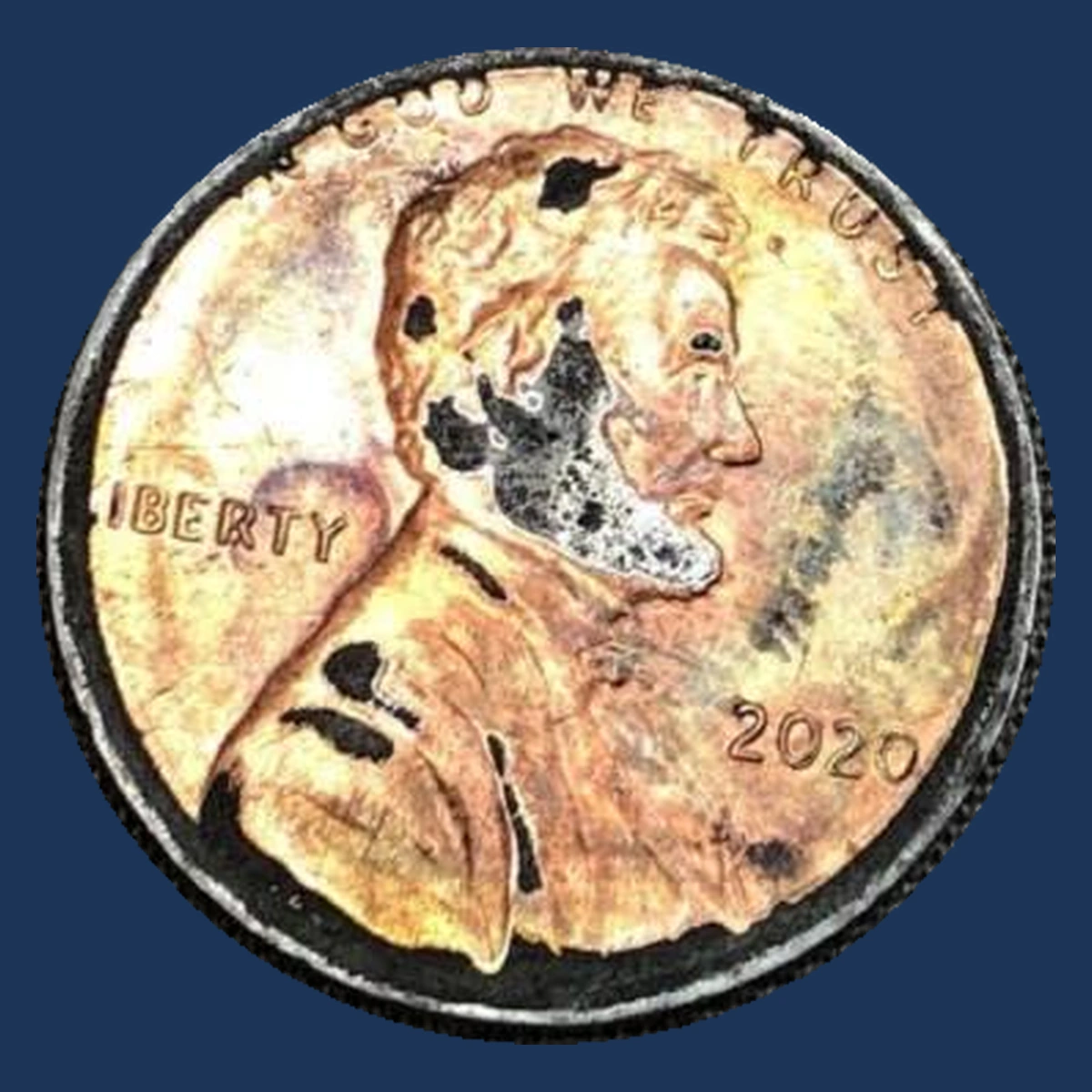
A peeling copper-colored flap can uncover a gray surface below. Modern pennies have a zinc center covered by thin copper plating.
This construction matters because an old solid-copper penny can peel for a different reason. The 2020 reports concern separation of the coating on a plated zinc coin.
A layer may have bonded poorly, allowing part of it to lift. Later corrosion or chemical treatment can also separate copper from the zinc.
The exposed color does not establish when the problem began. Examine the attachment and surrounding design before treating a damaged-looking surface as an original mint error.
Estimated Value
For genuine original plating separation, estimate $5–$40 for a small clear area. Larger, attractive examples can fit approximately $40–$150.
This comparison range concerns modern copper-plated zinc cents. It does not assign a completed sale to one reported 2020 specimen.
A visible attached flap can make the defect easier to understand. Corrosion that developed after the coin entered circulation does not receive the same premium.
Do not pay a missing-plating price solely for a gray patch.
How to Identify
Photograph the loose layer before handling the coin further. A flap can break if lifted, so leave it attached.
Use a 10× magnifier to inspect where copper meets exposed zinc. Look for original design passing across the boundary and for pits that might indicate later corrosion.
A scale may still read near the usual 2.50 g if most of the thin coating remains. Check safely accessible coins without opening sealed holders.
Calipers can compare the diameter with 19.05 mm, and the edge should be smooth. Scratches or chemical roughness may explain exposed metal after minting.
A genuine lifting copper sheet has a physical boundary and attachment. Gray color without those features is not enough to identify separation.
4. 2020 Lincoln Penny Struck-Through Error (Estimated Up to $200)
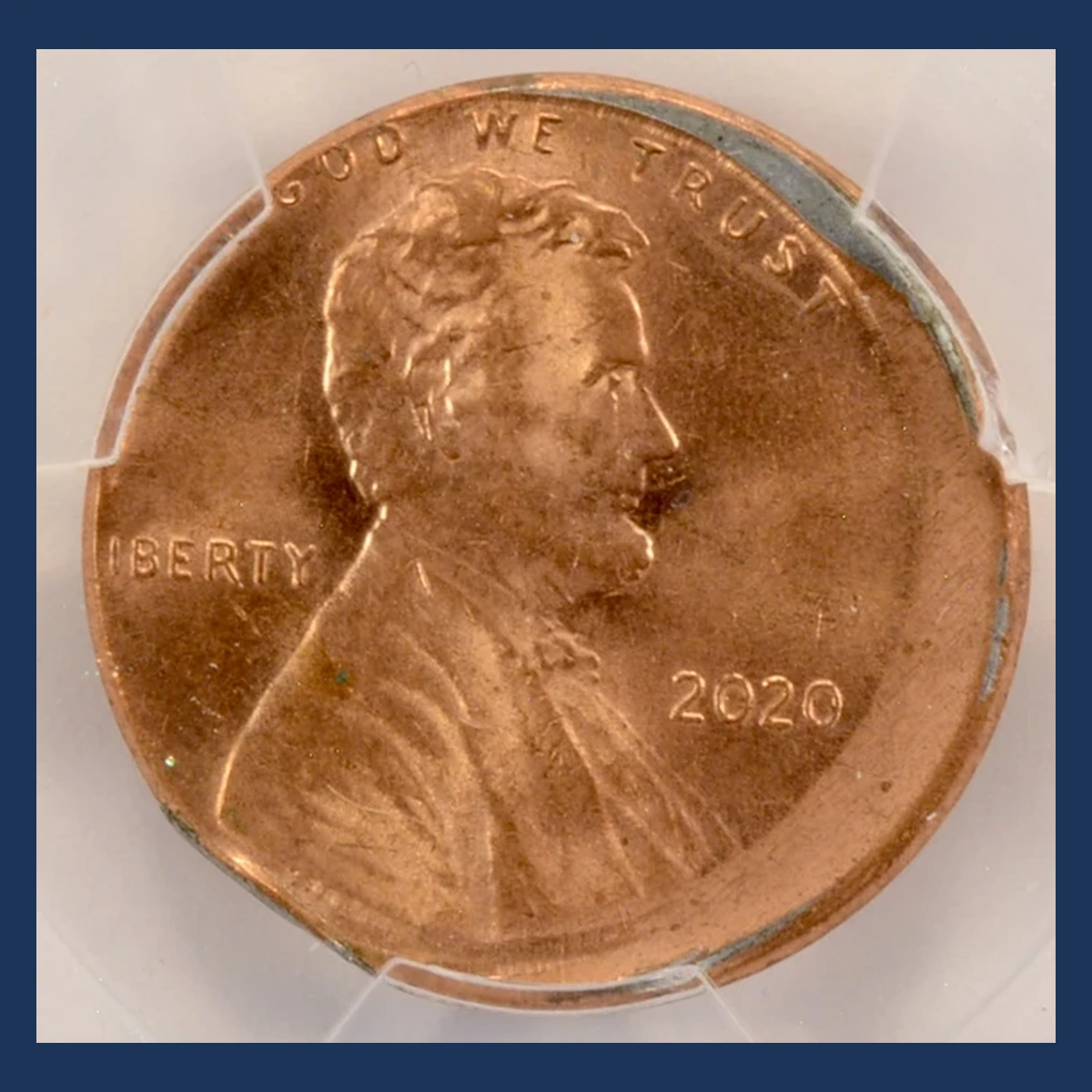
A shallow impression can replace part of Lincoln’s shoulder without cutting through the whole coin. Material between the blank and a tool can leave this kind of struck-through mark.
Other reports describe unusual textures on both faces. The obstruction may prevent detail from forming or press its own shape into the surface.
The particular material must be identified from the actual impression. A general description cannot establish that wire, cloth, or a fiber was present.
The surrounding design helps explain the timing. A later scrape damages a finished coin, while an obstruction acts as the normal design is being made.
Estimated Value
Estimate $5–$50 for small, identifiable struck-through areas. Larger or clearly shaped impressions can fit approximately $50–$200.
A 2021-D Shield cent struck through grease sold for $84 in September 2025. Its PCGS MS64 Red grade means unworn with some marks and copper-red color.
That nearby-year example supplies a comparison, not a sale price for the reported 2020 shoulder mark. A strong outline can attract more interest than an indistinct weak patch.
How to Identify
Follow the shoulder design into the impression with a 10× magnifier. Note where normal detail stops and where it resumes.
Photograph the opposite face too. More than one unusual area can be present, so a one-face-only rule is not a reliable test.
A dent made later may move metal into a rim around the hollow. Scrapes can cut across completed lettering or portrait detail.
A normal 2020 penny is 2.50 g and 19.05 mm across with a smooth edge. Use a scale and calipers when safely accessible.
The weight may remain normal because the obstruction does not have to remove metal. Original design interrupted by a clear impression is more useful than an assumed material name.
5. 2020 Lincoln Penny Clipped Planchet (Estimated Up to $250)
The coin’s outline is incomplete before any design is added. A blank cut across an earlier hole or the strip’s edge can emerge with metal missing.
After preparation, that blank is called a planchet. Striking it leaves a clipped coin with design limited to the metal that remains.
Year guides report Philadelphia and Denver examples for 2020. The amount missing must be measured on each coin rather than assigned from a general description.
A weak rim opposite the opening can occur during blank preparation. It is a helpful clue, but not an absolute requirement for every genuine clip.
Estimated Value
Allow an estimated $20–$100 for smaller clear clips. Larger, attractive examples can fit approximately $100–$250.
A 2021 Shield cent with a five-percent straight clip brought $114 in September 2025. PCGS graded it MS64 Red, meaning unworn with some marks and copper-red color.
This is a recent nearby-year comparison, not a 2020 sale. A single large opening can be more striking than several tiny gaps, so the count alone does not decide value.
How to Identify
Look at the opening from the edge as well as both faces. The ends of the gap can show how metal flowed when the incomplete blank was struck.
Use a 10× magnifier to search for fresh cuts or saw marks. A cut crossing already finished letters suggests later damage.
Weigh a safely accessible example with a scale against the normal 2.50 g. A clip removes metal, although a later cut reduces weight too.
Measure intact spans with calipers against 19.05 mm and inspect the remaining smooth edge. Check the rim opposite the gap without requiring an obvious weak spot.
Rounded original metal at the gap’s boundaries supports a mint-made clip more than low weight alone.
6. 2020 Lincoln Penny Rotated Dies (Estimated Up to $300)
Lincoln can stand upright while the shield ends up tilted after the correct flip. This relative misalignment is called a rotated-dies error.
One tool was set or turned away from its intended angle. The coin can otherwise have a normal outline and complete design.
A 2020 year guide reports the type without establishing a specific angle for every example. The angle must be checked on the actual coin.
Turning the penny like a book gives a different result from flipping it top to bottom. Use the same controlled motion each time so that handling does not create an apparent rotation.
Estimated Value
For a clear original rotation, estimate $20–$100 for smaller visible angles. Large, easily demonstrated rotations can fit approximately $100–$300.
NGC cites a 1943 Lincoln cent sold for $114 in September 2023. It had an unworn details grade, which also indicates a condition problem.
That different-year steel coin is a broad comparison only. The angle, condition, and modern coin’s appeal need their own assessment.
How to Identify
Hold Lincoln upright with the coin secured at its left and right edges. Flip the top downward around that fixed horizontal line, without twisting sideways.
The shield should then be upright on a normal U.S. penny. Compare with an ordinary cent using exactly the same motion.
Repeat the check and photograph the setup so the angle can be reproduced. A loose coin rotated inside a holder can otherwise mislead.
Use a 10× magnifier to inspect both faces and the smooth edge for seams or alteration. A scale and calipers can check 2.50 g and 19.05 mm when safely accessible.
A shield that repeatedly lands at the same wrong angle after a controlled flip is the visible rotation to measure.
7. 2020 Lincoln Penny Broadstrike (Estimated Up to $350)
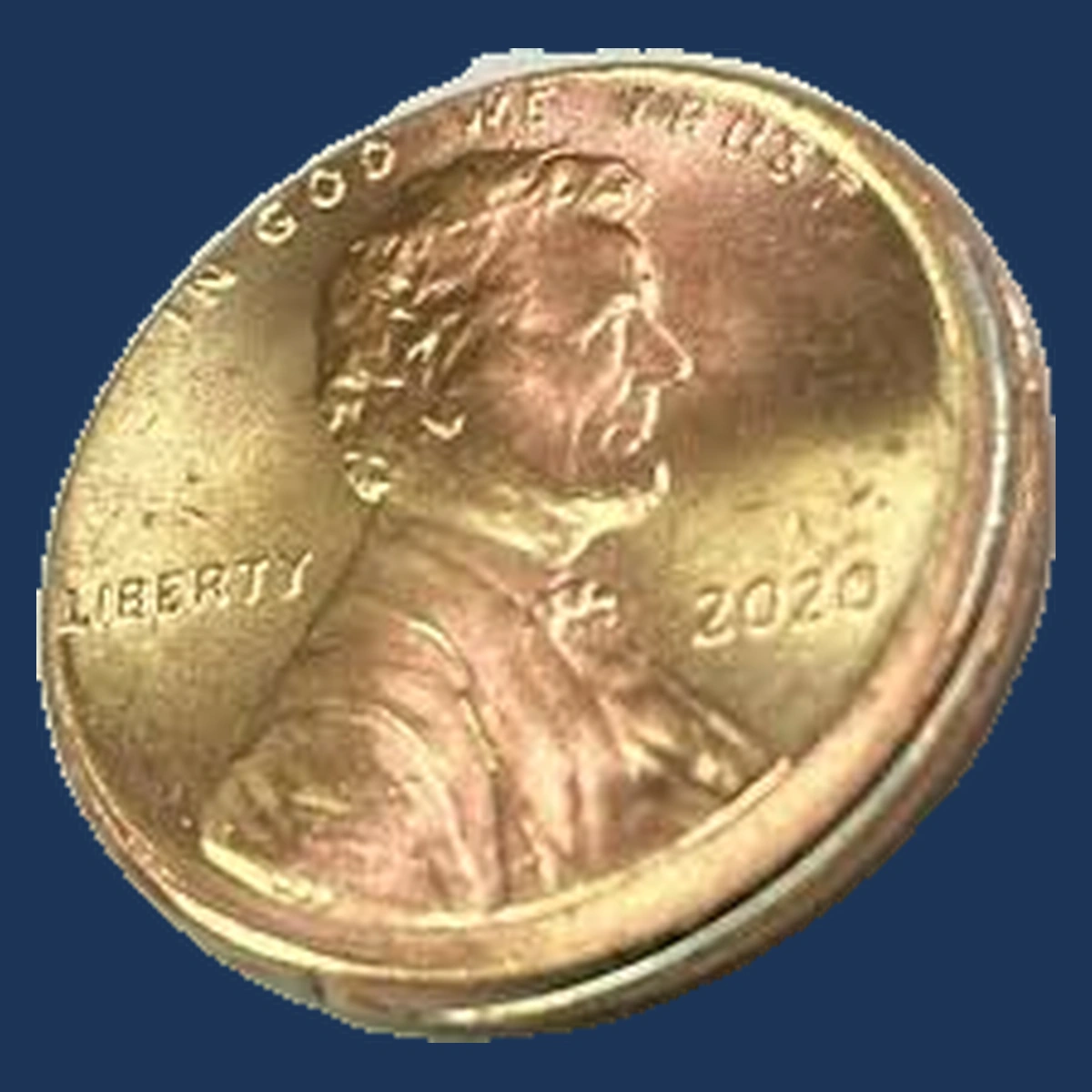
Both designs can remain complete while the penny spreads beyond its normal width. This points toward a broadstrike rather than an off-center blank.
The collar is the ring that normally contains the blank during striking. Without its support, metal can spread outward and leave an oversized border.
A 2020 report also mentions chips near the nose or cheek. Those raised spots concern tool damage and do not cause the expanded outline.
Each feature needs its own check on the same coin. A broad rim by itself can also reflect later flattening, which usually disturbs the finished portrait and letters.
Estimated Value
Genuine broadstrikes have an estimated $40–$350 range, depending on the expansion and condition. The upper portion suits obvious, attractive spreading with clear original design.
The estimate compares modern Lincoln broadstrikes rather than claiming a completed sale for the reported 2020 coin. Slight unevenness generally makes a weaker display.
A chip near the portrait may accompany the broadstrike. Assess the coin as one purchase instead of adding independent full prices for each feature.
How to Identify
Check the outside lettering on both sides. A broadstrike retains the intended designs, even when their surrounding border looks unusually wide.
Calipers help compare several spans with the normal 19.05 mm diameter. A scale should remain near 2.50 g if the original blank is intact.
Use these tools only where safely accessible. Keep a sealed example in its holder and consult its recorded measurements.
With a 10× magnifier, inspect the smooth edge and high points for hammering or squeezing. Later pressure can widen a coin while crushing its already finished details.
Ignore any small portrait chip while deciding this mechanism. Complete designs inside an original expanded border are the features that establish the broadstrike.
8. 2020 Lincoln Penny Die Chips, Cracks, and Rim Cuds (Estimated Up to $400)
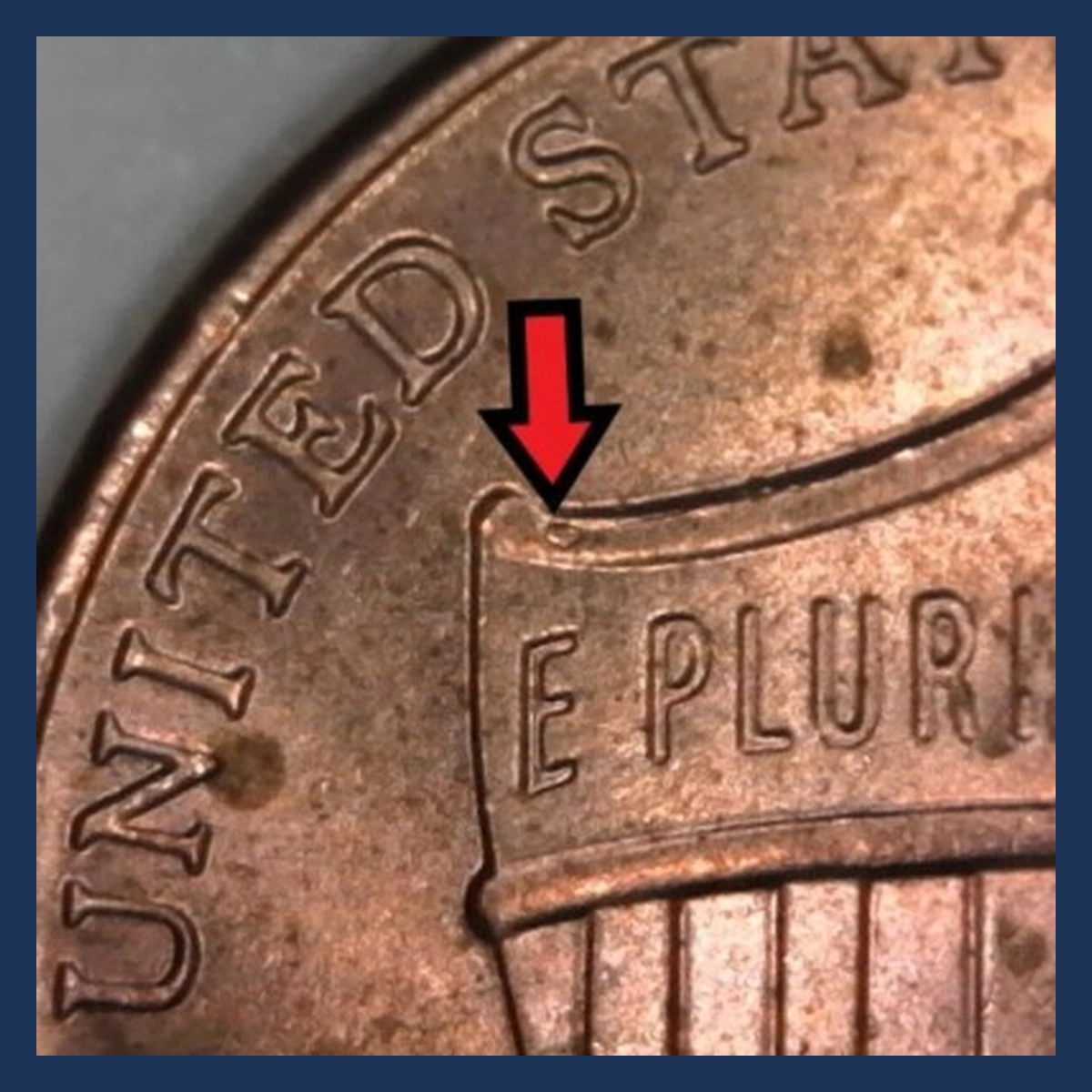
An extra bar between B and E in LIBERTY gives the BIE nickname. Other 2020 reports describe bumps under Lincoln’s eye or raised lines running across the portrait.
The names Crying Eye and Assassination refer to particular locations. They do not mean every coin has the same damage pattern.
These raised features form when coin metal fills a crack or missing piece in the stamping tool. A larger break reaching the tool’s edge can produce a rim-connected patch called a cud.
An internal bump and a rim cud have different shapes. Their connection to surrounding design helps distinguish them.
Estimated Value
Minor chips and short raised lines have an estimated $2–$50 range. Clearer rim-connected cuds can fit approximately $50–$400.
A different 2021-D Shield cent with a retained cud sold for $186 in September 2025. PCGS graded it MS64 Red, meaning unworn with some marks and copper-red color.
That larger tool-break example is not a price for a tiny BIE bar. The estimates vary with size, visibility, and how much normal design the break replaces.
How to Identify
Choose a full-face view before enlarging the raised area. Its position determines whether you are examining a BIE bar, an internal chip, or a rim-connected patch.
At low magnification, trace any ridge across neighboring design. A scratch cuts inward, while a broken stamping tool can leave raised metal.
Use a 10× magnifier to inspect the boundary without pressing the surface. Plating blisters or corrosion can also make bumps on copper-coated zinc.
The standard is 2.50 g and 19.05 mm with a smooth edge. A scale and calipers are useful when safely accessible.
For a cud, look specifically for a raised patch replacing normal detail all the way to the rim. An isolated cheek bump is a different shape.
9. 2020 Lincoln Penny Off-Center Strike (Estimated Up to $500)
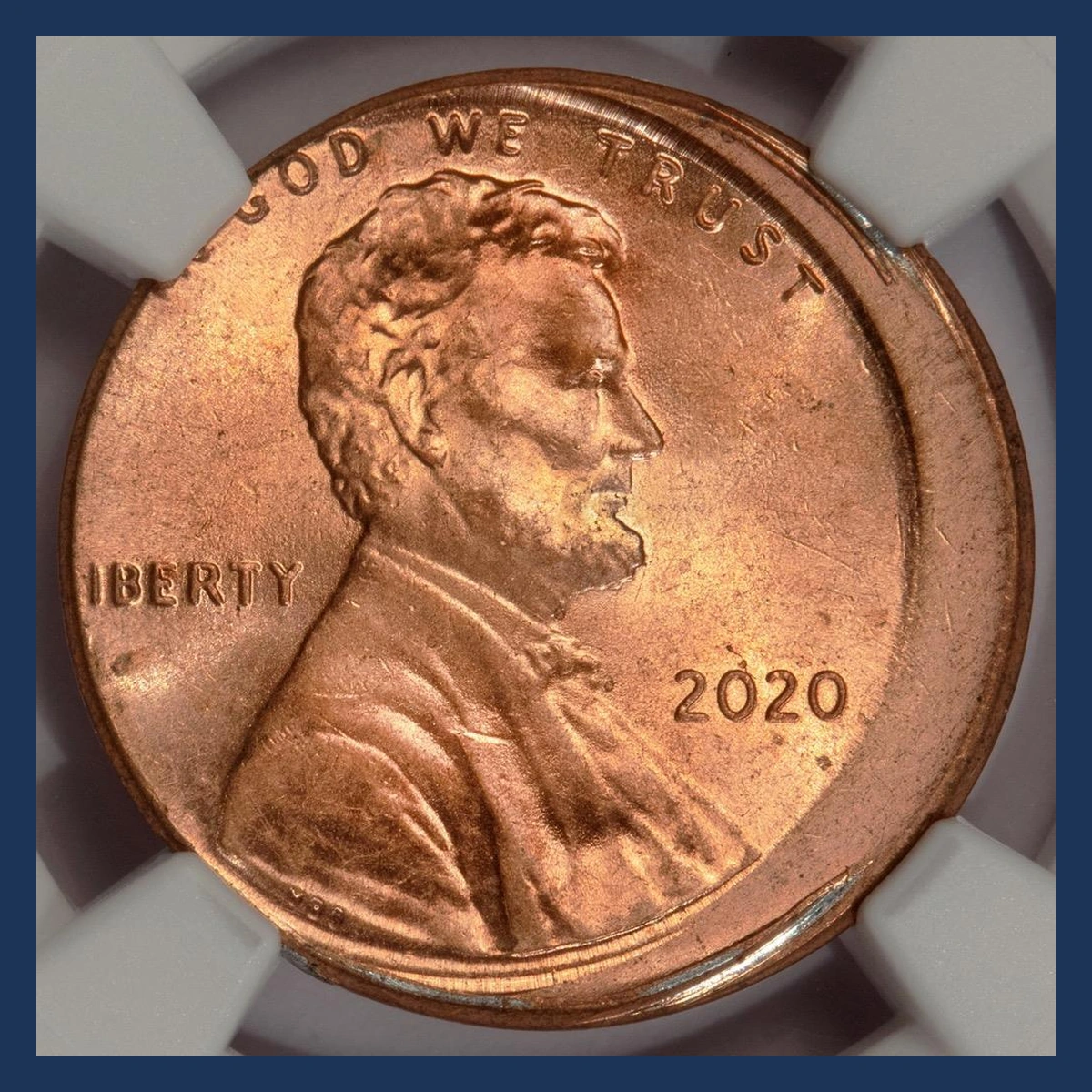
The blank entered the press away from the intended center. Some of Lincoln’s portrait and the shield design then landed beyond the metal.
The portion that missed the tools stayed blank. It is still part of the coin, unlike metal absent from a clipped blank.
Reports for 2020 include Philadelphia and Denver examples without a single fixed direction or percentage. A readable year keeps an example tied to the correct date.
If only one face has shifted, a misplaced tool can explain it instead. Compare both faces before using the size of an uneven rim to name the error.
Estimated Value
For smaller readable-date shifts, estimate $15–$75. Larger, attractive off-center examples can fit approximately $75–$500.
These ranges compare modern Lincoln striking errors. They do not imply that a dramatic coin at the upper limit has a documented 2020 auction result.
Surviving design, surface condition, and the amount of blank metal all affect appeal. A date partly lost beyond the edge can make identification harder.
Do not price a one-face misalignment as though both designs missed the blank.
How to Identify
Find the complete 2020 date and note whether a mintmark survives. Missing metal or design in the mintmark area does not automatically mean Philadelphia.
Compare both faces with the entire outline shown. Look for incomplete designs meeting original plain metal rather than rubbed-away details.
A 10× magnifier helps reveal scratches or grinding at that boundary. Such damage can mimic an empty area in a small photograph.
A normal blank is 2.50 g and 19.05 mm across. Use a scale and calipers when safely accessible, allowing for metal spreading during the strike.
The edge starts smooth on a penny. Untouched blank metal beside missing design on both faces provides the strongest quick visual check.
10. Reported 2020 Lincoln Penny Struck on a Wrong Planchet (Estimated Up to $2,000)
A penny design on the wrong blank can have an unexpected color, weight, or size. A planchet is the prepared metal disc placed in the press.
The 2020 year guide reports wrong-planchet errors without establishing a particular foreign or U.S. blank. A dime or nickel comparison does not prove that either blank is documented for this year.
The actual coin must supply that identity. A smaller blank may not hold the full cent design.
Color is only a starting clue. Plating, chemical treatment, and ordinary copper loss can change appearance without any wrong blank entering the press.
Estimated Value
Use an estimated $300–$2,000 for an authenticated wrong-blank example, depending on the identified blank and condition. This is a comparison range for the reported type.
An 1981-D cent on a clad dime blank sold for $372 in September 2025. PCGS graded it MS62, meaning unworn with noticeable marks.
That coin has a different date and back design. Its known blank does not establish what was used for a reported 2020 example.
How to Identify
Record the weight before assigning a denomination to the blank. A normal 2020 copper-plated zinc cent weighs 2.50 g.
Use calipers to compare the outline with 19.05 mm and inspect the smooth edge under a 10× magnifier. Smaller size alone can result from later cutting or grinding.
Check how the original design meets the edge. On a genuine smaller blank, outer lettering may never have fitted onto the metal.
Take measurements only when safely accessible, and keep sealed coins in their holders. Metal analysis by a grading service can distinguish an unusual blank from altered plating.
The proposed blank must fit the weight, dimensions, metal, and surviving struck design together; an unusual color cannot make that identification alone.
Conclusion
A sideways shield calls for a controlled flip; a wider penny calls for measurements. Small raised marks need a close look at their shape and connection to the design.
Estimated ranges run from $2 for minor tool breaks to $2,000 for an authenticated wrong-blank example. Keep comparison sales tied to their actual year and condition.
Clear photographs of both faces and the edge help turn an unusual-looking coin into a feature you can explain.