1940 Dime Error List with Pictures

On some 1940-S dimes, the bridge of Liberty’s nose fades because part of the stamping tool was polished away. Other coins carry extra design instead: a doubled-front-and-back example sold for $660 in July 2021.
The 1940 Mercury dime errors below span estimated values of $10–$1,200. Small mint-letter traces, missing details, and wider outlines need different checks.
Use the comparisons below to work from the visible feature to its cause and likely price range.
1. 1940 Mercury Dime Peeling Metal on the Front
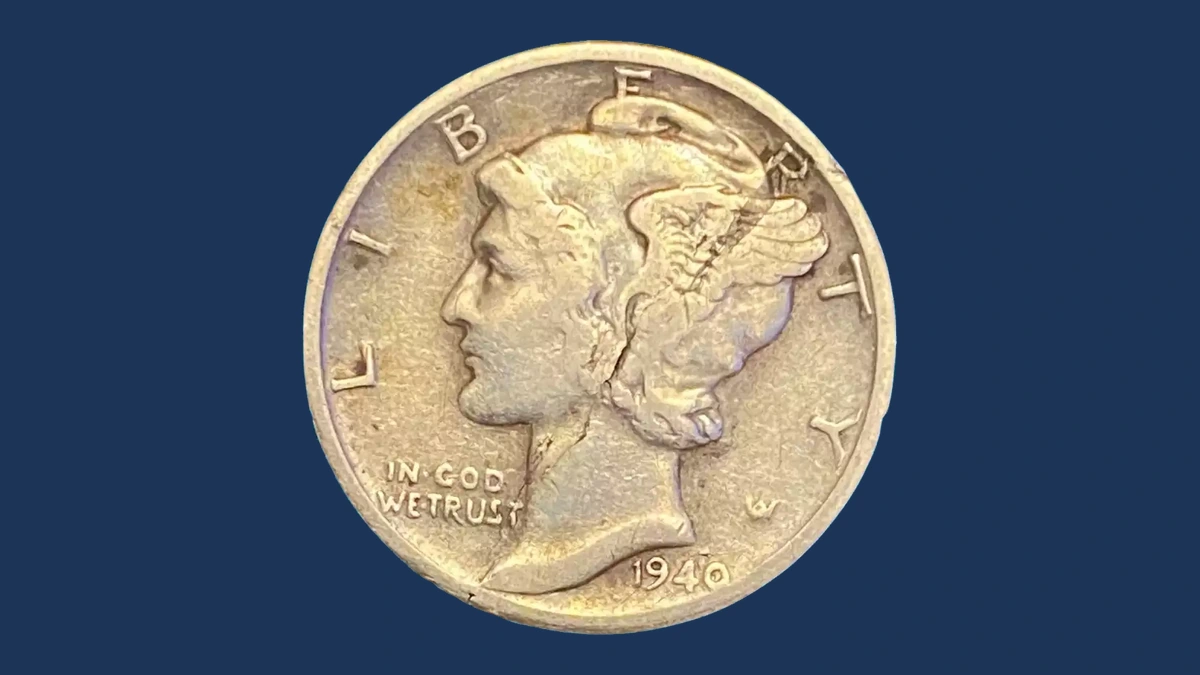
A thin surface layer can lift or fall away from the front of a Denver dime. The flaw begins within the metal blank and is called lamination.
A year guide reports this feature for 1940-D without establishing a precise position on Liberty’s portrait. The whole front should be examined before a particular facial line is called the reported peel.
Normal Mercury dimes contain 90% silver and 10% copper mixed together. They do not have a modern copper core, so brown discoloration beneath a rough patch does not establish a missing outer clad layer.
Estimated Value
Estimate $15–$200 for genuine front peeling on a 1940-D dime. A clearly attached flake or original separation boundary can be more informative than a vague rough spot.
For a nearby-year comparison, a 1942 Mercury dime with major front peeling sold for $89 in March 2023. Its location and condition differ from the reported Denver category here.
The price covers the complete coin. Heavy wear, cleaning, or loss across important design can reduce appeal even when the separation itself is genuine.
How to Identify
A loose coin with metal already missing may weigh less than 2.50 grams, while an attached flake may leave it near normal. Record the scale reading and compare an intact diameter with 17.9 mm using calipers, without squeezing across the suspected peel.
Under low side lighting and a 10× magnifier, find where the sheet separates from the surface and photograph the boundary. Leave any attached material untouched, since pulling it off can remove the evidence connecting the flake to the original coin.
Inspect the grooved edge and follow the nearby design into the flaw. A scrape cuts completed detail, whereas separation within the blank follows a metal boundary and may affect how the design formed.
2. 1940 Mercury Dime Traces from Clashing Stamping Tools
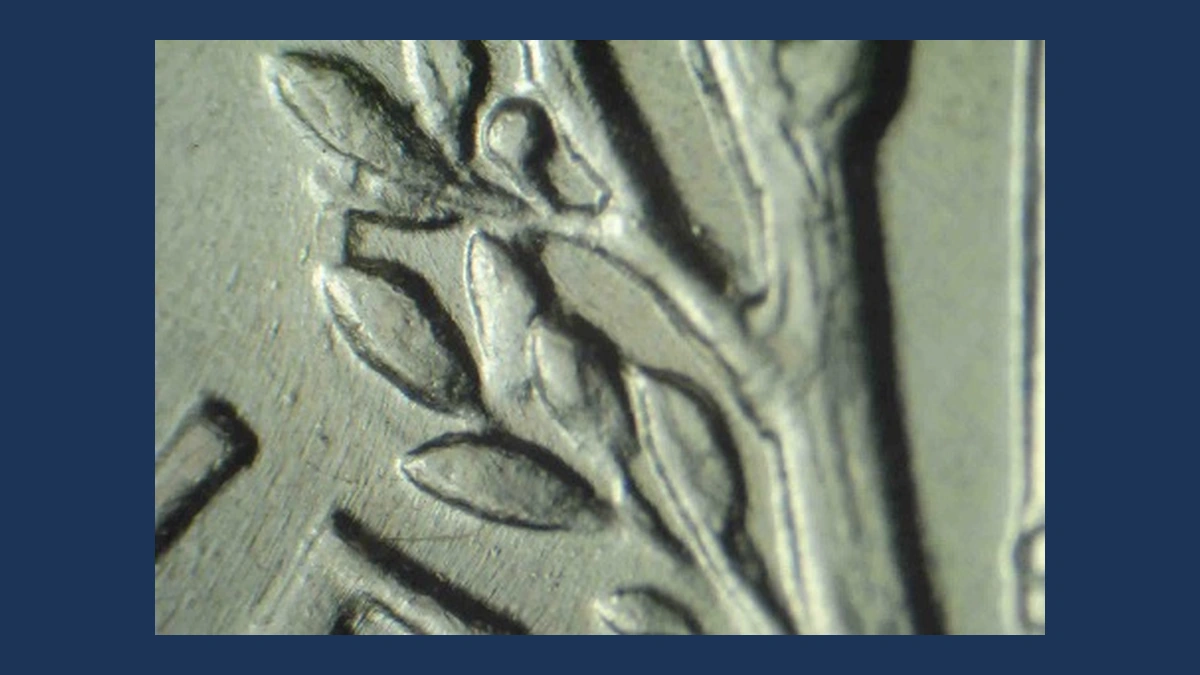
Faint marks resembling the other face’s design can appear around Liberty’s chin, nose, or neck. Related marks may appear near the lower-left branch or beneath AME on the back.
They come from the dies, the steel tools that stamp coins, meeting without a blank between them. The contact can leave traces of one design on the opposite tool.
Later coins then carry those transferred outlines. Reported San Francisco examples belong to different tool stages, so their marks should not be combined into one diagram or confused with the thin lines left by polishing.
Estimated Value
Recognizable minor clashes have an estimated whole-coin range of $15–$200. A transferred outline that can be connected with the opposite design is easier to collect than a few unexplained lines.
These estimates compare similar silver Mercury clashes, rather than assigning a sale to every reported stage. The same coin may also have doubled details, and its combined features receive one value.
Wear can soften the clash. Bright scratches from cleaning or later handling should not be given the same premium.
How to Identify
Begin with an enlarged photograph of the opposite face, using its design to interpret the faint mark. A transferred outline should have a relationship with that design, rather than merely occupying a familiar place.
Magnify the chin, nose, and neck on the front. Then examine the lower-left branch and the space beneath AME on the back.
Compare one catalog pattern at a time. Different San Francisco tool stages do not supply pieces of one combined clash.
A loose dime can be weighed against 2.50 grams and measured against 17.9 mm with calipers. Check the grooved edge for later disturbance.
Change the lighting to distinguish a raised outline from a cut scratch. Fine polishing lines by themselves do not prove that the tools transferred an opposing design.
3. 1940 Mercury Dime Missing Details and Marks from Tool Abrasion
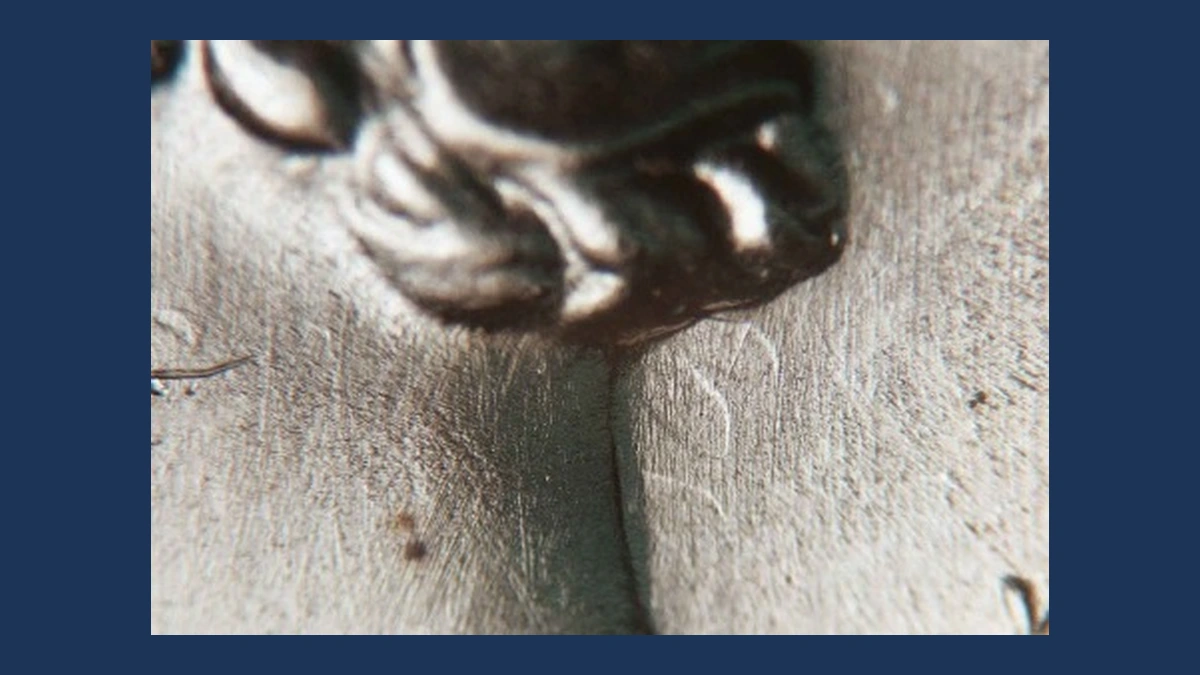
Some details can disappear when a stamping tool is polished too deeply. One San Francisco tool stage lost the bridge of Liberty’s nose; others show a detached-looking upper-right leaf or missing lower-left leaves.
The coins copied the changed tool, rather than losing those details through circulation. These appearances belong to separate examples and stages.
Another S example has abrasion marks above and right of B in LIBERTY. A metal feeding arm rubbed the stamping tool there; nothing was trapped against this coin during the strike.
Estimated Value
For clearly matched tool-abrasion features, estimate $10–$250, depending on visibility and the whole coin’s condition. A recognizable missing detail can be more interesting than fine background lines alone.
This range compares similar altered-tool features on silver Mercury dimes. Some examples also belong to doubled-design or repunched-letter varieties, so their value should be considered together.
An otherwise worn face does not qualify as a missing-nose variety simply because the bridge looks flat. Scraping after minting also has a different origin.
How to Identify
Place a normal dime photograph beside the candidate to locate the detail that should be present. For the missing-nose example, compare the bridge with the surrounding face instead of judging the entire portrait’s wear.
Before enlarging the weak area, check a loose coin with a scale and calipers against 2.50 grams and 17.9 mm. Its grooved edge and adjacent design should remain consistent with an ordinary silver dime.
Use a 10× magnifier to examine the upper-right leaf connection or lower-left leaves on the appropriate separate example. Normal nearby detail helps distinguish a changed tool from general circulation wear.
For the B-area marks, compare their position and pattern with the recorded feeding-finger abrasion. Do not call every scratch near B the same feature.
4. 1940 Mercury Dime Clipped Blanks
A blank can be incomplete before it receives the dime design. After striking, its missing section may resemble a bite cut from the finished coin.
The general 1940 clip report does not establish a shape, percentage, or mint for every example. A separate Denver listing identifies a disk clip on an ANACS AU55 Details coin.
AU55 means light wear, while Details indicates an additional condition problem. That label does not supply a particular gap direction or outline, so the visible boundary of the actual coin should guide the comparison rather than an imagined curved shape.
Estimated Value
Use an estimated $30–$400 for genuine clips with varying wear, size, and surface quality. The clarity of the original gap and the remaining date are useful price factors.
A different 1944 Mercury dime with a 7% clip sold for $126 in July 2021. Its PCGS MS63 grade describes an unworn coin with noticeable marks.
That example provides a comparison rather than the price of the Denver AU55 Details coin. Later damage can reduce the value of an otherwise genuine clip.
How to Identify
Inspect where the struck design ends at the missing section, using a 10× magnifier. A later saw cut can slice through completed letters and leave sharp burrs, while an incomplete blank develops different boundaries during production.
For a loose candidate, compare its scale reading with the complete dime’s 2.50 grams. Calipers can check an intact width against 17.9 mm without treating the shortened span across a gap as normal diameter.
Follow the surviving grooves around the edge and inspect the opposite rim for possible weakness. That supporting clue may be absent, so it cannot replace examining the cut boundary itself.
Keep the Denver Details example separate from the general report. Its label does not establish the precise gap shape or the reason for the condition designation.
5. 1940 Mercury Dime Repunched D and S Mint Letters
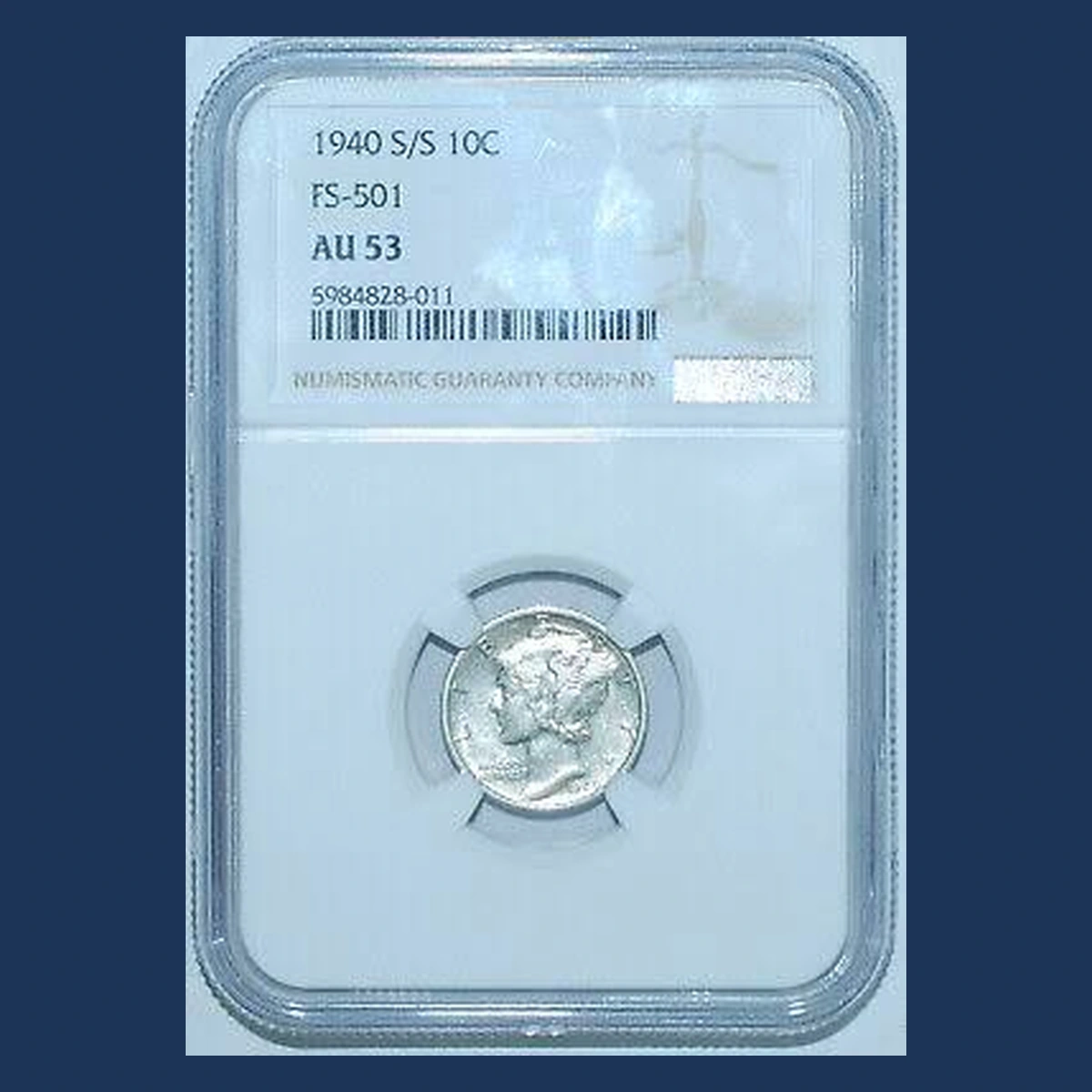
The small D or S can preserve parts of an earlier punch impression beside the main letter. The letter was punched into the stamping tool again in a slightly changed position.
Denver patterns include north, south, west, southwest, and southeast traces. The S patterns include western and tilted impressions; the FS-501 form shows several overlapping traces, including at the letter’s ends.
Some of these coins also have doubled front or back designs. Those features can help identify the tool pair, but one direction alone does not prove that two coins came from the same tools.
Estimated Value
An S-over-S FS-501 example in PCGS MS65 sold for $216 in June 2024. MS65 indicates a well-preserved unworn coin.
Estimate $20–$400 across recognized minor D/D and S/S patterns with different wear and clarity. The extra letter needs to match the right variety before that range is applied.
Another feature on the same coin is part of its appeal. Separate premiums for the mint letter, doubled date, and supporting crack should not be added as though they described different coins.
How to Identify
Find D or S below the left side of the back’s central rods. Keep the coin upright while enlarging the letter with a 10× magnifier, since rotation changes the apparent direction of an extra stroke.
For a loose coin, use a scale and calipers against 2.50 grams and 17.9 mm, and inspect the grooved edge. Look closely around the letter for scratches or added metal.
Then compare the extra letter and its spacing from the nearby leaf with the catalog photograph. Several Denver patterns point north, so direction alone does not settle the identification.
If the example also shows a doubled date or back lettering, match those details to the same tool pairing. Replaced front tools can change which companion features are present.
6. 1940 Mercury Dime Broadstrike with an Uncentered Design
A complete dime design can sit unevenly within an expanded border. The collar ring did not fully contain the metal during striking, allowing it to spread outward.
A Philadelphia example is cataloged as an uncentered broadstrike in PCGS MS62, an unworn grade with noticeable marks. Its complete design should be distinguished from one that misses the blank.
A separate San Francisco listing describes an NGC MS61 Full Bands coin using both broadstrike and off-center wording. Full Bands concerns clear separation in the back’s central bands, not a separate error or a resolution of that wording conflict.
Estimated Value
A broadstrike of this date has an estimated range of $40–$500. Complete design within an expanded border is the useful feature, while wear and damage still affect the price.
A different 1944 Philadelphia broadstrike graded MS65 sold for $94 in October 2022. Its preserved design provides a comparison for the mechanism, not a result for either reported 1940 coin.
The San Francisco candidate should be priced according to its actual shape. Two competing labels do not create two additive errors.
How to Identify
Check whether every outer letter fits on the metal before measuring how uneven the border looks. An uncentered broadstrike can preserve the whole design, while an off-center strike loses some of it beyond the blank.
Use a scale and calipers on a loose candidate to compare weight with 2.50 grams and widths with 17.9 mm. Several width measurements and a magnified edge photograph can show where the collar failed to restrain metal or form normal grooves.
Inspect the detail inside the expanded border for flattening or tool blows from later hammering. On the ambiguously labeled San Francisco example, use that physical evidence and the complete-design test to decide which description fits, rather than counting both seller terms as separate errors.
7. 1940 Mercury Dime Cracks and Raised Rim Breaks
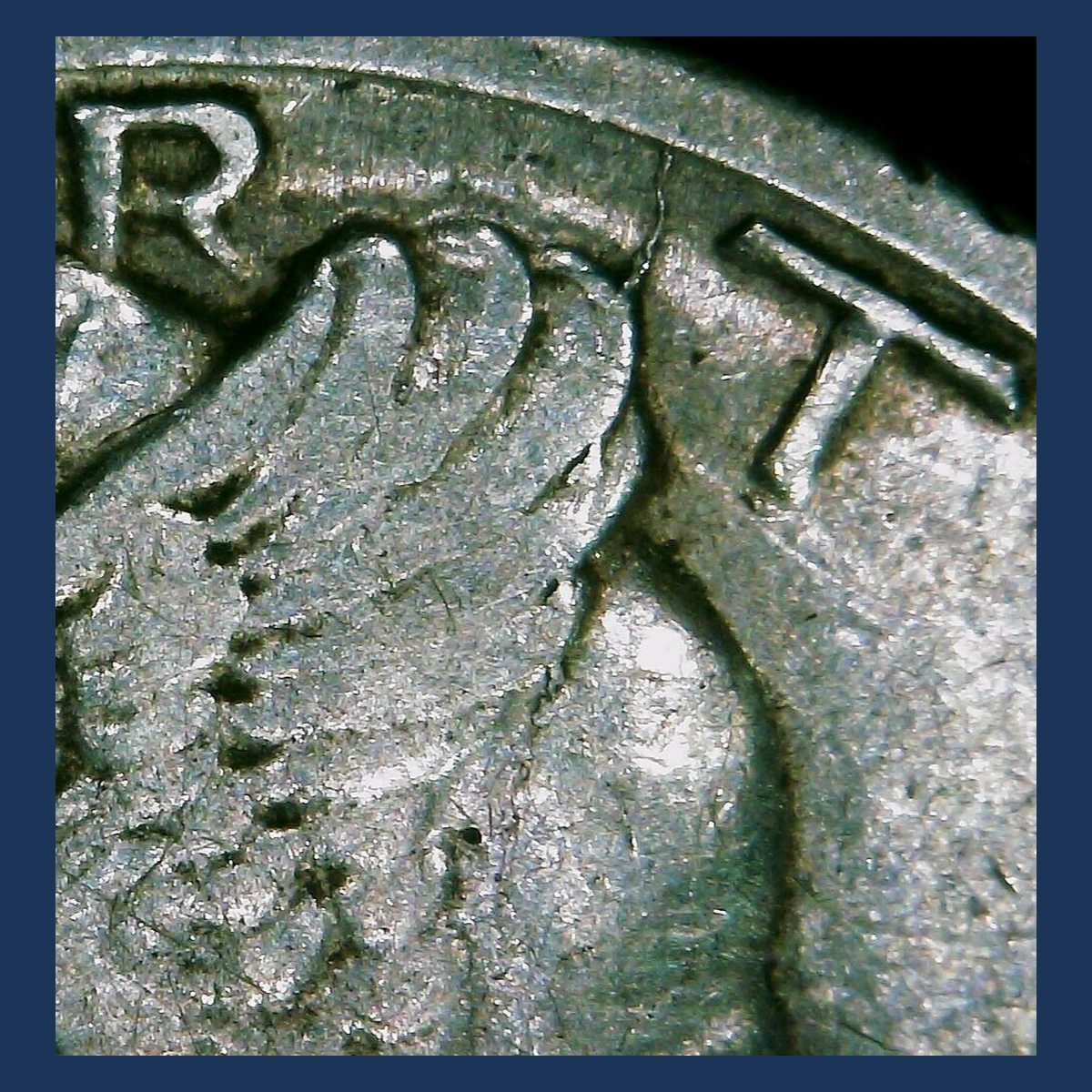
A raised crack line can begin at the rim and run through the portrait or back lettering. Metal entered a crack in the stamping tool and copied it as a ridge on the coin.
Larger missing pieces of the tool can leave raised patches connected with the rim, called cuds. Separate S examples place these at 2:30, 12 o’clock, or near particular letters.
Denver and San Francisco records include many different crack paths. Some accompany doubled designs or repunched letters; their lines should stay with the correct coin rather than being joined into one pattern.
Estimated Value
Estimate $10–$100 for modest original cracks and roughly $75–$600 for clearer rim breaks. Size, visibility, and preservation help distinguish the ranges.
The S rim-cud example at 2:30 sold for $156 in July 2021. A separate lot of three cracked 1940-S dimes sold for $132 in October 2021.
That $132 is the price of the group, not one coin or one ridge. Different cracks and rim patches should be compared with their own photographed shape and condition.
How to Identify
First decide whether you are following a narrow ridge or the boundary of a larger raised patch. Under side lighting and a 10× magnifier, scratches appear cut into the metal rather than standing above it.
A suspected cud must connect with the rim. Compare the S 2:30 and 12-o’clock examples separately; their locations do not describe one combined patch.
For a loose complete coin, check 2.50 grams and 17.9 mm with a scale and calipers. Inspect the grooves near the affected edge for dents that might explain displaced metal.
Match a crack’s entire path, including nearby lettering. The three-coin auction lot does not establish that every coin shares the cataloged neck, cap, wing, or Denver back-letter crack.
8. 1940 Mercury Dime Five Percent Off-Center Strike
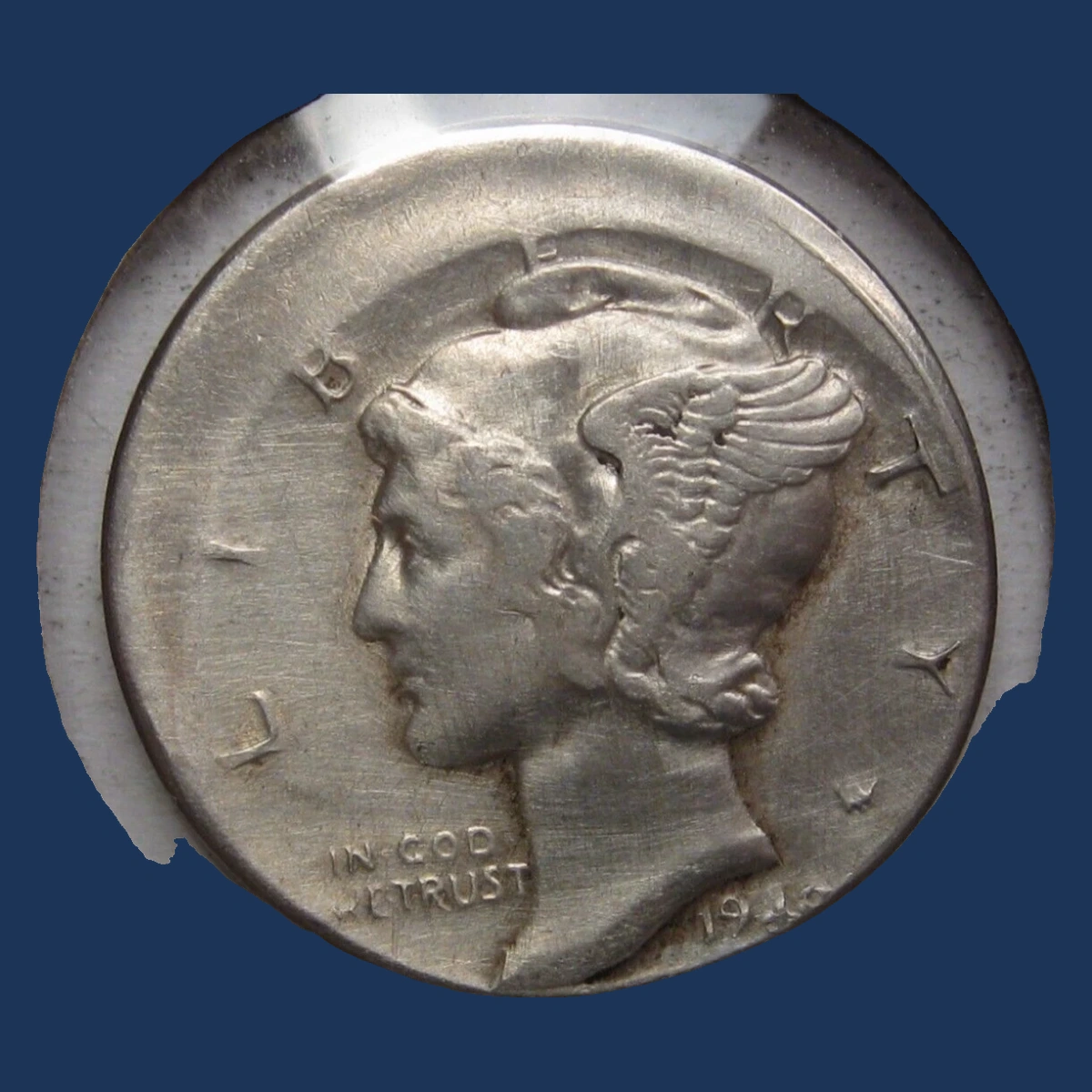
A small shift can leave a narrow untouched crescent and remove some design from the opposite edge. Both faces record the position of the same misplaced blank.
A 1940-S example was offered with a PCGS MS61 label identifying a 5% off-center strike. MS61 means unworn with noticeable surface marks.
This is a separate example from the S listing with conflicting broadstrike wording. The amount of shift is stated, but its direction should come from the coin’s photograph rather than a clock position borrowed from another specimen.
A wide rim by itself is not the defining feature.
Estimated Value
For genuine dated off-center dimes, estimate $75–$1,000 across small shifts and stronger examples with better preservation. The recorded 5% coin should be compared with modest offsets, rather than automatically placed at the top.
A different 1964 silver dime struck 60% off center sold for $134 in December 2025. Its ANACS MS65 grade describes better unworn preservation.
That comparison shows why the percentage alone cannot set the price. Readable dates, original blank surfaces, and later damage all affect collector interest.
How to Identify
Photograph the whole front and back before taking close-ups. Locate the untouched crescent and the design lost across from it, checking that both faces agree with the blank’s shift.
Read 1940 and the S through a 10× magnifier. A mint-letter area missing beyond the edge could not establish San Francisco merely by looking blank.
A loose complete dime normally begins near 2.50 grams. Use a scale and calipers to record its weight and outline against the usual 17.9 mm diameter.
Inspect the remaining edge grooves and the transition from untouched metal to struck design. If all the design stays on the coin, return to the uncentered-broadstrike comparison instead of deciding from the seller’s chosen word alone.
9. 1940 Mercury Dime Doubled Front and Back Designs
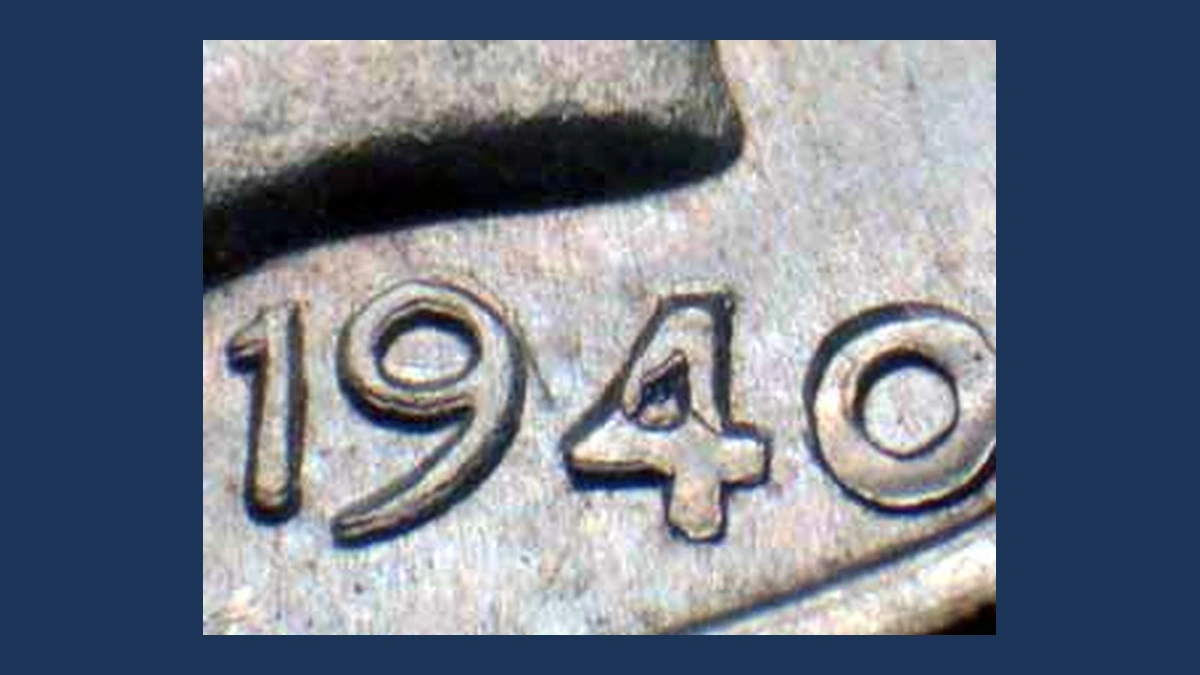
Extra outlines can appear on one face or on both faces of a Mercury dime. They were built into the stamping tools, so a single normal strike could transfer them.
The San Francisco FS-901 has a clearly doubled date, lighter front details, and doubling at STATES OF, upper-right leaves, and the top of the central rods. Other Philadelphia, Denver, and S patterns affect different lettering, dates, or the designer’s AW initials.
Some show close separation while others mainly look thick. These ordinary-issue patterns do not automatically identify errors on Proofs, collector coins made with special preparation.
Estimated Value
The 1940-S FS-901 in PCGS MS65 sold for $660 in July 2021, according to PCGS CoinFacts. Its price covers both doubled faces of one well-preserved unworn coin.
Estimate $20–$300 for matched minor patterns and about $50–$1,200 for stronger, recognized double-face examples. Condition and clarity remain important within either range.
A second side does not mean doubling a separate single-side price. Supporting mint-letter or crack features also belong to the same complete coin.
How to Identify
A loose ordinary dime should be checked against 2.50 grams and 17.9 mm with a scale and calipers before studying tiny extra lines. Inspect the grooved edge and confirm the mint letter, since the cataloged patterns differ between Philadelphia, Denver, and San Francisco.
For FS-901, magnify all four date digits, then turn to STATES OF, the upper-right leaves, and the top of the back’s central rods. The front and back patterns must agree with the recognized San Francisco pairing, rather than two unrelated examples.
Use a 10× magnifier under changing light to separate fixed extra detail from reflections and flat striking shelves. Some other patterns mainly show thickness, so compare the correct photographed details instead of demanding large separated outlines everywhere.
Conclusion
The estimated $10–$1,200 span covers several different causes, from modest tool marks to stronger doubled designs. A missing nose bridge and an extra date outline may occur on related varieties, but they are not the same physical effect.
Keep whole-coin comparisons together and never add a three-coin auction result to one specimen. For an uneven outline, check whether the design stays complete before choosing between broadstrike and off-center strike.