1998 Quarter Error List with Pictures

Two metal blanks entered the press together, leaving one 1998 quarter with a round hollow where its eagle should be. That unusual coin brought $1,292.50 in January 2013.
Other 1998 Washington Quarter errors show missing metal, repeated portraits, or a rim rising like a shallow cup. Estimated values in this guide run from $2–$2,500.
Follow the sections below to compare the last year of the regular eagle-back design, including small flaws that need magnification and larger errors visible at a glance.
1. 1998 Washington Quarter Doubled Letters and Eagle Details
A second rounded outline beside a letter or feather can suggest a doubled design on the stamping tool. Collectors call that tool a die, so the error is known as a doubled die.
Front-side reports for 1998-P mention LIBERTY, the motto, and the date. Back-side reports concern the eagle’s arrows, feathers, and surrounding lettering.
Those broad locations do not identify one specific variety. A claimed coin needs a matching example with the same detailed pattern.
Flat ledges beside letters can form during striking instead. They should not be confused with rounded doubling already present on the tool.
Estimated Value
An estimated $10–$150 suits genuine, clearly matched doubling on an ordinary 1998 quarter. Strong separation on a well-preserved coin can appeal more than a thick letter requiring special lighting.
This range does not apply automatically to every doubled-looking date. Mechanical doubling usually adds little collector value.
A recognized variety and clear close-up photographs help support the higher end. Heavy wear can hide the extra contour, while cleaning may reduce the value of a coin that otherwise has real doubling.
How to Identify
Choose a specific letter or feather to compare, rather than scanning the whole coin for anything unusual. Under a 10× magnifier, decide whether the extra part has a rounded contour or a flat shelf.
A normal clad quarter, made from bonded metal layers, weighs 5.67 grams and measures about 24.26 millimeters. Use a scale and calipers if the coin is loose, and inspect the grooves around its edge for alteration.
These measurements cannot identify a doubled die. Compare the exact feature with a documented 1998 example of the same side and mint; matching the shape of the extra outline is the essential final step.
2. 1998 Washington Quarter Raised Cracks and Rim Breaks
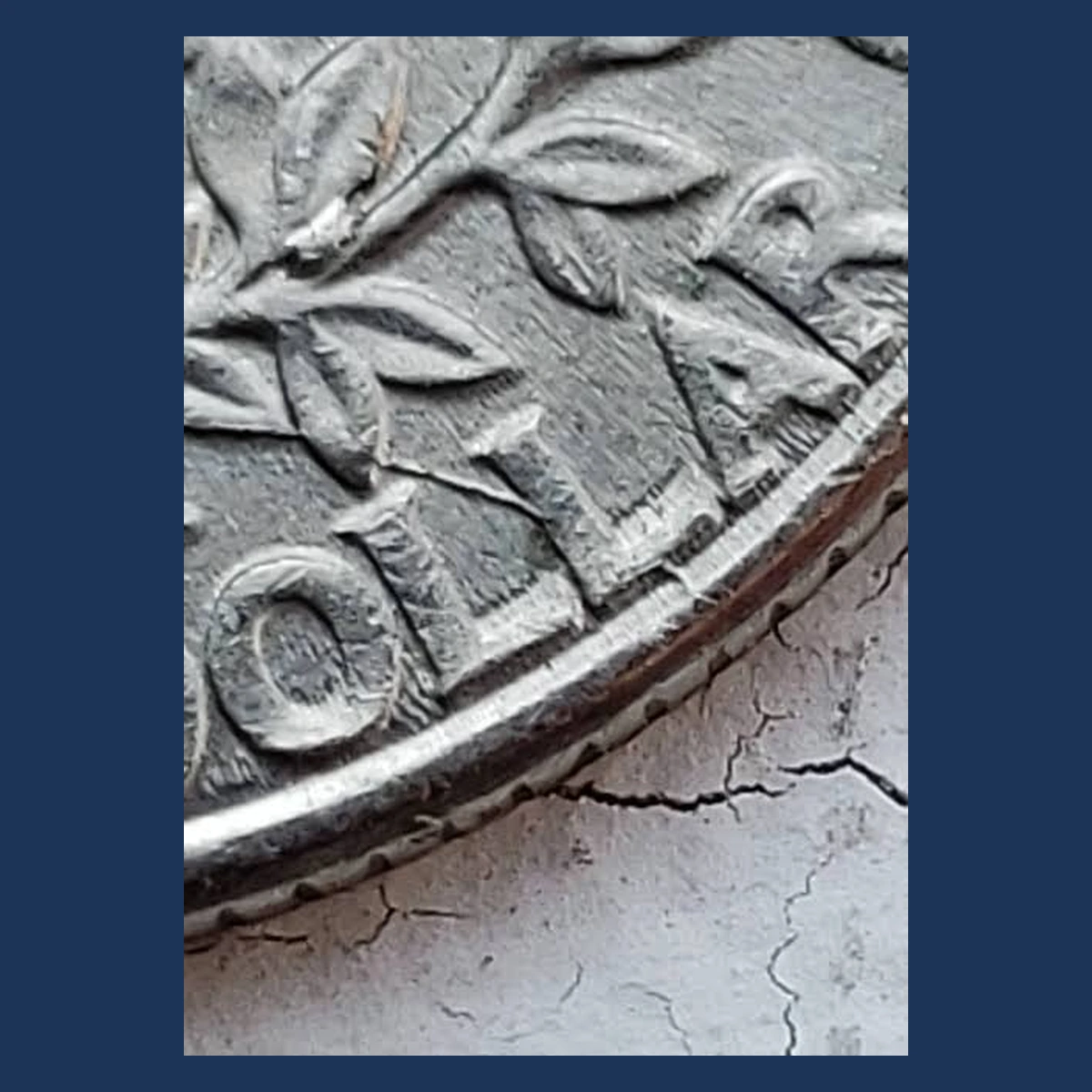
A thin ridge running from Washington’s head toward the rim can look like a spike. It forms when metal enters a crack in the stamping tool.
Several 1998-P examples appear in the spike-head catalog. Their routes and smaller back-side marks differ, so one photograph should not identify them all.
Larger tool breaks can leave a raised patch joined to the rim, called a cud. Separate catalog reports concern a P back-side break and a D front-side break.
One spike-head coin also has an unusual partly constrained edge. That additional feature belongs to its own example.
Estimated Value
Small raised cracks fit an estimated $2–$40 range, while larger genuine rim breaks can bring roughly $30–$250. Visibility usually matters more than how many small catalog numbers exist.
A 1970-D nickel with two cuds sold for $63 in October 2022. It is a different-year comparison for raised tool breaks, not a sale of a 1998 quarter.
A patch replacing part of the design is more noticeable than a hairline ridge. Later dents and attached metal should not receive this premium.
How to Identify
The P mintmark is beside Washington’s hair ribbon, while the suspected crack runs elsewhere. Identify the coin first, then compare its head-to-rim ridge with the spike-head catalog.
Use a 10× magnifier along the complete raised line. A cut with a pushed-up lip is a different feature.
Check the back for supporting marks; the LL crack in DOLLAR applies only to its particular example.
A loose clad coin should remain near 5.67 grams and 24.26 millimeters on a scale and calipers. Examine the edge grooves, especially on the cataloged coin with an additional partly constrained edge.
For a claimed cud, follow the raised patch into the rim itself.
3. 1998 Washington Quarter Broadstrike
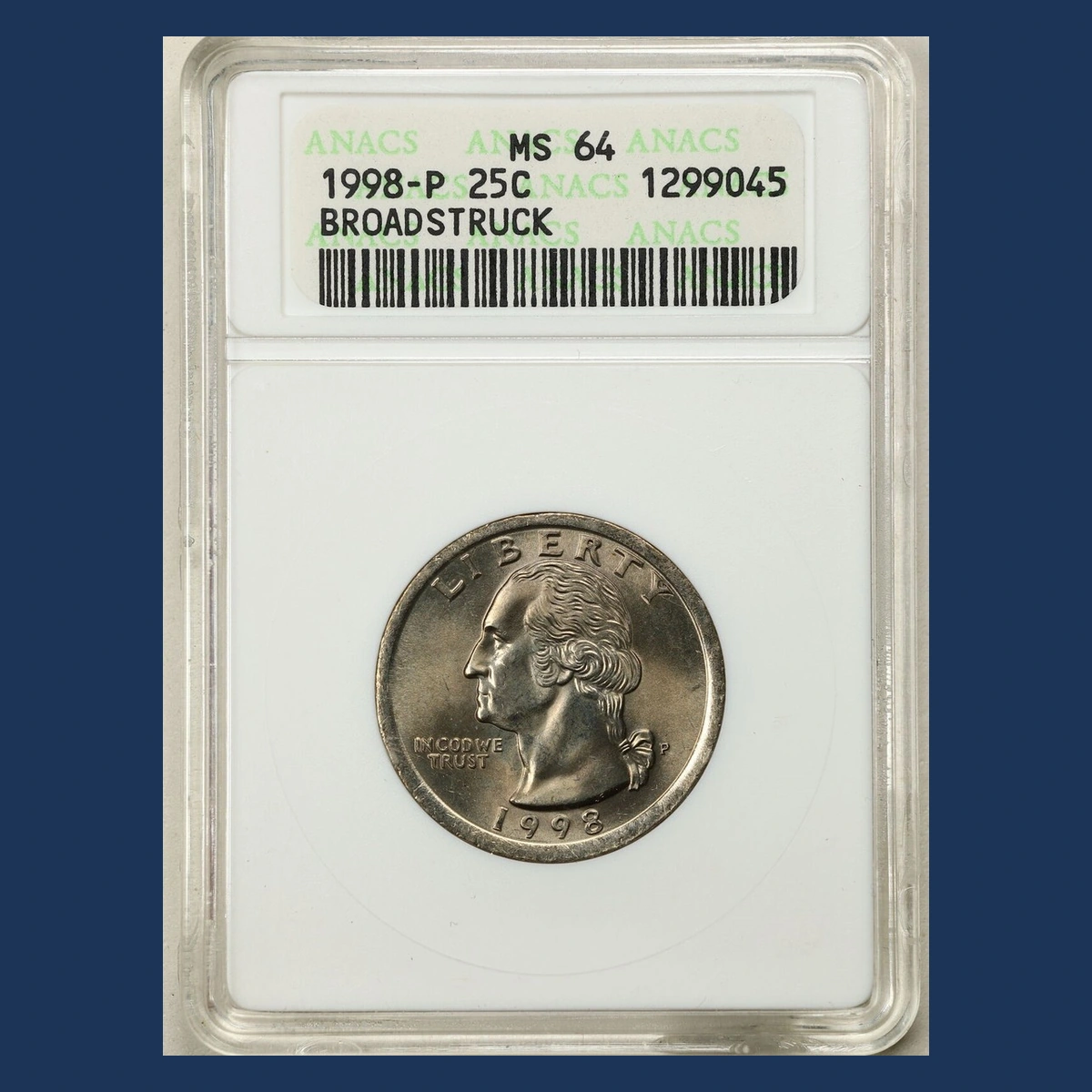
An unusually wide border can surround a quarter whose full design still fits inside it. This is a broadstrike, produced when the surrounding ring fails to hold the blank during striking.
Without that ring, metal spreads outward. The coin may have an uneven shape rather than a perfectly centered extra border.
A 1998-P example was graded NGC MS67, indicating an unworn coin with few visible marks. Its actual expanded diameter must be measured rather than copied from normal coin specifications.
Missing design beyond one side would suggest an additional off-center feature, rather than expansion alone.
Estimated Value
Estimate $40–$300 for a clear 1998 broadstrike, with visible expansion and original surfaces. A small border change sits toward the lower end; an attractive, noticeably spread coin can bring more.
As a related edge-error comparison, a 1990-P nickel with a partial collar sold for $99 in June 2025. Its stepped edge differs from an unrestricted broadstrike.
A high grade helps, but shape still matters. An ordinary quarter flattened after minting should not be valued as a genuine expanded strike.
How to Identify
Measure the outline in several directions with calipers before deciding that the coin is oversized. Compare with the normal 24.26-millimeter diameter, and use a scale against the ordinary clad weight of 5.67 grams.
A broadstrike spreads metal rather than removing it.
Follow the outermost letters and the date to see whether the complete design remains. A 10× magnifier can reveal flattened detail from later hammering or rolling.
Inspect the side for missing or incomplete edge grooves and for a naturally expanded rim. A full design surrounded by extra struck metal is the practical feature that separates a broadstrike from a merely off-center design.
4. 1998 Washington Quarter Defective Blank
A rough or incomplete area can begin in the metal disc before a quarter receives its design. That disc is called a blank or planchet.
One 1998 coin was graded PCGS MS64 and described as struck on a blank with about a 10% defect. The description does not by itself identify the flaw as a missing outer layer or a clipped edge.
The remaining design and the flaw’s boundary are important. They can show how the metal behaved when struck.
A similar-looking damaged area made after minting may have sharply disturbed edges or scrape marks.
Estimated Value
A blank defect of this size is estimated at $50–$300. The amount depends on how clearly the pre-strike flaw can be seen and how much attractive design remains.
An irregular empty patch is not valuable merely because it covers a large area. Its surface must show that the defect belonged to the blank before striking.
Corrosion, grinding, and later digging reduce appeal. A naturally struck boundary supports a stronger price than an unclear damaged spot on a heavily worn coin.
How to Identify
Before naming the defect, record the coin’s weight and size with a scale and calipers. Normal clad standards are 5.67 grams and 24.26 millimeters; the reported 10% defect is not a measured 10% weight loss.
Study the nearest letter at 10× and follow it toward the irregular area. A strike can soften or spread a pre-existing flaw, whereas later digging cuts through the finished design.
Check the grooved edge for a fresh cut or grinding, and compare the opposite face for related damage. Color alone cannot establish a missing outer layer; the useful clue is naturally struck design flowing into the original defect.
5. 1998 Washington Quarter Tool Scrapes and Marks Across the Strike
A raised line across the eagle has been reported under the nickname “Wounded Eagle.” That name alone does not identify a cataloged variety or prove a particular cause.
Two separately studied 1998-P coins show a more specific pattern. Scrapes cross the unstruck front margin and continue across freshly struck detail.
Their backs also show stamping-tool scrapes and small blocked areas near the eagle’s legs. A later example has stronger marks.
The linked surfaces help explain damage continuing through the striking process. They do not make every eagle scratch the same rare error.
Estimated Value
A small genuine raised tool line is estimated at $5–$75. A well-established example of the unusual scraping that continued across the strike can be estimated around $75–$400.
The stronger range requires the connected features described on the studied coins. A random scratched quarter does not qualify.
Clear photographs of both faces help explain the error to another collector. Surface condition and how convincingly the scrape crosses the striking boundary matter more than a nickname or an unsupported rarity claim.
How to Identify
Locate the narrow unstruck area on the front first. Follow the scraping from that margin into the newly struck design rather than starting with an isolated scratch.
In the two studied examples, the pattern continues near the end of LIBERTY. Examine the back at 10× around the eagle’s legs for the related tool scrapes and small blocked impressions.
A normal clad coin starts near 5.67 grams and 24.26 millimeters on a scale and calipers. Inspect its edge grooves and raised lip for damage consistent with the same event.
For the separate raised-eagle-line claim, verify that the line is raised; for the unusual scraping, trace the same moving mark across blank margin and struck detail.
6. 1998 Washington Quarter Large Off-Center Strike
Only a small portion of the design appears when most of the blank misses the stamping tools. A broad plain area remains beside the struck crescent.
A reported 1998 example was described as about 80% off center, with the date and parts of the motto surviving. It appeared in a mixed five-coin auction lot.
That description does not establish a visible mintmark or a professional grade for this individual coin. Each feature must belong to the quarter itself.
A clipped blank is different: it lacks metal, while an off-center coin usually retains the unused area.
Estimated Value
A genuine large off-center 1998 quarter with a readable date is estimated at $100–$450. An attractive outline and clear remaining details can help the upper end.
A 1999-D Delaware quarter struck 80% off center sold for $139 in December 2024. That later state-quarter result is a comparison, not the price of the 1998 mixed-lot coin.
A missing date generally makes identification harder. The price of a group containing several different errors should not be assigned to this one quarter alone.
How to Identify
Find the surviving date before using the 1998 name. If the mintmark area never received a design, a missing letter does not identify Philadelphia.
Compare the struck and blank portions on both faces. The large unused area should remain real metal, unlike the absent area of a clip.
A scale can compare a loose clad coin with 5.67 grams, while calipers show how its outline differs from a normal 24.26-millimeter quarter. At 10×, inspect the transition into the blank area and any surviving edge grooves.
Grinding can remove detail but leaves altered metal. Look for the uninterrupted plain blank beside a naturally cut-off design on both sides.
7. 1998 Washington Quarter Impressions from Trapped Material
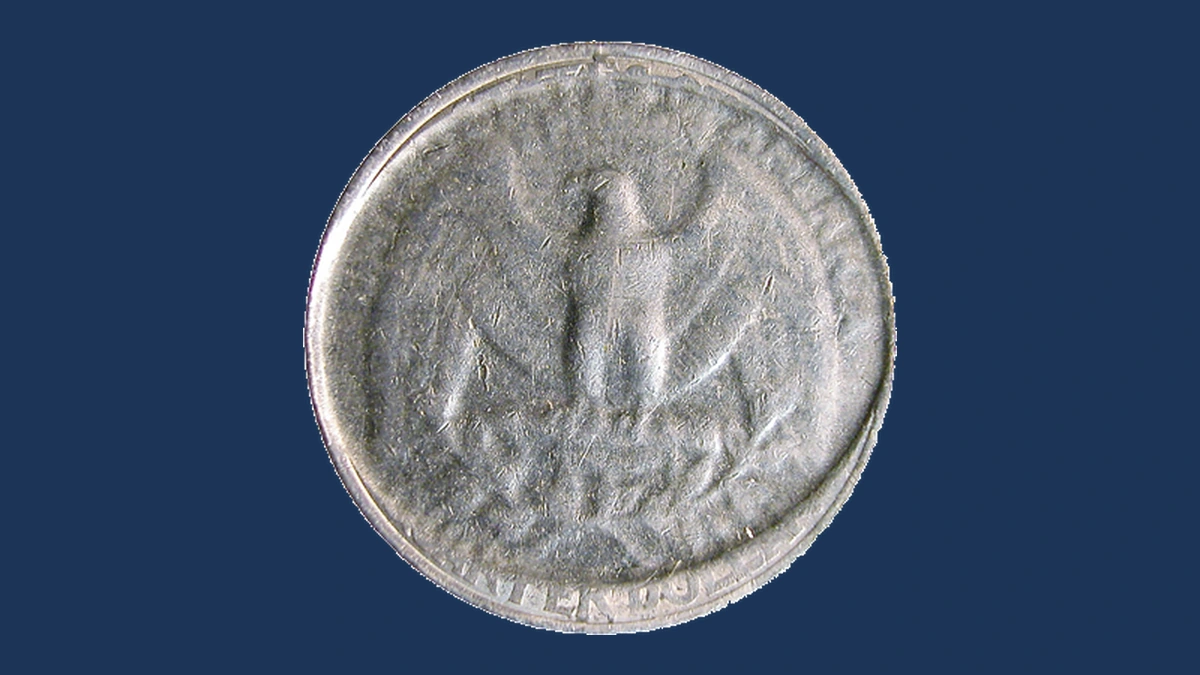
A shallow oval depression on one 1998-D quarter leaves narrow bands of normal design above and below it. The design within the oval is evenly blurred.
The reported cause was a thin outer layer detached from a different oval blank. It lay between this quarter and a stamping tool during the blow.
The quarter itself was not necessarily missing its own outer layer. The loose intervening sheet made the impression.
A separate 1998-P forum coin has a recessed mark interpreted as struck through material. Its object and exact position need to be judged separately.
Estimated Value
A small genuine struck-through impression is estimated at $20–$150. A clear oval-layer impression with the described design pattern can be estimated around $100–$500.
A 1986-P nickel with a struck-through error sold for $204 in June 2023. That different-year coin offers a comparison for a visible foreign-material impression.
The amount of missing detail is only one factor. Original surfaces and a convincing explanation of the depression support value, while damage after minting does not earn the same premium.
How to Identify
For the oval example, begin on the back and compare the design inside the shallow depression with the narrow normal areas above and below. The uniform blur inside should relate to the sheet that blocked the strike.
Use a 10× magnifier along that boundary. A deep gouge with pushed-up metal is a different appearance.
Weigh the coin itself against 5.67 grams and check its diameter against 24.26 millimeters with calipers. A trapped sheet from another blank does not require this quarter to lose a whole layer.
Inspect the grooved edge as well. The paired clues are a shallow oval boundary and evenly weakened design within it.
8. 1998 Washington Quarter Clipped Blanks, Including Combined Errors
Some 1998 quarters started with an incomplete blank. The missing area may be curved, straight, or formed where the punch reached the end of a metal strip.
A P example combines two curved clips with an off-center strike. Another D coin combines 15% double clipping with a 10% off-center strike.
A different D example has about 35% total double clipping. P reports also include a 38% straight clip and an 8% strip-end clip.
These figures describe different coins. A missing section and an unstruck crescent can appear together without representing two separate specimens.
Estimated Value
Estimate $30–$200 for smaller genuine clips and roughly $150–$650 for large missing sections or attractive combined errors. The estimate applies to the complete coin, not each clip separately.
A 1999-D Pennsylvania quarter with overlapping clips sold for $74 in December 2024. That provides a different-year comparison for multiple missing areas.
Strong shape, readable date, and natural boundaries help support a premium. Sawing or cutting an ordinary quarter does not create a mint clip, even if the resulting outline looks dramatic.
How to Identify
Put a normal quarter beside the suspected coin so that missing metal and unstruck metal are easy to separate. The D combination has 15% double clipping plus a different 10% off-center displacement.
With calipers, record the remaining outline against 24.26 millimeters, then compare its weight with 5.67 grams on a scale. Missing blank metal should affect the weight, while an off-center strike usually leaves that unused metal present.
Examine the surviving edge grooves and each missing boundary at 10× for natural cut-and-break texture rather than saw marks. Straight and strip-end clips have different outlines from curved bites; follow the complete missing boundary before deciding which shape is present.
9. 1998 Washington Quarter Missing Outer Layers
An ordinary quarter has copper-nickel outer faces bonded to a copper core. A missing face can leave a copper-colored design and lower the coin’s weight.
Both P and D examples have been reported for 1998. The affected side and actual weight must come from each individual coin.
A reddish surface alone is not enough. Staining, added copper plating, or chemical stripping can produce a similar color after minting.
Silver Proof quarters use a different metal mixture and should be kept separate from these ordinary clad examples. They do not have the same copper-core construction.
Estimated Value
For a genuine full outer-layer loss, estimate $100–$700 on an ordinary 1998 quarter. A clear naturally struck copper face is more appealing than a heavily damaged or corroded surface.
A 1999-D Connecticut quarter missing its back layer sold for $149 in December 2024. That result supplies a nearby-year comparison without identifying the affected face of either 1998 report.
Weight and surface quality matter together. A normal-weight stained coin should not receive the premium assigned to real missing metal.
How to Identify
First establish that the coin is an ordinary clad P or D quarter, rather than a silver Proof. Its normal starting weight is 5.67 grams.
Weigh the loose coin yourself. A generic missing-layer weight does not replace that reading.
At 10×, inspect where exposed copper meets the grooved edge for scraping, added plating, or chemically eaten metal. Then compare the design struck into that surface with the intact opposite face.
Use calipers against the normal 24.26-millimeter diameter and look for broader changes from grinding. A layer can be gone without reducing the diameter much.
Combine the measured weight loss with a natural layer boundary before treating copper color as evidence of missing metal.
10. 1998 Washington Quarter Sunken Mirror Image with a Broadstrike
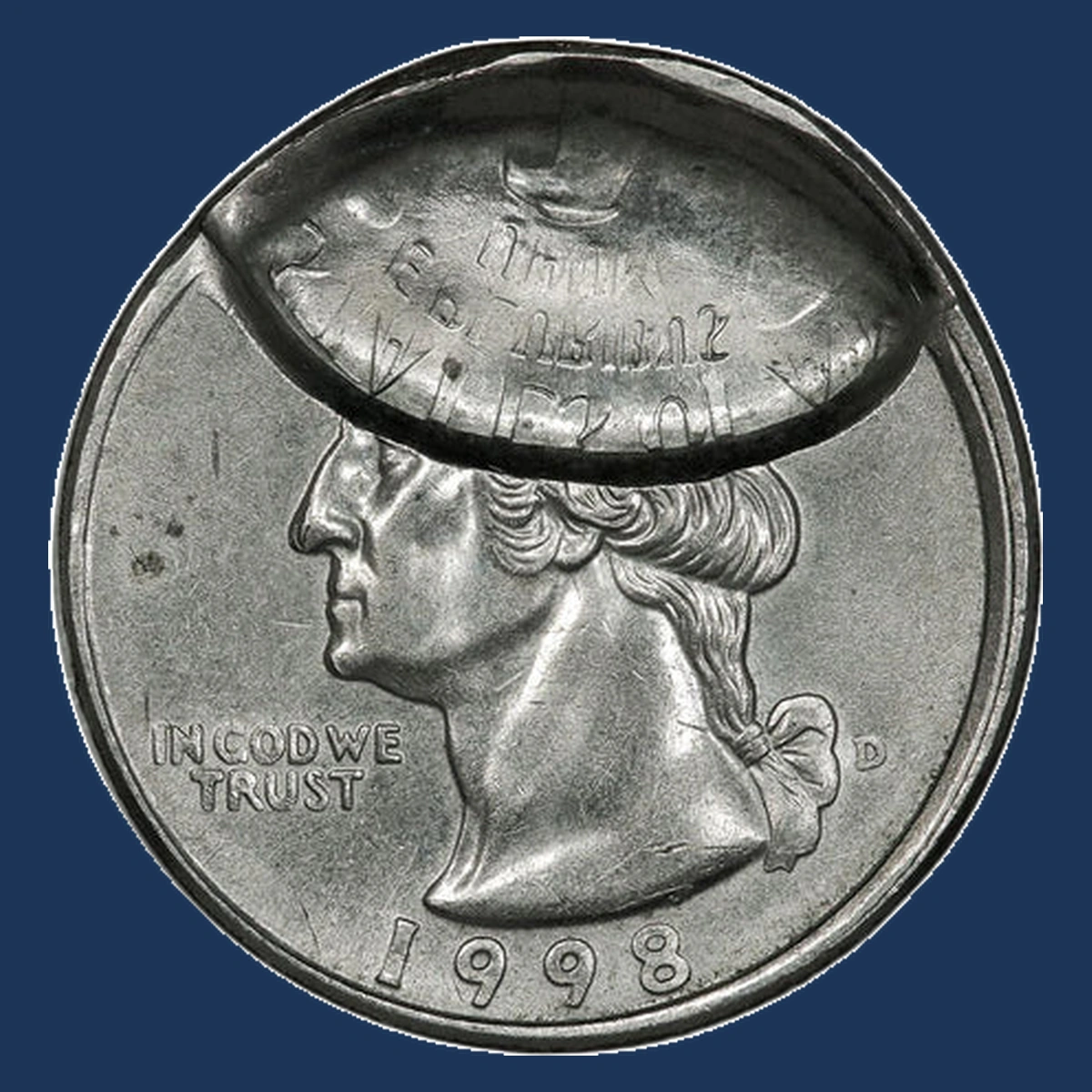
Backward, sunken letters can appear when a struck coin blocks a stamping tool. Its raised design presses into the next blank and leaves a recessed mirror image.
This effect is called brockage. It differs from ordinary doubling, where repeated details remain raised and face the usual direction.
A 1998-P PCGS MS66 example combines about 10% brockage with an expanded strike. The reported description does not assign the mirror image to a particular face.
The outward spread and mirrored impression belong to the same coin. Both must be understood before comparing it with a simple broadstrike.
Estimated Value
Estimate $150–$800 for a clear partial brockage combined with a broadstrike. The size and readability of the backward design help determine where a coin falls in that range.
A 1999-P New Jersey quarter with 80% front brockage and a broadstrike sold for $312 in December 2024. Its much larger affected area makes it a different comparison.
The two effects should receive one whole-coin price. A normal raised double image or a damaged flat patch does not qualify as brockage.
How to Identify
Turn the coin under low light and decide whether the repeated detail lies below the surface. A 10× magnifier should reveal backward lettering or another recognizable mirrored design within the depressed area.
Do not assign a side from the label alone; inspect both faces of this particular example. Measure the expanded outline with calipers against the normal 24.26 millimeters, and compare loose-coin weight with 5.67 grams.
Inspect surviving edge grooves and the spread rim for later flattening. A naturally expanded coin bearing a readable, recessed mirror image explains the combined error more convincingly than a broad blank depression without recognizable design.
11. 1998 Washington Quarter Repeated Strikes and Related Impressions
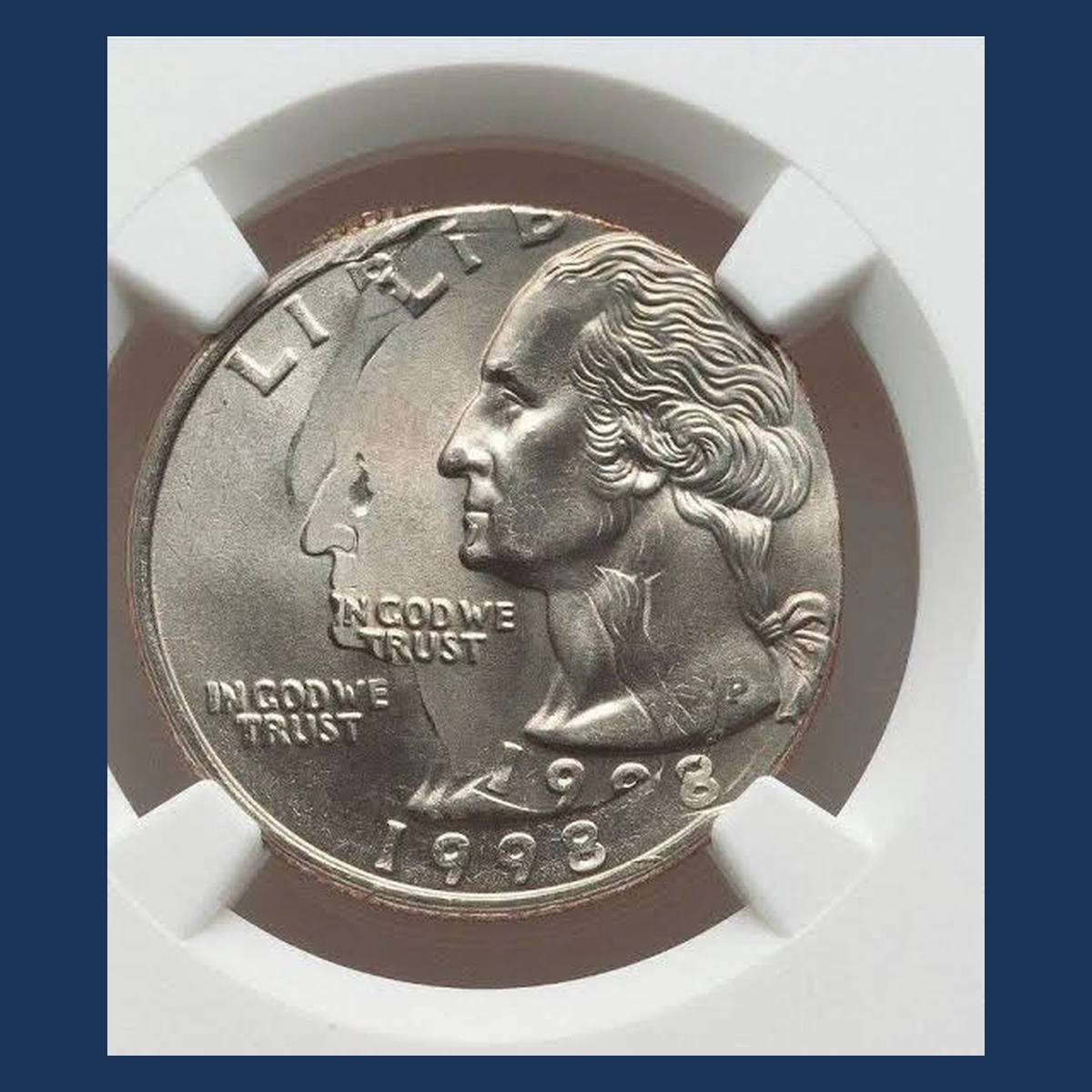
Several Washington portraits or dates can remain when a coin moves between repeated blows. Some 1998-P quarters were struck three or four times, with different directions and amounts of displacement.
One D example was first struck 10% off center, then 90% off center. Another coin has a 70% off-center second strike with part of its back blocked.
A separate P multiple-strike coin carries a recessed, backward UN from contact with another struck quarter. Its number of blows is unspecified.
Not every four-strike coin retains a readable mintmark. The repeated designs must tell each coin’s own sequence.
Estimated Value
A 1998-P NGC MS63 double strike sold for $312 in December 2024. Estimated values are $150–$600 for clear doubles and about $300–$1,200 for attractive triple, quadruple, or combined strikes.
More blows do not guarantee a higher price. Collectors must still be able to recognize what happened.
A clear surviving date, distinct shifted portraits, and original surfaces help. The backward UN belongs to one combined coin and should not create an extra price added to its multiple-strike value.
How to Identify
Find one complete or nearly complete portrait and associate it with its date and rim. A 10× magnifier helps distinguish later sharp details from earlier impressions flattened by another blow.
On the documented 40% triple example, the later positions lie near 1:30 and 2:30. Other reported coins need their own paths.
A scale and calipers compare a loose clad coin with 5.67 grams and 24.26 millimeters. Repeated blows may expand the outline and interrupt its edge grooves without taking metal away.
Inspect the back as well as the front before deciding that a particular area was blocked.
For the combined UN coin, look for recessed backward letters within the upper front indentation.
12. 1998 Washington Quarter Raised Cup from a Stuck Coin
A narrow wall rises most strongly near the left side of this 1998-P quarter. Its front portrait remains sharp, while the back has become blurred through repeated contact.
The coin stuck to a stamping tool and continued to be driven against other blanks. As its metal spread around the tool, it formed a cap-like shape.
This is called a die cap. The documented NGC MS68 coin also shows a reversed trace of Washington’s nose on the back.
Its high grade describes exceptional preservation. The important error features are the raised wall and the different appearances of its two faces.
Estimated Value
The documented 1998-P NGC MS68 die cap sold for $1,035 on March 26, 2010. An estimated $600–$1,500 range suits a recognizable, attractive example of this general form.
That historical sale is a guide rather than a fixed current price. Wall height, visible design, and original surfaces affect buyer interest.
A tall but damaged cap may appeal less than a cleaner shallow example. Bending a quarter after minting does not produce the repeated-strike surface changes expected on a genuine die cap.
How to Identify
Leave the raised wall untouched. Trying to flatten it would remove the feature that explains the error.
View the coin from the side and locate the tall narrow rim near 9 o’clock. At 10×, compare the sharp front portrait with the blurred back and the reversed nose trace.
Use calipers gently on accessible outer points rather than squeezing the cup. A normal clad quarter starts at 24.26 millimeters and 5.67 grams, but the altered shape needs its own measurements on a scale.
Inspect any remaining edge grooves and the wall for fresh bending marks. A naturally grown wall together with repeated-contact changes on the opposite face supports the cap explanation.
13. 1998 Washington Quarter Depressions Made by Another Blank
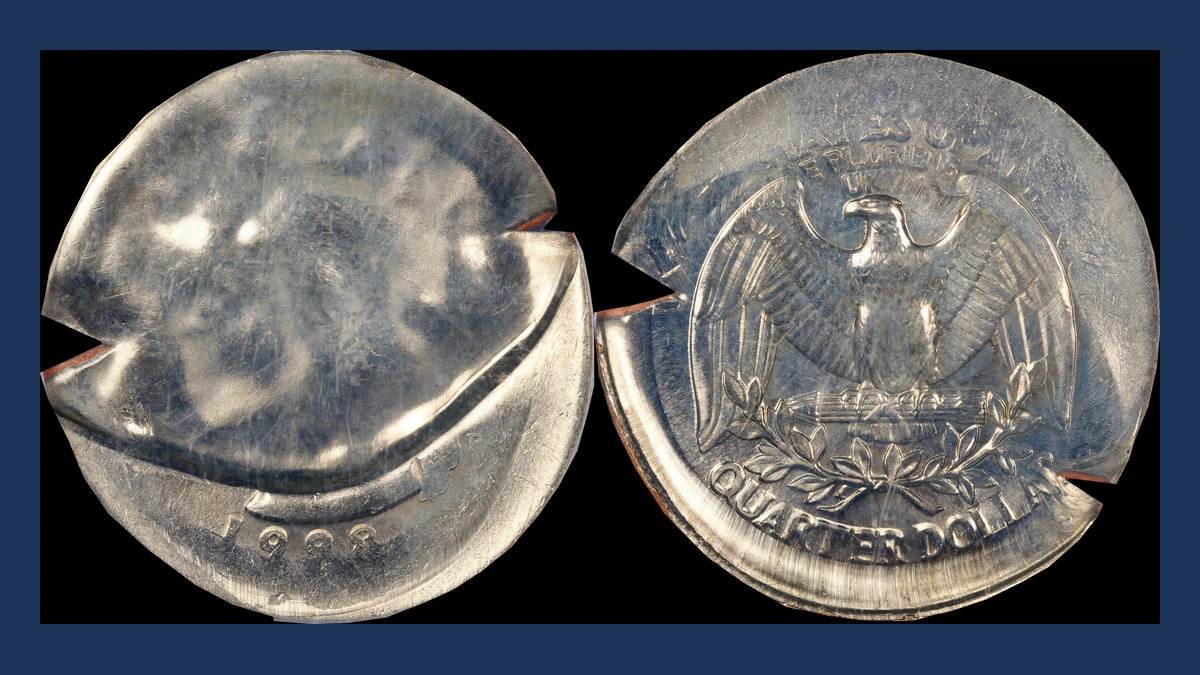
A round hollow occupies much of the eagle side on one 1998-P quarter. A cent blank lay between the quarter blank and the back stamping tool during the blow.
The eagle remains faintly visible within the hollow, while the outer lettering rises around it. The cent that made the impression was not included with the auction coin.
Other P examples combine a depression with an expanded strike or a 25% off-center strike and 15% back indentation. They are different coins.
An overlapping blank makes a depression without necessarily leaving a backward coin design.
Estimated Value
The centered cent-blank impression coin, graded PCGS MS64, sold for $1,292.50 in January 2013. Estimate $250–$1,800 for clear genuine indentations, depending on size and combined striking effects.
A centered, recognizable impression can attract more attention than a small feature near the rim. The comparison concerns the quarter alone, because its blocking cent blank was absent.
Do not add a second coin’s value to that price. Damage from pressing coins together later should not receive a mint-error premium.
How to Identify
Look inside the round depression for the faint eagle before judging the raised outer border. The centered example retained design through the indentation, which helps explain how the blank blocked the blow.
A scale should compare the loose quarter with 5.67 grams. Calipers can record its outline against the ordinary 24.26 millimeters; the missing blocking blank is not part of that weight.
Examine the boundary and edge grooves at 10× for fresh squeezing or machining. For the off-center combination, separate the 25% strike displacement from the 15% depressed area.
A naturally struck hollow with faint design and a matching raised surrounding border is the key feature on the centered example.
14. 1998 Washington Quarter Struck on Nickel or Cent Blanks
A quarter design can appear on a smaller disc intended for a nickel or cent. The different blank changes the available space, metal, and weight.
Recorded P and D nickel-blank examples include actual 5.0-gram coins. One P example sits slightly off center near 1 o’clock while retaining readable lettering.
A separate 1998-P PCGS MS65 coin was struck on a cent blank. Its actual weight and metal must be established from that coin, rather than borrowed from a normal quarter.
These are wrong-blank strikes. They do not necessarily carry an earlier nickel or cent design.
Estimated Value
A 1998-P quarter on a nickel blank, graded PCGS MS64, sold for $276 in September 2024. Estimate $200–$750 for typical genuine nickel-blank examples, depending on condition and visible design.
For a clearly authenticated cent-blank quarter, an estimated $400–$2,000 allows for the different metal and stronger loss of surrounding design. It should not inherit the nickel coin’s exact price.
Readable date and mintmark help buyers identify the coin. Scraped, reduced, or plated ordinary quarters fall outside these mint-error ranges.
How to Identify
Weigh the loose coin and measure its outline before deciding which blank was used. Nickel standards are 5 grams and 21.2 millimeters; a modern cent normally starts at 2.5 grams and 19.05 millimeters.
Those standards are comparison points, and striking can enlarge the original blank. The recorded 5.0-gram nickel examples have actual measurements, while the cent report does not supply one.
Inspect the edge and any grooves at 10× for grinding or plating. Compare the naturally truncated quarter design with a normal 5.67-gram, 24.26-millimeter quarter, then have a specialist confirm that the measured metal and size fit the same smaller blank.
15. 1998 Washington Quarter Matching Two-Coin Error Pair
Sometimes two coins preserve connected parts of the same striking accident. One documented pair includes a quarter with a stepped edge and a second piece struck about 85% off center.
The first coin was graded NGC MS63 and the second MS66. The second piece’s 1998-P identity comes from the pair, rather than a claim that it displays a complete date.
A stepped edge can form when a blank sits partly within the ring that normally controls its side. The other coin preserves the strongly displaced strike.
Keeping the pair together makes the shared accident easier to understand.
Estimated Value
Estimate $600–$2,500 for the two-coin pair together. The range depends on how clearly the contact shapes fit, the coins’ condition, and the strength of their identification as a pair.
A single double-struck 1998-P quarter sold for $312 in December 2024. That is only a lower-level comparison for an individual striking error, not a transaction for this paired set.
Do not divide a pair’s price evenly between its pieces. Separating them can remove evidence that makes the complete set desirable.
How to Identify
Keep the two coins in their holders and compare their contact areas without trying to fit them physically together. Photographs should show how the affected shapes relate.
On the first coin, examine the change between the smooth expanded side and the normal edge grooves. On the second, use a 10× magnifier to inspect the small surviving design and broad untouched blank area.
If loose measurements are available, record each separately with a scale and calipers against the ordinary clad standards of 5.67 grams and 24.26 millimeters. Never substitute the combined weight for either coin’s reading.
Confirm the pair through its linked contact shapes and grading records, rather than requiring a full date on the mostly unstruck piece.
Conclusion
The estimated $2–$2,500 range covers very different mistakes, from tiny raised cracks to unusual combined strikes and paired coins. A spectacular shape does not replace careful identification.
Keep each coin’s mintmark, affected side, and measured weight with its own photographs. For a pair, preserve both pieces together; for a bent or cupped coin, leave the shape untouched rather than trying to improve its appearance.