1974 Dime Error List with Pictures

PCGS records a $375 eBay result for a twice-struck 1974-D dime. A much lighter Denver dime has an entirely different surprise: its copper center is missing.
This 1974 dime error list covers small lettering changes, missing metal, and misplaced strikes. Estimated values run from $5–$2,000, with the upper end reserved for rare blank errors after expert identification.
Read on to see which details separate these coins from ordinary damage.
1. 1974 Roosevelt Dime Damaged or Doubled Mintmark Punch
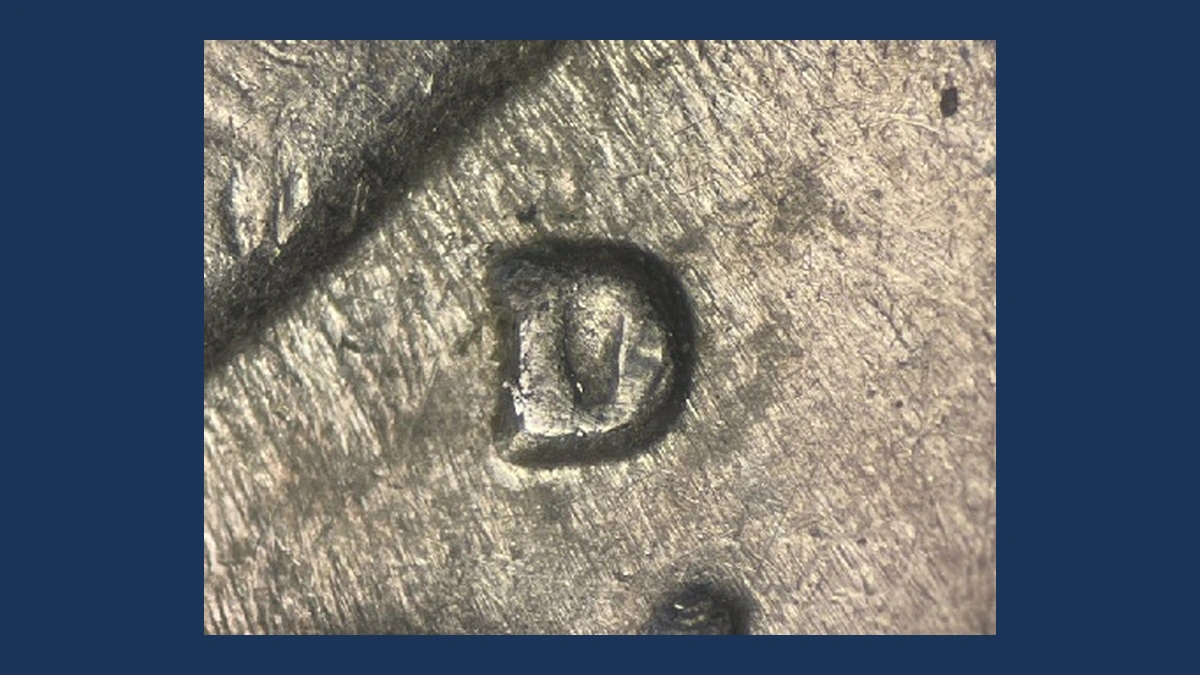
The tiny D can have a fork at its lower tip. That shape came from damage to the punch used to place the letter in a die, the tool that stamps the coin.
The 1974-S Proof, a specially made collector coin, has a related mintmark look-alike. Its extra outline came from a doubled punch.
Two former S repunched-mintmark listings were withdrawn for that reason. Neither case proves that a worker punched the letter into the die twice, even though the finished mintmark can look doubled under magnification.
Estimated Value
Budget an estimated $5–$40 for clearly identified examples of these punch features. Most of the price depends on the coin’s condition and, for the S, the quality of its collector finish.
The extra outline does not justify prices for a scarce repunched mintmark. A sharp close-up makes the feature easier to collect, but an impressive photograph cannot turn the damaged D punch into a rare D-over-D variety.
How to Identify
Find the mint letter behind Roosevelt’s neck, above and left of the date. With a 10× magnifier, compare the lower tip of the D with Wexler’s damaged-punch example.
The S belongs on a Proof collector coin, while the D belongs on an ordinary Denver issue. Both normally weigh 2.268 g and measure 17.91 mm; a scale and calipers can check loose examples.
For the S, compare the whole extra outline with the withdrawn punch listings. Do not use a single shiny edge as evidence of a second letter.
A normal Philadelphia dime has no mint letter at all. On the Denver variety, the useful small feature is the forked lower tip, not a separate complete D.
2. 1974 Roosevelt Dime Doubled Die on the Front
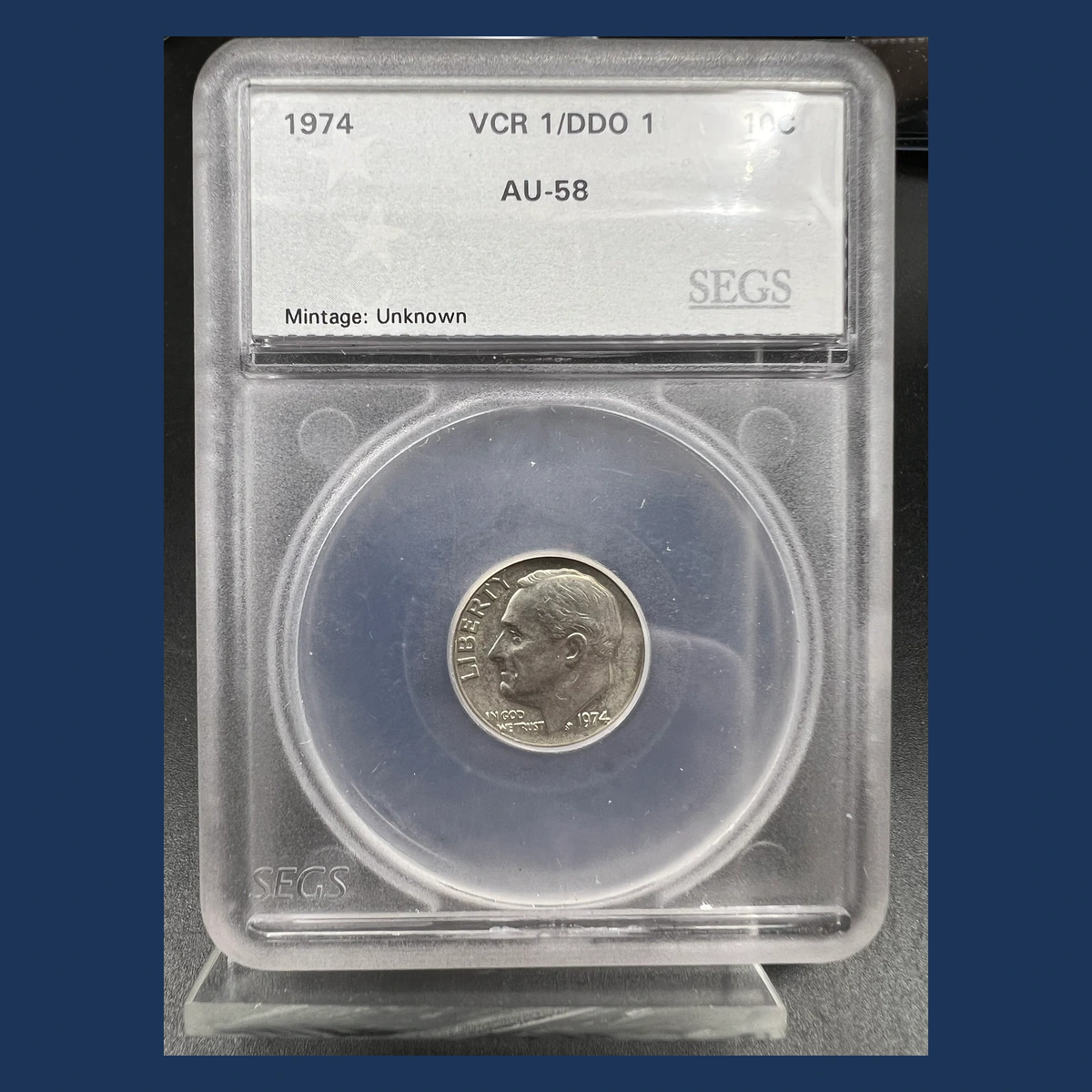
An extra edge on LIBERTY can be small enough to miss without magnification. Year guides point to the R and T as places to inspect for reported front doubling.
A doubled die carries a doubled design before any coin is struck. It can repeat that same extra detail on many coins.
This differs from a coin receiving two strikes. The 1974 reports do not establish one named variety for every mint, and broad, blurry lettering alone cannot show that a doubled design was present on the tool.
Estimated Value
Allow an estimated $15–$100 for a modest 1974 doubled die once its pattern is properly identified. This range compares minor modern dime varieties, rather than borrowing prices from dramatic doubled-date cents.
Separated letter edges make the error easier to demonstrate. Wear can hide those edges, while a flat shelf beside a letter often comes from movement during striking and usually adds little value to an otherwise ordinary dime.
How to Identify
Try to find a split corner on the R or T in LIBERTY. A 10× magnifier and light from opposite directions help separate a second rounded edge from a changing shadow.
A flat, lowered shelf beside a letter usually points toward movement during striking. It does not need a doubled design in the stamping tool.
Match the mint letter and finish when choosing a normal 1974 coin for comparison. That keeps ordinary design differences from looking like extra outlines.
If checking a loose coin, use a scale and calipers for the standard 2.268 g and 17.91 mm. Normal readings do not prove a doubled die.
Photograph the letter straight on: a fixed split or separated rounded outline is the detail worth matching.
3. 1974 Roosevelt Dime Struck Through Material
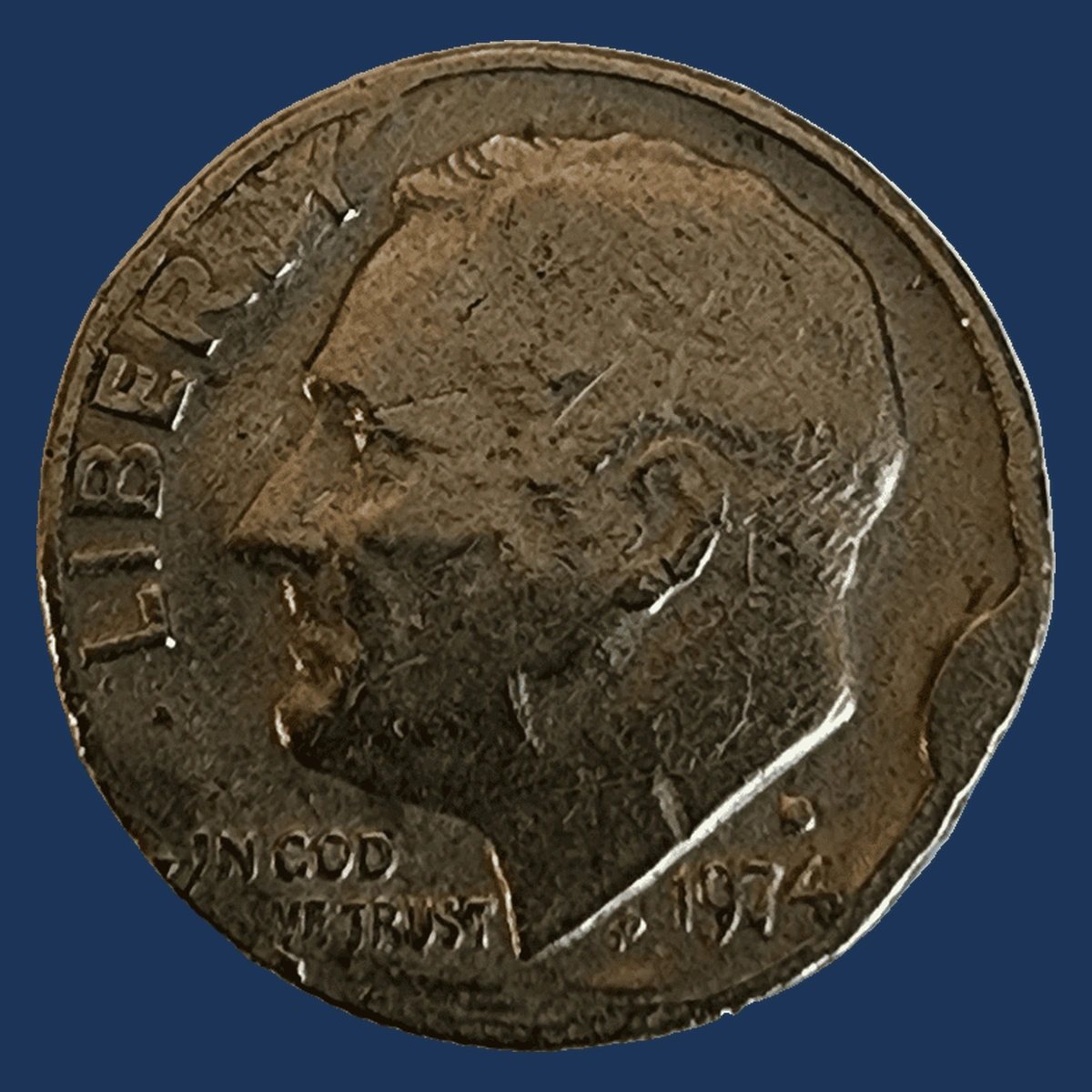
A patch of missing design can form when something gets between a coin blank and the stamping tool. Collectors call this a strike-through.
The blocking material prevents part of the design from reaching the metal. Soft grease may leave weak letters, while a harder object can leave a more clearly shaped hollow.
A 1974 year guide reports a struck-through coin with weak detail. It does not identify the object or a particular mint, so the shape of a suspected mark needs examination before calling it cloth, wire, or another specific material.
Estimated Value
An estimated $10–$125 covers small grease-filled areas through more obvious, properly identified impressions. This compares ordinary Roosevelt dime strike-through errors of similar size.
A faint missing letter generally attracts less attention than a deep mark with a recognizable shape. Damage can imitate both, so the higher end depends on a clear Mint-made impression, readable date, and surfaces that have not been scraped or polished to exaggerate it.
How to Identify
Check whether the weak area lies on a high point or interrupts otherwise sharp, sheltered detail. Wear flattens exposed parts of the design first; a blocker can affect an unexpected patch.
With a 10× magnifier, follow the patch’s boundary without cleaning it. Scraped metal or a raised lip around a hollow can reveal later damage.
A scale and calipers should compare a loose coin with 2.268 g and 17.91 mm. Normal measurements are compatible with this error because the blocking material need not remove any metal.
Photograph both faces under the same lamp. Clear detail beside a weak patch is more informative than a dime that looks soft or worn everywhere.
4. 1974 Roosevelt Dime Indent from an Overlapping Blank
A smooth, sunken bite in the design can come from another blank overlapping the dime during striking. The upper blank shields part of the lower one from the die.
This is an indent, not a missing piece of the coin. The metal remains, but the normal design cannot fill the covered area.
A dealer catalog lists an unworn 1974 dime with a 10% indent at 7:30. That clock position locates the hollow on the pictured face; the description does not establish which face carries it.
Estimated Value
A small 1974 indent fits an estimated $15–$125 range. The cataloged 10% example carried an $11 minimum bid, which was a starting amount rather than a completed sale.
The estimate compares small dime indents with readable dates and uncomplicated surfaces. A clear curved boundary is easier to appreciate than a shallow, indistinct depression, while heavy wear or damage can make the original contact area difficult to recognize.
How to Identify
A smooth hollow should still contain coin metal, so do not confuse the indent with a clipped edge. Compare the loose coin’s weight with 2.268 g on a scale, and its intact outline with 17.91 mm using calipers.
Look along the curved boundary through a 10× magnifier. The normal design should stop where the overlapping blank blocked the die, without backward letters or a mirror portrait filling the hollow.
The catalog locates this example’s 10% impression at 7:30 but does not name the affected face. Photograph the hollow from that edge inward, checking for fresh crushing or tool marks; a blank-shaped recess without copied design is the useful distinction.
5. 1974 Roosevelt Dime Broadstrike
Look beyond the lettering on a broadstrike and the border seems too wide. The coin spread sideways because the surrounding metal ring, called the collar, did not contain it properly.
The design can remain complete even though the dime is wider than normal. A broadstrike may also sit unevenly within the expanded metal.
Year reports include this mechanism for 1974 without establishing a particular mint or measured example. The important distinction is the spread blank with its full design, rather than a crescent where part of the design missed the metal.
Estimated Value
For a straightforward broadstrike, estimate $20–$150. As a nearby-year comparison, a 1995-P example graded NGC MS66 with sharp torch bands sold for $45.
That later coin supports the general price scale, not a specific 1974 sale. Extra width, clear rim detail, and a readable date help.
Cuts or flattened edges can imitate the shape, so a proper examination matters before paying for a broadstrike.
How to Identify
Trace the outer letters on both faces before measuring anything. A broadstrike retains the full design, while an off-center strike sends part of that design beyond the available metal.
Next compare the border with an ordinary dime. The extra space should be struck metal outside the lettering, rather than the result of a flattened or cut edge.
Calipers can measure the spread beyond 17.91 mm. A scale checks whether a loose coin remains near the standard 2.268 g.
Use a 10× magnifier to inspect the edge for filing, squeezing, or hammer marks. Keep sealed coins protected and rely on their visible outline.
A complete design surrounded by genuine spread metal is the combination to look for.
6. 1974 Roosevelt Dime Straight or Curved Clipped Blank
Part of the round outline is missing on a clipped blank. This happens before the design is struck, when the blank-cutting machine overlaps an earlier hole or reaches the edge of the metal strip.
An overlap can leave a curved gap. Cutting at a strip edge can leave a straight one.
An NGC MS66 1974 dime provides a cataloged straight-clip example, while year guides also report curved clips. They share the missing-blank mechanism, but the curve, size, and position of one example should not be assigned to the other.
Estimated Value
The straight-clip NGC MS66 dime sold for $41 in July 2021. For the broader group, estimate $20–$175, with small worn clips toward the lower end.
MS66 describes an unworn coin with few marks, but condition is only part of the price. A larger natural gap can be more striking than a tiny one, provided the date remains readable and the missing edge was formed before striking.
How to Identify
Photograph the gap from the front, back, and edge. Through a 10× magnifier, study whether the rim and nearby design flow naturally toward the missing area.
That examination matters more than a low weight alone. A scale should compare the loose coin with 2.268 g, while calipers across intact parts can check the normal 17.91 mm size.
Look opposite the gap for a weak section of rim, a supporting sign that can be faint or absent. At the gap itself, saw grooves, fresh burrs, or lettering abruptly sliced away suggest later cutting; smooth strike-related transitions at both ends are more persuasive than a neat curved shape.
7. 1974 Roosevelt Dime Sintered or Abnormally Heated Surface
A brown dime does not always lack its outer metal layer. Heating during blank preparation can alter the surface or leave a thin metal deposit, producing a dark or coppery appearance.
The 1974-D example was labeled “Sintered Blank” and graded ANACS MS64 Red and Brown. Its recorded weight is 2.30 g, close to a normal clad dime.
That measurement matters because the label describes a surface problem, not proof that the coin was made from a copper cent blank. Ordinary staining can look similar and needs to be separated from a minting error.
Estimated Value
The cataloged 1974-D dime sold for $63 in April 2020. An estimated $40–$200 range suits identified examples with visible surface changes and no serious damage.
MS64 indicates an unworn coin with some marks. Attractive, even color may help its appeal.
Buyers are paying for an identified preparation error. A brown dime found in soil or exposed to chemicals does not gain the same value from color alone.
How to Identify
Weigh a loose example before identifying it by color. The described coin weighs 2.30 g, close to the normal 2.268 g; its brown face does not imply a missing layer.
Look at the edge next. A 10× magnifier can help reveal the ordinary pale outer layers around the copper center, and calipers can check the 17.91 mm diameter.
Turn the lamp across each face to inspect deposits, pitting, or stains. Do not rub or polish the coin to reveal brighter metal.
For a sealed coin, use the grading record instead of opening the holder. Near-normal weight and brown color call for examination of the surface, rather than identification as a copper blank.
8. 1974 Roosevelt Dime Off-Center Strike
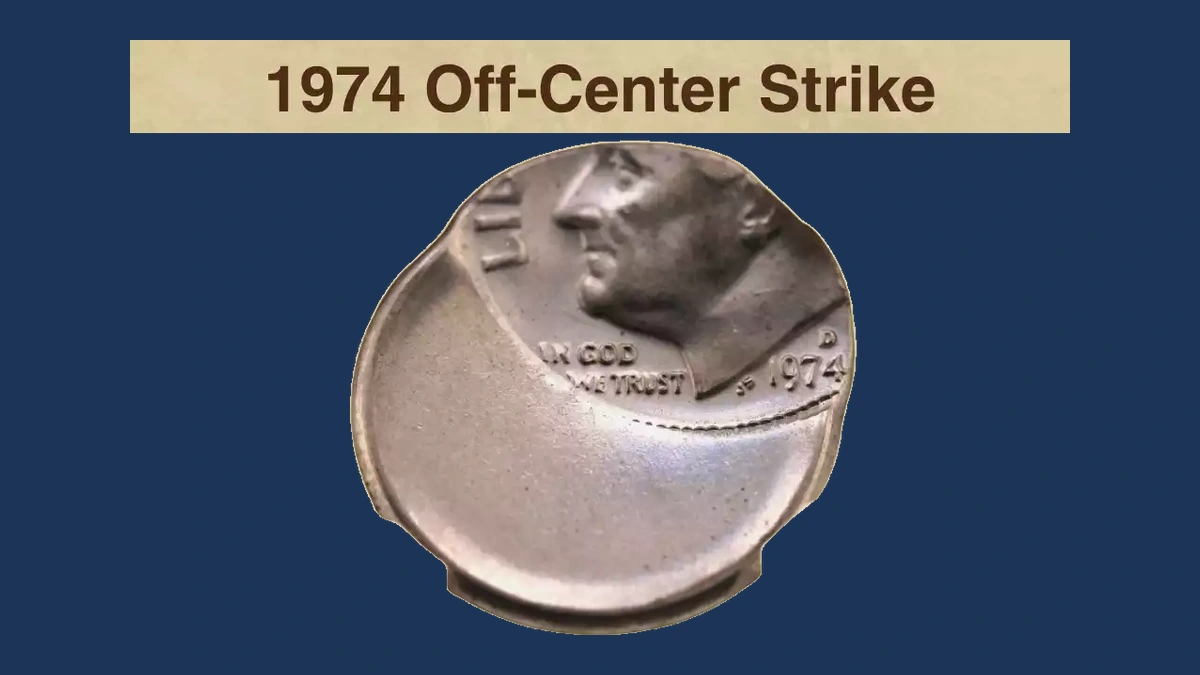
Roosevelt and the reverse design both miss part of the blank on an off-center strike. The blank entered the press away from its intended position, so part of it stayed outside the dies.
The result combines a cut-off design with an unstruck area. A slightly uneven rim on just one face is a different problem.
The documented 1974-D example was struck 45% off-center toward 10 o’clock and graded ANACS MS60. Its position describes that coin alone, rather than every off-center dime made during the year.
Estimated Value
The 45% off-center Denver dime sold for $45 on January 3, 2022. A practical estimated range is $35–$300 for dated 1974 examples, depending on the strike and condition.
The date is especially useful when much of the design is missing. A readable year, strong remaining detail, and undamaged blank metal can matter more than a larger off-center percentage by itself.
How to Identify
Follow the design to where it ends abruptly at the blank’s edge. Then turn the coin over and check that the other design also missed part of the metal.
A 10× magnifier should show original unstruck surface beside the struck area, rather than grinding or a slice removed afterward. Rotate the lamp to expose any worked edge.
An off-center dime can still weigh near 2.268 g on a scale because its blank was complete. Use calipers to record its shape against the 17.91 mm starting size, without forcing an irregular piece.
For the ANACS example, match the 45% displacement toward 10 o’clock. Both designs running off the same misplaced blank distinguish it from a one-sided uneven rim.
9. 1974 Roosevelt Dime Clamshell Split in the Blank
A clamshell error opens at the edge like a partly opened book. Metal within the blank separates, but part remains attached as a hinge.
This differs from a small flat patch of missing outer layer. It also differs from two fully detached pieces of a split coin.
A Stack’s Bowers group catalog includes a 1974 dime labeled Clamshell Defective Planchet. Its ANACS label reads AU55 Details, Damaged.
AU55 means light wear. The damage warning describes a separate condition problem, rather than the opening that defines this blank error.
Estimated Value
For a 1974 clamshell dime, use an estimated $50–$350 range based on comparable clad-dime blank splits. A modest opening with damage belongs below a clean, well-preserved split that clearly shows its attached structure.
The 1974 coin appeared among several coins in a group catalog, so a group total would not be its individual price. Keep the attached piece intact, since bending it open can harm both the coin and its value.
How to Identify
Leave the opening untouched. Pulling the sides apart or inserting a tool can break the surviving connection and add damage.
Use side lighting and a 10× magnifier to follow the separation from the edge toward its attached end. An internal split should be distinguished from fresh pry marks or a bent surface flap.
If all the metal remains attached, a scale may still show a weight near 2.268 g. Calipers can compare the intact outline with 17.91 mm, but must not squeeze the opening; a sealed coin should stay protected in its holder.
Look for the point where the two sides rejoin. That surviving metal connection separates a clamshell from two fully detached pieces.
10. 1974 Roosevelt Dime Missing Outer Clad Layer
A normal clad dime has pale copper-nickel outer layers over a copper center. When part of an outer layer is absent, a copper-colored patch can show through.
A dealer lists a 1974-D NGC MS63 dime with part of its reverse layer missing and an actual weight of 2.1 g. The remaining layer makes this different from a fully bare face.
A separate catalog records a worn no-mintmark 1974 dime whose front layer was absent before striking. An owner also reported a 1974-D front-layer example with an older ANACS photo certificate.
Estimated Value
The partial reverse-layer Denver dime carried a $195 asking price at Northeast Numismatics. Estimate $75–$400 across identified partial and complete outer-layer losses.
A broad area of original exposed copper generally attracts more interest than a tiny patch. The 2.1 g measurement belongs to the partially missing reverse example; full-layer coins can be lighter, and wear, stains, or later scratches can reduce their appeal.
How to Identify
For the partially bare reverse, follow the boundary between pale metal and exposed copper with a 10× magnifier. Check whether struck detail continues naturally across that boundary.
The recorded weight of this coin is 2.1 g. A scale can compare a loose example with the ordinary 2.268 g standard, but the two front-layer coins need their own measurements.
For a wholly copper-colored front, inspect the portrait and lettering rather than searching for a patch boundary. The design should fit a strike directly into exposed copper.
Calipers should compare the outline with 17.91 mm. Inspect the edge for the remaining metal layers.
Rough scraping or chemical damage can expose copper later; look instead for original struck detail continuing across the bare area.
11. 1974 Roosevelt Dime Partial Mirror-Image Brockage
Backward letters pressed down into the surface are the striking clue to a brockage. Another struck coin contacted the blank and impressed its design into it during the next strike.
A 1974-D example was cataloged with a partial brockage and an ANACS MS60 Details damage warning. Its exact affected face was not identified in the description.
A separate Philadelphia example was graded PCGS MS65 with a 40% early brockage. “Early” describes a relatively clear transferred image, before repeated striking could spread and blur the coin acting as the stamp.
Estimated Value
The damaged Denver brockage sold for $33 in August 2021. Across worn partial examples and clearer, unworn transfers, an estimated $30–$600 range reflects the large difference in appearance.
The separate PCGS MS65 Philadelphia coin has no wear and few distracting marks. Its 40% early transfer offers a different level of detail from the damaged Denver piece, so the $33 result should not be treated as its sale price.
How to Identify
Find one recognizable backward letter inside the unusual patch. Under a 10× magnifier, tilt the coin to confirm that the transferred detail is sunken rather than raised.
A scale and calipers can check a loose dime against 2.268 g and 17.91 mm, allowing for metal spread. These measurements help describe the coin but cannot prove how the image was made.
Coins squeezed together after minting can also leave reversed impressions. Inspect both faces and the edge for crushed details, pushed-up rims, or tool pressure.
The transfer must fit the original strike. Look for a recognizable sunken mirror image rather than a smooth, featureless dent.
12. 1974 Roosevelt Dime Double Strike
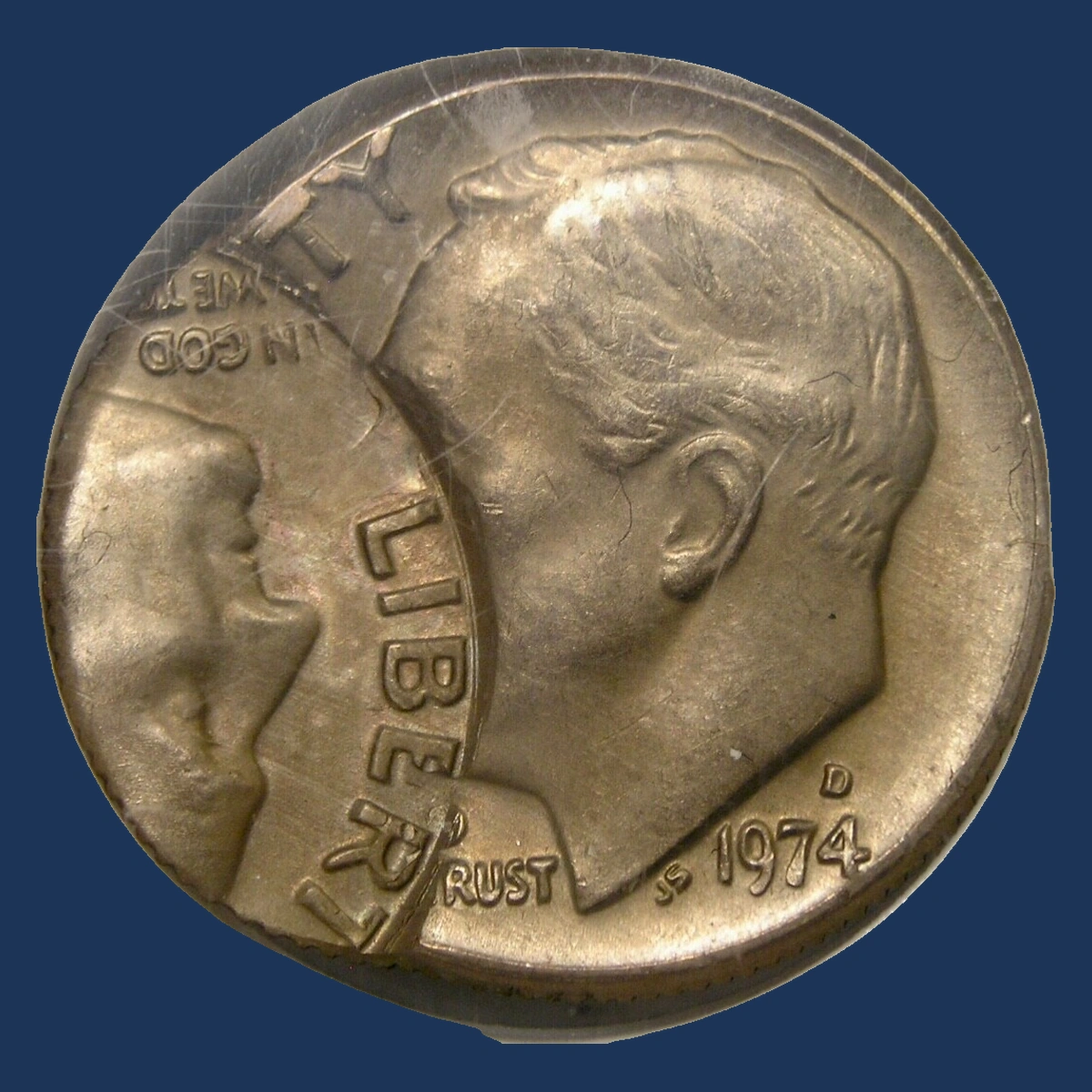
Two readable dates can make a double strike easy to spot. A coin stayed in or returned to the press and received another blow after moving.
The 1974-D PCGS MS62 example has a second strike 70% off-center at 8 o’clock. Both strikes left complete dates and mint letters, and dies struck both faces during the second blow.
Other records include a cleaned no-mintmark 1974 dime and a separate 1974-D coin certified NGC Genuine. Those descriptions establish different coins; they do not give each one the same second-strike position or percentage.
Estimated Value
PCGS records $375 for the NGC Genuine Denver coin on eBay in June 2021. A cleaned 1974 example sold for $84 in June 2026.
The PCGS MS62 coin with a 70% second strike had a $185 dealer asking price. Together, these support an estimated $75–$650 range, with clearly separated dates and undamaged surfaces helping the most attractive pieces command more attention.
How to Identify
Two dates and two D mint letters provide the starting point on the PCGS MS62 example. Follow each set through a 10× magnifier before tracing the overlapping portrait outlines.
The later design lies 70% off-center toward 8 o’clock. Both dates and mint letters remain complete on this particular coin.
Turn it over to check the second strike’s reverse detail. Dies struck both faces, so a blank flattened face would not match this example.
For a loose dime, a scale can compare its weight with 2.268 g and calipers can record its spread from 17.91 mm. Other double-struck examples need their own measurements and design maps.
Look for distinct groups of raised design details that overlap in a readable strike sequence.
13. 1974 Roosevelt Dime Coreless Copper-Nickel Blank
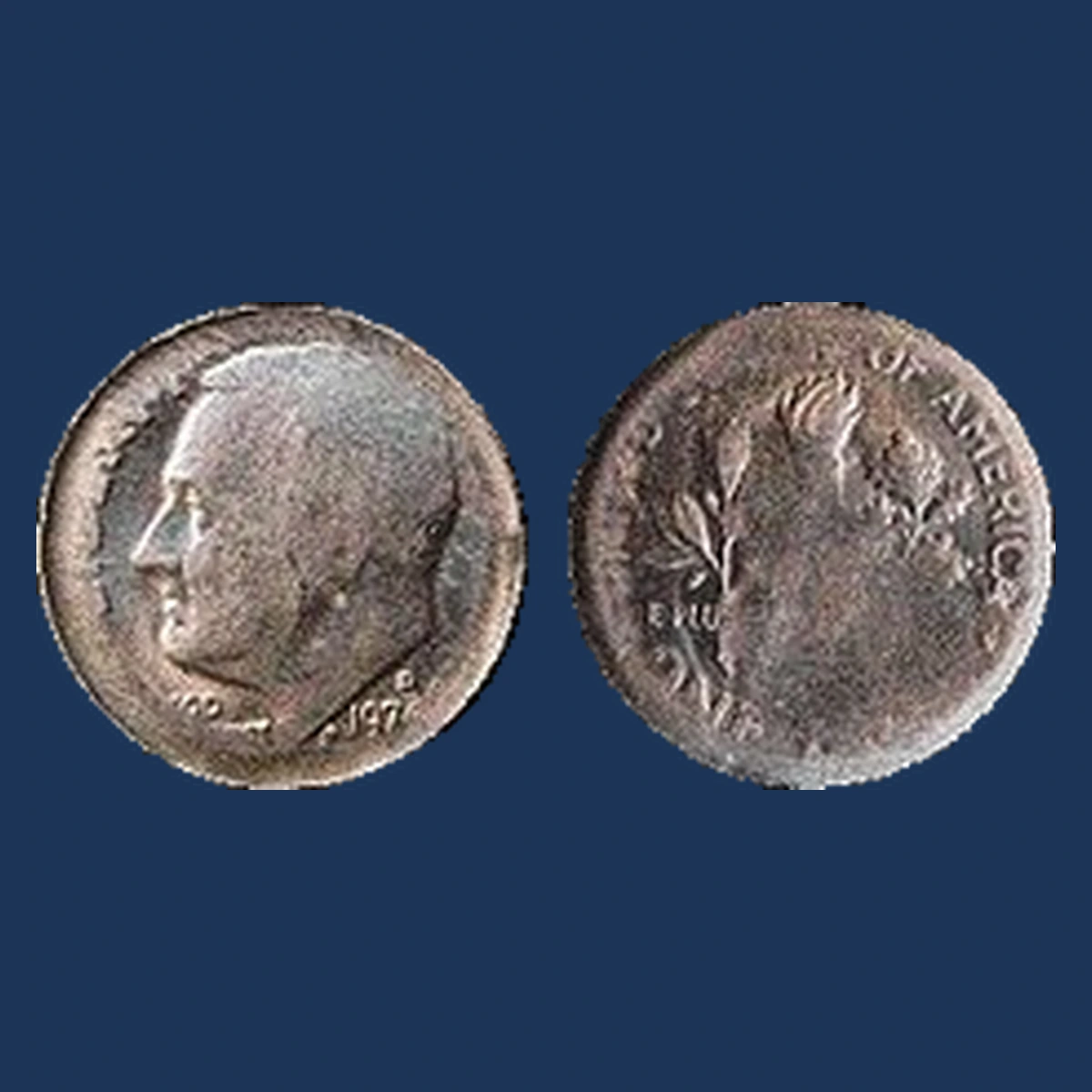
This unusually light Denver dime lacks the copper center found inside an ordinary clad dime. Its blank is a single thin piece of copper-nickel instead of the usual three-layer sandwich.
Error-Ref describes the 1974-D example at 0.9 g and roughly normal diameter. That is more than twice the weight of one ordinary outer layer.
The unstruck front areas show rough parallel lines. The reference suggests these came from brushes used to clean the metal strip, but the unusual blank’s weight and construction are more important than that proposed explanation.
Estimated Value
A thin, identified coreless dime like this fits an estimated $300–$1,500 range. This is a specialist blank-error estimate, not a recorded sale of the illustrated 1974-D piece.
Its appeal comes from the unusual one-piece copper-nickel construction and very low weight. An ordinary dime with worn surfaces cannot explain those features, and a coin that simply lost an outer layer belongs in a different price comparison with a different metal structure.
How to Identify
A precise scale provides a useful opening test: the recorded Denver dime weighs 0.9 g, compared with the ordinary 2.268 g. Calipers then check whether it remains close to the normal 17.91 mm diameter.
Through a 10× magnifier, inspect the thin edge for one pale metal throughout. It should lack the copper-colored center visible between a normal dime’s outer layers.
Later plating can hide metal colors, so professional composition testing may be needed. Keep graded coins sealed and use their recorded measurements.
A nearly full-size, extremely light copper-nickel blank without a copper center is the key combination. It differs from a broken fragment or a single detached outer layer.
14. 1974 Roosevelt Dime Wrong-Denomination Blank Candidate
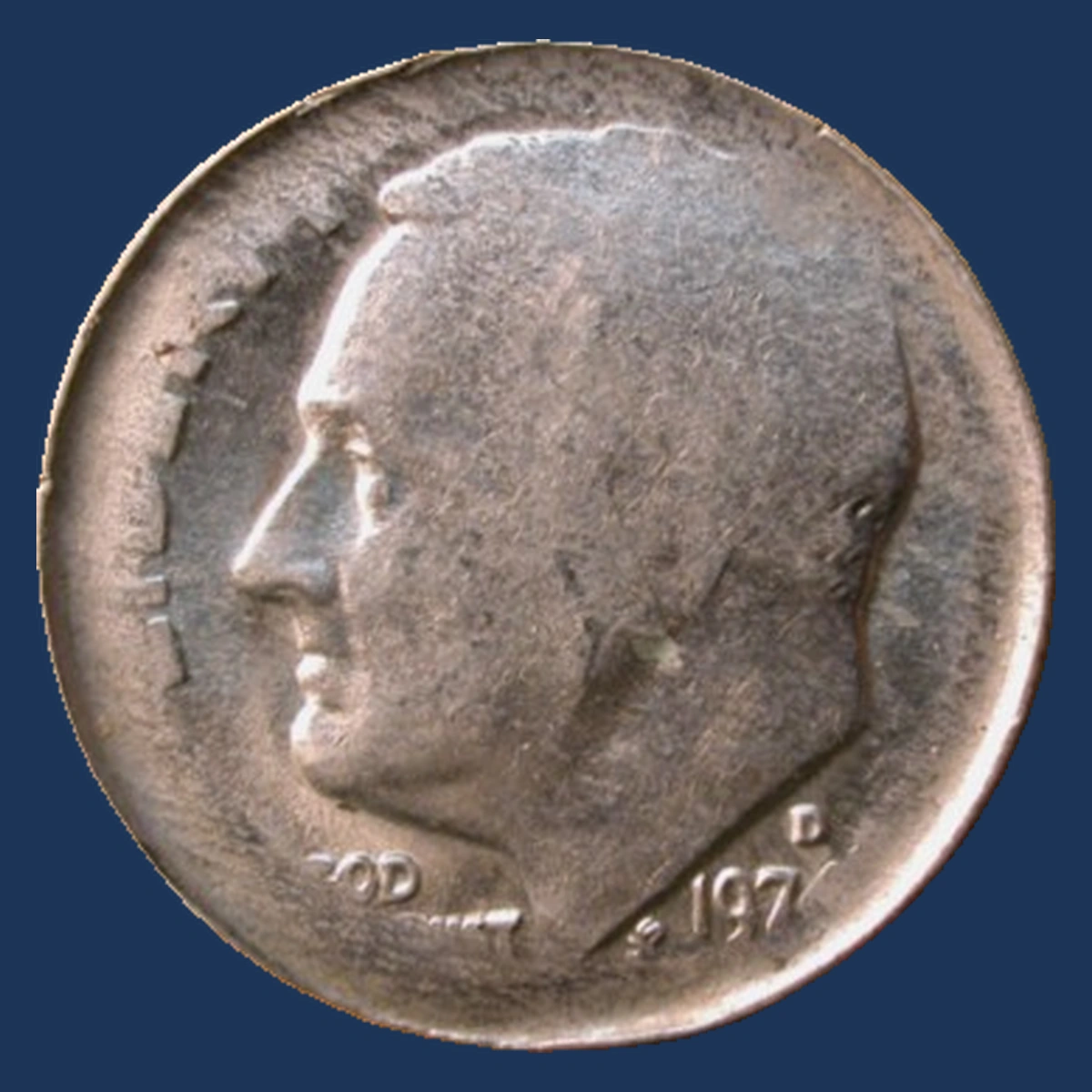
A true wrong-blank dime would carry the Roosevelt design on metal prepared for a different coin. Its weight, size, or composition would disagree with the normal dime blank.
The direction of the mix-up matters. A Lincoln cent struck on a dime blank remains a cent error, not evidence of a Roosevelt dime on a cent blank.
Current 1974 year reports do not establish a specific wrong-denomination Roosevelt specimen. This category therefore concerns candidates that need blank identification, separate from the documented coreless dime and coins missing an outer layer.
Estimated Value
If expert examination confirms a 1974 Roosevelt dime on a different denomination’s blank, estimate $500–$2,000 for a recognizable bronze-cent-type mismatch. The amount is conditional on that identity, not a sale price for an established 1974 specimen.
The comparison is with identified dime designs on bronze cent blanks. A full date, clear design, and confirmed metal would support value, while a brown surface or an unusual scale reading alone would not establish the error.
How to Identify
Read the design before judging the metal. Roosevelt and the torch should identify a dime; Lincoln and the Memorial would point to a cent error instead.
Use a scale and calipers to compare 2.268 g and 17.91 mm with the normal dime standard. A 1974 bronze cent blank starts at 3.11 g and 19.05 mm, so it is larger and heavier.
Examine the edge through a 10× magnifier for the dime’s usual copper-centered layers. Color can change after minting, and missing layers can lower the weight without involving another denomination.
Have a grading service identify the metal if the measurements disagree. The necessary match is a Roosevelt dime design struck into a demonstrably different kind of coin blank.
Conclusion
A forked mintmark, a missing edge, and a second date tell very different stories on a 1974 dime. The estimated $5–$2,000 range reflects those differences, along with wear and damage.
Start with the feature you can see, then check the matching measurements. Keep brown surfaces, missing outer layers, and the unusual coreless coin separate; their color alone cannot explain what happened.