1901 Dime Error List with Pictures

The O below the wreath can hide a second O lying on its side. One unworn example sold for $4,230 in September 2018.
These 1901 dime errors also include extra date outlines, missing metal, and coins with a spread or shifted design. Estimated values run from $25 to $6,000, depending on the error and the coin’s condition.
Follow the close-up checks below to separate a small punch mark from a larger mistake made during striking.
1. 1901 Barber Dime Curved Clipped Blank
A curved piece missing from the rim can begin before a dime receives its design. The cutting punch overlaps a hole already left in the metal strip.
The resulting blank has a bite-shaped gap, which remains when the coin is struck. This is called a curved clip.
A 1901 year guide lists clipped blanks, without tying the report to a particular mint letter or finish. That makes the gap itself the starting point for examination.
A neat curve alone proves little. Someone cutting a finished coin can also leave a smooth edge.
Estimated Value
For a genuine clip on an ordinary Philadelphia example, a working estimate is $50–$500. A small gap on a worn coin belongs toward the lower end.
More visible missing metal, a readable date, and an undamaged surface can raise interest. A scarce 1901-S coin needs its own date-and-condition valuation before adding the error premium.
Keep repaired, polished, or freshly cut pieces outside this estimate. They are altered coins, even when the missing area looks dramatic.
How to Identify
Examine the gap from the side, not just from above. Under a 10× magnifier, look for original metal flow toward the missing area and check whether completed letters were cut through.
The opposite rim may be weak because the blank did not pass through rim forming normally. This helps, but it is not required on every genuine clip.
For a loose coin, use a scale to compare its weight with the normal 2.50 grams. Calipers can check an intact span against 17.9 mm without closing across the gap.
Photograph the edge grooves where they approach the clip. Fresh tool tracks or displaced burrs favor a later cut and deserve closer examination.
2. 1901 Barber Dime Repunched Dates
A small extra base below a date digit is easy to miss. On these coins, workers impressed the date into a steel stamping tool, called a die, more than once.
A shift between impressions left extra outlines that then appeared on the dimes. Philadelphia examples show traces below 01, below the final 1, or across 190.
New Orleans examples include sideways traces at 0 or 9 and a lower trace beneath the last 1. A further report concerns a repunched date on the normal design known as Hub I.
Estimated Value
Estimated whole-coin values of $25–$600 suit worn through attractive unworn examples of these smaller date varieties. Crisp extra outlines are easier to sell than marks buried under wear.
The mint matters. A New Orleans coin and a Philadelphia coin with similar-looking marks can have different normal values.
Hub I alone adds no error premium. The coin needs the extra date impression, while unusually high grades may cost more for their condition than for the repunching.
How to Identify
Take a clear date photograph before choosing a variety number. Also photograph the mint area below the wreath: O means New Orleans, while Philadelphia has no letter.
For Philadelphia, compare the lower edges of 01 and the first three digits with the separate variety pictures. A 10× magnifier helps show a curved digit fragment rather than a flat shelf.
New Orleans needs different checks. Look inside the right side of 0, beside 9, or below the final 1, depending on the example.
A loose coin should be near 2.50 grams on a scale and 17.9 mm across calipers. Inspect its grooved edge for alteration.
Keep the date pattern separate from unrelated back lettering. The extra digit outline must match the correct variety even when other small marks are present.
3. 1901 Barber Dime Broadstrike
The design can remain complete even when a dime spreads beyond its usual size. During a broadstrike, the blank escapes the full restraint of the collar, the ring surrounding it during striking.
Metal flows farther outward, leaving a wider border or an uneven outline. This differs from an off-center strike, which leaves some design beyond the blank.
A 1975 dealer catalog described a toned, unworn 1901 Philadelphia broadstrike from the Bolt collection. Its unusual width belongs to the striking process, rather than to a larger dime design.
Estimated Value
The old catalog asked $75 in 1975; that was a selling price offered by the dealer, not an auction result. A present working estimate is $150–$700 for a genuine ordinary Philadelphia broadstrike.
A full date and visibly spread border make the error easier to appreciate. Attractive original color and little wear support the upper part of the range.
Flattened letters, polished surfaces, or heavy marks can reduce value even on a coin with substantial spread.
How to Identify
Measure a loose example in several directions with calipers, comparing it with the normal 17.9 mm diameter. A weight near 2.50 grams suggests spreading of the usual blank rather than use of a heavier one.
Now examine the complete design beside a normal dime photograph, checking the lettering all the way around both faces. A blank crescent opposite missing design points toward an off-center strike instead of a broadstrike.
Use a 10× magnifier to inspect the rim and edge grooves where the coin spread. Hammering tends to flatten already finished letters, whereas a broadstrike forms the letters while the metal flows beyond its normal boundary.
4. 1901 Barber Dime Partial Collar with Slight Spreading
Viewed edge-on, a partial-collar error can have a ledge around its side. One part of the blank remained inside the collar ring, while another part spread above it.
The trapped section kept a smaller diameter. The exposed section became wider, producing two levels along the edge.
A 1978 dealer catalog described a 1901 Philadelphia dime with a strong partial collar and slight broadening. Both features belong to that same coin.
This is a more specific shape than a simple wide rim. A side view reveals the difference much better than a face-on photograph.
Estimated Value
A historical dealer asked $125 in 1978 for the slightly broad coin with a strong partial collar. Today, use an estimated $175–$900 range for a genuine example in ordinary circulated through attractive unworn condition.
A sharp ledge visible without extreme magnification has more appeal than a faint uneven edge. Surface quality still matters.
The spreading and stepped edge are valued together. Adding a separate broadstrike price would count the same coin twice.
How to Identify
Request an edge photograph before judging this error from the portrait side. Turn a loose coin slowly under side lighting and follow the boundary between its narrower and wider sections.
With a 10× magnifier, check whether the edge grooves stop or change at that boundary. A collar step follows the coin’s thickness; a later dent pushes completed metal inward at a local spot.
The slight outward spread should agree with that two-level edge. A crushed rim with scrape marks is a different problem.
Use calipers gently at different heights to compare the widths with a normal 17.9 mm dime. A scale should usually remain near 2.50 grams, since collar failure does not itself remove metal.
5. 1901 Barber Dime Off-Center Strike
On the 20% example, the design sits toward two o’clock instead of in the middle of the blank. A broad unstruck area remains on the opposite side.
The blank was out of position when the stamping tools came together. The complete intended design therefore could not fit on its available surface.
Heritage described that Philadelphia coin as AU58, meaning almost unworn with slight wear. A separate published example is only 7% off center and was graded MS61, an unworn grade with noticeable marks.
The percentages describe different coins, not stages of one error.
Estimated Value
The 20% off-center AU58 dime sold for $1,035 in January 2005. Its readable date and clear displacement make it a useful example.
An estimated $250–$1,800 range covers less dramatic pieces through strong, attractive examples. A slight shift can be worth much less than a bold one.
Preserved design, original surfaces, and a full date matter alongside the percentage. Cleaning or damage can offset the appeal of a larger blank area.
How to Identify
Compare both faces before measuring anything. A true off-center strike shifts both designs onto part of the blank, leaving matching unstruck space.
If only one face is misplaced, a shifted stamping tool may explain the shape instead. For the documented 20% coin, use the date to orient the front and find the shift toward two o’clock.
Trace the border between stamped and blank metal with a 10× magnifier. The surface should meet that boundary naturally rather than end at a ground or cut edge.
For a loose example, a scale reading near 2.50 grams supports a full blank. Check its intact diameter against 17.9 mm with calipers and inspect the edge grooves for later trimming.
6. 1901 Barber Dime Clamshell Split
A coin can split within its thickness yet remain joined along part of the edge. The partly open shape gives this defect its clamshell name.
The fault begins inside the metal blank, where the mixture did not hold together properly. It is different from two finished coins glued together.
The Barber Coin Collectors’ Society displayed a 1901-S clamshell dime, and its June 2005 journal index names an article by John Frost. The S below the wreath identifies San Francisco.
Even a narrow opening needs careful handling. Pulling the layers apart can destroy their remaining connection.
Estimated Value
A working estimate of $300–$3,000 covers a genuine 1901-S clamshell with readable date and mint letter. This is a whole-coin estimate, not a recorded sale of the society’s example.
The scarce San Francisco issue already has collector value. Clear internal separation and an intact connection can add interest without requiring a wide opening.
Heavy wear, corrosion, or signs of forced opening lower appeal. An unusually high-grade host coin needs an individual valuation beyond this general range.
How to Identify
Do not test the opening with a blade. Support the coin in a holder that does not press the separated layers together or pull them apart.
A side photograph should show the split running within the coin and the section where the metal remains connected. Under a 10× magnifier, examine that junction without moving either layer.
Glue, fresh pry marks, or two unrelated edge patterns suggest an altered object. Check the S below the wreath and the complete 1901 date in face photographs.
If the coin can rest safely on a scale, compare its weight with 2.50 grams; an attached split need not reduce weight. Photograph its diameter beside a scale for comparison with 17.9 mm, rather than squeezing the opening with calipers.
7. 1901 Barber Dime O over a Sideways O Mint Mark
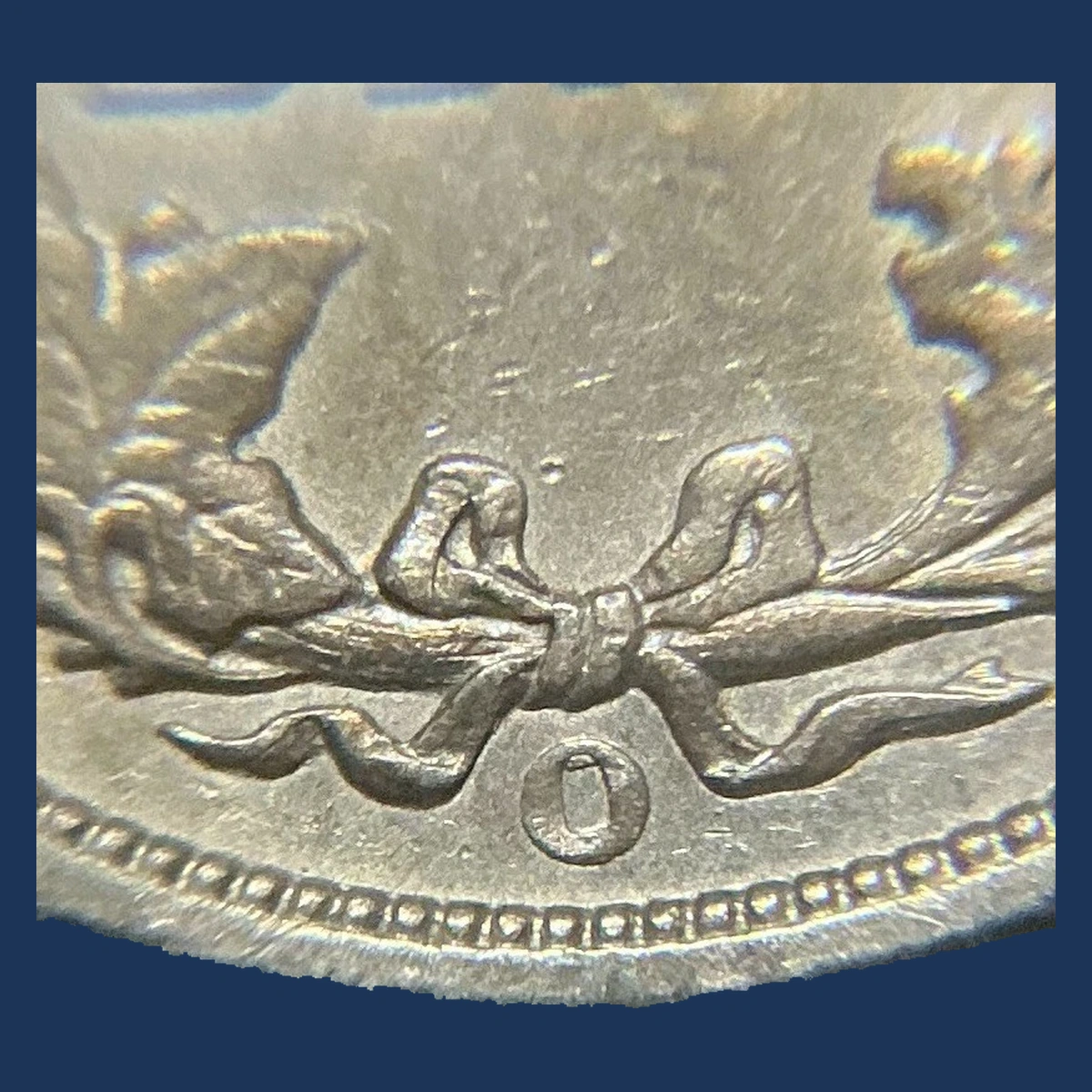
Look inside the O below the wreath. Small curved traces at its top and bottom can be the sides of an earlier O punched horizontally.
A worker corrected the mint letter by punching it upright into the die, the steel tool that stamps coins. Parts of the sideways impression survived.
This variety is known as FS-501. An early paired front also has extra date traces at 91; later coins use a different front tool and may show marks from the tools hitting together.
The sideways O remains the feature that links those examples.
Estimated Value
PCGS records a $4,230 sale in September 2018 for an MS65 example. That grade describes an unworn coin with relatively few marks.
For worn through attractive unworn pieces, estimate $50–$5,000. The old sale sits near the upper end because the whole coin was in strong condition.
A clear inner O shape helps collectors recognize the variety. A faint trace on a heavily worn coin will not command the same price.
How to Identify
Confirm that the letter below the wreath is O before examining a possible sideways impression. For a loose coin, check the normal 2.50 grams with a scale and 17.9 mm with calipers, then inspect the grooved edge for alteration.
A confirmed FS-501 photograph should show the same curved pieces inside the top and bottom of the O. View your coin with a 10× magnifier under angled light to distinguish raised curves from pits or stains.
Then examine the date as a separate check: an early paired front has extra traces above 91. A normal-looking date does not cancel a matching O, because a later front stamping tool replaced the earlier one.
8. 1901 Barber Dime Reported Foreign Silver Blank
A foreign-blank error happens when a metal disc intended for another country receives a United States design. The resulting coin may have unusual weight, size, or metal content.
A 1975 catalog described a 1901 Barber dime as struck on a Venezuelan half-bolivar silver blank. That is the historical identification; measured dimensions and a modern metal test are needed to establish the blank.
Silver color alone does not help. A normal 1901 dime already contains 90% silver.
The important comparison is with the proposed foreign blank’s full specifications, rather than with its name.
Estimated Value
For an authenticated foreign-blank example, use an estimated $1,000–$6,000 range. Clear proof of the blank’s identity and a readable date would be important at this level.
As a different-year comparison, a 1973-S Proof dime on a Liberian cent blank sold for $1,560 in November 2020. Proof coins are specially prepared collector issues.
That later coin has different metal and production details. Its sale illustrates this error category, rather than establishing a sale price for the 1901 report.
How to Identify
Begin with measurements, not a color guess. For a loose example, record weight on a precise scale and diameter with calipers, then compare them with 2.50 grams and 17.9 mm.
Have a specialist test the metal without scratching or filing the coin. Normal wear can lower weight, and a silver test alone cannot separate this claim from a regular silver dime.
Under a 10× magnifier, examine the edge grooves for trimming and see how the design fits the metal. Keep photographs of any missing outer lettering.
The Venezuelan identification needs agreement between metal, dimensions, and the striking evidence. A light or oddly colored dime by itself does not establish that particular foreign blank.
Conclusion
For 1901 dimes, estimated values stretch from $25 to $6,000. A tiny mark inside the O can matter more than a large but man-made cut.
Keep the date, mint letter, and edge in your photographs. Leave a partly split coin closed, and have an unusual blank tested before paying a foreign-metal premium.
The $4,230 sideways-O sale shows what a clear variety in strong condition can bring.