1986 Quarter Error List with Pictures

A quarter design squeezed onto a nickel blank leaves less room for the surrounding lettering. One 1986-P example brought $195.50 in March 2006.
Other 1986 Washington Quarter errors are much less obvious, including faintly struck details and small doubled letters. Estimated values below span $10–$1,500, with each range tied to the kind of mistake and the coin’s condition.
Read on to distinguish missing metal, repeated designs, and unusual striking shapes without confusing their different causes.
1. 1986 Washington Quarter Reported Repeated D Mintmark
An extra curved part beside the D can suggest that the mintmark was punched into the stamping tool more than once. Collectors call this a repunched mintmark, or RPM.
Denver quarters from this period can be examined for that older hand-punching mechanism. The 1986 year report does not establish a specific catalog number or direction for its claimed example.
A flat ledge beside the letter is a different appearance. Movement during striking, wear, or damage may produce a doubled-looking D without a second punch.
The full shape of the extra mark must explain a separate placement of the same letter.
Estimated Value
For an identified repunched D, estimate $10–$150. A clear secondary curve on a well-preserved coin can be more appealing than a faint thickening visible only at one angle.
This range requires a convincing second punch outline. It does not apply automatically to the year-list report or to every coin with a doubled-looking mintmark.
Wear and contact marks around the D affect visibility. A recognizable match and original surface matter more than an impressive name or a seller’s unsupported rarity claim.
How to Identify
Read the D before deciding that it contains an extra letter. Compare its normal shape with another 1986-D quarter under a 10× magnifier.
Follow the possible secondary curve toward both ends. It should fit another placement of the same punch, rather than merely thicken one corner.
Inspect the adjoining surface for a scratch or displaced metal. A flat ledge cutting into the D suggests another kind of doubling.
A scale and calipers check a loose clad coin, made from bonded metal layers, against 5.67 grams and 24.26 millimeters. Inspect the edge grooves for alteration.
Look for a plausible second D contour, not an isolated lump near the mintmark.
2. 1986 Washington Quarter Doubled Eagle-Side Letters and Other Design Reports
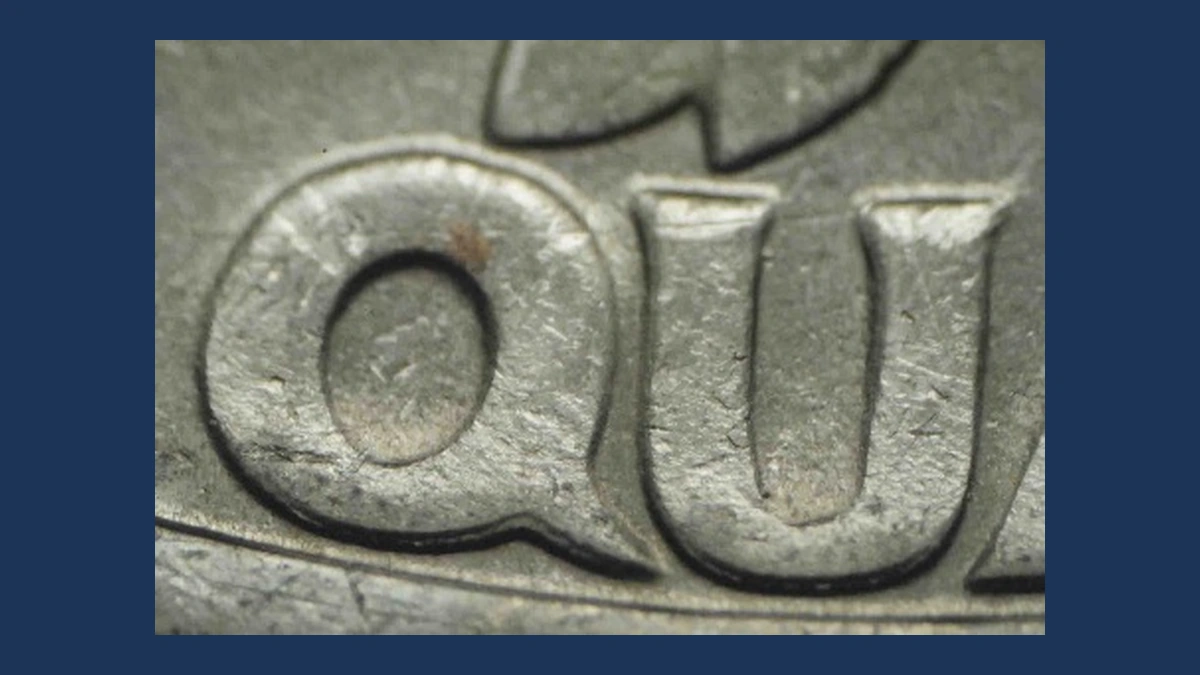
Thicker doubled outlines extend inward on parts of UNITED, QUARTER DOLLAR, and AMERICA in the cataloged 1986-P WDDR-001 variety. Leaves and branch ends below the eagle also carry extra detail.
The repeated outlines were already present on the stamping tool. They are not evidence that the whole coin received a second blow.
A separate front-side report mentions LIBERTY, the motto, and areas around Washington’s eye and ear. That claim needs its own comparison and cannot borrow the back variety’s catalog number.
Flat mechanical doubling and ordinary worn letters should be considered before identifying either feature.
Estimated Value
Estimate $15–$200 for matched doubled-design coins, with visibility and preservation guiding the range. The cataloged back variety offers a firmer comparison than an unexplained thick front letter.
Rounded extra detail that survives normal viewing is easier to collect. Tiny or worn features may require better photographs and bring less interest.
The front-side report should receive a doubled-die premium only when its actual pattern is established. Ordinary shelf-like mechanical doubling does not gain the same value because a letter looks wider.
How to Identify
Begin on the eagle side with UNITED, then compare QUARTER DOLLAR, AMERICA, and the lower leaves. The WDDR-001 catalog shows the inward direction of the extra outlines.
Under a 10× magnifier, a short vertical line inside the lower part of the O in OF can provide supporting detail. It should accompany the main pattern, not replace it.
A loose ordinary clad coin remains near 5.67 grams and 24.26 millimeters on a scale and calipers, with grooves around its edge. Those checks help spot alteration but cannot establish doubling.
Compare the complete back-side pattern; treat any front-side doubling as a separate claim requiring its own matching image.
3. 1986 Washington Quarter Very Weak Strike
Broad areas of the design can remain shallow when the stamping tools do not transfer their full detail. This can differ from a worn coin whose highest features were gradually rubbed away.
A 1986-P example graded NGC AU55 was cataloged as a die-adjustment strike. That name suggests an explanation involving press setup, but the directly visible feature is the weak strike.
Shallow design alone cannot prove why the press produced it. Both faces and the remaining original surface must be examined.
A coin flattened or polished after minting may also have weak-looking detail for a different reason.
Estimated Value
The documented NGC AU55 example sold for $36 in March 2010. An estimated $20–$250 range covers genuine weak strikes with different clarity, preservation, and remaining design.
A coin that shows weakly transferred details on both faces is easier to explain than an ordinary worn piece. A press-adjustment label should not create a premium without the physical evidence.
Date readability and surfaces still matter. Polishing or later flattening can remove detail while reducing value rather than creating a collectible minting error.
How to Identify
Set a normally struck quarter with similar wear beside the candidate. Compare the portrait’s high points with lower details to separate broad weak striking from ordinary circulation wear.
At 10×, inspect the surface inside the shallow design for polishing lines or later flattening. Check both faces rather than treating one weak patch as proof of low striking pressure.
Use a scale and calipers on a loose intact clad coin against 5.67 grams and 24.26 millimeters, then inspect the edge grooves for crushing. Original surface within shallow detail on both faces supports weak striking; it cannot alone establish that a worker deliberately adjusted the press.
4. 1986 Washington Quarter Raised Patch at the Back Rim
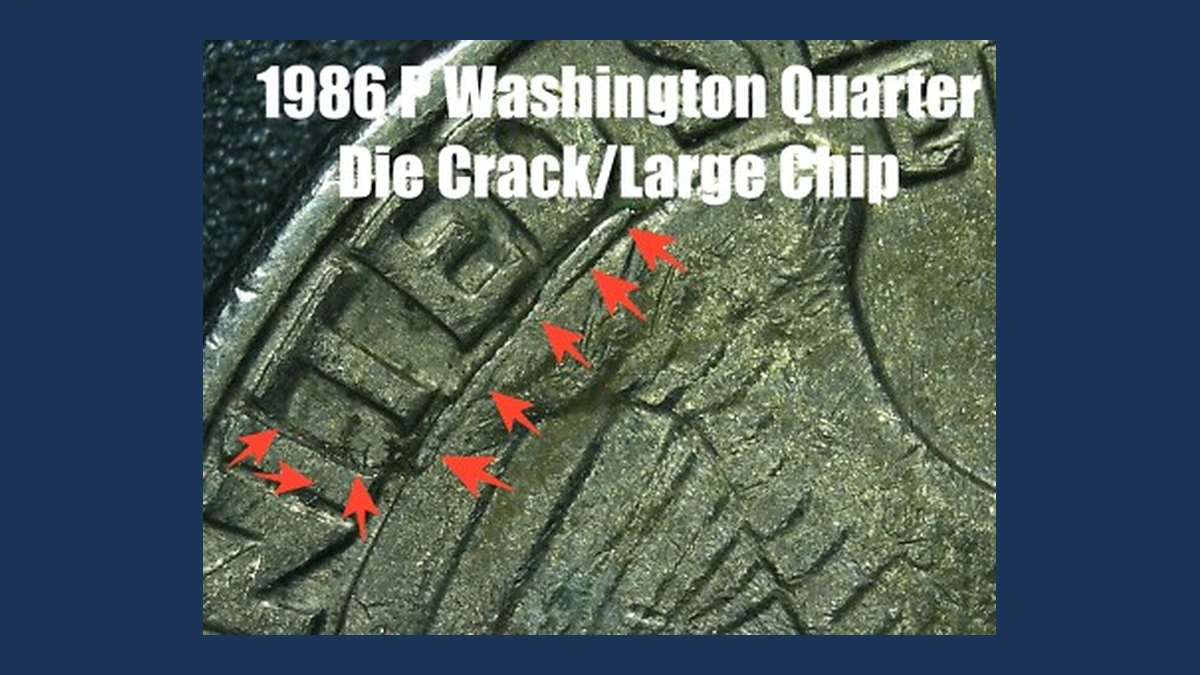
A raised patch connected to the rim can appear after a piece breaks away from the stamping tool. Metal fills the missing tool area during striking and replaces normal design with a lump.
This type of rim break is called a cud. A seller’s 1986-P report places one near 10 o’clock on the eagle side.
That location is a starting point for inspection, not proof that every lump there is genuine. Attached metal or an impact that pushed up the rim can look similar.
The patch must connect naturally with the original struck surface and the rim.
Estimated Value
A genuine rim-connected cud is estimated at $30–$300. Larger, clearer patches with readable surrounding design tend to attract more interest than a small irregular rim bump.
A 1970-D nickel with two cuds sold for $63 in October 2022. That different-year result provides a comparison for tool breaks, not an authenticated sale of the reported 1986 quarter.
The estimate requires the actual cud feature. A seller’s title alone cannot establish striking, and glued or impact-damaged metal does not receive this premium.
How to Identify
Check the back near 10 o’clock and locate the patch’s connection to the rim before studying its size. Under a 10× magnifier, follow the boundary into nearby design and inspect the opposite face for related weakness.
Use a scale and calipers on a loose clad example against the normal 5.67 grams and 24.26 millimeters. A broken tool does not attach a separate piece of metal to the finished coin.
Inspect the adjoining edge grooves for solder, squeezing, or a later impact. A naturally raised patch replacing design and continuing into the rim supports a cud; an isolated blob without that relationship needs another explanation.
5. 1986 Washington Quarter Expanded Strikes
A quarter can spread beyond its normal outline when the collar ring fails to hold its edge during striking. The full design may remain within the enlarged metal.
A 1986-P example was graded ANACS AU50 Details. The grade indicates wear together with a condition problem, rather than an uncirculated problem-free coin.
Denver also has a broadstrike report, but its actual shape needs a separate photograph. The Philadelphia example should not stand in for both mints.
A broadstrike concerns expansion during the blow. Hammering a completed quarter wider can create a different and less valuable appearance.
Estimated Value
Estimate $25–$300 for genuine broadstrikes, allowing for the amount of expansion and the coin’s surface condition. A worn details-grade piece should usually be compared with other problem coins.
Two 1990-P ANACS MS63 broadstrikes sold together for $101 in July 2021. That is a later-year lot total, not a separate price assigned to each coin or to the 1986-P example.
Original borders and a complete design help. Later flattening or surface damage can reduce appeal even when some original expansion remains.
How to Identify
The AU50 Details example already has a condition problem, so do not use it as an illustration of a clean unworn broadstrike. Separate that problem from the original expansion.
On a loose candidate, use calipers in several directions against 24.26 millimeters and a scale against 5.67 grams. An intact clad blank normally keeps its weight as it spreads.
At 10×, follow the date and outer lettering around the border, then examine the side and its grooves for hammering. A naturally enlarged outline containing the full design supports broadstriking, whereas missing design beyond one side points to an additional off-center feature.
6. 1986 Washington Quarter Missing Sections in the Blank
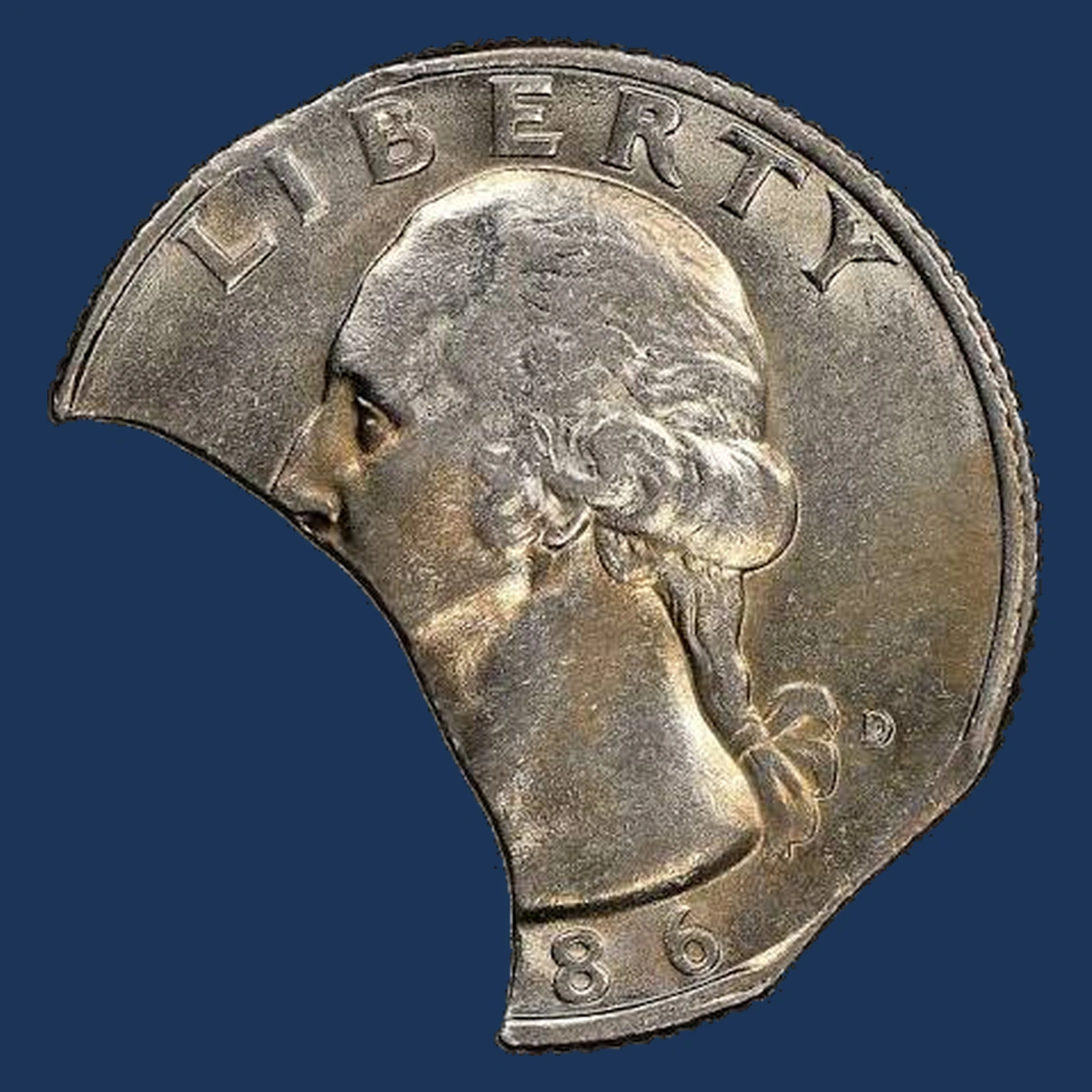
A coin can receive its design on a blank that already lacks part of its round outline. Overlapping cuts in the metal strip can leave several curved missing sections.
A reported Denver NGC MS61 example has three curved clips. The largest reaches Washington’s face, while the other missing sections affect the date and LIBERTY area.
Its date is written as (19)86 because the first two digits are missing. A separate Philadelphia clipping report should not inherit those exact gaps.
Three clips on one coin form one combined blank error, rather than three independent specimens.
Estimated Value
A modest genuine clip is estimated at $25–$175, while a clear multiple-clip example can be estimated around $100–$500. The shape and remaining identifiable design matter together.
A 1999-D Pennsylvania quarter with overlapping clips sold for $74 in December 2024. Its different arrangement provides a lower-level comparison, not a price for the Denver triple clip.
The missing date digits affect how the coin is identified. Preserve the grading record with the coin, and do not multiply a single-clip price by three.
How to Identify
Find the surviving 86 and keep the grading record with a coin whose first two date digits are missing. The reported triple clip should have three separate curved boundaries.
At 10×, examine where each boundary meets the struck design. A fresh saw track or filed edge suggests later alteration.
Weigh a loose example and measure its remaining spans with calipers against the normal clad starting values of 5.67 grams and 24.26 millimeters. No actual weight is supplied for the cataloged triple clip.
Inspect surviving edge grooves and possible weakness opposite the gaps.
All three boundaries should fit an incomplete original blank rather than cuts made through a finished coin.
7. 1986 Washington Quarter Off-Center Strikes from Both Mints
A plain crescent remains when the blank sits partly outside the stamping tools. The struck design is cut off on the other side because it runs beyond the available metal.
Philadelphia examples include a 30% off-center coin and separate 20% shifts toward 9:30 and 2 o’clock. Those directions belong to different specimens.
A Denver report describes a 60% shift toward 11 o’clock. Its date and exact remaining design need their own check.
The blank metal remains physically present. A clipped coin instead lacks metal, although the two features can occur together.
Estimated Value
The Philadelphia 30% off-center NGC MS65 coin sold for $139 in October 2022. Estimated values of $50–$500 cover genuine examples with different displacement, wear, and readable design.
The 60% Denver report should not receive a price based on size alone. A visible date and attractive original surfaces help collectors identify and compare the coin.
A worn, slightly shifted piece draws less interest. Later grinding or damage can remove design, but does not create the blank crescent of an off-center strike.
How to Identify
Compare the struck-to-blank boundary on both faces before choosing an off-center percentage. Both designs should agree with the same misplaced blank.
At 10×, inspect the plain crescent for fresh grinding or scratches. Read the actual mintmark and surviving date rather than borrowing them from another example’s description.
A scale should put an intact ordinary clad blank near 5.67 grams, while calipers compare its outline with 24.26 millimeters. Examine the remaining edge grooves for later alteration.
For the recorded P and D examples, keep the directions separate. Real untouched metal opposite naturally cut-off design on both sides is the useful final check.
8. 1986 Washington Quarter Missing Front Outer Layer
Washington’s portrait can appear on copper-colored metal when the front outer layer is absent. Ordinary clad quarters have copper-nickel faces bonded to a copper core.
A documented 1986-P PCGS AU55 coin lacks the front layer, while the back retains its normal outer face. The grade indicates light circulation wear.
The actual weight must be measured rather than copied from another missing-layer coin. A full missing layer should make the quarter lighter than normal.
Staining or added copper plating can change color without removing the original face. The edge boundary and design must help explain the exposed metal.
Estimated Value
The documented PCGS AU55 example sold for $62 in September 2024. A wider estimated range of $50–$600 allows for differences in wear, surfaces, and visible striking detail.
The recent result shows that a genuine missing layer need not cost hundreds of dollars. A cleaner unworn coin can make a stronger comparison than a worn piece.
The price range requires real layer loss. Stained, plated, or chemically stripped quarters should not receive the same mint-error premium.
How to Identify
Look at the intact back before turning to the copper-colored portrait. The documented P coin lacks its front layer, so the two faces provide a useful comparison.
At 10×, inspect the meeting line around the grooved edge for plating, chemical stripping, or grinding. The exposed design should still look naturally struck.
Weigh the loose coin yourself against the normal clad 5.67 grams; the auction record does not provide an actual specimen weight. Calipers compare its diameter with 24.26 millimeters, which may remain near normal despite the missing face.
Combine genuine weight loss with an undisturbed layer boundary, rather than making the identification from color alone.
9. 1986 Washington Quarter Expanded Double Strike
Two larger sets of design can overlap when a coin moves and receives another blow. If the surrounding ring also fails to contain it, the metal spreads beyond the ordinary outline.
The documented 1986-P ANACS MS64 example combines these two effects. Its expanded shape and repeated design belong to one coin.
They differ from small doubled letters already present on a stamping tool. A genuine second strike can displace whole parts of the portrait, lettering, and border together.
Wear can hide the weaker first impression, while later scratches may cross both designs. Do not count every line as another strike.
Estimated Value
The ANACS MS64 combined-error quarter sold for $129.25 in October 2014. An estimated $100–$700 range covers clear expanded double strikes with different surfaces and design placement.
Two easily recognized images are more appealing than a confusing overlap. A readable date and original metal help explain the event to another collector.
The expansion and second blow should receive one overall value. Do not add two separate error prices simply because the coin can be described with two different striking terms.
How to Identify
Trace one portrait or date to its own rim, then find the design that belongs to the second rim. A 10× magnifier helps separate sharper later detail from earlier impressions flattened by another blow.
Compare the back to see whether the same movement explains both faces. Do not decide on a flip-over strike from one unusual line alone.
Use calipers across the expanded outline against 24.26 millimeters and a scale against the ordinary clad 5.67 grams. Inspect the edge grooves for the effect of repeated striking or later hammering.
Linked second-design positions within naturally expanded metal demonstrate the combined error more clearly than a wide border or thick letter alone.
10. 1986 Washington Quarter Designs on Smaller Blanks
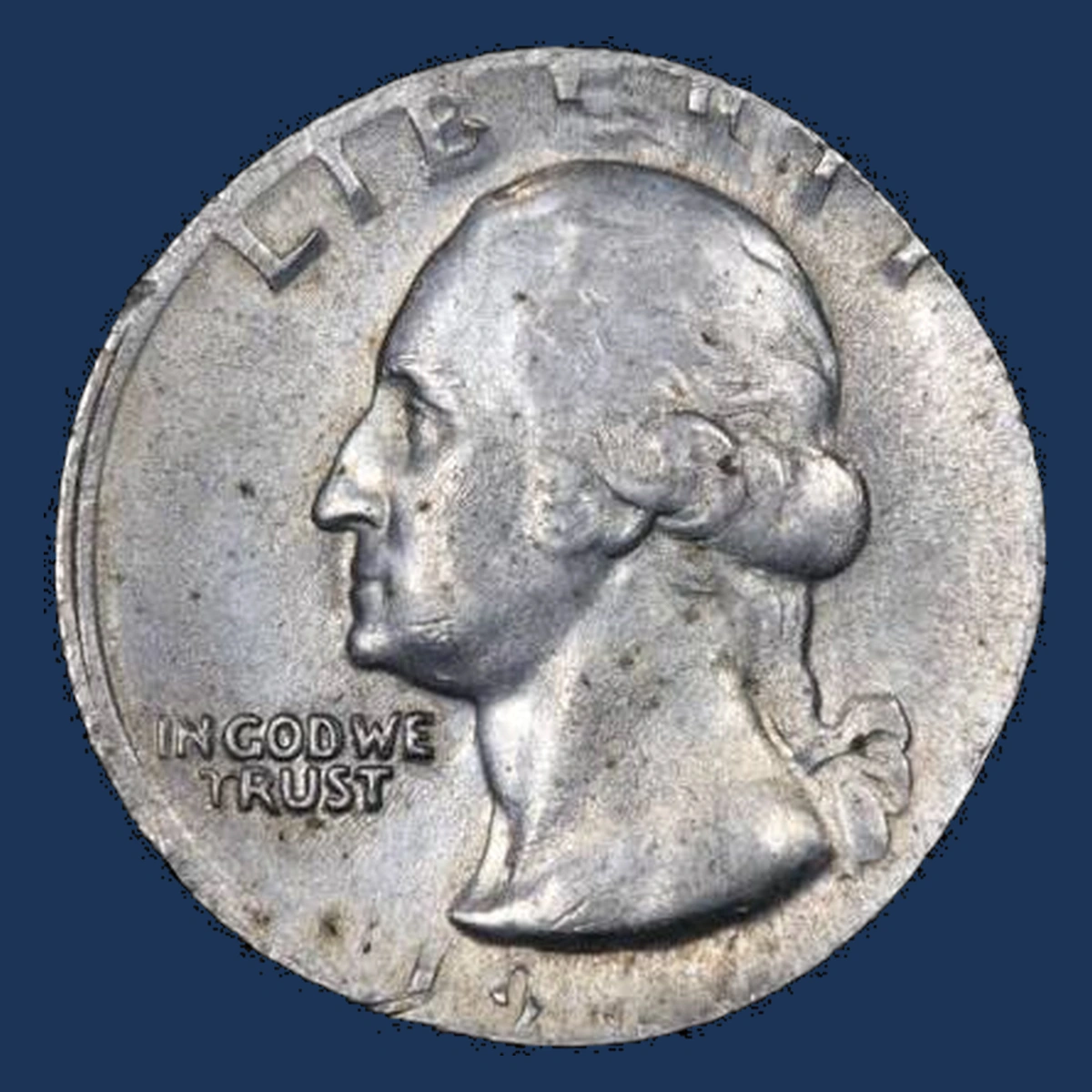
A smaller blank leaves less room for Washington’s portrait and the quarter’s outer lettering. The wrong denomination’s metal disc entered the quarter press before receiving a design.
A documented 1986-P ANACS MS61 example was struck on a nickel blank. A separate Denver NGC MS64 nickel-blank coin appears in a specialist auction list.
A dime-blank quarter is also reported for 1986, but its mint has not been established. It needs separate measurements and identification.
Nickel and dime blanks differ in metal construction and size. Neither report automatically means an already-struck nickel or dime lies beneath the quarter design.
Estimated Value
The P nickel-blank example sold for $195.50 in March 2006. Estimate $150–$700 for genuine nickel-blank quarters, depending on condition and the amount of visible design.
For an authenticated dime-blank quarter, estimate $400–$1,500. A different-year 1994-P dime-blank coin graded NGC MS64 sold for $504 in April 2022.
That smaller-blank comparison does not identify the mint or weight of the 1986 report. Readable date, original surface, and trustworthy identification help support the stronger part of either range.
How to Identify
Start with the actual metal disc rather than the missing letters. Nickel blanks normally weigh 5 grams and measure 21.2 millimeters; clad dime blanks start near 2.268 grams and 17.91 millimeters.
Use a scale and calipers on a loose candidate, allowing for expansion during striking. Those are standards, not measured weights of the listed 1986 specimens.
At 10×, inspect the side and any grooves for grinding that reduced an ordinary 5.67-gram, 24.26-millimeter quarter. Then compare which design details naturally extend beyond the smaller outline.
Have a specialist confirm that the metal, actual measurements, and naturally truncated quarter design agree with the same denomination’s blank.
Conclusion
Estimated values of $10–$1,500 reflect different kinds of 1986 errors, from subtle mintmark reports to unusual smaller blanks. The most dramatic appearance is not always the most valuable one.
Match the actual mint, surface, and design arrangement before using a price comparison. Record measurements separately for each coin, retain the original condition, and treat details-grade pieces differently from otherwise similar coins without surface problems.