1990 Quarter Error List with Pictures

A quarter does not need a spectacular shape to carry a collectible mistake. The small doubled details on a 1990-S Proof helped one example sell for $360 in March 2020.
This 1990 Washington Quarter error guide covers estimated values of $5–$1,500. It also includes stepped edges, missing metal, and coins that received another blow after turning over.
Read on to compare the correct features before treating an odd mark or missing letter as a minting error.
1. 1990 Washington Quarter Faint Details from the Opposite Design
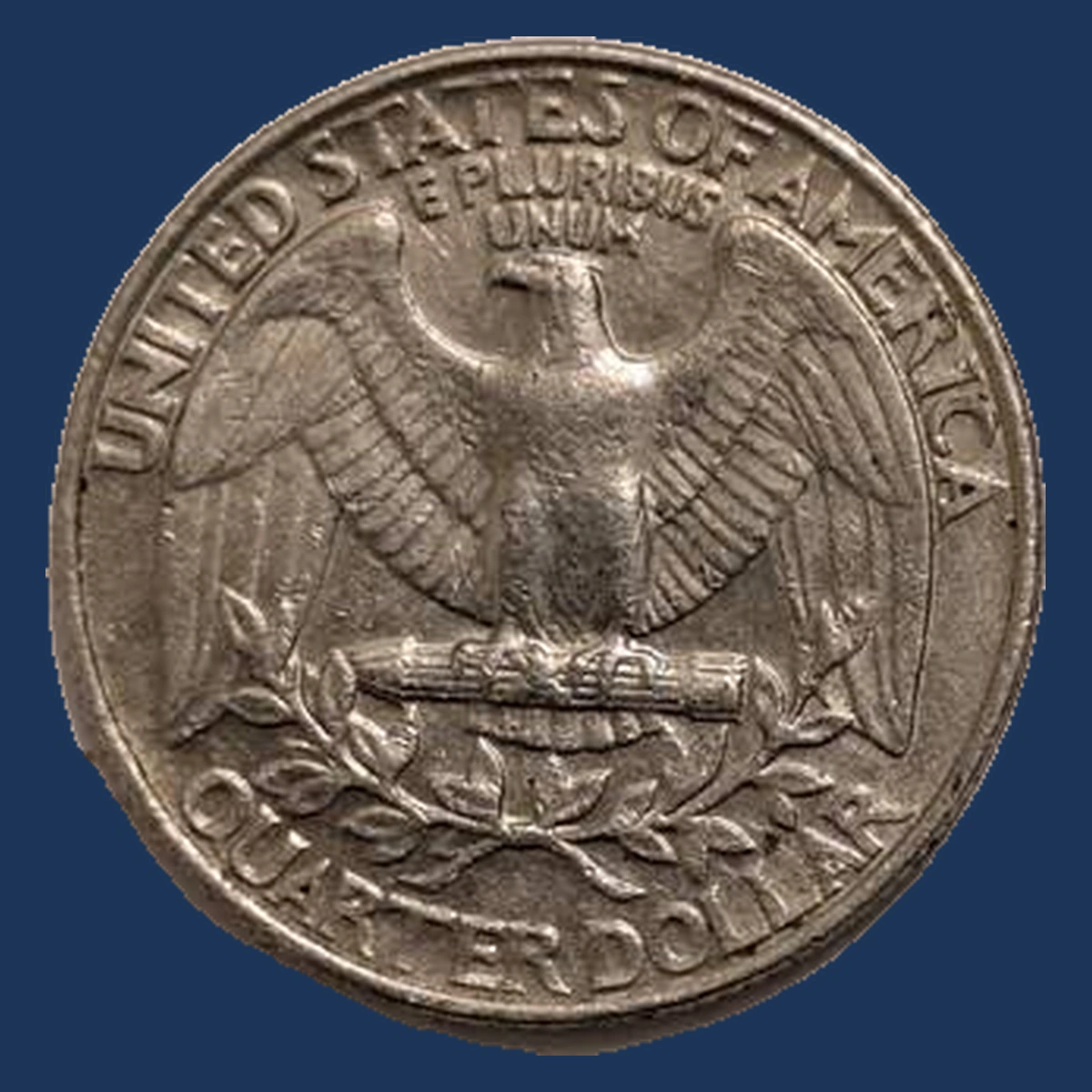
A faint fragment of the opposite design can appear in an otherwise open area of a coin. This happens when the two stamping tools touch without a blank between them.
The tools mark each other and can pass those marks to later coins. Collectors call this a die clash.
The 1990 report suggests checking around Washington’s neck and the open area to the left. It does not establish one specific transferred shape or mintmark.
A stray line needs a recognizable relationship to the opposite design. Its raised or recessed appearance alone does not settle the cause.
Estimated Value
Genuine modest clash marks are estimated at $10–$200. Strong recognizable transferred detail is easier to collect than a faint line visible only under unusual lighting.
The estimate applies to a coin whose marks actually fit a tool-contact explanation. Random scratches or a stain should not receive the same premium.
Preservation affects the result as well. Clean surrounding surfaces make a subtle clash easier to see, while wear or heavy contact marks can obscure the feature that first attracted interest.
How to Identify
Make square photographs of both sides and compare a faint mark with a reversed outline of the opposite design. The shape and its position should fit together, rather than merely resemble one small curve.
Inspect the line at 10× for a fresh cut or displaced metal. Do not rule a clash in or out solely because a line looks raised.
A loose clad coin, made from bonded metal layers, should remain near 5.67 grams and 24.26 millimeters on a scale and calipers. Check the edge grooves for unrelated damage, then match the faint trace to an actual part of the opposite design.
2. 1990 Washington Quarter Curved Missing Section
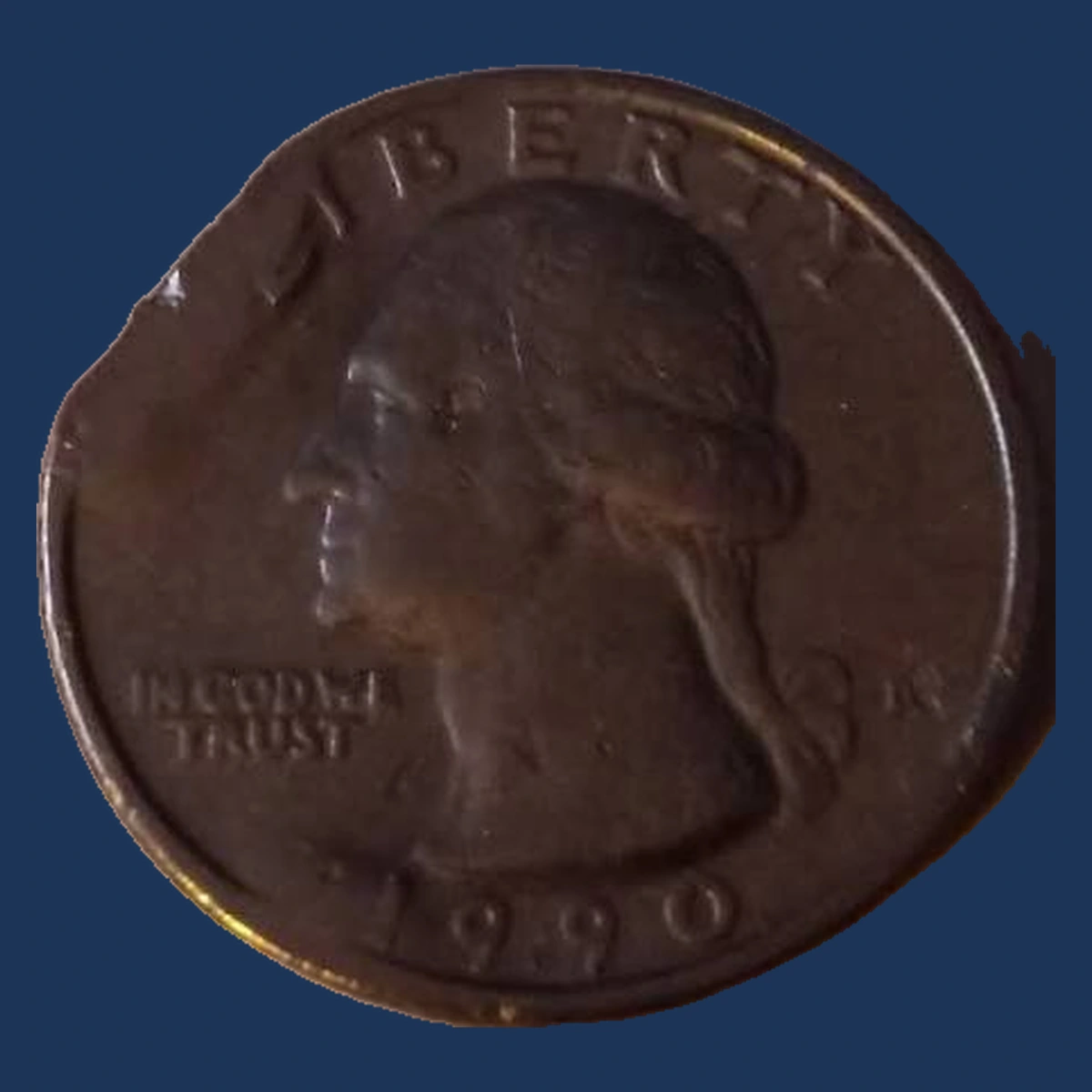
A curved bite can remain when a blank is punched too close to an earlier hole in the metal strip. Part of the round disc is missing before the design is struck.
A documented 1990-P example weighs 5.48 grams and was graded ANACS AU58, meaning only slight wear. Its curved missing section is described on the label as a disk clip.
That term does not mean someone punched a hole through the finished quarter. The missing boundary must be part of the original blank.
An artificial notch can imitate the outline without the same natural edge and strike features.
Estimated Value
A genuine modest curved clip is estimated at $25–$200. A clear missing section with readable date and attractive surfaces generally draws more interest than a tiny worn edge flaw.
A 1999-D Pennsylvania quarter with overlapping clips sold for $74 in December 2024. That later coin has a different clip arrangement, so its price is only a comparison.
The 5.48-gram reading helps describe the 1990 example but does not fix its price. Original boundaries matter more than low weight alone.
How to Identify
Weigh a loose candidate before comparing its missing section with the cataloged clip. That coin is 5.48 grams, below the normal clad quarter’s 5.67 grams, but other clips need their own readings.
Use calipers across an intact span against the normal 24.26 millimeters. Then examine the curved boundary at 10×, following both ends into the original struck faces.
Fresh burrs, saw tracks, or filing suggest a later cut. Inspect the surviving edge grooves and the rim opposite the gap; weakness opposite a clip can help, but is not always present.
A natural cut-and-break boundary meeting undisturbed struck detail is stronger evidence than a light weight alone.
3. 1990 Washington Quarter Sloping Step Around the Edge
One part of the side can have normal grooves while another bulges into a smooth shelf. A sloping meeting line between them suggests the blank sat tilted in the surrounding collar ring.
The collar normally controls the coin’s edge during the blow. When only part of the blank sits inside it, the exposed metal can spread.
A 1990-D example was graded ANACS MS65 and sold in a lot with a different-year off-center coin. The two pieces show different errors.
The step belongs on the coin’s side, not merely as two circles around its face.
Estimated Value
A clear tilted partial-collar quarter is estimated at $25–$200. Strong edge separation and good preservation help a buyer understand the error immediately.
A 1990-P nickel with a partial-collar error sold for $99 in June 2025. It offers a same-year but different-denomination comparison.
The Denver quarter’s mixed-lot price should not be assigned to it alone. Compare the physical step and condition, and reject a later crushed or machined edge before paying a premium for the minting explanation.
How to Identify
Turn the coin on its side before studying either design. Find where the normal grooves meet the smooth expanded metal.
At 10×, follow that meeting line around the edge. Its changing height should fit a blank tilted within the collar ring.
Compare different spans with calipers against the normal 24.26 millimeters. A scale should put an intact clad example near 5.67 grams because the error redistributes metal.
Now check both faces for fresh squeezing, grinding, or impact marks.
A naturally sloping step between grooved and smooth side portions is the feature to demonstrate; two circles around the face alone do not show a tilted partial collar.
4. 1990 Washington Quarter Marks from Dents in the Stamping Tool
Small raised features can result when the stamping tool has dents or other local damage. Coin metal fills the tool’s low areas during striking.
A 1990-P PCGS MS65 example was described as having unusual front-side tool dents near 10 and 3 o’clock. The original cause of those dents was not identified.
Those locations describe the reported coin, but not a detailed shape to assume on every candidate. A later dent in the coin itself is a different problem.
The surface needs to show that the extra feature was formed with the original design, rather than added afterward.
Estimated Value
For clearly identified original tool-dent impressions, estimate $40–$250. Distinct paired marks on a well-preserved coin are more useful to a collector than an isolated unexplained lump.
The range depends on natural struck surfaces and a convincing match to the reported positions. It does not apply to two ordinary contact marks that happen to lie in similar places.
Condition affects visibility. Scratches, corrosion, or attached material can confuse the explanation and should not be treated as additional mint-error value.
How to Identify
Check the two reported positions together before focusing on a single mark. At 10×, examine whether each feature rises naturally from the struck surface or sits beside a fresh impact groove.
A normal intact clad coin should remain near 5.67 grams and 24.26 millimeters on a scale and calipers. Tool damage redistributes the coin’s surface rather than attaching a separate lump of metal.
Inspect the grooved edge and opposite face for evidence of a later hit. Compare both front marks with photographs of the identified coin; the pair’s actual shapes and original surfaces matter more than simply finding something near 10 and 3 o’clock.
5. 1990 Washington Quarter Expanded Strikes, Including an Unprepared Blank
A coin can widen when the surrounding ring does not hold its edge during striking. The full design may remain inside the expanded outline, creating a broadstrike.
Two 1990-P ANACS MS63 broadstrikes appeared together in one auction lot. They were two examples of the same kind of error, not a documented matching pair.
A different P coin was identified as struck on a Type 1 blank. That is a disc whose edge had not yet received the normal raised preparation before striking.
Expansion alone cannot prove that earlier preparation step was missing.
Estimated Value
The two ANACS MS63 broadstrikes sold together for $101 in July 2021. That amount is the lot total, not a separate $101 sale for each coin.
Estimate $25–$200 for an ordinary broadstrike and about $75–$300 for a clearly identified Type 1 blank example. The exact surface and shape matter more than the label alone.
A naturally expanded outline helps support the estimate. A quarter flattened after minting should not receive the same premium, even if it has become wider.
How to Identify
Follow the outer letters all the way around before measuring the coin. A broadstrike should keep its intended design on the metal rather than lose a large section beyond one side.
Calipers can compare the expanded outline with 24.26 millimeters, while a scale checks the ordinary clad starting weight of 5.67 grams. Look at the side under 10× magnification for missing or incomplete grooves and signs of later hammering.
The Type 1 claim requires comparison with its own identified example and edge construction. Do not infer an unprepared blank from width alone; a complete design inside naturally spread metal establishes only the broadstrike feature first.
6. 1990 Washington Quarter Forty Percent Off Center
A broad plain crescent remains where the blank missed the stamping tools. On the documented 1990-P quarter, the design is displaced about 40% toward 11 o’clock.
The coin was graded ANACS MS64, meaning unworn with some noticeable contact marks. Its large unstruck area makes the movement much clearer than a slightly uneven border.
The unused metal is still present. It is not a missing section cut from the blank.
Both faces should reflect the same misplaced blank, while a shift confined to one face suggests a different tool-alignment problem.
Estimated Value
The documented 40% off-center coin sold for $109 in January 2022. An estimated $50–$400 covers genuine examples with different displacement, preservation, and readable design.
A larger plain area does not guarantee a higher price. Collectors still need enough date and design to recognize the coin.
Original untouched metal and a clear strike boundary help. Filing away detail after minting cannot create the same relationship between the blank crescent and the displaced designs.
How to Identify
Read the surviving date and mintmark before estimating the off-center percentage. The documented example has a P and a design displaced toward 11 o’clock.
Use a scale on a loose coin against the normal clad 5.67 grams and compare its outline with 24.26 millimeters using calipers. Much of an off-center blank remains unused, but the metal itself should still be there.
Under a 10× magnifier, follow the strike boundary and inspect the remaining edge grooves for filing or crushing. Turn the coin over: untouched blank metal should sit opposite naturally cut-off design in the corresponding area of both faces, rather than show a shift confined to one tool.
7. 1990 Washington Quarter Missing Letters and Trapped-Material Impressions
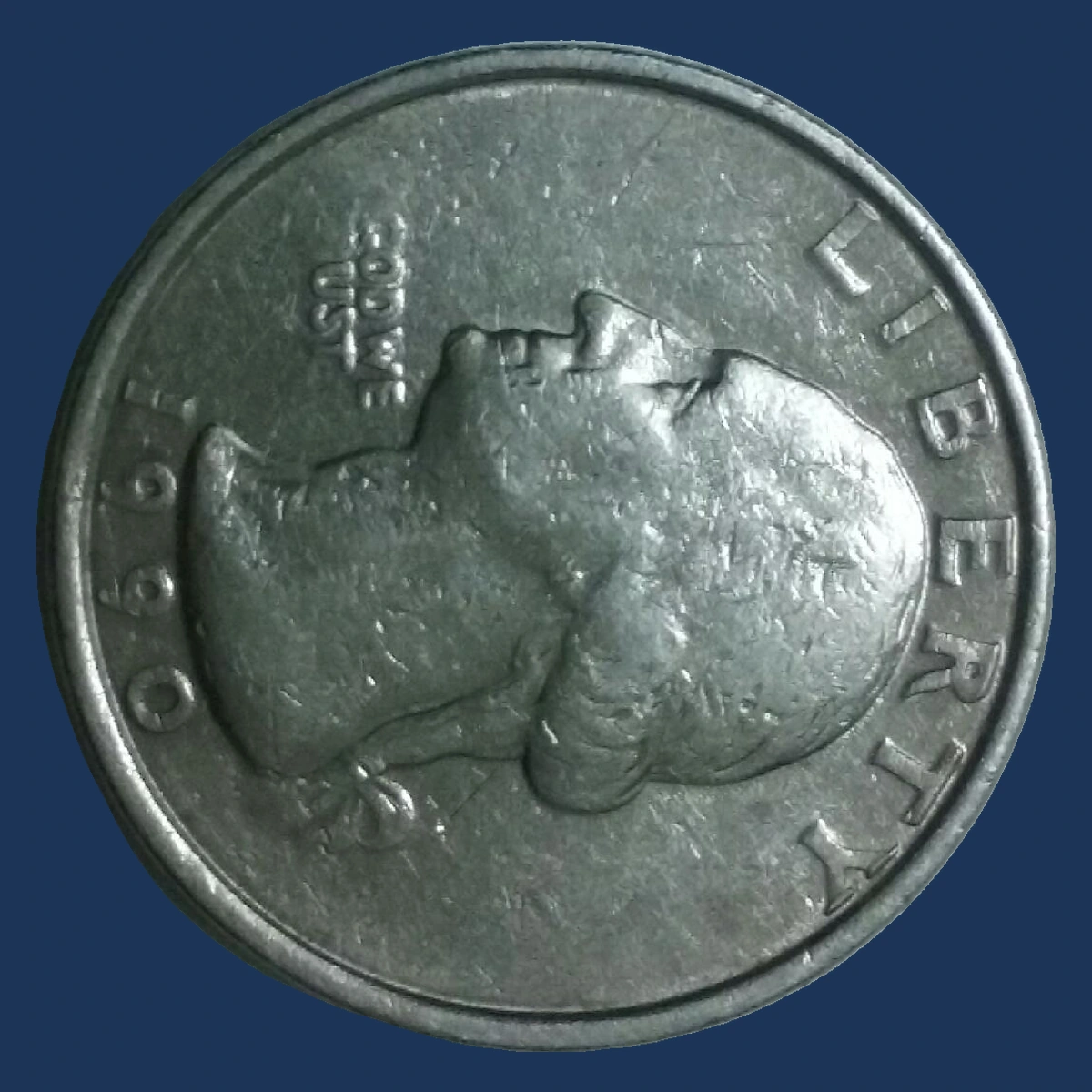
Missing IN and TR in the front motto have been reported on a 1990 quarter. Grease or debris blocking the tool’s lettering recesses is a suggested cause.
Material lying between a blank and the tool can also leave a depressed impression. A separate 1990-P report shows such a mark with a small lifted fragment at one end.
That fragment’s origin is not established. It should not automatically be identified as a piece of wire, a detached edge burr, or a peeling layer.
The surrounding design and the actual surface must explain whether the mark formed during striking.
Estimated Value
A genuine small grease-blocked lettering error is estimated at $5–$50. Larger recognizable struck-through impressions can be estimated around $30–$500, according to size and preservation.
A 1986-P nickel with a struck-through error sold for $204 in June 2023. Its different-year result provides a comparison for a visible impression, not a sale of the reported 1990-P coin.
The lifted fragment should remain untouched. Removing it can destroy evidence, while a later gouge or worn lettering should not receive the same error premium.
How to Identify
Compare the incomplete motto with the portrait beside it. Wear usually affects exposed details together, whereas blocked recesses can leave only some letters absent.
Inspect the lettering at 10× for a rubbed or scraped surface.
The separate recessed-mark coin needs a different check: follow its boundary toward the lifted fragment without moving that fragment. Examine the opposite face and grooved edge for a related later impact.
For a loose coin, a scale and calipers compare the actual object with the normal clad 5.67 grams and 24.26 millimeters. These readings cannot identify the unknown blocking material.
Look for an undisturbed transition from struck design to blocked area, rather than relying only on missing letters.
8. 1990 Washington Quarter Partial or Complete Outer-Layer Loss
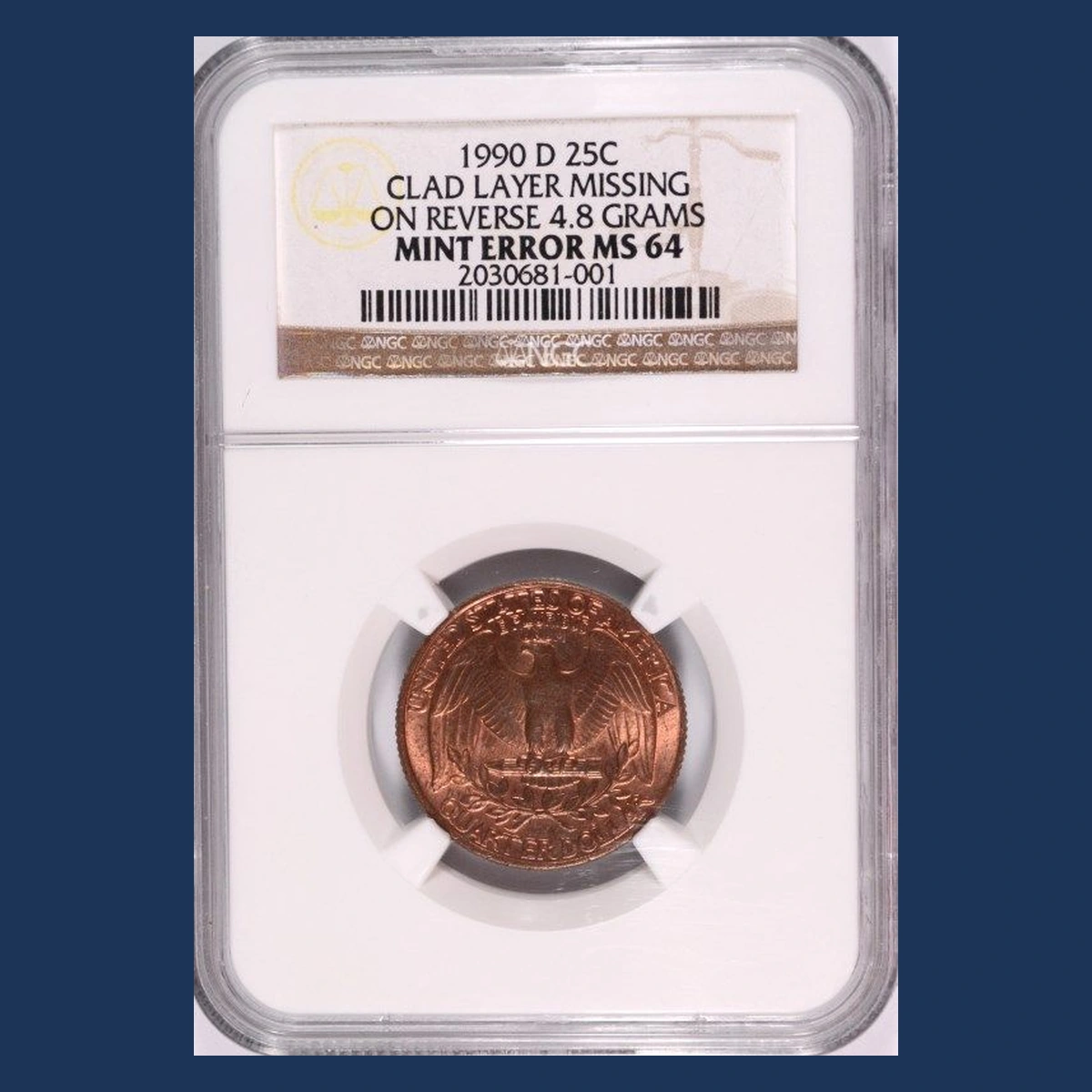
An exposed copper patch can show where part of a quarter’s outer face is absent. Ordinary clad quarters have copper-nickel surfaces bonded to a copper core.
One 1990-D report describes about 15% missing from the back layer, with a weight of 5.56 grams. The corresponding front area is weakly struck.
That is a local loss, not a complete missing face. Broader P and D missing-layer reports need their own affected-side and weight checks.
A brown surface can also come from staining or added plating. Color by itself does not establish that metal was absent when the design was struck.
Estimated Value
A genuine local layer defect is estimated at $30–$200, while a complete missing face can be estimated around $75–$600. Clear original boundaries and attractive exposed design support the stronger end.
A 1999-D Connecticut quarter lacking its back layer sold for $149 in December 2024. That whole-face loss differs from the 1990-D coin’s roughly 15% patch.
The 5.56-gram measurement belongs to the partial-loss example. Do not price a normal-weight stained quarter as though it had lost an entire outer layer.
How to Identify
Weigh the actual coin before applying a missing-layer label. The documented local-loss D example is 5.56 grams, only slightly below the normal clad standard of 5.67 grams.
Check the affected back area and the corresponding weak front area together. At 10×, follow the boundary for natural layer separation instead of chemical stripping or grinding.
Use calipers against 24.26 millimeters and inspect the grooved edge where the layers meet. A whole-face claim needs a weight change consistent with much more missing metal than a local patch.
The measured loss and an untouched layer boundary should support each other; copper color alone cannot do that.
9. 1990 Washington Quarter Doubled Details on the S Proof
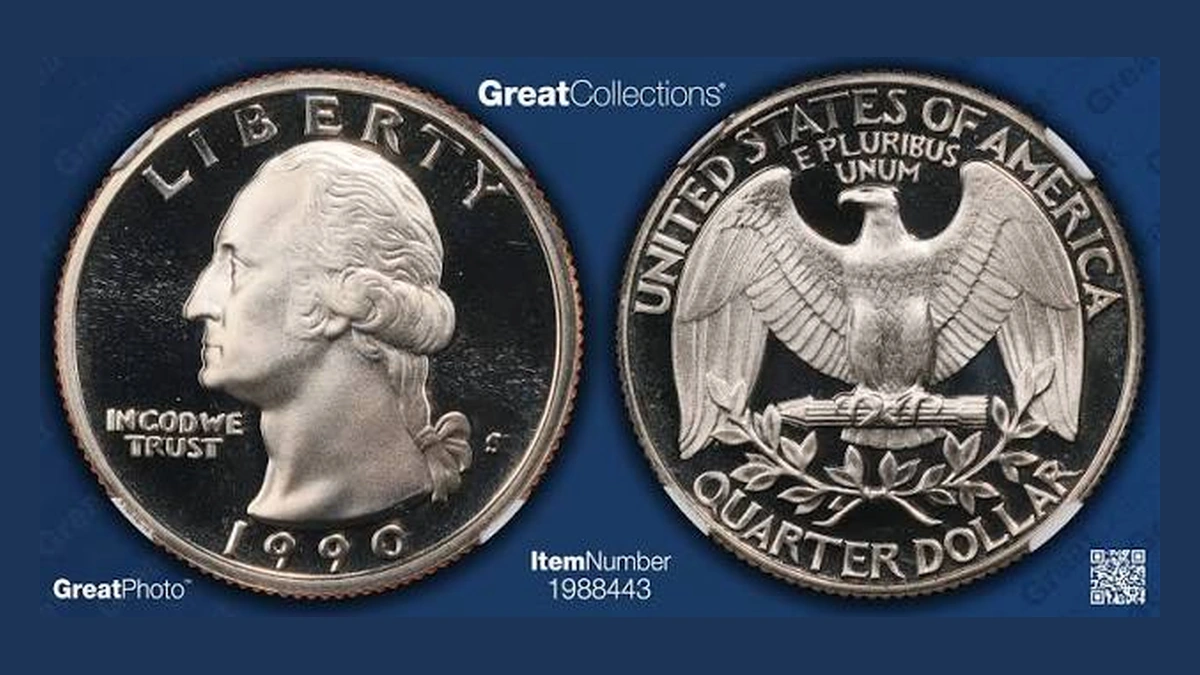
Small doubled outlines around the S, date, and JF initials identify the front-side variety called FS-101. The repeated details were part of the stamping tool rather than a second blow to the coin.
This variety occurs on specially made S Proof quarters, which have carefully prepared reflective surfaces. It should be compared with another Proof of the same year.
The JF initials are the designer’s small letters near the base of Washington’s neck. Their doubling belongs with the date and mintmark pattern.
Ordinary flat shelf-like doubling can look different and should not inherit the variety name.
Estimated Value
A PCGS Proof 68 Deep Cameo example sold for $360 in March 2020. Deep Cameo describes strong contrast between frosted design and reflective background.
An estimated $100–$800 covers clearly matched examples with different surfaces and preservation. Hairlines, spots, and reduced contrast can make a Proof less appealing.
The small doubled details must remain recognizable. A high numerical grade alone does not turn ordinary mechanical doubling into the cataloged FS-101 variety.
How to Identify
Keep a graded Proof sealed and first check that it is the S Proof variety, not an ordinary P or D quarter. Standard 1990 Proofs are clad, weighing 5.67 grams and measuring 24.26 millimeters, with no regular silver version that year.
On a loose coin, a scale and calipers can check those figures without rubbing the reflective faces. Inspect the grooved edge for alteration.
At 10×, compare the S mintmark, date, and small JF initials near the base of the neck with FS-101 photographs. Matching rounded doubled outlines at all three locations, rather than one thick-looking digit, provide the practical confirmation of this variety.
10. 1990 Washington Quarter Second Strikes, Including a Flipped Coin
A coin that turns over before another blow can retain parts of the eagle on Washington’s side. Its back may show remnants of the first date and mintmark.
A documented 1990-P AU58 example was struck again within the collar after flipping. Other double strikes moved away from the center instead.
Reports include a 45% second strike with the mint unspecified, and a separate P example with a 75% second strike. Another coin has first and second strikes about 75% and 80% off center.
These percentages describe different coins, not successive stages of one shared example.
Estimated Value
Estimate $150–$700 for clear displaced double strikes and about $400–$1,500 for a convincing flip-over example with recognizable opposing designs. Shape, remaining date, and preservation all affect demand.
A 1998-P NGC MS63 double-struck quarter sold for $312 in December 2024. Its later-year price is a comparison, not an exact value for a 1990 flip-over coin.
More dramatic displacement need not mean more value. A clear explanation visible on both faces can be more appealing than a confusing cluster of flattened lines.
How to Identify
For the flip-over coin, seek recognizable eagle or branch remnants on the portrait side, then look for the earlier date on the back. Their locations should explain a turn between strikes.
At 10×, distinguish these opposite-side remnants from a faint clash mark left by touching tools. A true second strike should also affect the surrounding design.
For displaced doubles, connect each portrait or date with its own rim. Use a scale and calipers against 5.67 grams and 24.26 millimeters on a loose clad coin, and inspect the edge grooves for repeated-strike effects.
Reconstruct a movement that explains linked features on both faces instead of counting isolated repeated lines.
Conclusion
Estimated values of $5–$1,500 cover small blocked details through clearly repeated strikes. A precise explanation of the feature is more useful than an impressive error name alone.
Keep Proof doubling separate from ordinary coin damage, and record each measured weight with its own specimen. Preserve unusual edges and attached metal; those original surfaces help distinguish a minting accident from something that happened after the coin left the press.