1877 Dime Error List with Pictures

Check the spaces around the date, not just the four numbers. Some 1877 dime errors leave extra digits in the rim teeth or Liberty’s seat, while another places a C on the wreath bow.
A well-preserved 1877-S repunched-date dime brought $5,280 in January 2020. Estimated values below span $20–$9,000, with the highest range reserved for exceptional unworn examples.
Read on to compare these small misplaced details with cracks, doubled lettering, and a genuine clipped rim.
1. 1877 Liberty Seated Dime Die Cracks and Small Breaks (Estimated Up to $200)
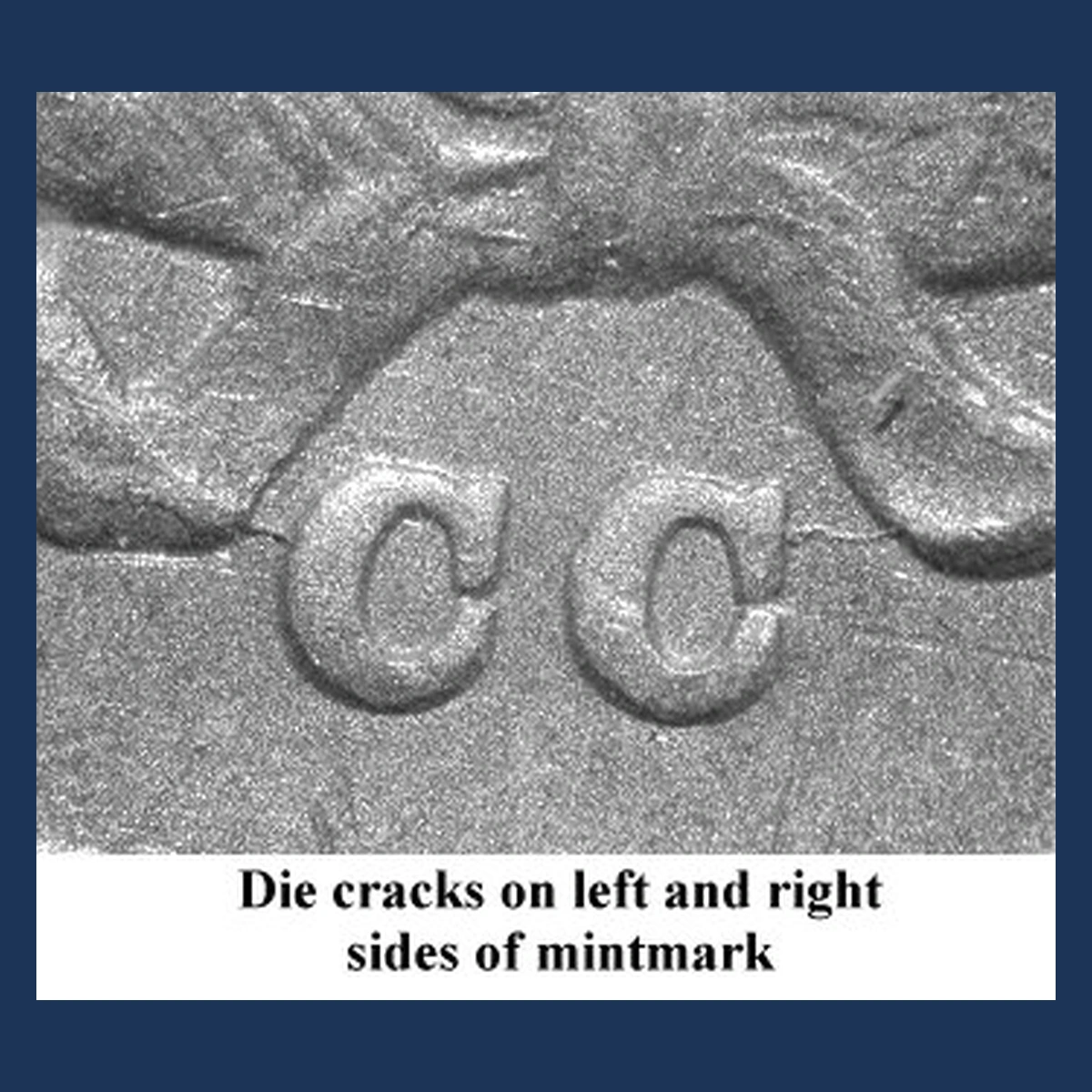
A raised line running through the date or around the wreath can reveal a cracked stamping tool. Collectors call this tool a die; silver entering a split in its surface creates the line on the coin.
Philadelphia examples include cracks through the date and curved lines around the wreath. Carson City records also describe a jagged line across the back.
A small internal break can leave a raised spot instead of a narrow line. Both differ from a scratch cut into a finished coin, and neither automatically means a large rim-connected break.
Estimated Value
Small cracks on ordinary worn coins have an estimated whole-coin range of $20–$200. The amount depends on the mint, remaining detail, and how clearly the crack can be seen.
This is an estimate rather than a recorded sale of a particular crack. A long, clear line may add interest, while a faint one adds little.
Compare the surfaces too. A damaged coin with a dramatic crack may be less appealing than a cleaner example with a modest line.
How to Identify
Move a light across the date and wreath. A raised line should cast a changing shadow, while a scratch usually cuts into the surface.
Follow the line with a 10× magnifier, checking whether it continues through the design. Do not connect separate scratches into an imagined crack.
A normal coin contains 90% silver and weighs 2.50 g, with a diameter of 17.9 mm. Use a scale and calipers for a loose coin, or recorded measurements for a sealed example.
Inspect the grooved edge for impact damage. The useful first test is a continuous raised line following the documented date or wreath pattern, rather than a cut through completed detail.
2. 1877 Liberty Seated Dime Clashed Dies (Estimated Up to $250)
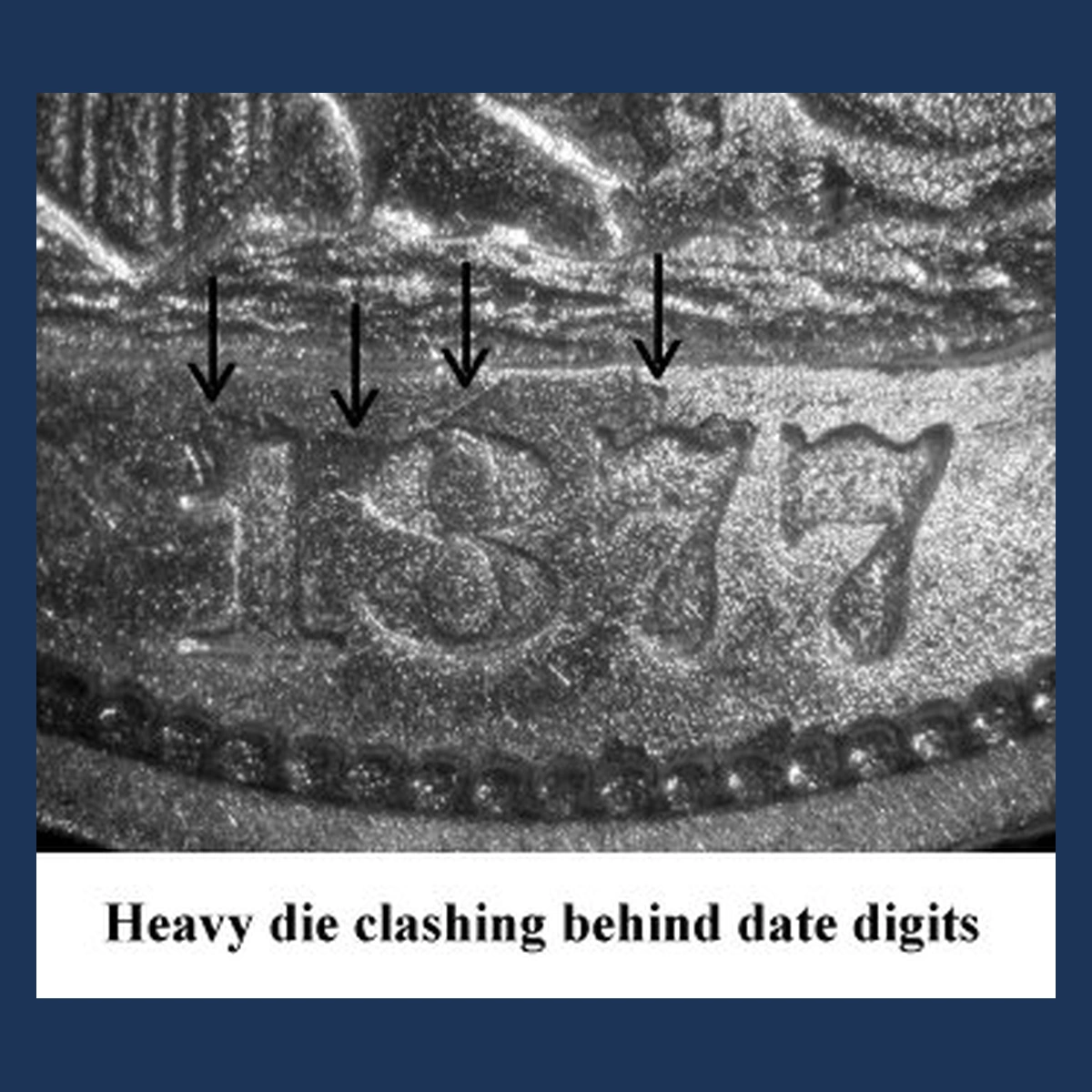
A faint piece of the opposite design can appear where the surface should be smooth. This happens when the two stamping tools meet without a blank between them.
Their contact leaves marks that later coins can pick up. The event is called a die clash, and it can affect both faces.
Specialist records show clashes on Philadelphia and Carson City 1877 dimes. The exact traces vary with the tools involved, so an unfamiliar line near Liberty is only a starting clue; it should match a real part of the wreath-side design.
Estimated Value
For a worn 1877 dime with a recognizable clash, estimate $30–$250 for the complete coin. Strong, readable transferred shapes are more useful to collectors than isolated faint lines.
The same coin may also have a repunched date or crack. Those features should be assessed together, rather than adding several complete coin prices.
This range is a practical estimate for ordinary collectible examples, not a claim that every clashed coin has sold within it.
How to Identify
Take equally sized photographs of both faces and compare the unexpected shapes. A 10× magnifier helps separate a faint outline from a scratch or stain.
Turn the comparison into the position in which the two tools would meet. A recognizable shape in an impossible position cannot be explained by that clash.
Weigh an accessible coin on a scale against 2.50 g and measure its width with calipers against 17.9 mm. The normal alloy is 90% silver and the edge has grooves.
Look for later scraping or pressure marks on both faces. Begin with an extra outline that fits a specific part of the opposite design, then check whether nearby traces agree.
3. 1877 Liberty Seated Dime Rim Clip (Estimated Up to $350)
The recorded 1877 example has a small rim clip, rather than a large bite extending deep into the design. A clip starts when the metal blank is incomplete before it reaches the striking press.
GreatCollections listed this Philadelphia dime in the Rippere collection. ANACS called it XF40 Details, meaning a worn coin with a surface or condition problem beyond ordinary wear.
The brief listing does not name that problem or the clip’s direction. A rim nick from later damage can look similar, so the original edge remains an important part of the examination.
Estimated Value
A small genuine clip on a worn 1877 dime has an estimated range of $60–$350. The listed coin’s Details designation needs to remain part of its value assessment.
A different-date comparison is a 1906 Barber dime with a larger 12% straight clip. It sold for $288 in July 2021.
Its PCGS MS62 grade means no circulation wear but noticeable marks. The size, design, and condition all differ from the reported 1877 clip.
How to Identify
Find both ends of the small missing section with a 10× magnifier. Check how the rim and edge grooves approach the gap, rather than judging its size alone.
A fresh cut can slice through finished grooves and leave sharp tool marks. An incomplete blank instead affects how the rim forms during striking.
Use a scale against the normal 2.50 g and calipers across intact metal against 17.9 mm. A tiny clip may remove too little metal for an ordinary scale to separate from wear.
The coin normally contains 90% silver. Check its grading label for the separate condition problem; the clip itself should show original struck transitions at both ends of the gap.
4. 1877 Liberty Seated Dime Misplaced Date Digits (Estimated Up to $650)
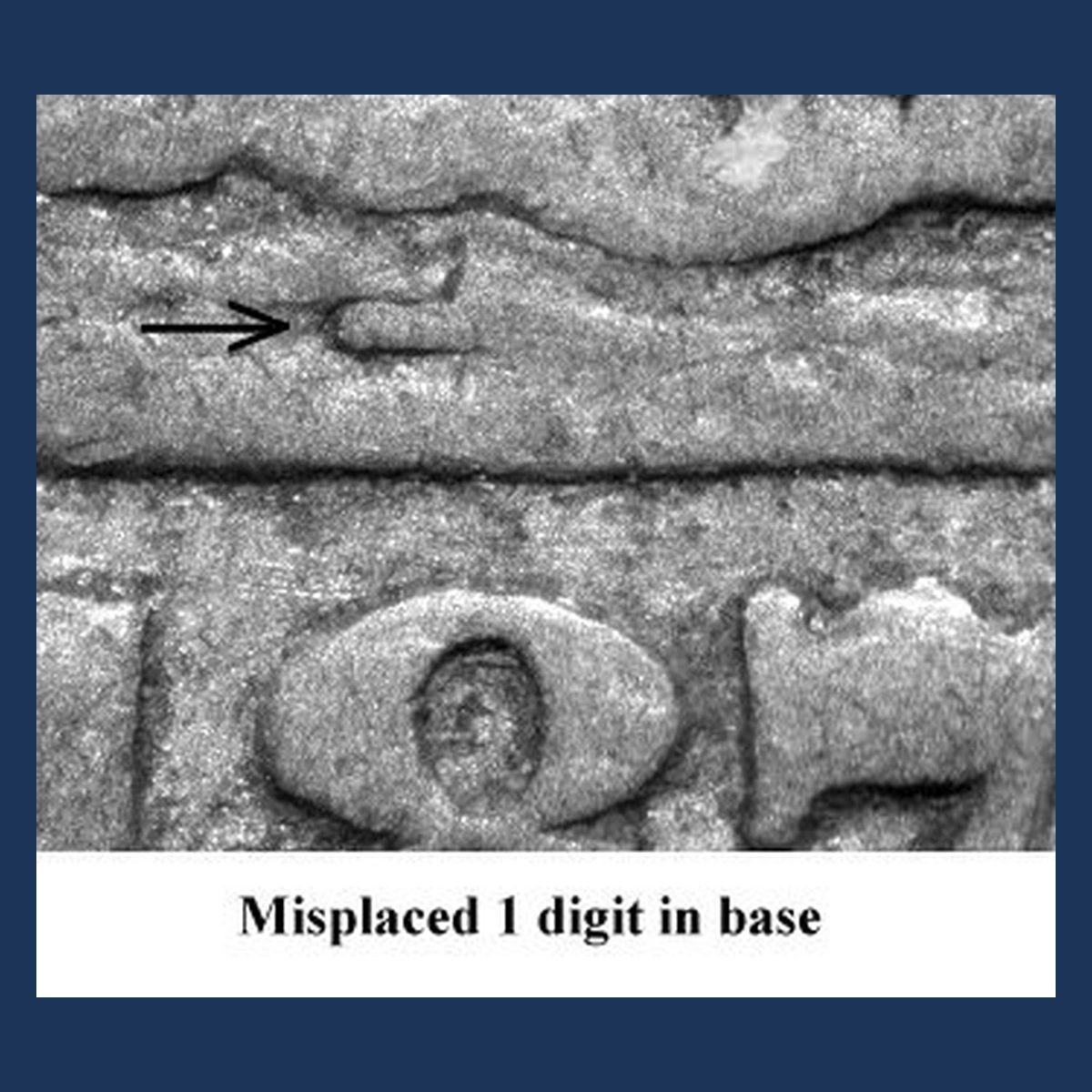
A small number can hide below the normal date or inside Liberty’s seat. These marks come from a date punch placed too high or too low while the stamping tool was being prepared.
Philadelphia records include an extra 1 in the seat base and digits among the small rim teeth. Carson City examples include an 8 or 7 in those teeth and other marks in the base.
The misplaced fragment lies outside the intended date. That separates it from a second outline immediately beside a normal numeral, which is called repunching.
Estimated Value
A Carson City example with an 8 among the rim teeth sold for $216 in February 2024. GreatCollections records the F-113 coin as PCGS XF40, a grade with clear circulation wear.
Estimate $60–$650 for comparable worn through lightly worn misplaced-date examples. A visible digit fragment and undamaged surrounding metal help the price.
Match the mint and the misplaced number before comparing. A different location does not automatically carry the F-113 coin’s value.
How to Identify
Search outside the four normal date numerals. With a 10× magnifier, inspect the little rim teeth below them and the base supporting Liberty.
For the pictured Carson City F-113, look for the reported 8 among those teeth. A curved scratch or an ordinary tooth should not be made into a number by changing the light.
Check the CC below the wreath bow before using that comparison. Philadelphia coins have no mintmark, and their misplaced fragments can occupy different positions.
A scale and calipers should relate to the normal 2.50 g and 17.9 mm, with 90% silver and a grooved edge. Begin with a recognizable number fragment outside the intended date that matches the correct mint’s example.
5. 1877 Liberty Seated Dime Misplaced C Mintmark (Estimated Up to $750)
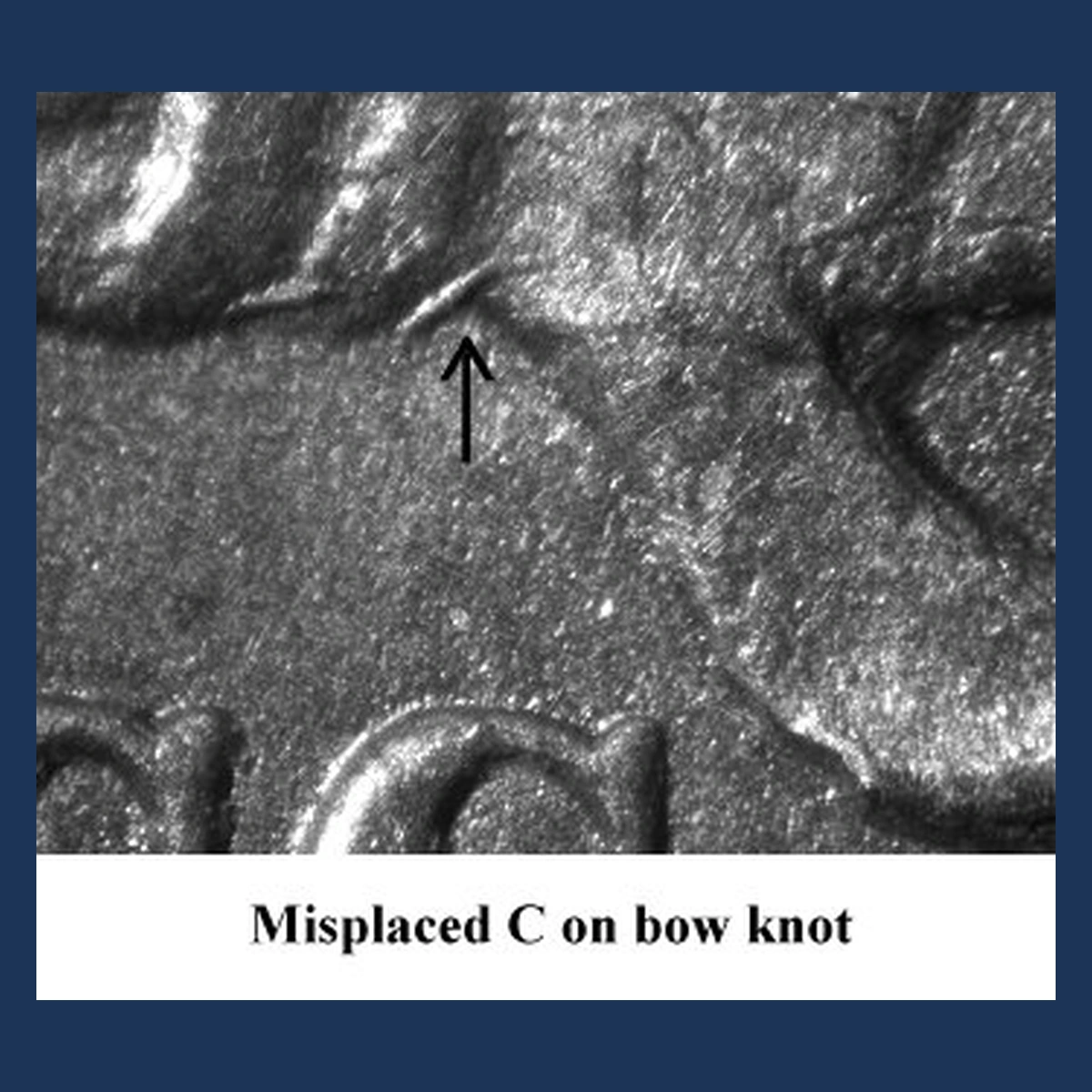
The normal CC mintmark belongs below the wreath bow. On this Carson City variety, another C appears on the bow itself.
A mintmark punch left the letter in the wrong place while the stamping tool was being prepared. Coins made from that tool can repeat the same extra curve.
The documented back was used with more than one front tool, so the extra C can accompany different front details. A loop in the normal ribbon or a raised crack may look similar, making the exact shape and position more important than counting apparent Cs.
Estimated Value
An estimated $100–$750 covers clear examples from worn grades through lightly worn coins. The misplaced letter’s visibility and the condition of the Carson City dime both affect the price.
This is a collector estimate, not a recorded sale of the bow-letter variety. The 2024 $216 misplaced-digit dime offers a nearby Carson City punch-error comparison.
The features still differ. A number near the date cannot set the exact price of a mintmark on the bow.
How to Identify
Turn directly to the wreath bow and compare it with a normal 1877-CC back. A 10× magnifier should show whether an extra curved letter interrupts the usual ribbon shape.
Keep the regular CC below the bow in the same photograph. This makes it easier to distinguish the misplaced letter from one normal mintmark viewed at an odd angle.
Look for a consistent raised C shape rather than a scratch, solder, or random crack. Match the bow itself even if small marks on the front differ.
Check 2.50 g on a scale and 17.9 mm with calipers; normal metal is 90% silver with a grooved edge. The key comparison is the extra C on the bow above the regular CC.
6. 1877 Liberty Seated Dime Rim Cud (Estimated Up to $850)
A raised patch replaces part of the upper-left border on the documented Philadelphia example. It joins the back’s rim between roughly ten and ten-thirty on a clock face.
This is a cud, made when a piece breaks away from the edge of a stamping tool. Silver fills the missing area instead of receiving the normal design.
The Philadelphia variety gallery identifies this as Type II F-113. The same number used for a Carson City date variety does not identify this break; the mint and the actual feature must match.
Estimated Value
For a genuine rim-connected break on a collectible worn 1877 dime, estimate $150–$850. The raised patch’s size and clarity help determine how much interest it adds.
No separate sale price is established here for the Philadelphia F-113. The range is an estimate for the described break.
Clean, original metal makes the feature easier to compare. A crushed rim or added metal may look dramatic without being a mint error.
How to Identify
Start at the back’s upper-left rim, around ten to ten-thirty. Under a 10× magnifier, follow the raised patch from the edge into the area where normal design should appear.
A small enclosed lump does not meet this rim connection. Examine the boundary for solder, corrosion, or metal folded inward by an impact.
Check that there is no CC or S below the bow when comparing with the Philadelphia example. Its Type II back is a normal design version, not a separate error.
Use a scale and calipers for the usual 2.50 g and 17.9 mm, and inspect the grooved edge. Look first for original raised metal replacing the design continuously from that upper-left rim.
7. 1877 Liberty Seated Dime Doubled Die Reverse (Estimated Up to $2,000)
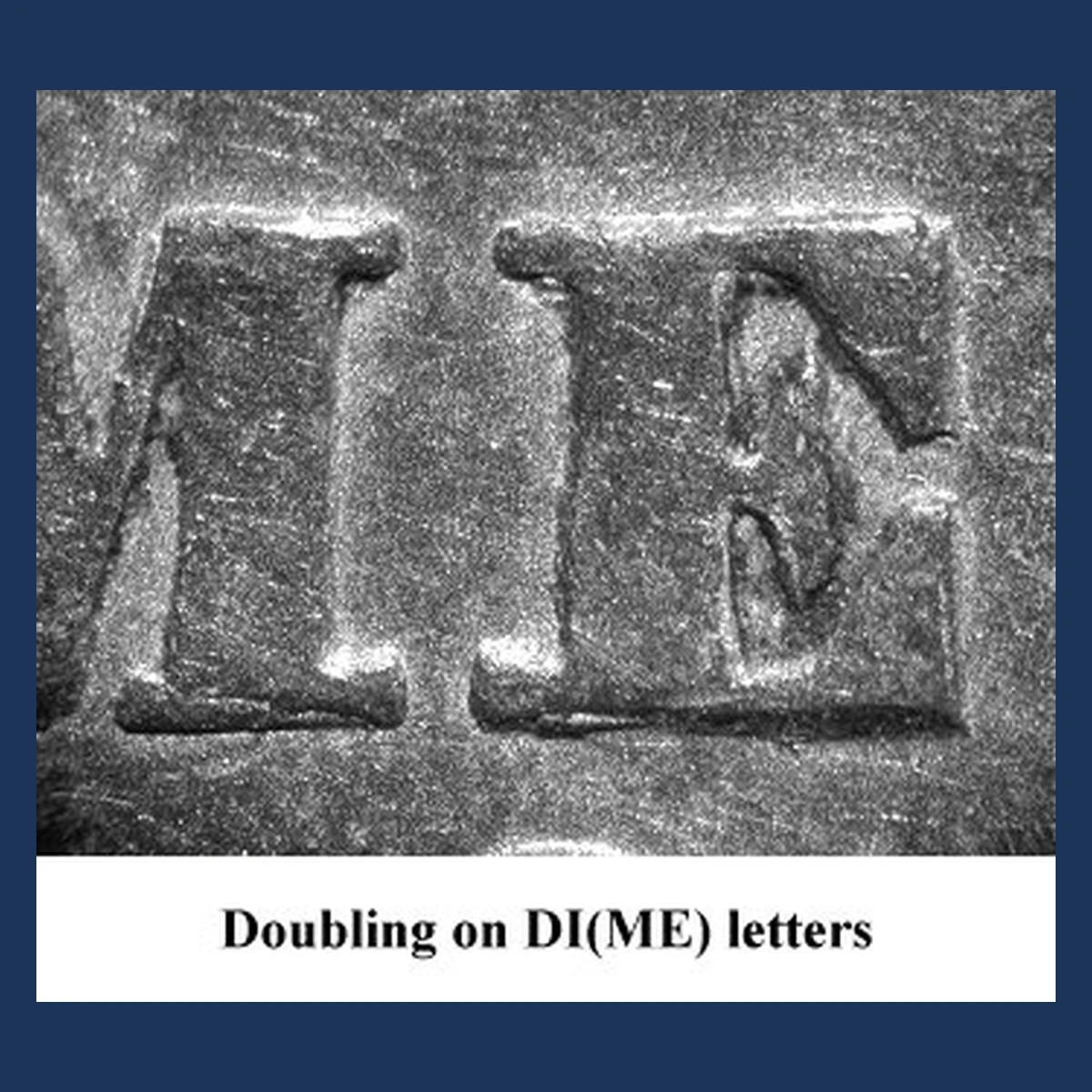
The letters ONE DIME may show extra outlines on the back. A doubled die carries a doubled design before striking, so coins from that tool can repeat the same pattern.
Philadelphia examples include doubled letters and parts of the wreath. The feature also occurs on specially made collector coins called proofs, while Carson City records describe doubled ONE DIME lettering.
A proof and a regular coin need separate comparisons. The normal Type I and Type II back designs also differ, but choosing one design version over the other does not itself create an error.
Estimated Value
A regular 1877 doubled reverse graded ANACS AU58 sold for $149 in March 2024, meaning it had only slight circulation wear. The auction does not specify a detailed variety match.
Estimate $60–$600 for ordinary worn through lightly worn examples and $400–$2,000 for collectible proofs. The proof range includes the specially made coin itself.
Clearer doubling and better surfaces can help its price. A normal proof without the doubled details should not receive the same extra premium.
How to Identify
Read ONE DIME under a 10× magnifier, checking the ends and corners of the letters. Genuine extra contours should keep their shapes as you change the light.
On the Philadelphia examples, compare the relevant wreath details too. Do not use the position of doubling on one tool to identify every coin with the same date.
A flat step shaving away a letter’s edge often comes from movement during striking. The ordinary Type I and Type II designs should be compared separately.
Both normal formats contain 90% silver, weigh 2.50 g, and measure 17.9 mm; use a scale and calipers when accessible. The first clue is matching extra outlines in the documented letters, supported by any accompanying wreath doubling.
8. 1877 Liberty Seated Dime 1877/6 Overdate (Estimated Up to $2,500)
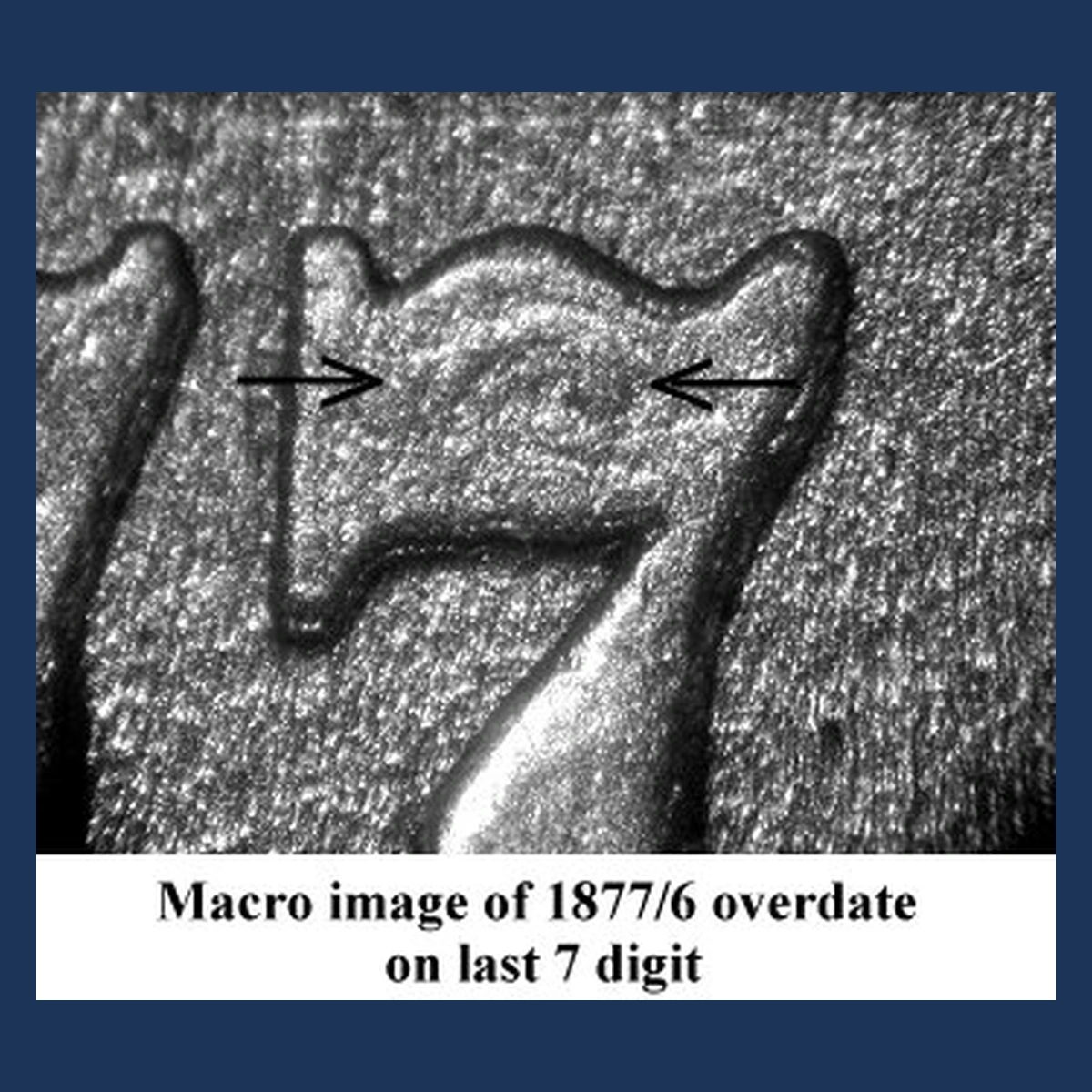
A tiny remnant of an older 6 can survive near the top bar of the last 7. This gives the Carson City variety its 1877/6 name.
An overdate results when a new date is applied to a tool carrying an earlier one. The new numeral can partly hide the old shape.
The published study describes the upper curve and end of the 6, together with other marks useful for matching worn examples. Strongly preserved coins show the small remnant best, while the normal Type II back helps identify the correct variety without being an error itself.
Estimated Value
For a correctly identified worn through lower-grade unworn example, estimate $150–$2,500. This is an appraisal range, not a quoted auction result for the discovery coin.
The older numeral is tiny. A visible remnant on well-preserved metal is more useful than the overdate name alone.
The recent $216 Carson City misplaced-date sale provides a same-year variety comparison. This overdate has a different feature, and its condition still needs a separate price judgment.
How to Identify
Study the last 7 with a 10× magnifier and compare its upper bar with the published overdate photographs. Look for the small upper curve and end attributed to the earlier 6.
Wear may hide that remnant. Supporting marks include a line in the shield below LIBE and extra punch traces at the feet of 1, but they should match together.
Confirm CC below the back’s bow before applying this identification. A random bump on a Philadelphia or San Francisco 7 is not the same variety.
Check the normal 90%-silver coin with a scale and calipers against 2.50 g and 17.9 mm. Begin with the older curve on the last 7, supported by the shield and 1 details.
9. 1877 Liberty Seated Dime Repunched Date (Estimated Up to $9,000)
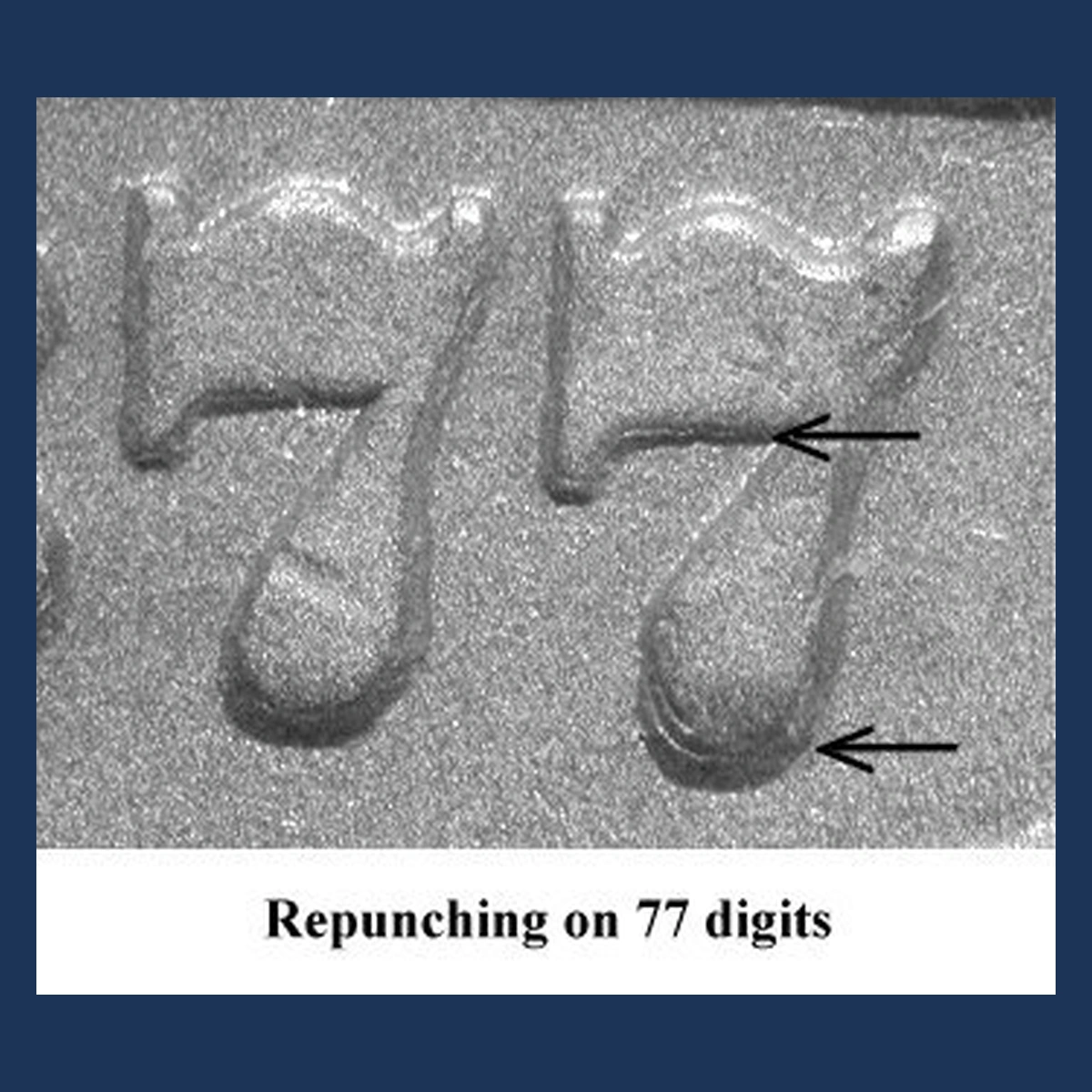
Two outlines beside a date numeral can record two placements of the date punch. The earlier impression remains after the punch is moved and struck into the stamping tool again.
Philadelphia examples include extra 7 outlines, while Carson City records show marks beside 1, 18, or 77. The San Francisco F-101 variety has repunched 18 digits.
The patterns are not interchangeable. An older 6 remnant beneath the last 7 belongs to the overdate discussion, while a misplaced digit in the seat or rim teeth sits outside the normal date area.
Estimated Value
Greysheet lists a $5,280 January 2020 Heritage sale for the 1877-S F-101 in PCGS MS66. That grade means no circulation wear and very few marks.
Estimate $50–$650 for ordinary worn through lightly worn repunched dates. Comparable exceptional MS66 San Francisco examples fit $4,000–$9,000.
The retail guide lists $7,500 for MS66 and $9,000 with additional CAC quality approval. Those guide figures are not separate completed auction sales.
How to Identify
Identify the mint before enlarging the date. CC or S appears below the wreath bow; Philadelphia coins have no mintmark.
Use a 10× magnifier beside the digits specified for that mint’s variety. For the San Francisco F-101, compare both 1 and 8 rather than accepting any bump beside a 7.
A real earlier punch leaves part of the same numeral in another position. Scratches and flat ledges caused during striking can create different shapes.
A loose 90%-silver dime should relate to 2.50 g on a scale and 17.9 mm with calipers; inspect its grooved edge too. Trace the extra strokes into recognizable parts of the correct numerals, then compare their direction with a matching example.
Conclusion
Small marks deserve different explanations: a number in the rim teeth, a C on the bow, and a raised crack do not come from the same mistake. Compare each feature with the correct mint’s coin.
Estimated values span $20–$9,000, with the highest prices tied to exceptional unworn repunched-date examples. Keep the whole coin visible in photographs and judge its wear and surface condition alongside the error.