1871 Dime Error List with Pictures

A cleaned 1871-CC dime with peeling front metal reportedly sold for $3,881 in 2010. Much of that price reflected the scarce Carson City coin, not the peeling patch alone.
This 1871 Seated dime error list includes raised cracks, extra letter strokes, and separate curved marks whose cause remains open. Estimated whole-coin values range from $30 to $15,000.
Read on to compare the features while keeping each mint and finish separate.
1. 1871 Seated Dime Reverse Die Cracks (Estimated Up to $3,000)
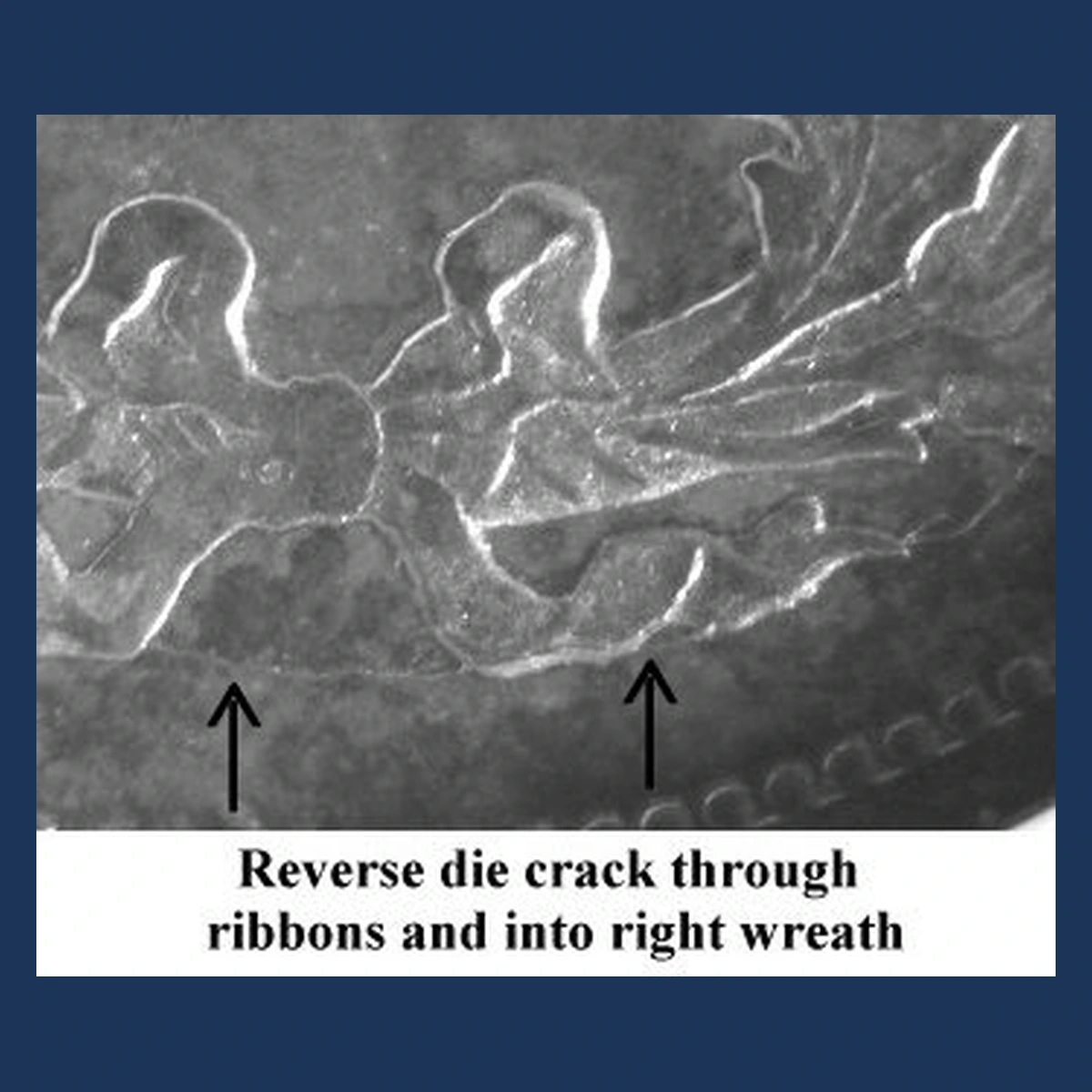
A raised line crosses the lower ribbons and wreath on some Philadelphia dimes. It is recorded on F-101 and F-102 Proofs, specially made collector coins, and on F-102a regular strikes.
Those names identify different pairings of dies, the steel tools that stamp coins. A cracked tool let silver enter the opening and form the extra ridge.
The line is not silver peeling from the coin. It belongs to the original struck design.
A tool first used for Proofs could later make ordinary coins. The same crack therefore cannot establish the finish by itself, even if the surface looks bright.
Estimated Value
Circulated Philadelphia examples with clear cracking are estimated at $30–$500. Collectible Proofs have a separate whole-coin range of $500–$3,000.
For comparison, an 1869 Proof graded NGC PR65 Cameo sold for $900 in October 2024. Cameo describes frosted designs against a shiny background.
That nearby-year sale gives a sense of the Proof market. It is neither an 1871 crack sale nor a price for the line alone; condition and finish remain central.
How to Identify
Start at the lower ribbons and follow the line through the wreath with a magnifier. Move the lamp to see whether the feature rises above the surface or cuts down like a scratch.
Compare the complete faces with the correct Proof or regular-strike photographs. A coin polished after minting may shine without having a genuine Proof finish.
The Philadelphia dime has no mintmark and is normally 90% silver, about 2.49 grams and 17.9 mm. Use a scale and calipers, then inspect the grooved edge for damage.
The direct first match is the continuous raised line across the ribbons and wreath, rather than surface brightness.
2. 1871 Seated Dime Repunched Date (Estimated Up to $4,000)
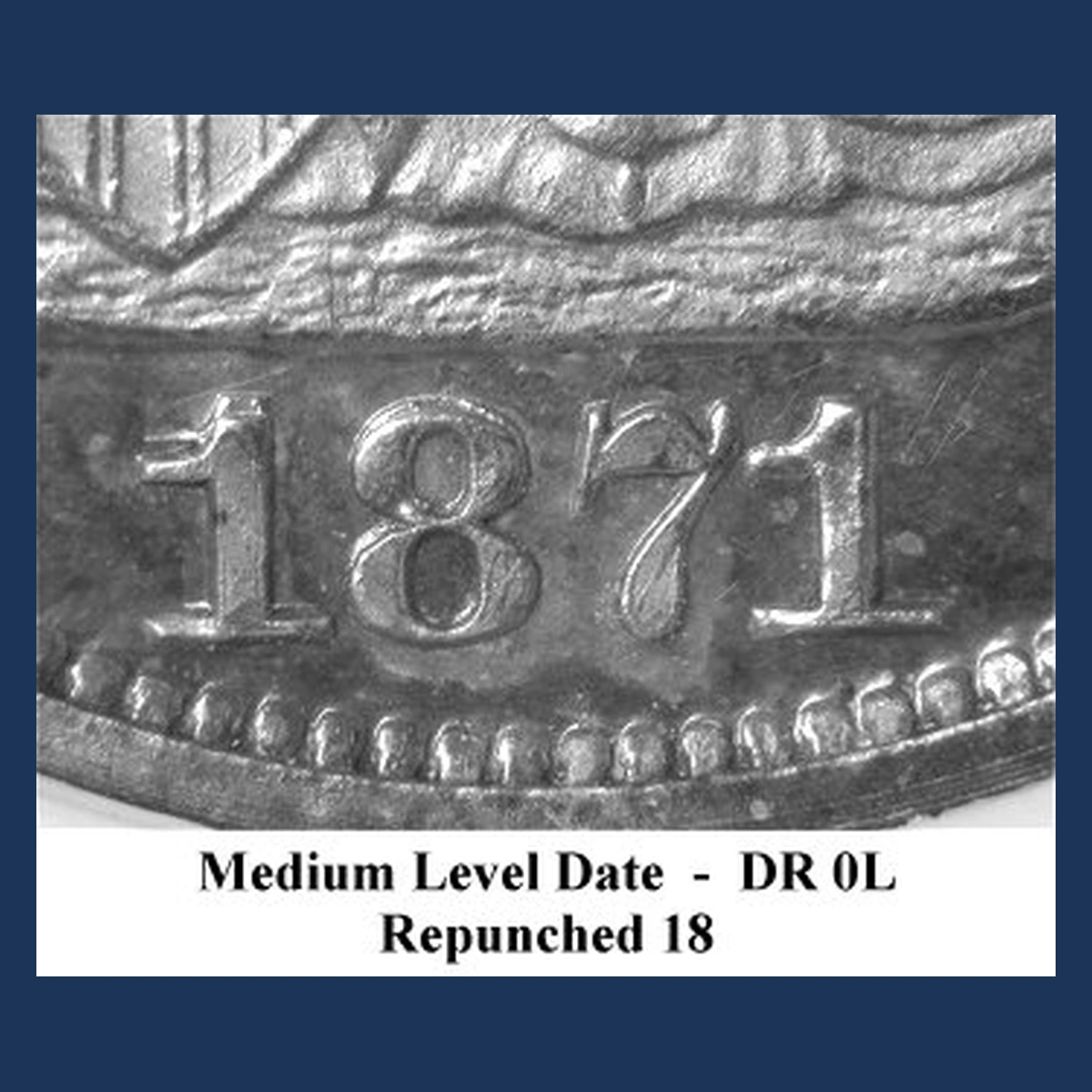
Earlier number strokes survive above the top of the first 1 and upper loop of 8 on Philadelphia’s F-101 Proof. The date punch entered the tool more than once.
The later impression did not cover everything. Coins made from the tool received those small extra shapes.
San Francisco regular strikes also have a recorded repunched 18. Their exact date pattern needs its own photograph rather than the Philadelphia positions.
The two mints did not necessarily prepare their dates the same way. These tiny extra strokes also differ from a second blow that moves the entire design across a coin.
Estimated Value
Philadelphia Proof examples are estimated at $500–$4,000. Circulated San Francisco coins occupy a separate $75–$1,500 range.
An 1869 NGC PR65 Cameo sold for $900 in October 2024, providing a nearby-year Proof comparison. It is not a direct sale of either 1871 repunched date.
A clear extra numeral and good surfaces make a stronger comparison than a worn blur. The ordinary San Francisco coin should not inherit Proof prices just because its date was also punched twice.
How to Identify
For Philadelphia’s Proof, keep the complete 1 and 8 visible while inspecting them with a magnifier. Look above the first 1’s top stroke and above the upper loop of 8.
The extra marks should resemble earlier parts of those digits. Scratches or flat shelves beside a numeral need different explanations.
For San Francisco, find S below the wreath and switch to the matching date photograph. Do not transfer the Philadelphia positions to it.
Calipers and a scale compare the normal 17.9 mm and 2.49 grams; inspect the grooved edge too. Begin with recognizable extra 1-and-8 strokes matching the correct mint’s photograph.
3. 1871 Seated Dime Doubled Die Obverse (Estimated Up to $4,000)
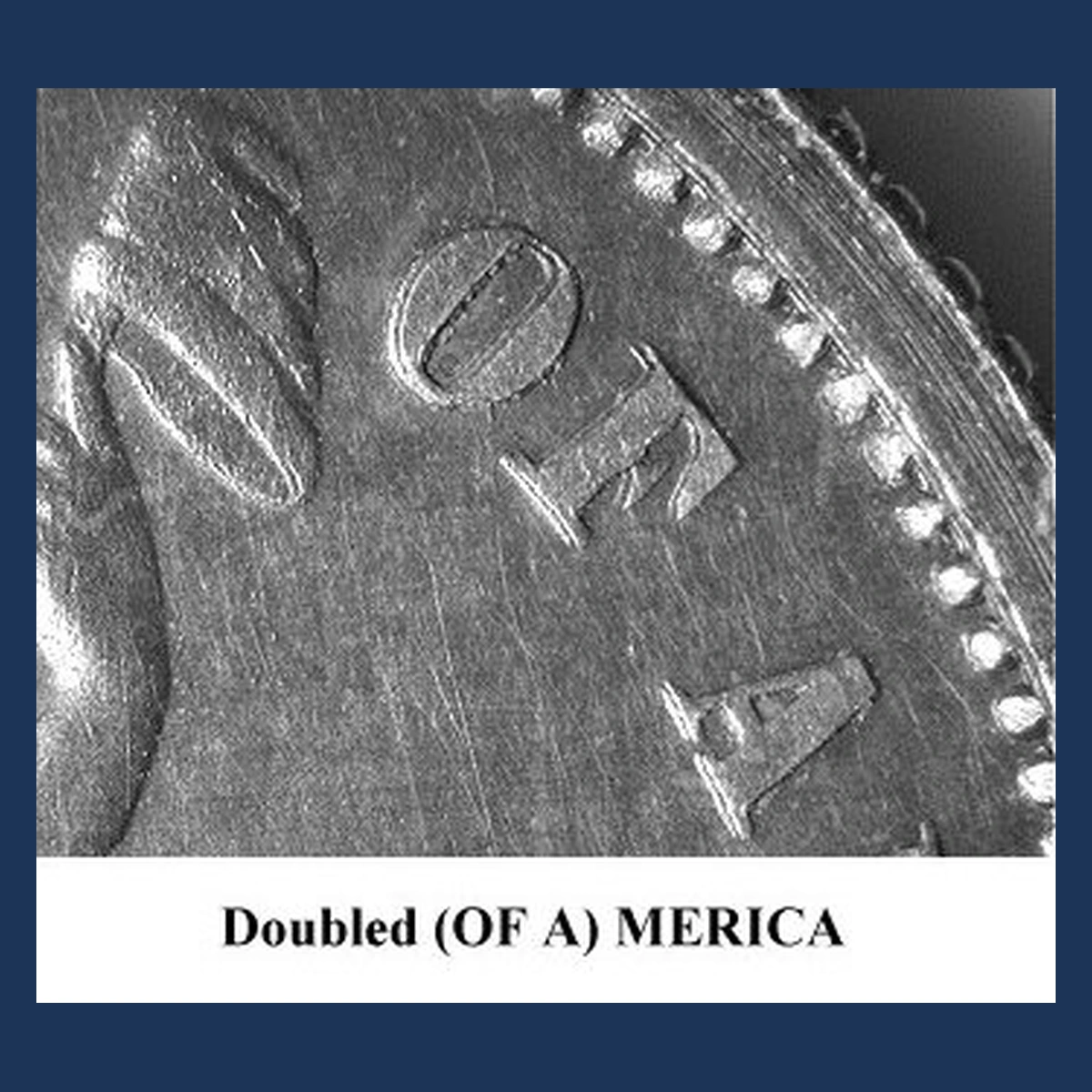
OF and the first A in AMERICA show the extra outlines recorded on the F-103 Proof. Those three letters narrow the search to a small part of the front design.
The duplication was in the stamping tool. It is different from the extra date strokes described above.
The related F-103a regular-strike entry describes weakened letters and a weak base, but does not prove the same doubling is clearly visible. Faint letters and repeated letter outlines are different features.
Bright light can also draw a false-looking border around a letter. The second shape must be real metal, not a reflection.
Estimated Value
A collectible F-103 Proof with clearly matched doubling is estimated at $500–$4,000 for the whole coin. Condition, surface appeal, and readable extra outlines influence the comparison.
The $900 1869 PR65 Cameo sale from October 2024 gives nearby-year Proof context. It is not a recorded F-103 transaction.
The range does not mean OF alone adds $4,000. A regular-strike coin with weak lettering also should not take the Proof price simply because the catalog numbers look related.
How to Identify
Frame OF and the following A together with a magnifier and compare them with the F-103 photographs. Shift the lamp to check that the extra outlines stay in place as the glare moves.
Neighboring letters provide useful normal comparisons, while a flat shelf or a cut into the surface suggests a different cause. A complete view should also support Philadelphia Proof manufacture rather than a polished ordinary coin.
Use a scale and calipers for the usual 90% silver dime at about 2.49 grams and 17.9 mm, then inspect its grooved edge. Begin with matching raised extra contours on OF and the first A, not general weak lettering.
4. 1871-CC Seated Dime Obverse Lamination (Estimated Up to $15,000)
A reported 1871-CC auction coin has peeling metal on its front as well as signs of cleaning. These describe two different parts of its history.
The peeling, called lamination, comes from a weakness within the silver-copper metal. Cleaning describes later treatment of the surface.
This dime is silver alloy throughout, not a sandwich with copper-nickel outer layers. Its flaw should not be called missing cladding.
The auction report does not place the separation at an exact spot on the front. It also does not identify a particular attached flap, so those details must come from the actual coin.
Estimated Value
A 2010 auction column reported $3,881 for the cleaned Carson City dime with front lamination. That amount paid for the whole scarce-date coin, including its surface problems.
For comparable circulated pieces with heavy to moderate wear, estimate $2,000–$15,000. The 1871-CC date and condition dominate this range.
A peeling flaw may interest error collectors, but it does not automatically raise the price. Harsh cleaning or an obvious defect can reduce appeal to collectors building date sets.
How to Identify
Confirm the 1871 date and CC below the wreath before judging the flaw. A scale and calipers compare the normal 90% silver dime with about 2.49 grams and 17.9 mm.
Under a magnifier, look for a natural separation within the front metal. A thin lifted edge or a crack continuing under the surface can support lamination.
Corrosion pits and parallel cleaning lines need different explanations. Check the grooved edge and keep any cleaning in the condition description.
Photograph the boundary without lifting attached metal. The first useful clue is an actual separation continuing beneath the surface, not a guessed location from the brief auction report.
5. 1871-CC Seated Dime Reported Curved Surface Mark (Estimated Up to $15,000)
Two 1871-CC dimes show similar curved marks reaching inward from the edge. Brad Holt illustrated them in 2015, with one mark on a front and the other on a back.
He used the nickname banana lamination while asking what caused the shapes. The name was a suggestion, not a proven explanation.
The two marks remain worth examining without deciding in advance that the silver separated or that the blank was rolled incorrectly. Their surface structure is the evidence.
Neither example is identified as the cleaned lamination coin from the 2010 sale. Similar descriptions do not make them the same specimen.
Estimated Value
For a genuine 1871-CC dime with heavy to moderate circulation wear and this kind of mark, estimate $2,000–$15,000. No extra error premium is assigned to the nickname.
The $3,881 cleaned-lamination result supplies a comparison for the scarce date. It is not a sale of either illustrated curved-mark coin.
Wear, originality, and later damage still control the value. A similar curve alone does not establish a rare manufacturing cause or justify an additional payment.
How to Identify
Compare the 2015 photographs as two separate coins, keeping each face upright. Follow the mark inward from the rim with a magnifier.
Does it rise, sink, or lift like a thin layer? Light from opposite directions can reveal that structure without rubbing or scraping the mark.
Inspect nearby edge grooves for cutting or an impact, then confirm the date and CC on that particular coin. Calipers and a scale compare about 17.9 mm and 2.49 grams.
A similar angle on another coin does not prove one cause. Begin by recording the actual raised, sunken, or lifted boundary where the curve enters from the edge.
Conclusion
Estimated values across these 1871 dimes run from $30 to $15,000. The mintmark, finish, and wear often matter more to price than the small unusual feature.
Match Philadelphia letter details with the right Proof or regular strike, and use a separate photograph for San Francisco’s date. Keep the Carson City curved marks distinct from the auctioned lamination coin.
Describe the visible shape first, without turning an unproven nickname into a confirmed cause.