2023 Dime Error List with Pictures

Roosevelt’s portrait has no oak leaves. A leaf-shaped trace near his ear is one reported feature to examine in this 2023 dime error list.
At the more dramatic end, a missing outer metal layer can expose copper beneath. A different-year 2018-P example sold for $384 in July 2021; the seven groups here have estimated values of $5–$600.
From tiny front-side bumps to a widened outline, each clue calls for a different check. Use the comparisons below to find a sensible starting point.
1. 2023 Roosevelt Dime Struck-Through (Estimated Up to $200)
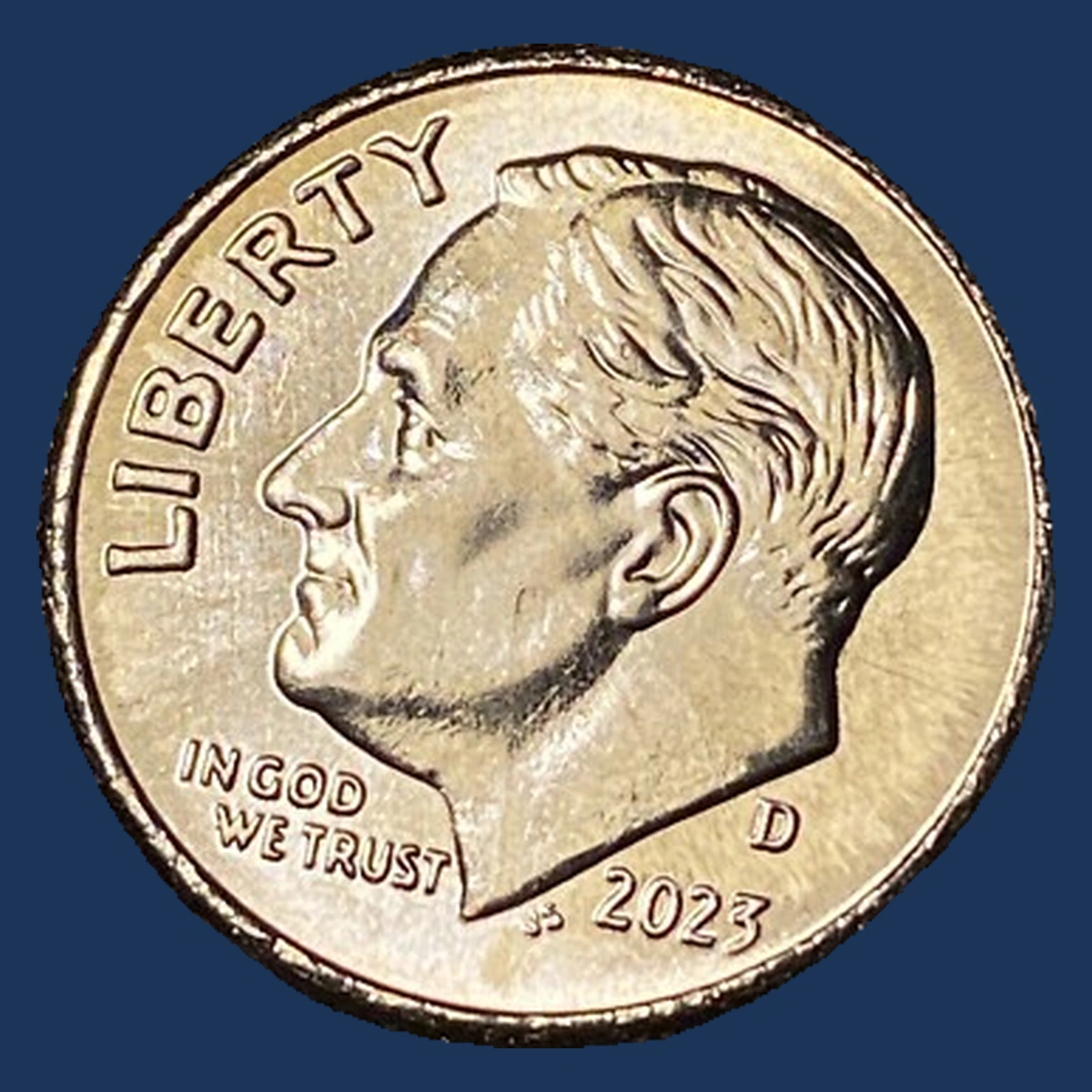
Part of the front design can fade or disappear beneath a shallow impression. A foreign substance between the metal disc and the stamping tool can cause this result.
Collectors call it a struck-through error. Grease can block small details, while a harder object may leave a more clearly shaped impression.
A 2023-D dime has been offered under this name by a seller. The listing alone does not identify what substance caused the mark.
Judge the surface itself. A scratch, dent, or area of corrosion can also interrupt the design after the coin has left the Mint.
Estimated Value
The ungraded 2023-D listing asks $15, with offers accepted. That is a seller’s asking price, not a completed sale or a grading service’s finding.
For genuine examples, estimate $10–$200 according to the size and clarity of the blocked area. A faint detail generally costs less than a strong impression on an attractive coin.
Later scratches or dents do not earn that premium merely because they resemble the seller’s description.
How to Identify
Look across the mark from several lighting angles with a 10× magnifier. Follow the place where normal lettering or portrait detail becomes weak.
A cut often crosses the surface sharply or leaves pushed-up metal beside it. Compare that with a smooth impression made while the design was being stamped.
Turn the dime over to check for a matching impact mark. Inspect the grooves around the edge for squeezing or filing.
A normal circulation dime weighs 2.268 g and measures 17.91 mm. Use a scale and calipers as supporting checks, rather than proof of the error.
Look for interrupted design inside a natural impression, without cutting or impact marks explaining its shape.
2. 2023 Roosevelt Dime Die Clash (Estimated Up to $250)
A faint leaf beside Roosevelt’s ear does not belong to his portrait. It may be a trace of the oak branch from the back design.
A collector discussion describes such marks near the ear and neck on a 2023 dime. This is a reported die clash, not an NGC grading decision.
Dies are steel stamping tools. When they hit each other without a disc between them, part of one design can mark the other tool.
Those marks can then appear on later coins. Ordinary hair detail and scratches need separate consideration.
Estimated Value
An estimated $20–$250 covers faint through clearly recognizable genuine clashes. The upper end is for a strong feature on an appealing coin.
The ear-and-neck report does not provide a completed sale. This price range is an estimate rather than a transaction attached to that example.
An obvious leaf shape can interest collectors more than isolated lines. Condition also matters, and scratches near the same spot should not receive a clash premium.
How to Identify
Find the oak branch on the back of a normal dime. Study its leaf shapes before comparing the unexpected marks near Roosevelt’s ear and neck.
Use a 10× magnifier and move the light slowly. A real transferred shape stays in the metal, while glare changes with the lamp.
Check whether the line fits the opposite design rather than the portrait’s normal hair. Do not force a random scratch into the outline of a leaf.
Compare the edge grooves with a normal coin. A scale and calipers should give readings near 2.268 g and 17.91 mm.
Match the extra contour to a recognizable part of the opposite design, rather than identifying a clash by location alone.
3. 2023 Roosevelt Dime Die Chips and Cuds (Estimated Up to $300)
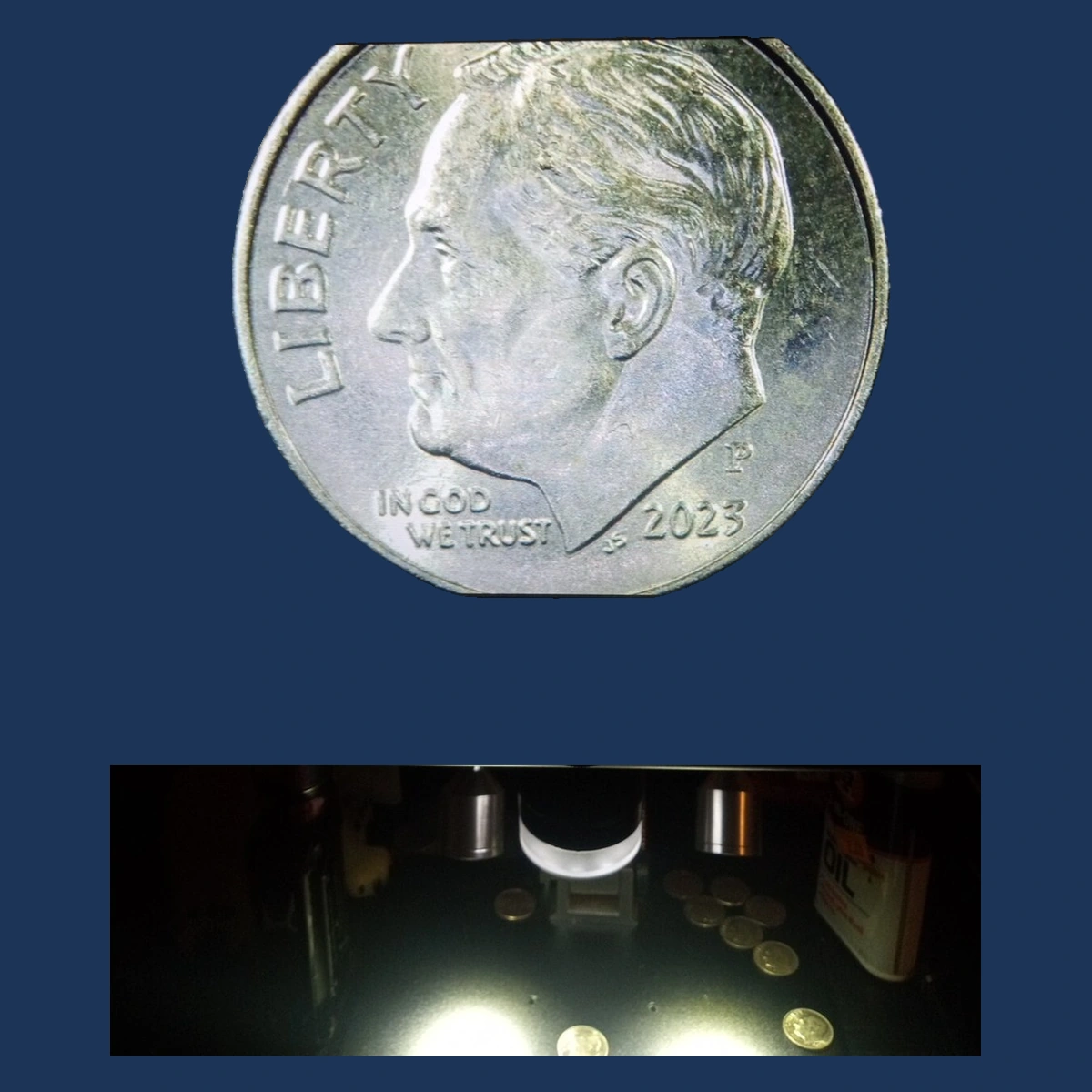
A raised bump can appear where a small piece broke from a stamping tool. Metal enters that gap as the next coin is made, producing a die chip.
A 2023-P dime with front-side chips was graded NGC MS65 FT. The grade describes an unworn coin with clear torch detail on the back.
Reports also describe a bump on the back’s olive branch. That location does not identify the chips on the graded coin’s front.
A larger break joined to the rim produces a cud. An isolated branch bump does not meet that description.
Estimated Value
Estimated values range from $5–$300. Small internal bumps usually sit at the low end, while prominent rim-connected cuds can attract more money.
GreatCollections sold the NGC MS65 FT front-chip example on March 16, 2025. Its price is hidden on the public page, so it is not treated as a known dollar result here.
A strong nickname or several tiny bumps does not automatically increase the coin’s value.
How to Identify
Inspect both sides before assigning the bump to a reported example. The graded front-chip coin and the olive-branch report concern different areas.
Under a 10× magnifier, check that the raised feature joins the surrounding metal. A deposit may sit on top, while a dent can leave a raised lip beside a hollow.
Trace any larger blob toward the rim. It needs a natural rim connection to be called a cud.
Check normal specifications with a scale and calipers: 2.268 g and 17.91 mm. Look for impact marks around the edge grooves.
Follow the bump’s base and rim connection to distinguish a genuine internal chip or cud from attached material and damage.
4. 2023 Roosevelt Dime Doubled Die (Estimated Up to $300)
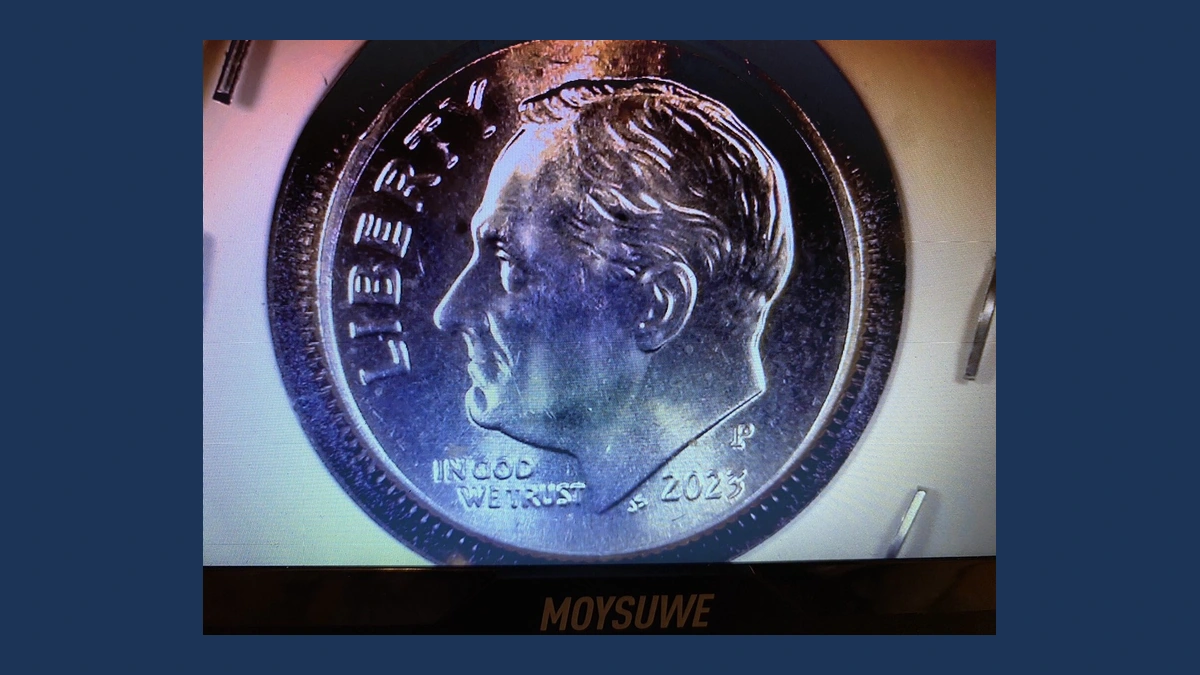
Two distinct edges on a letter can point to a doubled die. The extra shape was already present on the steel tool before it stamped the coin.
For 2023 front-side reports, compare LIBERTY and the date. Back-side reports mention ONE DIME and the N in UNUM.
These are separate areas to inspect, not a promise that every feature appears on one coin. Philadelphia and Denver examples also need their own comparisons.
Movement during stamping can leave low, flat shelves beside letters. Those shelves have a different cause from extra design built into the tool.
Estimated Value
Use an estimated $20–$300 for genuine 2023 doubled dies with clear extra detail. Better condition and a strong match to a known pattern can increase buyer interest.
This is a guide estimate, not a specific certified auction result. Slightly thick lettering alone does not justify its upper end.
Compare photographs of the actual feature before paying extra. Flat shelf-like doubling from movement during stamping generally adds little to an ordinary dime’s value.
How to Identify
Try changing the light before deciding a letter has two edges. A shadow may move or disappear, while a second metal stroke remains.
Use a 10× magnifier on LIBERTY and the date, then examine ONE DIME and UNUM on the back. Keep the observations from each face separate.
Look for clear separation or a small notch where strokes divide. A lower flat shelf is a warning that movement during stamping may explain the effect.
Check the edge grooves and use a scale and calipers to compare with 2.268 g and 17.91 mm. Confirm the mintmark too.
Match the second stroke to a known example from the same year, mint, and face before calling it a doubled die.
5. 2023 Roosevelt Dime Broadstrike (Estimated Up to $400)
Extra width outside the design is the first clue to a broadstrike. The disc spread because the collar did not hold its edge during stamping.
That collar is a ring that normally limits the diameter and forms the edge grooves. Without its restraint, a dime can expand beyond its usual outline.
The design should remain on the coin, though its border may be uneven. Missing design points toward a different striking problem.
A smooth edge alone is not enough. Wear, filing, or later flattening can change a dime’s edge without producing a broadstrike.
Estimated Value
Estimate $50–$400 for genuine 2023 broadstrikes with visible expansion. Complete designs and attractive surfaces make an example easier to sell.
A 2000-P Roosevelt dime that was broadstruck and stamped several times sold for $159 in September 2025. That NGC MS65 coin was unworn and had more than one error.
Its different date and extra strikes limit the comparison. A wide-looking border on an otherwise ordinary coin does not automatically receive this premium.
How to Identify
Place a normal dime beside the candidate and compare their outlines. Use calipers to measure several directions against the usual 17.91 mm.
Check with a scale that the coin remains near 2.268 g. Broadstriking spreads the existing disc rather than cutting pieces away.
Now inspect the outer letters on both faces with a 10× magnifier. All major design elements should remain within the metal.
Examine the edge for missing grooves, but also look for filing and flattened portrait details. Later hammering may widen a coin while crushing its design.
Confirm that the outline has expanded around complete designs, rather than becoming wider through later flattening or edge damage.
6. 2023 Roosevelt Dime Off-Center Strike (Estimated Up to $500)
Part of the design may run off the edge while a plain crescent remains on the other side. The disc was not centered between the stamping tools.
Both faces should reflect that misplaced disc. The amount of missing design varies between coins.
The reported 2023 category does not establish one fixed offset percentage or direction. A visible mintmark must identify the individual coin rather than a general description of the year.
This is different from a broadstrike with complete designs. It also differs from one shifted tool that moves only a single face’s design.
Estimated Value
For genuine examples with readable dates, estimate $30–$500. A slight offset usually brings less than a bold shift that still retains the year.
A 1977 dime struck ten percent off center sold for $109 in June 2026. NGC graded that different-year coin MS64 Full Bands, with clear separation in the torch bands.
The comparison does not assign ten percent to any 2023 coin. Judge each offset, condition, and surviving date separately.
How to Identify
Start at the plain crescent and check whether it contains metal. If a piece is missing altogether, a clip or later cut is a different possibility.
With a 10× magnifier, trace the end of the design on both faces. A shifted front with a centered back suggests one displaced tool instead.
Find the date and mintmark wherever they survive. Do not assign a mint if its mark was outside the stamped area.
Use a scale and calipers against 2.268 g and 17.91 mm, recording any distorted outline. Inspect the edge grooves for fresh cuts.
Match the unstamped crescent on both faces and confirm that the same displaced disc explains the missing designs.
7. 2023 Roosevelt Dime Missing Clad Layer (Estimated Up to $600)
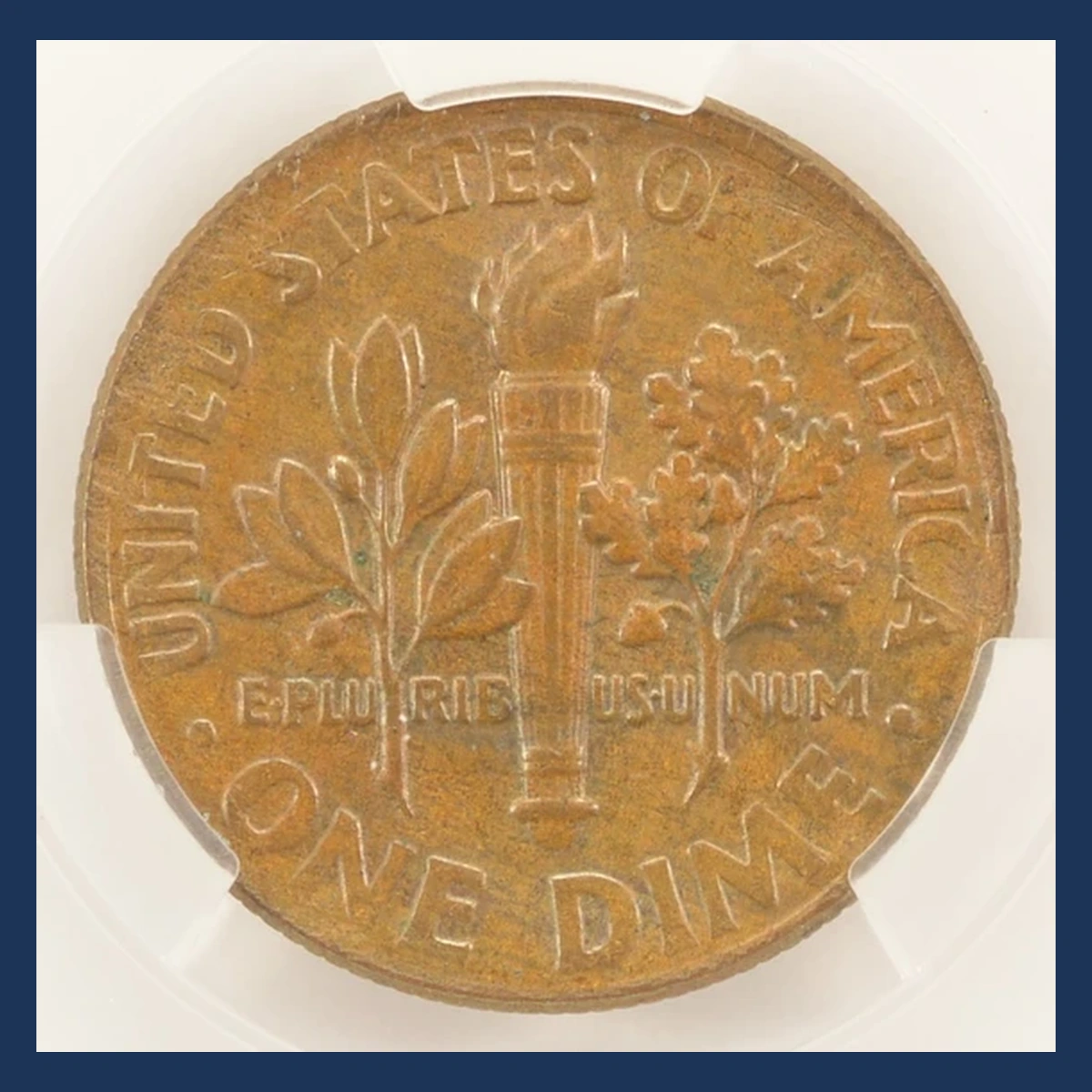
A copper-colored face can stand out among pale dimes. Ordinary 2023 coins have clad construction, with pale outer layers bonded around a copper center.
Part or all of one outer layer can be absent. The exposed metal then changes the appearance and often the weight.
Check the kind of coin first. The .999 silver proofs made for collectors do not have this ordinary clad structure.
Color is not conclusive. Chemicals, heat, and added coatings can imitate the appearance, so the remaining layers and exposed design must explain what happened.
Estimated Value
Use an estimated $50–$600 for genuine missing-layer errors. Large exposed areas and good surfaces usually attract more attention than tiny patches.
A 2018-P dime missing its front layer brought $384 in July 2021, graded PCGS MS64. Another comparison, a 2019-P dime with eighty percent of the front layer missing, sold for $139 in September 2024.
Both are different-year examples. Their prices help estimate the error without proving any particular brown 2023 dime is genuine.
How to Identify
Turn the coin on its side and inspect the metal layers with a 10× magnifier. Compare the unusual face with the pale metal remaining on the other side.
If only a patch is missing, look for the actual edge of that missing layer. A gradual color change across intact metal may simply be a stain.
Weigh a loose coin against the normal 2.268 g and compare caliper readings with 17.91 mm. Low weight helps, but chemicals can also remove metal.
Check the edge grooves and exposed design for grinding or rough chemical damage. Confirm that it is an ordinary clad coin.
Find physical evidence of an absent outer layer, with the stamped design continuing naturally in the exposed copper.
Conclusion
A 2023 dime can carry a small raised chip, a faint transferred leaf, or a much larger striking error. Each calls for its own comparison, even when two coins look similarly unusual.
Estimated prices span $5 for minor chips to $600 for stronger missing-layer examples. Check the actual metal and design before using that range, and keep asking prices separate from completed sales.