2021 Crossing the Delaware Quarter Error List with Pictures

Look beneath Washington’s outstretched wrist on the river scene. Some Philadelphia quarters have an extra outline there, while other examples show a raised “crown” on his hat.
These 2021 Crossing the Delaware quarter errors have estimated values of $3–$1,000. As a different-year comparison, a 1776–1976 quarter struck through cloth sold for $881.25 in January 2017.
That older coin carried a fabric impression, not just a weak letter. Read on to compare the marks, metal changes, and misplaced strikes found or reported on the 2021 river design.
1. 2021 Crossing the Delaware Quarter Raised Feeder-Finger Lines
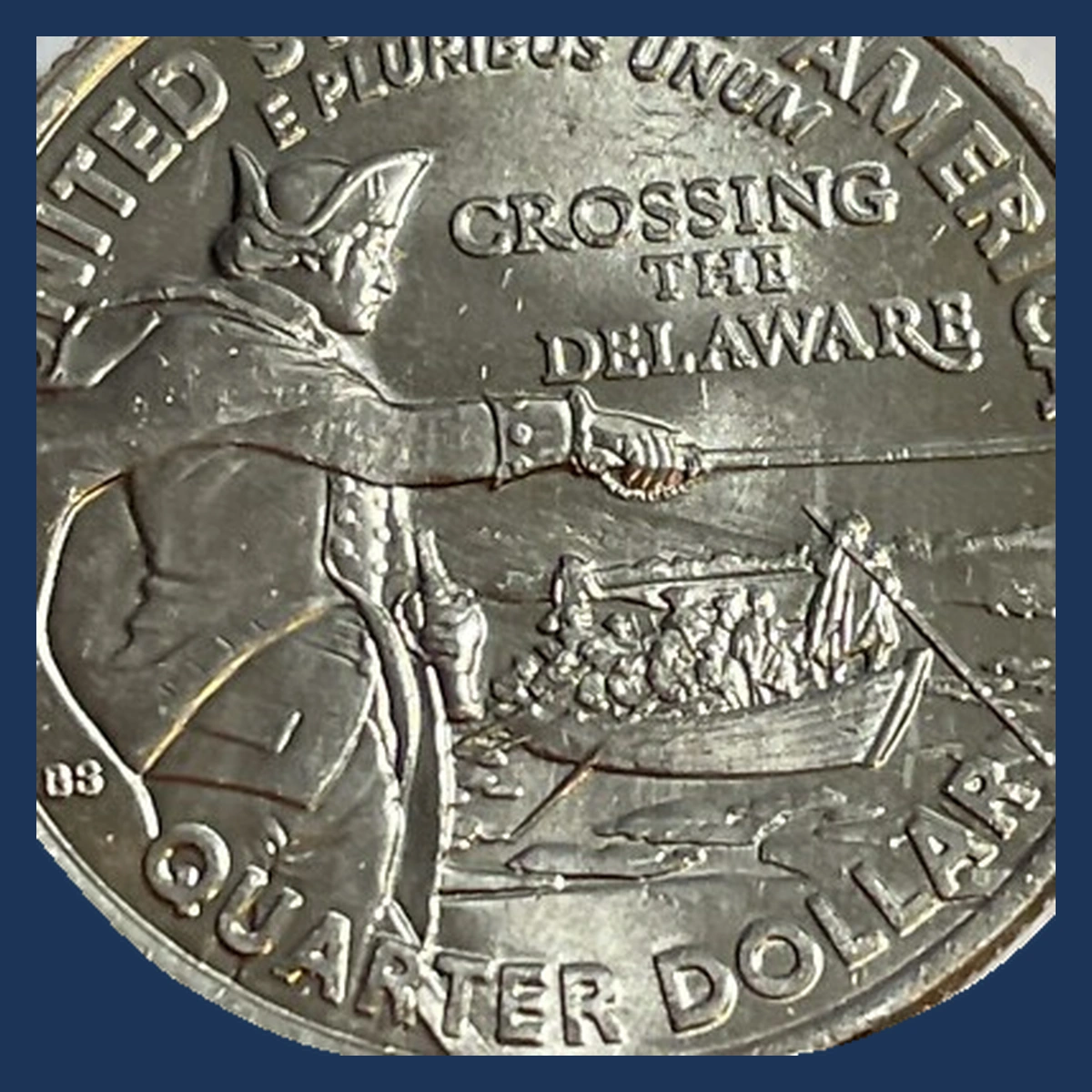
Thin parallel ridges may look like scratches until you tilt the coin. They can come from a feeder finger, the machine part that moves blank metal into the press.
If that part scrapes a die, or stamping tool, it cuts grooves into the tool. Coins made afterward copy those grooves as raised lines.
This type is reported beside Washington and across open areas on the river side of the quarter. A scratch made directly across a finished coin usually cuts into the surface instead.
Estimated Value
For clear raised feeder-finger lines, use an estimated $3–$30. Light lines that need difficult lighting may add little to an ordinary quarter’s value.
A stronger group of parallel ridges is easier to see and compare. Original surfaces also help separate the feature from damage.
The estimate concerns this minor tool mark, not a major missing-metal error. A seller’s dramatic nickname does not increase the amount of metal or design affected.
How to Identify
A matching second coin is useful when checking parallel lines. Compare their locations around Washington and the open background; repeated lines in the same places suggest marks copied from a stamping tool.
Now tilt one coin under a small lamp. Watch whether several ridges catch the light together, then examine their sides with a magnifier.
A scratch can also have raised edges.
Look for a cut running between those edges, especially where it crosses a letter or other raised detail. Feeder-finger marks should form raised lines rather than cuts through the finished design.
Photograph the lines where they meet normal detail. Several matching ridges without cut centers provide a better check than a lone bright streak.
2. 2021 Crossing the Delaware Quarter Clashed Design Outlines
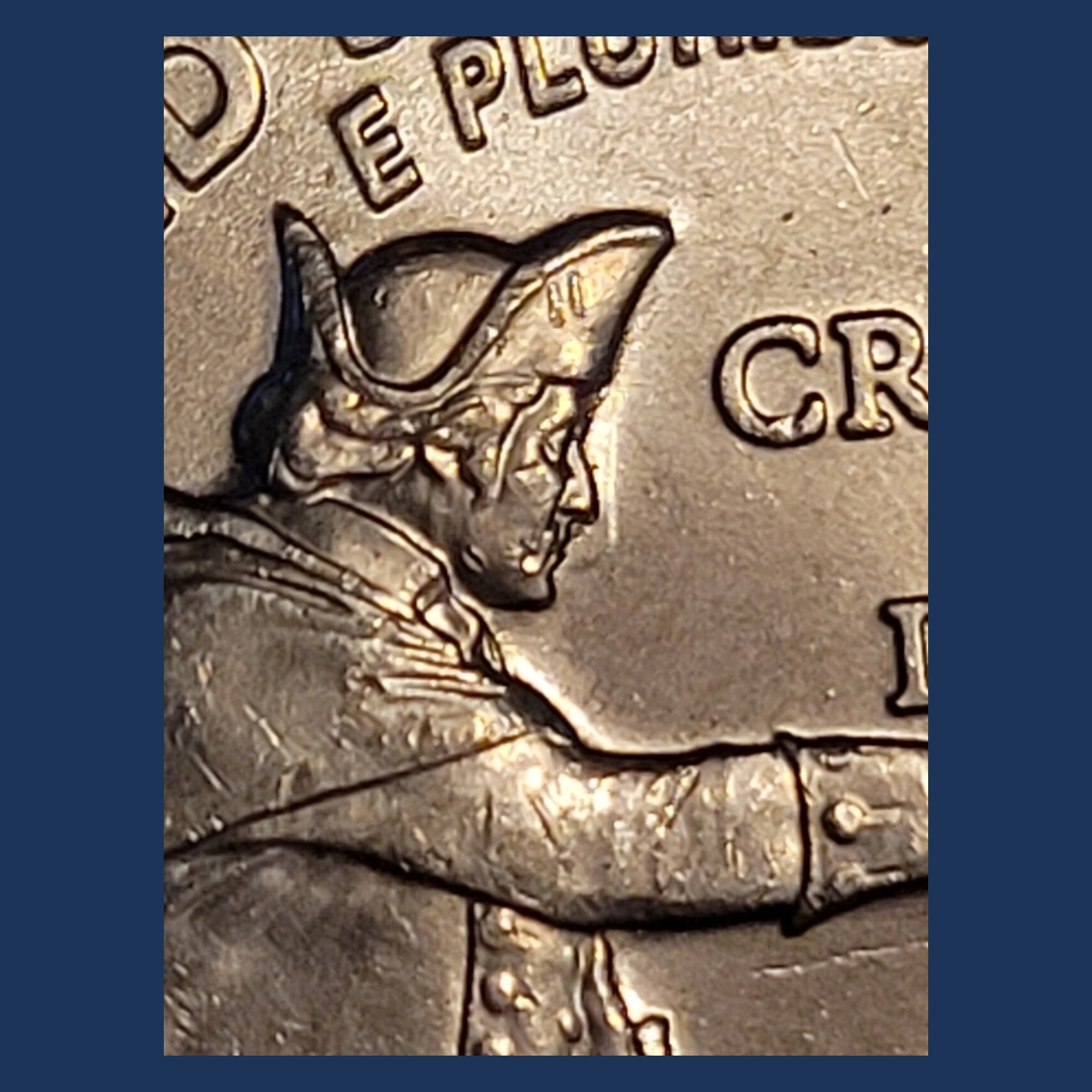
An unexpected outline may resemble part of the design on the other side. This can happen when the two dies meet with no metal blank between them.
The collision marks a stamping tool. Later quarters can carry faint traces of that contact alongside their normal designs.
The Crossing the Delaware issue has reported clashes, but a random line is not enough to identify one. Several connected faint marks should fit the shape of a real feature on the opposite face.
Estimated Value
Estimate $10–$100 for a genuine, clearly recognizable clash on this issue. A strong transferred outline is generally more appealing than a faint, incomplete trace.
The coin’s wear matters because circulation can blur the shallow marks. Cleaning may also leave lines that interfere with a useful comparison.
This is a type estimate for confirmed clashes. A bright streak, rough background, or unusual shadow does not earn a clash premium by itself.
How to Identify
Choose one extra shape, then find a possible match on the other side of the quarter. Use photographs of both faces at the same size so the shape and surrounding spacing can be compared.
Follow the whole outline with a magnifier, looking for connected curves or corners instead of stopping at one line. Change the light direction to make sure the shape stays visible rather than disappearing as a reflection.
The normal river scene already contains many small lines, so compare it with an ordinary quarter too. A transferred outline should match a feature from the opposite face that does not belong in that spot.
3. 2021 Crossing the Delaware Quarter Hat Chips, Cracks, and Rim Breaks
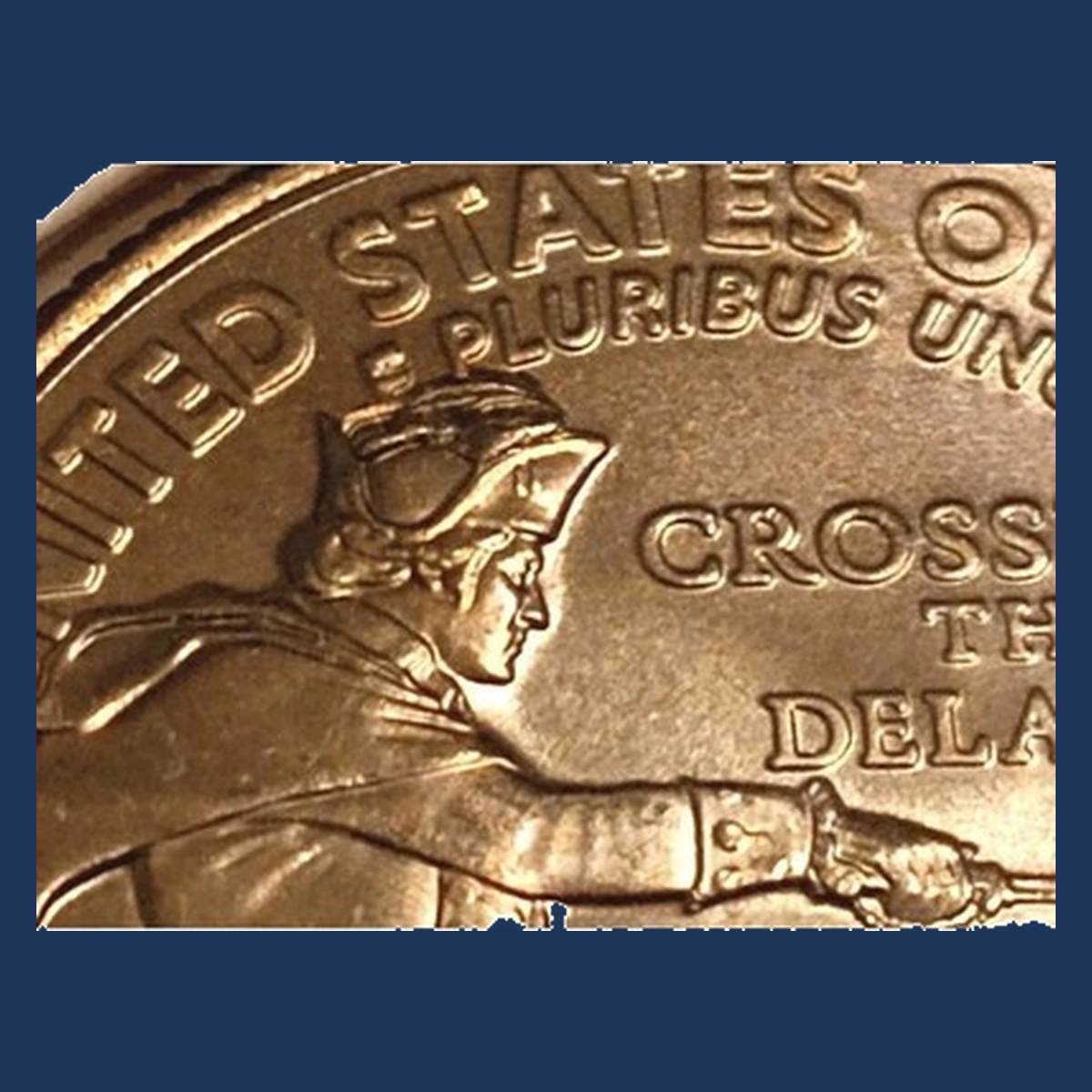
The popular “crown” is extra raised metal on Washington’s three-cornered hat in the river scene. A piece broke out of the die, leaving a space that coin metal could fill.
Other chips are reported near the front portrait’s lips or eye. Thin raised cracks can cross the hat, the base of the front portrait, or the tied hair.
These marks vary in size and shape. A chip within the design is not automatically a cud, the term used for a larger break connected to the rim.
Estimated Value
Small cracks and chips can be estimated at $3–$30, while a clear hat “crown” may fit $5–$125. Substantial authenticated rim breaks can reach an estimated $50–$250.
The full group therefore spans $3–$250. Size, visibility, and the condition of the surrounding design matter more than a catchy nickname.
A large online asking price is not a completed sale. Compare similar raised features on the same design before assigning a premium.
How to Identify
Find Washington standing in the boat and examine the top of his hat. A real chip forms a solid raised shape that interrupts the normal hat outline.
For front-side marks, move to the lips, eye, lower portrait edge, or tied hair. Do not expect all these separate features on one coin.
Check a line with side lighting to see whether it rises above the surface or cuts into it. Scratches often leave grooves with small pushed-up edges.
For a claimed cud, follow the raised area to the coin’s outer border. A lump surrounded by intact design is an interior chip, even when it looks unusually large.
4. 2021 Crossing the Delaware Quarter Doubled Front and River-Scene Details
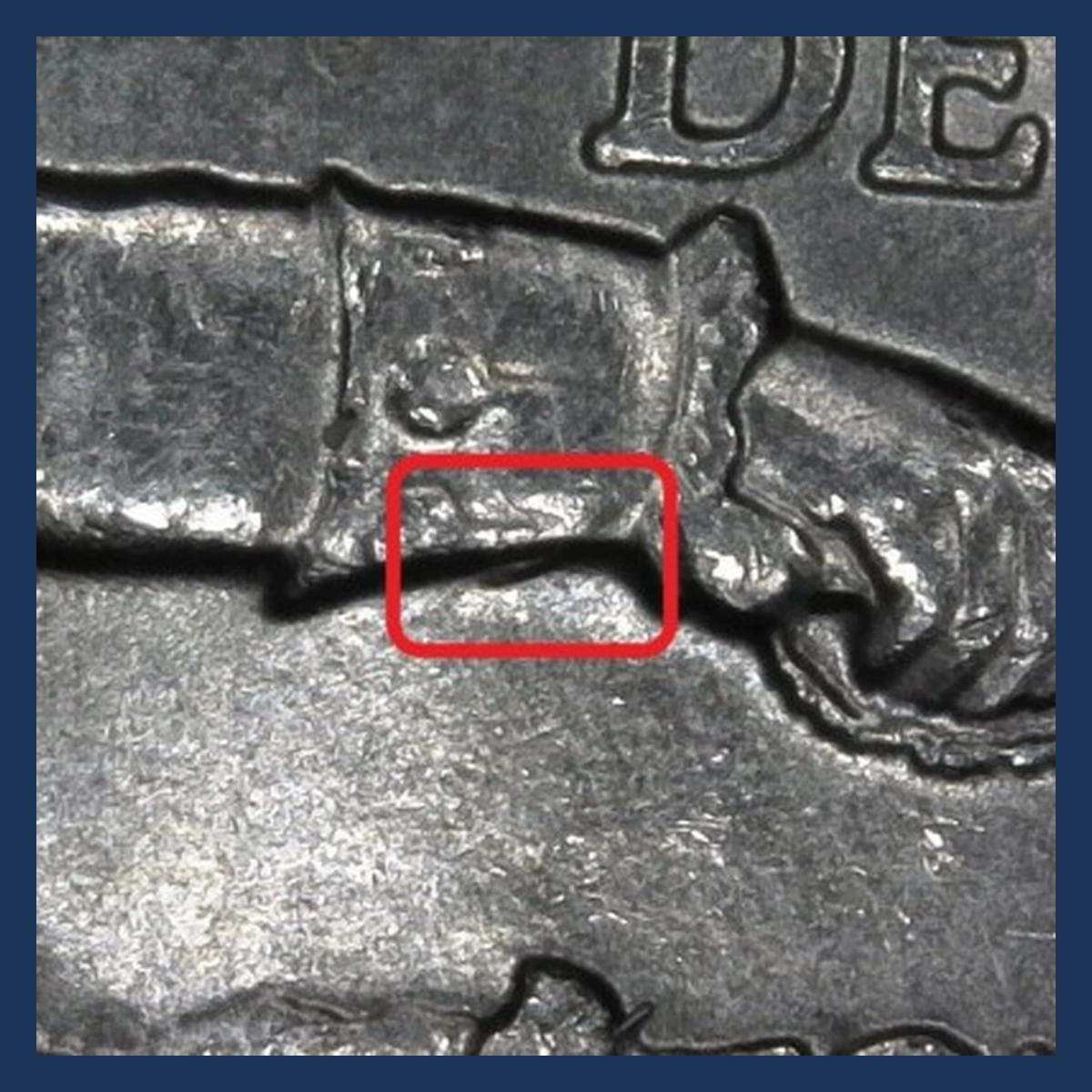
Philadelphia doubled reverses have a useful landmark: the area just below Washington’s extended wrist. An extra outline there can be small enough to miss without magnification.
The doubled image was already in the die before it stamped the quarter. It does not mean that the finished coin received another blow.
Other reports describe repeated Denver back lettering or extra edges on the front’s LIBERTY, motto, or date. These involve separate locations; the Philadelphia wrist feature is a small extra outline directly beneath the extended arm.
Estimated Value
For identified doubled designs on this issue, estimate $10–$300. Clear separation and an unworn surface make small details easier to recognize.
The upper end calls for a strong, well-matched pattern rather than slightly thick lettering. Flattened extra edges caused during striking are a different feature and generally do not carry the same appeal.
A Philadelphia wrist variety also does not establish the value of a Denver lettering claim. Compare the same mint and affected area.
How to Identify
Read the P or D beside the front portrait. A Philadelphia wrist variety needs a P coin, while reported Denver lettering patterns need their own matching examples.
Turn a P coin to the river scene and locate Washington’s extended arm. Enlarge the area immediately below the wrist, then compare it with Wexler’s photographed wrist varieties.
For a front-side candidate, move to LIBERTY, the motto, or date instead. Examine several nearby letters for rounded extra edges; a flat shelf may come from movement during striking.
Check the doubled shape against its exact photographed counterpart. A wrist match identifies that feature only, not every thick letter elsewhere on the same coin.
5. 2021 Crossing the Delaware Quarter Blocked Letters and Struck-Through Patches
A letter can fade while the neighboring portrait stays sharp. Grease or other material caught between the die and blank can block part of the design during striking.
Reports for this issue include interrupted front lettering, mintmark detail, and local design patches. The affected area may appear weak or sunken, depending on what blocked the blow.
This differs from gradual circulation wear, which usually softens several high points together. It also differs from a scrape that removes finished design and leaves rough, disturbed metal in its place.
Estimated Value
Allow an estimated $5–$100 for clear grease-filled lettering and $25–$400 for stronger identified strike-throughs. The combined estimate is $5–$400.
A sharply defined interruption is easier to display than a slightly weak letter. For broader context, a 1776–1976 quarter struck through cloth sold for $881.25 in January 2017.
That older coin had a distinct fabric impression. Its result does not establish a cloth error or the same value for an unexplained 2021 patch.
How to Identify
Compare the weak spot with the nearest intact letters and portrait details. A small blocked area beside sharp design is different from broad wear across the highest parts.
Under a magnifier, examine the boundary for original surface texture. Grinding often leaves directional cuts or an unnaturally smoothed patch.
If the mintmark appears missing, inspect its usual position before choosing a mint. Weak detail alone may hide the letter rather than identify a special mintmark variety.
Leave any attached material in place and avoid rubbing the patch. The relationship between that material and the interrupted design can help explain whether it was present when the coin was struck.
6. 2021 Crossing the Delaware Quarter Smooth Edge Instead of Grooves
An ordinary quarter has small grooves all around its edge. The press’s collar, a metal ring surrounding the blank, helps form them while controlling the coin’s width.
A smooth-edge type is reported for 2021-D Crossing the Delaware quarters. The complete edge needs examination because wear, rolling, or filing can also remove grooves.
A genuine mint-made collar problem should explain the edge together with the coin’s outline and rims. Smoothness alone does not show exactly what happened in the press, or prove that the whole collar was absent.
Estimated Value
For an authenticated mint-made smooth-edge error, estimate $25–$500. The range applies after ruling out damage that flattened or removed ordinary grooves.
Clear original edge metal and an understandable change to the struck rim make a stronger example. A rolled or filed quarter belongs to a different category.
A clear change to the original edge matters more than a smooth strip caused by wear. Compare the size of the affected area and the condition of both rims.
How to Identify
On a loose coin, measure the width with calipers before deciding that a smooth edge is an error. The normal diameter is 24.26 millimeters; filing can narrow it, while an uncontrolled strike may spread it wider.
Inspect the edge through a full turn.
Use a magnifier to look for surviving grooves, filing lines, or metal rolled over either rim. Flattened letters near the rim can also reveal damage that happened after the design was struck.
A partly smooth edge and a completely smooth edge need separate explanations. Record where grooves survive and whether the neighboring rim changes at the same point.
Examine both rims beside the smooth area. Abrasive lines or rolled metal at their edges would undermine a claim that the press made the coin that way.
7. 2021 Crossing the Delaware Quarter Missing Outer Metal Layer
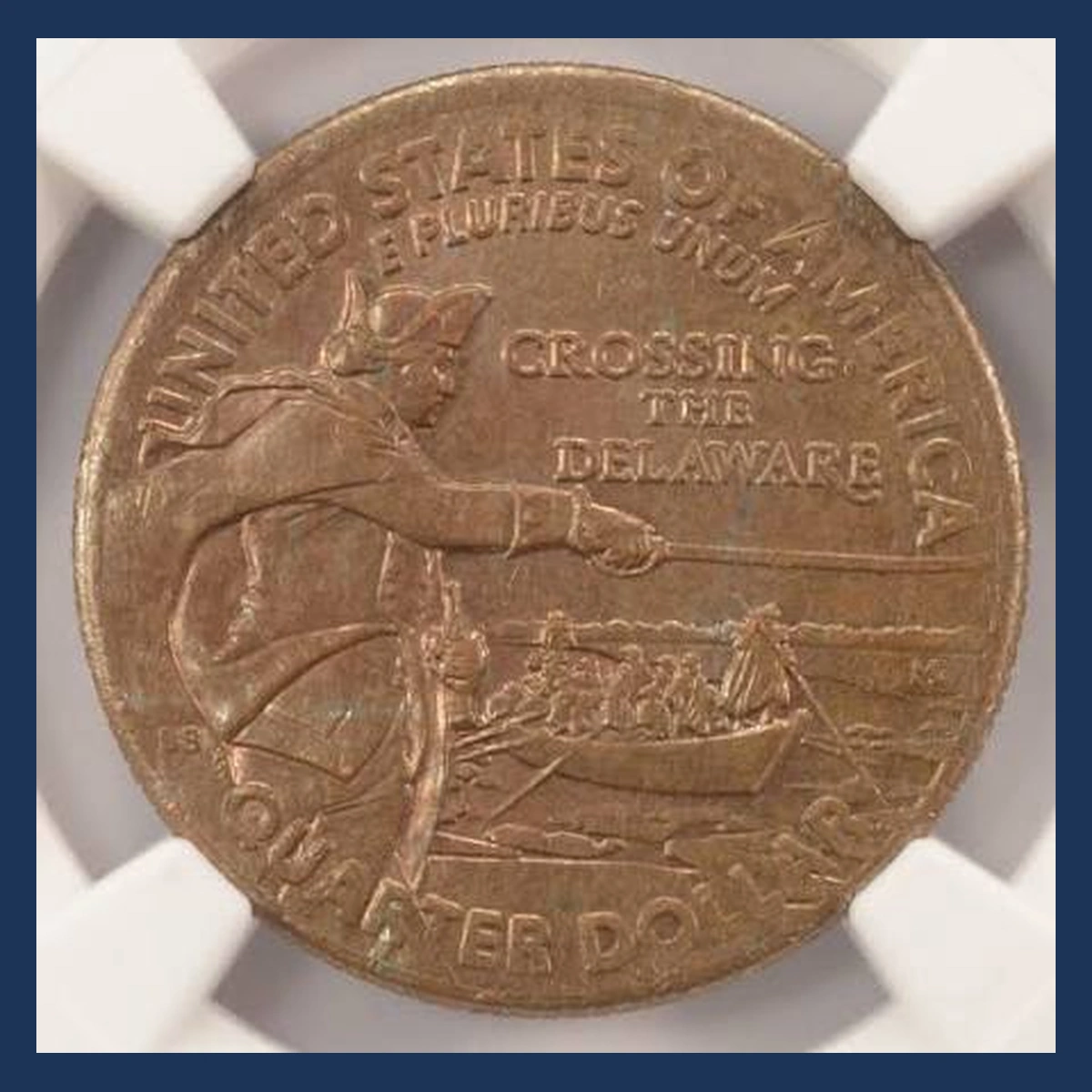
A normal clad quarter has a copper center covered by pale outer layers. When one layer is missing, a face can show exposed copper and the coin weighs less.
A 2021-D Crossing the Delaware example is reported at 4.7 grams, below the normal 5.67 grams. That measurement is a useful clue alongside its surface and edge.
San Francisco also made silver Proofs, specially produced collector coins, for this design. Their different metal is normal; they should not be judged as clad quarters that lost a layer simply because their edges look different.
Estimated Value
Estimate $50–$700 for a properly identified missing-layer 2021 quarter. A clearly exposed copper face with original design is more attractive than a stained or heavily damaged surface.
A useful different-year comparison is a 1988-D missing-front-layer quarter graded NGC MS62. It sold for $156 in November 2020 and weighed 4.8 grams.
The 2021-D reported weight is 4.7 grams. Each coin’s condition and actual missing layer still determine its own comparison.
How to Identify
First establish that this is a clad quarter, made with a copper center and pale outer layers. An S collector Proof can instead be silver, so a different-looking edge alone does not show missing metal.
Inspect the edge beside each face, looking for one pale layer that is absent while the other remains. Then examine the copper-colored face for struck detail, rather than scrape marks, corrosion, or a colored coating.
Weigh a loose coin without opening any grading holder: normal clad weight is 5.67 grams, compared with the reported D example’s 4.7 grams. A low weight supports the missing-layer claim only when the exposed face and edge show where that layer was lost.
8. 2021 Crossing the Delaware Quarter Off-Center Strike
A quarter can leave the press with an empty crescent beside only part of its normal design. Its blank, the metal disc before striking, sat too far to one side when the tools came together.
Off-center examples are reported for the Crossing the Delaware issue. Both Washington’s front portrait and the river scene should fit the same misplaced piece of metal.
This is different from an uneven rim with the full picture still present. It also differs from a shifted front tool that leaves the back centered; the blank itself must have been out of position.
Estimated Value
For a genuine, clearly dated 2021 off-center quarter, estimate $30–$1,000. A readable year and recognizable river scene help establish exactly what the collector is buying.
A 1988-P quarter struck thirty percent off center sold for $109 in January 2022, graded ANACS MS63. That older example provides a comparison rather than a price for every modern off-center coin.
Larger shifts can attract interest, but losing the date can make identification and comparison harder.
How to Identify
Read the date and find enough of the river scene to identify the design. Another 2021 quarter depicts the Tuskegee Airmen, so the year alone does not settle the issue.
Examine the empty crescent and the opposite edge with a magnifier. Some of the intended design should extend beyond the original metal.
Turn the coin over and compare the missing design on that side. Both faces should fit a blank struck away from the center, rather than a single misplaced stamping tool.
Look for grinding or flattened letters inside the supposedly untouched area. A genuine unstruck crescent retains original blank metal instead of showing a picture that was removed afterward.
Conclusion
From a tiny wrist outline to a missing outer layer, these errors leave very different clues. Estimated values span $3–$1,000, with major, clearly identified mistakes generally attracting more interest than faint marks.
Start with the river scene and mintmark, then choose the relevant close-up. A raised hat chip, a sunken blocked patch, and a smooth edge each require a different physical explanation.