2016 Quarter Error List with Pictures

An oval Theodore Roosevelt quarter and a nearly erased Harpers Ferry building need very different explanations. Shape, surface detail, and the correct park design are the starting clues.
For a wrong-blank price comparison, a 2001 quarter struck on a nickel blank sold for $2,040 in September 2024. That sale belongs to another year.
This 2016 quarter error list covers estimated whole-coin values from $2–$3,000. Read on to separate reported minting mistakes from ordinary wear and later damage.
1. 2016 America the Beautiful Quarter Severe Tool Wear or Deformation
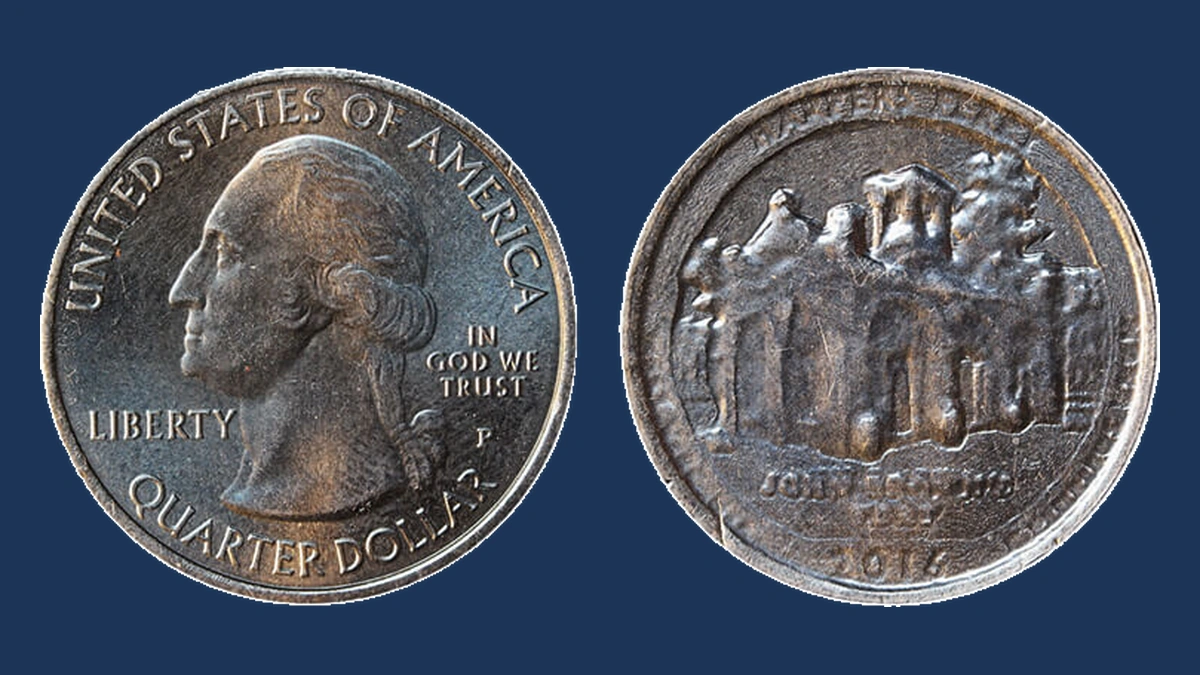
The Harpers Ferry building can lose its windows and brickwork while remaining raised above the background. A studied Philadelphia example has merged, smooth-looking design where crisp architectural detail should appear.
Coin specialist Mike Diamond described the unusual tool distortion in a 2017 study. He distinguished it from a coin struck through a covering stuck to the tool.
A separate Philadelphia Shawnee example shows more typical severe tool wear, with thinning design beside a swollen background. These surfaces came from damaged or worn stamping tools, rather than ordinary circulation gradually rubbing away the finished coin.
Estimated Value
Modest examples of obvious tool wear fit an estimated $2–$25 range. A dramatic, well-matched deformation like the Harpers Ferry type can merit an estimated $25–$100 as a teaching example.
These are estimates for the visible condition of the tool’s design, not prices for a rare die cap. Much routine tool wear adds little, and a coin polished or flattened after minting should not be priced as though it matches the studied example.
How to Identify
Compare the building with a sharp Harpers Ferry quarter, concentrating on its windows and brickwork. The studied coin merges those small details without simply flattening the entire raised building.
With a magnifier and side lighting, inspect the design’s height and the texture of the surrounding background. Later polishing may instead leave directional scratches through completed details.
For Shawnee, examine Washington’s side for thinning design and a swollen background. Those are separate observations from Harpers Ferry’s reverse distortion, so use a normal coin of the correct park for each comparison.
The difference between merged raised detail and a uniformly flattened surface helps direct the examination. Blurred lettering alone cannot identify a covering stuck to the tool.
2. 2016 America the Beautiful Quarter Clashed Opposing Designs
An unfamiliar outline beside John Brown’s Fort may resemble part of Washington’s portrait. If it matches the opposite design, it could come from contact between the two stamping tools.
The tools can strike each other when no blank is present. Marks from that contact may then appear on later coins, creating a die clash.
A year guide reports a Denver Harpers Ferry example with such traces near the building. It does not establish every line’s exact path, so the relationship between the two real designs is more useful than a generic extra-mark label.
Estimated Value
A visible, correctly matched clash on an ordinary 2016 quarter supports an estimated $10–$150 range. A connected outline that another collector can recognize usually makes a better display than one faint unexplained line.
The estimate compares modern-quarter clashes rather than adopting an unsupported sale for the reported Denver coin. Surface condition matters, especially where cleaning scratches overlap the suspected image and make it difficult to see whether an opposite-design shape is really present.
How to Identify
Keep Washington and the Harpers Ferry building in separate full-face photographs. Compare the suspected extra outline near the building with a plausible part of the portrait on the other side.
Use a 10× magnifier to follow several connected features rather than accepting one curved line. Change the light direction to see whether the outline remains visible in the same position.
A random scratch may cross letters or architectural details without matching the opposite face. Its sharp hollow and displaced edges can also differ from a mark copied by the stamping tool.
Keep the D mintmark visible when documenting the candidate. A convincing portrait-related outline is the important match, rather than any particular shadow near the building.
3. 2016 America the Beautiful Quarter Doubled Front or Reverse Details
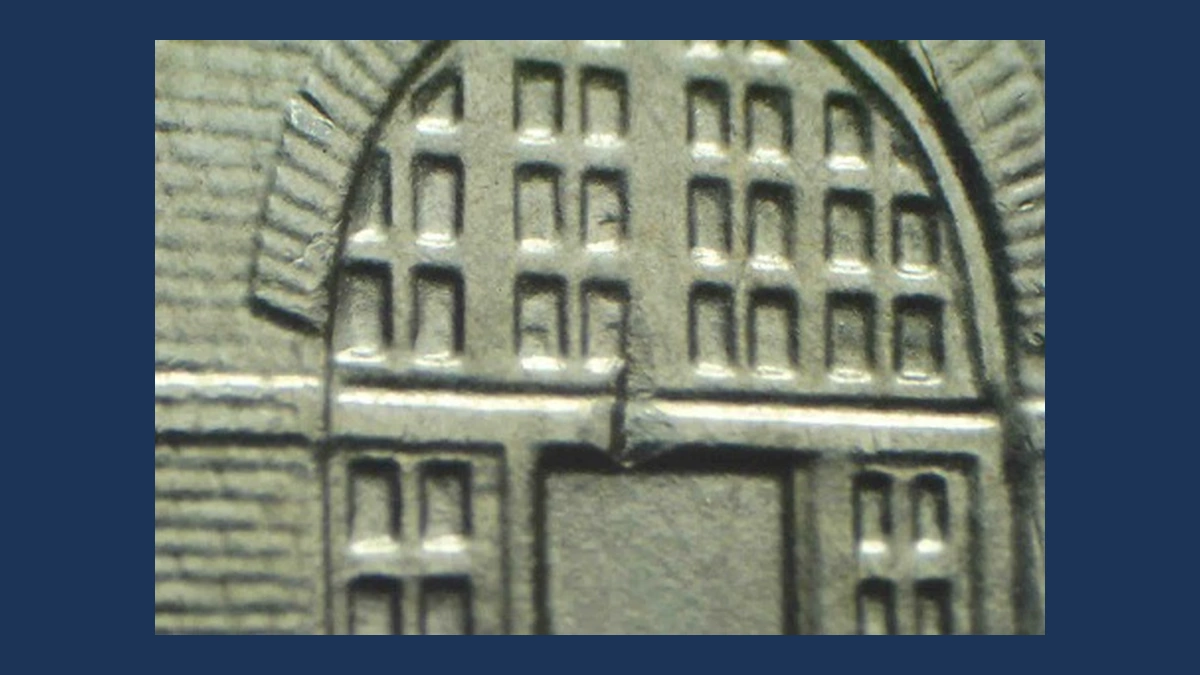
A repeated design can be built into the stamping tool before a coin is made. One strike then produces extra outlines without a second accidental blow.
The Fort Moultrie report concerns LIBERTY on Washington’s side. Harpers Ferry reports concern the reverse name, windows, and nearby inscriptions, with Denver named in one year list.
The two designs need different photographs. The 2016 date is on the park side, so an extra-looking date cannot prove a doubled front.
A thick window edge does not establish doubling without a consistent repeated shape.
Estimated Value
For a matched minor doubled design, estimate $10–$200. Strong repeated letter corners or clearly separated window details are easier to demonstrate than vague thickening.
The price range compares collectible minor varieties on modern quarters. A flat shelf caused by movement during striking often brings little extra.
A sharp unworn normal coin can have value from condition alone. Neither feature should be confused with the extra value of a verified doubled-tool pattern.
How to Identify
Choose the design before choosing a face. Fort Moultrie’s reported front feature belongs in LIBERTY, while Harpers Ferry’s reported pattern belongs around its reverse building and name.
A 10× magnifier can show whether letters have a rounded repeated edge or split corners. Compare nearby details for a consistent second shape.
Now tilt the light. A reflection can disappear, and a low flat shelf may reveal movement during striking rather than a doubled tool.
Keep the park name and mintmark in the full photographs used for comparison. The date sits on the reverse of these quarters, so the claimed face must agree with the actual position of the feature.
4. 2016 America the Beautiful Quarter Raised Cracks, Chips, and Rim Breaks
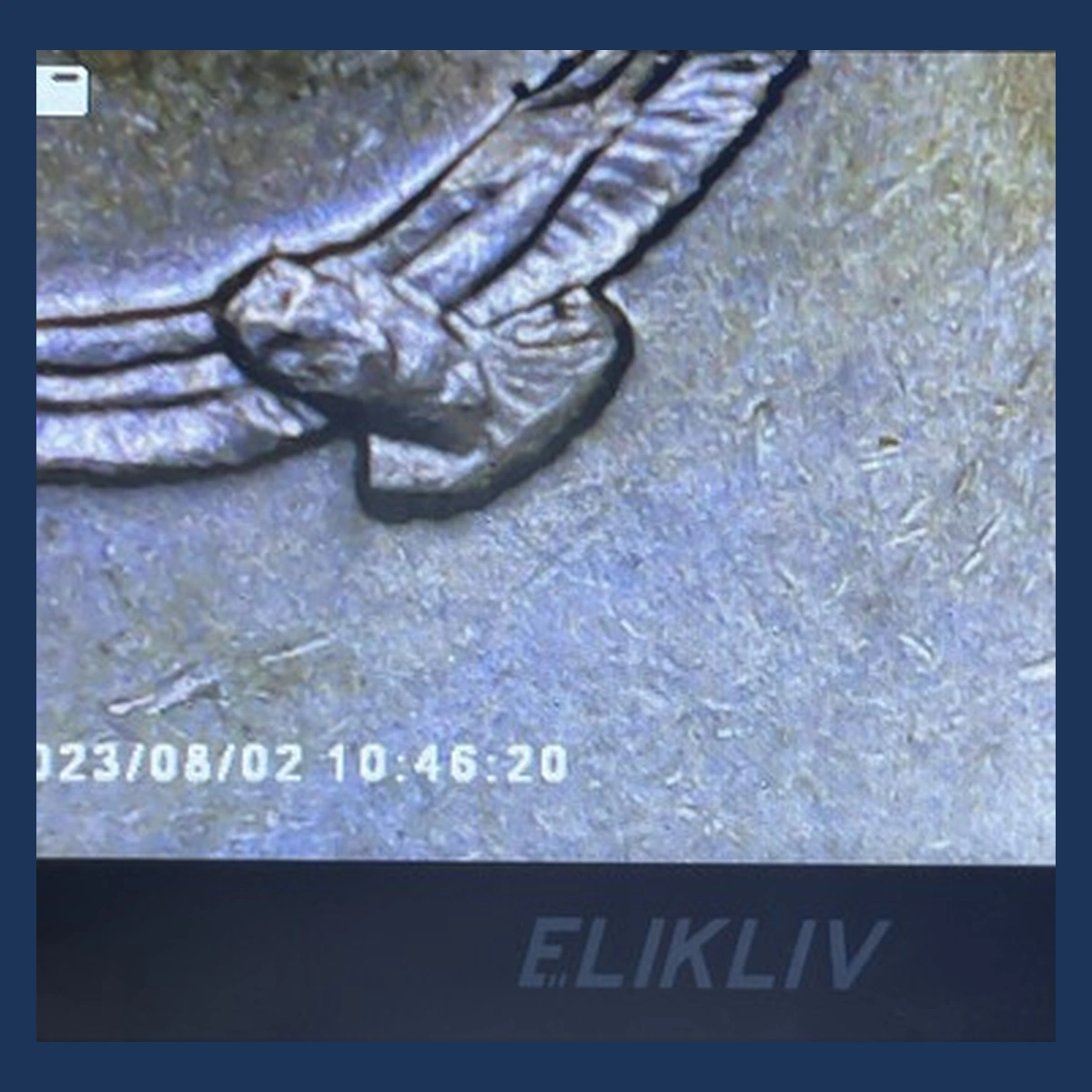
Raised lines or blobs can form when a die, the steel stamping tool, cracks or loses a small piece. The coin’s metal fills the resulting gap during striking.
Shawnee’s Camel Rock has reported cracks and a photographed mouth-like rock-edge chip. Harpers Ferry reports include building cracks and a Denver roof bump nicknamed “Cat on the Roof.”
Other reports concern Cumberland Gap’s hat or mountain, Fort Moultrie’s flag, and a Philadelphia Theodore Roosevelt rim-connected break. Only a break connected to the coin’s outer rim is a cud; an internal rock chip is not.
Estimated Value
Many small chips fit an estimated $2–$20 whole-coin range. Larger visible cracks or an original rim-connected break can support an estimated $20–$250, depending on size and condition.
The Shawnee rock-chip report described numerous finds, so its presence alone does not suggest great rarity. A nickname can make a feature memorable, but prices still depend on the actual raised shape and cannot turn later dents or attached material into valuable mint errors.
How to Identify
On Shawnee, compare the mouth-like edge of Camel Rock with a normal reverse. The extra raised spot belongs to the rock design, not the quarter’s outside rim.
Follow Harpers Ferry cracks through the building, or inspect the separate roof bump with a magnifier. A scratch can leave a raised lip beside a hollow, so look at both sides of the line.
For Cumberland Gap and Fort Moultrie, keep the figure or flag visible around the suspected chip. Their reports do not give one shared path or mint identity.
The Theodore Roosevelt cud candidate needs a different check: trace the raised patch into the actual coin rim. An isolated bump inside the design cannot satisfy that connection.
5. 2016 America the Beautiful Quarter Struck-Through Material or Blocked Detail
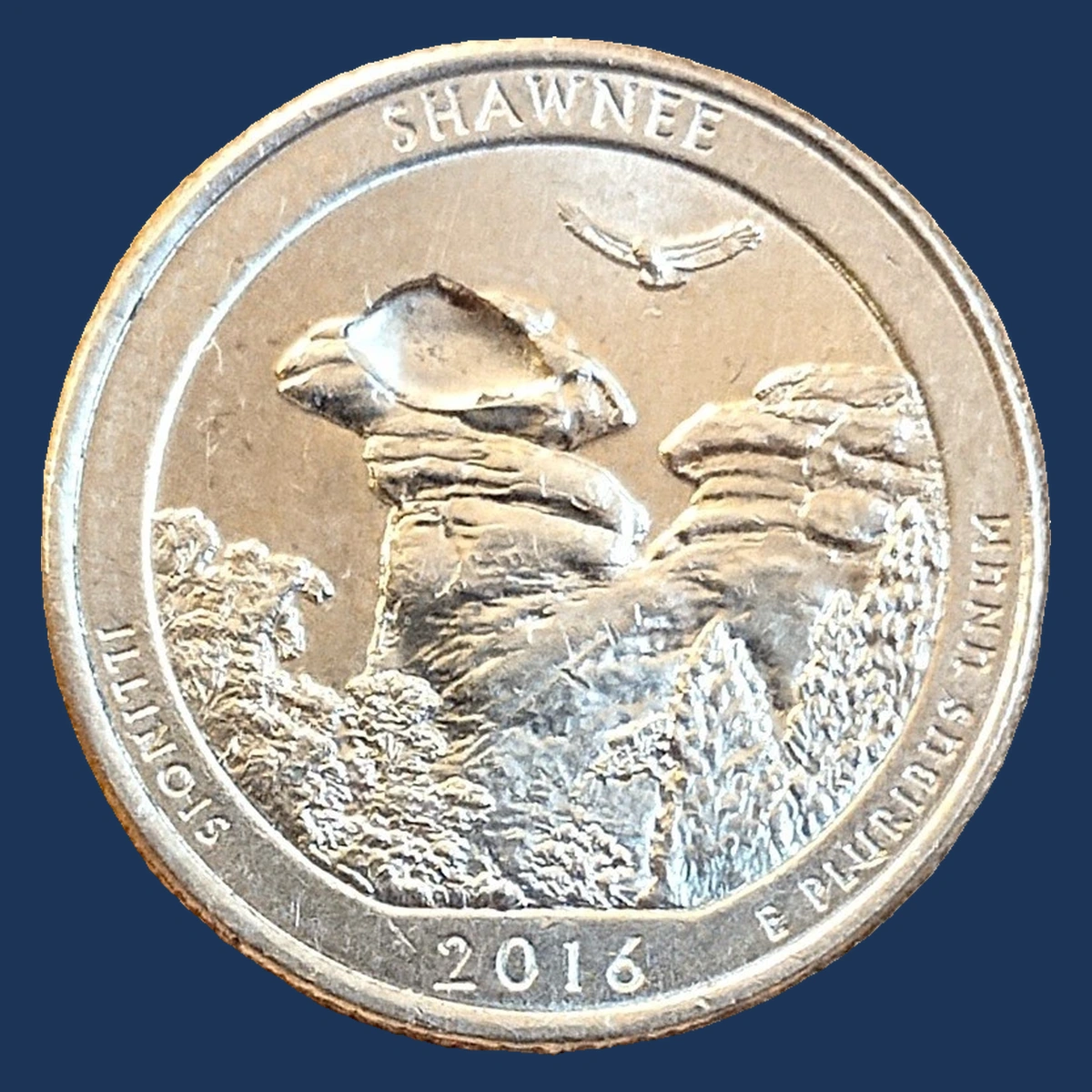
A patch of missing or softened detail can form when material blocks a stamping tool. Solid debris may leave a hollow, while grease can prevent small details from filling normally.
Reports include an ordinary-strike San Francisco Shawnee example described as MS66, an unworn grade. Philadelphia Theodore Roosevelt reports concern the horse’s mane, while other examples mention the rider or saddle.
Philadelphia Harpers Ferry reports describe weak windows, roof detail, or lettering. The material is not established for every coin, and widespread tool wear can also make those architectural features appear blurred.
Estimated Value
Estimate $10–$75 for a confirmed modest filled-detail effect and $40–$350 for a clearer original debris impression. These ranges assume that the feature can be distinguished from wear or damage.
A different-year comparison is the 2020-P Samoa AU58 reverse strike-through that brought $104 in September 2024. Its specific impression and light wear do not price the separate reported 2016-S Shawnee MS66 coin, whose affected location still needs a matching photograph.
How to Identify
The park design tells you where to look. A horse’s mane belongs to Theodore Roosevelt, while the Shawnee landscape has Camel Rock and no rider or saddle.
For a Theodore Roosevelt candidate, examine the actual interrupted mane or rider detail under a magnifier. Do not combine separate reported locations into one imagined specimen.
On Harpers Ferry, compare the weak patch with nearby intact windows or lettering. Broadly merged design may instead resemble the severe tool deformation discussed earlier.
Check the boundary for scrape lines or metal pushed up by a later impact. The reported S Shawnee coin is an ordinary collector strike; an S mintmark alone does not mean Proof, a specially made collector coin.
6. 2016 America the Beautiful Quarter Broadstrike with an Expanded Outline
A quarter may spread wider during striking if the collar ring does not restrain its edge normally. The complete design can remain inside that expanded outline.
This is a broadstrike. The relevant 2016 report concerns Fort Moultrie, whose reverse shows a military scene with a flag.
A wide border should be checked against the picture and edge together. The report gives no exact diameter or mint identity.
A quarter flattened after minting can also become wider, while losing its original shape and detail through later damage.
Estimated Value
A genuine Fort Moultrie broadstrike has an estimated $75–$500 range across modest through strongly expanded examples. A clear complete picture inside an original spread-out margin is easier to display.
The estimate concerns the striking process rather than a wide-looking rim alone. Flattened letters, heavy edge damage, or grinding can change the explanation, while normal high-grade value should be considered separately from the premium attached to a visibly expanded strike.
How to Identify
Calipers can compare a loose candidate’s outline with the normal 24.26 mm diameter. Measure in more than one direction, since outward spread need not be perfectly even.
Place a normal Fort Moultrie quarter beside it to compare the full military scene and outer inscriptions. A broadstrike should retain the main picture rather than leave part of it off the blank.
Inspect the edge with a magnifier for original metal flow and abnormal groove formation.
A scale can check the usual clad weight of 5.67 g.
Later crushing can widen a coin too, but it may flatten high points or damage the edge. Natural expansion around a complete struck design is the useful combination.
7. 2016 America the Beautiful Quarter Off-Center Strike
An off-center blank receives a picture that runs beyond the metal at one side. An untouched area remains on the opposite side, often as a crescent.
Shawnee off-center quarters are reported without a fixed mint or percentage. A separate year list names a Philadelphia Theodore Roosevelt example.
Theodore Roosevelt’s reverse shows a rider on horseback against a rugged landscape. Both sides of each candidate must agree with a misplaced blank, since a single shifted tool can instead make one face look off center while the other stays normally positioned.
Estimated Value
Estimated values of $50–$750 suit genuine dated 2016 off-center quarters with recognizable park designs. Greater displacement can be appealing, but a readable date and original surfaces still matter.
For a different-year comparison, a 2000-P Virginia quarter struck 20% off center sold for $154 in September 2024. That NGC MS64 coin had no circulation wear, and its measured percentage should not be assigned to the reported 2016 examples.
How to Identify
Put the two faces beside each other in photographs and compare their missing design with the unstruck metal. Their positions should describe the same blank sitting away from the center of the press.
Under a magnifier, inspect the plain crescent for original texture rather than grinding lines. A border made blank by removing the finished design will not explain a genuine displaced strike.
Keep the park name and the reverse date visible, then check the mintmark on Washington’s side. The size of an empty margin alone does not establish a percentage; the two-sided interruption of the picture is the stronger evidence for this error.
8. 2016 America the Beautiful Quarter Clipped or Elliptical Blank
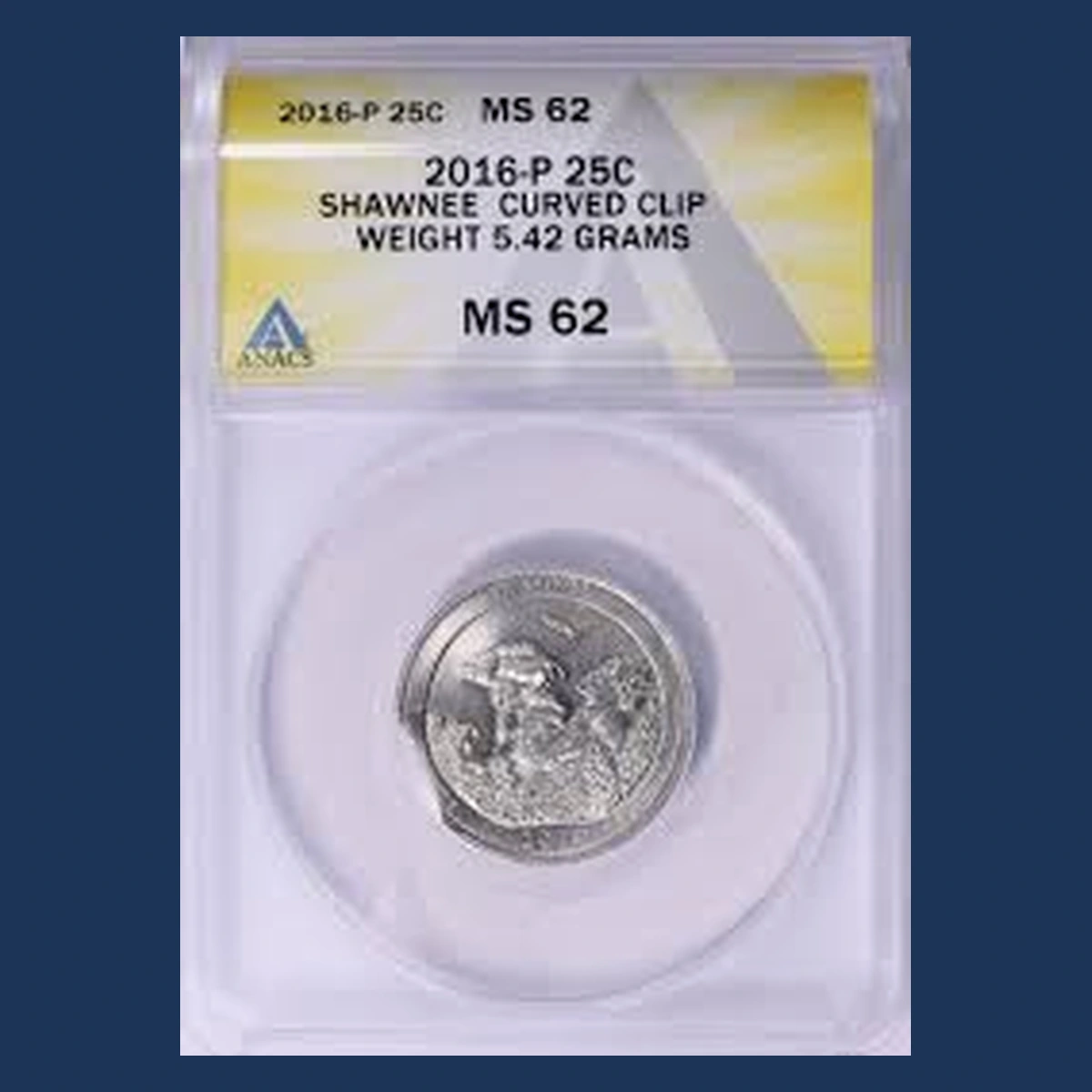
A clipped blank begins with missing metal before the coin is struck. Its outline can show a curved gap or become strongly oval, depending on how the incomplete disc formed.
A Philadelphia Theodore Roosevelt example is graded ANACS MS63 and weighs 4.88 g. Its label also notes a rim burr, a rough projection at the edge.
A separate PCGS MS64 Theodore Roosevelt example weighs 4.3 g, with its mint not established here. Shawnee curved clips are also reported, but their exact size and direction must come from the individual coin.
Estimated Value
For an original small curved clip, estimate $30–$200. A clearly formed elliptical blank with a readable 2016 design supports an estimated $200–$1,000 comparison.
The 4.88 g ANACS MS63 coin appeared in a November 2025 auction, but its final price is not publicly displayed. A different 2000-P New Hampshire elliptical quarter graded PCGS MS66 brought $288 in September 2024, providing a real comparison without inventing a result for either 2016 example.
How to Identify
The Philadelphia auction example has a recorded weight of 4.88 g. A scale can compare a loose candidate with the normal clad standard of 5.67 g, but leave graded coins in their holders.
Trace the incomplete edge through a magnifier, including where it meets the normal rim. Look for original metal flow rather than fresh cutting marks or a squeezed boundary.
The separate 4.3 g example should not be given the Philadelphia coin’s weight or identity. On a Shawnee curved-clip candidate, compare the gap’s ends and the opposite rim, where weakness can support an incomplete blank when clearly present in the photograph.
9. 2016 America the Beautiful Quarter Missing Clad Layer with Reported Heating Discoloration
A missing outer layer can expose the copper center of an ordinary quarter. An unusual color may have another cause as well, including problems during heating of the blank before striking.
That heating step is called annealing. One year report describes a Philadelphia Harpers Ferry coin combining missing cladding with an annealing problem.
The two claims need different visible evidence even though they concern one reported coin. A brown surface alone cannot demonstrate either a missing layer or a Mint heating fault, since chemicals and heat can change a finished quarter later.
Estimated Value
If both original features are identified, estimate $150–$1,200 for the complete Harpers Ferry coin. The amount of genuinely missing outer metal and preservation of the struck surface carry more weight than color alone.
A different 2000-P Maryland reverse-missing-layer quarter graded PCGS MS63 sold for $149 in September 2024. That sale does not verify the 2016 heating claim, and two descriptions of one coin should not be priced as two separate full errors.
How to Identify
Begin where the pale outer layer meets exposed copper. Use a magnifier to inspect whether the boundary belongs to the original struck surface or shows scraping and chemical damage.
A scale reading below the ordinary 5.67 g standard can support missing metal, but cannot identify why it disappeared. Record the weight without using one fixed cutoff as an automatic diagnosis.
The heating claim needs separate examination of the surface and color. Toning, burning, or added plating can mimic an unusual finish.
For San Francisco silver Proofs, the normal standard is 6.25 g and 90% silver, with no clad copper core. Confirm the ordinary clad version before treating a layer boundary as this reported combination.
10. 2016 America the Beautiful Quarter Reported Die Cap
A coin that sticks to a stamping tool may remain there through later blows. Its metal can spread around the tool and form a cup-shaped shell called a die cap.
A year guide reports a Philadelphia Harpers Ferry example graded MS63, meaning unworn with noticeable marks. Its actual shape needs to establish that identity.
A different Harpers Ferry coin studied by Mike Diamond has severely distorted design caused by the tool itself. Its blurred building does not prove the separate cap report, and a coin struck through a cap is not the cap itself.
Estimated Value
For a genuine cup-shaped 2016 die cap, estimate $400–$2,500, depending on its development and surviving design. This is a conditional comparison with modern-quarter caps, rather than a verified price for the reported MS63 piece.
A recognizable shell formed around a stamping tool has a different appeal from one weakly detailed flat coin. The reported identity should be supported by its physical shape before a cap estimate is applied to a blurred Harpers Ferry reverse.
How to Identify
View the coin from the side before examining the building. A cap’s cup-like form should be visible, rather than inferred from a soft-looking picture.
Photograph the inside and outside of the shell without pressing on it.
Use a magnifier to follow original design into the stretched metal and examine how the rim rises. A bent or hammered coin may show sharp folds, impact scars, or flattened detail instead.
Compare the whole shape with a confirmed quarter cap. The process can affect both the picture and the coin’s three-dimensional outline.
A flat coin with merged windows still needs the tool-wear comparison. The shell formed around the tool is the essential feature for a cap.
11. 2016 America the Beautiful Quarter Reported Strike on a Nickel Blank
A blank intended for a five-cent coin could enter the quarter press and receive a design too large for it. The resulting coin can lose outer lettering and has different metal from an ordinary clad quarter.
A year guide reports this error on a 2016-D Theodore Roosevelt quarter described as MS62. The individual coin still needs measurements and a match to that identity.
Nickel blanks normally weigh 5.00 g and measure 21.21 mm before striking. Those are comparison standards, not documented measurements of the reported 2016 coin after the quarter tools struck it.
Estimated Value
A 2001-P North Carolina quarter struck on a nickel blank sold for $2,040 in September 2024. It was graded PCGS MS62, an unworn grade with noticeable marks.
For a confirmed 2016 example of the reported kind, estimate $500–$3,000. That range uses the same wrong-blank mechanism as a comparison.
The coin’s actual metal, amount of visible quarter design, and condition determine which end of that estimated range fits it.
How to Identify
Use a scale and calipers on a loose candidate to record weight and diameter, rather than judging size from a photograph. An ordinary clad quarter is 5.67 g and 24.26 mm.
A nickel blank starts at 5.00 g and 21.21 mm but can spread when struck by larger tools.
Inspect the edge for signs of cutting or grinding and compare its metal structure with the quarter’s usual copper-core stripe. Edge grooves are not guaranteed on a smaller wrong blank.
The 2016 date is on the park side; QUARTER DOLLAR belongs on Washington’s side.
The smaller original blank, compatible metal, and natural struck design must support the same explanation before the nickel-blank claim fits.
Conclusion
The estimated $2–$3,000 range includes small tool flaws, incomplete blanks, and reported major striking errors. The $2,040 wrong-blank auction comparison concerns a 2001 coin, not a verified 2016 sale.
Use the park design to choose the right comparison. A round but blurred quarter, an oval clipped blank, and a cup-shaped coin leave different clues, so keep the full outline and both faces in your photographs.