1983 Quarter Error List with Pictures

“THIS IS MY LUCKY DAY” is not part of Washington’s portrait. It survived on a game token stamped with a 1983-P quarter design, which sold for $15,862.50 in January 2014.
Most 1983 quarter errors are less dramatic, including the raised Spitting Eagle line and small clipped edges. Estimated values below range from $1 to $25,000.
Use the pictures to follow the metal and the design, starting with the feature that caught your eye.
1. 1983 Washington Quarter Curved Clip
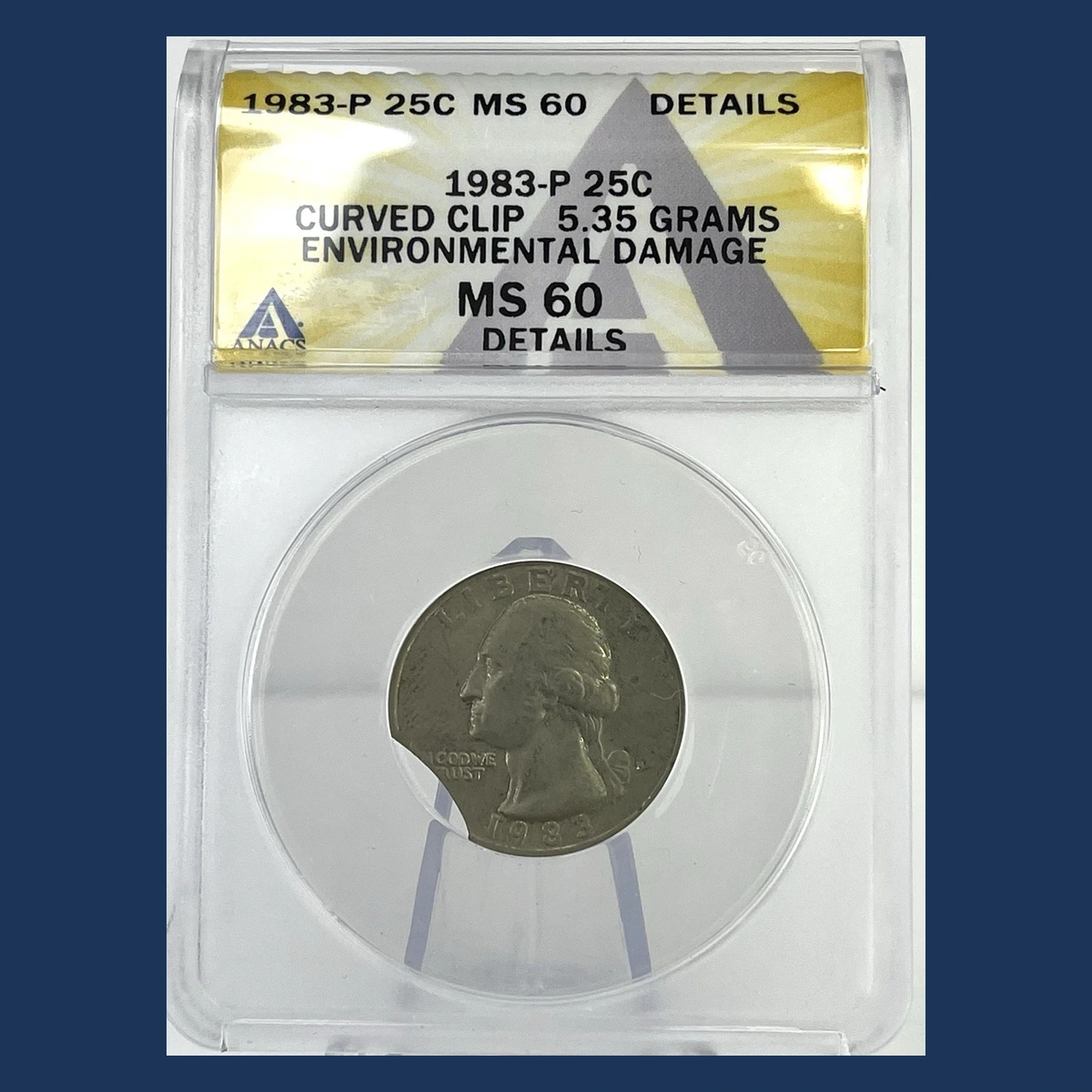
A curved notch can begin in the metal strip before the coin has a portrait or date. If the cutting punch overlaps an earlier hole, it produces an incomplete blank.
The minting process can then turn that blank into a quarter with part of its edge missing. This type is reported for 1983 without a fixed mint or notch position.
The gap is a loss of metal, not simply an area that missed the stamping tools. Its edge and the nearby design help show when that loss happened.
Estimated Value
A small genuine curved clip has an estimated value of $10 to $150. A clear gap with an intact date is usually easier to collect than a faint defect on a damaged coin.
Larger missing sections can attract attention, but their condition still matters. An attractive curved opening and natural nearby detail make better evidence than size alone.
This range assumes the blank was incomplete before striking. A cut made afterward does not receive the same mint-error premium.
How to Identify
Inspect the notch from the edge as well as from the front. A photograph of only its outline can hide saw cuts or later filing.
Follow the rim and lettering as they approach the gap. Metal flowing around an existing opening can leave weaker or distorted nearby details.
Check the opposite rim for weakness, but do not require that feature on every clip. The entire pattern matters more than one test.
For a loose candidate, record the weight and compare it with the normal 5.67 grams. Less metal should usually mean less weight, although weighing cannot establish when it was removed.
Keep the year and any visible mint letter in the photographs so the actual coin remains identifiable.
2. 1983 Washington Quarter Broadstrike
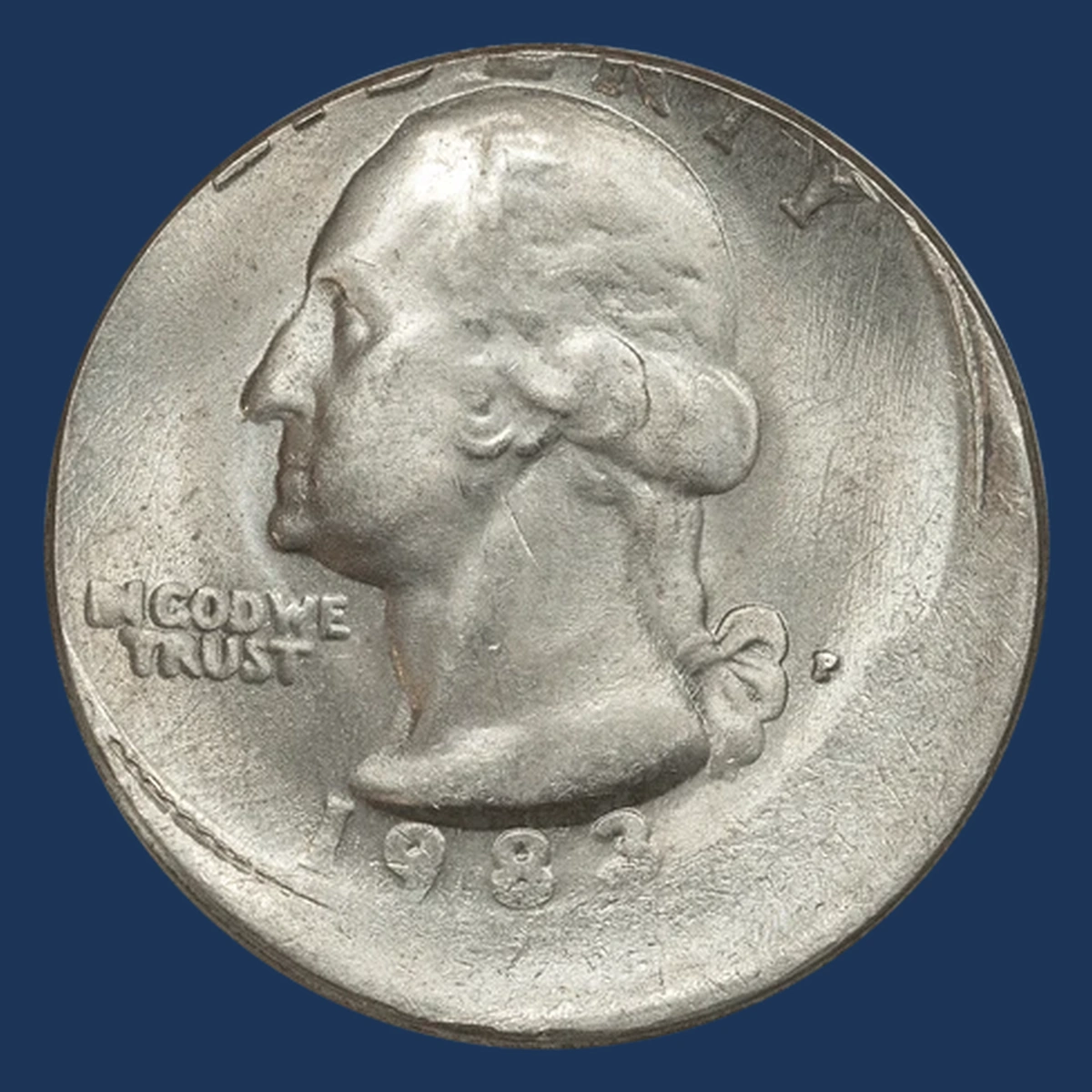
Extra metal outside a complete design can show that a blank spread without normal edge restraint. The retaining ring, called the collar, normally controls that expansion.
When the collar fails to contain the strike, the result can be a broadstrike. Philadelphia examples are reported for 1983.
The outline may spread unevenly, and edge grooves can be weak or absent. A smooth edge alone is not enough because wear or grinding can also remove grooves.
The combination of natural expansion and a surviving complete design is more useful than width by itself.
Estimated Value
An estimated $20 to $200 covers ordinary 1983-P broadstrikes with clear identity. Small spreads tend toward the lower end, while wider clean examples can draw more interest.
For a same-design comparison, a 1987-P broadstrike graded MS63 sold for $20 in August 2009. That was a different year and coin.
Compare the actual border expansion before moving far above that modest result. Later flattening or a merely worn edge does not support the same price.
How to Identify
Place the candidate beside a normal 1983-P quarter and photograph both at the same distance. Compare the space outside the complete lettering, not just the apparent width of the two circles.
For a loose coin, measure several directions with calipers against the normal diameter of about 24.3 millimeters. Uneven expansion can produce different readings, while a camera angle can make an ordinary round coin appear oval.
At the widest area, inspect the portrait and letters for crushing or hammer marks. Naturally struck details should survive inside the spread border; later pressure that enlarges a finished quarter often flattens those details too.
3. 1983 Washington Quarter Off-Center Strike
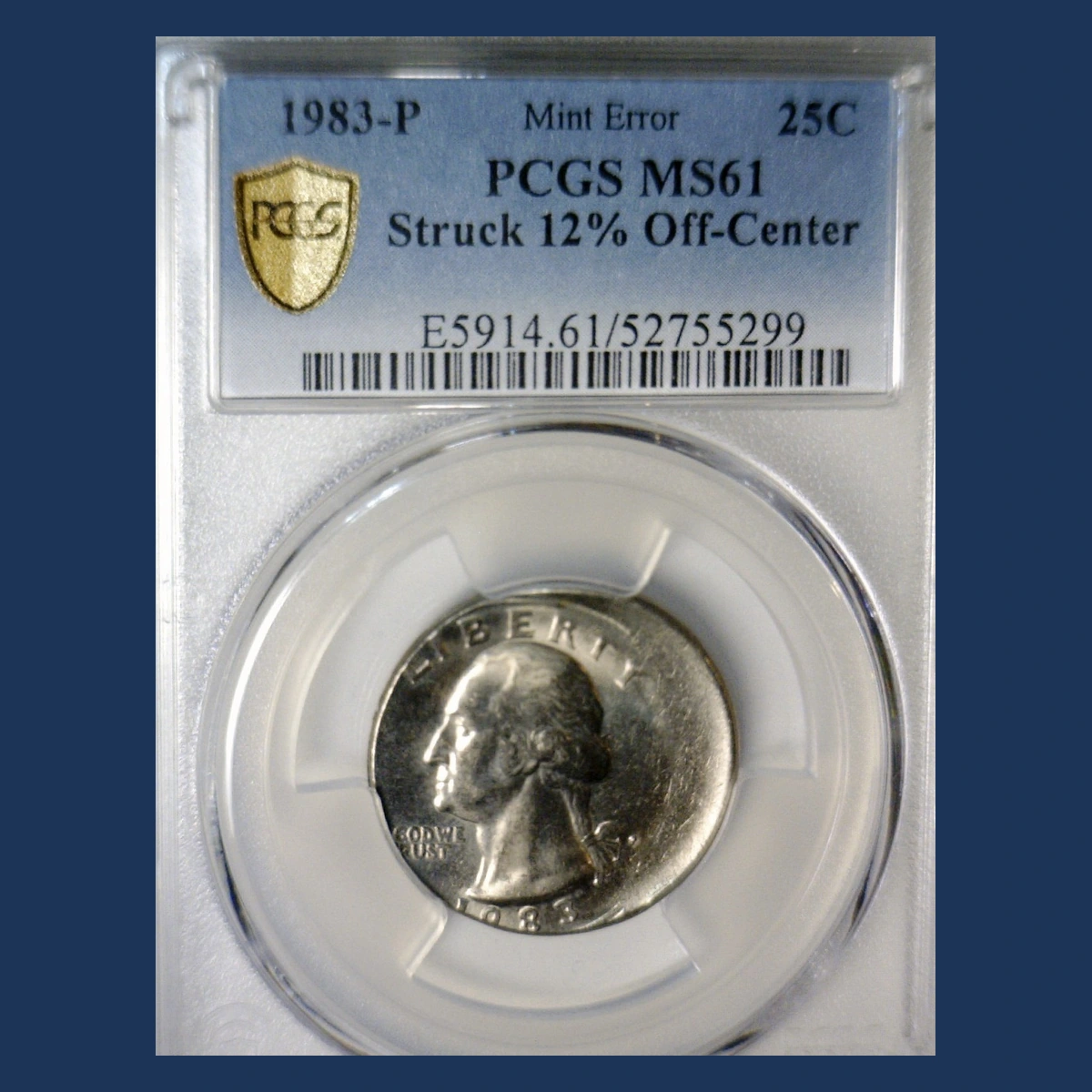
An off-center quarter has a section of blank metal beside a design that runs out of room. The blank was not fully beneath the stamping tools when they came together.
Philadelphia examples include a 15% shift on an NGC MS67 coin and a separate 25% shift on an MS65 coin. Both grades describe unworn coins, with the higher grade showing fewer flaws.
A much larger 70% example was graded MS63, but its mint was not identified. Those percentages and grades belong to different specimens, not one changing description.
Estimated Value
The 15% Philadelphia example sold for $192 in December 2025. The separate 70% coin of unidentified mint brought $198 in the same month.
An estimated range of $50 to $400 suits comparable ordinary 1983 off-center quarters. A readable date, attractive shape, and clean surfaces help.
The two results show why a larger percentage does not guarantee a much higher price. Compare condition and the amount of identifying design that survived as well as the shift.
How to Identify
Find whatever remains of the date and mint letter before comparing how far the design shifted. The 70% coin’s auction description does not establish a mint.
Trace the boundary between design and blank metal on both faces. The unused areas should fit the same blank sitting partly beyond the stamping tools.
The Philadelphia 15% and 25% examples preserve different amounts of design. Their grades also differ, so keep each photograph with its own description.
A crescent that remains physically present is unstruck metal. An inward gap is missing metal and needs a clip comparison.
If a large area looks artificially blank, inspect it for grinding lines or impact marks that could have removed a finished design.
4. 1983 Washington Quarter Doubled Dies
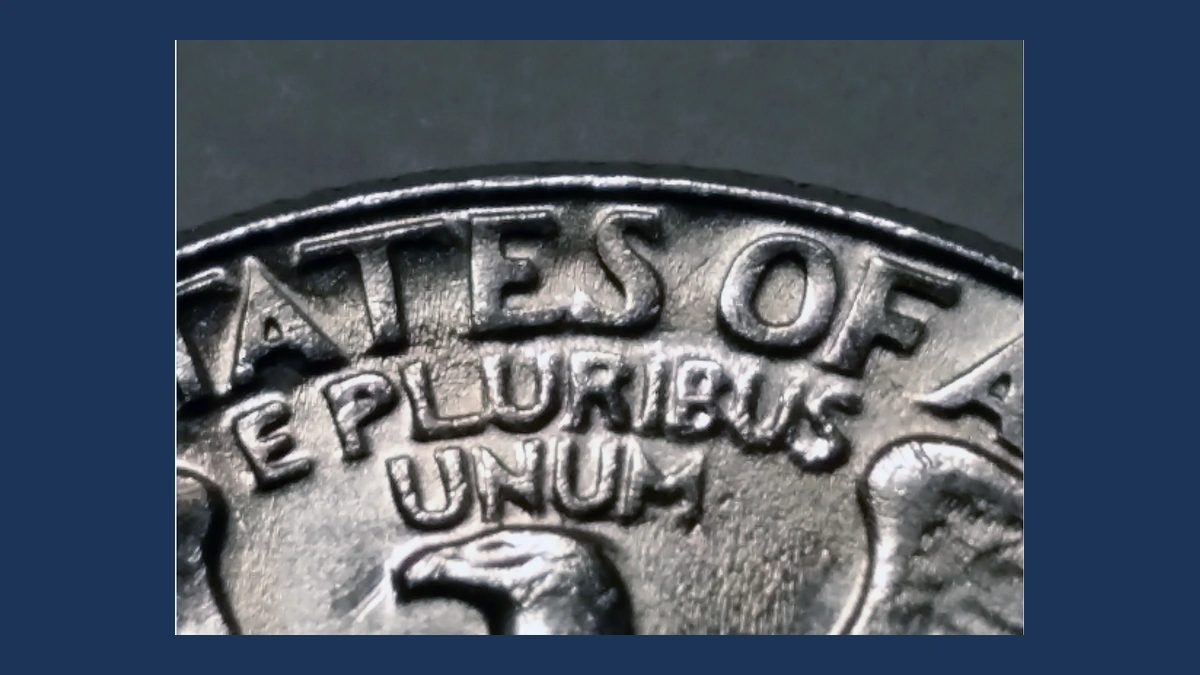
On San Francisco Proofs, repeated outlines may appear in LIBERTY, the motto, date, or portrait. Proofs are collector coins made with specially prepared tools and surfaces.
Several front varieties and a separate doubled-back variety are cataloged for 1983-S. Back doubling affects lettering, wings, and lower leaves.
These details came from doubled stamping tools, not two blows on the same coin. Ordinary-coin back doubling is also reported.
A Denver “ghost” pattern has a disputed explanation involving two design styles. It remains separate from the established S Proof varieties.
Estimated Value
Estimated values are $20 to $500 for identified S Proof doubled dies, with stronger visible separation and better preservation toward the upper end.
For ordinary-coin reports, use a $10 to $150 estimate only after genuine doubled-tool detail is established. That includes any Denver ghost-pattern coin accepted as a true doubled die.
The ghost nickname alone does not justify a premium. Differences caused by ordinary tool wear or machine doubling require a different value assessment.
How to Identify
Start with the S and the collector finish. Match each Proof to its own pattern rather than expecting all doubled areas on one coin.
Some front varieties emphasize LIBERTY; others include the motto, date, ribbon, or upper portrait. The small raised dot on one variety’s Y is a supporting marker, not the doubling itself.
Check a doubled back independently through its lettering, wings, and lower leaves. Do not use an S Proof picture to identify an ordinary P or D quarter.
For the Denver ghost claim, compare the A in QUARTER and the eagle’s beak with normal examples. Have the actual pattern examined before accepting the disputed two-design explanation.
Flat shelves and worn-tool thickening are not the same as rounded, repeated outlines.
5. 1983 Washington Quarter Spitting Eagle Clash
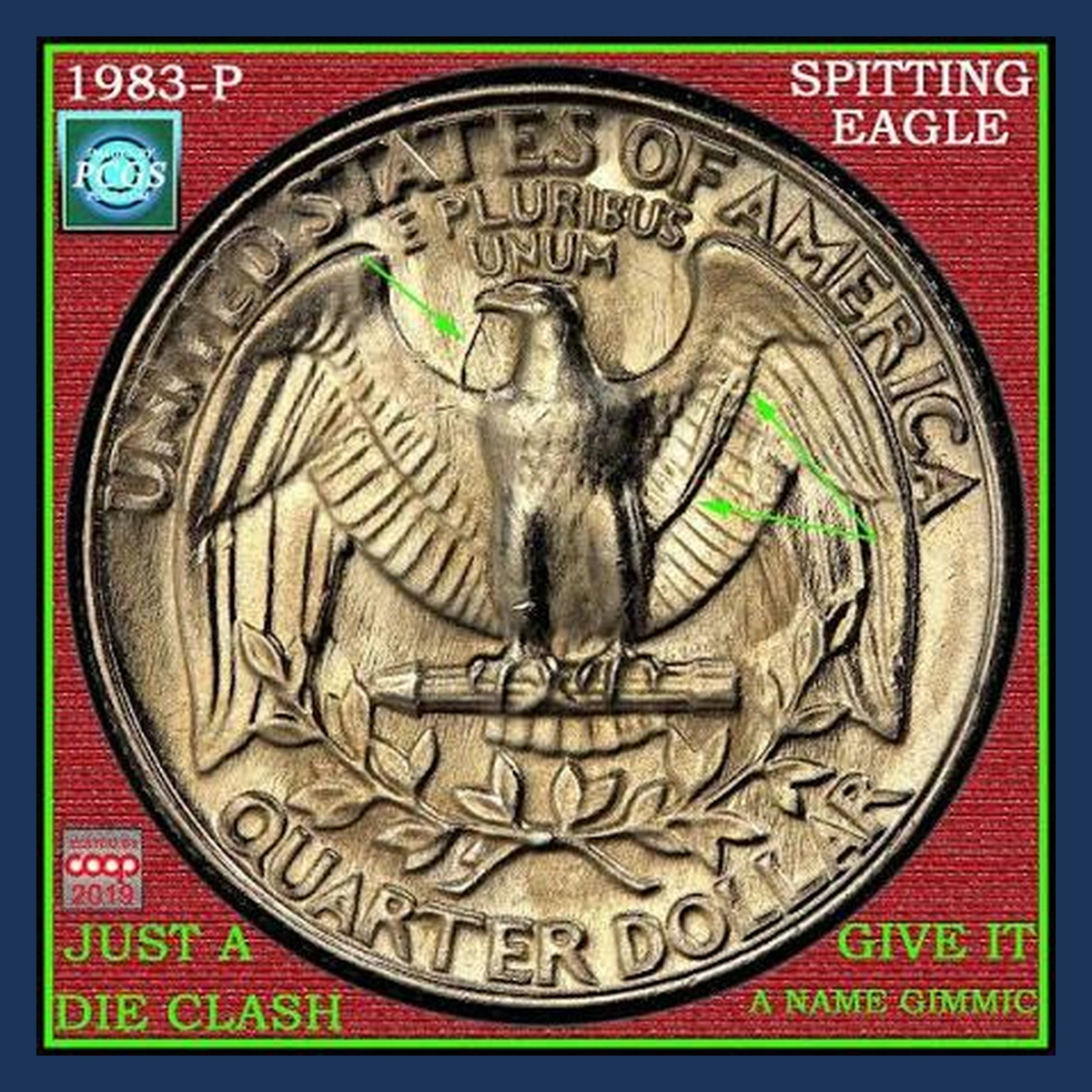
A short raised ridge below the eagle’s beak makes it appear to be spitting. The familiar nickname belongs to the Philadelphia variety known as FS-901.
The ridge came from a die clash: the steel stamping tools struck each other without a blank between them. Part of Washington’s neck outline marked the tool carrying the eagle.
Later quarters received that extra raised shape along with their normal design. It is therefore a transferred outline, not a random crack or doubled letter.
NGC recognizes the Spitting Eagle as a specific 1983-P variety.
Estimated Value
An estimated range of $1 to $750 spans worn examples through attractive high-grade Spitting Eagles. The condition spread is wide because a faint worn ridge can be inexpensive.
PCGS records a $504 result in March 2018 for an MS66+ example. That grade describes an especially clean unworn coin.
The strong result reflects the complete coin’s preservation as well as the recognized variety. It should not be assigned to every circulated quarter with a line near the beak.
How to Identify
Confirm the P to the right of Washington’s hair ribbon before turning to the eagle. A 1983 Philadelphia quarter does have that mint letter.
Below the beak, look for the fixed raised ridge shown in NGC’s illustrated identification. Change the light angle to see whether the line rises above the surrounding surface.
A scratch cuts down into the metal, although displaced lips beside it may catch the light. Compare the complete shape and position rather than accepting any bright line near the eagle’s mouth.
Wear can weaken the ridge, so examine a circulated example with a magnifier. The identification depends on the matching neck-outline transfer, not on how dramatic the nickname sounds.
6. 1983 Washington Quarter Missing Front Clad Layer
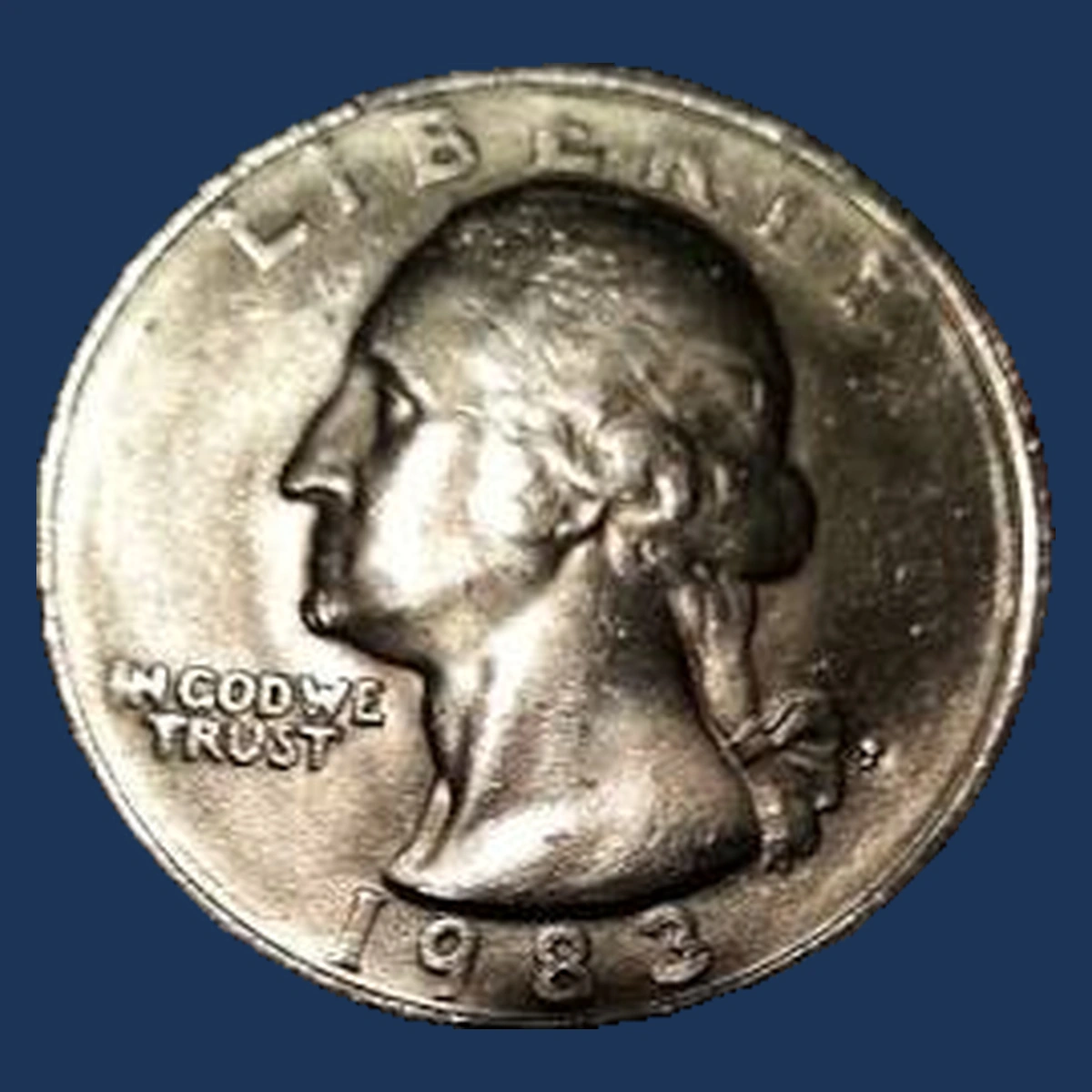
Washington appears on copper-colored metal rather than the usual pale surface of this Philadelphia quarter. Its front outer layer is missing, exposing the copper center.
The documented PCGS MS63 coin weighs 4.61 grams. That is a measurement of this specific example, below the normal quarter standard of 5.67 grams.
The back retains its outer layer. The difference between the two faces helps show what metal is missing.
Added copper plating or brown staining can imitate the color, but neither automatically explains the reduced weight and the missing-layer boundary.
Estimated Value
The 4.61-gram Philadelphia MS63 example brought $336 in June 2024. An estimated $150 to $750 range covers comparable 1983 front-layer losses.
Clear struck detail on the exposed copper makes the error easier to appreciate. Heavy scratches or corrosion can obscure the surface and reduce appeal.
The amount and timing of metal loss should be established before comparing prices. A chemically thinned quarter does not qualify simply because it matches the color or weighs less than normal.
How to Identify
The recorded 4.61 grams is a useful starting point for this specimen. Weigh a loose candidate independently; a similar error need not match that figure exactly.
Turn the coin edge-on and follow the boundary between the exposed front copper and surviving outer metal. Then compare the back’s intact pale surface.
Under magnification, check whether Washington and the lettering retain naturally struck detail in the copper. Grinding can leave parallel cuts, while chemical removal can produce pits.
All normal 1983 quarters, including S Proofs, were clad. A normal copper stripe confined to the edge is not this error.
A coin needs evidence of actual front-layer loss, not just an overall brown color, before this comparison applies.
7. 1983 Washington Quarter Blocked Back with a High Front Rim
Washington’s side retains its design, but the back has no normal eagle image. Another blank completely blocked that face during striking.
The same coin also has an unusually high front rim running from about 11 to 5 o’clock. This thin raised rim is sometimes called a fin.
The Philadelphia example was graded ANACS MS63, meaning unworn with visible marks. Some front details are softly formed.
The blocked back and high rim describe one combined coin. It should not be pictured as an ordinary quarter with only a small crescent-shaped depression.
Estimated Value
This Philadelphia combination sold for $310.50 in April 2002. A working estimated range is $200 to $1,000 for a comparable authenticated piece.
The dramatic difference between its two faces helps explain its appeal. A clear high rim adds another visible feature to the same accident.
The price covers the entire coin, not a separate amount for each feature. Damage to the raised rim or later treatment of the blank back can reduce the value.
How to Identify
Look at the back as a whole, not just one small depression. The documented example’s entire eagle side was blocked and has no normal design.
Compare that with Washington’s side, where all major features remain although some are soft. This two-face relationship distinguishes the coin from a simple local indent.
Photograph the front edge from the side, showing the high rim between about 11 and 5 o’clock. Do not press or bend the thin raised metal.
A ground-down back can also look blank, but it may show cutting marks and unexplained metal loss. The natural front strike, blocked back, and raised rim need to make sense together before the coin is accepted as this combination.
8. 1983 Washington Quarter Struck on a Nickel Blank
The quarter’s large design can lose outer details when it lands on a blank intended for a nickel. The smaller blank leaves less room for the picture.
A Philadelphia example was cataloged as a quarter struck on a five-cent blank and graded PCGS MS62. It was unworn with noticeable marks.
A nickel blank is a solid copper-nickel alloy, unlike the quarter’s copper center with pale outer layers. That construction difference makes the edge useful for identification.
The normal nickel weight is a reference; it is not a published measurement of this specific specimen.
Estimated Value
For an authenticated 1983-P nickel-blank quarter, an estimated range is $200 to $1,200. Surface condition and the amount of readable quarter design influence its position within that range.
A same-design 1995-P nickel-blank example, graded MS64, sold for $216 in July 2022. That is a different-year comparison rather than a sale of the 1983 coin.
A clear date and mint improve the identification. Missing peripheral letters are expected on the smaller blank and need not mean later damage.
How to Identify
Check the edge for a solid alloy rather than the normal quarter’s visible copper center. Color on the faces is less decisive because toning can change it.
For a loose coin, use a scale and calipers. A normal nickel blank starts near 5.0 grams and 21.2 millimeters, compared with 5.67 grams and about 24.3 millimeters for a quarter.
The strike may spread the smaller blank, so diameter alone does not settle the question. Record the actual measurements instead of assigning the standards to the illustrated specimen.
Follow the design where it runs beyond the metal. Natural interrupted lettering differs from a finished quarter’s rim being cut or filed away afterward.
9. 1983 Washington Quarter Double Strike with an Off-Center Second Blow
Two separated groups of quarter details can survive when a coin moves between blows in the press. The later strike can push an earlier image aside or partly flatten it.
One Philadelphia example has its second strike about 78% off center and a PCGS AU58 grade, indicating slight wear. Another has a second strike about 65% off center and an MS62 grade.
They are separate coins. Their overlap and condition should not be combined into one description.
In these catalogs, “D/S” means double struck; it does not identify a D over S mint letter.
Estimated Value
An estimated $150 to $1,500 covers these genuine repeated-strike combinations, depending on separation, readability, and condition. A clear second image makes the accident easier to understand.
For comparison, a 1995-D quarter with a second strike 60% off center sold for $312 in July 2022. Its date and grade differ from the 1983 examples.
That result offers a starting comparison, not a fixed price for every offset. Damage and incomplete identifying details can reduce interest.
How to Identify
Find a recognizable letter or portrait feature and trace enough neighboring details to establish the first image’s position. Next, locate displaced features that form a second coherent image rather than a collection of isolated thick edges.
Examine the overlap for places where a later blow flattened earlier detail, allowing the two impressions to survive differently. Check the back separately because the amount of visible detail need not match the front.
The 78% AU58 and 65% MS62 examples require separate photographic comparisons, including their surviving date and mint. In auction descriptions, read D/S as double struck here; searching the P for a hidden D or S would follow the wrong clue.
10. 1983 Washington Quarter Struck Through a Torn and Shifted Die Cap
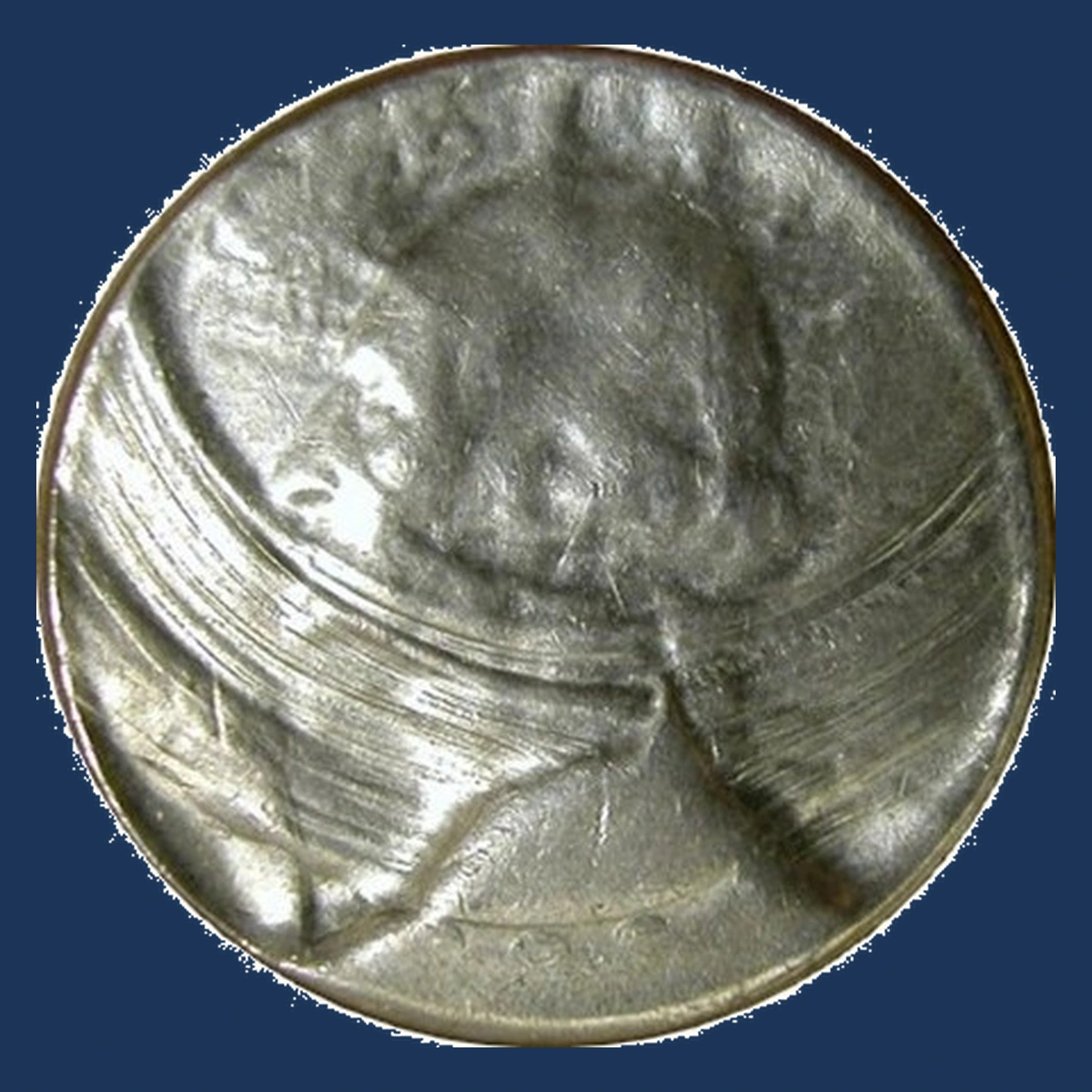
A small triangular raised area carries part of Washington’s bust and date on this unusual 1983 quarter. The matching area on the back is sunken and blank.
A previously struck coin had stuck to a stamping tool and formed a covering called a die cap. After that cap tore and shifted sideways, fresh coin metal pushed into the opening.
The bulge reached the front tool and picked up a weak design on its top. The illustrated quarter received the strike through that damaged cap; it is not the cap itself.
Estimated Value
A working estimate for this complex struck-through-cap type is $300 to $2,500. This is an estimate for the illustrated mechanism, not a published sale of the 1983 example.
The raised design patch and matching blank depression make the coin more distinctive than a broadly weak strike. Clear photographs of their relationship are valuable for comparison.
Condition and a secure explanation of the metal flow matter. Do not add a second price for the bulge; it formed during the same event.
How to Identify
Place the front and back photographs side by side and locate the triangular raised patch. Find the corresponding sunken area on the opposite face.
The illustrated error explanation shows why those two shapes belong together. The raised top reached the stamping tool while the opposite area pulled away from its normal design.
Use side lighting to examine the weak bust base and partial date on the bulge. Do not assume a full date or a visible mint letter from the general year identification.
A hammer dent can make metal bulge on the other side, but does not explain naturally struck design on that bulge’s top. Preserve the surfaces and have the whole relationship examined.
11. 1983 Washington Quarter Overstruck on an Amusement Token
Extra words and clovers cross the normal quarter design because the metal already carried a game-token picture. The Philadelphia quarter strike landed over that earlier design.
The token’s lucky-day message remains readable on the front. Its play-only and no-cash-value wording survives on the back with decorative details.
The quarter’s date and P are clear, and the coin was graded NGC MS65, an unworn grade. The left edge has light grooves while the right edge is plain.
The token’s route into the press is unknown; deliberate placement was only an auction-house suggestion.
Estimated Value
The amusement-token overstrike sold for $15,862.50 on January 10, 2014. A working estimated range for this exceptional kind of piece is $10,000 to $25,000.
Its appeal comes from readable remnants of two different designs on the same metal. The surviving token words explain the unusual origin without relying on color alone.
This is a comparison for an authenticated token overstrike. It does not apply to ordinary quarters with gold-colored plating or later novelty stamps.
How to Identify
Read the extra words before studying the metal’s color. The underlying token inscription and clovers should form a consistent older design beneath the quarter impression.
Compare both faces with the cataloged example, keeping the readable quarter date and P in view. Follow where later quarter details cross the token’s earlier shapes.
Inspect the edge transition from lightly grooved on the left to plain on the right. A plated quarter may change color without carrying any genuine earlier token design.
Later punches or novelty lettering cut into an already finished coin. A valuable candidate needs the correct sequence of overlapping designs, confirmed by an expert rather than inferred from a lucky-day inscription alone.
Conclusion
Check the P before identifying a Spitting Eagle, and separate ordinary quarters from S Proof collector issues when comparing doubled designs. A clear feature matters more than a familiar nickname.
These estimated values run from $1 to $25,000. The amusement-token overstrike sits far above most small clips or displaced strikes.
Keep unusual paired surface features together: a blank back and high front rim can describe one combined minting accident.