1977 Quarter Error List with Pictures

A 1977-D quarter weighing 5.7 grams sold for $4,935 in January 2016. Its unusual feature was the metal: a blank containing forty percent silver.
The 1977 quarter errors below also include shifted designs, clipped blanks, and a quarter struck over a finished nickel. Estimated ranges span $5–$15,000.
Philadelphia quarters normally have no mint letter in 1977. Use the date, surviving design, and physical evidence together when checking an unusual coin.
1. 1977 Washington Quarter Misaligned Front Design
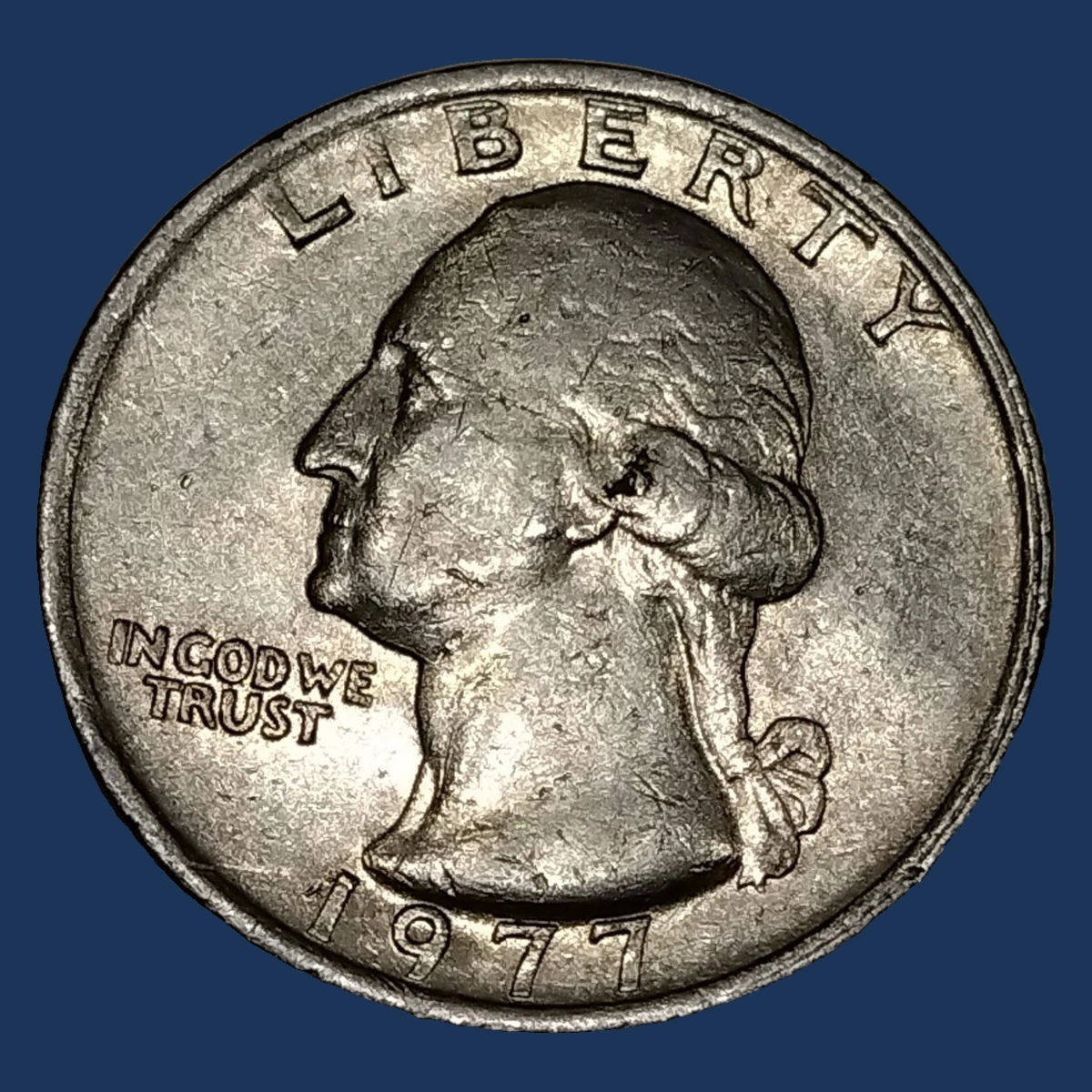
Only half the date remains on a Denver quarter whose front stamping tool was displaced downward. The catalog describes a five-percent misalignment.
The tool moved relative to the blank, rather than both faces receiving the same off-center placement. Comparing the eagle side is essential to understanding that difference.
NGC graded the documented coin MS63, an unworn grade with noticeable marks. The missing part of its date should not be reconstructed in a photograph.
Mildly uneven borders occur on ordinary coins too. This example is more useful because the downward shift actually removes part of the intended front design.
Estimated Value
Estimate $5–$150 for genuine front-tool misalignment, depending on its visibility and the coin’s condition. Tiny border differences usually have limited appeal.
A shift that removes part of the date is more noticeable than a slightly uneven border. Compare how much original design falls outside the metal, together with the preservation of both faces.
The estimate does not apply to a normal coin with a filed date. Both faces and the remaining original edge need to support the explanation.
How to Identify
Compare the eagle side first with a normal 1977 quarter, keeping the outside edge visible in both photographs. Then turn to Washington and check whether only that picture has moved toward the lower border.
The Denver example retains only half its date because the front tool shifted downward. Preserve those incomplete digits in the photograph rather than filling them in from an ordinary coin.
An unstruck crescent shared by displaced designs on both faces points toward an off-center blank instead. Inspect the remaining edge for filing or impact marks, and use the grading record to support the year when the full date is gone.
2. 1977 Washington Quarter Improper Annealing
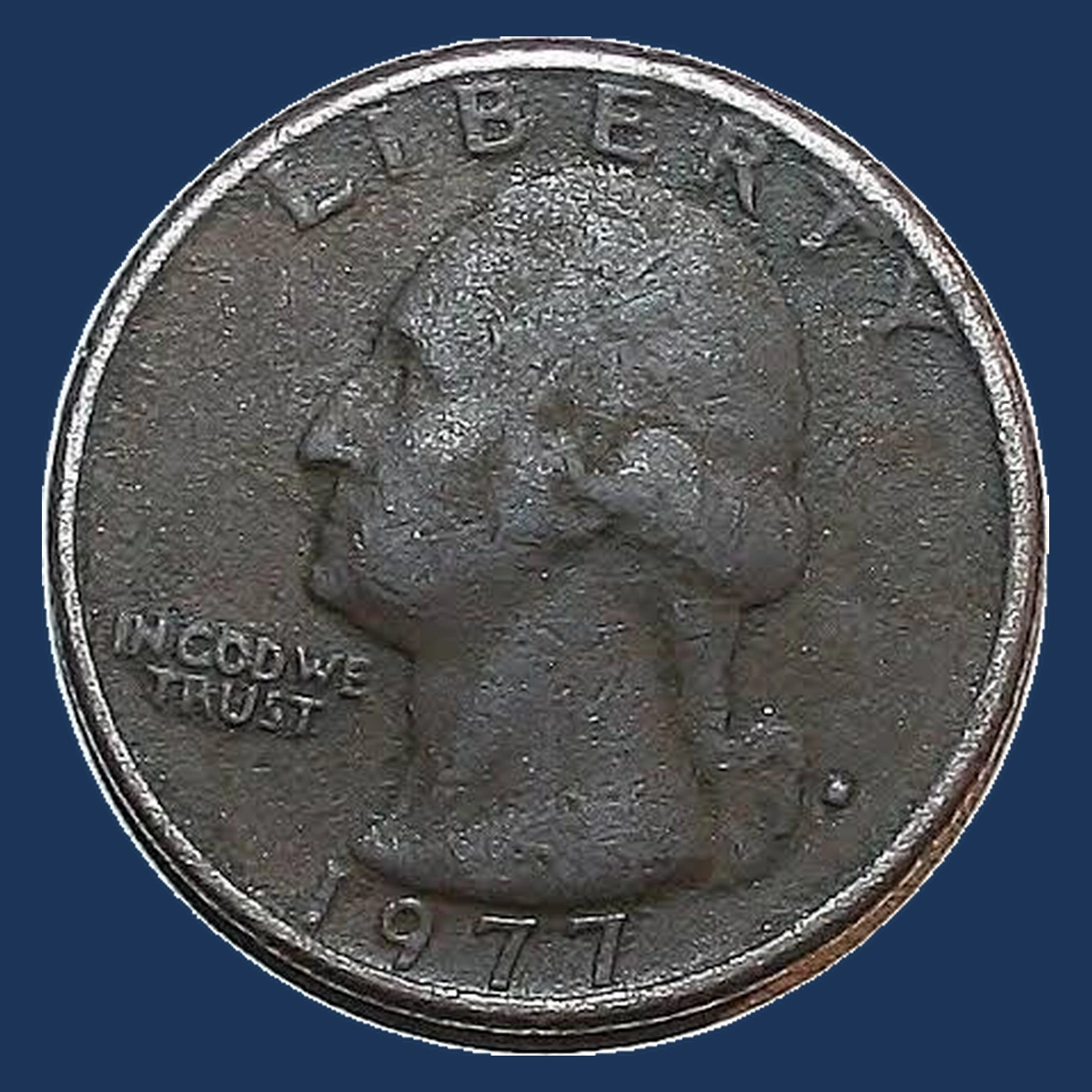
An unusual surface color can begin before a quarter receives its design. Annealing is a heating treatment used to prepare the metal for striking.
A Denver example graded NGC MS63 appears in a 2022 auction record as improperly annealed. That description concerns a production-related surface change.
Brown toning, dirt, and environmental damage can produce similar colors. A dark quarter should not be assigned the same explanation from color alone.
The entire surface needs to be considered, including its original shine and texture. The record does not establish a particular color pattern that every genuine example must display.
Estimated Value
For a confirmed 1977-D annealing error, estimate $20–$250. An unworn surface with a clear production-related change usually gives a stronger comparison than a corroded coin.
A secondary auction index records the NGC MS63 example at $69 in December 2022. Keep that recorded identification with the price instead of applying it to any dark Denver quarter.
Original surface evidence is important. Cleaning away the color can reduce both the coin’s appeal and the ability to determine what caused it.
How to Identify
Move a single light across the dark area while keeping the coin still. Observe whether the normal shine continues beneath the color or whether roughness interrupts it.
Check protected spaces around the letters and the higher parts of Washington’s face. Pits, powdery deposits, or attached material need a different explanation from a simple color change.
Then photograph the edge and a normal quarter under the same lighting. The comparison should record what the metal actually looks like without warming or darkening the image.
Do not use cleaning fluid as a test. A specialist should inspect the original surface before accepting an annealing diagnosis, even when the color resembles the auctioned example.
3. 1977 Washington Quarter Minor Doubled Front Details
An extra outline beside LIBERTY or the date can be copied from a doubled die. A die is the steel tool that stamps the design onto a coin.
The 1977 reports describe minor front doubling on both Philadelphia and Denver quarters. Philadelphia references emphasize LIBERTY, with subtler effects reported around the date and designer’s letters.
These reports do not establish individually matched catalog varieties. Compare Philadelphia and Denver photographs separately, since their doubled shapes need not match.
A repeated small detail does not mean the whole coin was struck twice. Flat doubling caused during striking is another different appearance.
Estimated Value
For a confirmed minor doubled-front variety, estimate $5–$300. Recognizable separation on clear original surfaces usually brings more interest than vague thickness on worn letters.
Photographs under different lighting help show the feature. Clear letters let a buyer judge extra contours without guessing through wear.
A buyer needs the actual mint and repeated pattern to compare a price. Cleaning lines, reflections, and flat strike doubling can all make an ordinary letter seem more complicated than it is.
How to Identify
Use a normal quarter of similar wear to map the expected shapes in LIBERTY. A thick-looking letter matters only if the added contour differs from the ordinary design.
Inspect its corners with a 10× magnifier and then follow neighboring letters. Rounded separation or a split corner is more useful than a lone shiny line.
Move the light to check whether the suspected detail stays fixed in the metal. A flat ledge beside a narrowed letter can come from movement during striking.
Examine the date and motto separately, without expecting every reported feature on one coin. Record the D if present; Philadelphia coins normally lack a mint letter.
A variety specialist can compare those photographs with the exact repeated pattern before assigning a name.
4. 1977 Washington Quarter Repunched D Mintmark
A small extra part of a D can remain if the mintmark punch entered the stamping tool more than once. Later coins would repeat the resulting overlapping letter shape.
The Denver year guide lists a repunched mintmark for 1977 quarters. It does not establish a direction, catalog number, or identified specimen for that report.
The feature needs an actual earlier-letter outline to support the name. A filled center is a different appearance and may come from damage inside the tool.
Likewise, a flattened edge beside the D can result from movement during striking. It is not a second punch impression.
Estimated Value
For an authenticated repunched-D variety, estimate $5–$350. Clear remnants of a second letter and original surfaces would support the more collectible examples.
The range is conditional on matching a genuine repeated mintmark. The source report does not provide a verified auction result for a particular 1977 quarter variety.
Do not choose a price from the word rare alone. A normal D containing dirt, or one altered by a hit, does not receive a repunched-mintmark premium.
How to Identify
Copy the visible D outline onto a rough sketch before deciding that it contains another letter. Include its outside curve and straight stem, not just the opening in the middle.
Under a 10× magnifier, trace the suspected remnant until it either follows an earlier D or stops as an isolated bump. Compare the surrounding surface for a hit that pushed metal toward the letter.
A flat ledge may come from movement during striking, while metal filling the center can come from a chipped tool. Send a full view and close-up to a variety specialist; a repunch claim must explain an earlier letter shape rather than mere thickness.
5. 1977 Washington Quarter Die Cracks, Filled D, and Rim Breaks
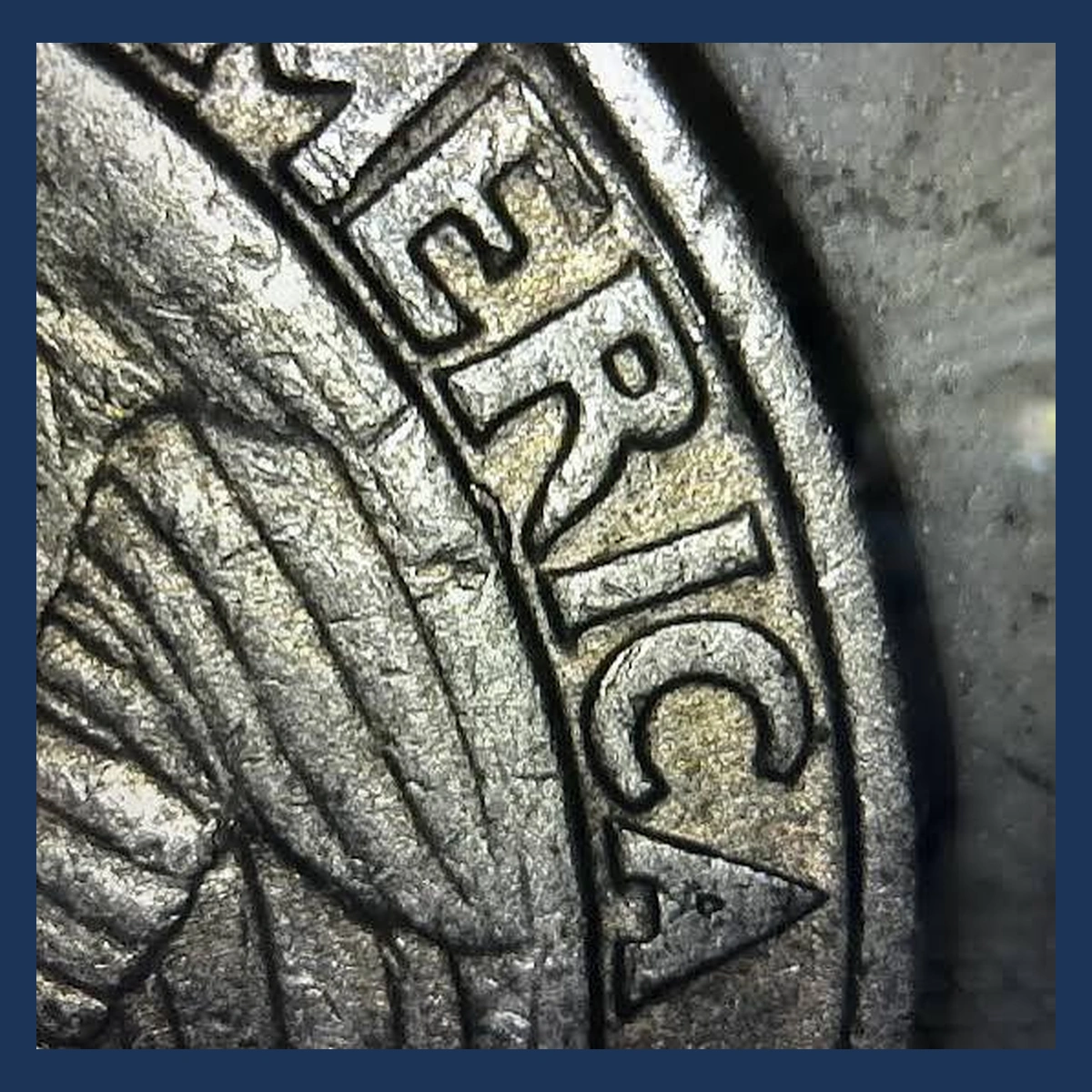
A damaged stamping tool can leave a thin raised line or a larger patch of extra metal. The shape depends on where the tool cracked or lost a piece.
Denver reports include cracks, a filled D, and a cataloged back rim break. The rim break is listed as CU-25c-1977D-01R.
A rim-connected break is called a cud. It replaces part of the normal design with raised metal that reaches the edge.
The filled D concerns the opening inside the mint letter, while ordinary cracks may occur elsewhere. These separate features should not be combined into an invented single specimen.
Estimated Value
Use an estimated $5–$500 across genuine minor cracks, filled-letter tool damage, and stronger rim breaks. The smallest features commonly occupy the lower end.
A large clear cud is easier to display than a barely visible line. Condition and the exact amount of design replaced remain important to the comparison.
The cataloged back cud provides a specific pattern to match, without a realized price used here. An edge dent pushing metal inward or dirt filling a D requires a different explanation.
How to Identify
For the cataloged Denver cud, begin on the back and trace the raised patch into the rim. Compare its outline with the Washington quarter cud catalog rather than guessing a clock position.
For a filled D, examine the center of the letter without scraping it. The relevant feature is original raised metal, not a dark deposit inside the opening.
A thin crack needs a third comparison: follow the ridge across the nearby design and distinguish it from a recessed scratch.
Include the complete affected face in each photograph. The rim connection, mintmark opening, and crack route explain different appearances even though all can begin with damaged tools.
6. 1977 Washington Quarter Tilted Partial-Collar Strike
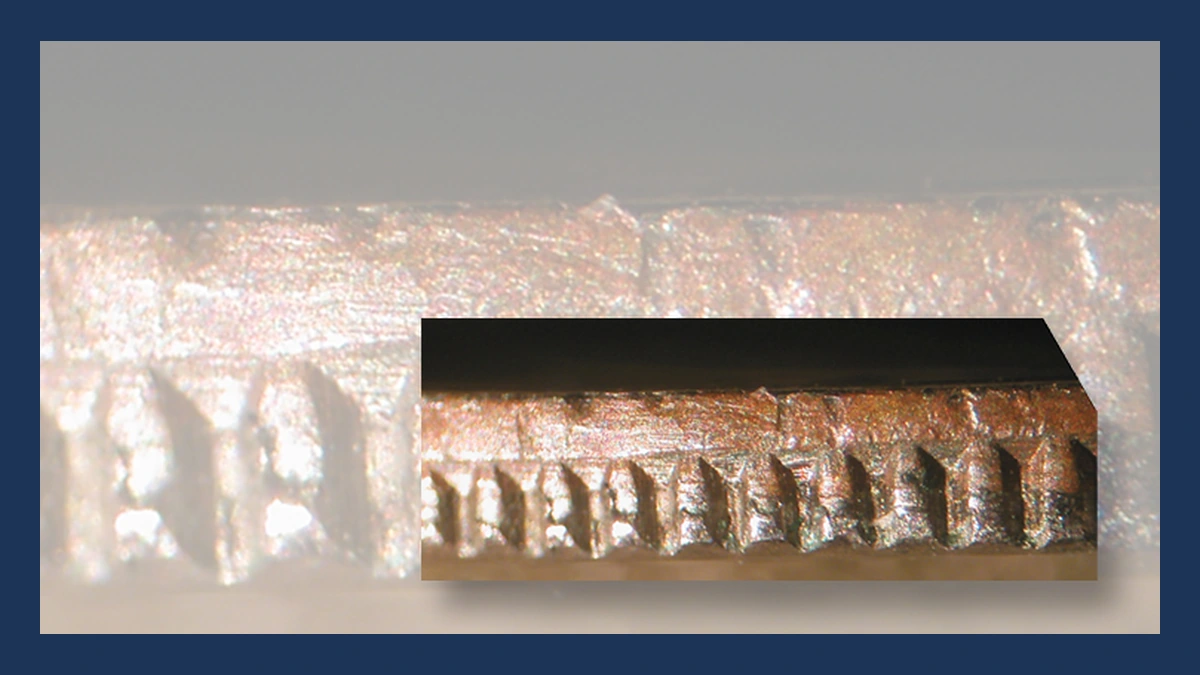
This quarter’s edge changes as the coin is turned. About three-quarters of the circumference has a partial-collar structure, while the remaining quarter is entirely plain.
The collar is the ring that normally holds the blank during striking. On the stepped portion, the lower edge has grooves and the upper part is smooth.
Mike Diamond described this 1977 example as involving an early-stage blank and a tilted position. The ring held different amounts of metal around the circumference.
The step is an important clue. It should not be replaced with the continuous sloping edge produced by another kind of collar interaction.
Estimated Value
Estimate $50–$600 for a genuine tilted partial-collar quarter with a comparable visible edge. The clearer the step and changing circumference, the easier the event is to explain.
Compare complete edge views rather than single close-ups. One smooth patch does not show the same changing contact with the ring.
Preserved grooves help show which metal was held by the ring. A later rolled or ground edge can remove those clues and reduce the usefulness of a price comparison.
How to Identify
Take overlapping edge photographs during one full turn of the coin. Mark where the stepped structure starts and where it ends, rather than estimating the whole edge from one view.
On the documented example, the step extends around roughly 270 degrees. The lower portion carries grooves while the upper portion is smooth.
The remaining roughly 90 degrees is completely plain. Keep that section in the sequence even though it does not show the step.
Compare the profile with the original edge examination. A continuous slope is different from the two-level structure described here.
Check for grinding lines or squeezing marks, since later work can change the edge. The complete sequence should explain how restraint varied around this one coin.
7. 1977 Washington Quarter Broadstrike
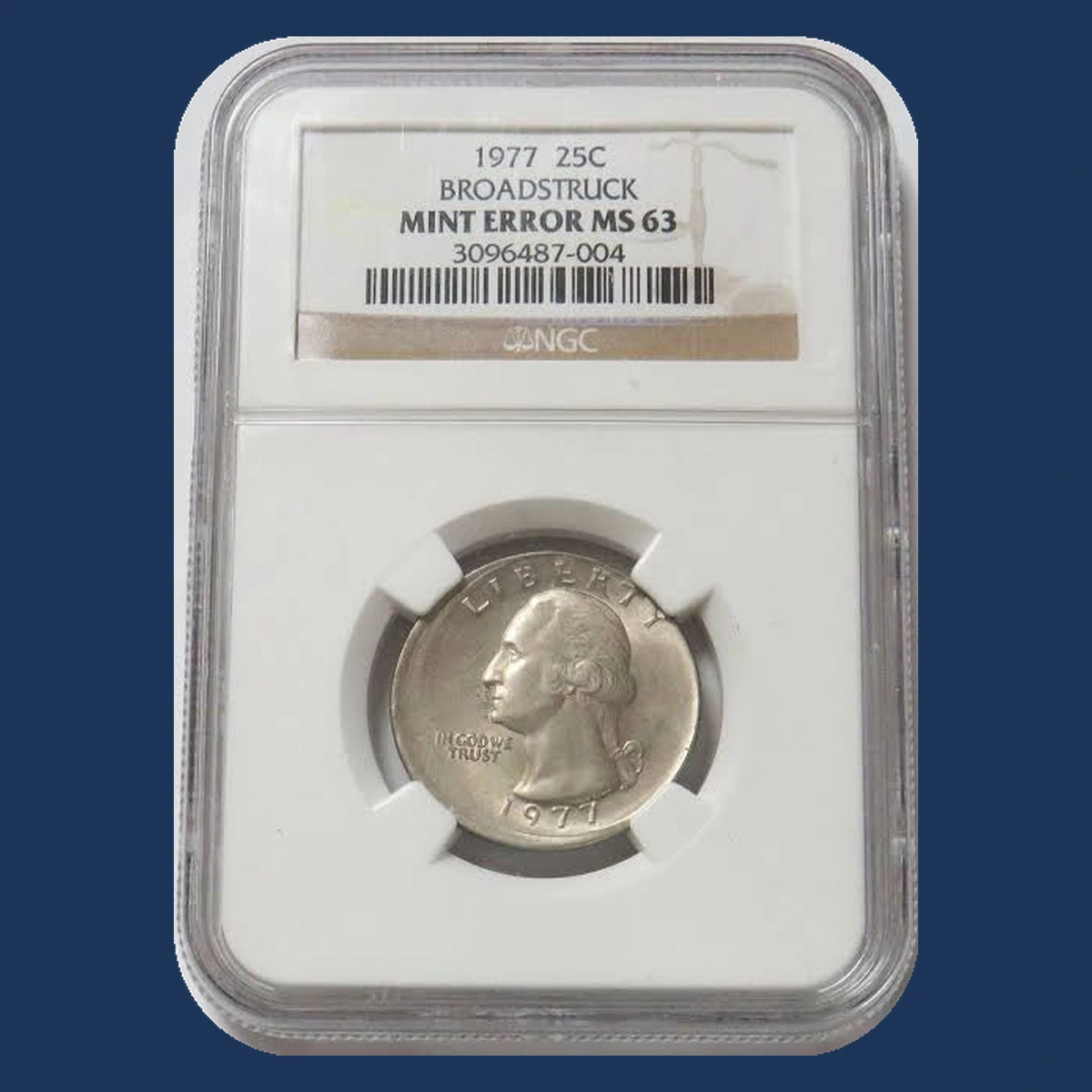
A complete quarter design can sit inside an unusually wide border when the surrounding collar fails to hold the blank. The resulting outward spread is called a broadstrike.
Both Philadelphia and Denver examples are reported for 1977. A Philadelphia NGC MS66 example appears in the year literature, indicating an unworn coin with relatively few marks.
The extra metal need not spread evenly around the design. What matters is that the intended design stays on the coin.
A smooth edge is only supporting evidence. Grinding away normal edge grooves does not explain a naturally expanded original strike.
Estimated Value
For genuine 1977 broadstrikes, estimate $25–$750. A wide original border and an attractive complete design usually make the error easier to appreciate.
The general type should remain separate from a broadstrike combined with a clipped blank. Those composite examples have their own missing-metal features discussed in the next section.
An unusually wide coin still needs examination for later flattening. Crushed letters, heavy scratches, or a ground edge can reduce its appeal even when part of the original strike was unusual.
How to Identify
Follow the outside lettering around both faces and check that no intended design falls beyond the metal. The normal absence of a Philadelphia mint letter must not be counted as missing artwork.
Next compare the border’s width in different directions. A loose quarter normally measures about 24.3 millimeters across, while an unrestricted strike can exceed that size unevenly.
Examine the edge for original spreading and the raised letters for later crushing. Width alone cannot distinguish a broadstrike from a coin flattened after minting.
Keep the complete outline in the photographs. If a blank crescent accompanies truncated lettering, investigate an off-center strike rather than identifying the coin solely from its wide border.
8. 1977 Washington Quarter Clipped Blanks, Including Broadstruck Examples
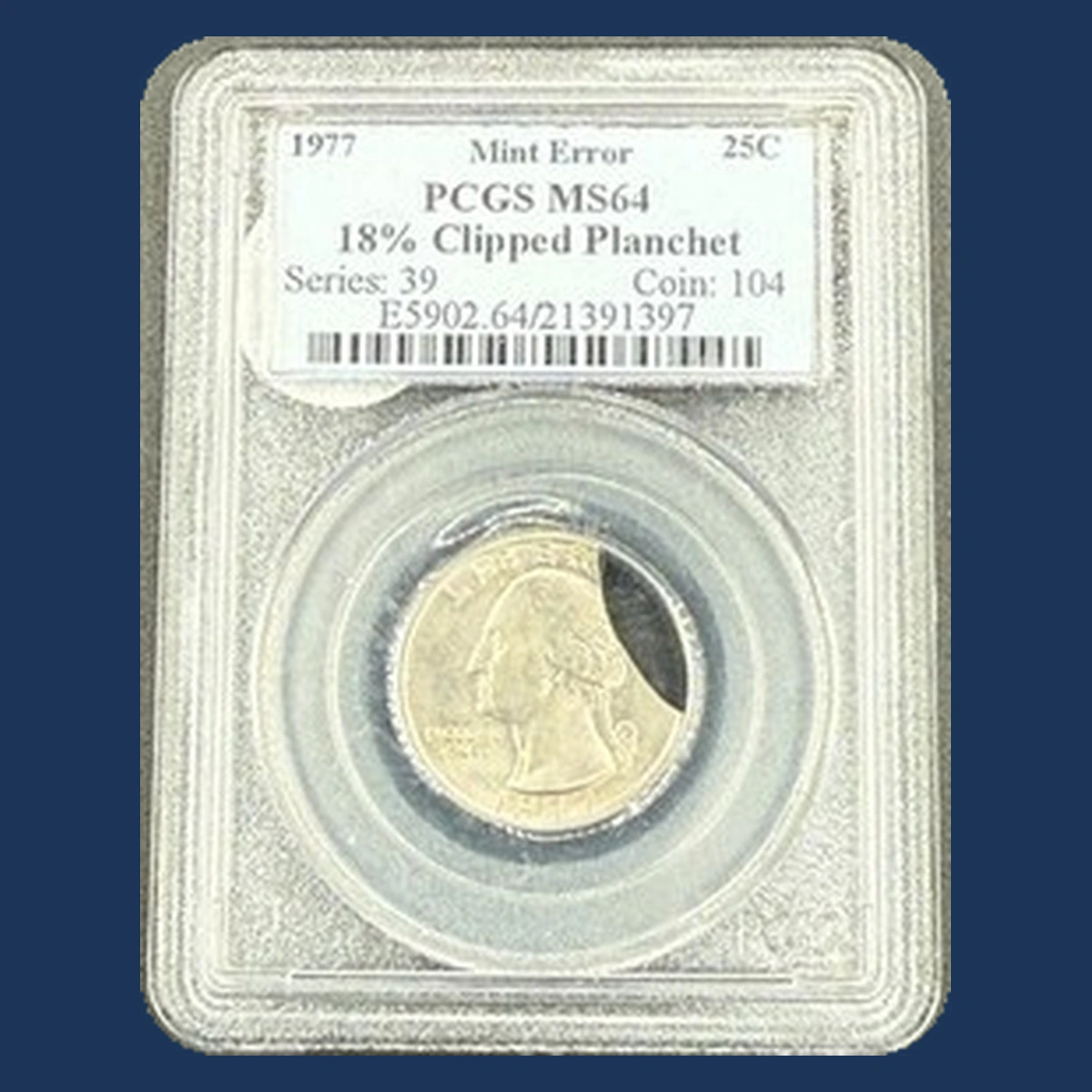
A broad curve can be missing from a blank before it receives the quarter design. The incomplete metal then forms an unusual rim and nearby lettering during striking.
One Philadelphia example loses metal from roughly two o’clock to five-thirty and weighs 63.6 grains, about 4.12 grams. Its large curve is not the same as a separate two-clip example.
That double-clip coin has a reported twenty-five-percent loss and was also broadstruck. Another broadstruck curved-clip coin has no percentage specified.
Denver clipping is also reported for this year. Its particular gap shape needs its own photograph rather than a borrowed Philadelphia outline.
Estimated Value
Estimate $10–$1,000 for genuine 1977 clips, allowing for different sizes, condition, and accompanying broadstriking. Two features on one coin do not automatically create two full premiums.
The separate NGC MS66 curved-clip broadstrike sold for $52 on August 18, 2015. The twenty-five-percent double-clip coin was graded PCGS MS67 and is a different specimen.
A larger gap can make an attractive display, but later cutting or damaged surfaces changes the comparison. Original struck boundaries are essential to the value.
How to Identify
Place both ends of the gap in one photograph and inspect how the original rim approaches them. Natural changes in nearby detail can show that metal was missing before striking.
For the large Philadelphia curve, keep its two-to-five-thirty position with the recorded 63.6-grain weight. The two-clip broadstrike needs a separate image showing both gaps.
On either broadstruck example, distinguish missing metal from outward expansion. A missing section and a wider border describe different physical features.
Look inside each gap for saw marks, burrs, or filing, and compare the opposite rim for supporting weakness. A lighter weight alone does not establish an original clip because later cutting also removes metal.
9. 1977 Washington Quarter Front Layer Missing before Striking
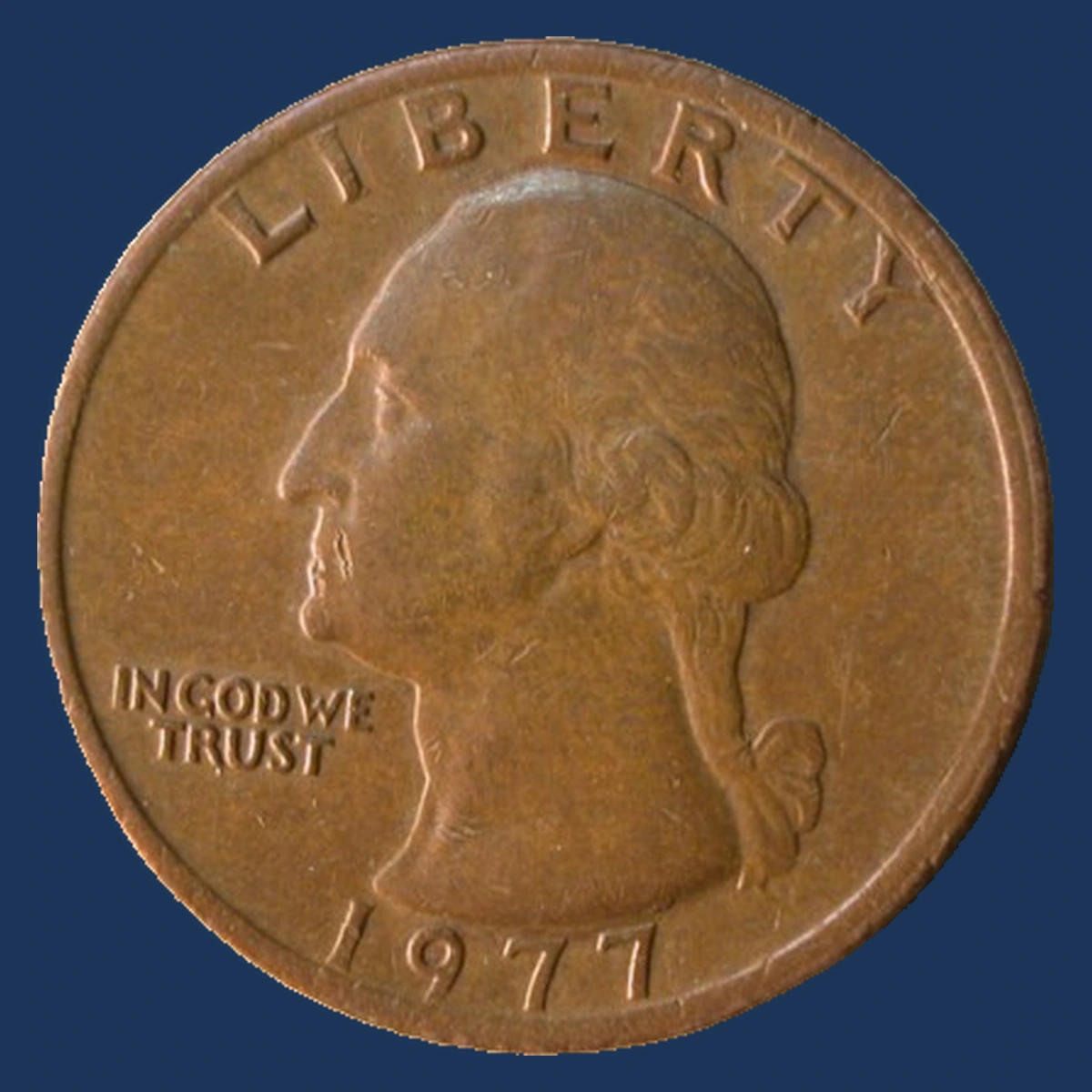
The portrait is struck directly into copper on this documented Philadelphia quarter. Its front outer layer had separated before the design was pressed into the remaining metal.
The example weighs 4.70 grams. A normal quarter weighs about 5.67 grams, so the loss is substantial.
The back retains its normal pale covering, giving a useful comparison with the exposed front. The layered edge also helps explain the different surfaces.
This is not simply brown toning or a loose flake lifted after the coin was made. The timing matters because the portrait formed on a surface already missing its covering.
Estimated Value
Allow an estimated $50–$1,500 for an authenticated pre-strike missing-front-layer quarter. The clarity of the exposed face and the preservation of its design influence collector interest.
A clear portrait on exposed copper explains more than a brown stain. Compare the missing metal and the intact pale back before pricing another example.
Surface color can change for different reasons. A chemically altered or scraped brown quarter needs to be excluded before assigning a missing-layer premium.
How to Identify
Examine how Washington’s portrait sits on the copper-colored surface before looking at the scale. The documented error was struck after the front covering had already separated, so the design formed directly on the exposed metal.
Compare that face with the intact pale back, then inspect the edge where the remaining layers meet. Scrapes through a finished design can expose copper too, but they do not reproduce the original struck surface.
For a loose coin, record its weight against the normal 5.67 grams and the example’s measured 4.70 grams. Use the pre-strike missing-layer example for the surface comparison, since weight alone does not establish when a layer separated.
10. 1977 Washington Quarter Off-Center Strike
Much of a quarter can remain blank when the metal enters the press off center. The stamping tools reach only part of it, leaving a crescent without the normal design.
A Denver example was cataloged as seventy percent off center toward eleven o’clock. ANACS graded it MS63, indicating an unworn piece with noticeable marks.
Philadelphia examples without mint letters are also reported, but no single direction or percentage defines that group. Their dates and design must establish their identities.
The error concerns the placement of the blank. A shifted front tool with a normally centered back is a different comparison.
Estimated Value
For genuine 1977 off-center quarters, estimate $25–$2,500. A dramatic shift with a readable date usually attracts more attention than a minor displacement.
A readable date helps identify a large shift. The seventy-percent Denver example provides a specific comparison, with its struck area toward eleven o’clock.
A large blank area does not automatically establish a valuable dated error. If the date is outside the metal, identification requires more evidence than the general Washington portrait or eagle design.
How to Identify
Locate the date before choosing a year-specific comparison. On the Denver example, check any surviving D together with the shifted design rather than assigning the mint from color or weight.
Keep Washington upright to assess the eleven-o’clock direction. Compare the position of the strike on the back with the unstruck crescent on the front.
Both faces should fit the same misplaced blank. A front-only shift belongs with the misaligned-tool discussion near the start of this guide.
Inspect the blank area for later grinding or flattening that erased an already struck design. Preserve the complete outline in photographs, including any incomplete digits, instead of filling in missing information from another coin.
11. 1977 Washington Quarter Cent, Nickel, and Dime Blanks
A quarter design can be forced onto metal intended for a smaller denomination. Outer letters may fall beyond the blank, while its color and weight reflect the different metal.
Denver cent-blank examples include an NGC MS63 Red-Brown coin recorded at 3.07 grams. A Philadelphia nickel-blank example was graded NGC AU55, indicating slight wear.
Dime-blank versions are reported for both mints. Their metal and measurements need individual confirmation; a small outline alone cannot identify the blank.
A small blank carries no earlier coin design. Surviving Lincoln, Jefferson, or building details would instead suggest a finished coin was struck again.
Estimated Value
Estimate $100–$4,000 across authenticated cent-, nickel-, and dime-blank quarter errors. The exact blank and surviving design determine the useful comparison.
The 3.07-gram Denver cent-blank MS63 sold for $600 in January 2018. The Philadelphia nickel-blank AU55 brought $134.40 in November 2020.
The dime-blank reports receive a conditional comparison within this range, not a fabricated completed sale. A coin’s small size alone is insufficient to identify the blank or establish either mint.
How to Identify
Search first for any older lettering beneath Washington or the eagle. Recognizable Lincoln or Jefferson details would indicate a finished host coin, not an unused blank.
For a loose candidate without those traces, record width, weight, and the appearance of the edge. Keep the holder off the scale.
The 3.07-gram measurement belongs to the documented Denver cent-blank example. The normal nickel-blank standard is about five grams, not a measured value for every quarter-on-nickel specimen.
Compare the outer words to see how they fit the smaller metal. Partial contact with a collar can leave some edge grooves even on an unusual blank.
Have a specialist check the alloy when the blank remains unclear. A small size or copper color alone cannot identify the original denomination.
12. 1977 Washington Quarter Struck over a Finished Jefferson Nickel
Two denominations can share one piece of metal when a nickel enters the quarter press. The later Washington and eagle designs partly cover the older Jefferson and Monticello designs.
A documented Philadelphia example was graded PCGS MS64. It has an unworn surface with marks and identifiable traces of the nickel host.
Those older traces make it a double-denomination error. A quarter struck on an unused nickel blank lacks that earlier design.
The surviving host date and mint must be read from the coin or its certification record. The quarter’s year alone does not establish all of the nickel’s original details.
Estimated Value
The PCGS MS64 quarter-over-nickel example sold for $2,100 on September 20, 2020. That price belongs to a finished-coin overstrike, not an unused nickel blank.
For authenticated comparable pieces, estimate $500–$6,000. Clear older design beneath recognizable quarter details makes the combination easier to appreciate.
Wear, cleaning, or weak host traces can make another example a poorer comparison. A double-denomination description needs both sets of design evidence before a buyer applies a major overstrike price.
How to Identify
Choose a recognizable piece of the older design and follow it beyond one isolated line. A fragment of Jefferson or Monticello should connect with neighboring details of the same nickel design.
Compare those traces with a normal Jefferson nickel at the same scale. Keep the Washington and eagle impressions visible so the relationship between the two denominations remains clear.
Then examine both faces for the way the quarter strike flattened or covered older features. A simple small blank cannot explain surviving nickel lettering or architecture.
Have an error specialist separate genuine struck overlaps from transferred marks made by pressing two finished coins together later. Leave the host’s date or mint unspecified wherever the actual evidence does not establish it.
13. 1977 Washington Quarter Forty-Percent-Silver Blank
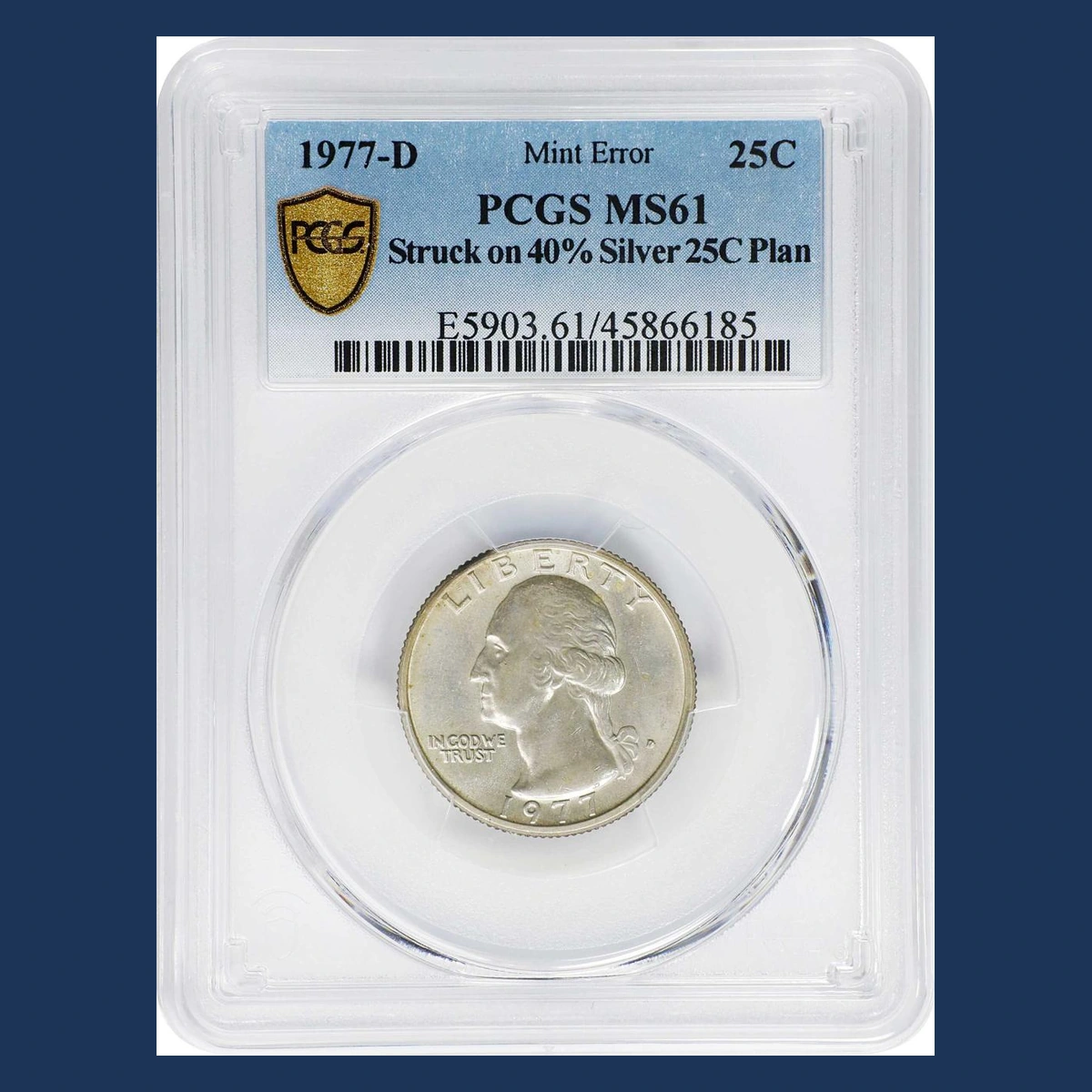
This Denver quarter uses silver-bearing metal instead of the ordinary copper-nickel clad blank. NGC identified the documented example as struck on a forty-percent-silver blank.
The coin weighs 5.7 grams and lacks the usual red copper band at its edge. Its XF Details assessment records circulation wear and improper cleaning.
The composition is forty percent silver, not the ninety-percent alloy of older circulating silver quarters. A 6.25-gram standard from those earlier coins would be the wrong measurement to attach here.
The reference connects the blank type with Bicentennial silver coinage. It does not establish how the blank reached Denver.
Estimated Value
The cleaned XF Details example sold for $4,935 on January 6, 2016. Its recorded weight was 5.7 grams.
An estimated $3,000–$15,000 applies to an authenticated 1977-D forty-percent-silver-blank quarter, depending on preservation and demand. Cleaner surfaces can support a stronger comparison than the documented problem coin.
This range requires confirmed metal identification. Silver-colored plating on an ordinary quarter does not create the same error or justify the same price.
How to Identify
The recorded 5.7 grams sits close to a normal clad quarter’s weight, so this error cannot be found reliably with a scale alone. Begin by reading 1977 and the D, then inspect the edge for the usual copper-colored band.
A missing band is a reason for composition testing, not proof of silver by itself. Ask a specialist to distinguish the forty-percent-silver metal from plating or other altered surfaces without scratching or applying acid.
Keep the grade and cleaning qualification attached to any price comparison with the documented coin. Its identification concerns forty-percent silver specifically; neither the earlier ninety-percent alloy nor the blank’s route into the Denver press should be assumed.
Conclusion
A missing layer and a silver blank can both change a quarter’s appearance, but they require different evidence. The estimated ranges here extend from $5–$15,000.
Keep the normal absence of a Philadelphia mint letter out of the error count. Photograph the edge, preserve any loose metal, and compare the actual design traces before deciding whether a small coin began as a blank or a finished nickel.