2001 Dollar Coin Error List with Pictures

A copper-colored 2001 dollar may have changed during heating, or it may actually be missing an outer metal layer. Those two problems need different checks.
This 2001 Sacagawea dollar error list also includes wrong blanks and designs stamped over other coins. One quarter-blank example sold for $5,750 in January 2009; the estimated ranges discussed here extend from $10–$25,000.
Follow the surviving design and the metal itself to see which explanation fits your coin.
1. 2001 Sacagawea Dollar Philadelphia Annealing Error
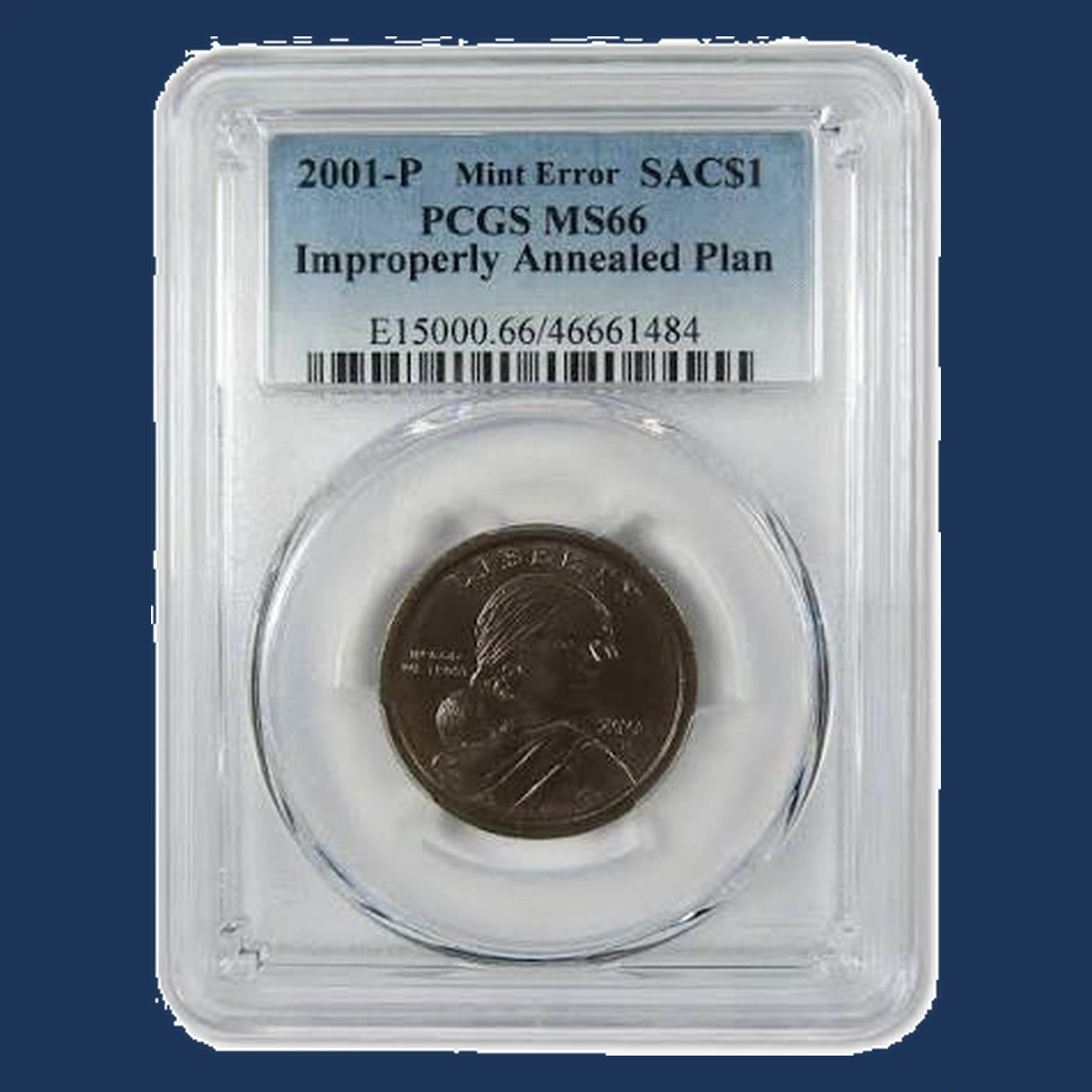
Copper-brown color across a dollar can result from a problem during preparation of its blank. Annealing is the heating treatment that softens the metal before striking.
Certified 2001-P examples have been described as improperly annealed or sintered. The latter term describes surface material bonded during heating, rather than an outer layer simply falling away.
These coins can keep the normal dollar design and overall shape. The color change must still be distinguished from tarnish, corrosion, or heating after minting; an ordinary dark dollar is not automatically the same error.
Estimated Value
Estimate $25–$250 for a genuine 2001-P annealing error, depending on surface preservation and the clarity of the color change. Certified examples need not reach four figures.
An archived Fred Weinberg price list asked $175 for an MS68 example, a very well-preserved unworn coin. Littleton also listed an error-and-normal-coin comparison set at $94.25–$118.
Those are asking prices, and the set contains two coins. They should not be presented as separate completed auctions for one error dollar.
How to Identify
Compare the dark dollar with a normal golden example without attempting to brighten either coin. Look across the large open areas and into the protected spaces around letters.
Turn the light to see whether the original surface texture continues through the color change. Shine can survive beneath natural tarnish too, so that observation alone cannot prove an annealing error.
Inspect the edge and both faces for actual loss of metal. A missing layer changes the physical structure, while a surface-color problem need not remove an entire layer.
Keep photographs of the 2001 date and P with the color comparison. A specialist can assess the untouched surface against certified annealing examples and distinguish it from corrosion or later heating.
2. 2001 Sacagawea Dollar Struck Through Thin Material
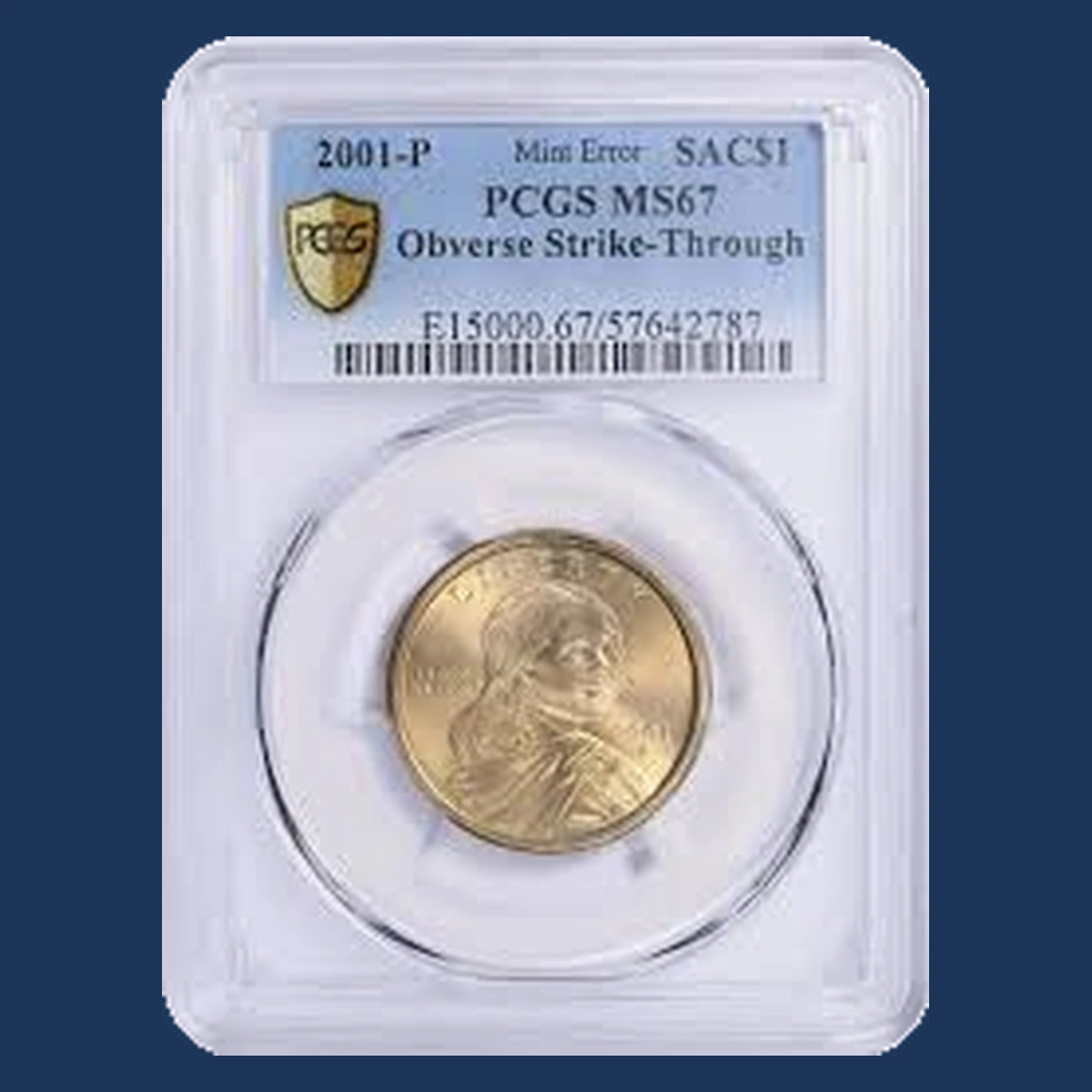
A thin object blocked part of the lower-right portrait on a documented 2001-P dollar. The stamping tools pressed the design through that obstruction rather than directly into the entire blank.
This is called a struck-through error. It can leave a depressed or weakened area while nearby details form more normally.
The ANACS MS62 example was described as possibly struck through paper, but the material was not positively identified. Its light marks, toning, and fingerprint traces are separate surface features, not additional evidence that paper caused the missing detail.
Estimated Value
The ANACS MS62 coin brought $14.95 in February 2002. Its grade means unworn with noticeable marks, helping explain why a real mint error could remain inexpensive.
An estimated $10–$400 covers similar 2001 struck-through errors, from a modest interruption to a large, clearly shaped impression. The affected area and overall condition determine which comparison is useful.
A later listing of the described coin was unsold. An auction appearance without a buyer is not another completed-sale price.
How to Identify
Locate the lower-right portrait and compare the shape with a normal dollar, following the boundary between clear and interrupted design. Low side lighting can reveal the depth and texture without establishing that paper was the object responsible.
Next examine the surrounding face for scratches, fingerprints, and wear, which can coexist with a genuine mint error. Keep those later surface features separate from the original change in the struck picture.
Include the back and the readable front date and P in the photographs sent to a specialist. The untouched transition into the affected area is more useful than a cleaned patch or a guess about the substance.
3. 2001 Sacagawea Dollar Clipped Blank
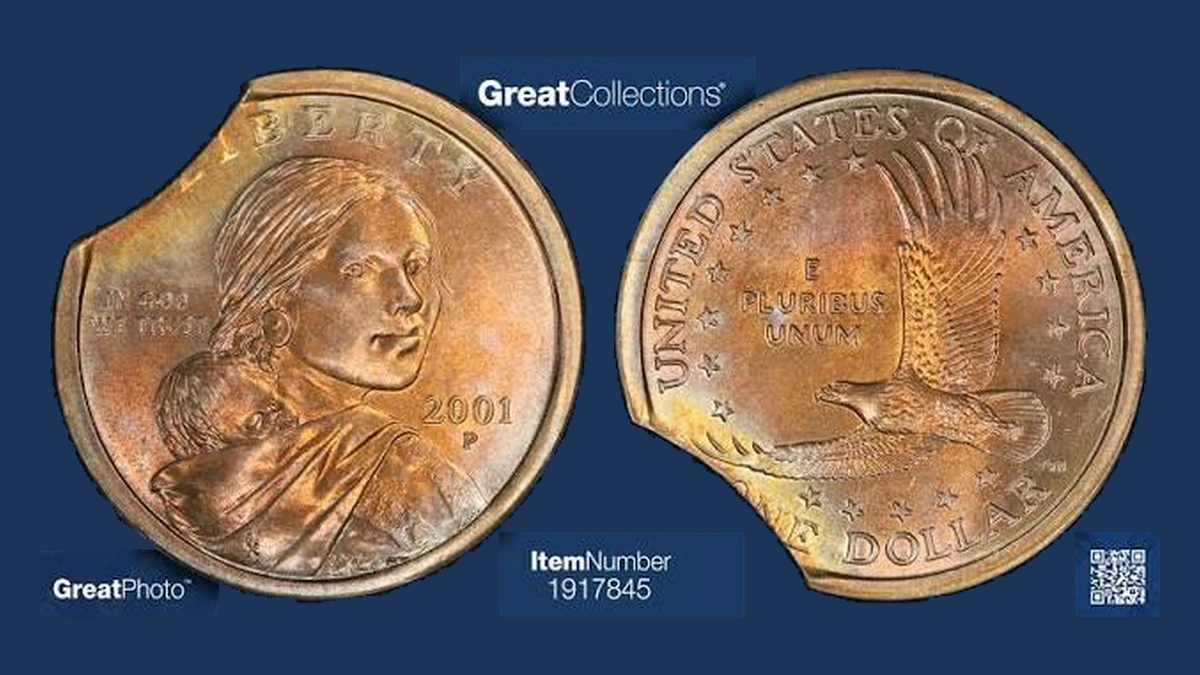
A curved gap can remain when the Mint strikes a blank that already lacks a piece. One cause is a punch overlapping a previously cut hole in the strip of coin metal.
A 2001-P PCGS MS67 dollar has a five-percent curved clip. A separate ANACS MS65 example is described with both a curved clip and an additional edge clip.
The grades describe two different coins, not two assessments of the same gap. Their exact missing sections should be compared from each coin’s photographs rather than assigned a shared clock position.
Estimated Value
The PCGS MS67 five-percent clip is listed by Sullivan Numismatics at an asking price of $200. That example provides a useful comparison for a small gap on a well-preserved coin.
An estimated $50–$500 covers genuine 2001 clipped dollars of this general kind. Larger or multiple missing sections may attract more attention if the design remains recognizable.
Compare natural rim formation and condition, not just the percentage. A notch cut into a finished coin has a different cause and value.
How to Identify
Examine the normal rim just before and after the gap. These junctions can show how the incomplete blank behaved when the design was struck.
With a magnifier, check the gap surface for saw cuts, file lines, or metal folded outward by later cutting. Do not reject a clip solely because one part of its surface looks rough.
Look directly across the dollar for a weaker raised border. That feature can support a genuine clip, although it is not equally strong on every example.
For a loose coin, compare its weight with the normal 8.10 grams and relate the loss to the missing area. Record each gap separately on the two-clip example rather than borrowing the single-clip coin’s five-percent measurement.
4. 2001 Sacagawea Dollar Missing Outer Metal Layer
A copper-colored face can result when the golden outer metal is missing. Sacagawea dollars have a copper core with bonded outer layers, so their color and weight can change together when a layer separates.
One 2001-P example has the back layer missing and a recorded weight of 6.0 grams. NGC graded it MS67, indicating an unworn coin with very few marks.
A separate ANACS MS63 report concerns front-layer loss. Its details must remain separate from the six-gram back-loss coin; either face can be affected without both layers being absent.
Estimated Value
An estimated $50–$1,500 covers genuine front- or back-layer loss on 2001-P dollars. Greater surface preservation can support the upper part of the range.
Heritage recorded separate back-loss MS63 examples at $87.40 and $64.40 in February 2002. The six-gram MS67 example appeared in a May 2007 auction but did not sell there.
Compare the exposed face and surviving design as well as the grade. A heavily scraped copper-colored surface should not be priced from an intact mint-error example.
How to Identify
Weight is a useful starting point when one entire face looks copper-colored. For a loose dollar, record the reading against the normal 8.10 grams rather than assuming every missing-layer example must weigh exactly six grams.
Inspect the edge beside the affected face to see how the remaining layers meet. Then check whether the portrait or eagle design was formed on the exposed surface.
Photograph front and back under the same neutral light. A stain can make both sides look different without showing the edge structure of a separated outer layer.
Look for scraping or chemical damage and keep any detached material with the coin. The strike and surface need specialist examination to establish when the layer came away.
5. 2001 Sacagawea Dollar Philadelphia Off-Center Strike
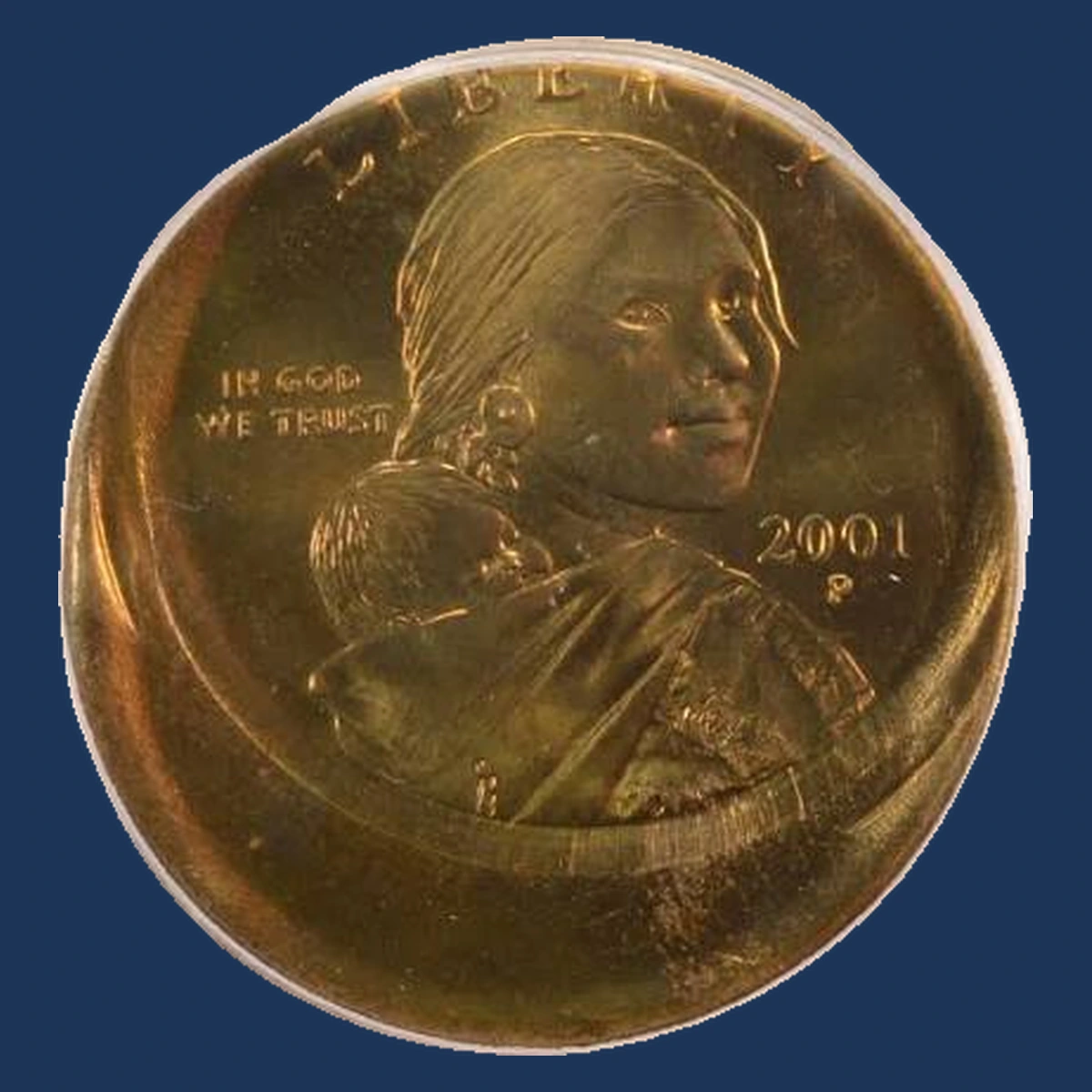
The portrait and eagle sit partly outside their intended positions on an off-center dollar. A bare crescent remains where the stamping tools did not reach the blank.
Sullivan Numismatics describes a 2001-P PCGS MS66 example struck twenty-five percent off center. Its remaining design and exposed blank make the shift easy to follow.
The listing also notes golden-blue toning and small white specks on the lower front. Those are condition details, not the direction of the off-center strike, and they should not be used to invent a clock position for the displacement.
Estimated Value
Sullivan’s twenty-five-percent example carries a posted asking price of $1,750. Its out-of-stock label does not disclose an actual selling price.
An estimated $200–$3,000 accommodates differences in displacement and condition among genuine 2001 off-center dollars. A dated, well-preserved example with a clear bare crescent provides a better comparison than a badly damaged coin.
Minor shifts usually bring less than large ones. The amount of recognizable design remaining also influences what a collector will pay.
How to Identify
Use an uncropped photograph to compare the struck portion with the bare crescent. The coin’s outer shape and the edge of its design should both remain visible.
Check the eagle side next: a misplaced blank should affect the position of both designs. If only the portrait is shifted, investigate a misaligned stamping tool instead.
Read the front date and P before matching the twenty-five-percent example. The white specks described near five o’clock are surface marks and do not establish the direction of the shift.
Inspect the crescent for grinding, scraping, or signs that an existing picture was flattened. A genuine unused area should make sense beside the design that was struck, rather than look like a separate alteration.
6. 2001 Sacagawea Dollar Struck on a Quarter or Nickel Blank
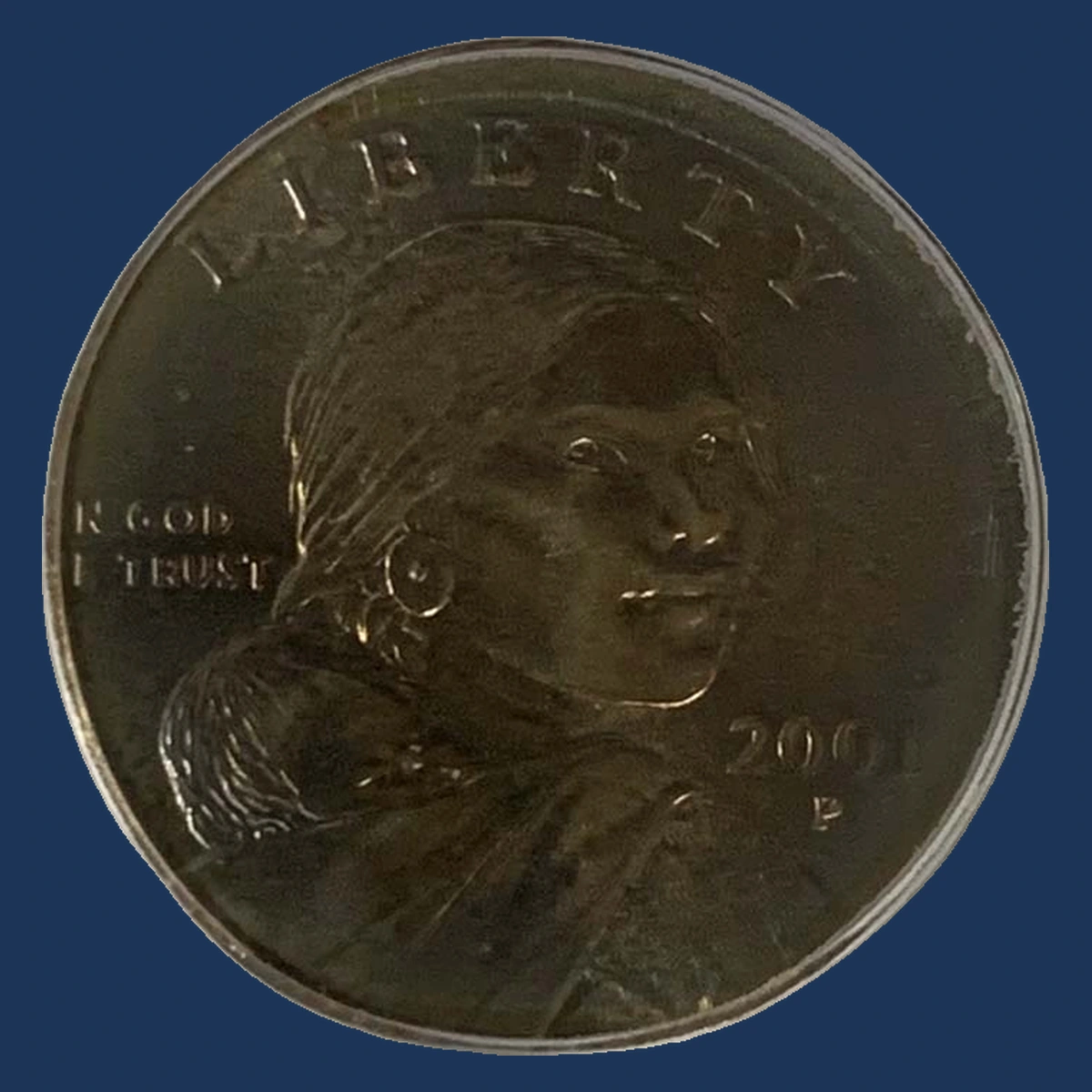
A dollar design struck on a smaller blank can crowd or lose its outer lettering. Confirmed 2001-P examples include both quarter blanks and nickel blanks.
The NGC MS64 quarter-blank coin weighs 5.4 grams, slightly below a quarter blank’s normal weight. AMERICA lies close to the edge, and the right-side raised border is missing.
A separate PCGS MS64 coin is identified as struck on a nickel blank. Neither blank had already received another coin’s design, so these errors differ from a dollar struck over a finished quarter or dime.
Estimated Value
The quarter-blank example sold for $5,750 in January 2009 and $4,406.25 in February 2013 at Heritage. Estimate $1,000–$7,000 for comparable quarter-blank pieces.
Nickel-blank examples are estimated at $8,000–$20,000. A published ownership history reports a different NGC MS61 example at $13,667 in 2008.
The PCGS MS64 nickel-blank coin is marked sold by its dealer without a disclosed amount. Do not assign the other coin’s reported price to it.
How to Identify
Compare the edge structure before deciding which denomination supplied the blank. A quarter blank has outer layers around a copper center, while a nickel blank uses a single copper-nickel alloy.
For a loose coin, record weight and width together. Normal quarter-blank standards are 5.67 grams and about 24.3 millimeters.
A nickel blank starts at 5.00 grams and about 21.21 millimeters. Striking can change the final width, so do not treat these dimensions as exact measurements of every error.
The quarter-blank specimen actually weighs 5.4 grams. Examine its crowded AMERICA and absent right-side border alongside the readable 2001 date and P.
Have a specialist test the metal without damage; white plating cannot explain the smaller blank and how its outer design meets the edge.
7. 2001 Sacagawea Dollar Design Overstruck on Another Coin
KENTUCKY and part of a horse remain beneath a dollar design on an NGC MS66 example. A finished 2001 Kentucky quarter entered the dollar press and received another denomination’s picture.
This is an overstrike, which preserves traces of two coin designs. It differs from starting with an unstruck quarter blank.
A separate report concerns a 2001 Roosevelt dime carrying the dollar’s back design on one side. Its 2001 date belongs to the dime; without a dollar date, that piece cannot establish that the dollar tools were also dated 2001.
Estimated Value
The Kentucky-quarter overstrike has an estimated range of $5,000–$15,000. Fred Weinberg’s archived listing asked $12,500 for the NGC MS66 coin; that was a dealer price, not a recorded auction result.
For an authenticated dollar-design overstrike on the reported 2001 dime, use a conditional $5,000–$25,000 range. This values the two-design error without assigning an unproved dollar year.
Clear surviving host details help explain the object. The two estimates concern separate coins and must not be added together.
How to Identify
On the Kentucky example, first locate KENTUCKY near one o’clock and the horse near three o’clock. The quarter’s 2001 date appears near seven o’clock, and QUARTER remains beneath DOLLAR.
Trace those older features separately from the dollar’s eagle and inscriptions. They should belong to one underlying design rather than a collection of unrelated scratches.
The dime example requires a different check: identify its own date and design before studying the dollar-back impression. A back-only dollar design does not supply the missing dollar date.
Have a specialist examine how the later strike altered the earlier picture and edge. Coins squeezed together outside the Mint can copy details too, so overlapping images alone do not authenticate an overstrike.
Conclusion
The 2001 errors range from a small blocked area to a dollar design struck over a different denomination. Estimated prices span $10–$25,000, with separate comparisons for each blank and each finished host coin.
Photograph the edge when a surface looks copper-colored, preserve the shape of any missing section, and record both designs on an overstrike. A date belonging to the underlying coin does not automatically date the dollar design above it.