1976 Quarter Error List with Pictures

Roosevelt’s outline beneath Washington helped one Bicentennial quarter bring $15,000 in January 2021. Its quarter design had been struck over an already-made 1967 dime.
Other 1976 quarter errors are far more affordable, with estimated values here spanning $5–$20,000. All carry the familiar 1776–1976 design or a documented connection to that issue.
The differences matter: a blank, a missing layer, and an earlier coin leave different clues. Use the examples below to see what to check and how the prices compare.
1. 1976 Washington Quarter Repunched D Mintmark
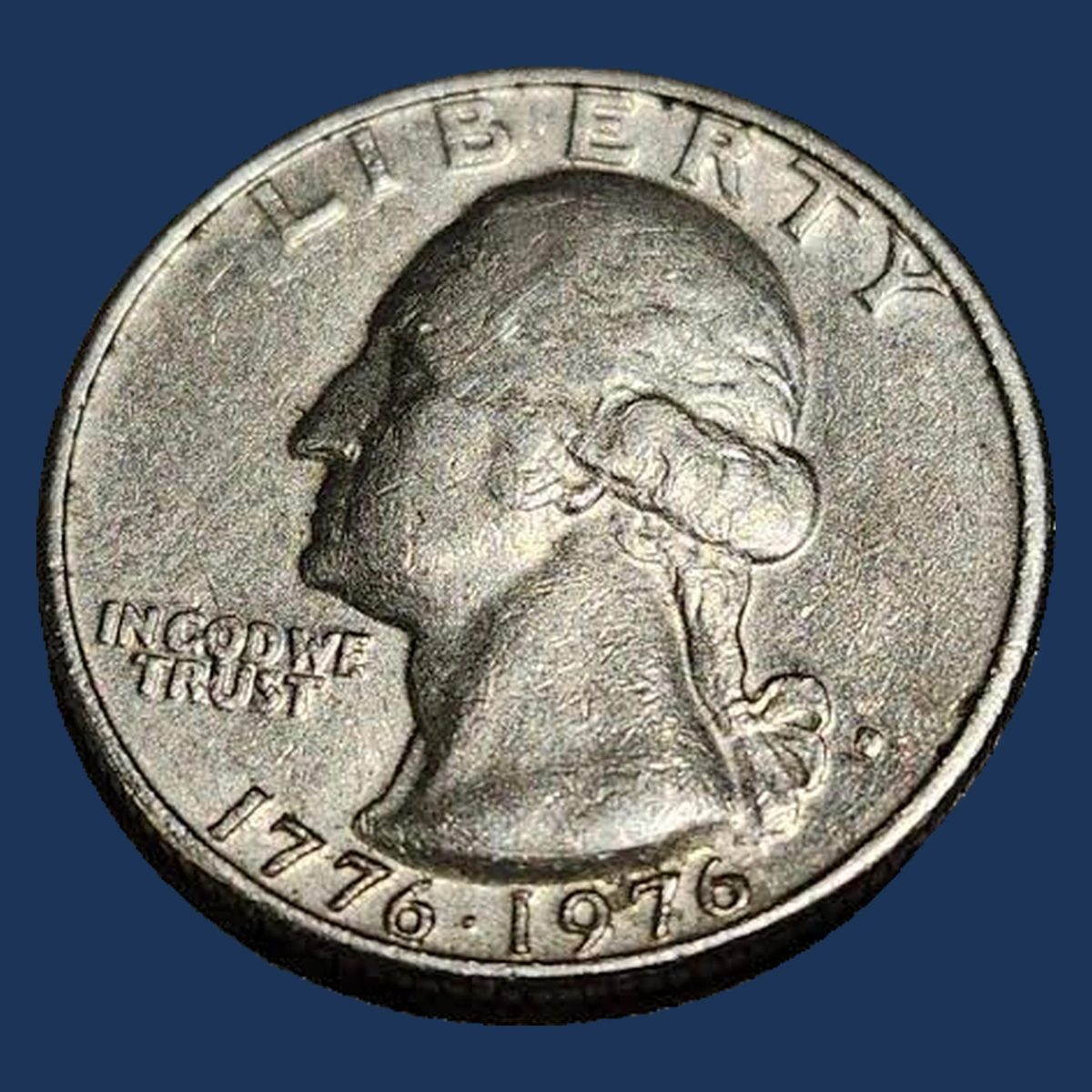
The D may have another D-shaped outline peeking above it. This comes from a mintmark punched into the die, or stamping tool, again in a slightly different position.
The documented Denver variety is RPM-001, described as D over D toward the north. North means upward when Washington’s portrait is held upright.
Coins struck by that tool can repeat the same mintmark feature. A swollen letter, a flat shelf, or a small impact beside the D does not establish repunching, even when it looks like an extra stroke in a photograph.
Estimated Value
An estimated $15–$200 suits identifiable examples of this repunched D. A clean, unworn coin with an obvious upper outline can attract more interest than a worn piece with only a faint remnant.
The error is small, so clear photographs can matter when selling it. The extra shape must match the documented D-over-D feature; an ordinary thick mintmark should not be priced as though it has the same variety.
How to Identify
The extra D belongs above the main letter when Washington is upright. Start with that direction before enlarging the mintmark, since a turned photograph can make a lower bump appear to be northward repunching.
Place a 10× magnifier over the D beside the hair ribbon and follow the outline of the main letter. Any extra curve or upright should fit the shape of another D in the stated position.
Change the light angle and compare those remnants with a photograph of RPM-001. A low shelf or a shapeless lump does not make the required letter pattern; the raised upper D outline is the feature that identifies this variety.
2. 1976 Washington Quarter Broadstrike
A broadstrike spreads the metal beyond its normal width while leaving the complete design on the coin. The collar, a ring around the blank, did not hold the metal within its usual boundary.
Philadelphia Bicentennial quarters provide several documented examples, including coins graded NGC MS64 and MS65. Both grades describe unworn coins, whose expanded borders can differ.
The drummer reverse helps distinguish this issue from later eagle-back quarters with similar errors. Extra width alone is not enough to identify a broadstrike, because pressing or hammering a finished coin can also change its outline.
Estimated Value
For an original Bicentennial broadstrike, use an estimated $30–$250. The clearer the expansion and the better the surface, the easier the error is to appreciate.
An unworn coin with complete outer lettering generally offers a stronger display than a damaged piece whose border has been crushed. Compare coins with similar expansion rather than paying solely for a numerical grade, since the grade does not describe the size of the broadstrike.
How to Identify
The outer words are your starting point. Trace LIBERTY, the dual date, and the drummer-side lettering to see whether the entire design remains on the metal.
If important outer detail never reached the blank, compare an off-center strike instead. A broadstrike must retain the full design, even when the outline is not perfectly round.
Calipers can compare the widest and narrowest measurements of a loose coin with the normal 24.3 mm diameter. Keep them clear of the faces to avoid marks.
Now inspect the expanded border with a magnifier for filing, impacts, or flattened letters. A naturally struck complete picture inside the expanded metal is more persuasive than width by itself.
3. 1976 Washington Quarter Off-Center Strike
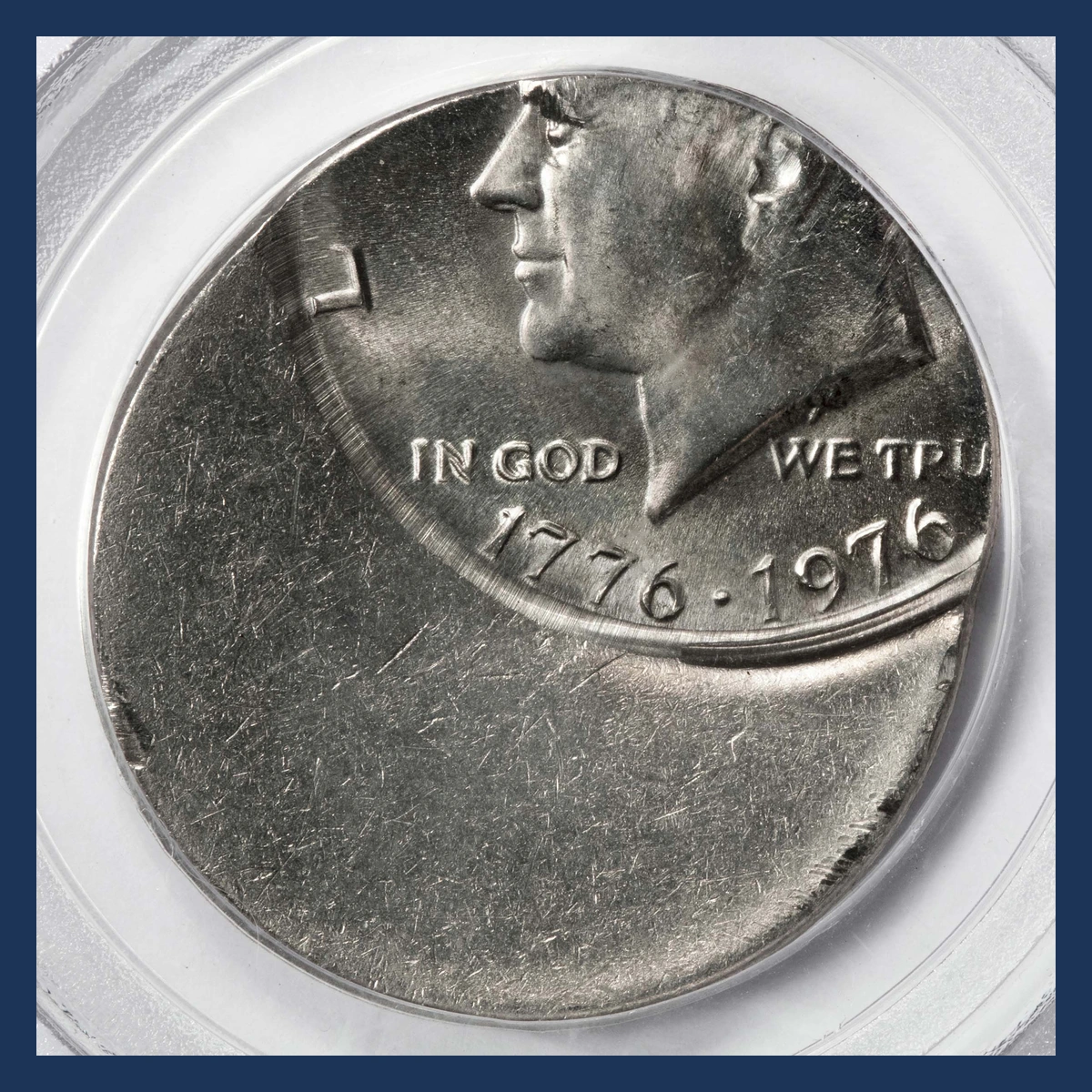
A crescent of unused metal appears when the blank lies partly outside the striking area. Some of Washington and the drummer design then misses the blank instead of being squeezed into a wider border.
Known Philadelphia examples include 10% and 15% off-center strikes. These percentages describe different coins rather than two measurements of the same example.
The dual date often remains useful for identifying the issue, even when some outer lettering is missing. A coin with only one shifted face needs a different explanation from a blank displaced between both stamping tools.
Estimated Value
A PCGS MS64 example struck 10% off-center brought $114 in March 2023. For comparable Bicentennial off-center quarters, estimate $40–$350.
A clear dual date and an undamaged crescent can support the upper portion of that range. A higher percentage does not automatically make one coin more valuable than another, since extensive wear or missing date digits can reduce its appeal despite a dramatic-looking blank area.
How to Identify
Find where the picture runs off the metal, then compare that location with the empty crescent. The two areas together show how the blank sat under the tools.
Check the drummer side as carefully as Washington. If only one face is shifted while the other remains normally centered, do not assume the whole blank was off-center.
Through a magnifier, look for original texture in the unstruck metal. Grinding away a finished design can leave crossing scratches or an unnaturally thinned edge.
A loose clad example may still weigh near the normal 5.67 g because displacement does not itself remove metal. Missing design on both sides beside an untouched crescent is the decisive visual comparison.
4. 1976 Washington Quarter Rotated Reverse on a Silver Proof
Washington can stand upright while the drummer faces an unexpected direction after the coin is flipped. This means the two stamping tools were turned incorrectly relative to one another.
A separate 1976-S silver Proof example is recorded with rotated dies. Proof means a specially made collector coin, and this silver version contains 40% silver.
The auction description does not state its rotation angle. It must not inherit the 180-degree alignment of the different double-struck silver Proof discussed later, since that other coin combines rotation with a visibly displaced second strike.
Estimated Value
The NGC PR61 Cameo silver Proof with rotated dies sold for $192 in December 2024. Estimate $100–$500 for comparable, clearly measured examples.
The amount of rotation and the surfaces both influence interest. Cameo describes contrasting frosted designs and reflective backgrounds, rather than another minting error.
Judge that contrast together with the coin’s wear, marks, and measured rotation when comparing it with the auctioned silver Proof.
How to Identify
A sideways flip can make a normal quarter look rotated, so control the movement before measuring any angle. Hold Washington upright and turn the coin top to bottom around a horizontal axis, without twisting it.
The drummer should then appear upright on an ordinary coin. Photograph both positions with a ruler or straight guide in view to show any consistent departure from that normal alignment.
A certified coin can remain in its holder for this check; also read the label to confirm the silver Proof version. The repeatable reverse angle after the controlled flip is what matters, and this example has no published angle to borrow from the separate double-struck Proof.
5. 1976 Washington Quarter Very Weak Strike
A very light strike can leave broad areas of shallow detail instead of a few isolated missing letters. Too little striking pressure may keep the blank from filling the recessed design in the tools.
One Bicentennial quarter was cataloged as a die-adjustment strike and came from a 1975 mint set. Its date still reads 1776–1976 because these quarters were made in both 1975 and 1976.
The visible weakness can be examined, but the catalog name does not independently prove why the press was set that way. Purposeful testing should not be assumed from a weak impression alone.
Estimated Value
Use an estimated $100–$600 for a clearly identified, broadly weak Bicentennial strike. Preserved original surfaces and enough remaining design to establish the issue are important.
The 1975 mint-set origin is useful background for the cataloged coin. It does not turn the date into 1975 or guarantee the value of another weak quarter.
Heavy wear, corrosion, or polished surfaces could explain missing detail on another example.
How to Identify
Look into sheltered parts of the design with a magnifier, not only at Washington’s exposed high points. Wear usually reaches those high points first, while low striking pressure can leave other areas incompletely formed.
Compare the weakness across both faces. A few isolated missing letters may suggest a local blockage instead of broadly weak striking.
Now inspect the background for scraping or polish lines. Those can show that someone removed finished design later.
If the coin is loose, a digital scale can compare it with the clad standard of 5.67 g. A substantial shortage of metal would need its own explanation.
The useful combination is widespread shallow design with preserved original surfaces, rather than the adjustment-strike wording on a label alone.
6. 1976 Washington Quarter Missing Reverse Clad Layer
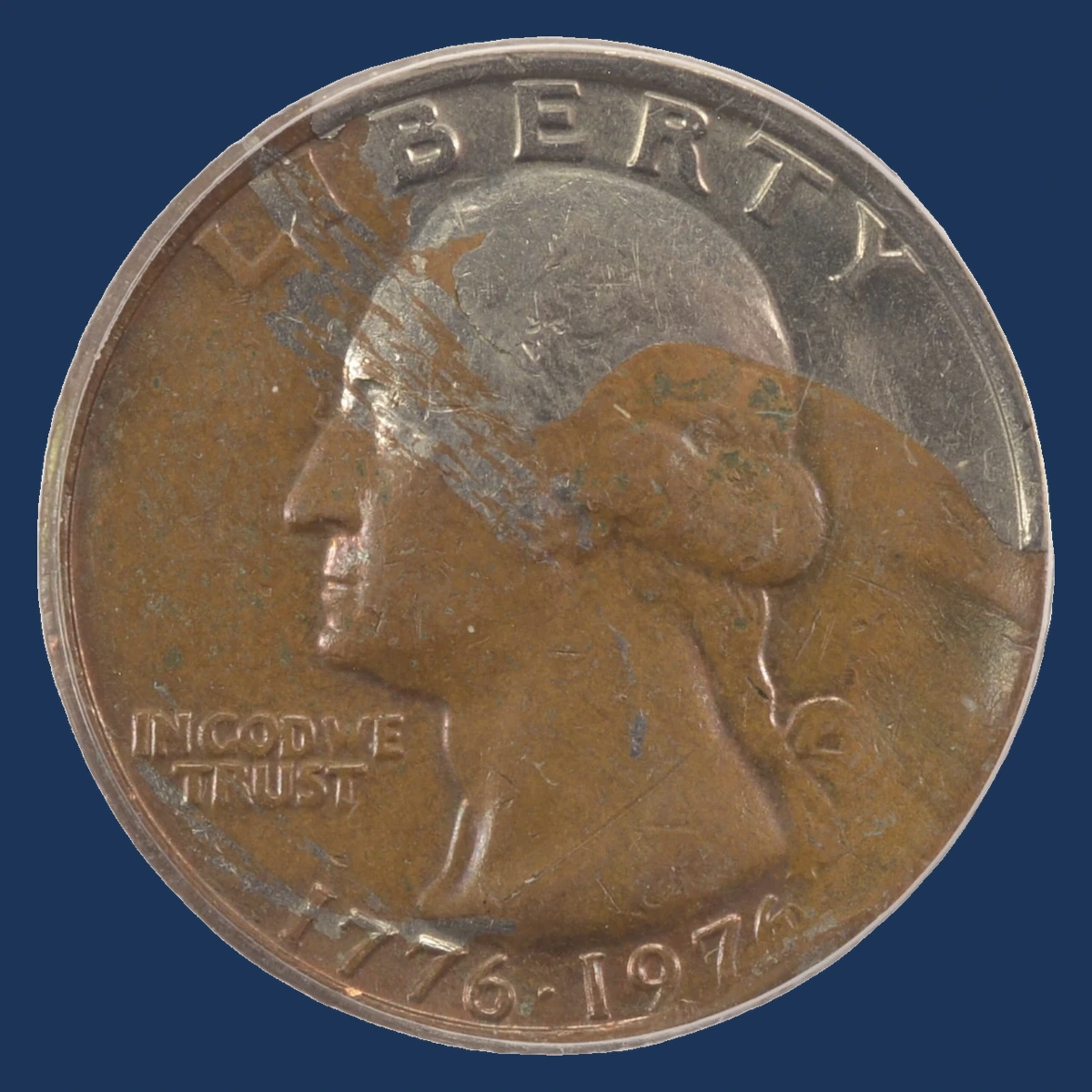
The drummer side can appear copper-colored while Washington remains silvery. A missing reverse clad layer exposes the copper center that normally lies between the quarter’s two outer layers.
A documented Philadelphia example graded NGC MS63 weighs 4.7 g. That is below the ordinary clad quarter’s 5.67 g standard, supporting the identification alongside the visible missing layer.
Normal silver Bicentennial collector quarters are a separate issue, not a missing-layer error. Neither a silver-colored edge nor a brown face alone decides the cause, since original metal, toning, and damage all need to be distinguished.
Estimated Value
The NGC MS63 missing-back-layer example brought $423 in January 2017. Another reverse-missing example, graded NGC AU58, sold for $402.50 in January 2010.
An estimated $150–$700 covers identifiable pieces across a range of wear and surface quality. Clear copper exposure with the original design preserved is more attractive than a rough, corroded face, and each coin’s own weight should stay attached to its own price comparison.
How to Identify
The drummer face and Washington face should be compared under the same lamp. On the documented coin, copper exposure is on the back while the front retains its silvery layer.
Look at their meeting point along the edge through a magnifier. The remaining layer should help explain why one face differs from the other.
A uniformly brown stain may change color without taking away a layer. Grinding can remove one, but can also leave cuts through finished design.
For a loose example, weigh it on a digital scale. Normal clad and 40% silver quarters are respectively 5.67 g and 5.75 g; the recorded missing-layer coin is 4.7 g.
Combine that measured mass loss with the visible layer structure, rather than treating either weight or color as sufficient alone.
7. 1976 Washington Quarter Clipped Blanks and Combined Striking Errors
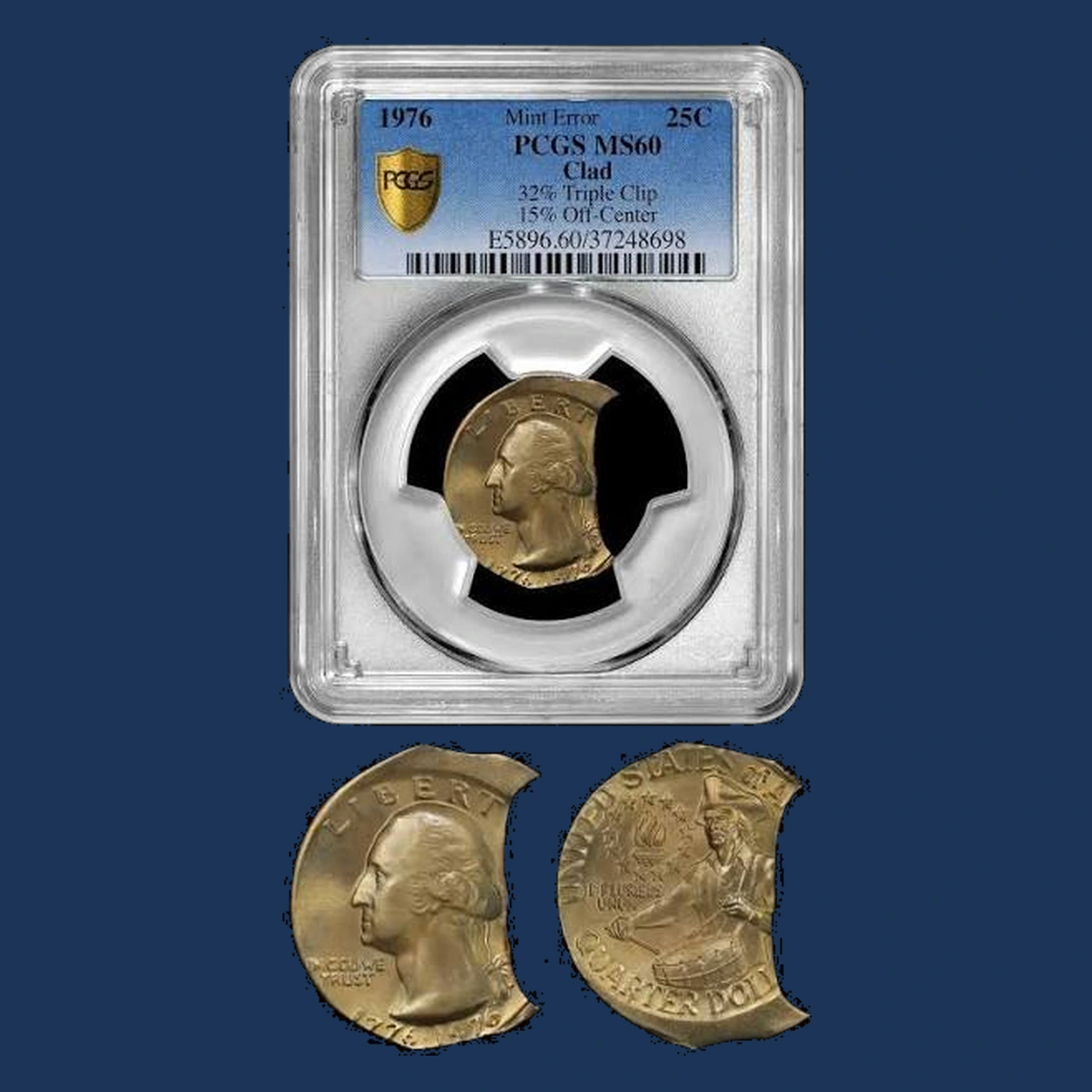
One or more missing edges can begin when a blank is cut from an incomplete part of the metal strip. Philadelphia examples include a curved clip and two curved clips.
Another Philadelphia double-clip coin also has a partial collar, leaving a stepped edge. Denver examples include a clip of unspecified shape, a 20% straight clip with broadstriking, and a curved clip struck 25% off-center.
These are separate combinations. Missing blank metal explains the gaps, while the partial collar, expansion, or displaced design describes what happened when each incomplete blank was struck.
Estimated Value
Estimate $25–$800 across these clipped-blank examples and their striking combinations. Small single clips usually have less visual impact than a large straight gap or two well-separated missing sections.
A dramatic combination can draw more interest, but its features belong to one coin. Do not add separate broadstrike, clip, and partial-collar prices together; compare the entire piece, including its condition, readable date, and how clearly the different features can be seen.
How to Identify
Inspect a clip where the struck rim runs into the missing section. With a magnifier, look for natural metal flow rather than saw marks or letters bent by cutting.
For a double clip, examine both gaps separately. Their positions need to match the actual coin, not a generic illustration.
Then test the accompanying strike feature. A partial collar requires a physical step in the edge, while a broadstrike retains the complete design within expanded metal.
The Denver 25% off-center combination must also show design that missed the blank. That absent design is different from the actual gap where blank metal was missing.
Keep the untouched gap edges and the separate striking feature visible together to explain the whole combination.
8. 1976 Washington Quarter Front Brockage with a Partial Collar
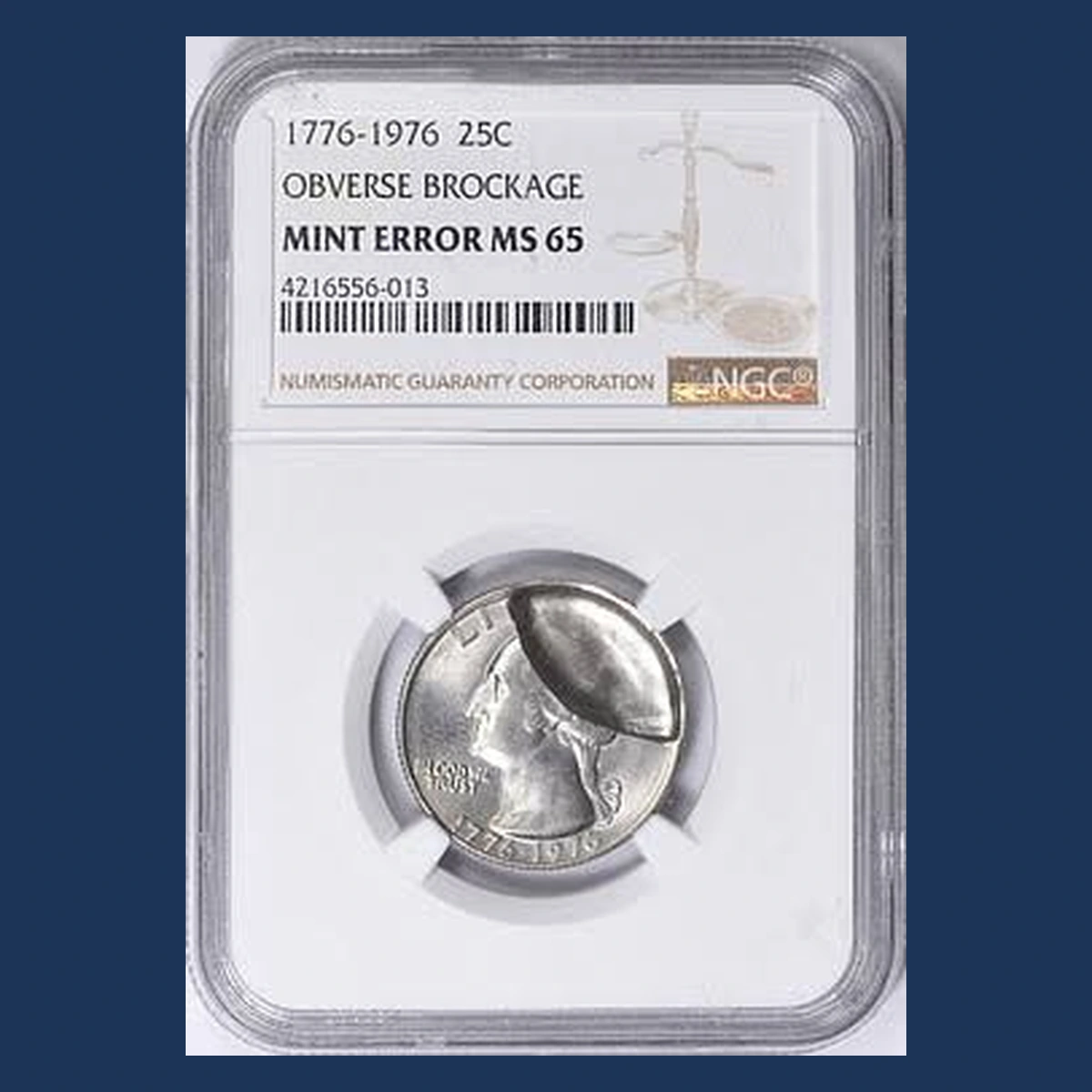
Backward, sunken design on the front can form when another already-struck coin blocks the normal stamping tool. Its raised design presses into the new coin and creates a mirror-image impression called a brockage.
A Philadelphia Bicentennial example graded NGC MS62 combines front brockage with a partial collar. The latter leaves an edge step because the blank was only partly restrained by the surrounding ring.
The backward impression and edge step describe two parts of the same coin. Neither feature should be confused with an ordinary double strike, whose new design is normally raised and correctly oriented.
Estimated Value
For an identifiable front brockage with a partial collar, estimate $100–$1,000. A clear backward image can make the mechanism easier to understand than a vague flattened patch.
The surviving Washington details, size of the brockage, and condition of the edge all matter. A high grade by itself does not describe those features, so compare actual photographs and treat the brockage-plus-collar combination as a single coin when judging its likely selling price.
How to Identify
Read any recognizable letters in the affected front area. If they run backward and sit below the surrounding surface, you may be seeing the impression of another coin.
Use low-angle light and a magnifier to judge their depth. A flat blurry patch without a readable reversed feature does not show the mechanism as clearly.
Turn to the edge and follow the height change left by partial collar contact. The normal copper stripe of a clad coin is not itself an edge step.
Photograph both features without changing the coin’s identity between views. The important pairing is a genuinely sunken mirror image on the front and a separately visible physical step around the edge.
9. 1976 Washington Quarter Cloth Struck Through the Front
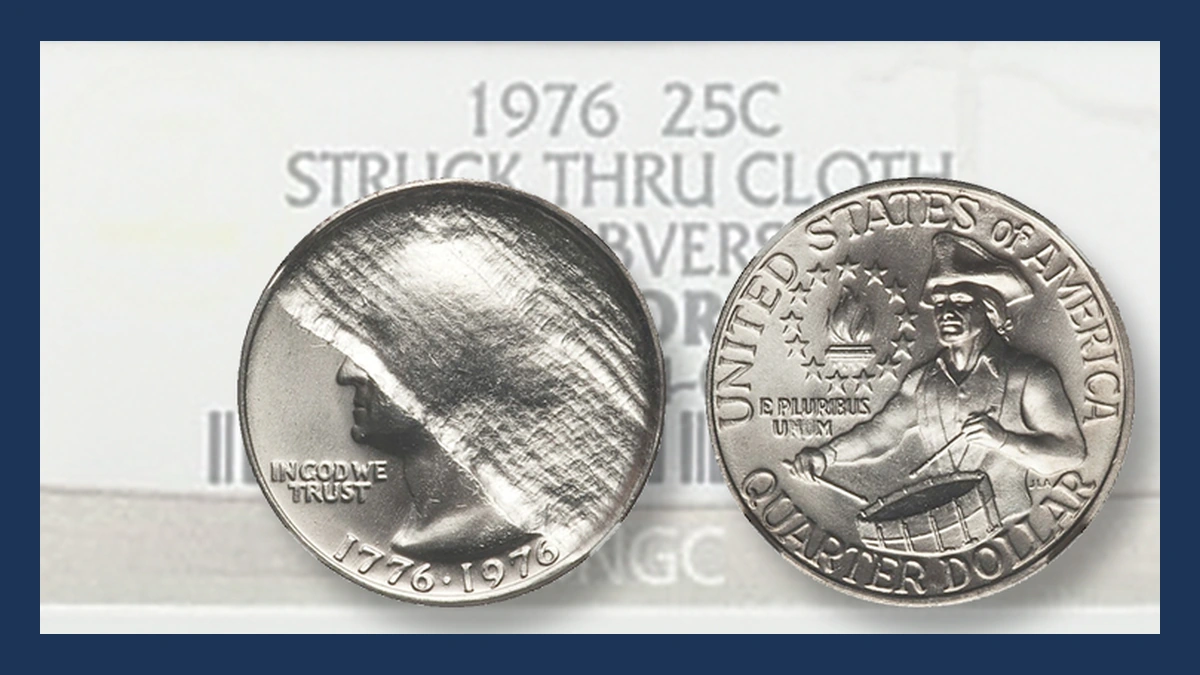
Tiny crossing lines can show that fabric lay between the blank and the front stamping tool. Pressure forced its weave into the metal while keeping some normal design from forming.
A Philadelphia Bicentennial quarter graded NGC MS66 was auctioned as struck through cloth on the obverse, meaning the Washington side. The cloth’s exact position must be read from that coin’s image.
This is more specific than simply calling a coin weakly struck. A cloth impression should preserve a related woven texture, whereas random scratches, corrosion, or a rubbed patch do not create the same organized pattern.
Estimated Value
The NGC MS66 cloth-struck example sold for $881.25 in January 2017. For identifiable Bicentennial cloth impressions, estimate $250–$1,500.
An obvious weave with recognizable nearby quarter design can make the error especially easy to display. The upper part favors a strong, original impression and attractive surfaces.
Later scratches through the fabric texture can reduce interest even when the grading label names the correct error.
How to Identify
Try to follow several threads through the impressed front area with a magnifier. An organized crossing pattern is more useful than a single line that could simply be a scratch.
See where the weave meets the normal Washington design and turn the light across that boundary. A cloth blockage interrupts the strike, while later rubbing can drag marks across design that had already formed.
Keep the dual date and portrait in a wider photograph beside the enlarged texture so the coin remains identifiable. If the supposed threads change direction randomly or cut through finished details, reconsider the cause rather than relying on a cloth label.
10. 1976 Washington Quarter Cracks and Large Rim Breaks
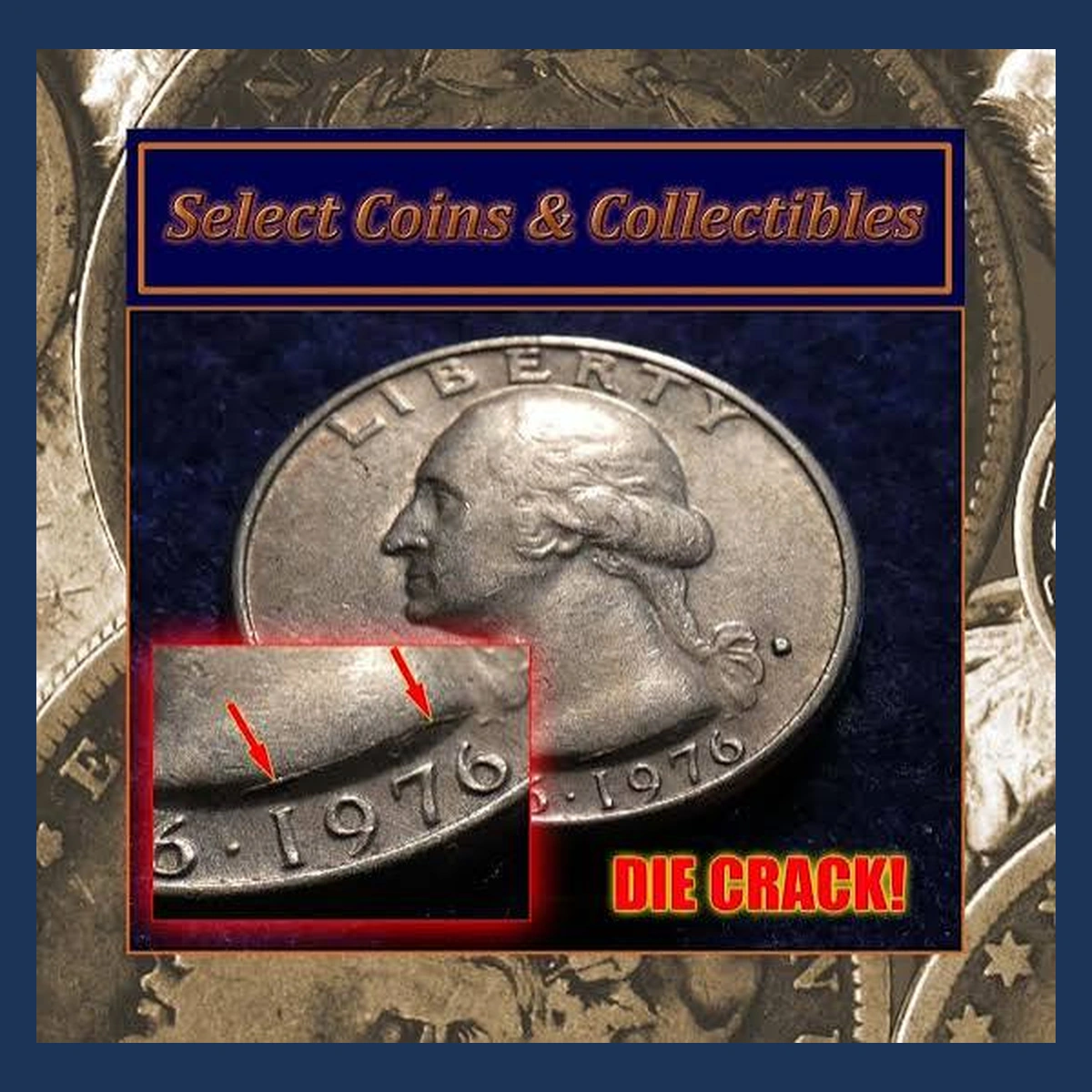
A fine raised line and a broad rim-connected lump can both come from a damaged stamping tool. The line records a crack, while a larger missing piece can leave a mound called a cud.
Year lists report these features on Bicentennial quarters, and an auction listing identifies a major Denver die break. Exact positions should be taken from each actual example.
The drummer design matters when choosing a comparison. A Washington quarter with an eagle reverse can show a similar kind of break, but it cannot establish the location or identity of a Bicentennial example.
Estimated Value
Allow about $5–$50 for a small recognizable crack and $100–$2,500 for a substantial identified rim break. The full estimated range is $5–$2,500.
The size of the missing tool area can greatly change the appearance and collector interest. A large mound that replaces clear design generally stands out more than a hairline crack, but damage or a poorly established date can lower the value of either type.
How to Identify
Is the unusual mark a line or a missing area of normal design filled by raised metal? Answer that first, since the two shapes need different comparisons.
Use a magnifier and move the light across a thin line. A crack produces raised metal, while a scratch cuts into the coin and may leave a displaced ridge beside it.
For a cud, examine the mound’s connection with the rim and the design that should occupy that space. Crushed letters beside an impact can instead point to metal pushed inward after minting.
Keep the 1776–1976 date and drummer reverse visible in your comparison photographs. Match the raised line or rim-connected mound on the actual Bicentennial quarter rather than an eagle-back example.
11. 1976 Washington Quarter Unstruck Silver Blank
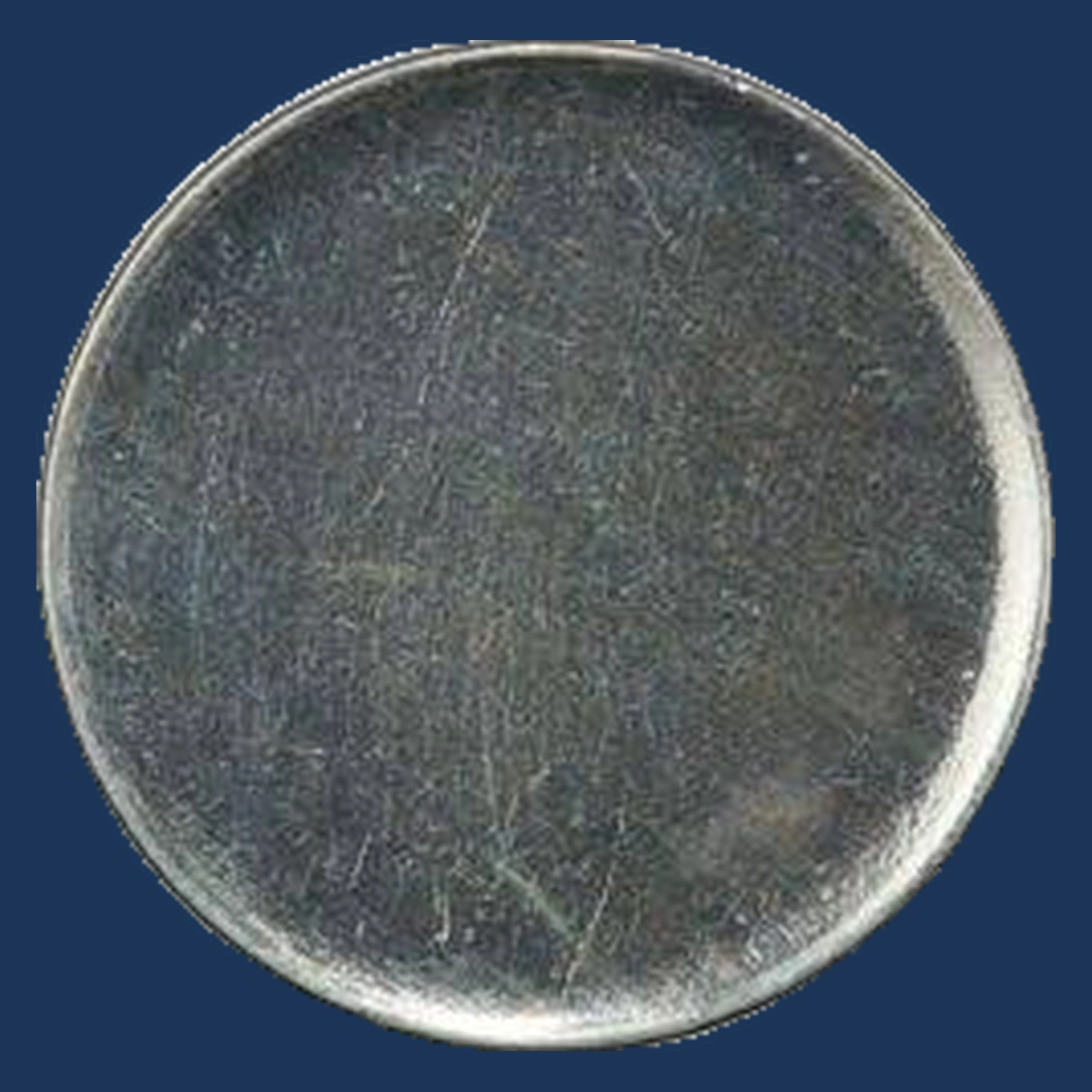
A blank with no portrait, drummer, or date can belong to the production stage before the design was struck. One silver blank has been attributed to the Bicentennial quarter issue by its professional label.
The auction describes it as a Type Two blank. Here, Type Two means the rim had already been raised before striking, not a second drummer reverse design.
The year appears in parentheses because the blank itself has no date. Its silver composition and earlier identification are therefore important; a plain metal disc cannot establish a Bicentennial origin merely by looking quarter-sized.
Estimated Value
The attributed silver blank, graded PCGS PR63, sold for $1,920 in July 2022. Estimate $800–$2,500 for a comparable authenticated Bicentennial silver blank with preserved surfaces and reliable identification.
That price does not apply to every undated disc. The value rests partly on establishing the correct metal and issue, so a loose blank without that support should not inherit the auctioned piece’s identity or premium from diameter alone.
How to Identify
No date on the metal can answer which issue this blank belongs to, so begin with its documented professional identification. Confirm that it names the silver Bicentennial quarter rather than a half dollar or dollar with different dimensions.
Inspect the plain faces and prepared raised rim through a magnifier, leaving a certified blank inside its holder. A finished coin ground smooth can show abrasive lines and remnants of its removed design rather than original blank surfaces.
Only for a loose blank, use a scale and calipers to compare the silver quarter standards of 5.75 g and 24.3 mm. Those measurements support the metal and size identification, but the Bicentennial date still depends on reliable documentation.
12. 1976 Washington Quarter Repeated Strikes and Rotated Impressions
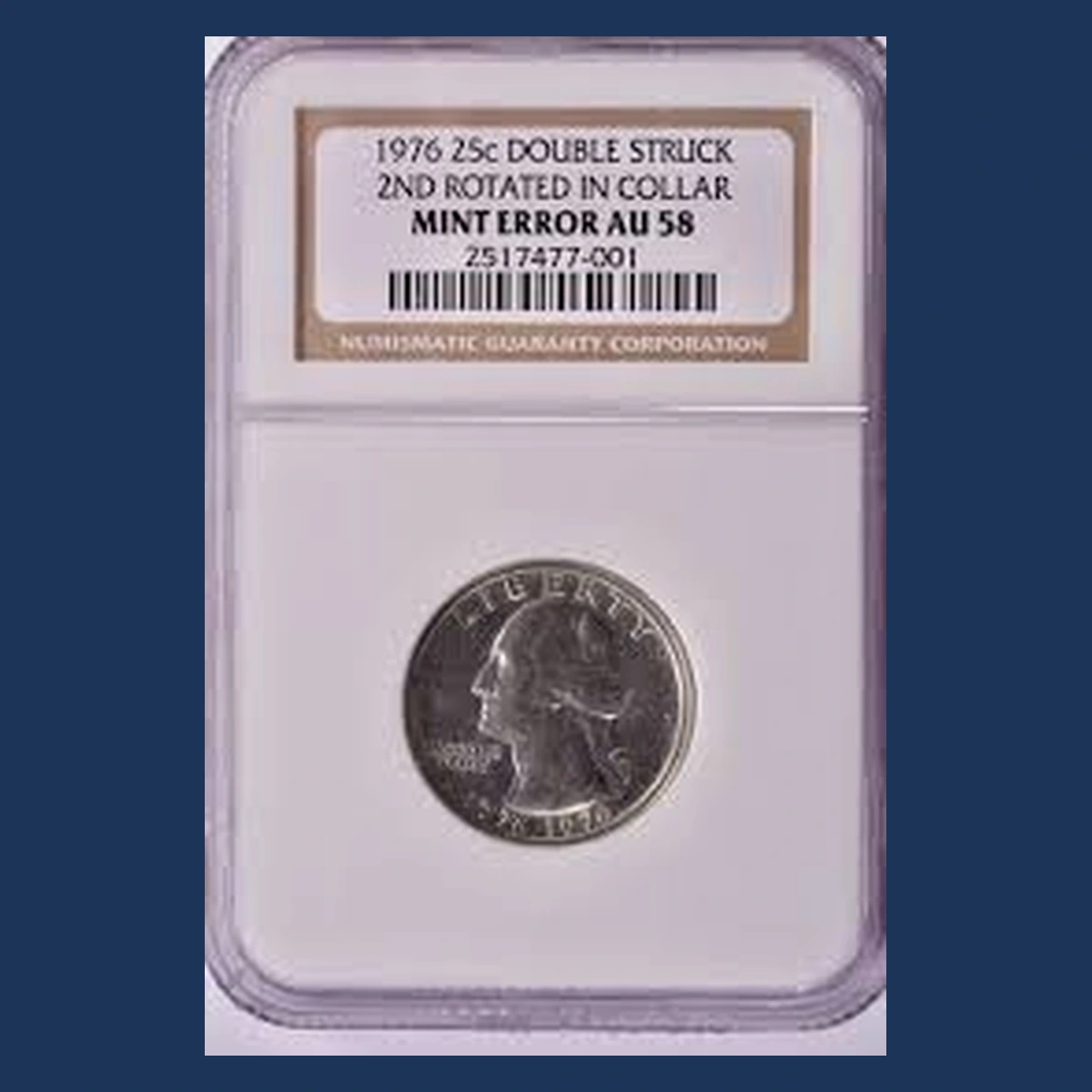
Designs crossing in different positions show that the coin moved between repeated blows. A silver San Francisco Proof has its second impression turned about 135 degrees counterclockwise within the collar.
That coin also has roughly 180-degree front-to-back tool alignment. This is a different angle describing how the two faces relate, not how far the second strike moved.
Separate Philadelphia examples include a broadstruck multiple strike and a second strike 95% off-center with one face blocked. A counting-wheel mark on the first and scratches on the second are later damage, not extra minting errors.
Estimated Value
The silver PCGS PR64 double strike brought $1,920 in July 2021. A broadstruck multiple strike with a wheel mark sold for $439.20 in June 2026, while the scratched 95% second-strike coin brought $99 in March 2023.
Estimate $90–$3,000 across these combinations. Their prices reflect different materials, appearances, and condition problems, so the three figures should not be treated as grades on one simple price ladder.
How to Identify
On the silver Proof, separate the two Washington or drummer impressions before measuring their rotation. The approximately 135-degree counterclockwise movement compares successive impressions on one face.
Test the front-to-back alignment separately by flipping the coin top to bottom. Its roughly 180-degree difference describes the relationship between the faces instead.
For the broadstruck multiple strike, use a magnifier to follow repeating design groups into the expanded border. Do not count the wheel mark as another impression.
On the 95% example, locate the small surviving second strike without assuming which face was blocked. A scratch is cut into the surface; related struck design fragments are what reveal the extra blow.
13. 1976 Washington Quarter Doubled Design Varieties
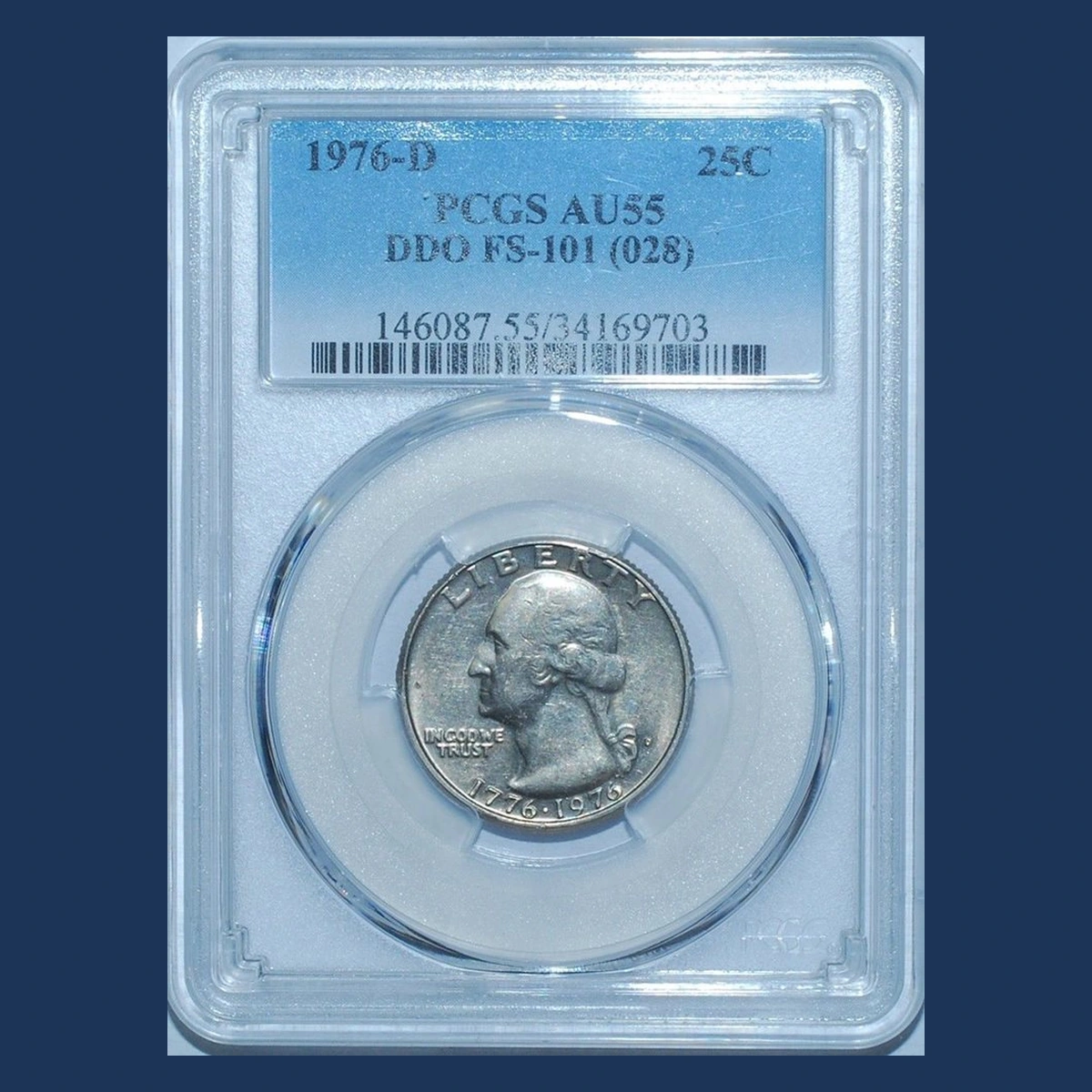
Extra outlines can be built into a stamping tool before coins are made. Each coin then repeats that doubled design rather than receiving a misplaced second strike.
Denver FS-101 strongly doubles LIBERTY; FS-102 has closer separation. Two Denver reverse varieties have inward doubling in lettering, with the second also affecting the drum and outer fingers.
San Francisco’s clad Proof DDO-001 doubles the date. Its separate 40% silver DDO-002 affects the motto, date, and LIBERTY, but the catalog does not specify whether that silver example is Proof or ordinary finish.
Estimated Value
Estimate $50–$3,500 for identifiable Denver front varieties, with the strongest and best-preserved examples attracting the most attention. Subtle reverse or San Francisco doubling can be estimated around $20–$500, for an overall $20–$3,500.
The precise pattern and condition are central to pricing. A barely visible thick letter is not equivalent to clear separated outlines, and a number copied from a different doubled-tool variety can give a misleading value.
How to Identify
For Denver front varieties, compare LIBERTY under a 10× magnifier. Wexler’s photographs distinguish the wider FS-101 pattern from the closer FS-102 pattern.
FS-102 also has a raised diagonal tool line below RU in TRUST. Use that extra feature to support the lettering match rather than identifying the coin from the line alone.
On the reverse, inspect DOLLAR and the designer’s initials; the second listed variety also affects the lower drum and outer fingers. A “six-finger” nickname does not replace matching those details.
Match San Francisco patterns to the correct metal and finish rather than mixing their photographs. Consistent extra outlines or divided corners support doubling, while a low shelf beside a normal letter suggests movement during striking.
14. 1976 Washington Quarter Two Pieces Struck Together
The drummer can appear on a small separate piece while most of that design is missing from the quarter beneath it. Two blanks were struck together, with the smaller one blocking much of the quarter’s reverse.
A documented pair has a fully struck Washington side and a smaller piece that was nearly centered against the reverse. Much of the drummer-side design landed on that smaller piece instead.
The auction suggested that the small blank might be intended for a dime, but did not establish that denomination. Both pieces belong together when explaining how this error formed.
Estimated Value
The NGC pair sold for $2,880 total in March 2023. Estimate $1,500–$5,000 for a comparable identified pair with both related pieces present.
The auction amount buys the pair, not each piece separately. Clear matching shapes and shared design relationships help explain the premium.
Losing one piece removes part of that evidence and makes the remaining coin harder to compare with the complete auctioned pair.
How to Identify
Study the two pieces side by side without forcing them together. Compare the smaller piece’s outline with the blocked area on the quarter’s reverse.
The quarter’s Washington side should remain fully struck in the documented pair. On the smaller piece, locate the drummer-side design that could not reach the quarter below.
Use magnified photographs to follow how the design and blocked boundary relate. A separate damaged disc lying beside a quarter does not establish a matching pair.
The smaller blank’s exact denomination remains a separate identification question. The strong visible evidence is the shared outline and complementary distribution of the reverse design across the two pieces.
15. 1976 Washington Quarter Struck on Cent, Nickel, or Dime Blanks
A quarter design can crowd a smaller blank intended for another denomination. Known examples use copper cent blanks, solid copper-nickel five-cent blanks, and layered dime blanks.
Philadelphia and Denver nickel-blank coins are documented, alongside dime-blank examples from both mints. San Francisco Proof dime-blank pieces include a reported double-struck example.
The Denver cent-blank coin weighs 3.03 g and has peeling metal in Washington’s scalp. A different Philadelphia dime-blank coin has a narrow strike-through in the hair; those two marks have different causes and must not be combined as one specimen.
Estimated Value
A Philadelphia nickel-blank MS62 coin brought $1,020 in August 2024; a dime-blank MS64 brought $2,520 that month. The Denver cent-blank MS65 Brown coin sold for $3,840 in January 2018.
A San Francisco PR68 Deep Cameo dime-blank example was offered at $6,000, an asking price. Estimate $800–$8,000 across these different blanks and finishes, with the higher portion reserved for exceptional identified examples rather than an ordinary small-looking quarter.
How to Identify
Identify the quarter design before deciding what blank received it. On the Philadelphia dime example, much of Washington and the drummer remains, but almost all of QUARTER DOLLAR missed the metal.
Weigh and measure loose coins with a scale and calipers. Normal blank standards are cent 3.11 g/19.05 mm, nickel 5 g/21.21 mm, and clad dime 2.268 g/17.91 mm; striking can change width.
The 3.03 g Denver cent, 4.9 g Denver nickel, and 2.2 g Denver dime are separate recorded specimens. Those actual weights cannot be transferred to the other examples.
Inspect the edge for copper cent metal, uniform nickel alloy, or layered dime metal. For the reported S double strike, also require displaced repeated design rather than treating ordinary Proof production as an error.
16. 1976 Washington Quarter Struck Over an Already-Made Dime
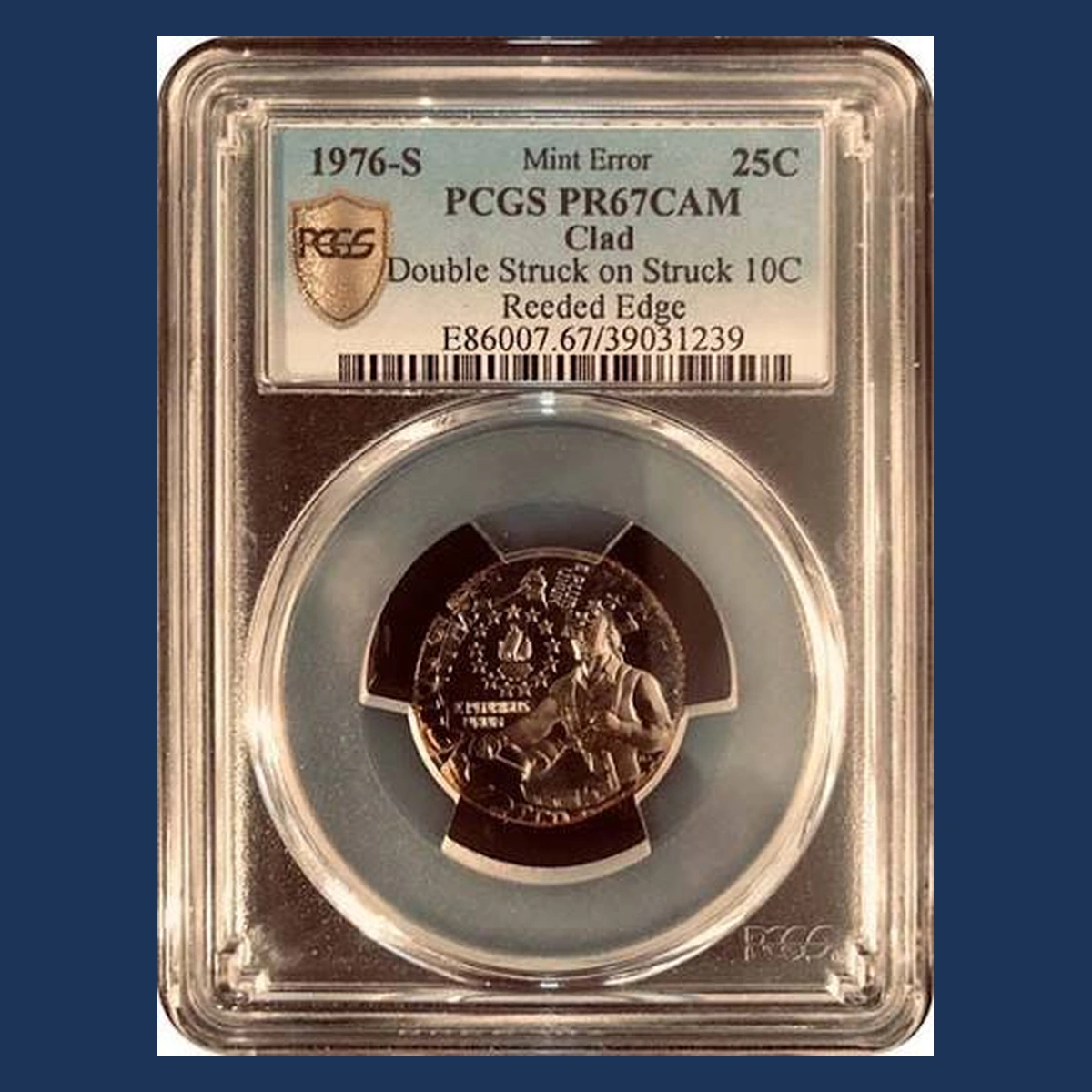
Traces of Roosevelt beneath Washington reveal something more than an undersized blank. The quarter was struck over a dime that already carried its own finished design.
A San Francisco Proof over a 1967 dime has a nearly egg-shaped outline. The earlier date appears faintly in Washington’s hair, while the quarter’s date and S remain clear.
A separate Philadelphia quarter was struck over a 1976 dime, with its new design turned about 90 degrees clockwise relative to the older design. These are two different coins showing designs from two denominations on the same piece.
Estimated Value
The NGC PR67 Proof over a 1967 dime sold for $15,000 in January 2021. Estimate $6,000–$20,000 for identified Bicentennial quarter-over-dime errors of comparable interest.
The surviving earlier design is central to that interest. Readable dates and a recognizable Roosevelt outline can explain the unusual combination, while surface problems or poorly visible earlier details can make another example less appealing than the auctioned Proof.
How to Identify
Look inside Washington’s hair for the faint 1967 digits on the San Francisco example. Its earlier Roosevelt outline is upside down relative to Washington, and some dime lettering remains readable.
A magnifier helps connect those fragments into an earlier dime design. Do not confuse ordinary marks with a few letters chosen to fit a desired date.
On the separate Philadelphia example, compare the two designs using the stated quarter-turn relationship. Its earlier dime is dated 1976, not 1967.
The San Francisco coin also met the collar near five o’clock, but that contact point alone cannot prove overstriking. Surviving dime design beneath the quarter impression distinguishes an already-struck dime from an unused dime blank.
Conclusion
Estimated values stretch from $5–$20,000, starting with small raised cracks and reaching dramatic quarter-over-dime errors. The dual date alone does not make an ordinary Bicentennial quarter an error coin.
Look for the specific missing metal, repeated design, or altered edge described here. Keep silver and clad versions separate, and compare each coin with an example showing the same mechanism and a similar state of preservation.