1919 Quarter Error List with Pictures

A widened border, a half-blank disk, and a coin broken into two pieces tell different minting stories. Among 1919 quarter errors, an exceptionally preserved broadstrike brought $35,250 in June 2014.
The examples below span estimated values of $30 to $50,000. Some involve small marks left by damaged tools; others changed the coin’s entire shape.
Use the visible differences to find the right comparison, especially when a seller calls any split in the silver a lamination.
1. 1919 Standing Liberty Quarter Reported Clashed E
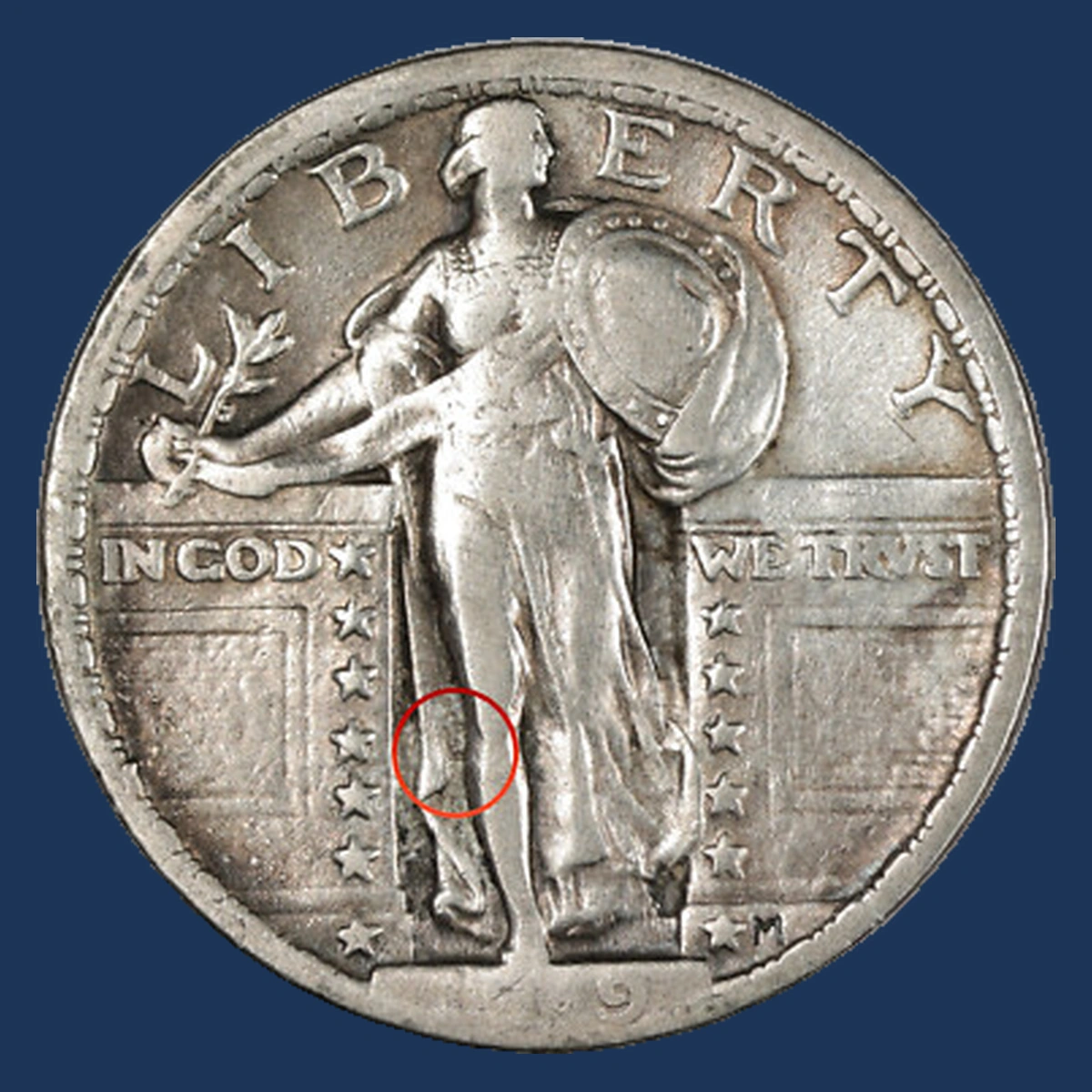
An E-like outline is reported beside Liberty’s leg or knee on Philadelphia quarters. The extra shape appears in an area where that letter does not belong in the normal front design.
The proposed cause is a die clash. Dies are the steel tools that stamp coins, and they can mark each other when they meet without a blank between them.
Later coins may show pieces of the transferred design. Identifying a true clash requires matching extra shapes with the opposing design.
A recognizable relationship between the two designs matters more than finding an isolated E-shaped scratch.
Estimated Value
Estimate $75 to $500 for ordinary worn to modestly unworn Philadelphia examples with a convincing clash pattern. A faint trace is less appealing than a clear shape visible without difficult lighting.
The underlying quarter’s condition still matters. Sharp original detail and an undisturbed surface make the extra lines easier to compare.
This is a whole-coin estimate. Do not add the maximum clash value again to the normal coin’s price, or pay the same premium for unrelated scratches.
How to Identify
Find the reported area beside Liberty’s leg and knee in a complete front photograph. Keep surrounding folds and open space visible so the location is clear.
Compare the suspicious lines with the normal front design before consulting an opposite-face image. A regular fold can look like a letter when seen in a tiny crop.
For a clash claim, seek related traces that fit the same back-to-front alignment. Do not choose an E from the inscription merely because its name sounds plausible.
Use angled light to inspect whether the mark belongs to the original surface or cuts into it as a scratch. A specialist comparison should account for the whole transferred shape, not just one short straight line.
2. 1919 Standing Liberty Quarter Surface Lamination
A lamination affects a layer near the surface rather than necessarily splitting the entire coin apart. A thin silver flap may lift, crack, or fall away.
Year reports describe such defects on Philadelphia, Denver, and San Francisco quarters from 1919, especially on the back. The exact affected patch varies by coin.
A weak area within the original alloy allows the layer to separate. Struck detail may remain on an attached piece, helping show when it was present.
This differs from the documented 1919 coin broken into two thick matching pieces. A small peel should not inherit that major error’s description.
Estimated Value
For ordinary circulated examples with genuine surface peeling, estimate $30 to $750. Larger visible flakes and better-preserved coins generally receive stronger interest than tiny rough patches.
A 1919 example graded ANACS AU50, with light wear, was offered at $225 in a dealer listing. That is an asking price, not a confirmed sale.
Denver and San Francisco coins can have substantial underlying value. Especially high grades or sharply formed head detail need comparisons beyond this ordinary-grade estimate.
How to Identify
Inspect the depth of the separation before comparing it with the expensive broken pair described elsewhere in this guide. A shallow flap on one face does not divide the coin into two pieces that each carry both designs.
Use side lighting to see where the thin layer leaves the underlying silver, without lifting or pressing any loose edge. Follow the remaining struck detail across the flap and photograph the exposed area to distinguish peeling from corrosion pits or sharp scraping.
An attached flap need not change the coin’s weight, while metal that has fallen away can make it lighter. Record such measurements only for a loose coin and keep the fragile area untouched during any expert examination.
3. 1919 Standing Liberty Quarter Reported Clipped Blank
A collector reported owning a clipped 1919-S Standing Liberty quarter. The report identifies the year and mint, but does not define the missing section’s exact shape or direction.
Clips begin when a plain disk is cut incompletely from the metal strip. The gap is already present when the design is struck.
The remaining disk can carry both faces normally apart from changes beside the missing metal. Rim detail may weaken near the gap because the metal has less support.
A piece removed later can imitate the outline. The edge and surrounding design must explain the timing of the loss.
Estimated Value
Estimate $100 to $1,500 for a genuine clipped 1919-S in ordinary circulated grades. The mint and date have their own collector demand, so the entire coin deserves attention.
A readable date, clear S, and visible original clip support the stronger end. A tiny gap on a badly worn or damaged coin is a weaker comparison.
Unworn examples and coins with unusually sharp head detail require separate grading comparisons. The estimate does not assume that the collector-reported piece had either quality.
How to Identify
Confirm the S on the front, left of the lower figure and above the date level. A seller’s category heading is not a substitute for seeing the mint letter on the actual coin.
Request edge views through the gap and photographs of both faces. Cut or filed metal may look convincing from above while revealing tool marks from the side.
Follow the rim into each end of the missing area. Original clips can affect how nearby detail formed, while a later cut may slice through fully struck features.
If the coin is loose, record its weight alongside photographs of the entire outline. Compare the missing area and surrounding strike together instead of using a light weight alone to authenticate a clip.
4. 1919 Standing Liberty Quarter Die Cracks and Cuds
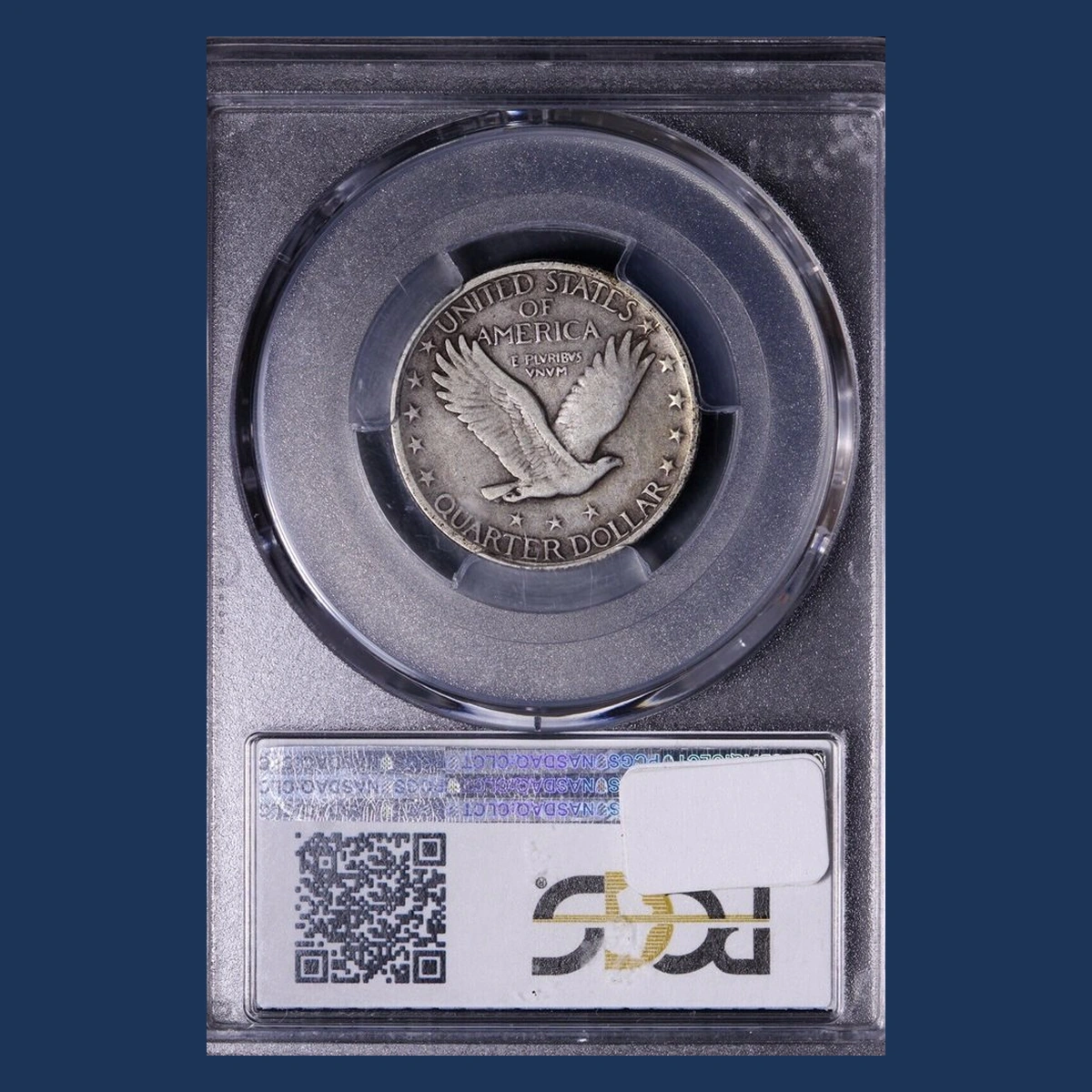
A fine raised line can appear when silver enters a crack in a die during striking. A larger piece of missing steel can produce a broader raised patch.
When that patch connects to the rim, collectors call it a cud. Both features belong to damage in the striking tool rather than a split through the coin itself.
Year reports include cracks and cuds on Philadelphia 1919 quarters. They do not establish one particular line or lump shared by all examples.
Read the shape and position from each coin. An added deposit can initially resemble extra struck metal.
Estimated Value
An estimated $30 to $2,000 covers small cracks through substantial genuine rim-connected breaks on ordinary-grade Philadelphia coins. A thin line usually adds little, while a large raised area replacing design can draw stronger demand.
For the lower end, a 1954 Washington quarter with a head crack sold for $52 in July 2022. That different design is a modest-crack comparison only.
The upper estimate requires a pronounced original break, not a scratch or a small surface deposit.
How to Identify
Trace the mark toward the rim before deciding whether it is a cud. A small isolated raised spot is not a rim-connected break, even if both came from damaged dies.
Use side lighting to inspect whether a narrow line rises above the design or cuts into it. A scratch can have raised lips, so examine the channel between them rather than judging only the bright edges.
For a larger lump, check how adjacent letters or folds stop at its boundary. Added solder or glue may sit over finished detail instead of replacing an area that could not form normally.
Keep the surface untouched and photograph the whole face. The connection between the raised shape, original design, and rim is more useful than a close-up of the lump alone.
5. 1919 Standing Liberty Quarter Matching Pieces from a Broken Blank
This quarter broke into two nearly equal pieces along a line running from eleven to five o’clock on the front. Each piece retains both front and back design.
The break therefore passes through the full thickness of the coin. It is not a thin front layer peeled away from a separate back layer.
Stack’s Bowers cataloged the matching pieces as a blank broken after striking. PCGS graded them AU58, meaning only slight wear, and placed each piece in its own holder.
Together they preserve one coin. The original relationship between the two fracture edges is central to understanding the error.
Estimated Value
The two-piece set brought $19,800 in August 2019 at Stack’s Bowers. This is the price of the matched pair, not an amount for each half.
Estimate $15,000 to $30,000 for a comparable authenticated complete pair. Matching surfaces, preserved design, and secure identification of both pieces support that comparison.
A lone fragment or an ordinary coin broken after circulation cannot automatically use the same range. The value depends on the complete documented error and its original fracture.
How to Identify
Keep the two pieces in their holders and arrange clear photographs beside each other to reconstruct the original coin. Each fragment must show part of Liberty on one face and part of the eagle on the other.
Follow the front’s break from about eleven to five o’clock, then check how the back design meets along the same boundary. Matching images should join into one continuous design and outer outline, rather than two unrelated pieces of silver.
Close photographs of the fracture surfaces can help an expert compare their texture and rule out cutting or a later forced break. Preserve both labels and their paired history, since the straight division alone does not authenticate an original blank failure.
6. 1919 Standing Liberty Quarter Fifty Percent Off-Center Strike
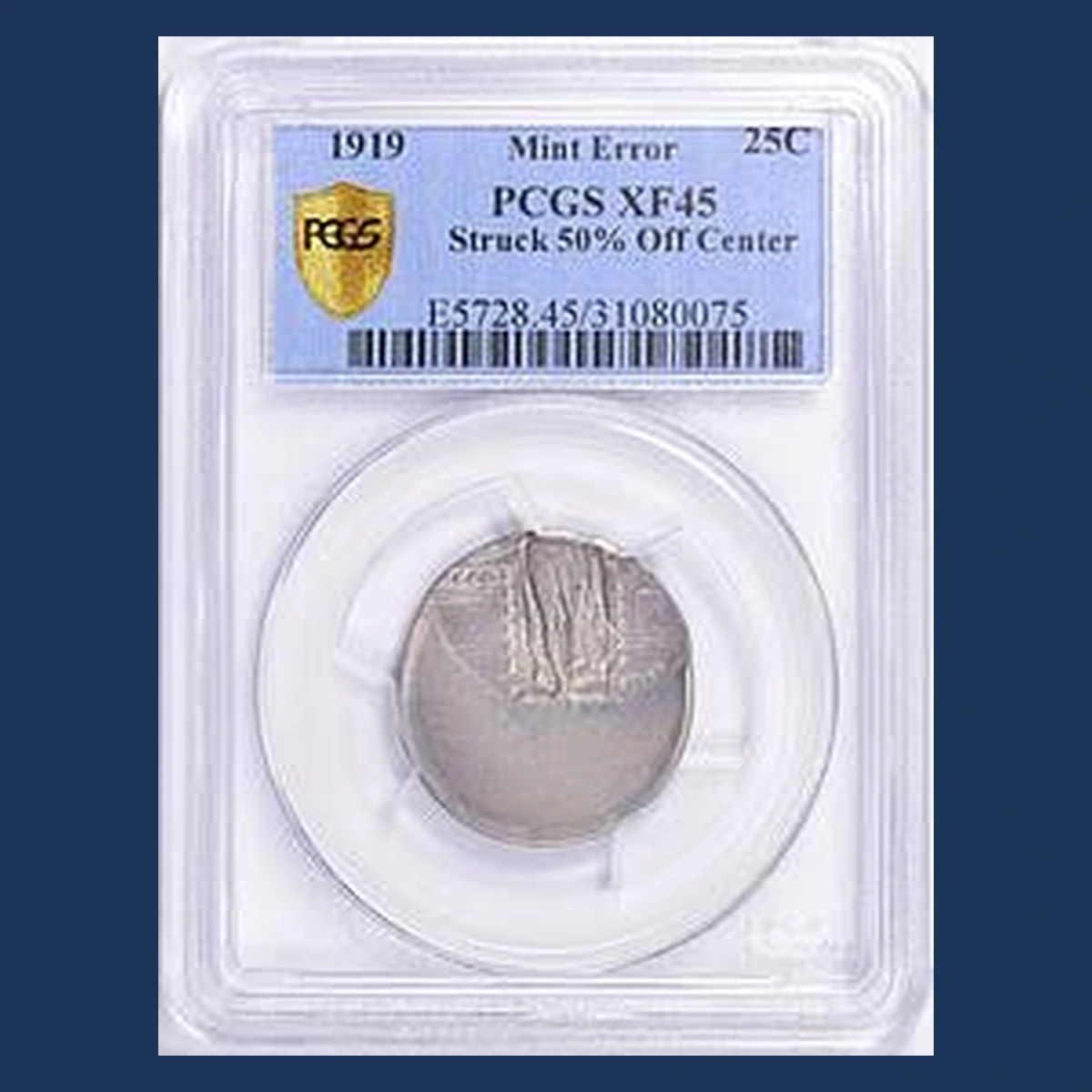
Half the design misses the disk on the documented Philadelphia off-center quarter. The strike is displaced upward toward twelve o’clock, yet the complete date remains visible.
The mint-letter area also survives and contains no D or S. This helps establish Philadelphia without guessing from a missing section.
GreatCollections offered the coin in a PCGS XF45 holder, describing a circulated coin with much detail remaining. Its large blank area comes from misplaced metal during striking, not from removing part of the silver afterward.
The coin retains a recognizable outline of the original disk alongside the incomplete design.
Estimated Value
For a dramatic dated 1919 off-center example like the documented coin, estimate $20,000 to $40,000. GreatCollections sold that piece in May 2023, but the visible page does not disclose the paid amount.
An earlier published $18,500 figure was an ongoing bid, not the final result. It should not be quoted as the sale price.
The complete date and visible mint-letter area strengthen this example’s appeal. Smaller shifts and poorer surfaces require different comparisons.
How to Identify
On the documented coin, all four date digits survive despite the large unstruck area. Read those digits before trying to assign the year from the portrait’s general style.
Locate the mint-letter area at the left of the lower figure. Its visible blank space supports Philadelphia on this example.
If that area falls outside the design on another coin, the absence of a letter proves nothing about its mint.
Follow the struck-to-unstruck boundary on both faces and compare it with the upward shift. The metal beyond that boundary should remain an original blank surface, not a patch where finished letters were ground away.
Keep the complete outline in view when estimating displacement. A broadstrike retains the intended design inside extra metal, whereas this error loses design beyond the disk.
7. 1919 Standing Liberty Quarter Broadstrike
A broadstruck 1919 quarter shows how silver spreads when the surrounding collar fails to contain it. The collar normally limits the width and forms the grooves around the edge.
The documented Philadelphia example has an expanded outline and a plain edge. Its design remains complete, with the upper portions of three date digits stretched by the spreading metal.
NGC graded it MS67 Full Head, meaning exceptional unworn condition with sharply formed head detail. Full Head is a measure of strike quality, not another minting error.
This combination of a visible mistake and outstanding preservation makes it a particularly important comparison.
Estimated Value
The NGC MS67 Full Head broadstrike brought $35,250 in June 2014 at Stack’s Bowers. Its exceptional preservation contributes substantially to that result.
Estimate $5,000 to $50,000 for genuine 1919 broadstrikes, from less impressive examples to coins approaching the documented piece. The widened border alone does not account for the entire high price.
Compare surface quality, remaining detail, and extent of spread. A worn coin or one flattened after striking does not inherit an MS67 Full Head valuation.
How to Identify
Read the full date and outside design to check that spreading did not remove any intended details. The documented coin’s stretched upper date portions remain part of a complete design.
Inspect the edge for the lack of normal grooves and follow the expanded border into the struck surface. That relationship should explain how the silver flowed while the design was being made.
For a loose candidate, measure its width and weight against the normal 24.3 millimeters and 6.25 grams. Extra width without added metal supports spreading, although measurements alone do not rule out later flattening.
Examine the portrait and lettering for crushed finished detail, then compare the head separately for strike quality. Neither a smooth edge nor a sharp head, by itself, proves a broadstrike.
Conclusion
Estimated values of $30 to $50,000 cover everything from a small raised line to a beautifully preserved broadstrike. A surface peel, a missing portion of the blank, and two matching broken pieces require different explanations.
Preserve the coin before testing an idea. Full photographs of both faces and the edge let you compare the original shape, surviving date, and actual mint letter without touching fragile metal or disturbing a certified pair.