1971 Quarter Error List with Pictures

The eagle-side lettering was the attraction when a Philadelphia doubled-reverse quarter sold for $8,812.50 in February 2017. Its extra outlines belonged to a specific variety, FS-801.
1971 quarter errors also include wrong blanks, missing layers, and a remarkable 1971 design struck over a 1970 quarter. Estimated values across the types below span $5–$12,000.
Start with the features you can actually see. The following examples explain where to look and which prices offer useful comparisons.
1. 1971 Washington Quarter Broadstrike
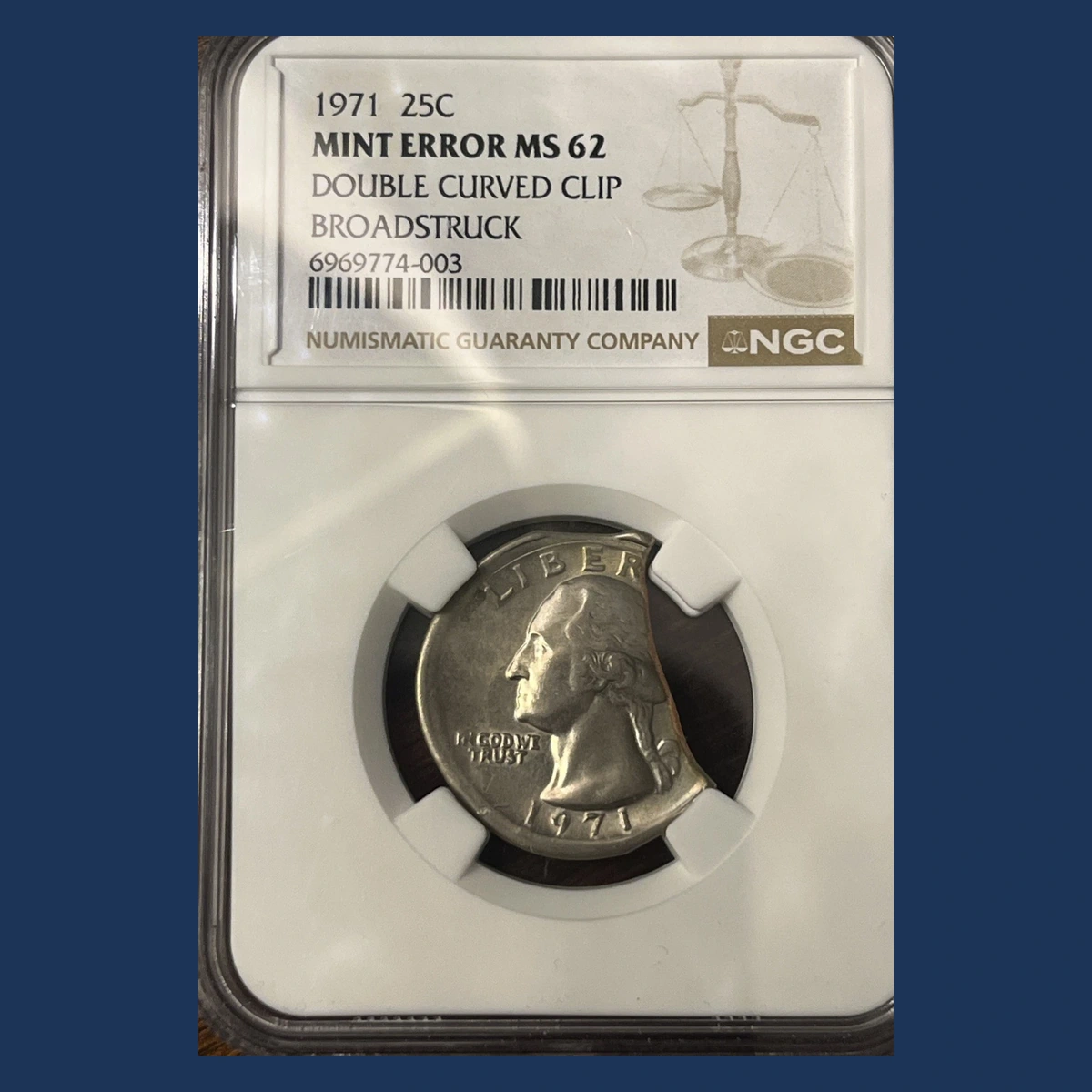
A quarter may have a complete picture but a wider outline than normal. Without the collar ring restraining the blank during striking, the metal spreads beyond the usual edge.
This type of broadstrike is reported for Philadelphia and Denver quarters of 1971. The specific outline and degree of expansion need to be checked on the individual coin.
The complete design is important. An off-center strike loses part of its design beyond the blank, while a coin flattened after minting can spread wider without ever having experienced a collar problem at the Mint.
Estimated Value
Estimate $20–$200 for an identifiable 1971 broadstrike. More pronounced original expansion can make a coin easier to appreciate, especially when both designs remain sharp.
For a dated comparison, a 1984-P broadstrike graded PCGS MS65 sold for $169 in December 2025. That later coin supports the general price scale, but its condition and expanded outline should not be treated as measurements or features of a particular 1971 example.
How to Identify
Place a loose coin beside a normal quarter and compare the outlines without rubbing their faces together. Calipers can then check whether it extends beyond the usual 24.3 mm width.
Trace all the outer letters on each face. A complete Washington-and-eagle design is needed for a broadstrike, even if the wider border is uneven.
Next, look through a magnifier for crushed raised details or impact marks. Flattening after minting can increase diameter while damaging the design that was already there.
A smooth edge also needs checking for filing. The useful combination is original expansion surrounding the entire struck picture, without evidence that someone widened or reshaped the finished coin afterward.
2. 1971 Washington Quarter Clipped Blank
A gap in the edge can result from the blank being cut from metal that was already incomplete. The quarter design is then struck onto a disc that never had a full circular outline.
Clipped blanks appear in year guides for 1971, but the reported type does not fix one mint, shape, or clock position. Those details must come from the particular coin.
A fresh cut can imitate the silhouette of a clip. The ends of the gap and the surrounding struck design therefore matter more than a missing piece viewed only from a distance.
Estimated Value
An estimated $20–$250 fits genuine 1971 clips ranging from small gaps to more obvious missing sections. The surviving edge must support an original blank defect.
A verified comparison from another year is a 1980-P corner clip graded NGC MS65, sold for $204 in June 2023. Its corner shape is specific to that coin and should not be used to assign a shape to the general 1971 report.
How to Identify
Inspect the two ends of the gap with a magnifier and low-angle light. Look at how the struck rim approaches the missing section, including any weakly formed area beside it.
Tool cuts can leave sharp grooves, filed surfaces, or letters bent over the new edge. A naturally incomplete blank instead receives its design after the gap already exists, and may also show a weak rim opposite it.
Examine the actual 1971 date and mint area in the same view as the gap before choosing a comparison photograph. A similar clip from another date can explain the mechanism, but only original gap surfaces and surrounding struck detail establish the feature on your coin.
3. 1971 Washington Quarter Raised Die Crack or Rim Break
Raised lines can trace cracks in a die, the tool that stamps the design. A larger piece breaking away beside the rim can produce a raised mound called a cud.
A Denver rim break is reported for 1971, but its published text and illustration disagree about the year. The illustrated 1972 coin cannot identify the reported 1971 example.
The underlying mechanism is still straightforward: coin metal fills space left by tool damage. That differs from an ordinary scratch or a rim impact, both of which alter metal after the coin has already been struck.
Estimated Value
For a confirmed 1971 example, estimate $5–$40 for a small raised crack and $40–$300 for a clear rim break. The combined range is $5–$300.
The larger mound can draw more attention because it replaces an obvious part of the normal design. A reported name alone does not establish that premium, however; the actual year, raised feature, and condition must be clear on the coin being offered.
How to Identify
Read the final date digit before studying the break. This matters particularly here because the published illustration shows a different year from the 1971 report.
A rim-connected mound should occupy an area where normal design could not form. Check surrounding letters for crushing that might instead reveal a later blow pushing metal inward.
For a fine line, move the light from one side to the other while using a magnifier. A genuine tool crack makes a raised line on the coin.
A scratch can have a raised burr beside its cut. Follow the entire feature to tell the cut from that displaced edge.
The right date and a naturally raised line or rim-connected mound must appear on the same coin.
4. 1971 Washington Quarter Off-Center Strike
Washington and the eagle can partly miss the metal if the blank sits too far to one side in the press. An unstruck crescent remains opposite the portion of the design that runs beyond the edge.
Year reports include ordinary Philadelphia and Denver off-center quarters. They do not establish one particular percentage or direction for all examples.
A separate report combines a 70% off-center strike with a Philippine blank. That belongs with the wrong-blank examples below, since a foreign blank introduces another cause for an unusually small or incomplete-looking coin.
Estimated Value
Estimate $25–$400 for identifiable off-center 1971 quarters on normal blanks. Moderate displacement with a readable year can be attractive without requiring an extreme percentage.
As a later-year comparison, a 1988-P quarter graded ANACS MS63 and struck 30% off-center brought $109 in January 2022. A 1971 coin should still be judged by its own wear, surviving date, and original unstruck surface rather than automatically receiving that later example’s price.
How to Identify
Search for design that is genuinely missing beyond the edge, not just a thick rim on one side. Compare that area on the front with the eagle side.
Both faces should show the consequences of the misplaced blank. If the reverse remains centered while only Washington shifts, one tool may have been misaligned instead.
Examine the blank crescent under a magnifier for grinding lines or remnants of removed design. A normal scale reading near 5.67 g can support intact metal but cannot establish the error by itself.
Read enough of the date to connect the coin with 1971. Original unstruck metal beside corresponding missing design on both faces shows the displacement most clearly.
5. 1971 Washington Quarter Missing Clad Layer
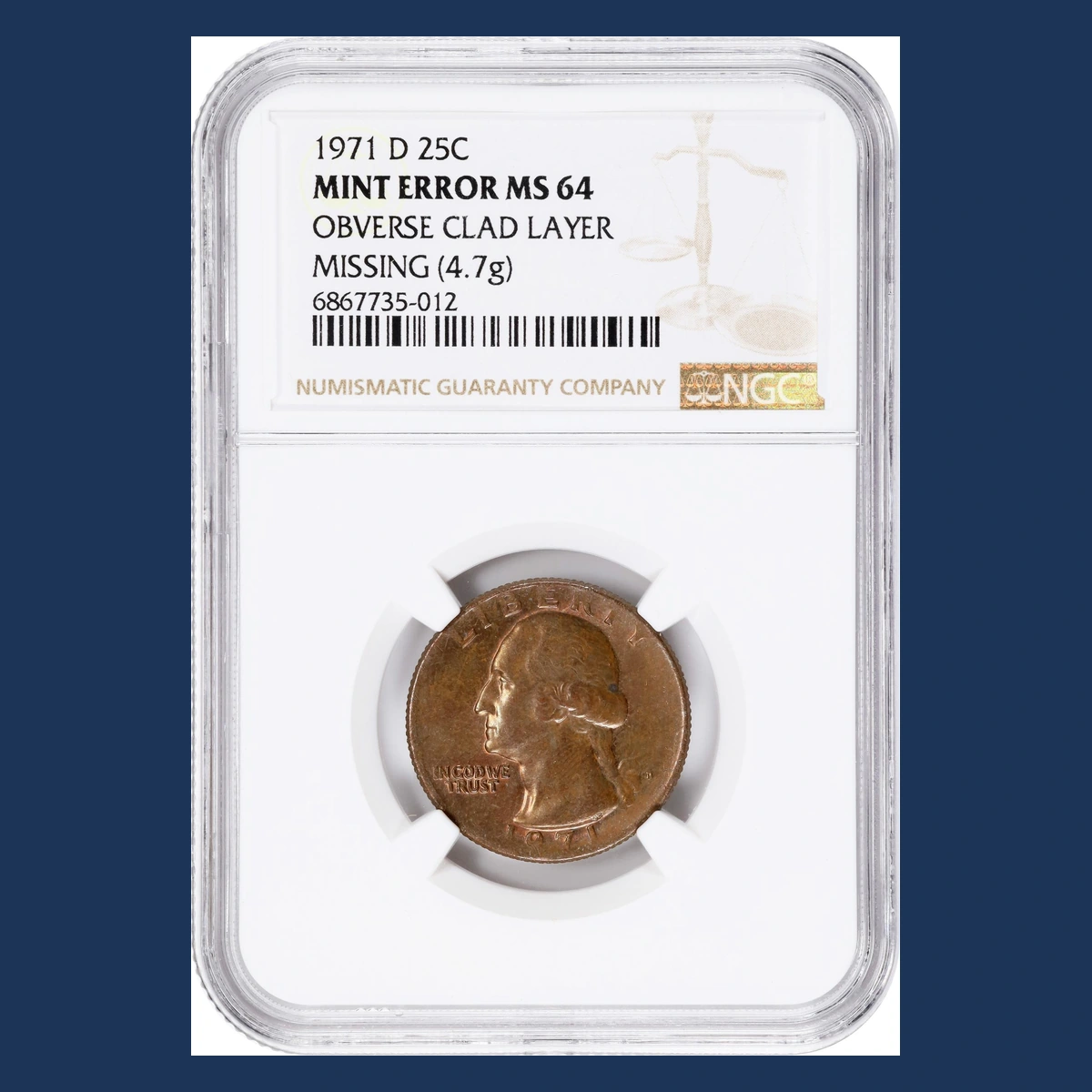
Copper exposed beneath a silvery outer layer can change a quarter’s color and weight. Normal 1971 quarters contain a copper center between copper-nickel outer layers.
The year’s missing-layer report does not specify which face is affected or provide an actual measured weight. A photograph must therefore show the real layer loss rather than relying on a generic brown-quarter illustration.
Staining and chemical damage can also make the surface brown or rough. Normal San Francisco Proofs, specially made collector coins, are clad too; they are not a separate silver version that explains a missing copper-nickel layer.
Estimated Value
Use an estimated $50–$500 for a correctly identified 1971 missing-layer coin, depending on the amount lost and its condition. A clean, broad exposed face is usually easier to explain than a corroded patch.
For comparison, a 1988-D quarter missing its front layer, graded NGC MS62, sold for $156 in November 2020. Its recorded weight of 4.8 g belongs to that later coin, not to the unspecified 1971 report.
How to Identify
Begin at the edge of the copper-colored area and look through a magnifier for a physical layer boundary. If only the color changes, stain or toning may explain what you see.
Compare the same location from the coin’s edge. The remaining silvery outer layer and copper center should fit the claimed loss.
For a loose coin, record its actual weight on a digital scale against the normal 5.67 g standard. Do not substitute a weight copied from another missing-layer example.
Check for scratches cutting through finished letters or broad corrosion that has eaten away the surface.
A genuine layer-loss claim needs the metal structure and reduced mass to agree; copper color alone cannot establish it.
6. 1971 Washington Quarter Wrong United States or Philippine Blank
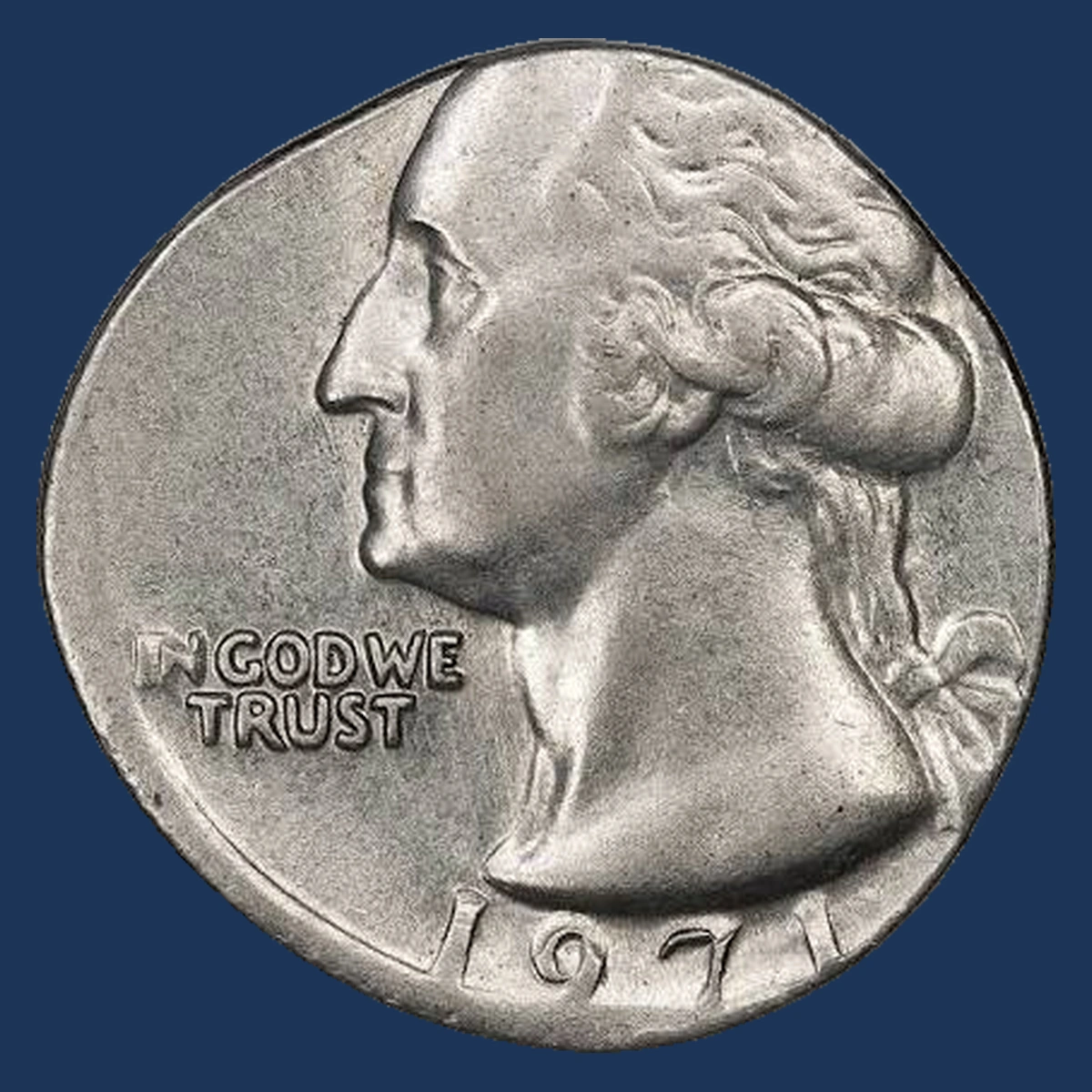
A smaller blank can leave outer quarter lettering beyond the metal. Denver examples use dime and nickel blanks, while a copper cent-blank coin is dated (1971) on its label.
Philippine ten- and twenty-five-sentimo blanks are documented separately. The ten-sentimo example is displaced toward twelve o’clock; the twenty-five-sentimo example weighs 4 g.
Another (1971) dime-blank coin has a front indent from overlapping metal. A separate report describes 70% off-center striking on an unspecified Philippine blank, so neither its mint nor foreign denomination should be borrowed from the identified Denver pieces.
Estimated Value
The Denver dime-blank AU58 coin sold for $345 in May 2005. The (1971) dime-blank indent, graded MS63, brought $504 in December 2025.
The Philippine ten-sentimo error sold with a normal Philippine coin for $325 before buyer’s premium in September 2006. That amount covered both coins.
Estimate $250–$4,000 across identified wrong blanks and combinations. Clear foreign-blank identification or dramatic extra strikes can support the upper portion.
How to Identify
On the Denver dime-blank coin, the partial date and D remain readable but LIBERTY and QUARTER DOLLAR are absent. That combination is more informative than a small diameter alone.
Weigh loose examples and use calipers to record width without touching the faces. United States blank standards are cent 3.11 g/19.05 mm, nickel 5 g/21.21 mm, and clad dime 2.268 g/17.91 mm.
The cent example actually weighs 3.07 g; the Philippine twenty-five-sentimo example is a different 4 g coin. Parentheses around (1971) on a label mean the year is assigned rather than fully readable.
With a magnifier, compare alloy layers, surviving letters, and the original edge. The indent or 70% displacement needs its own visible evidence in addition to the correct blank identity.
7. 1971 Washington Quarter Doubled Reverse FS-801 Varieties
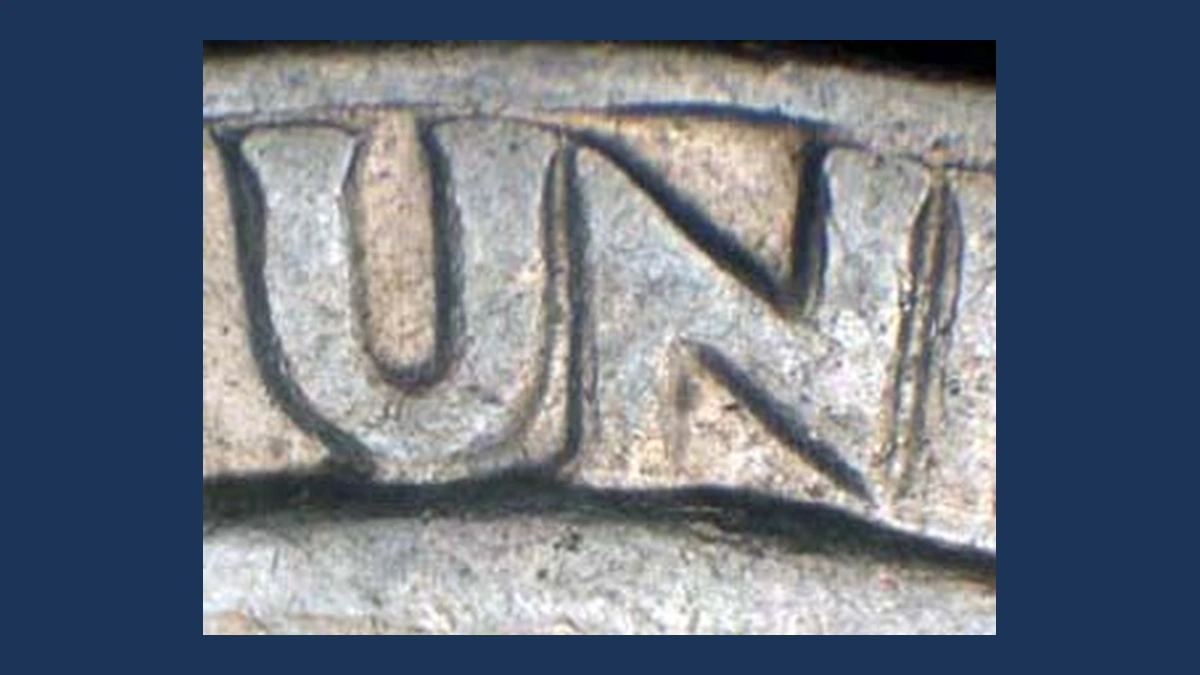
Several eagle-side words can show clear extra outlines, even though the front portrait looks ordinary. A doubled die carries that repeated design in the stamping tool before it makes the coins.
Philadelphia and Denver each have a different reverse variety called FS-801. Both show strong doubling in the country name, E PLURIBUS UNUM, QUARTER DOLLAR, and the wreath.
The mint therefore matters when choosing a matching photograph. Common minor doubling inherited from an earlier design-making tool also occurs on quarters of this era, and it should not automatically receive an FS-801 identification.
Estimated Value
A Philadelphia FS-801 graded PCGS MS65 sold for $8,812.50 in February 2017. MS65 describes an unworn coin with relatively few marks.
For identified Philadelphia and Denver varieties across different grades, use an estimated $100–$10,000. The high end concerns exceptional examples rather than every doubled-looking quarter.
Match the correct mint and lettering pattern before comparing prices. The auctioned Philadelphia coin does not establish the value of an ordinary Denver quarter with slightly thick letters.
How to Identify
Check for a D beside Washington’s hair ribbon before turning to the reverse. No mintmark is normal for a Philadelphia quarter of 1971 and is not a missing-S error.
Under a 10× magnifier, compare several words and the wreath with the matching Philadelphia or Denver variety photographs. A consistent second outline across the design is stronger evidence than one thick letter.
For the Philadelphia pattern, supporting marks include a line northwest from the lips and another rising from a leaf right of the eagle’s tail. These do not replace the doubled-letter match.
Do not transfer those supporting marks to Denver. Match the correct mint’s complete reverse pattern, rather than the common minor inward doubling found on many quarters of this period.
8. 1971 Washington Quarter 1971 Design Struck Over a 1970 Quarter
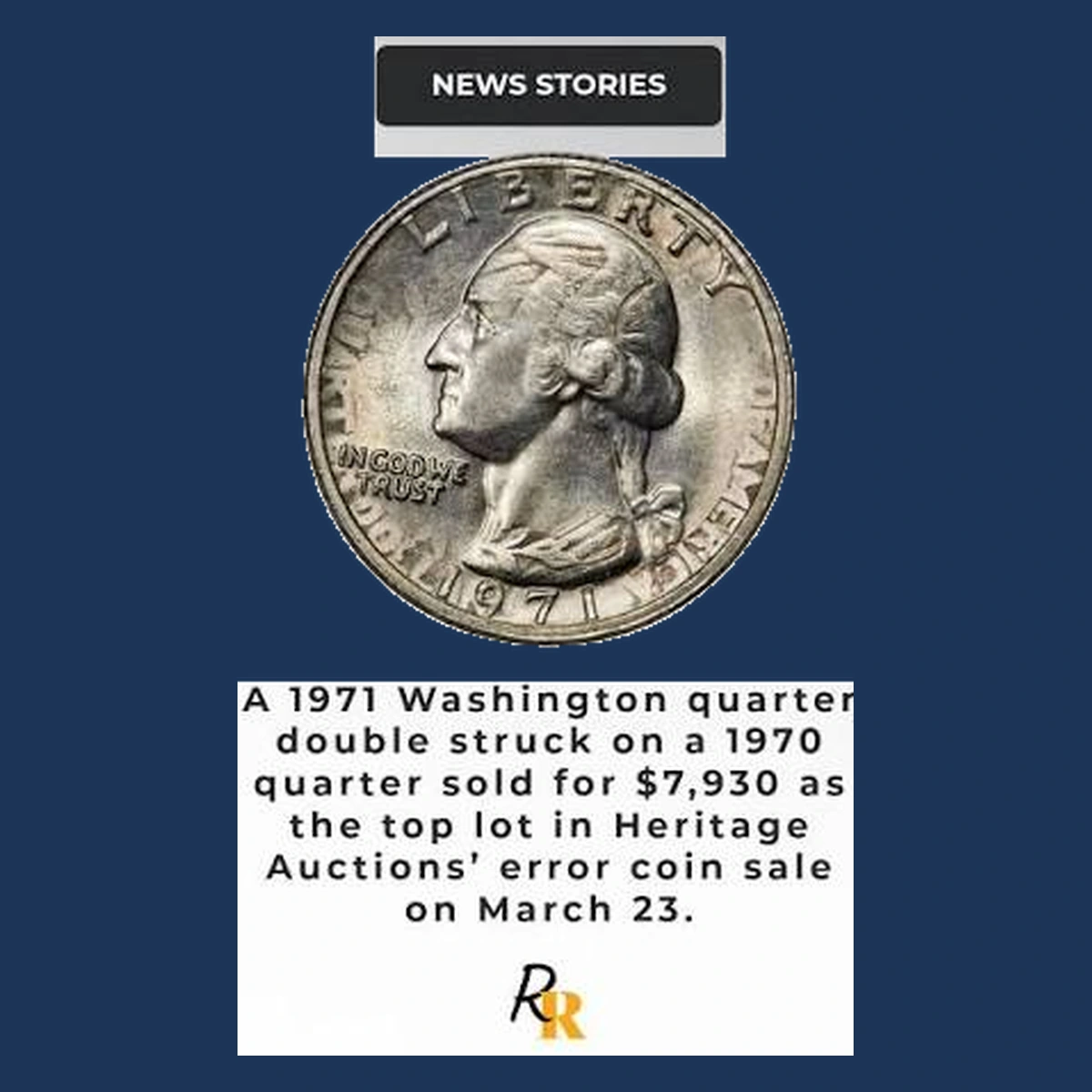
The date 1970 appearing beside the eagle is a clue that an older quarter received another year’s design. In this documented error, a finished 1970 quarter was struck again by 1971 tools.
The coin had also turned over. Earlier eagle-side details survive beneath the new Washington side, while earlier portrait-side details cross the new reverse.
The older date remains between the eagle’s right wing as viewed and the rim. This is not a small repunched date or ordinary doubled lettering; two complete coin designs were impressed at separate times on the same piece of metal.
Estimated Value
The NGC MS64 overstruck quarter brought $7,930 in March 2026. For a similarly clear and authenticated different-year overstrike, estimate $5,000–$12,000.
The readable earlier date and crossed designs make this coin especially easy to explain. A few stray marks that resemble digits cannot justify the same price, and surface damage that hides the relationship between the two strikes can reduce collector interest considerably.
How to Identify
Turn directly to the eagle side and search between its right wing as you view it and the rim. The older 1970 date should appear there, away from the normal date position.
Use a magnifier to follow nearby pieces of the earlier portrait design. Then examine the new Washington side for remnants of the old eagle-side design.
These crossed faces reveal the flip between strikes. A single oddly shaped date digit would not show that relationship.
Compare the main 1971 date with the older digits and keep both whole faces in your photographs.
The strongest evidence is the readable pair of years accompanied by connected earlier designs on the opposite faces, rather than isolated lines that happen to resemble numbers.
Conclusion
The estimated $5–$12,000 range covers everything from modest raised cracks to a different-year overstrike. Strong doubled lettering and unusual blanks can also be valuable when the exact variety or metal is correctly identified.
Read the year and mintmark before using any comparison. A normal no-mintmark Philadelphia coin, brown staining, or a flattened edge needs more evidence before it belongs among the errors described here.