1965 Quarter Error List with Pictures

The metal matters especially in 1965, when ordinary quarters switched from 90% silver to bonded copper-nickel layers. A quarter accidentally struck on a silver blank sold for $9,300 in July 2022.
The 1965 quarter errors below range from small raised cracks to that valuable metal mix-up, with estimated prices of $5–$15,000. Special Mint Set coins also have their own striking errors.
Keep reading for visible clues that separate these pieces from ordinary quarters and later damage.
1. 1965 Washington Quarter Raised Cracks and Broken-Tool Lumps
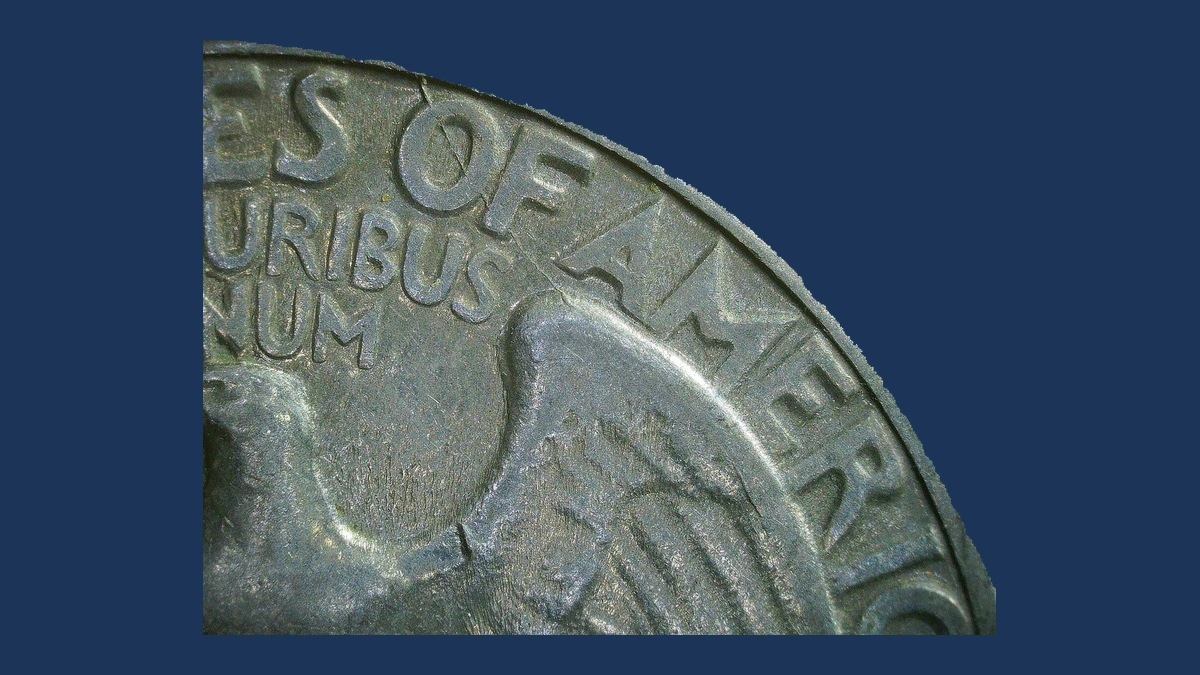
A thin raised line can cross the design when a crack develops in the die, the steel tool that stamps coins. Metal enters the crack during striking and leaves its shape above the surface.
If a larger piece breaks from the tool’s edge, the coin can show a raised lump joined to the rim. Collectors call that lump a cud.
Both features are reported for 1965 quarters, without one fixed location applying to every coin. An ordinary scratch cuts into the surface, so a random line is not automatically a die crack.
Estimated Value
Estimate $5–$100 for modest 1965 raised cracks or small cuds, with larger, clearly formed lumps generally attracting more interest. Fine lines that are difficult to see usually occupy the lower end.
For comparison, a 1970-D nickel with two raised rim breaks sold for $63 in October 2022. That different coin offers context for small broken-tool errors, while the quarter’s own defect size and preservation determine where it fits within the range.
How to Identify
Tilt the coin until the line casts a small shadow and decide whether it rises above the surface or cuts into it. A 10× magnifier helps distinguish a raised crack from a scratch with a pushed-up lip.
Follow the line across letters or other design features. A genuine crack can continue through them as part of the original strike, while damage often slices or flattens details along its route.
For a suspected cud, trace the lump into the rim and inspect the opposite face for a matching impact dent. Do not expect a specific clock position when the report does not identify one; look for metal formed naturally in a broken part of the stamping tool.
2. 1965 Washington Quarter Faint Opposite-Side Design
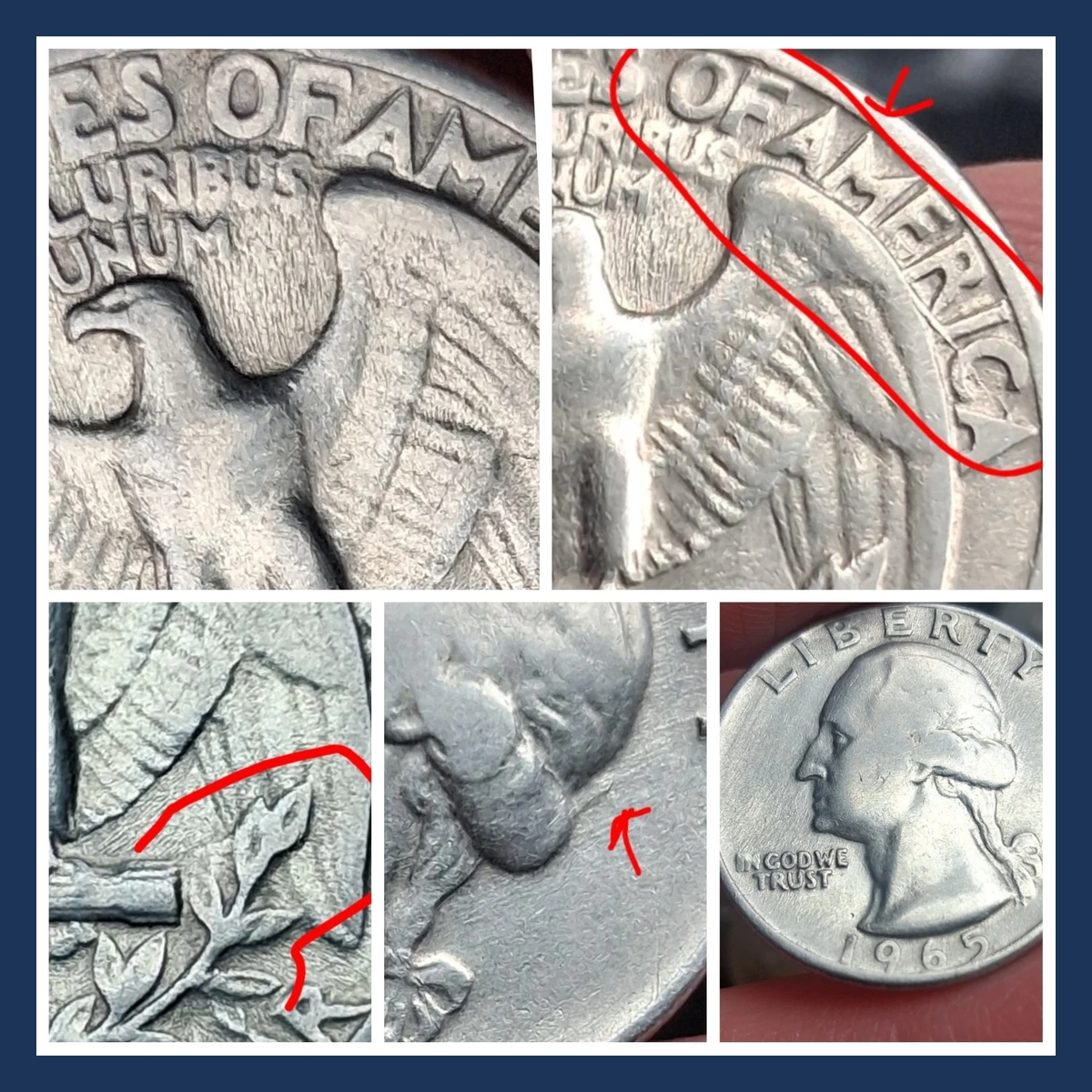
A faint outline from the opposite face can appear where the normal design leaves open space. This can happen after the front and back stamping tools collide without a blank between them.
The collision marks the tools, which may then transfer traces of the other design to later coins. Collectors call those traces die-clash marks.
Clashing is reported for 1965 quarters, but no single confirmed position is given for every example. A line near Washington or the eagle therefore needs comparison with the opposite design rather than a name based only on its location.
Estimated Value
A confirmed minor clash has an estimated value of $10–$150. The outline needs to be recognizable enough to explain the error; a barely visible line can add little to an ordinary quarter.
For a different-denomination comparison, a clashed 1972-S nickel Proof graded PR64 sold for $51 in December 2020. That actual clash provides a modest price comparison, while the quarter’s own transferred pattern and surface condition determine its appeal.
How to Identify
Use a photograph of the opposite face as a comparison, rather than trying to name the faint mark in isolation. Turn or reverse the photograph as needed to test whether part of that design fits the extra outline.
With a 10× magnifier, follow more than one part of the suspected transferred shape. A single straight line could come from a scratch or polishing of the tool, while connected design fragments offer a better match.
Inspect the coin for later cuts, rubbed patches, and marks pressed in by another finished coin. The useful evidence is a faint opposite-side outline within the original struck surface, not a complete deep mirror image or an unrelated scratch.
3. 1965 Washington Quarter Clipped Blank
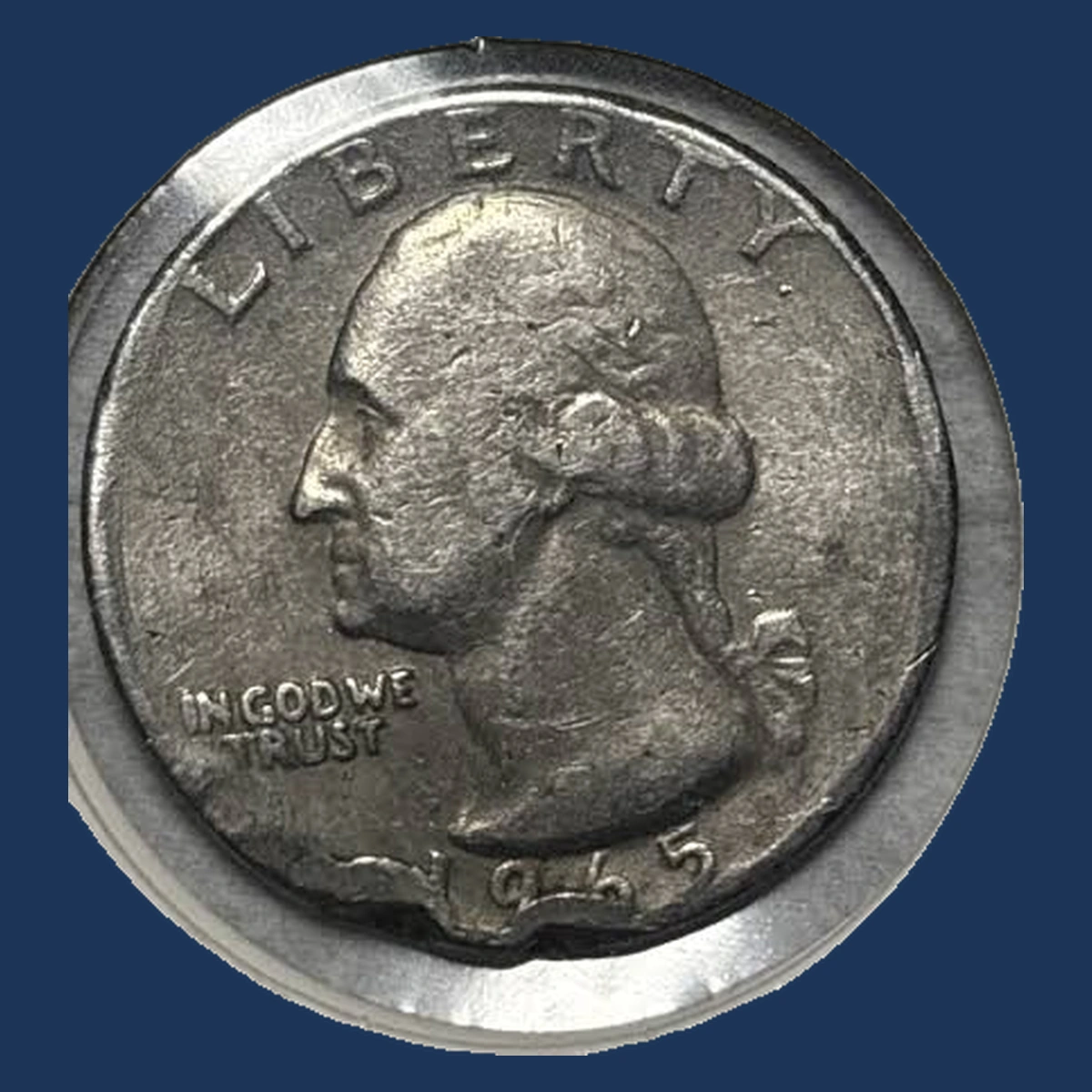
A quarter can begin as an incomplete metal disk, called a blank. If the blank-cutting machine overlaps an earlier hole or the edge of the metal strip, a curved or straight section can be missing.
The later strike places the design around that gap. This differs from cutting a piece out of a finished quarter, which can leave sharp tool marks across completed lettering.
Curved and straight clips are reported for 1965. Their shapes belong to the same general blank-making error rather than separate categories for every outline or amount of missing metal.
Estimated Value
Estimate $20–$250 for a confirmed ordinary 1965 clipped quarter, depending on the missing area, condition, and how clearly the date survives. A tiny clip on a worn coin usually sits toward the low end.
A 1978 quarter with three curved clips sold for $180 in March 2025. That later multiple-clip example provides a comparison for a more dramatic outline, while the smaller or simpler 1965 examples should be assessed individually.
How to Identify
Inspect the boundary of the gap before weighing the coin. Under a 10× magnifier, look for natural rounding and design drawn toward the missing section, rather than a saw cut through finished letters.
Use a scale to compare the weight with the ordinary 5.67 g standard. Missing metal lowers weight, but later cutting does too, so the number cannot settle the question alone.
Calipers across surviving full edges can compare the quarter with its usual 24.26 mm diameter. Check the remaining grooves and the place where each gap meets the rim.
A weak rim opposite a clip can help, but is not required. Judge the gap from its natural boundary and how the original design formed beside it.
4. 1965 Washington Quarter Struck Through Material
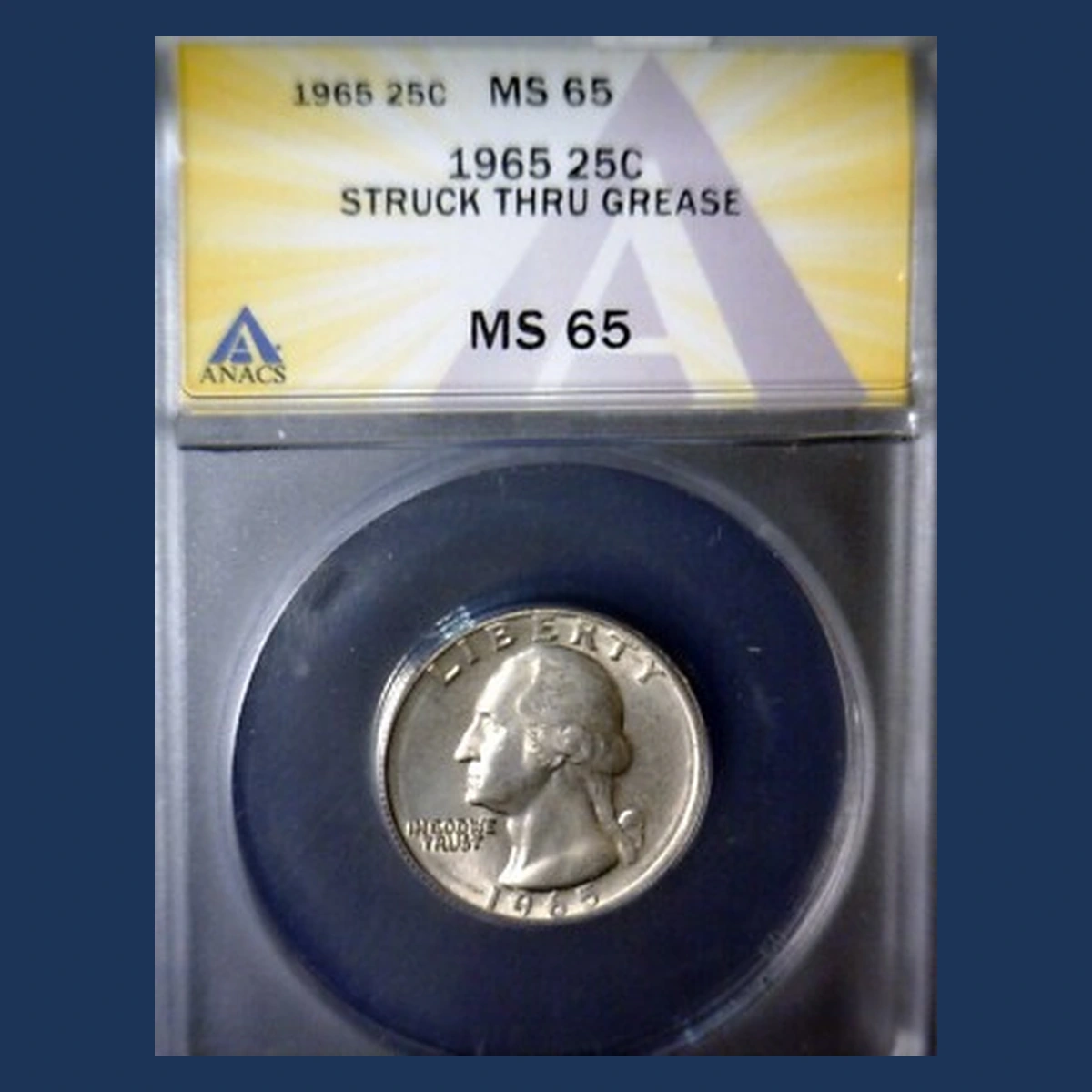
A depression or a patch of missing design can form when material gets between the blank and a stamping tool. The obstruction stops part of the design from reaching the metal.
This struck-through error is reported for 1965, without a specific substance or fixed location identified. Its appearance depends on what blocked the strike and whether that material stayed in place afterward.
A smooth patch alone does not establish the cause. Wear, corrosion, and later impact can also remove visible detail, so the transition into the surrounding design needs close examination.
Estimated Value
Use an estimated $15–$400 for confirmed 1965 struck-through errors, with stronger, easily explained impressions generally bringing more. A small smooth area can add less value than a clear shape preserved in an unworn surface.
For a different-denomination comparison, a 1986-P nickel with a struck-through error sold for $204 in June 2023. That sale helps frame the estimate, but the quarter’s own mark, condition, and identifiable cause still determine its appeal.
How to Identify
Find a letter or design line that approaches the unusual patch, then follow it to the boundary. Note whether the original strike fades or stops there, rather than being sliced away afterward.
Change the light under a 10× magnifier. A fresh cut may reveal a sharp groove or displaced metal, while wear often flattens the highest neighboring details as well.
Compare the rest of the face for related scratches or corrosion that could explain the missing design. Do not clean the patch in an attempt to expose a pattern.
Only name a substance when its shape or retained material supports that conclusion. The first useful check is an interruption formed during striking within an otherwise original coin surface.
5. 1965 Washington Quarter Missing Back Layer
A copper-colored eagle side can reveal that the quarter’s outer layer is missing. Normal 1965 quarters are clad, meaning silver-colored outer metal is bonded to a copper center.
The recorded back-layer example weighs 4.7 g and is cataloged as NGC MS63, an unworn grade. Its reduced weight supports the missing metal, while the remaining back design helps show how the exposed copper was struck.
The ordinary quarter standard is 5.67 g. Brown color without the corresponding layer structure could instead come from toning, chemicals, or a coating added later.
Estimated Value
The recorded back-layer quarter sold for $159 in December 2022. Estimate $80–$500 for comparable 1965 missing-layer examples, with clean original surfaces and a strong design making the error easier to appreciate.
The 4.7 g measurement describes this individual coin, not a fixed weight required for every missing-layer error. A scraped copper-colored face can look dramatic but should not receive the same price as natural exposed copper carrying the original struck design.
How to Identify
Weigh a loose coin before relying on its color. Compare it with the normal 5.67 g standard, while remembering that the documented 4.7 g result belongs to one particular specimen.
Check the diameter with calipers against 24.26 mm, then inspect the edge layers under a 10× magnifier. The normal grooves can survive, but the back should connect to copper that is physically part of the coin.
Follow the eagle design across the exposed face and look for scraping, pitting, or a coating over the metal. Natural struck details in the copper, together with the missing edge layer and lower weight, provide a stronger check than a brown surface alone.
6. 1965 Washington Quarter Broadstrike
A coin can spread too widely when the steel ring around the striking area fails to hold the blank. This broadstrike leaves more metal outside the normal outline while retaining the design.
One ordinary 1965 example was struck on a Type One blank, a disk whose starting rim had not been raised. A separate Special Mint Set coin was cataloged as an uncentered broadstrike.
Special Mint Set, or SMS, describes collector coins made differently from ordinary circulation pieces. Neither coin should be confused with the separate SMS example that is also 10% off center.
Estimated Value
The Type One blank broadstrike graded PCGS MS61 sold for $192 in June 2024. The separate SMS uncentered broadstrike graded PCGS SP64 brought $504 in December 2025.
Estimate $60–$800 for comparable 1965 broadstrikes, with the SMS identity, size of the spread, and preservation affecting price. An attractive unevenly centered strike can command more than a modest expansion, but an unprepared blank rim needs its own support rather than an assumption from width alone.
How to Identify
Compare the amount of outer design remaining on the coin before calling it off center. A broadstrike can sit unevenly on its blank yet keep the whole design within the spread metal.
Measure the outline with calipers against a normal 24.26 mm quarter. Weight should stay roughly near 5.67 g because the metal spread rather than being removed.
Inspect the outer lettering and edge with a 10× magnifier, looking for original struck surfaces and incomplete or absent grooves where the ring failed. A later flattened coin may also widen but often loses design height.
For an SMS example, preserve its original set or grading identification; no mint letter proves that status. Establish complete design within naturally spread metal before deciding which broadstrike example matches.
7. 1965 Washington Quarter Off-Center Strike
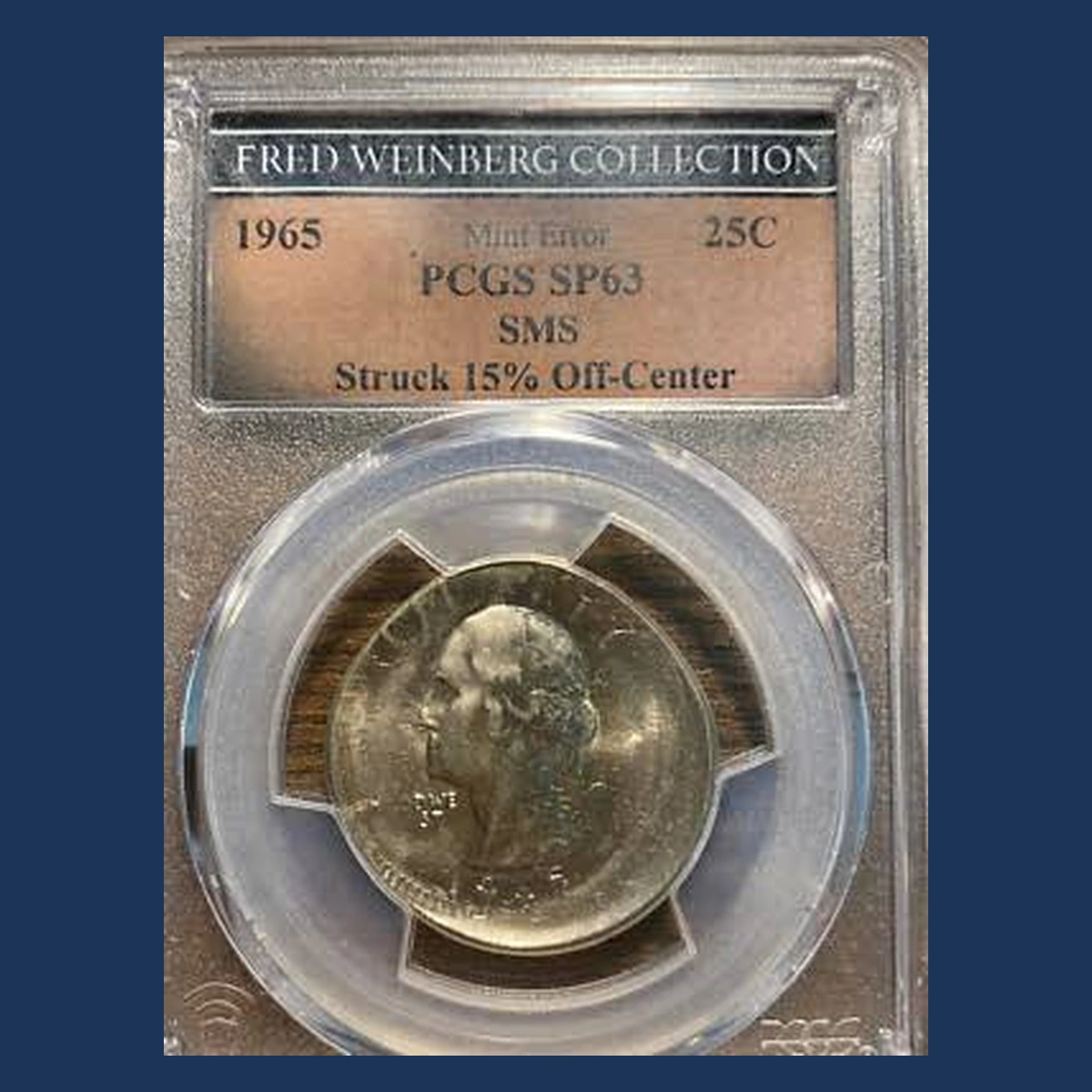
The design can fall partly off the blank when the metal is misplaced during striking. A blank crescent remains opposite the missing portion of Washington’s portrait or the outer lettering.
A 1965 SMS example is 10% off center and also spread outside the collar, the surrounding steel ring. A different ordinary example is 25% off center and was graded NGC MS65.
Both coins lack mint marks, as all 1965 quarters do. That absence cannot identify an ordinary coin as Philadelphia or establish that a shiny example came from a Special Mint Set.
Estimated Value
The SMS 10% off-center coin graded PCGS SP63 sold for $312 in April 2020. The ordinary 25% off-center NGC MS65 example brought $180 in December 2025.
An estimated $50–$1,000 covers comparable 1965 off-center quarters, depending on finish, displacement, date visibility, and condition. These results show that a larger percentage does not automatically mean a higher price, especially when a separately made SMS coin is compared with an ordinary circulation strike.
How to Identify
Identify the coin’s finish and any original set or grading history before comparing the two recorded examples. A missing mint mark is normal for 1965 and cannot decide whether the coin is SMS.
Turn the quarter over and compare the blank area with the design missing from each face. The positions should fit one misplaced blank, rather than a rim that is merely uneven on one side.
Under a 10× magnifier, inspect where the struck design ends at the edge. The SMS coin also spread outside the ring, so its widened shape has more than one visible cause.
Look for natural unstruck metal beside a genuinely cut-off design. Do not infer a clock direction or a different mint from a percentage that describes only the amount of displacement.
8. 1965 Washington Quarter Doubled Front or Back Design
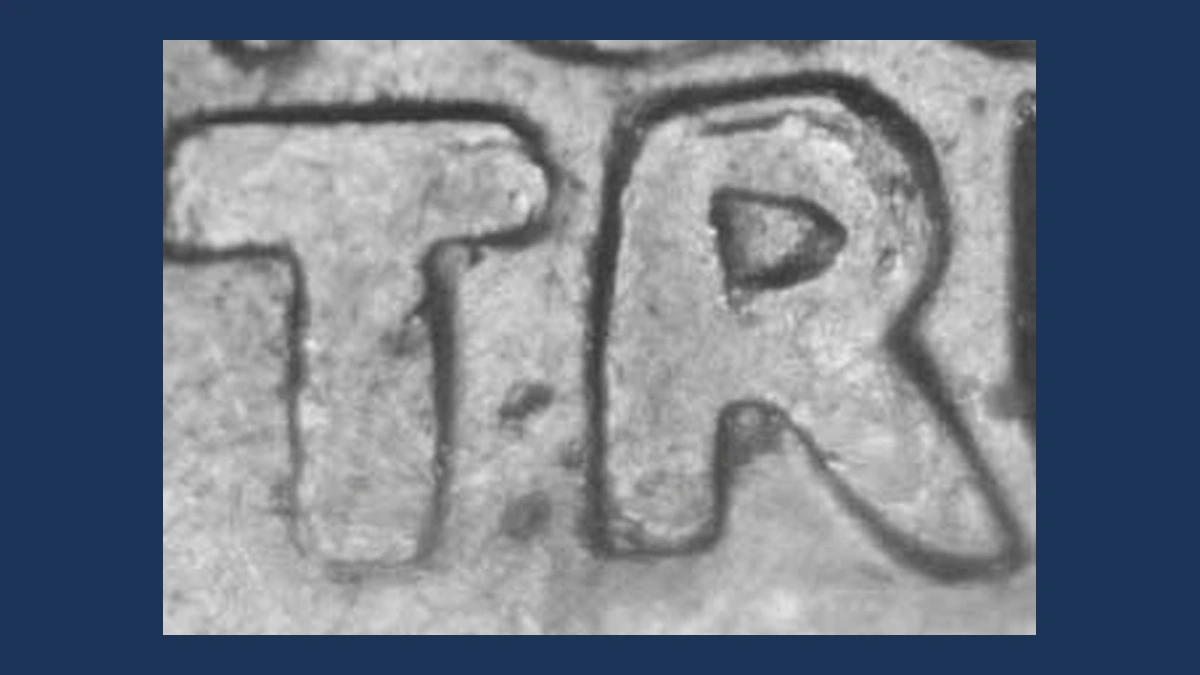
Rounded extra outlines can appear when the stamping tool itself carries a doubled design. The 1965 front variety WDDO-001, also called FS-101, shows separation toward the bottom of the coin.
Two back varieties have different patterns. WDDR-001 spreads inward, while WDDR-002 shows counterclockwise separation around lettering and leaves.
WDDR-001 once carried the FS-801 number, which was removed from a later guide edition; the documented doubled pattern still exists. These varieties belong to separate tools, so their different positions should not be combined into one supposed all-over doubled coin.
Estimated Value
Estimate $40–$2,000 for confirmed 1965 doubled-die quarters, depending on the variety and condition. Clear FS-101 examples can attract stronger prices than minor or poorly matched doubling.
GreatCollections records a PCGS MS64 FS-101 sale at $1,518.75. That result belongs to the front variety and its grade, not automatically to either back variety; wear, weak separation, and surface damage can place another coin much lower within the estimated range.
How to Identify
Choose the face first, then compare the actual direction of doubling under a 10× magnifier. For FS-101, inspect LIBERTY, IN GOD WE TRUST, the date, and Washington’s head for downward separation.
A short raised line below the nose and a crack through AMERICA’s E and R can provide supporting matches. They should support the doubled design rather than replace it as evidence.
On the back, compare Wexler’s separate variety photographs: WDDR-001 moves inward, while WDDR-002 turns counterclockwise.
Use the same viewing angle and avoid treating a flat shelf as a rounded second impression. Match the lettering’s repeated outline to one specific variety before assigning its catalog name or price.
9. 1965 Washington Quarter Wrong Denomination Blank
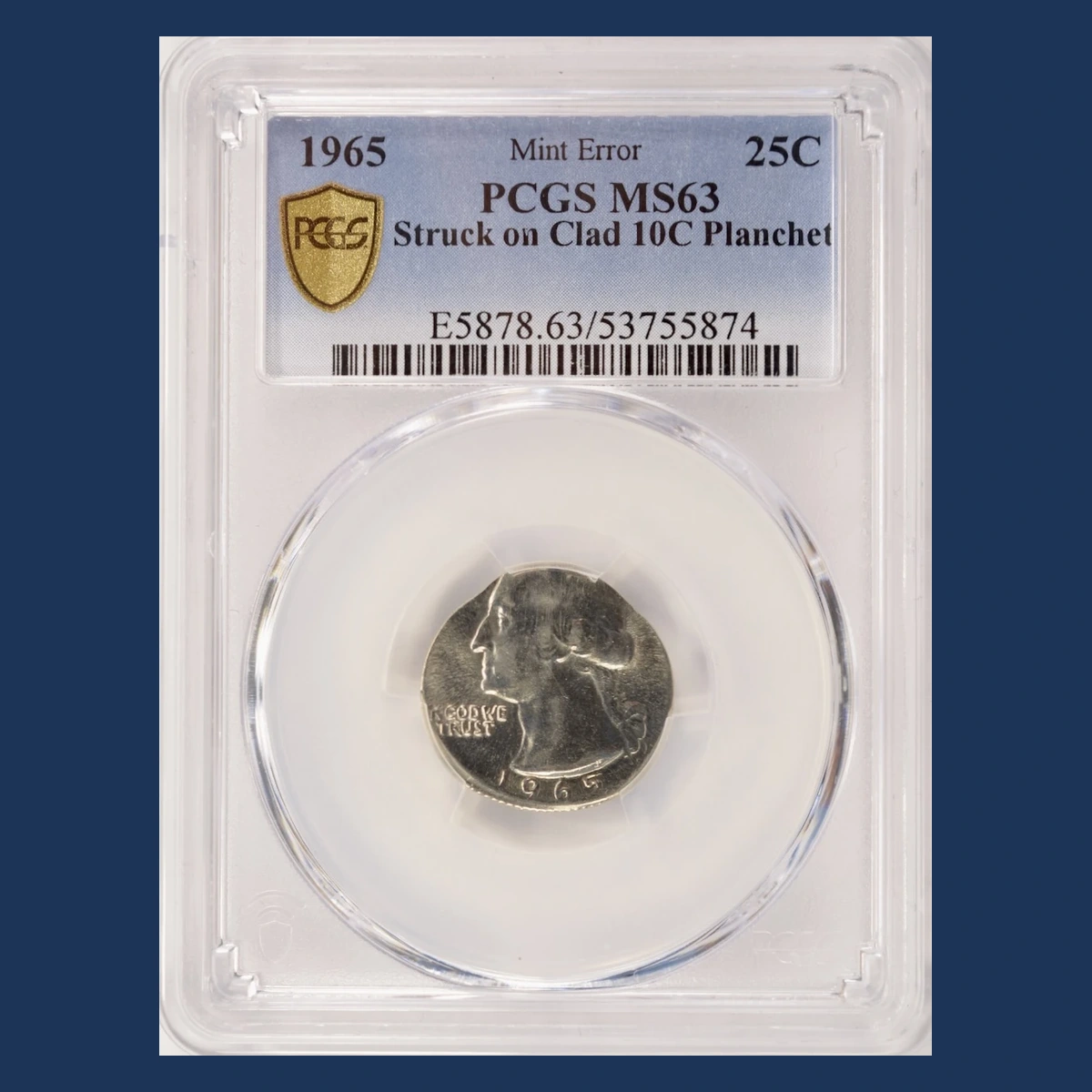
A smaller blank intended for another denomination can receive the quarter design. Parts of the lettering then fall beyond its edge, and its metal or weight can differ from a normal quarter.
Recorded 1965 examples include clad dime and nickel blanks; cent and silver-dime blanks are also reported. Special Mint Set examples include a nickel-blank coin found within an original set.
Another SMS nickel-blank coin also has a 3% clip. These are separate specimens, so the clipped outline, set origin, and measured weights should remain attached to the particular coin that shows them.
Estimated Value
Estimate $150–$7,000 across ordinary and SMS wrong-blank examples, with the blank type and finish making a large difference. The ordinary clad-dime AU58 coin sold for $431.25 in April 2006, while the nickel-blank MS62 brought $373.75.
A different SMS nickel-blank example graded ANACS MS63 sold for $5,175 in January 2006. That higher result reflects a particular collector-set error rather than a universal price for every small 1965 quarter.
How to Identify
Begin with weight and size: the recorded clad-dime example is 2.2 g, while the ordinary nickel-blank example is 5.0 g. Use a scale and calipers, comparing their smaller outlines with the normal quarter’s 5.67 g and 24.26 mm.
Cent blanks normally start near 3.11 g, while silver-dime blanks use a different 2.5 g standard. Those are comparison figures, not measurements of the reported specimens.
With a 10× magnifier, inspect the edge metal and the naturally missing outer design. Only the tops of the date remain on the recorded clad-dime coin, while the nickel example retains a readable year.
Check any claimed clip separately and keep SMS evidence tied to its own coin. Reject filed edges or plating that imitate the wrong blank without the matching original design and metal.
10. 1965 Washington Quarter Struck on a Silver Quarter Blank
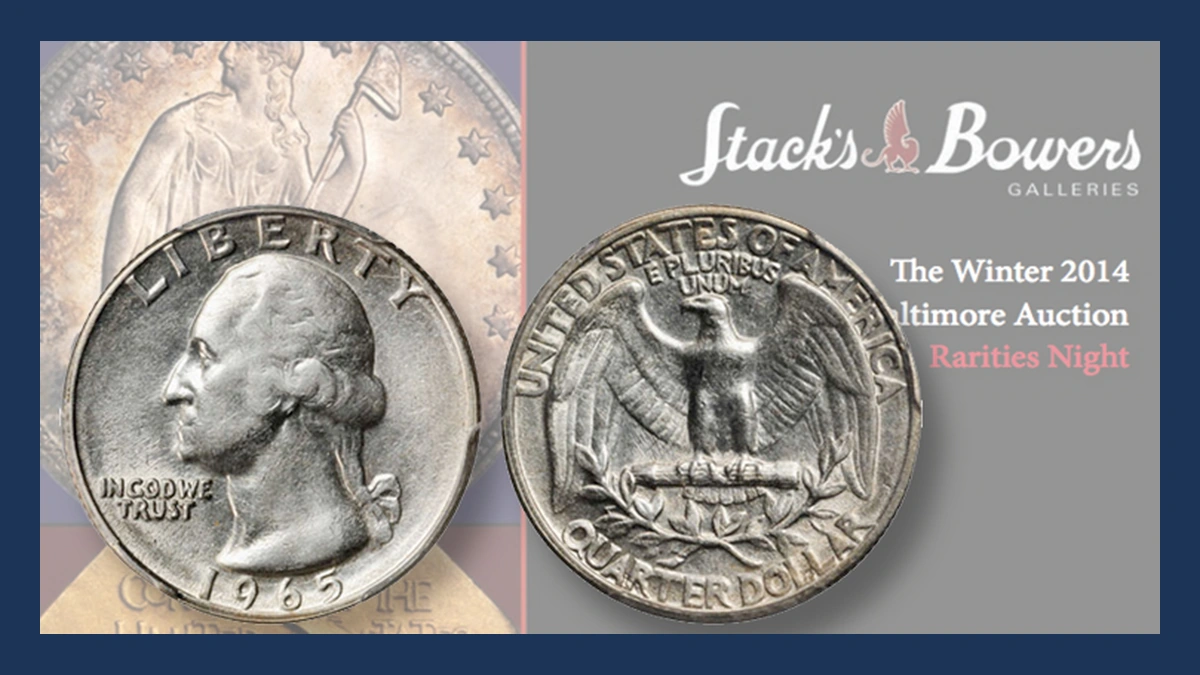
A silver quarter blank could remain in the production system when the Mint changed to copper-nickel clad metal. If struck with the new 1965 design, it became a transition error with the wrong metal for its date.
The resulting coin still looks like a full-sized Washington quarter. Its heavier silver composition, rather than a missing part of the design, is the main clue.
A recorded example was graded PCGS XF45, showing circulation wear. Silver plating on a normal clad coin can imitate its color, so an apparently silver edge does not establish this rare error by itself.
Estimated Value
The PCGS XF45 silver-blank quarter sold for $9,300 in July 2022. Estimate $5,000–$15,000 for comparable authenticated examples, with preservation and reliable metal identification strongly influencing the price.
This is the value of the entire rare coin, not the value of its silver alone. A normal 1965 quarter with silver-colored plating does not gain that premium, even when its edge initially looks convincing.
How to Identify
Check that the date is genuinely 1965 before focusing on the edge. Under a 10× magnifier, compare its shape with a normal example and look for scratches or altered digits.
Weigh the loose coin on an accurate scale. A silver quarter blank normally starts near 6.25 g, compared with 5.67 g for the regular clad version; wear can change the reading.
Both types are about 24.26 mm wide, so diameter alone will not distinguish them. Inspect the grooved edge for a copper-colored center, but remember that plating can hide it.
The strongest next step is a non-destructive metal test by a qualified coin specialist. Confirm the correct 1965 design on genuine 90% silver quarter metal rather than relying on color or sound.
Conclusion
Estimated 1965 quarter error values range from $5–$15,000, with the silver-blank transition error at the high end. Smaller mistakes can still be collectible when their cause is clear and the coin remains attractive.
Check the metal and measurements when the blank is in question, and compare exact design details for doubled varieties. Keep Special Mint Set examples distinct from ordinary coins, since no 1965 quarter has a mint mark to settle that question.