1870 Nickel Error List with Pictures

Faint lines inside a shield can be more interesting than a large scratch. An 1870 nickel cataloged with an unusual design transfer and extra date traces sold for $646.25 in February 2016.
The 1870 nickel errors below have estimated whole-coin values of $20–$2,000. These examples concern ordinary Philadelphia coins, which have no mint letter.
Follow the visible clues to compare doubled details, unusual metal, and a back design that points in the wrong direction.
1. 1870 Shield Nickel Cracks Copied from the Stamping Tool
A raised line can travel through the shield and date without breaking the nickel apart. The line records a crack in a die, the steel stamping tool.
During striking, the coin’s metal entered that opening and copied it as a ridge. Reported 1870 paths involve the lower shield, date, ball-shaped ornaments, cross, or tops of back letters.
These locations describe different examples. Some tools developed more visible cracks as they continued making coins, but one short line does not mean every listed path must appear on that nickel.
Estimated Value
For ordinary examples with visible narrow die cracks, estimate $20–$200 for the whole coin. The coin’s condition can account for more of its price than the crack itself.
A clear branching ridge is easier to show than a faint line hidden by wear. Corrosion and cleaning reduce appeal, while attractive original detail helps a collector follow the shape and compare it with another coin made from the same damaged tool.
How to Identify
A full-face photograph shows the crack’s route through the design and the positions of its branches. Use it to choose a matching example before enlarging one small section.
Then shine a lamp across the line and inspect it with a 10× magnifier. A ridge copied from the tool should continue naturally across letters or shield details, rather than form a lip beside a scratch.
Move the light to the opposite side and check whether the same ridge remains visible. The entire path should agree with the comparison coin: a line near the date cannot be identified from an unrelated crack above the reverse lettering.
2. 1870 Shield Nickel Original Blank Flaw or Peeling Metal
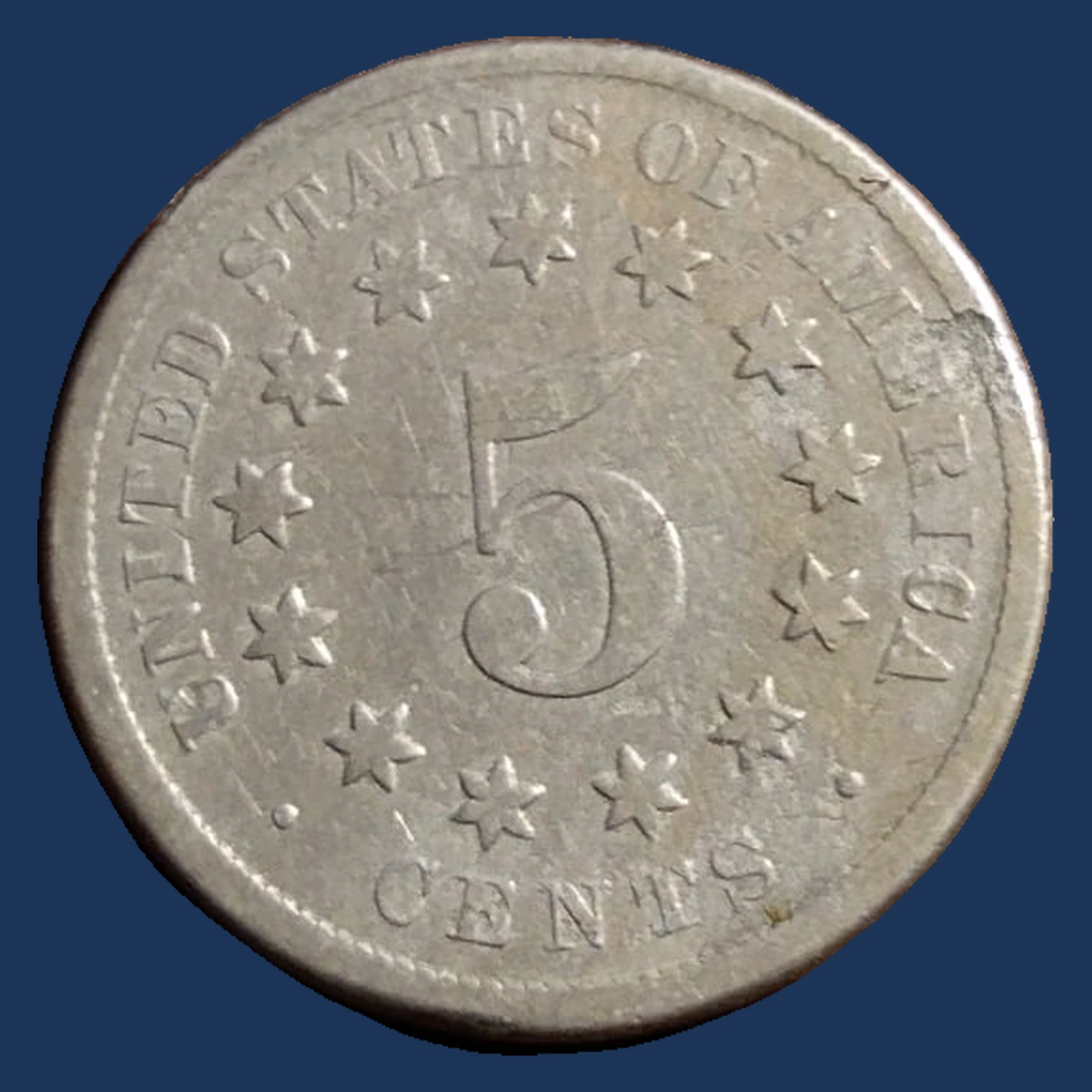
An irregular patch can begin inside the metal disk before that disk becomes a coin. If a weak surface layer lifts, collectors call the separation a lamination.
An owner’s 2022 sale listing described an 1870 Shield nickel as having a defective blank or possible lamination. That wording does not establish a particular face, location, or shape for the flaw.
The coin needs to show what happened to its metal. A later gouge, corrosion, or a rough stain can also look irregular without preserving an original weakness in the blank.
Estimated Value
Estimate $30–$300 for a modest authenticated blank flaw on a worn through attractive ordinary 1870 nickel. An intact lifted layer can be more informative than a patch that has already been scraped away.
For context, a different 1911 Liberty Head nickel with front peeling sold for $51 in January 2023. That comparison concerns a small metal flaw; it does not supply a shape or location for the reported 1870 coin.
How to Identify
Leave loose metal attached and avoid rubbing the patch. Its connection with the surrounding surface may explain more than the rough area itself.
Follow that boundary through a 10× magnifier. Original design continuing onto a lifted strip can support separation within the metal, while sharp cuts through finished details suggest later damage.
If the coin is loose, a scale can compare its weight with the normal 5 grams. A missing flake may lower the reading, while an attached layer may leave it nearly unchanged.
Photograph both faces under low-angle light. The most useful visible feature is a natural layer boundary meeting original struck detail, rather than roughness alone.
3. 1870 Shield Nickel Back Design Turned 90 or 180 Degrees
The large 5 on the back may point sideways or upside down when the front is held in its normal position. The two stamping tools were not aligned in the usual relationship.
The 1870 variety catalog includes examples rotated about 90 degrees and about 180 degrees. These are a quarter turn and a half turn, respectively.
Each angle belongs to a separate coin. Simply turning a loose nickel between photographs can imitate rotation, so the way it is held during comparison matters as much as the direction of the back design.
Estimated Value
An estimated $75–$600 covers recognizable large rotations on ordinary 1870 Shield nickels. A clear quarter turn or half turn is easy to demonstrate when the coin’s orientation is preserved.
The amount of rotation does not replace condition in a price comparison. Worn but readable coins can still show the error clearly, while damaged edges or polished faces reduce appeal despite a dramatic change in direction between the two designs.
How to Identify
Hold the shield upright, with the date at the bottom. Turn the coin over top to bottom, keeping the same vertical line through its center.
On a normally aligned U.S. coin, the back should then be upright. A quarter-turn example leaves the 5 sideways; a half-turn example leaves it upside down.
Repeat the movement without letting the coin spin between your fingers. A simple holder can preserve its position while you photograph both faces.
Include the entire outline in each image so another person can follow the comparison. Two independently rotated photographs do not prove a rotated die.
Record the angle shown by the actual coin rather than choosing a direction from another example’s photograph.
4. 1870 Shield Nickel Extra Date Strokes and a Misplaced 1
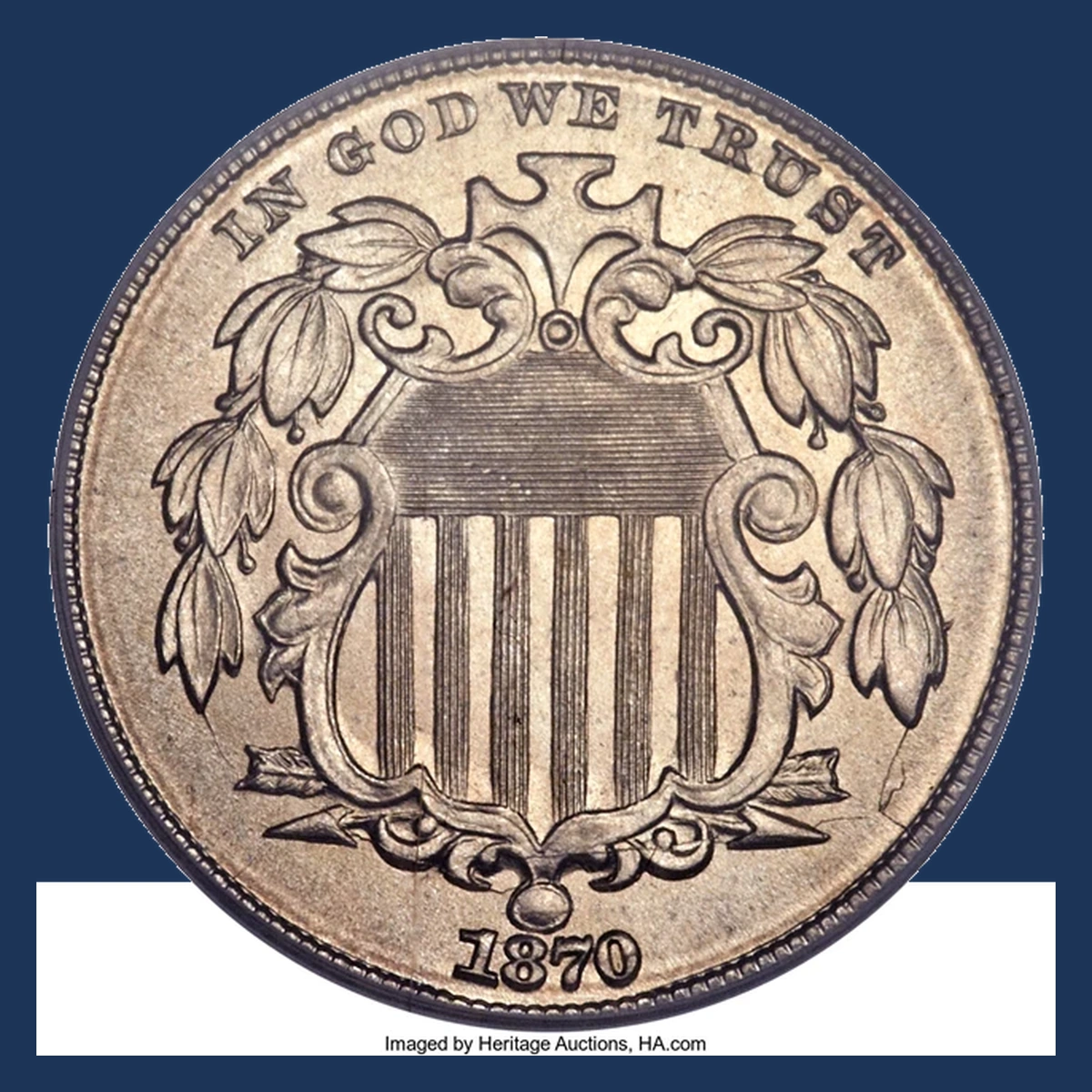
The date punch could enter the stamping tool again after moving slightly. Coins made from that tool may show extra strokes beside the normal digits.
Cataloged 1870 examples include 1, 7, and 0 traces toward the lower left, 70 below, and separate extra 0 outlines. Those directions belong to different date patterns.
Another documented feature is the top of a 1 above the border teeth, to the right of the normal 1. It sits outside the usual numeral position, which is why it is called a misplaced date trace.
Estimated Value
For recognizable date-punch varieties on ordinary coins, estimate $50–$1,000. Clear traces, a reliable photograph match, and attractive original surfaces help place a coin within that span.
The FS-301 coin discussed below brought $646.25 in February 2016 with both date traces and the unusual front lines. That is one whole-coin result, not a separate payment for each feature, and it should not set every minor 1870 repunched date’s price.
How to Identify
For the misplaced 1, begin outside the normal digits: look above the border teeth to the right of the main 1. Include the full date and that border in a photograph so the extra trace stays in context.
For repunched numerals, use a 10× magnifier to follow the additional strokes beside each digit. They should fit portions of the same numbers in a shifted position, rather than look like flat ledges or unrelated scratches.
Compare the complete arrangement with the pictured variety, including the direction of each extra stroke. One isolated line cannot identify several different date patterns or establish that every trace belongs to the same coin.
5. 1870 Shield Nickel Doubled Front or Back Designs
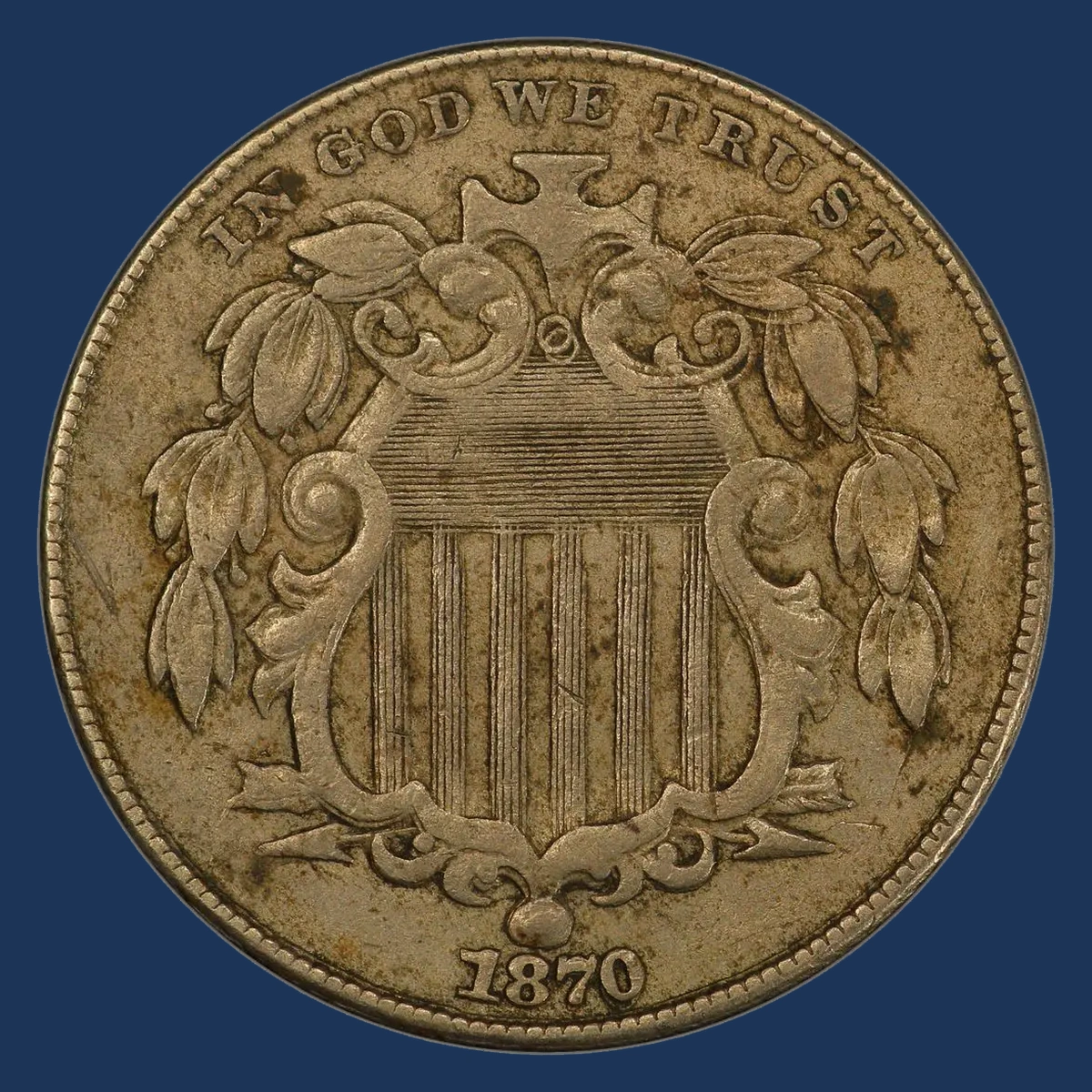
The shield’s ornaments and arrows can show rounded extra outlines. Other 1870 nickels have repeated edges in back lettering, including UNITED or STATES.
These features began in the stamping tools as doubled designs. They differ from a second strike moving the finished nickel between two blows.
The variety catalog lists several patterns, including back designs combining details from two different tool designs. A design labeled 1867 in that discussion is a tool style, not a second date on the coin.
Compare each example’s actual doubled positions instead of expecting all listed details together.
Estimated Value
Use an estimated $75–$1,500 range for matched doubled-die 1870 nickels across worn and attractive unworn examples. Strong separated outlines can draw more interest than faint thickness in the same area.
Front and back patterns do not all have the same visibility or collector demand. A coin with more than one feature still needs one complete valuation, and scratches or cleaning can reduce its appeal even when the doubling remains easy to see.
How to Identify
Choose a front or back comparison before studying tiny details. At the front, inspect the ornament above the shield, the shield lines, and the lower arrows with a 10× magnifier.
For a back example, follow extra outlines in UNITED or STATES and any other details shown in its matching photograph. Do not use a front pattern to identify a back variety.
Rotate the lamp rather than changing the coin’s position. True raised outlines remain fixed as their shadows change.
A low flat shelf can come from movement during striking, and a worn tool can make a letter thick. Favor a consistent rounded second outline at several matching points over one unusually wide letter.
6. 1870 Shield Nickel Unusual Lines Resembling an Indian Cent Design
Faint lines inside and beside the shield have been compared with an Indian cent portrait. The reported shapes run below a ball-shaped ornament toward the left, with feather-like detail toward the right.
This recognized 1870 variety has traditionally been described as a clash with an Indian cent stamping tool. Researchers have also proposed other explanations for how those marks formed.
The visible pattern is therefore the important comparison. It is not a complete Indian cent design struck over the nickel, nor does the description make the coin itself a one-cent piece.
Estimated Value
A PCGS VF20 FS-301 example sold for $646.25 in February 2016. VF20 describes a worn coin with clear major details.
Estimate $300–$2,000 for correctly matched examples across different levels of preservation. The sale covers the complete coin, including its date traces.
Sharper lines and original surfaces make the unusual pattern easier to display. Do not add a second full repunched-date valuation to the same specimen.
How to Identify
Start with the whole shield so the ordinary design remains easy to recognize. Locate the ball-shaped ornament before moving to a close-up.
Follow the faint lines below it toward the left. At the right, compare the reported feather-like shapes with a photograph of an identified example.
A 10× magnifier and gentle side lighting can help reveal the lines without cleaning. Change the light direction to separate them from scratches or ordinary shield detail.
Check the date traces as another part of the same coin’s pattern.
Several features must occupy the same positions as the comparison example. One short curve that resembles a face in certain lighting is not enough to identify the complete arrangement.
Conclusion
The estimated $20–$2,000 span covers very different features on 1870 Shield nickels. A raised crack, an extra date stroke, and a sideways back design each call for their own comparison.
Keep both faces and the border in your photographs. When several features share one coin, compare its complete condition and identity rather than adding prices for each mark, and leave fragile or rough metal untouched.