1962 Quarter Error List with Pictures

The extra outline beside a letter and the gap between two letters tell different stories on a 1962 quarter. One doubled-die example reached $3,290 at Heritage in July 2016.
This 1962 quarter error guide covers estimated values from $20 to $3,500. It also includes a foreign-blank coin cataloged as (1962), whose date is not visible.
Read through the photographs and checks below to separate altered designs, displaced strikes, and coins made on the wrong blanks.
1. 1962 Washington Quarter Straight Clipped Blank
A flat gap interrupts the normally round edge of this quarter. Part of its blank was already missing when the design was stamped into the silver.
The recorded 1962 example weighs 5.63 grams and was graded AU50 by ANACS. That grade describes a circulated coin with relatively little wear.
Its straight boundary differs from the curved bite often associated with clipped blanks. A cut made after minting can produce a similar outline, but it cuts through finished detail rather than affecting how the rim and design originally formed.
Estimated Value
Estimate $20 to $300 for a genuine straight-clipped example, depending on the missing section and condition. A clear date and undamaged exposed edge help collectors understand it.
The AU50 coin appeared in a three-coin lot that sold for $51 in July 2021. That total also included 1955 and 1965 clipped quarters.
The auction did not assign separate prices to the three pieces. Larger, cleaner clips can command more than small worn examples.
How to Identify
A side photograph of the straight gap is especially useful here. Examine it for parallel saw marks or filing before relying on the coin’s outline.
Next, trace the struck border into both ends of the gap. Original rim formation should fit a blank that lacked the metal before striking.
For a loose coin, compare its weight with the normal 6.25 grams. The recorded 5.63-gram piece is a particular example, not a target weight for every straight clip.
Check the opposite rim for possible weakness, but do not reject a clip solely because that weakness is absent. Keep the date and the entire missing segment visible in the same set of photographs.
2. 1962 Washington Quarter Repunched D Mintmark
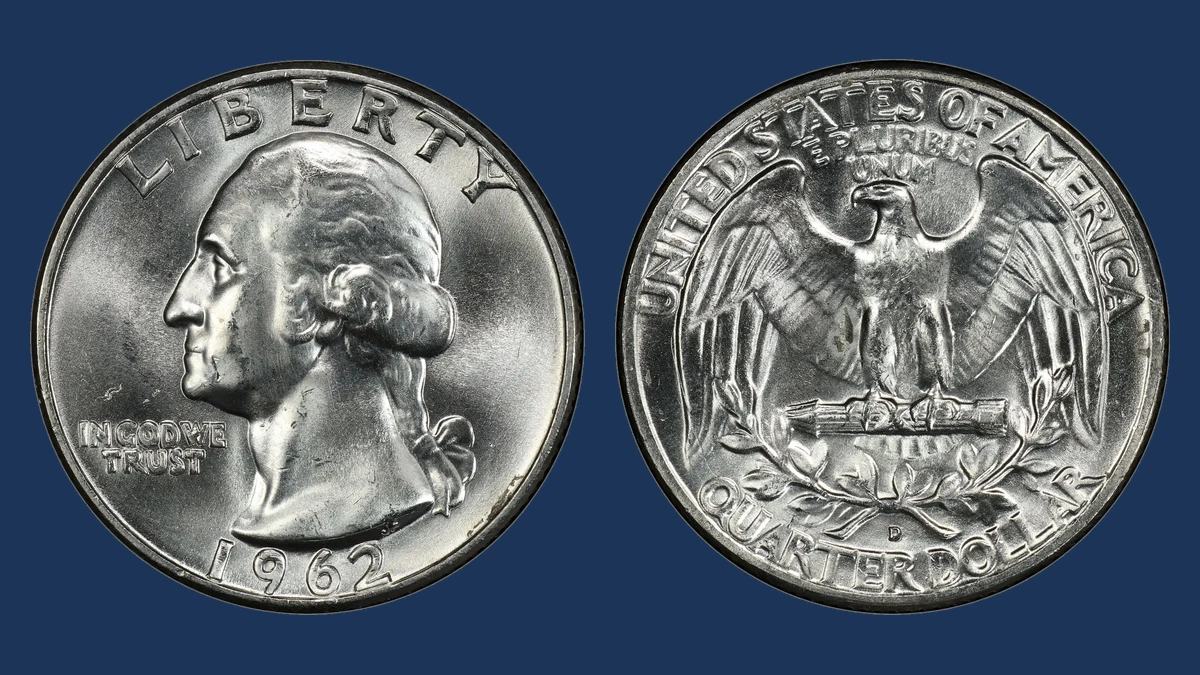
The small D below the eagle can carry traces of an earlier D in a slightly different position. This is a repunched mintmark, often shortened to RPM.
In 1962, a mint letter was punched into the die, the steel tool that stamps coins. Repeating that punch out of alignment could leave overlapping letter shapes on every coin made from that tool.
PCGS recognizes the Denver variety called FS-501. The feature is confined to the mintmark and should not be confused with a doubled portrait or a scratch beside the letter.
Estimated Value
A confirmed D-over-D example has an estimated range of $25 to $500. Strong surviving letter outlines and original surfaces support the higher end.
PCGS records an MS65 example at $495 on eBay in August 2021. MS65 means the coin is unworn with relatively few marks.
Wear can hide the small earlier impression before much of the main D disappears. A damaged mintmark may therefore be less desirable than a clearly matched example of the same general condition.
How to Identify
Find the D on the back, below the eagle and above QUARTER DOLLAR. A Philadelphia coin without a mintmark cannot be this Denver variety.
Enlarge the letter with a 10× magnifier or a sharply focused photograph. Trace the main D first, then look for parts of the earlier punch around it.
Compare those parts with a confirmed FS-501 photograph. Several matching curves or edges are more persuasive than a single lump beside the letter.
Tilt the light to distinguish raised outlines from a shadow inside a scratch. A flat shelf caused during striking can also resemble doubling, so the shape of the earlier D must remain recognizable when the lighting changes.
3. 1962 Washington Quarter Reported Off-Center Strike
An off-center strike leaves part of the blank untouched while the design runs off the opposite edge. The empty crescent belongs to the original blank, not to metal later added around a coin.
The blank sat partly outside the space between the stamping tools when the press came down. Only the area caught between them received the design.
Reports for 1962 include Philadelphia and Denver circulation issues. The surviving date and mintmark must establish each example’s identity; a quarter with a missing date cannot acquire a visible 1962 simply from its appearance.
Estimated Value
Use an estimated $50 to $1,000 for authenticated 1962 off-center quarters. Small shifts with modest wear belong toward the lower end, while dramatic, attractive strikes can reach higher.
A clear year is particularly useful when the design has lost much of its outer detail. For comparison, a 1943-S quarter struck 35% off center sold for $2,640 in July 2022.
That older, different-mint coin is a comparison, not a recorded 1962 sale.
How to Identify
Locate the empty crescent, then examine the opposite edge for missing design. Both features should result from the same displacement of the blank.
Compare the front and back without assuming that every uneven border is an off-center strike. A complete design surrounded by extra metal may instead be a broadstrike.
Read the surviving year before estimating the percentage of displacement. On a Denver example, include the back-side D in the photographs if it survives.
Inspect the blank crescent for filing or a seam where metal might have been joined later. The struck and unstruck areas should meet naturally on one continuous piece of silver, rather than on a reshaped or assembled coin.
4. 1962 Washington Quarter Type B Back Design on a Circulation Coin
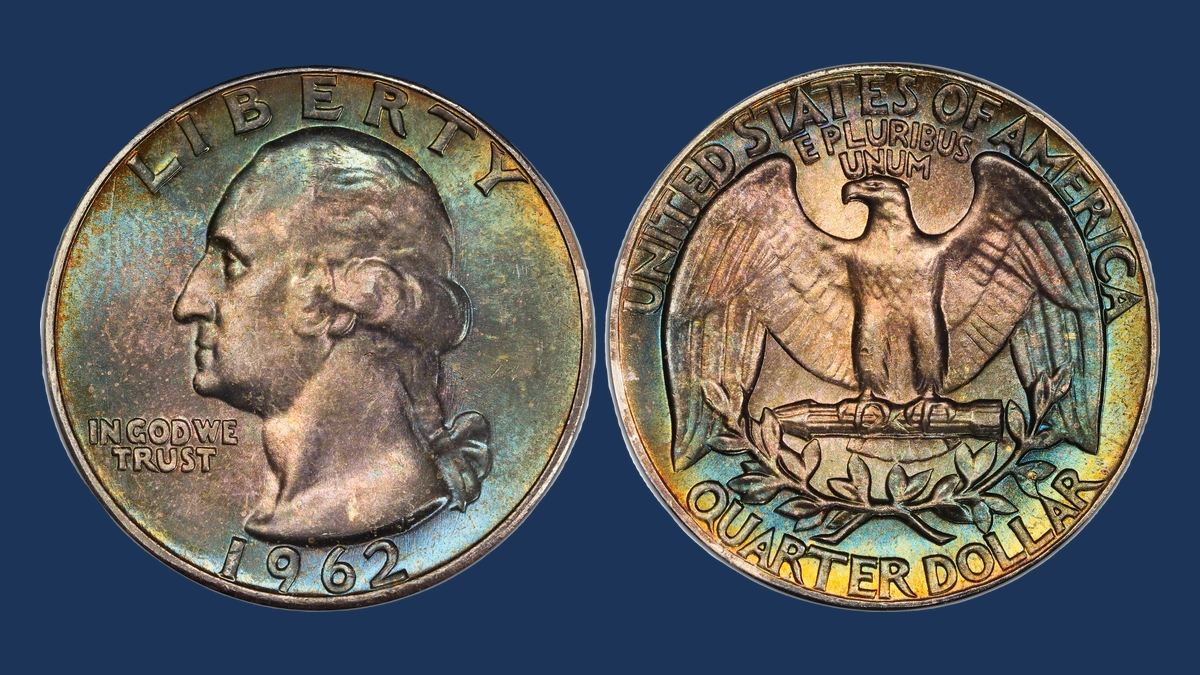
Two letters offer a quick introduction to the Type B variety. The E and S in STATES are farther apart than on the usual circulation design.
This back design was intended for Proof coins, collector pieces made with special preparation. It also appeared on some ordinary Philadelphia quarters in 1962.
That use on a circulation coin is what makes Type B worth checking. The same lettering on a normal Proof is expected, so identifying the finish is part of identifying the variety rather than an optional final step.
Estimated Value
Estimate $20 to $1,500 for a confirmed circulation-strike Type B quarter. Much of the difference comes from wear, marks, and the quality of the original surfaces.
PCGS lists an MS66+ example at $1,500 on eBay in April 2019. This is a very well-preserved unworn coin, not a typical worn pocket find.
A normal Proof with the same back design does not receive the circulation-variety premium. Clean, untouched surfaces matter more than artificial shine.
How to Identify
Decide whether the coin is an ordinary circulation issue or a Proof before studying STATES. Use reliable grading information when polished or worn surfaces make that distinction difficult.
On an ordinary Philadelphia example, compare the E-S gap with a normal circulation quarter photographed at the same scale. The usual letters nearly touch; Type B leaves clear separation.
Use the leaf details beneath the eagle’s tail as a second comparison with a confirmed Type B image. Avoid judging a worn letter edge in isolation.
A shiny surface alone does not establish Proof manufacture, since cleaning can add shine. Once the issue is correct, the repeated design differences should match across the lettering and nearby leaves.
5. 1962 Washington Quarter Struck on a Silver Dime Blank
A quarter struck on a dime blank can still look like an ordinary silver coin at first glance. Both denominations used ninety-percent silver in 1962.
The difference is the available metal. A dime blank starts much smaller and lighter, so the quarter’s outer design cannot fit completely on it.
A PCGS MS62 example from the Fred Weinberg Collection documents this error for 1962. MS62 describes an unworn coin with noticeable marks, and its silver color alone does not identify the smaller blank used to make it.
Estimated Value
The MS62 example sold for $660 in July 2022. Comparable authenticated silver-dime-blank quarters have an estimated range of $400 to $2,000.
An identifiable date and a recognizable quarter design make a crowded strike easier to collect. Better surfaces can also improve its appeal.
Extensive damage or an incomplete year may lower the price even when the wrong blank is genuine. The estimate concerns a quarter stamped on an unused dime blank, not a quarter design over an already finished dime.
How to Identify
For a loose candidate, start with a scale: a silver dime blank normally weighs about 2.50 grams. A normal 1962 quarter starts at 6.25 grams.
The dime blank’s starting diameter is about 17.9 millimeters, although striking can spread it. Record the actual measurement rather than rejecting a wider struck example automatically.
Now identify Washington and the surviving quarter lettering on the small disk. The crowded design must fit the small blank, with the outer details lost naturally at the edge.
Inspect that edge for cutting or grinding that could reduce a normal quarter. Silver color cannot settle the question, because both the correct quarter blank and the incorrect dime blank have the same basic silver alloy.
6. 1962 Washington Quarter Attributed Korean 10 Hwan Blank
This copper-colored quarter has no visible date. A Fred Weinberg listing described it as a PCGS AU58 coin struck on a Korean 10 hwan blank and cataloged it as (1962).
The parentheses matter: the year is an attribution, not a number readable on the coin. AU58 indicates slight circulation wear.
The dealer noted that the piece resembled a quarter on a cent blank. Identifying the foreign blank therefore depends on more than its brown color or small outline, and its proposed year must remain separate from the visible design.
Estimated Value
The old dealer listing asked $800 for the attributed Korean-blank coin. That was an asking price, not an auction result.
An estimated $500 to $3,000 applies to a genuine example with the foreign blank and proposed date properly supported. A clear history and convincing metal identification are especially valuable for an undated piece.
The missing date limits direct year-by-year comparison. Surface damage or a doubtful blank identification can reduce interest despite the unusual appearance.
How to Identify
Begin with the holder description and the coin’s recorded history, because there is no date to read. Check that the photographs show the same undated piece described in the listing.
Then separate the quarter design from the blank identification. Washington’s portrait can establish the design without establishing either the country of the blank or the year of the strike.
A specialist should compare the measured weight, diameter, and metal with the proposed Korean blank. If the coin is sealed, use its documented measurements rather than opening the holder.
Keep “(1962)” attached to the description. A copper-colored surface cannot turn an undated coin into a securely dated example, nor distinguish a Korean blank from a U.S. cent blank by itself.
7. 1962 Washington Quarter Doubled Die Obverse
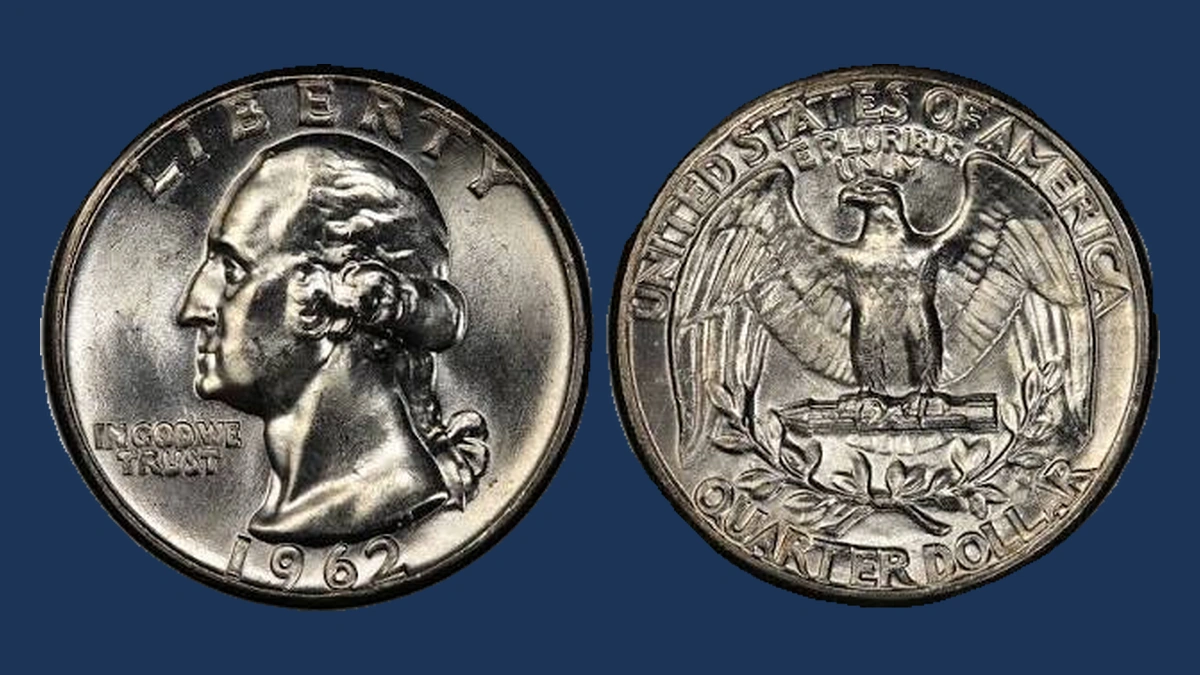
Two distinct outlines can survive around Washington’s eye or parts of the front lettering. On a doubled die, that extra design was already present on the steel stamping tool.
The coin did not need a second strike to receive it. Each blank struck by that tool could reproduce the same doubled features.
PCGS recognizes the Philadelphia circulation variety FS-101 for 1962. Reports direct attention to the eye, LIBERTY, and the motto, but the precise pattern should match an identified example rather than any thick letter on a silver quarter.
Estimated Value
A PCGS MS66+ example sold for $3,290 at Heritage in July 2016. That high grade describes an exceptionally clean, unworn coin.
Estimate $50 to $3,500 across confirmed examples in different conditions. Circulation wear can soften the very outlines that make the variety recognizable.
A clear match and attractive original surfaces support stronger prices. Flat strike doubling or marks beside the eye do not deserve the same estimate simply because the coin appears to show two edges.
How to Identify
Choose one clear letter in LIBERTY and compare it with the same letter on a confirmed FS-101 image. Look for matching separation at its ends and corners.
Move to the eye and motto only after locating a convincing match. Several related features should repeat the same pattern, rather than forming an assortment of unrelated dents.
Change the light angle and keep the camera square to the surface. Reflections can make one raised edge appear doubled, while a flat shelf may come from movement during striking.
Check that the comparison is a Philadelphia circulation coin, not a Proof or a different year. A worn candidate may lose tiny features, but its remaining outlines should still correspond to the identified doubled design.
Conclusion
Estimated values run from $20 to $3,500, with ordinary clipped examples near the lower end and well-preserved doubled dies near the upper end. A small feature can matter as much as a dramatic change in outline.
Keep the coin’s identity attached to its price. A three-coin auction total, an old dealer asking price, and a single-coin sale each describe something different.